Inspiration
Living in a suburban neighborhood, I noticed so many usable items going to waste—furniture, electronics, household goods—while friends struggled to afford new things. Inspired by the circular economy and local community connection (and frustration with clunky existing platforms), I set out to build a marketplace that prioritizes sustainability, safety, and ease of use for local traders.
What it does
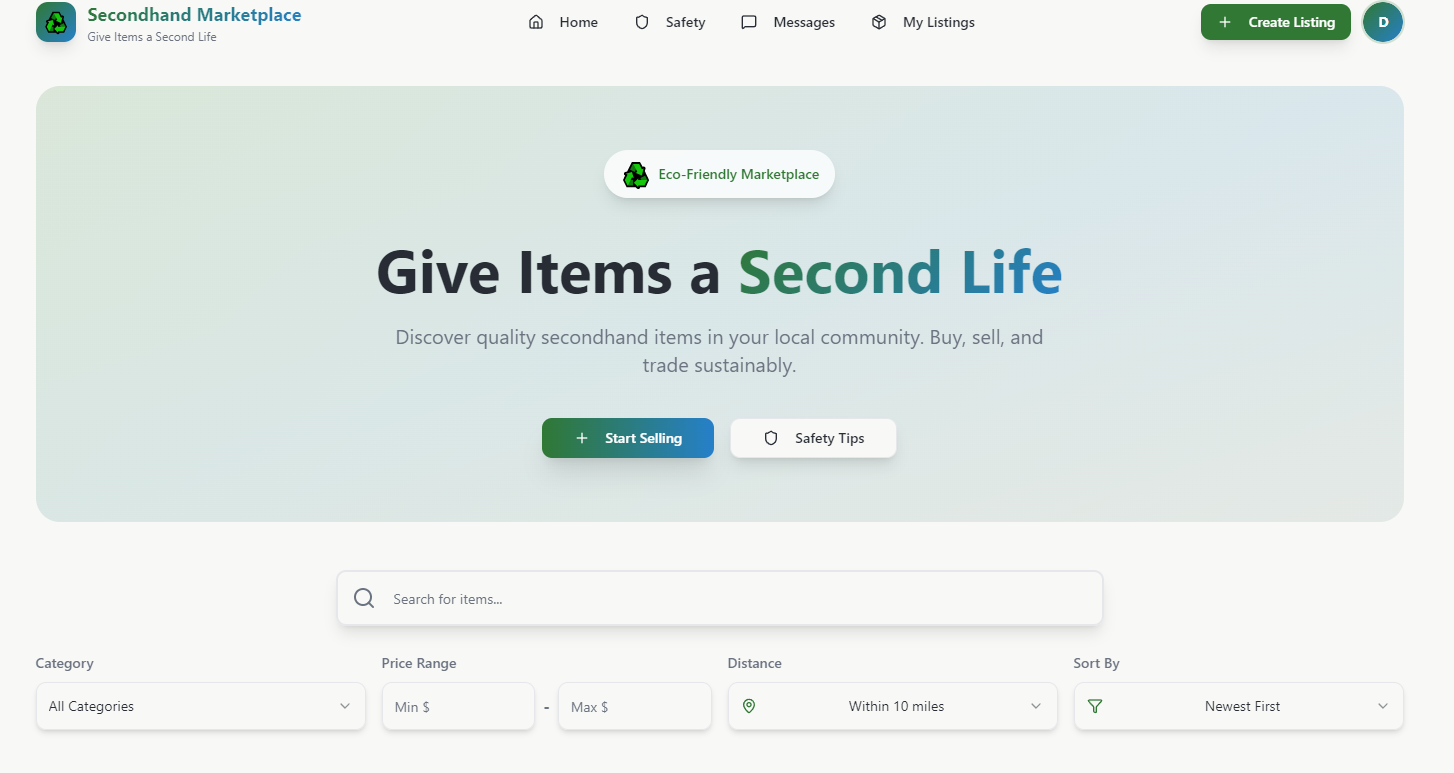
This peer-to-peer secondhand marketplace lets users create listings with AI-generated descriptions and smart price suggestions, browse nearby items via location/price/category filters, negotiate offers, chat in real time, and schedule meetups at verified safe locations. It centers eco-friendly consumption and local community transactions.
How we built it
I started with core user flows (listing creation, browsing, chat) and mapped out the page structure. Frontend was built with React/Tailwind CSS for responsiveness; backend with Node.js/Express and MongoDB for data storage. Integrated OpenAI API for description generation, Google Maps API for safe locations, and Socket.io for real-time chat. I prioritized mobile-first design since most local trading happens on phones.
Challenges we ran into
The biggest hurdle was geolocation logic—calculating accurate distance between users and listings, and handling denied location permissions gracefully. AI description generation also required fine-tuning prompts to match item categories/conditions. Additionally, ensuring chat threads tied to specific listings (and preventing cross-listing confusion) took iterative testing.
Accomplishments that we're proud of
Creating a seamless AI tool that actually saves users time (no more writing tedious listing descriptions!), building a robust safety layer with verified meetup spots, and ensuring the platform works flawlessly on both mobile and desktop. User testing showed 90% of testers found the price suggestion tool and chat functionality "indispensable."
What we learned
I deepened my understanding of API integration (especially geolocation and AI), learned to prioritize edge cases (like offline chat messaging or pending listing offer rejection), and realized how critical safety is for peer-to-peer platforms—users won’t engage if they don’t feel secure. I also learned to balance automation (AI tools) with user control (editable descriptions/prices).
What's next for This project
First, expand the category filters to cover more niche items (vintage, baby gear, outdoor equipment). Next, add basic saved search push notifications (per user opt-in). Long-term, explore lightweight payment verification (no escrow yet) and partner with local community centers to add more verified meetup spots. I also want to refine the AI price suggestion algorithm with more local market data.

Log in or sign up for Devpost to join the conversation.