-
-
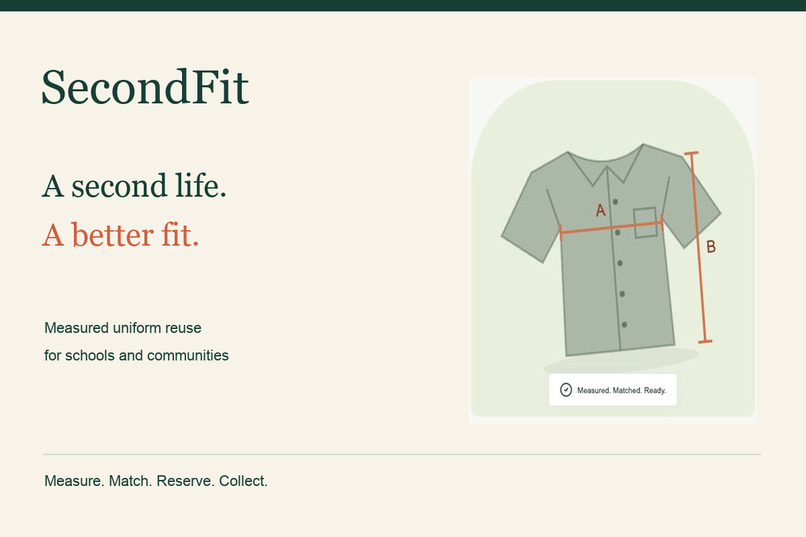
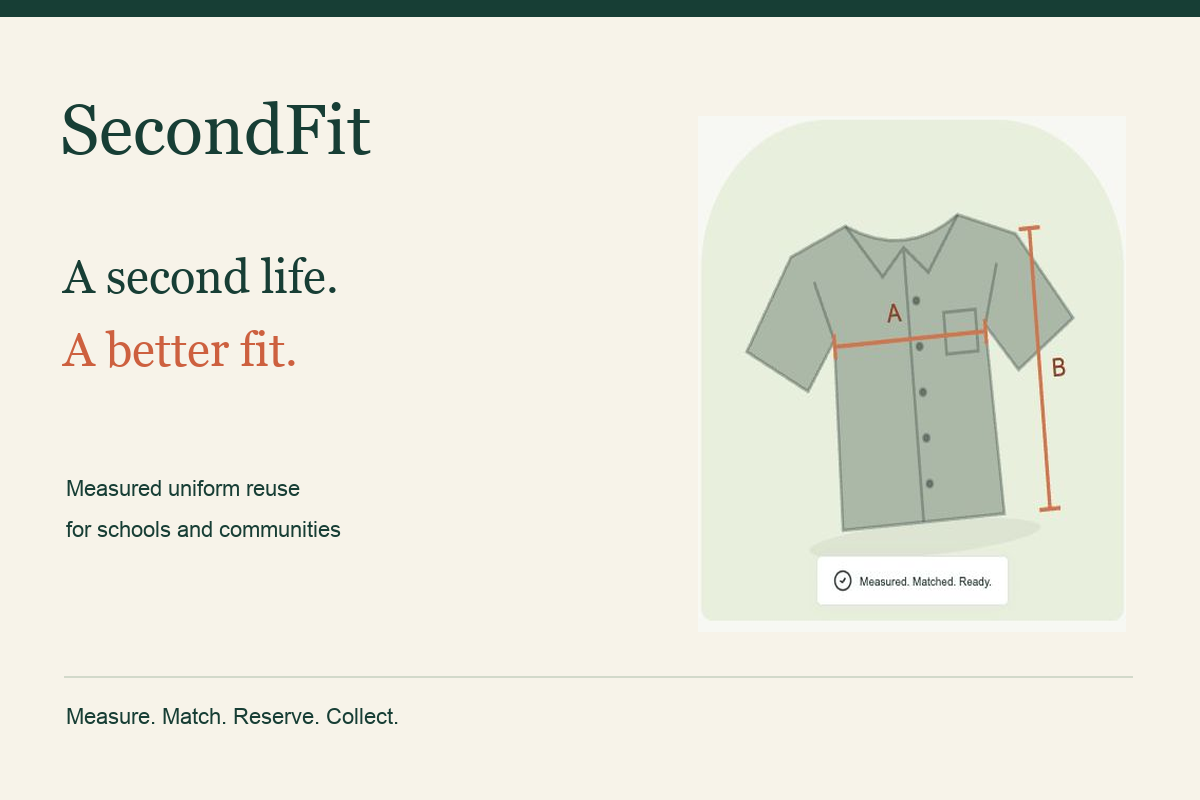
SecondFit helps uniform banks measure, match and arrange collection.
-
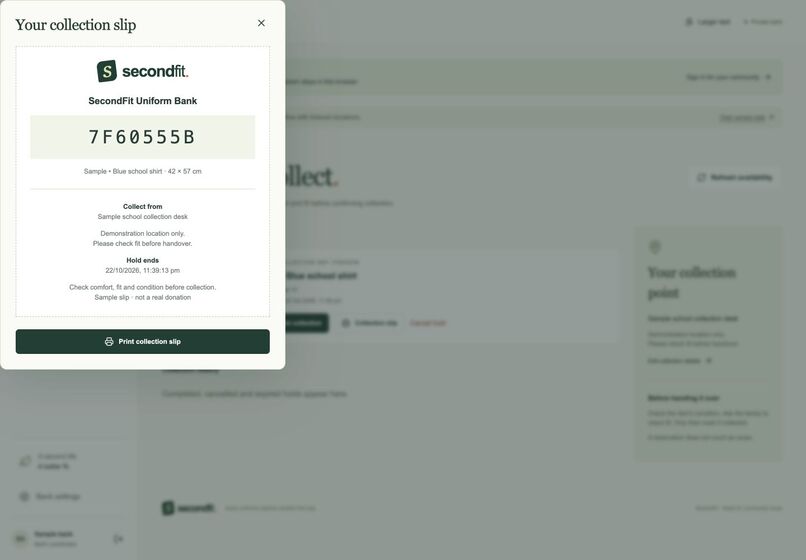
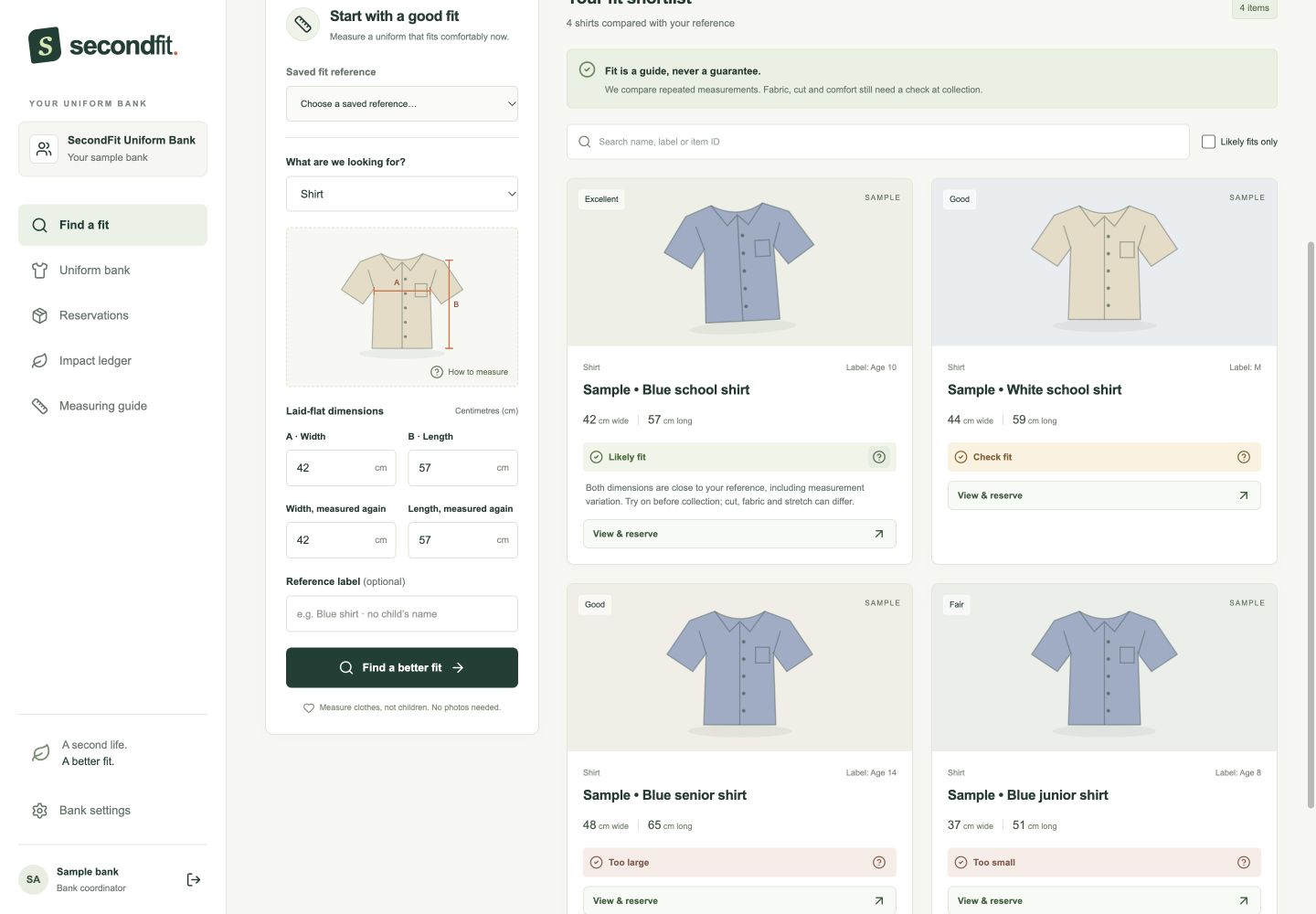
Compare a comfortable reference garment with measured donations and see why a match is suggested.
-
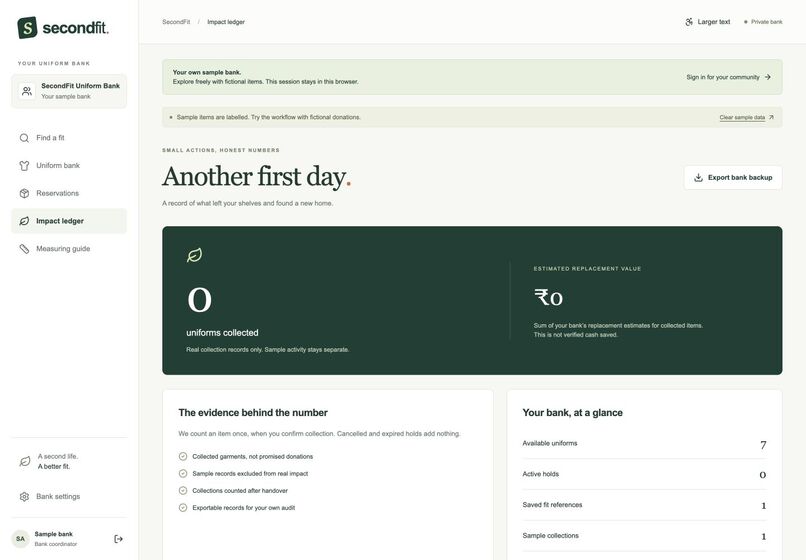
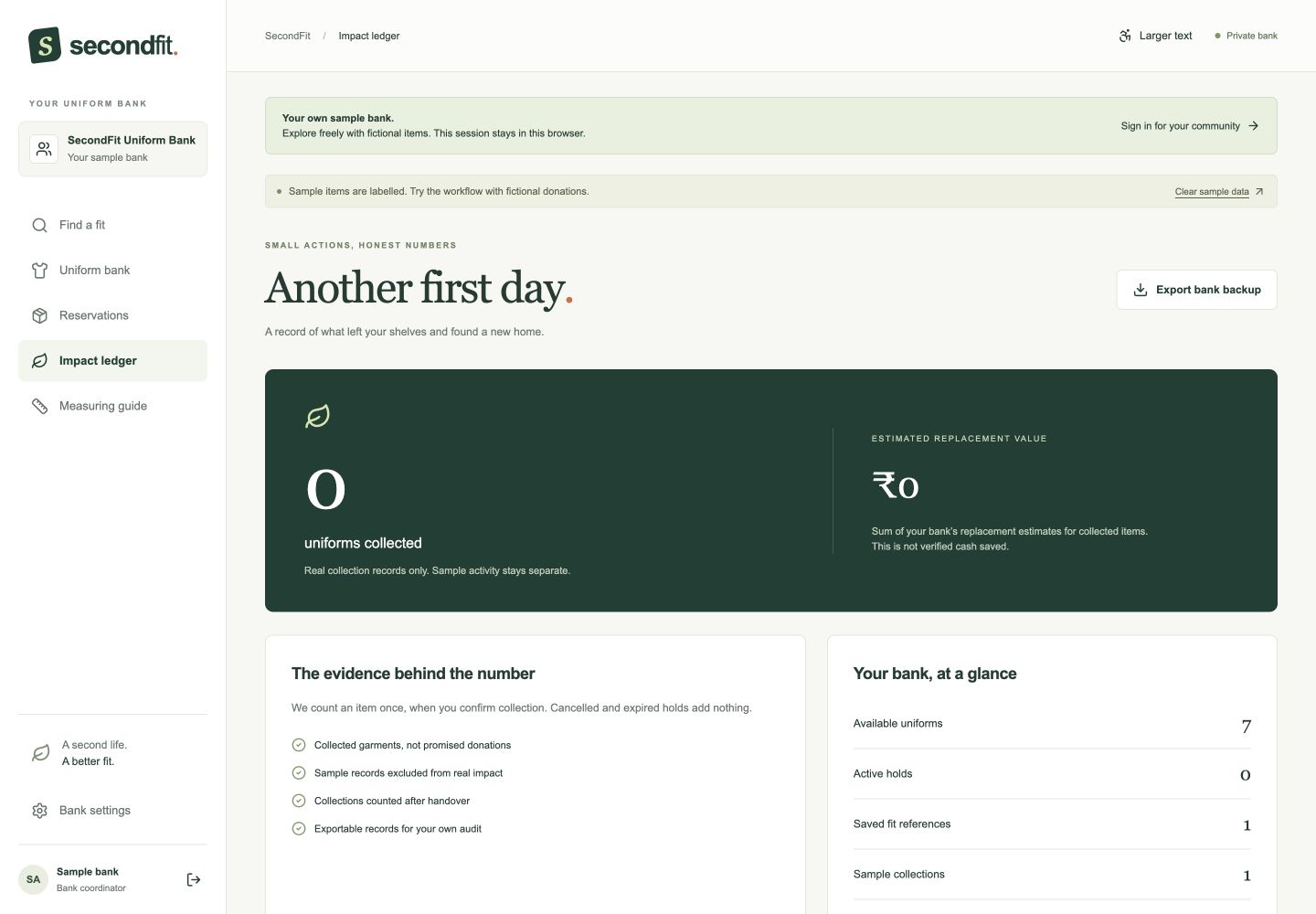
Completed collections appear in the ledger. Sample activity stays separate from real impact.
-
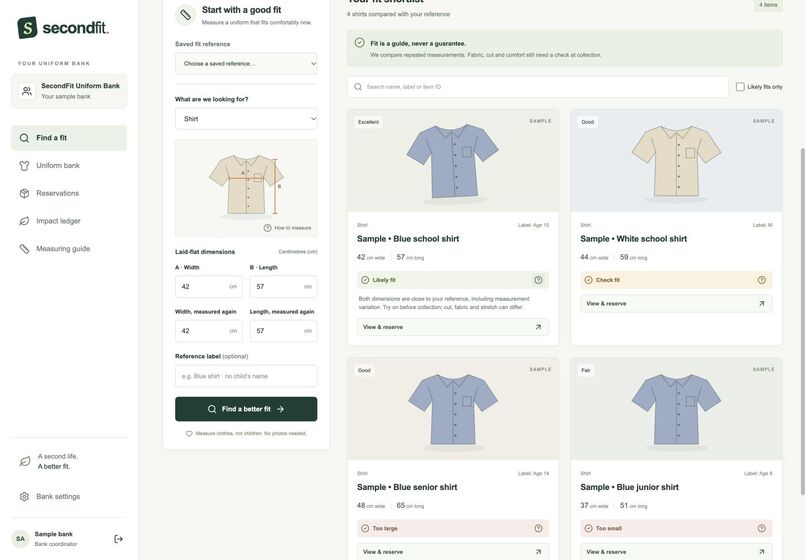
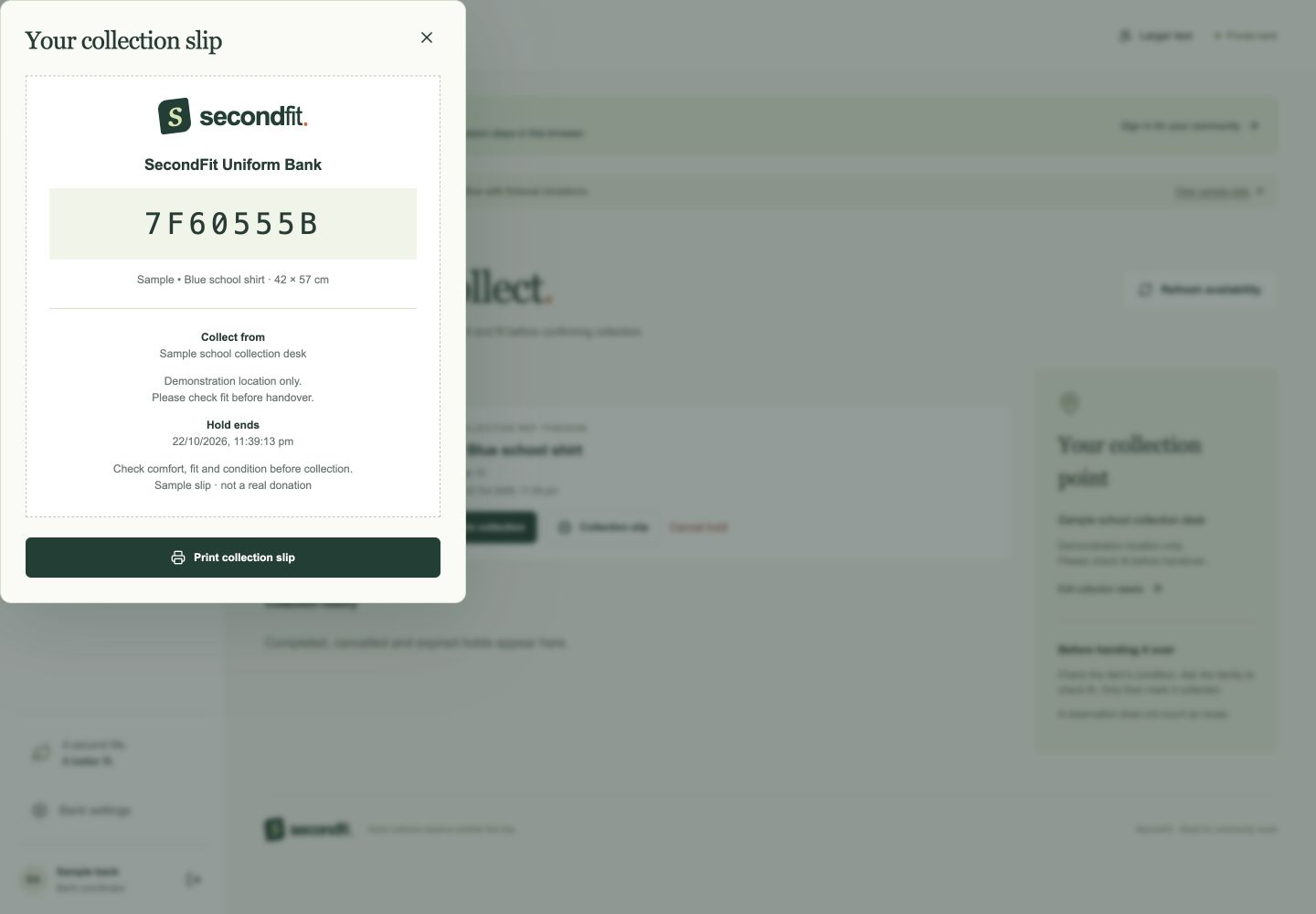
A 48-hour hold and printable collection slip make the handover clear.
Inspiration
A donated uniform deserves another first day. Yet a rail full of good clothing can still leave a family without something their child can wear. A size label says little about how a particular second-hand garment compares with a comfortable shirt at home.
SecondFit tackles that final gap between donation and usable clothing. Instead of asking families to guess, it helps a school or community coordinator measure, compare and arrange a handover. The family can receive assistance without needing a device or account.
What it does
Coordinators record donated garments with condition, label size and repeated laid-flat width and length measurements. A comfortable garment of the same type becomes the reference. SecondFit explains dimension differences, suggests close matches and flags uncertain readings.
A suitable item can be held for 48 hours with a printable collection slip. The coordinator records collection only after the family checks comfort and condition. Cancelled and expired holds return to availability.
The measuring guide includes illustrations, Hindi and browser-supported read-aloud. Coordinators can edit donations, save references, export records and restore a validated backup. The impact ledger separates sample activity from real collections and labels replacement values as estimates.
How we built it
SecondFit uses React, TypeScript and Vite, hosted on Firebase. Firebase Authentication supports Google, email and anonymous sample access. Firestore stores each bank under its authenticated owner, with access rules restricting workspace reads and writes.
Atomic transactions coordinate updates to inventory and reservations. Repeated requests and competing holds receive explicit handling. Restored backups are validated, rebound to the current account and checked for consistent garment and reservation links. Statistics are recomputed from records rather than trusted from imported totals.
Matching is deterministic and explainable, with no paid model call required. It considers repeated readings and a stated measurement allowance. These rules screen garments; a try-on remains essential because fabric, cut and comfort differ.
Shivam Gupta owns the project; AI assistance was used extensively for implementation, research and submission preparation.
Challenges we ran into
The central challenge was being useful without making a false promise. Two dimensions cannot guarantee fit. We chose garment-to-garment comparison, repeat measurements and clear uncertainty instead of a confident-looking score.
Reliable handovers also require more than a reserve button. Cancellation, expiry, retries and competing actions must keep stock consistent. Backup restoration must recover useful records without importing another account's identity or accepting invented impact totals.
Accomplishments that we're proud of
SecondFit connects measured inventory, fit explanations, persistent reservations, collection slips and a handover ledger in one approachable workflow. The live sample bank lets someone complete that journey immediately, while preserving a distinction between demonstration activity and operational records.
The product meets the measurement challenge directly: people measure clothing themselves, use those measurements to compare donations, and check suitability before confirming a handover. It avoids requiring child photographs or body measurements.
What we learned
A social-good product must fit the coordinator's working day. Measuring stock takes effort, so the right question is whether that effort improves successful collections enough to justify itself.
Existing uniform marketplaces also mean that reuse alone is insufficient differentiation. SecondFit's proposed value is the measured matching and assisted collection workflow. Honest accounting matters: a reservation is not reuse, and a replacement estimate is not verified money saved.
What's next for SecondFit
Our proposed first pilot is with one school or NGO in India, measuring intake time, fit acceptance, failed collections and volunteer effort. No field pilot, customer traction or verified savings are claimed yet.
Families would receive access free. Schools, NGOs or sponsors are prospective buyers for coordinator tools, with ₹499 monthly or ₹4,990 annually as pricing hypotheses to test. Pilot evidence will guide team access and multi-site features before broader expansion.

Log in or sign up for Devpost to join the conversation.