-
-
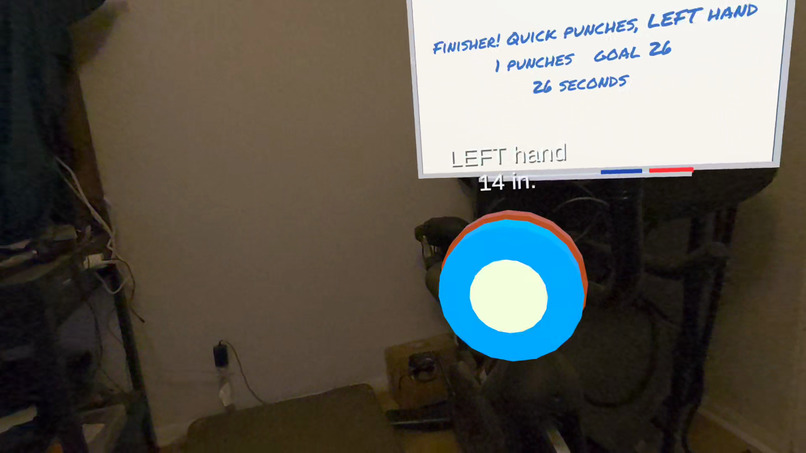
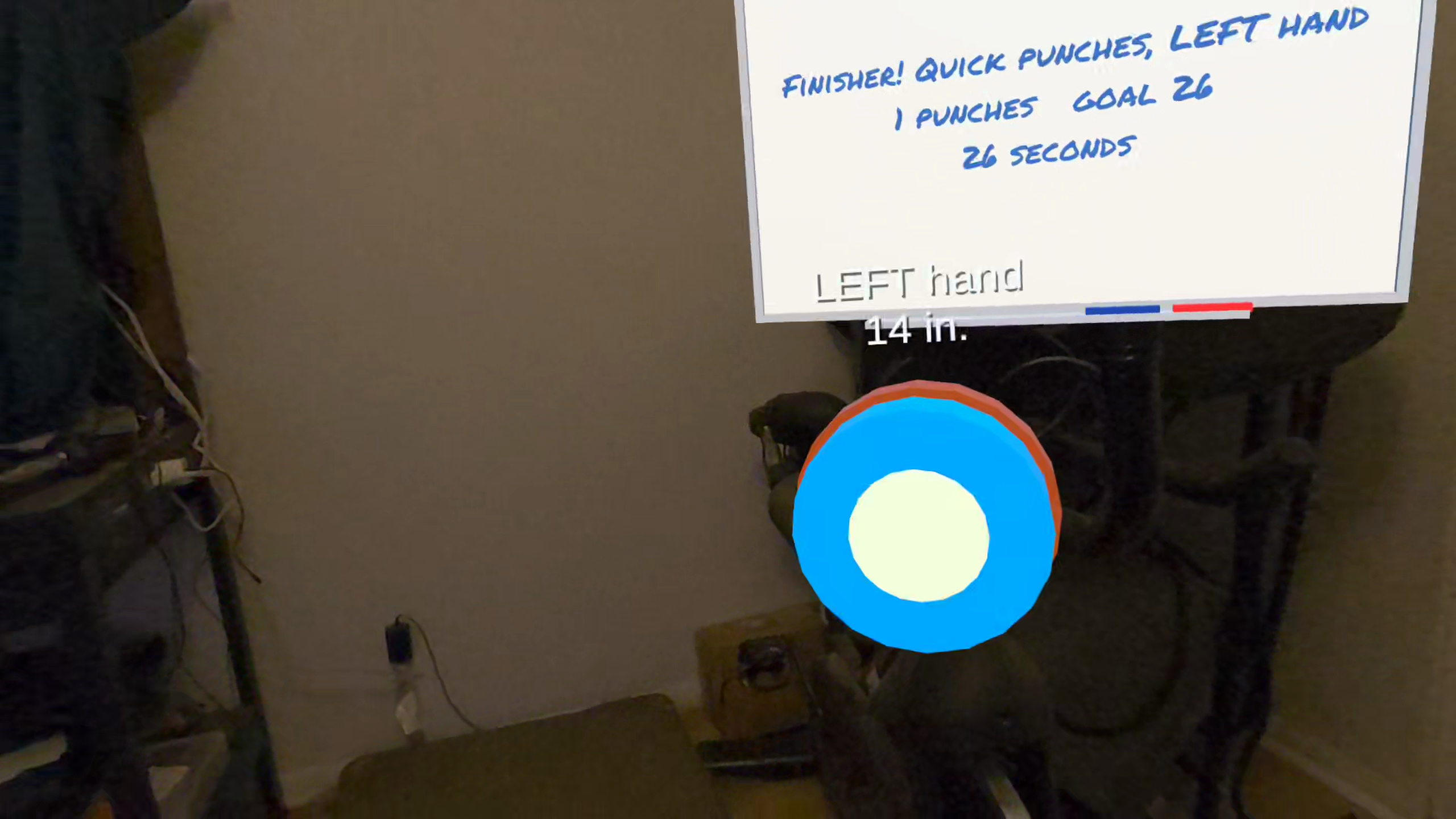
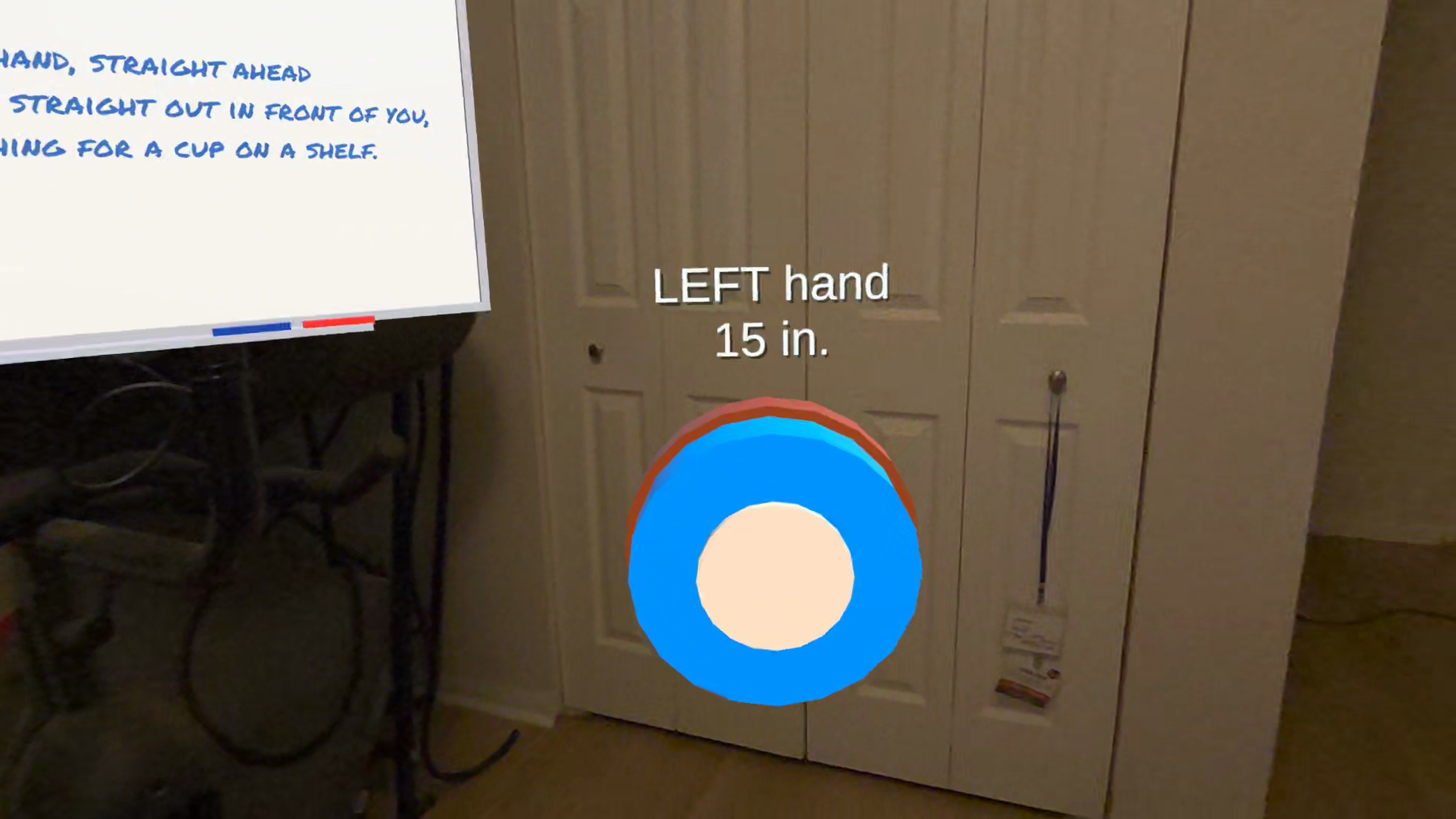
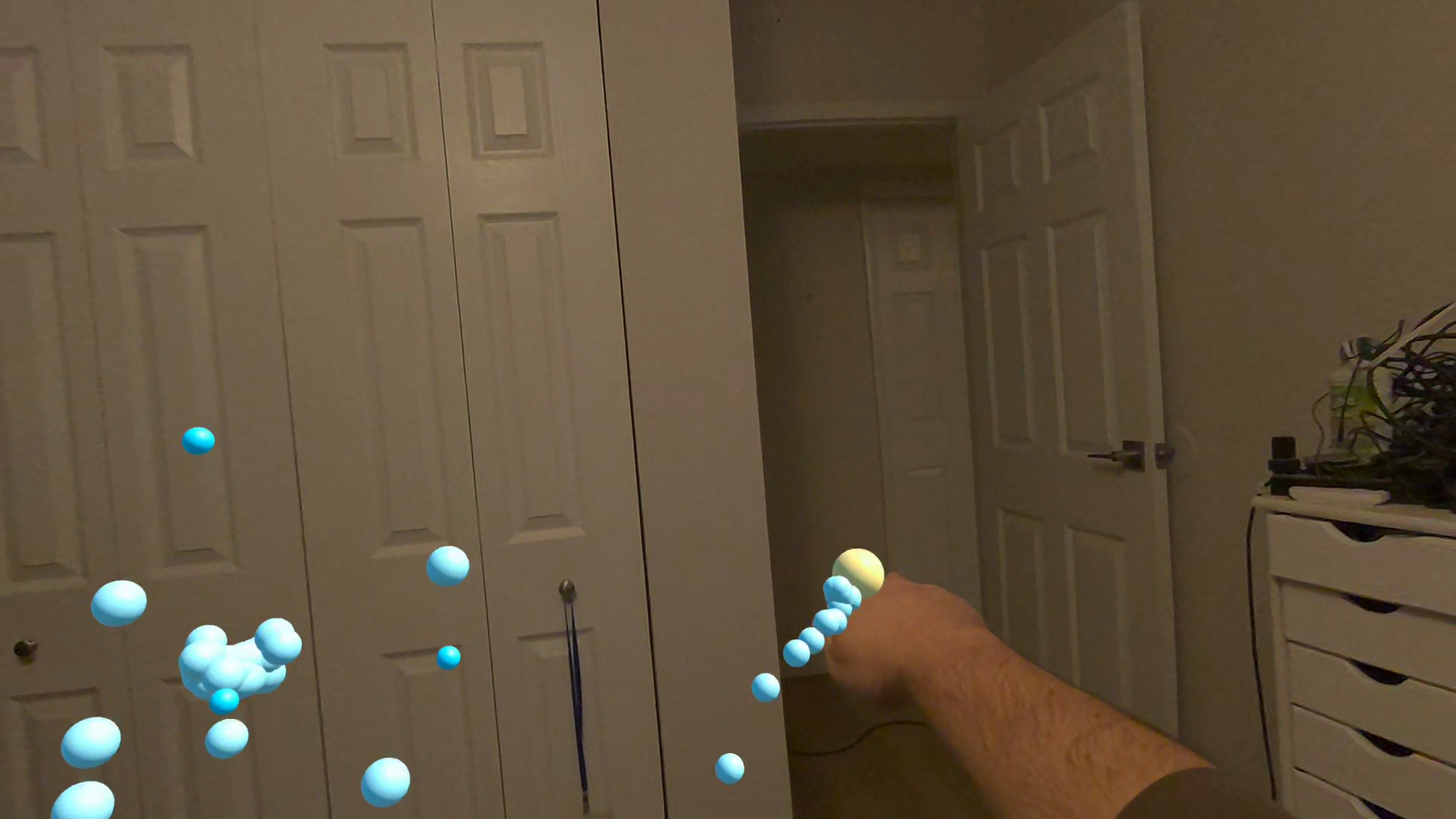
Bare-hand mitts in the real room. Blue calls the left hand; spoken coaching gives the direction.
-
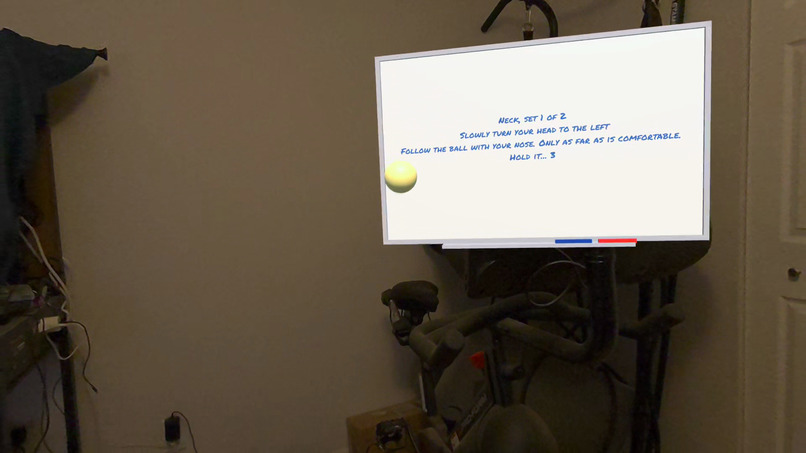
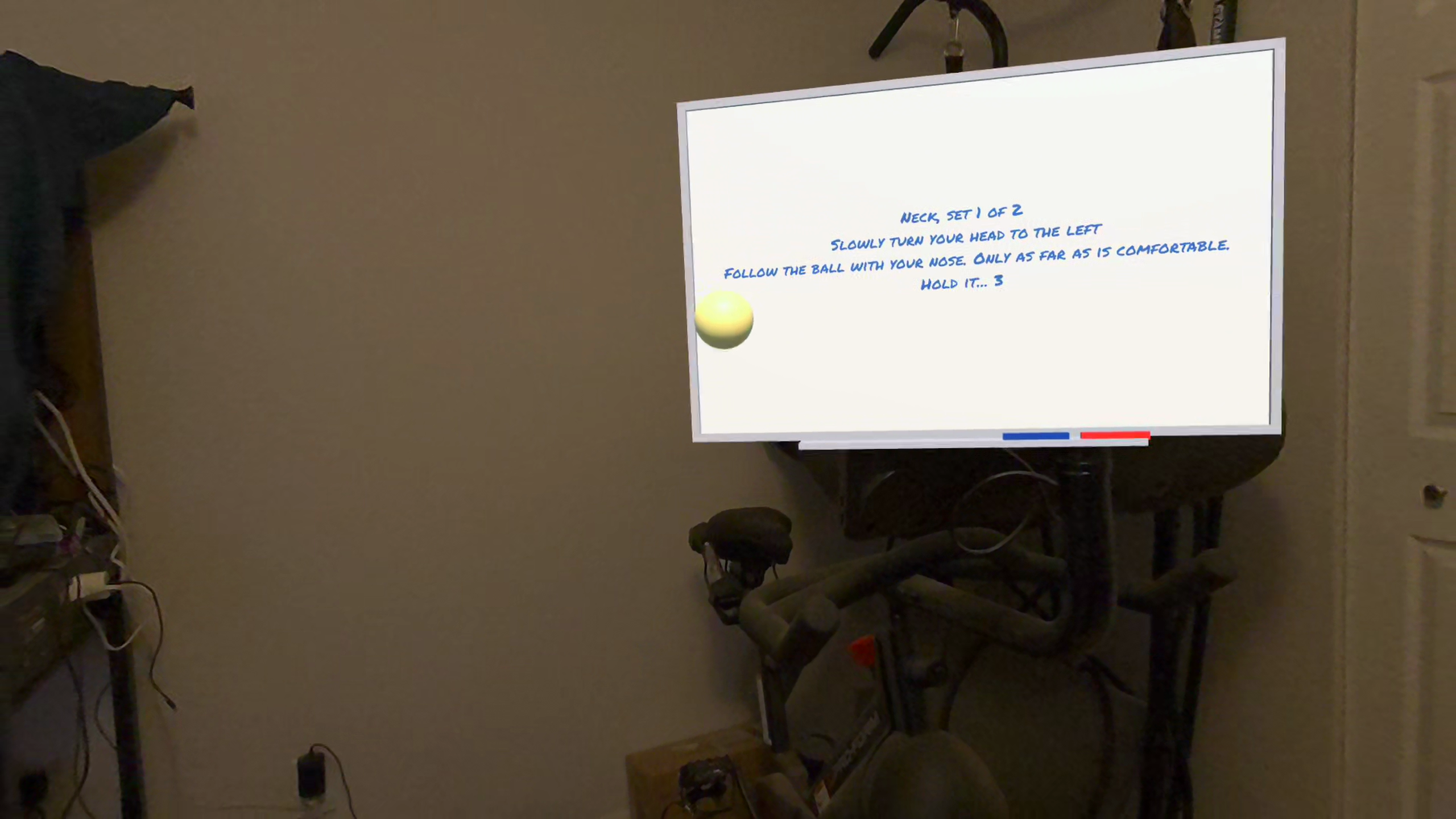
Gentle neck turns follow a yellow light, with spoken cues and counted holds.
-
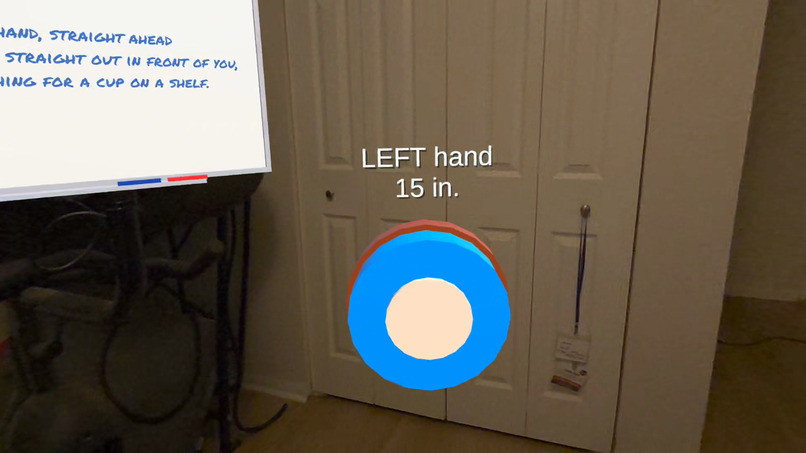
Round 2 adds a thinking task: say a month aloud while reaching with the requested hand.
-
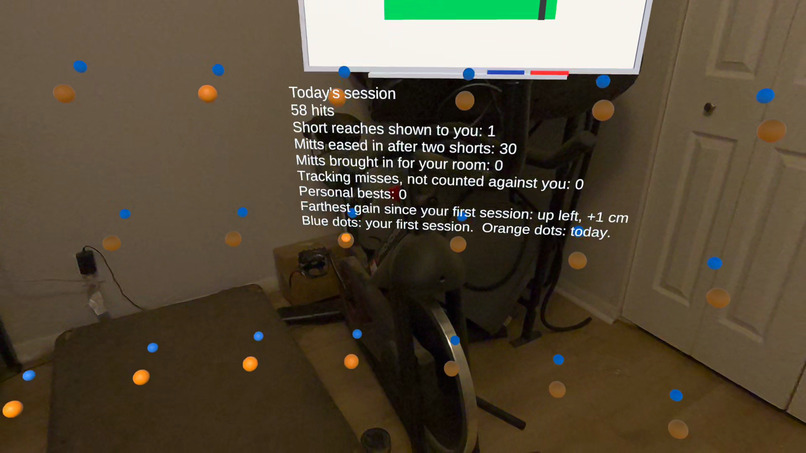
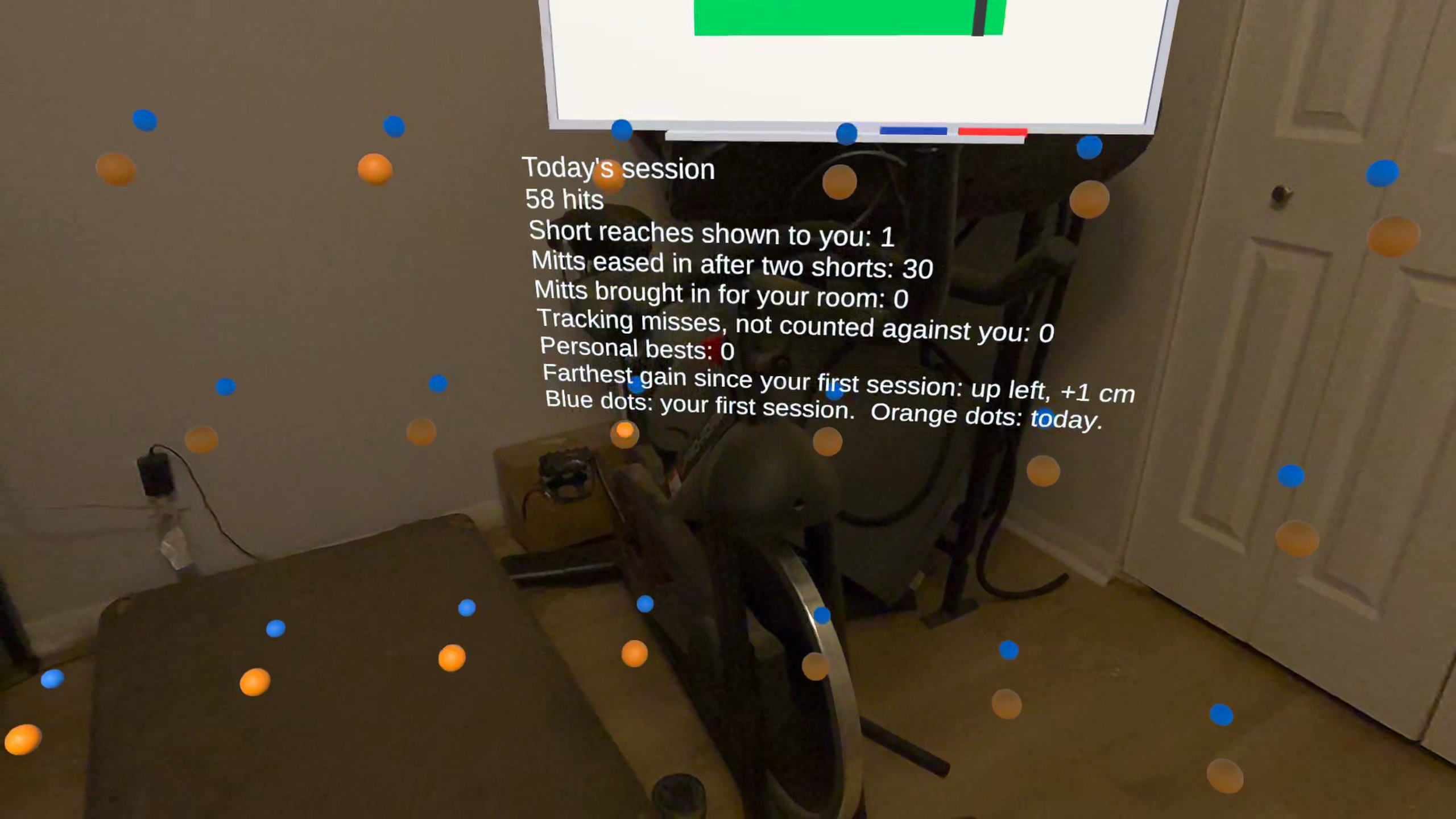
A completed session earns a belt stripe. Dots show calibration versus adapted target reach, not a clinical outcome.
-
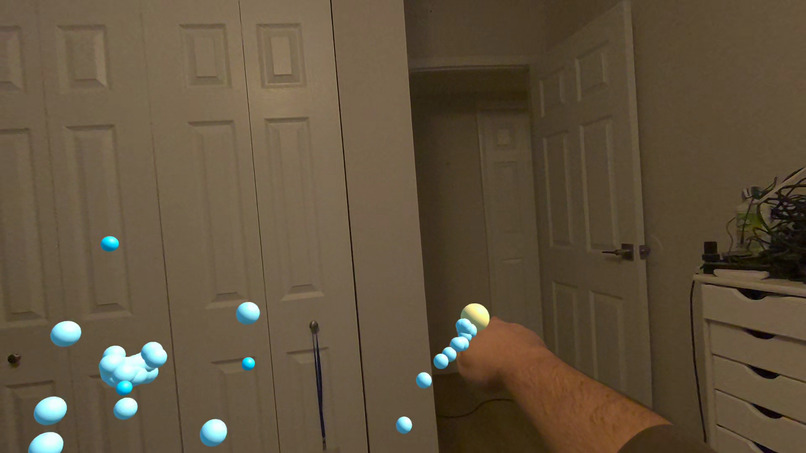
Eight guided stretches calibrate today’s reach and pace; movement during each counted hold is expected.
Inspiration
A Parkinson's exercise class near me meets three times a week. On October 16, I sat through a full session: boxing-style reaches, stretches, music and thinking drills. What stayed with me was who was missing because getting out, or getting there, was hard.
Stronger Every Day brings that class into the player's own room. The instructor helped design it: she reviewed the concept, answered a questionnaire, chose the name and played the demo.
What it does
A seated, hands-only mixed-reality workout on Quest 3S. Every menu uses large spheres touched and held; no controller or precise pinch is required.
Start with today's reach. Eight guided stretches calibrate target distance and movement pace. Spoken ten-count holds allow movement instead of demanding stillness. The calibration smooths samples and uses their 90th percentile rather than a single extreme reading.
Move and think. After gentle neck turns, four rounds progress through same-side reaches, counting aloud, cross-body reaches and a 30-second finisher. Recorded coaching calls the hand and direction. Original procedural music follows the measured pace and ducks under speech.
A short reach leaves the mitt waiting. The gap appears in inches with an invitation to try again. Repeated short reaches bring the target closer; leaning can also ease the session. Tracking losses are recorded separately from short reaches.
The room matters. With a room scan, MRUK raycasts limit target placement around walls and furniture. A whiteboard hangs on a detected wall; without a scan, it stands on an easel. Passthrough keeps the player's surroundings visible.
A reason to return. Completed sessions earn belt stripes. Local history keeps seated and standing records separate, while Guest mode saves nothing. Blue and orange dots visualize the earlier calibration and today's adapted target envelope. This is gameplay feedback, not a validated measure of clinical improvement.
How I built it
Unity 6.3 LTS, URP, Meta XR SDK v207 and OpenXR, tested on Quest 3S. OVRHand and OVRSkeleton drive menus and mitt contact. MRUK supplies room geometry. Voice sequencing keeps instructions ahead of counts, and music ducks while the coach speaks.
Challenges and what I learned
The first calibration asked people to hold still. Watching the class made the flaw obvious: the interaction was fighting the audience it was meant to serve. Counted stretches replaced that test. The instructor's encouragement also shaped how a short reach is handled: another invitation, not a buzzer.
The current results card has a reporting limitation: its “after two shorts” counter also includes lean-based target adjustments. The recorded demo's 30 adjustments are not 30 pairs of short reaches. Separating those causes is a next fix.
What's next
The instructor is recording her own coaching voice. A university researcher is planning a supervised feasibility and comfort pilot. Live instructor-led classes, translation and shared celebrations are future work; this submission is a single-player exercise prototype, with no claim of demonstrated treatment benefit.

