Inspiration
After results, students can pay for a re-mark, but the window to ask is short, it costs money, and a grade can go down. In England in summer 2025, 301,980 GCSE and A level grades were challenged and 72,875 of them changed (Ofqual). Scotland's SQA received 50,805 appeals in 2025. Students still have to guess which questions are worth sending back.
What it does
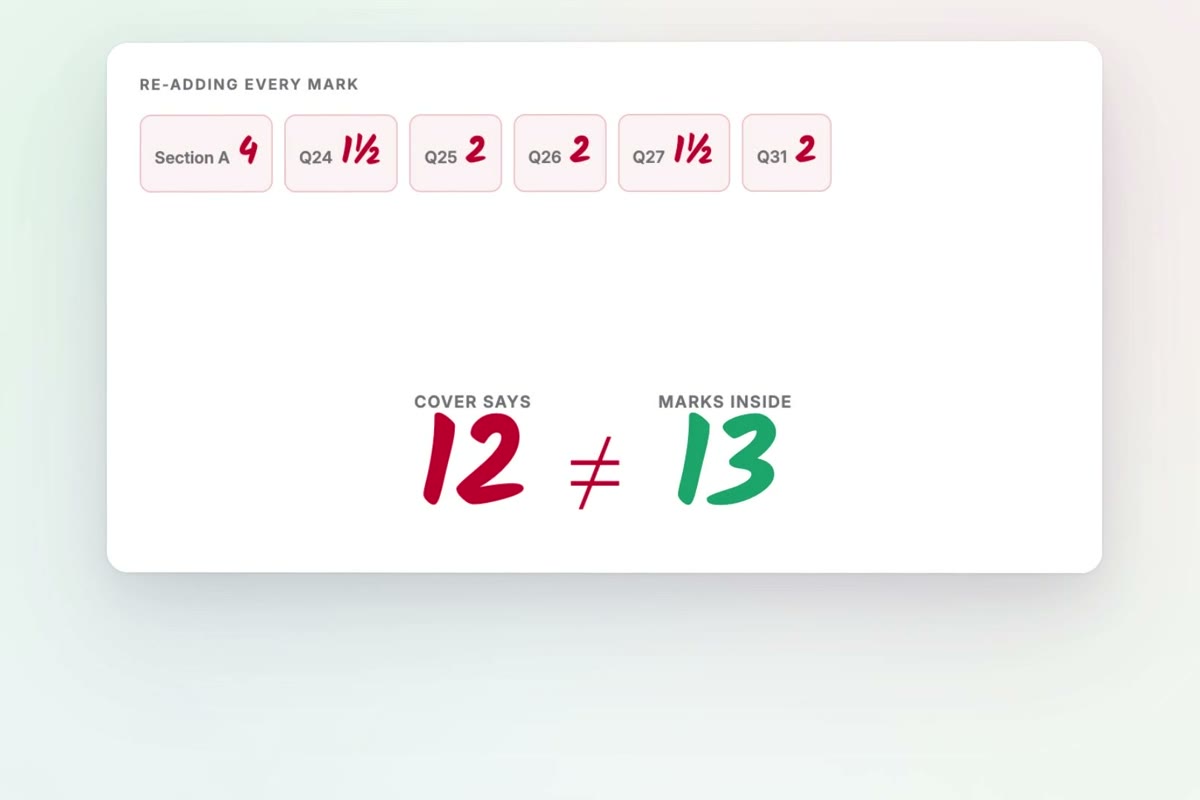
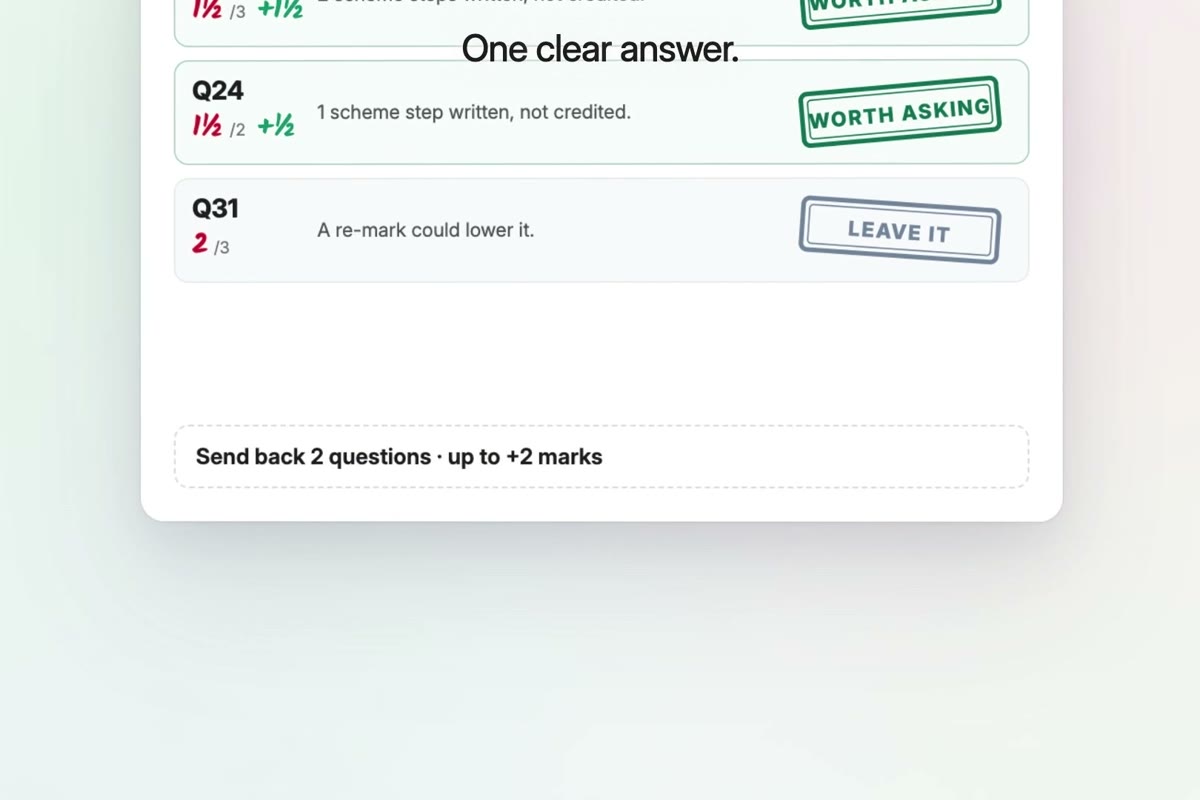
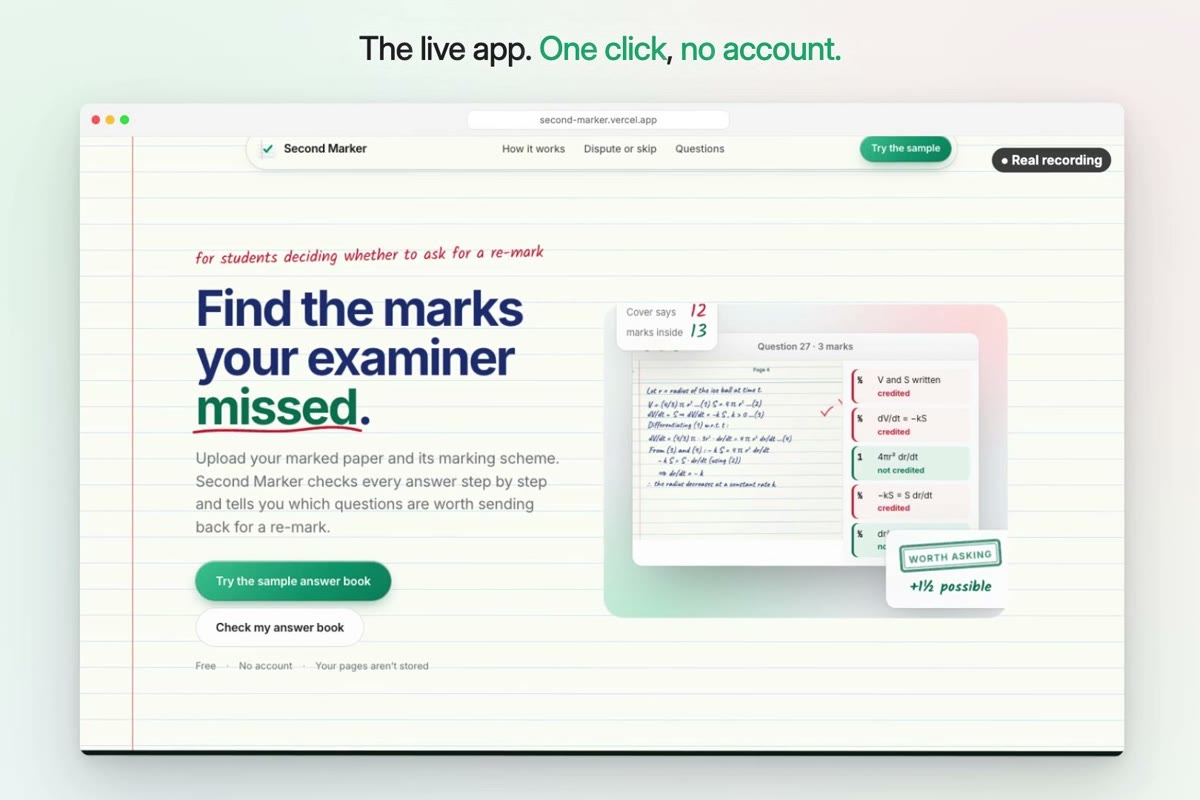
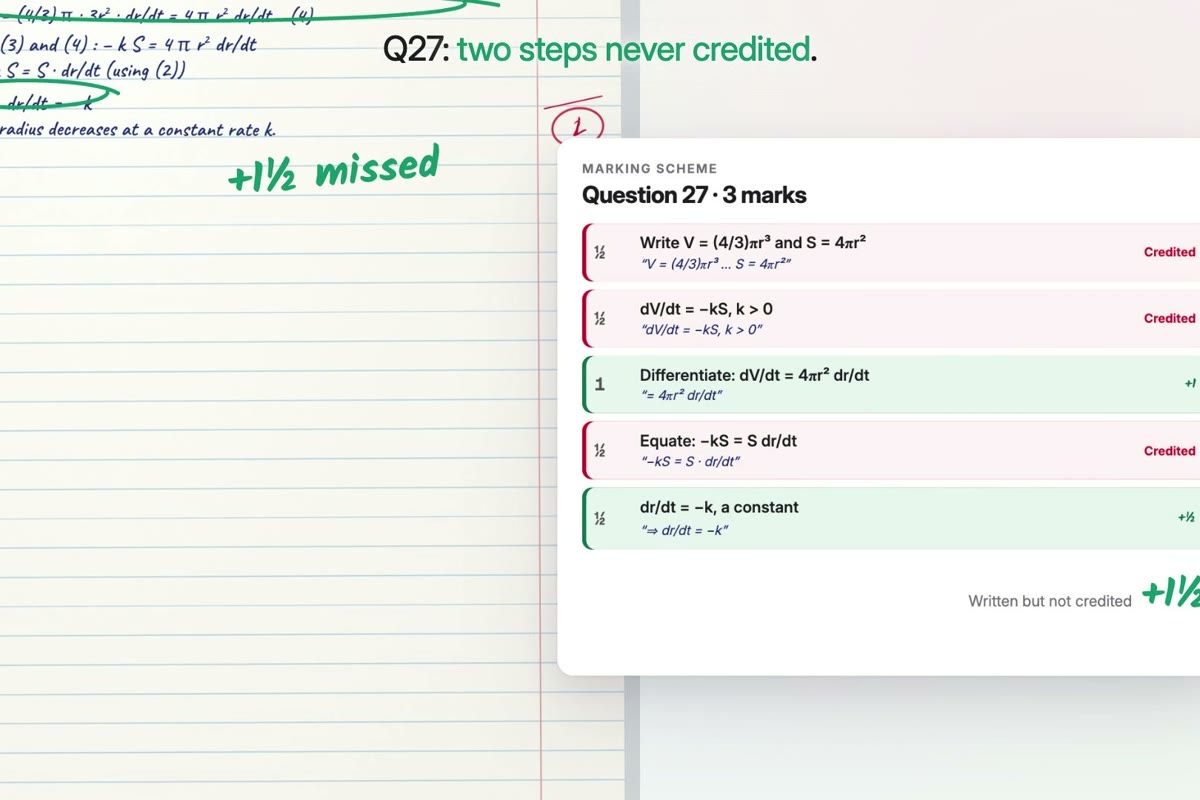
Upload a marked paper and the marking scheme it was graded against, or try the sample answer book in one click with no account. Second Marker reads every page, re-adds the examiner's marks against the cover total, and lines each answer up with the scheme's step marks, quoting the student's own line as evidence. Each question gets a WORTH ASKING or LEAVE IT stamp with the possible gain, the fee and the risk. The results open with one plain verdict, a "How far to trust this" panel, and step edits that recompute the verdict live. It ends with a printable filing sheet and a ready-to-send request.
One paper is built in and checked by hand: CBSE Class 12 Mathematics 2025 to 26 with its official marking scheme. For other exams (IB, Cambridge, Edexcel, AQA, OCR, SQA, university finals) you paste the marking scheme or rubric. That path is newer and labelled beta.
How we built it
Planned with the Devpost Learn skill pack: the scope, PRD, spec and build checklist are in the repo's devpost/ folder. Next.js on Vercel. A vision model reads each page and reports which scheme steps are written. Everything that touches money is plain TypeScript with unit tests: re-adding marks, working out which steps the examiner's single mark already covers, gains, fees, question limits and the stamps.
Challenges
The reader misread small stacked half marks in the margin, reading 1½ as 2. Cover pages repeat each mark in a table, so the app now cross-checks the two and openly flags any disagreement. On the sample answer book it matches the answer key on 36 of 36 checks. The sample was written for this demo, and the trust panel says the app has been tested on one paper so far.
What we learned
Keep the AI on reading and matching, and put every decision that costs a student money in code that can be tested.
What's next
More built-in marking schemes, and testing on real marked papers from other boards.
Built With
- elevenlabs
- next.js
- pdf.js
- react
- remotion
- typescript
- vercel
- vitest
- zod

Log in or sign up for Devpost to join the conversation.