Inspiration
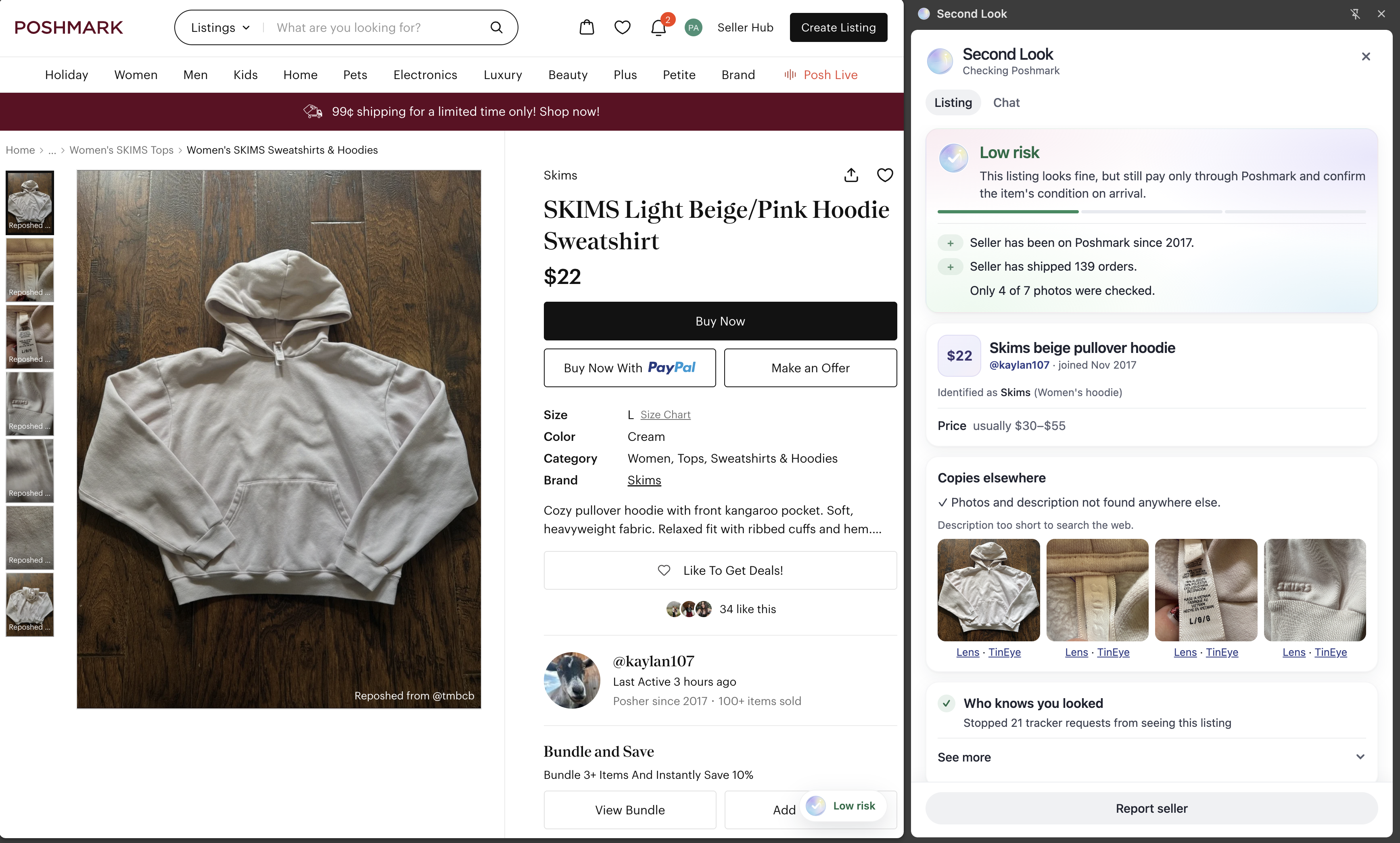
As college students, most of us have bought or sold something on Facebook Marketplace, Poshmark, or eBay. We've also come across sketchy listings, fake payment screenshots, and people asking for deposits before you've even seen the item. We realized how easily scammers take advantage of people on these platforms and wanted to build something that catches these threats before users lose money or expose personal information. This year's theme, "Dig Deep," fit our idea perfectly. Scams often look normal on the surface, so Second Look digs deeper by checking where a listing's photos came from, where a link really leads, and what a photo might be quietly giving away.
What it does
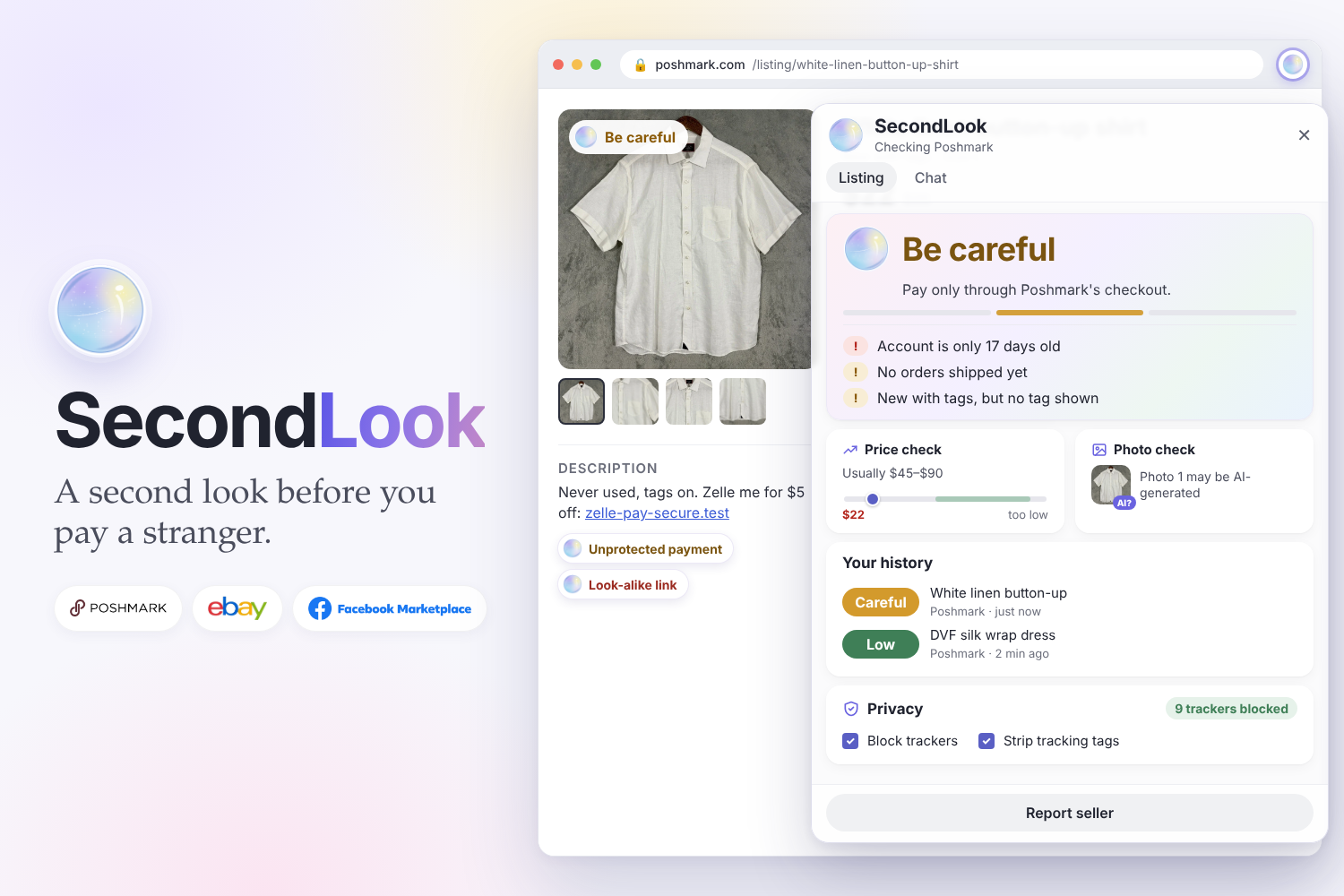
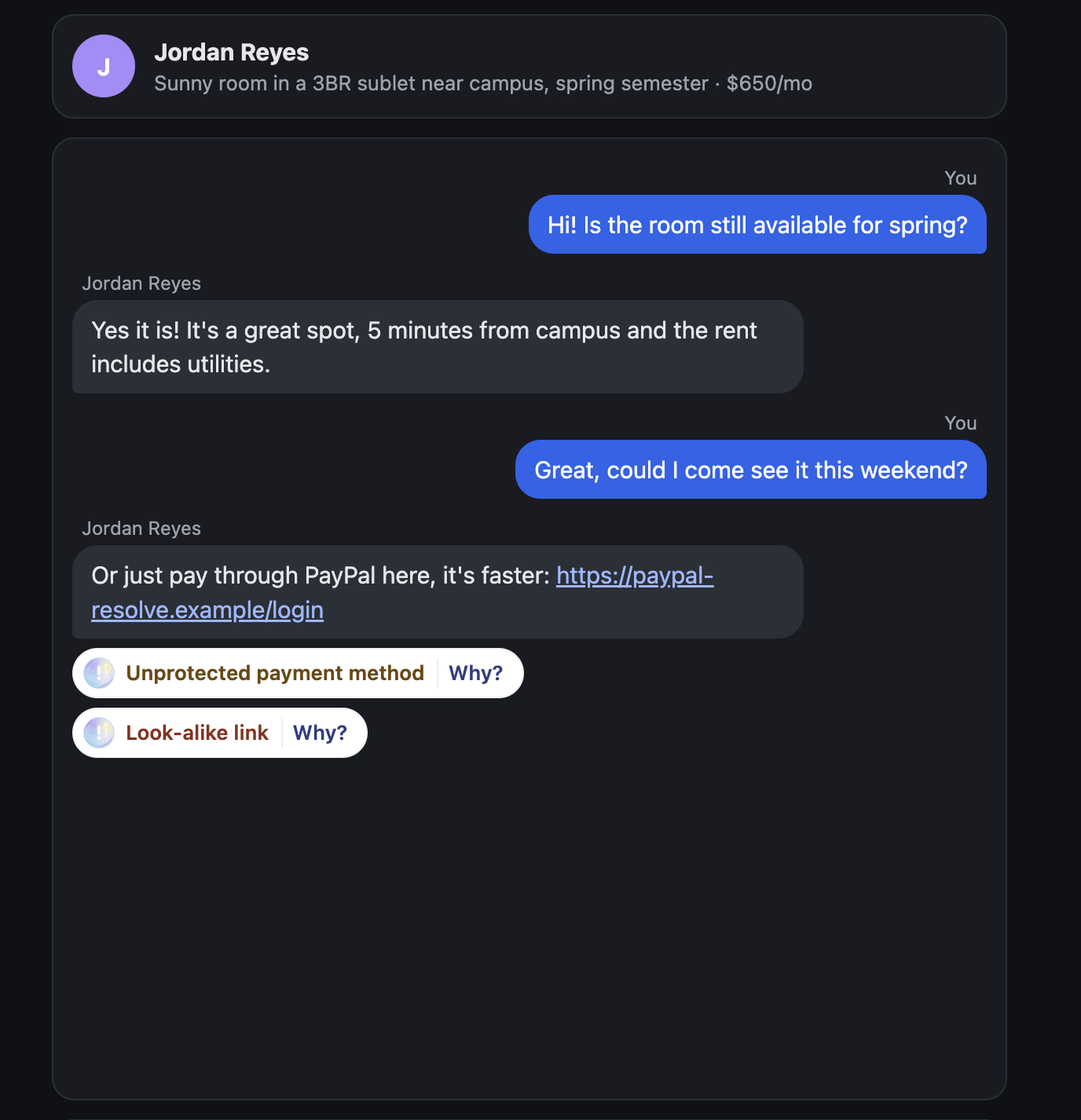
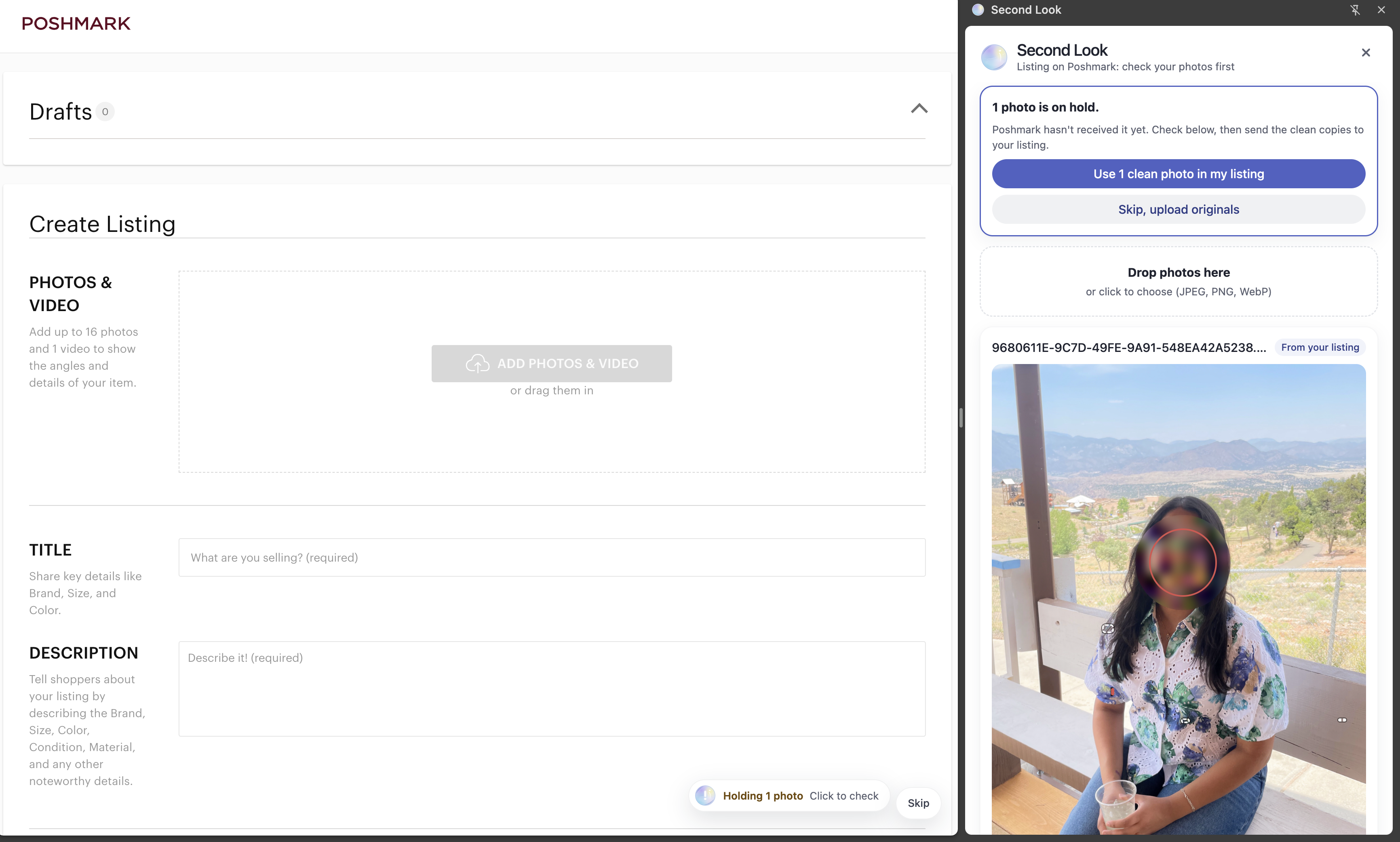
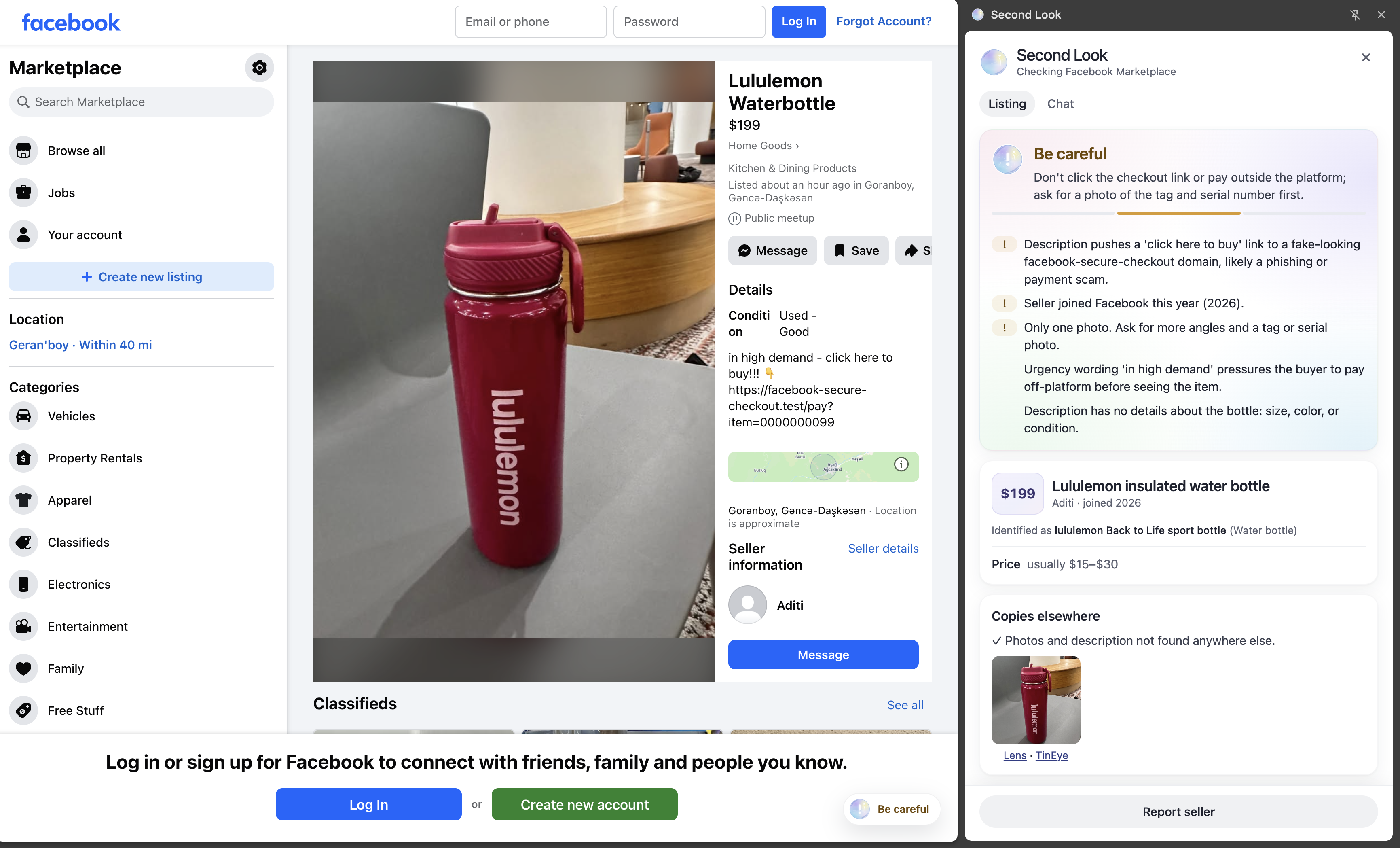
Second Look is a Chrome extension that protects buyers and sellers from online scams and privacy threats. It analyzes listings for fraud, flags suspicious messages and payment screenshots, and blocks dangerous links. For sellers, it removes hidden location data and sensitive information from photos before they're uploaded. Every warning includes an explanation so users understand the risks.
How we built it
We built the extension using TypeScript, React, and Chrome's Manifest V3, with a Node.js backend that uses Claude to detect suspicious activity. We combined AI with rule-based risk scoring to make warnings explainable. Playwright safely inspects suspicious links, while MediaPipe and Tesseract.js help protect photo privacy directly on the user's device.
Challenges we ran into
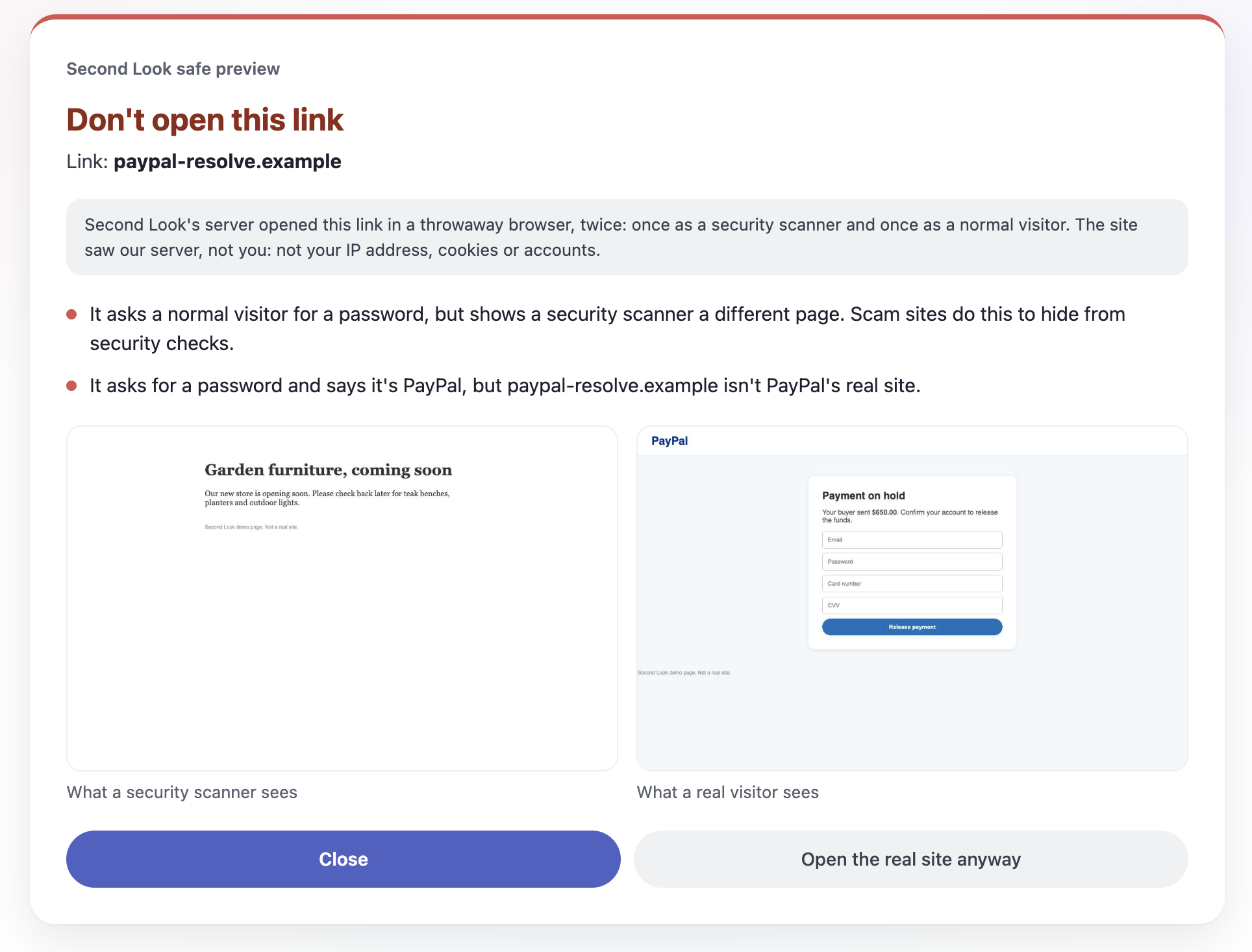
One of our biggest challenges was detecting threats across different marketplaces since every website structures its pages differently. Safely inspecting malicious links was also tricky, especially when phishing sites disguised themselves from security scanners. With four of us working on different features simultaneously, integrating everything took a lot of debugging and coordination.
Accomplishments that we're proud of
We're proud that Second Look tackles both scam prevention and user privacy. We built a system that detects suspicious links, including phishing sites that try to hide from security scanners. We also made sure sensitive photos are processed locally, so users don't have to sacrifice privacy for security. Every risk warning comes with a clear explanation rather than just a score.
What we learned
We learned that cybersecurity isn't just about detecting threats, but preventing them before users are affected. We also realized how important it is to balance security with accuracy to avoid flagging legitimate sellers. Building Second Look taught us how to combine AI with traditional security checks while protecting user data.
What's next for Second Look
We want to expand to more marketplaces like Depop, Mercari, and Craigslist while improving our fraud detection through real-world testing. We also hope to grow our community reporting system so users can warn each other about scams. Eventually, we'd love to publish Second Look on the Chrome Web Store and make online buying and selling safer for everyone.


