Inspiration
Second Look was inspired by conversations with recruiters about the hidden inefficiencies in modern hiring. Modern job boards make it easy for applicants to apply to hundreds of jobs, but this volume overwhelms recruiters; thousands of applicants for a single role, with many applicants clearly unqualified, while others are technically qualified but difficult to prioritize. Existing systems force recruiters and companies into a dichotomy of either spending hundreds of thousands to millions per year on rigid, keyword-detecting ATS systems or spending hours manually reviewing thousands of resumes, scheduling interviews, and managing spreadsheets. Spending 20-30 seconds per resume punishes both the applicant and the recruiter's ability to treat each applicant with care for little systemic benefit.
What stood out most was that strong candidates are constantly lost in the process. If someone is rejected for one role but might be perfect for another team, that candidate is rarely shared internally because recruiters simply don’t have the time or mental bandwidth. We wanted to build a system that helps recruiters recover overlooked talent instead of letting great candidates disappear.
We were also inspired by the idea that recruiting should feel more human. Candidates shouldn’t feel like “just another application.” Personalized communication and thoughtful referrals can make hiring feel far more engaging and respectful, increasing an applicant's willingness to follow through with a company, improving that company's image, and increasing the likelihood that an applicant will accept an offer.
What it does
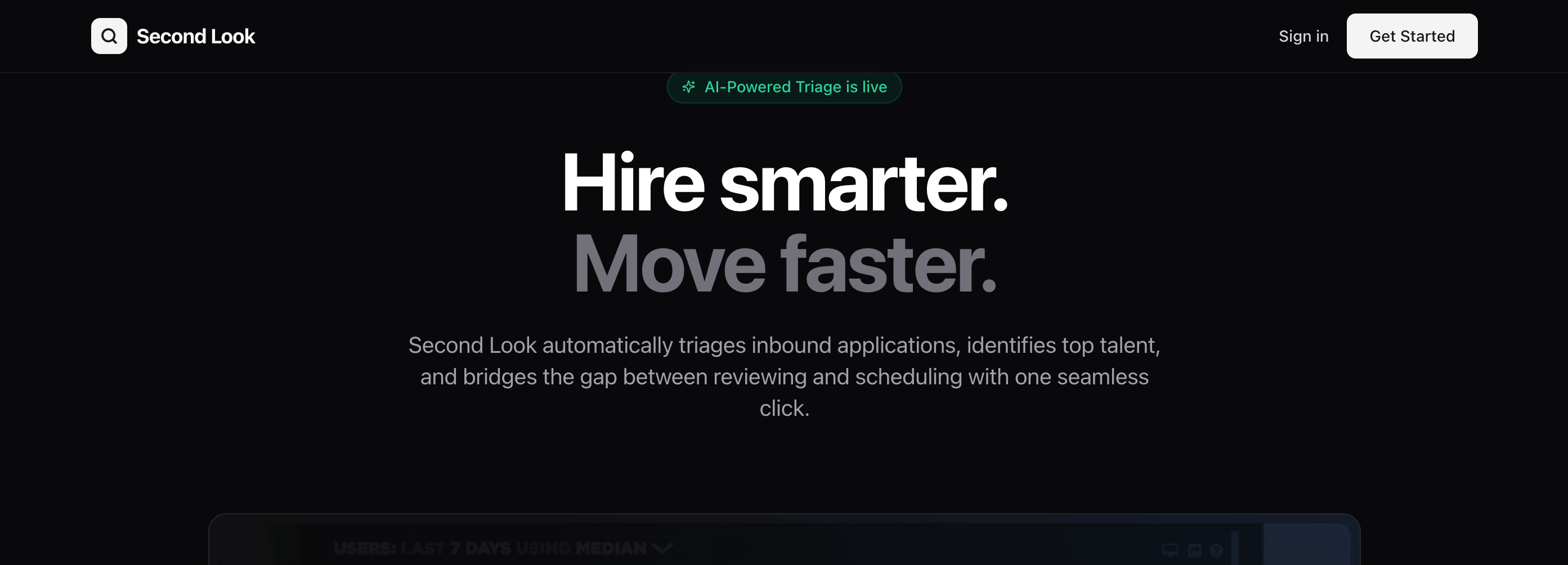
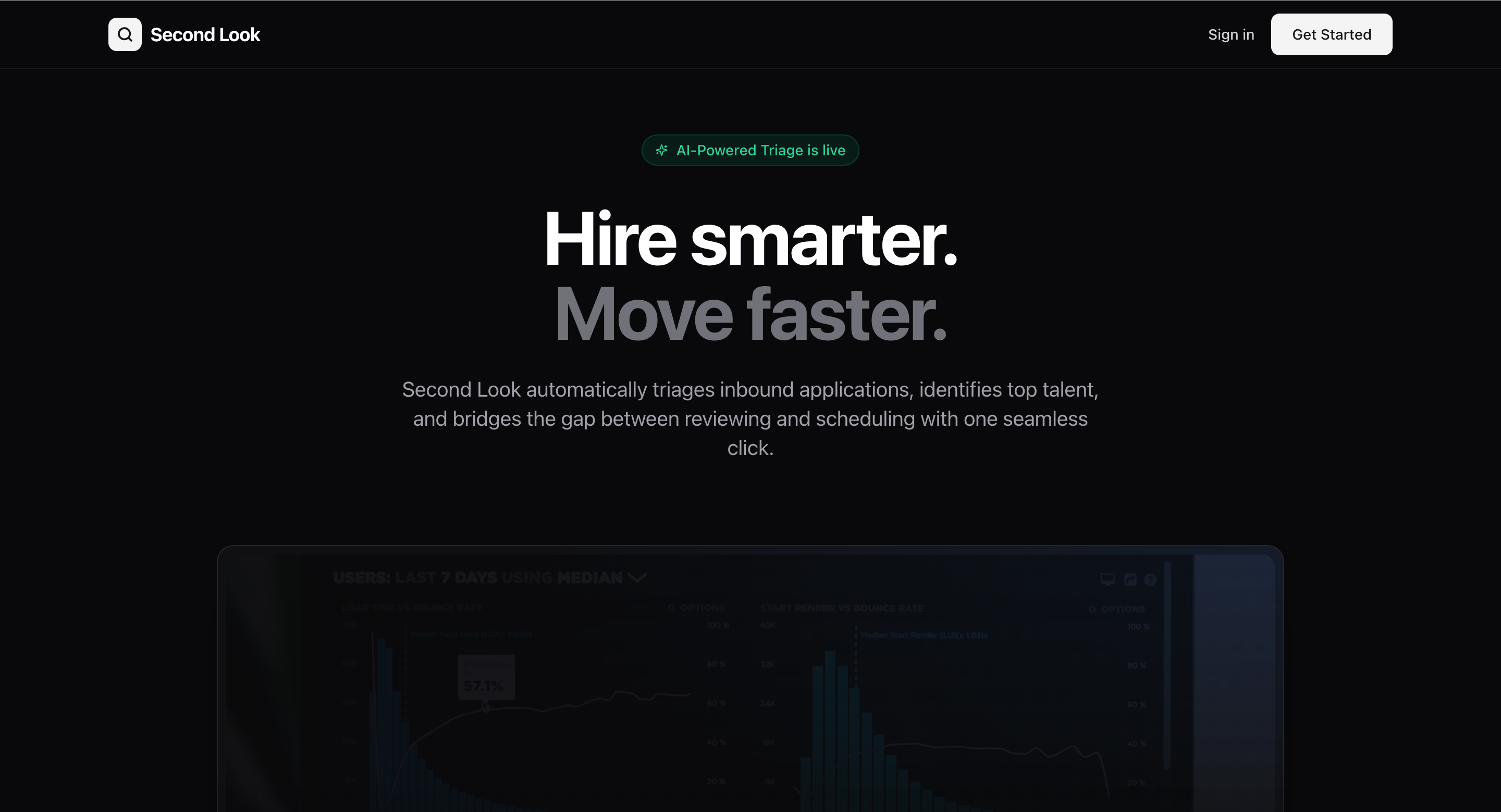
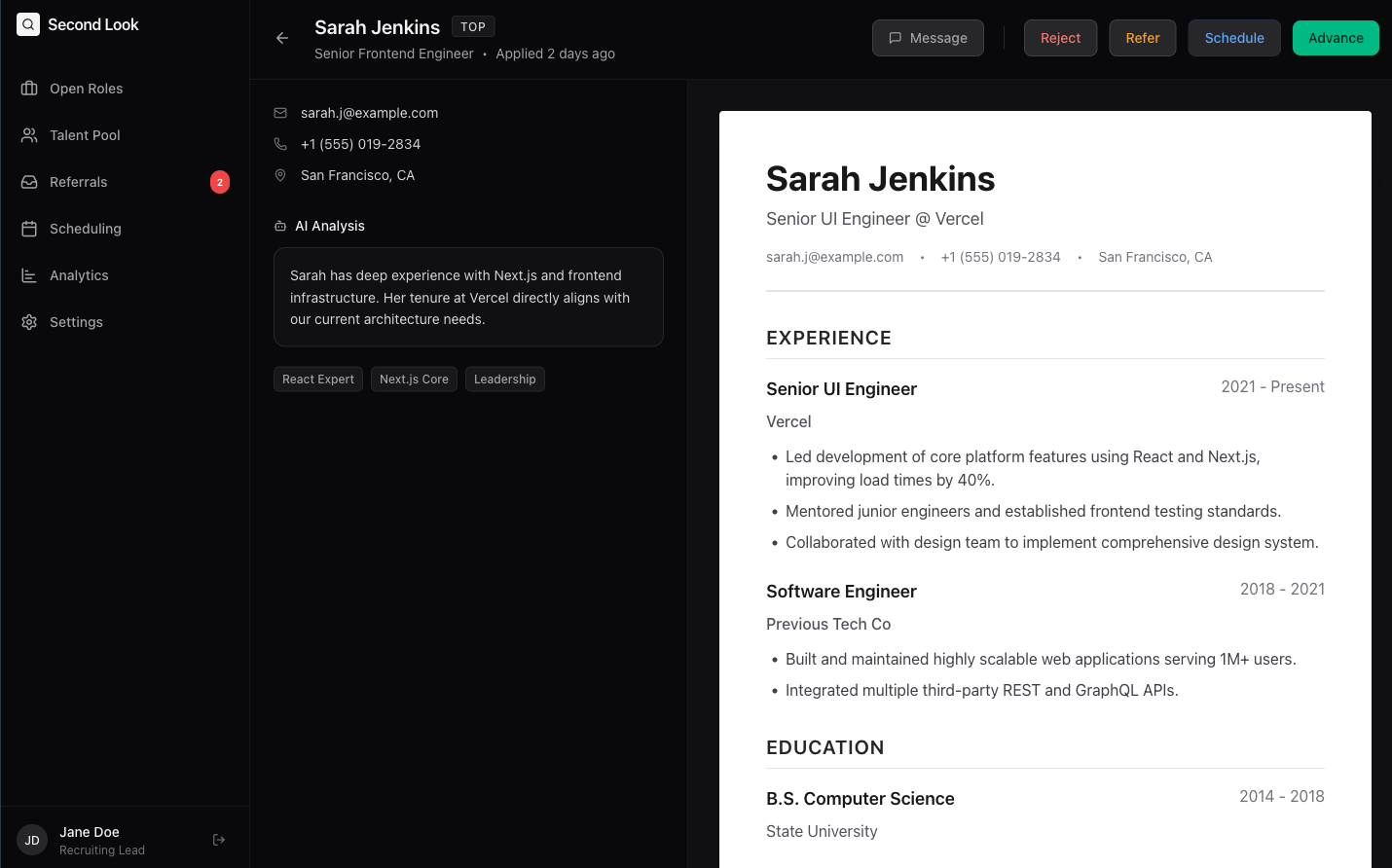
Second Look is an AI-powered recruiter triage and candidate routing platform.
The platform helps recruiters:
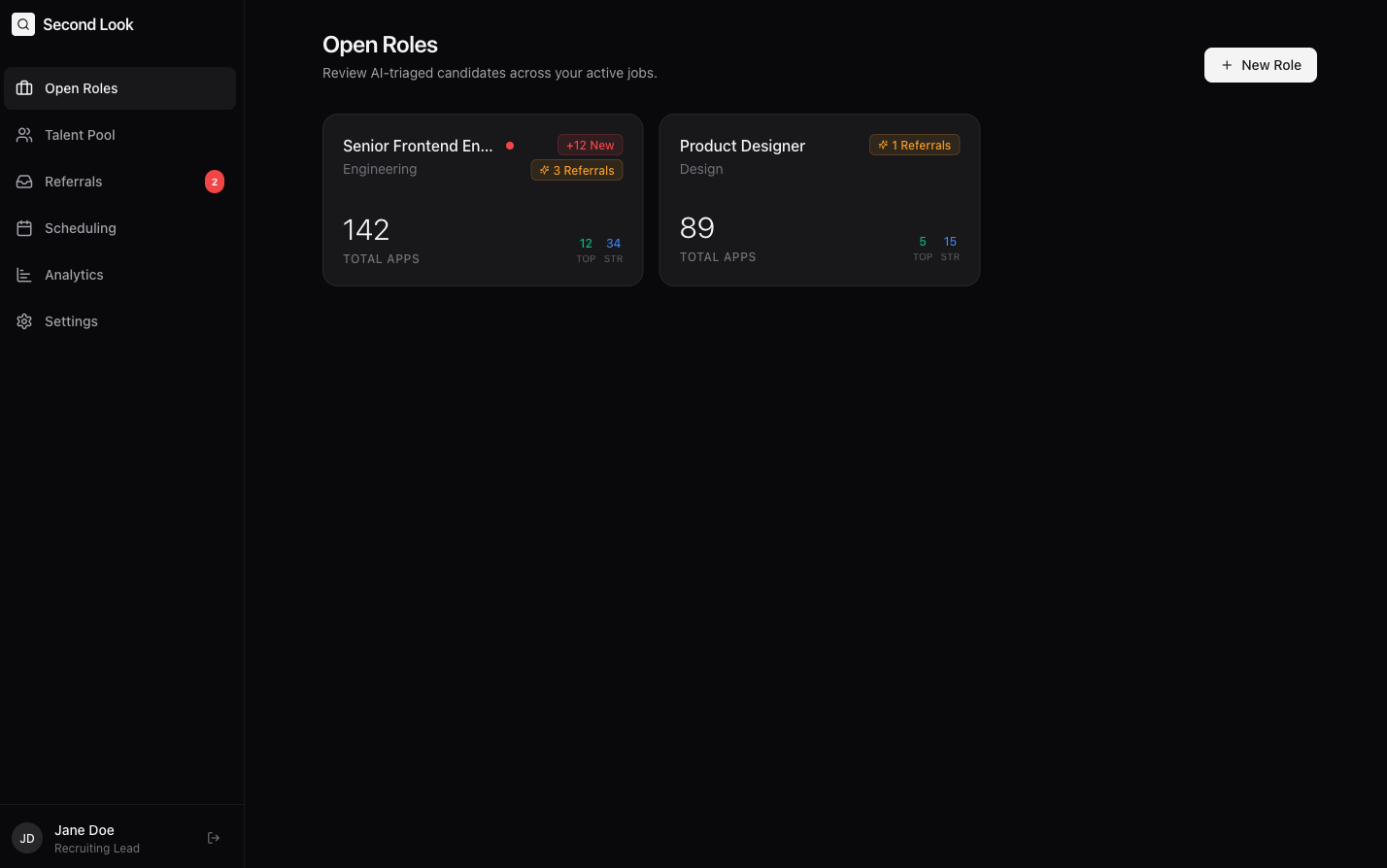
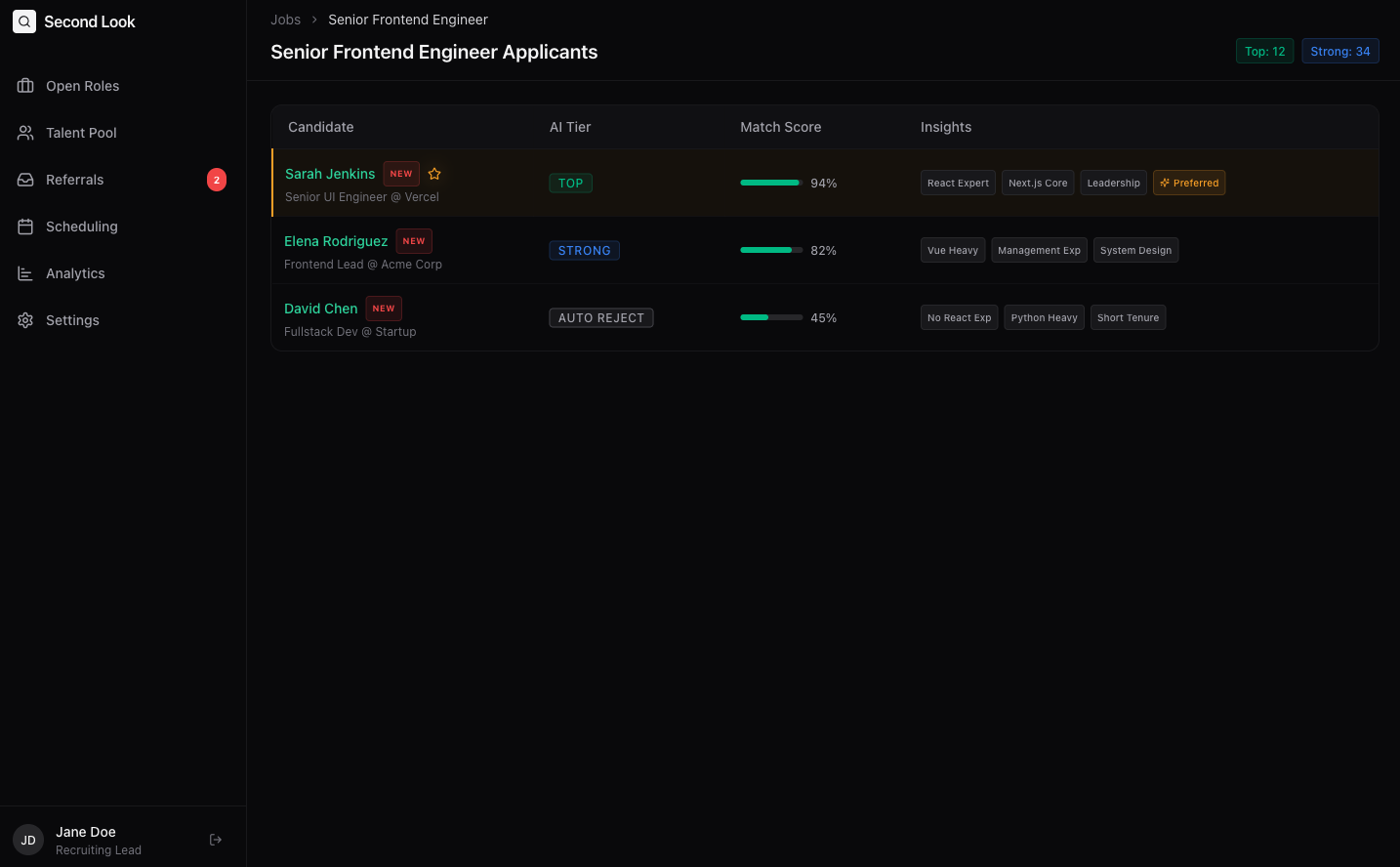
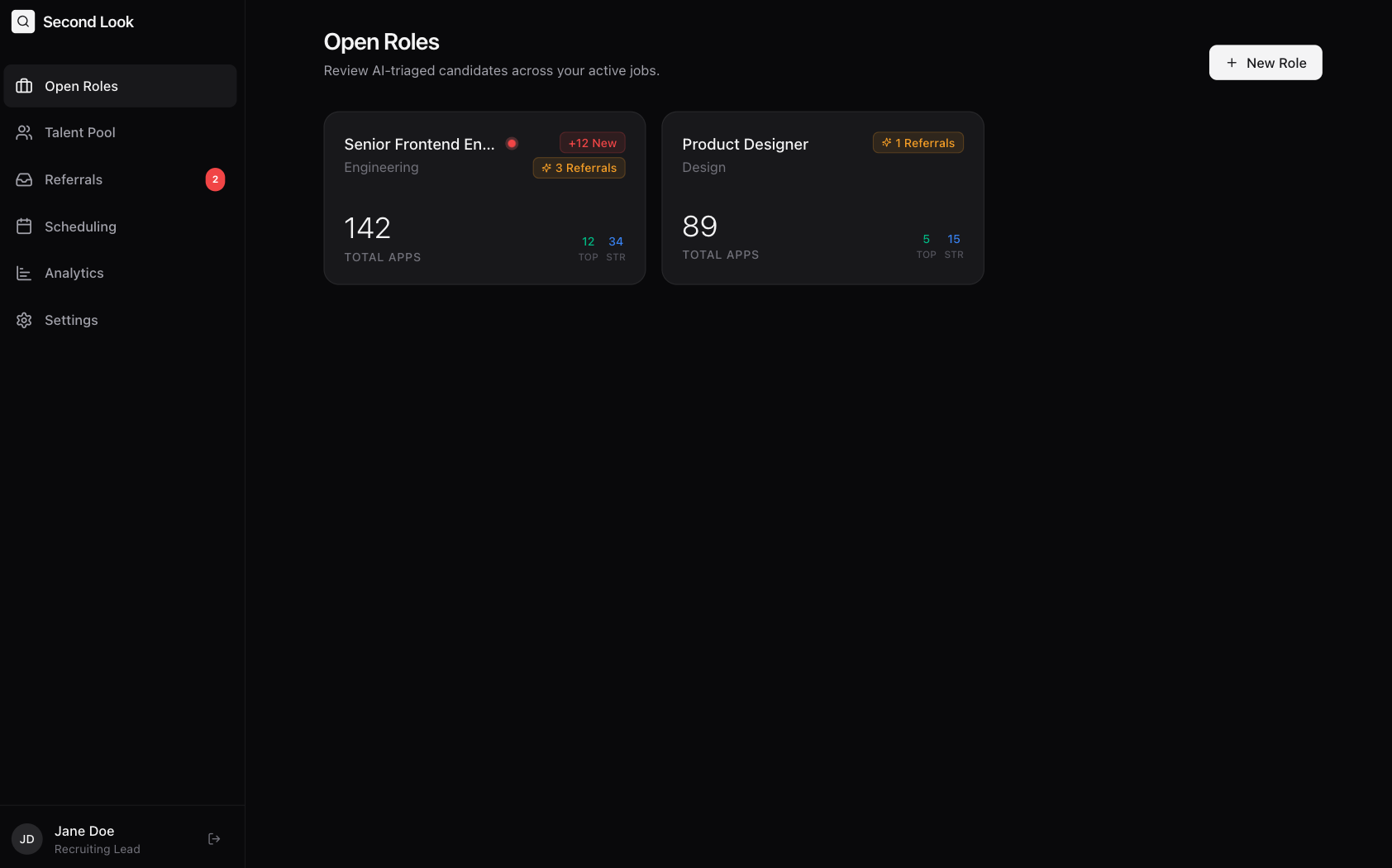
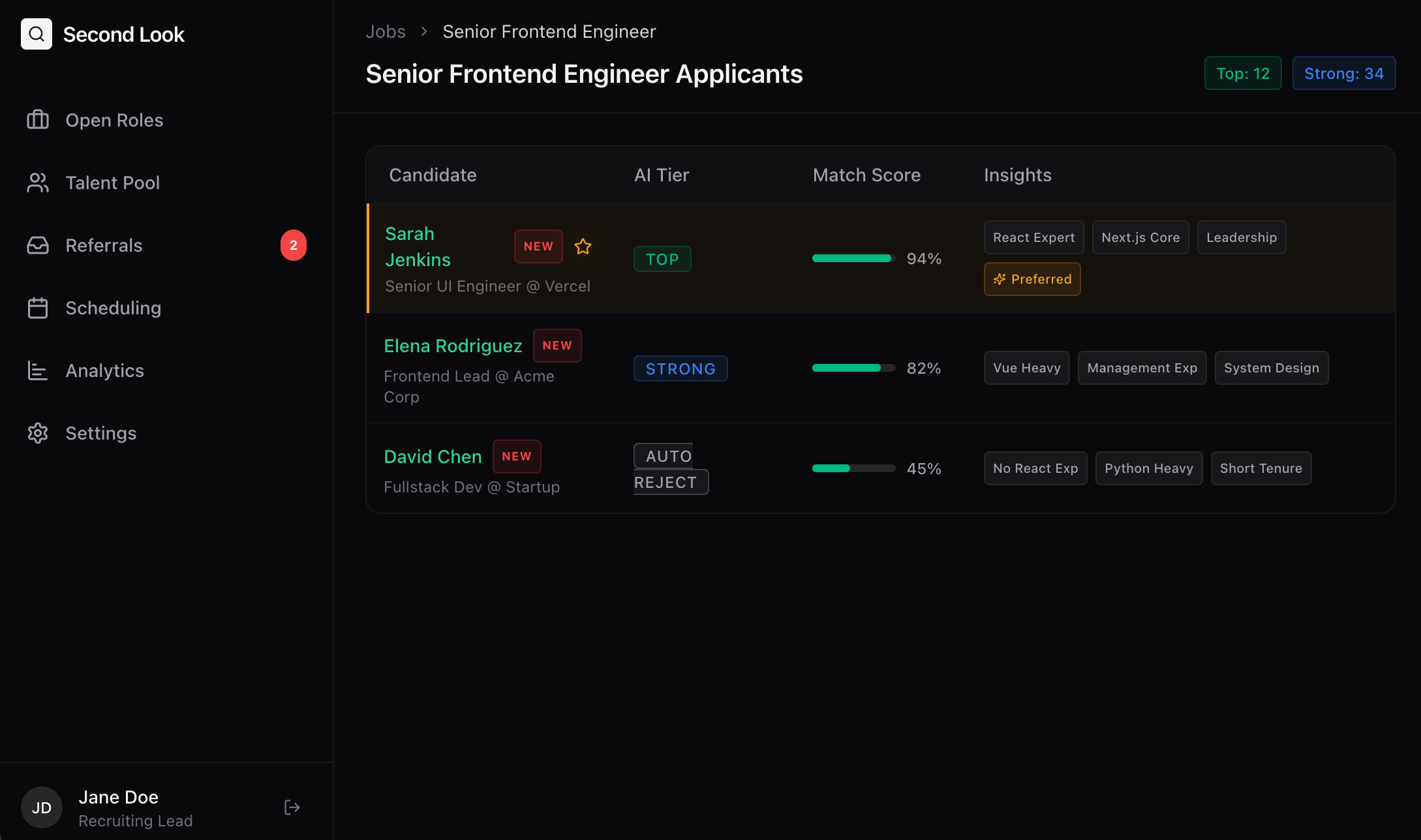
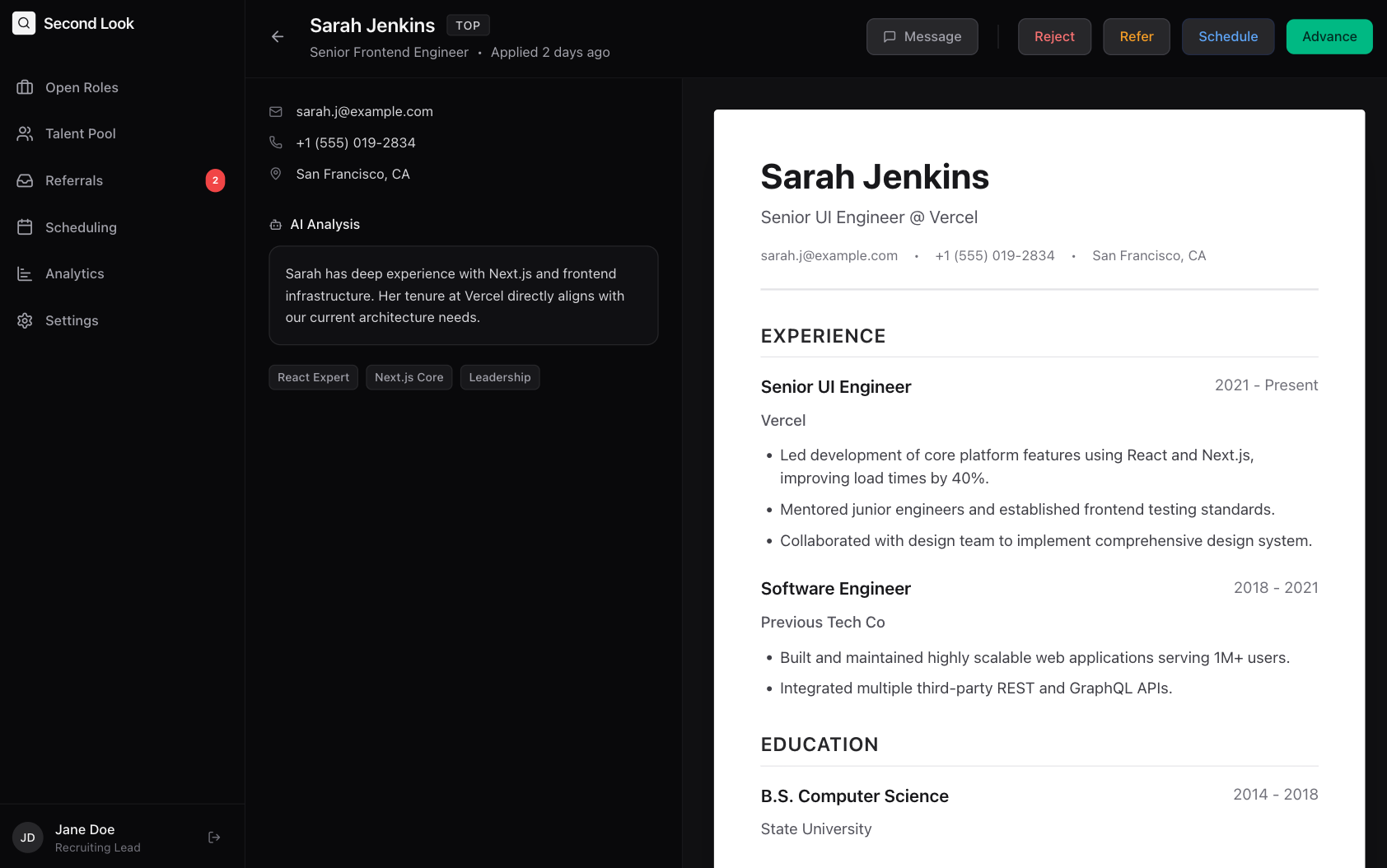
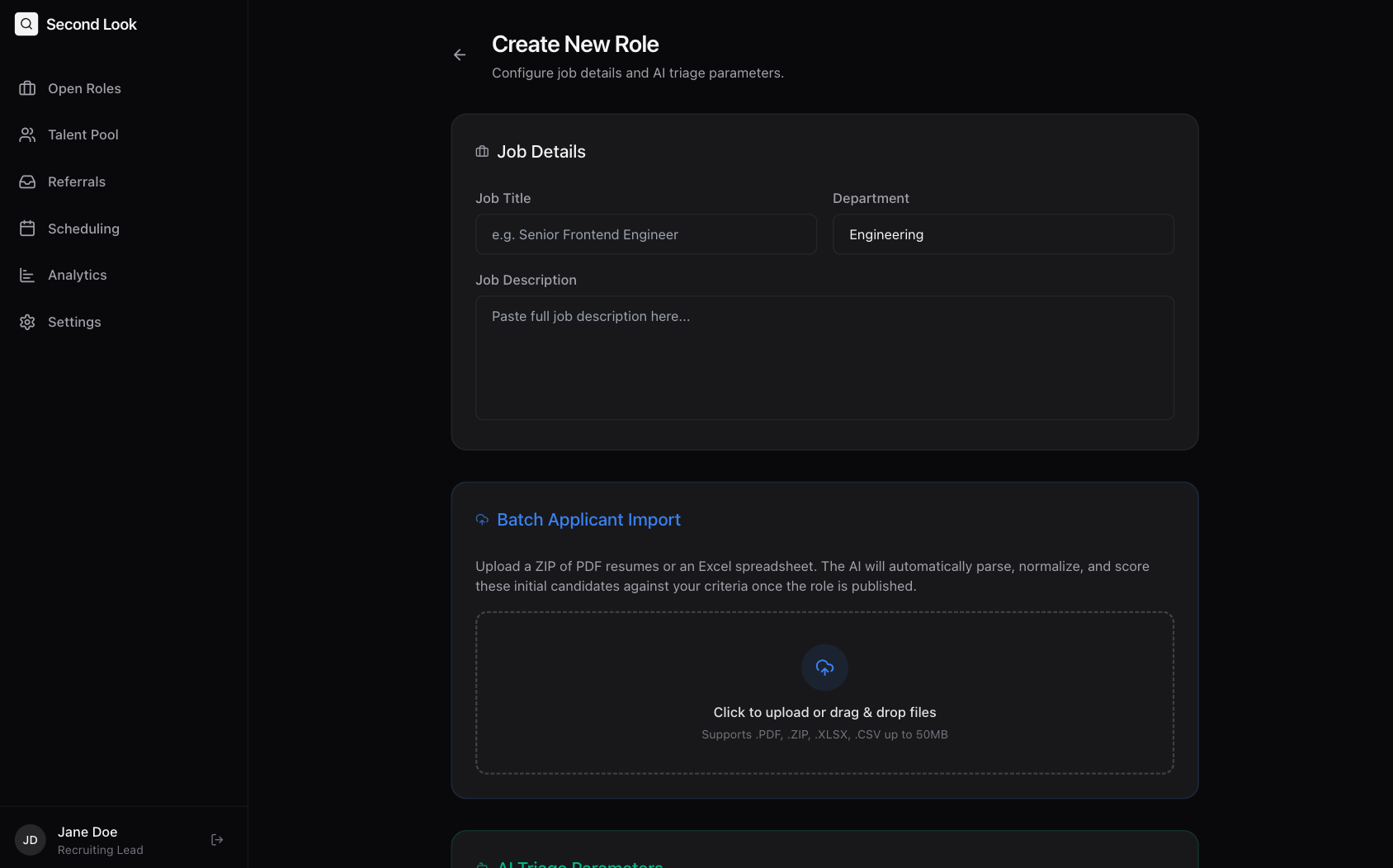
Automatically screen and rank applicants Highlight the top 5–10% of candidates Surface preferred qualifications and risk factors Reduce time spent manually reviewing resumes Refer strong rejected candidates to other recruiters and roles
Instead of functioning as a full ATS, Second Look acts as a lightweight intelligence layer on top of existing recruiting workflows.
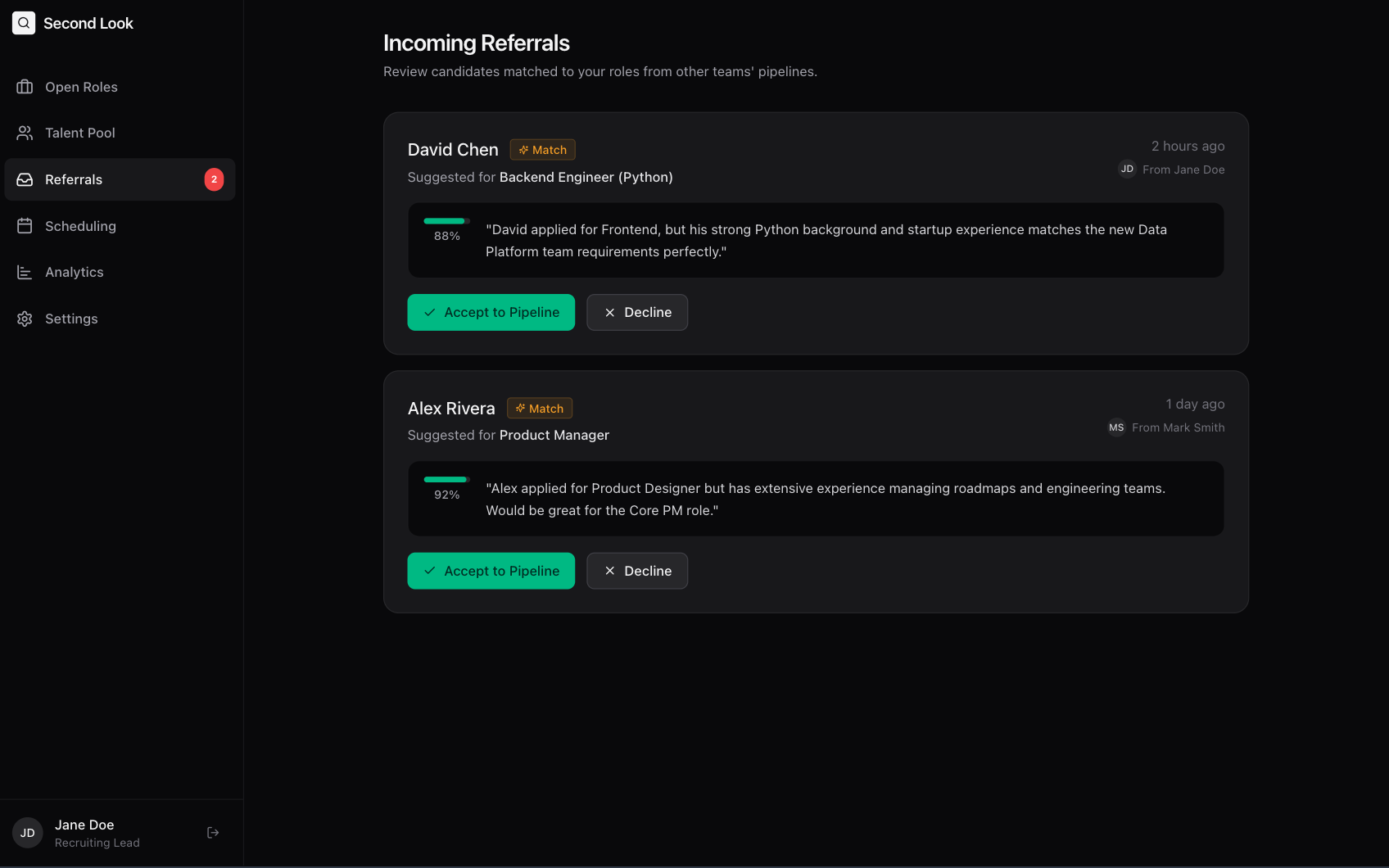
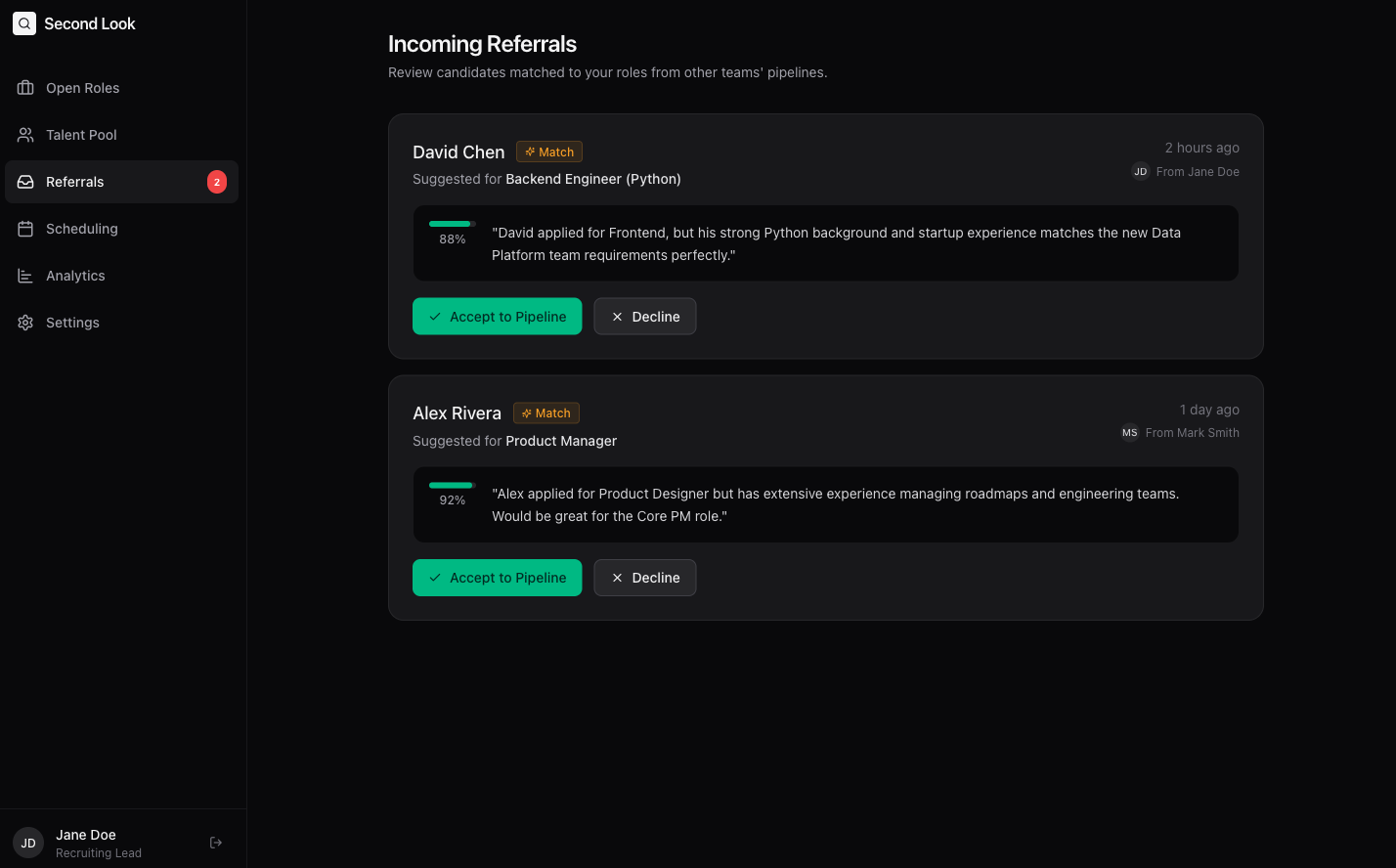
One of our core features is cross-team candidate recovery. If a recruiter rejects a candidate for one role, the system can automatically detect whether that person may be a strong fit for another open position. Another recruiter can then review and accept the referral, and the candidate receives a personalized invitation asking if they’d like to be considered for the new opportunity.
This helps companies avoid losing high-quality talent while giving candidates a more human and personalized experience.
How we built it
Next.js App Router React Tailwind CSS Supabase Gemini APIs
Challenges we ran into
One of the biggest challenges was balancing automation with the human side of recruiting. Recruiters told us they don’t want AI replacing their judgment — they want AI reducing repetitive work while keeping them in control.
Another challenge was designing around real recruiting workflows instead of idealized ones. Hiring processes involve recruiters, hiring managers, compensation teams, scheduling constraints, and changing job requirements. We learned how surprisingly fragmented and manual recruiting operations still are, even inside large companies.
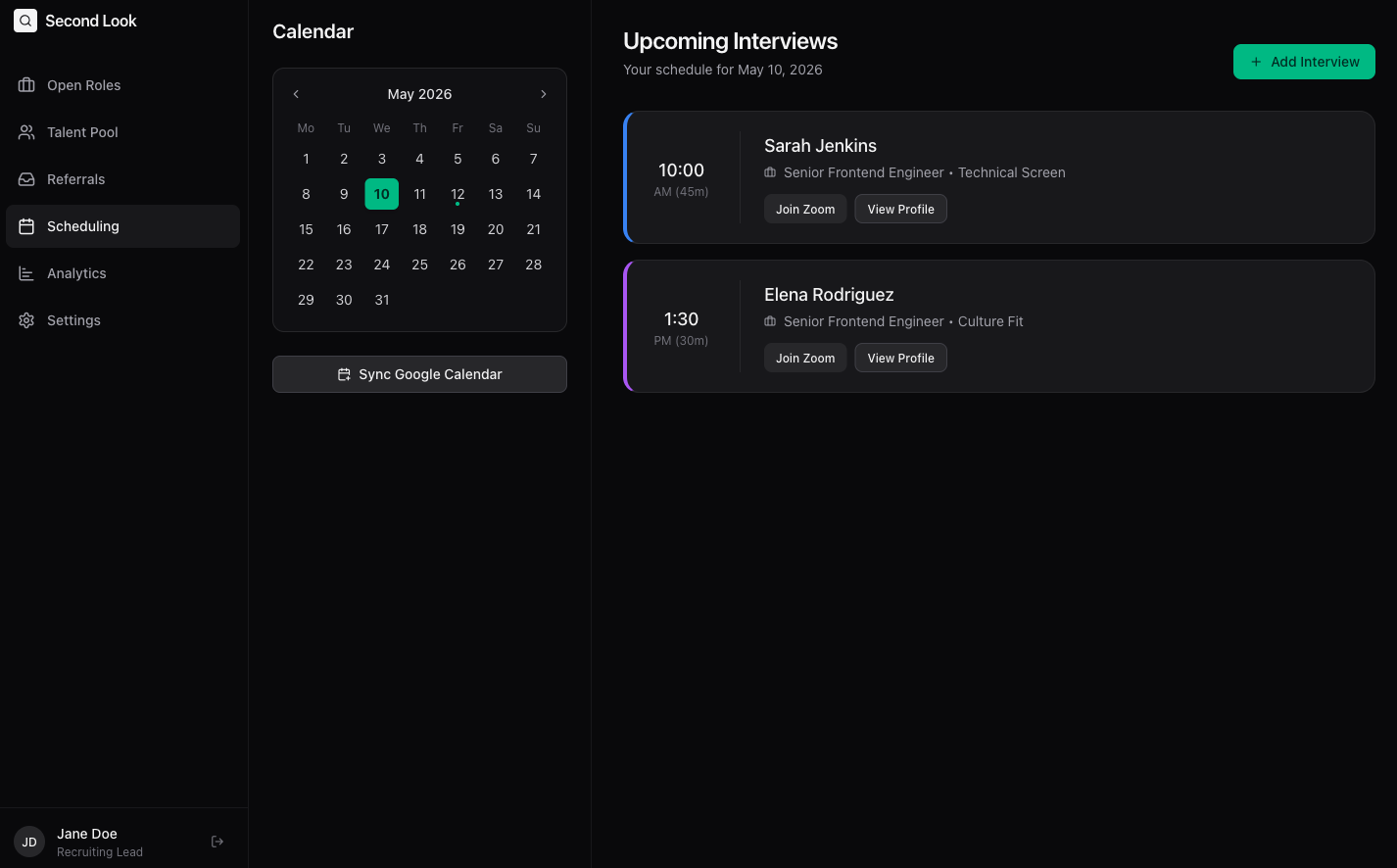
We also had to avoid feature creep. It was tempting to build scheduling systems, onboarding tools, and full ATS functionality, but we realized the strongest version of the product focused narrowly on screening and candidate recovery.
On the technical side, building explainable AI workflows was important. Recruiters need transparency into why someone was ranked highly or referred elsewhere — not just a black-box score.
Accomplishments that we're proud of
We’re especially proud of building a workflow that feels genuinely useful to recruiters instead of just “AI for the sake of AI.”
Our favorite feature is the cross-team referral flow:
A recruiter rejects a candidate The system identifies a stronger internal fit Another recruiter can instantly review and accept the referral The candidate receives a personalized invitation to continue the process
That workflow transforms rejection into opportunity and helps companies retain strong talent that would normally be lost.
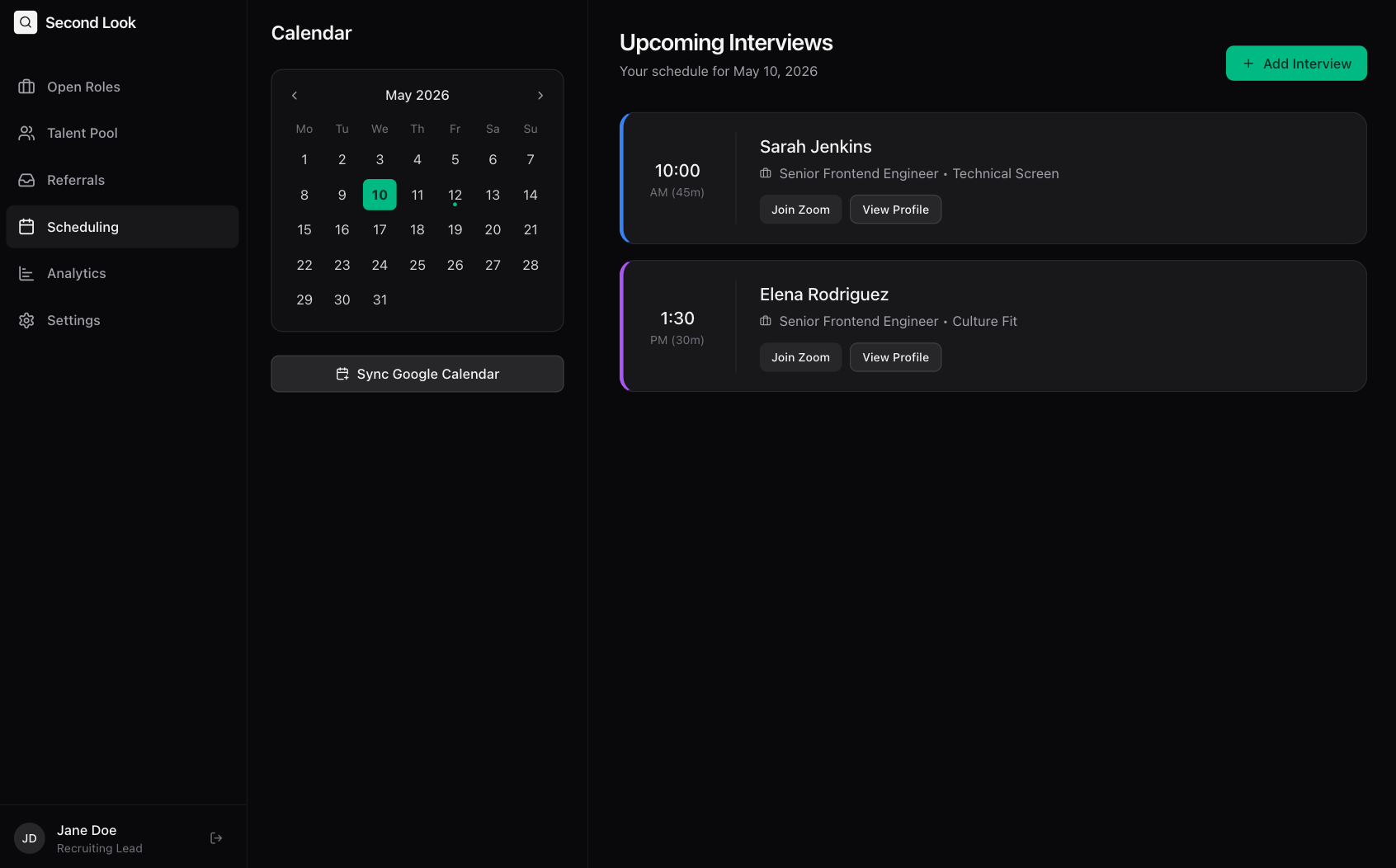
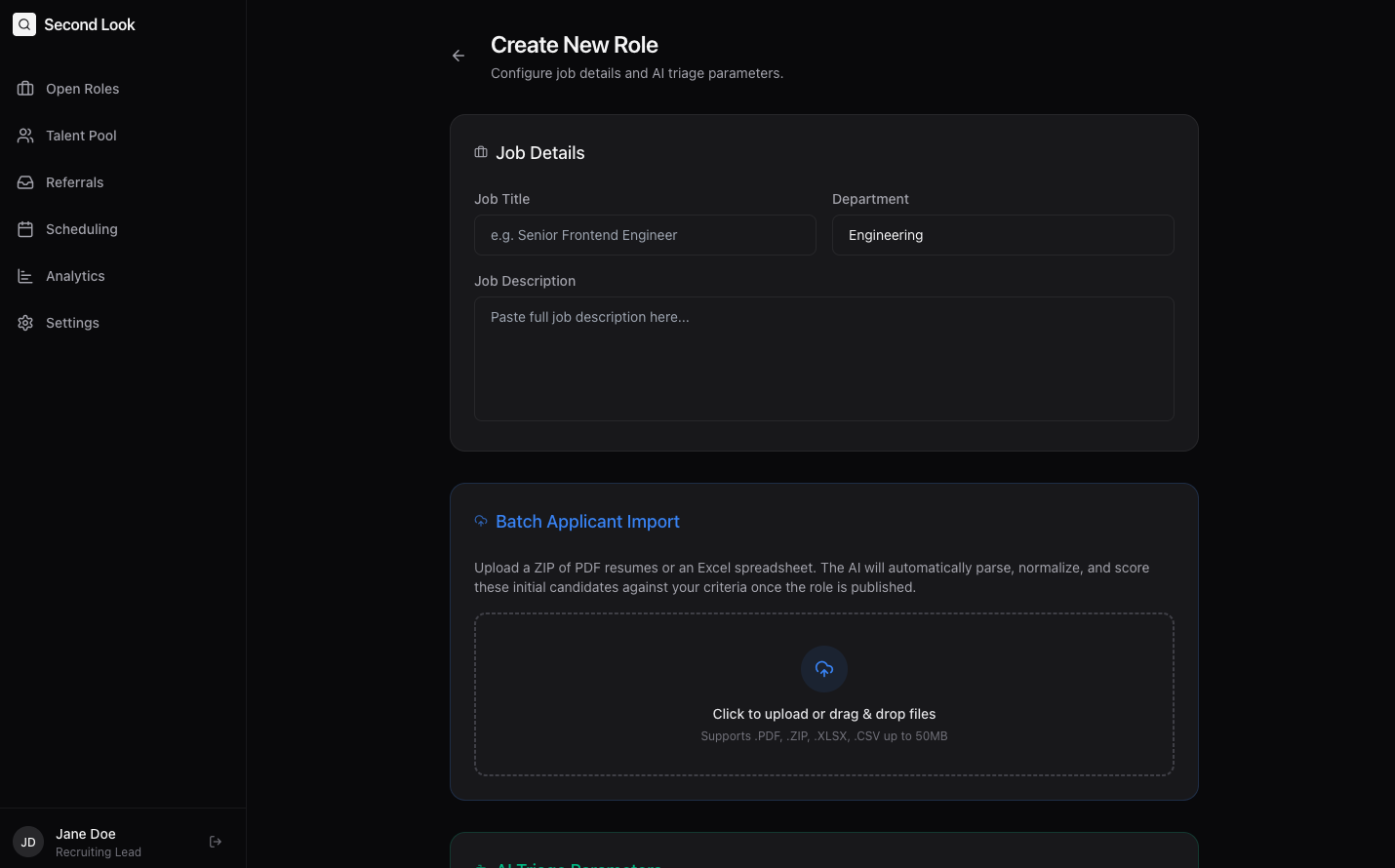
We’re also proud of the product’s UI and overall experience. Instead of feeling like traditional HR software, Second Look feels fast, modern, and operational — more like a mission control system for recruiting.
Finally, we’re proud that we focused on a realistic pain point that recruiters immediately understood and related to.
What we learned
We learned that recruiting bottlenecks are often operational rather than technical. The issue usually isn’t a lack of applicants — it’s the inability to efficiently identify, prioritize, and route talent.
We also learned how expensive and fragmented enterprise recruiting software can be. Many companies pay enormous amounts for ATS platforms but still lack strong resume screening and candidate recovery tools.
Another major takeaway was the importance of candidate experience. Personalized communication, thoughtful referrals, and transparent workflows make candidates feel seen rather than processed.
From a technical perspective, we learned that explainability matters as much as automation. Recruiters are far more likely to trust AI systems that clearly explain why decisions were made.
What's next for SecondLook
Next, we want to expand Second Look into a fully connected recruiter intelligence platform.
Our roadmap includes:
Real-time resume ingestion and parsing AI-powered scheduling assistance Personalized AI-generated recruiter outreach Candidate engagement tracking Internal talent rediscovery across departments Recruiter collaboration tools Analytics for pipeline efficiency and candidate recovery
We also want to deepen the human side of recruiting by supporting richer communication formats like personalized video or audio outreach.
Long term, we envision Second Look becoming the intelligence layer that sits on top of existing ATS systems — helping companies hire faster, recover overlooked talent, and create a more human hiring experience.
Built With
- clerk
- googlegemini
- html
- javascript
- next.js
- react
- supabase
- tailwindcss
- typescript
- vercel

Log in or sign up for Devpost to join the conversation.