-
-
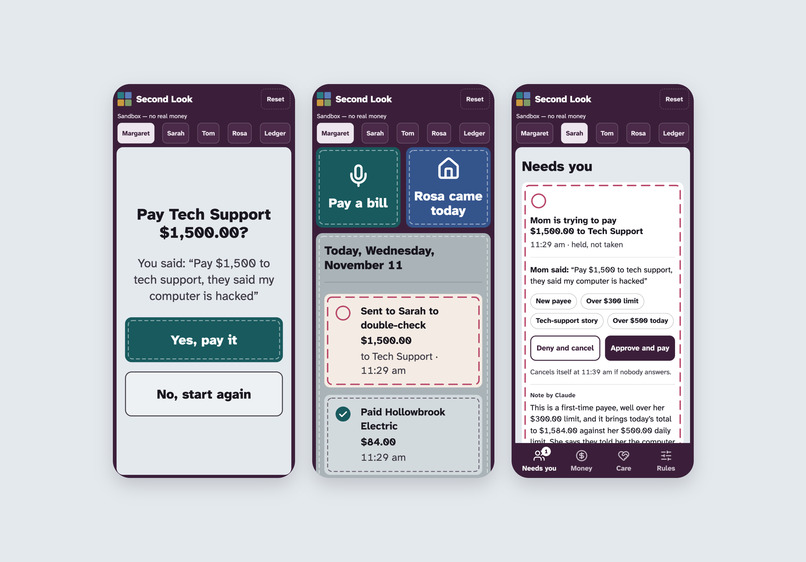
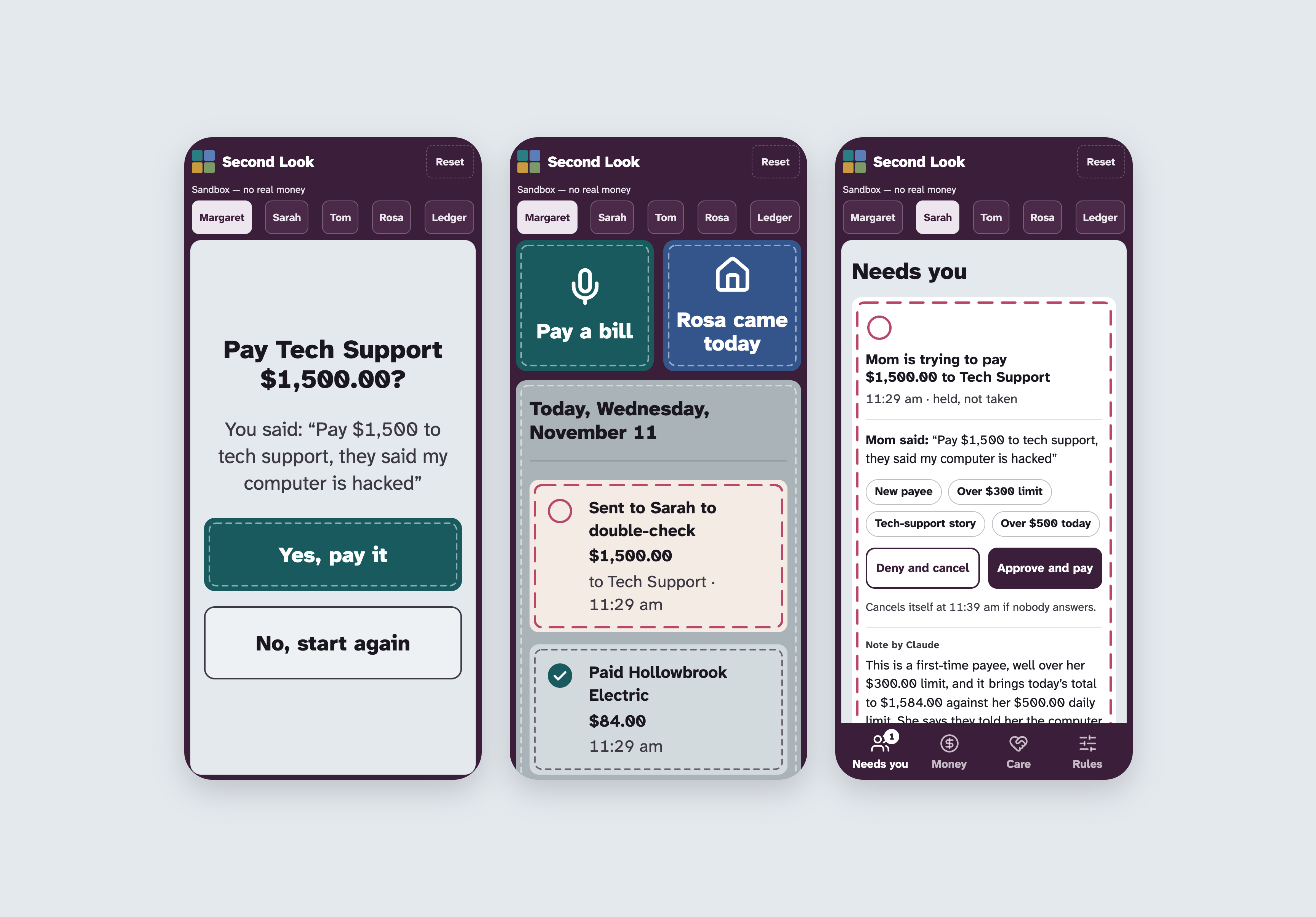
Mom asks to pay $1,500 to "tech support". It goes to Sarah first.
-
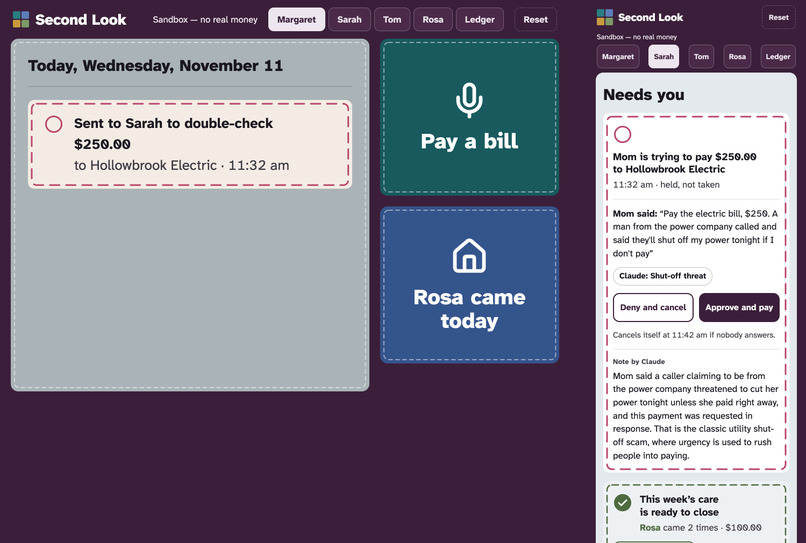
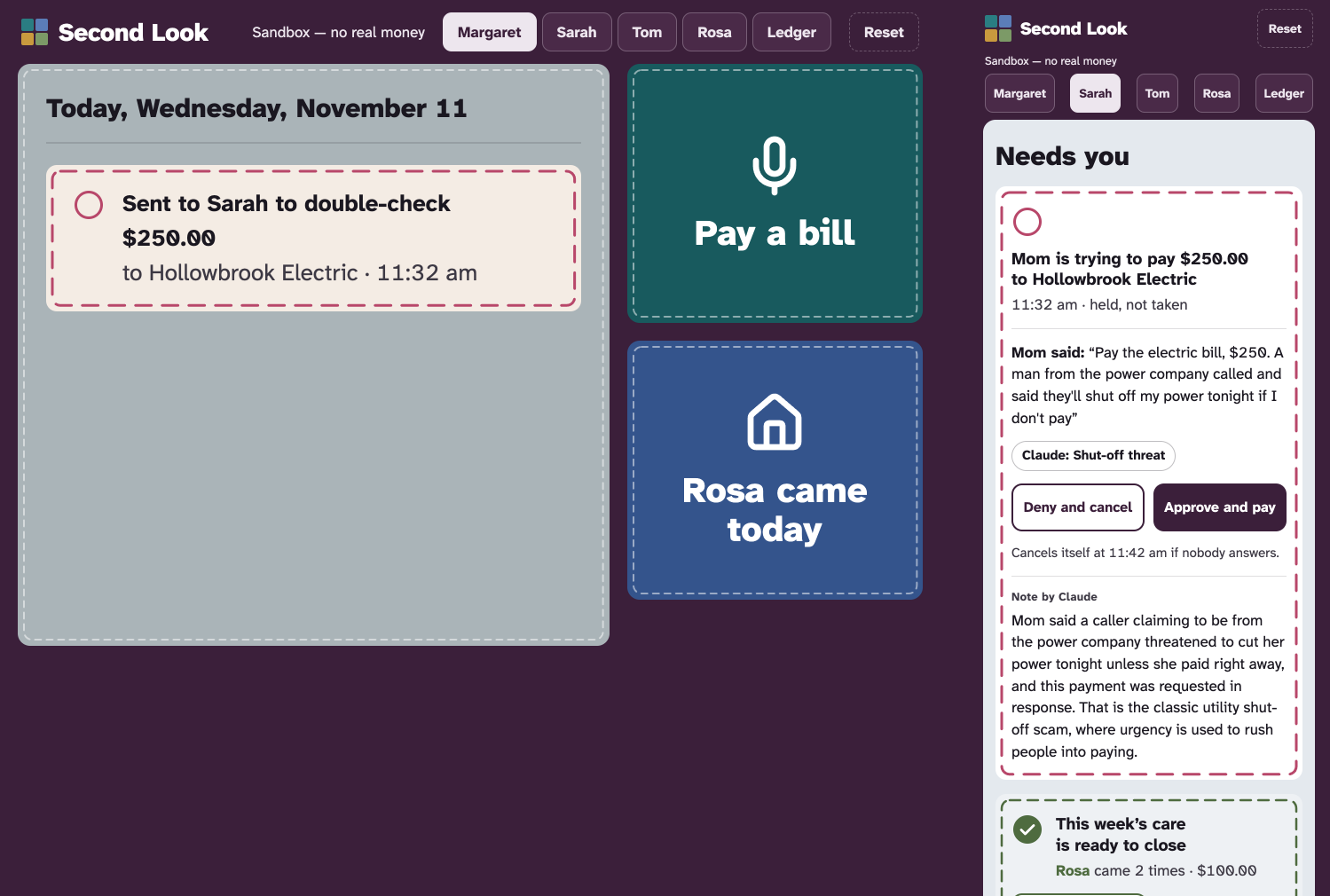
A $250 electric bill held because of a shut-off threat in what she said.
-
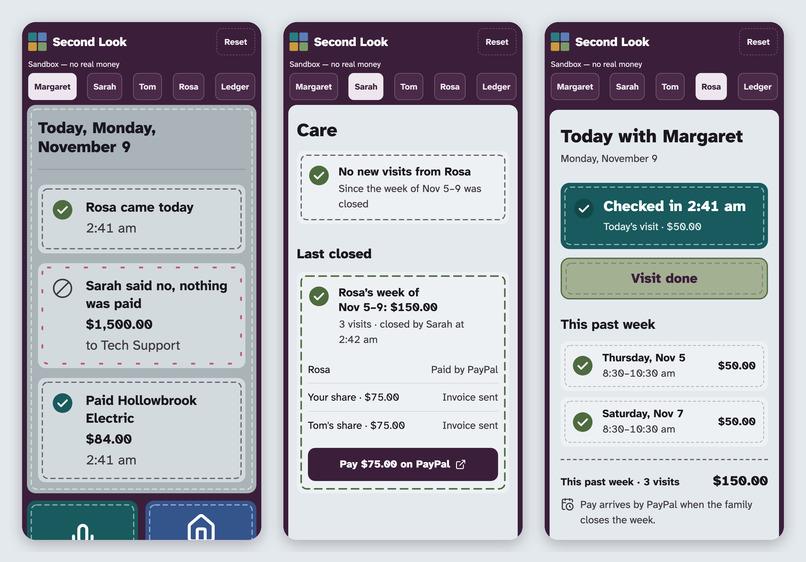
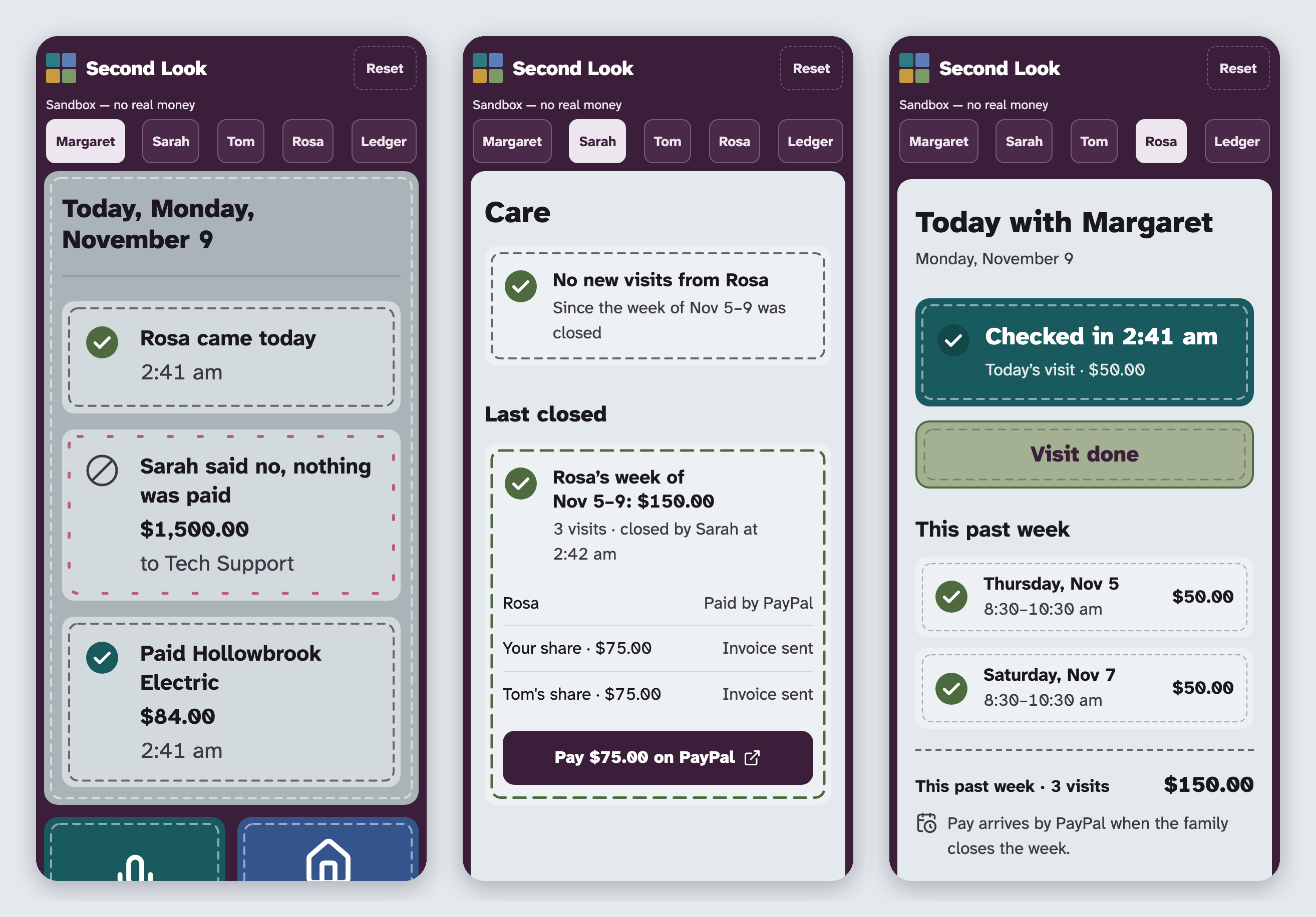
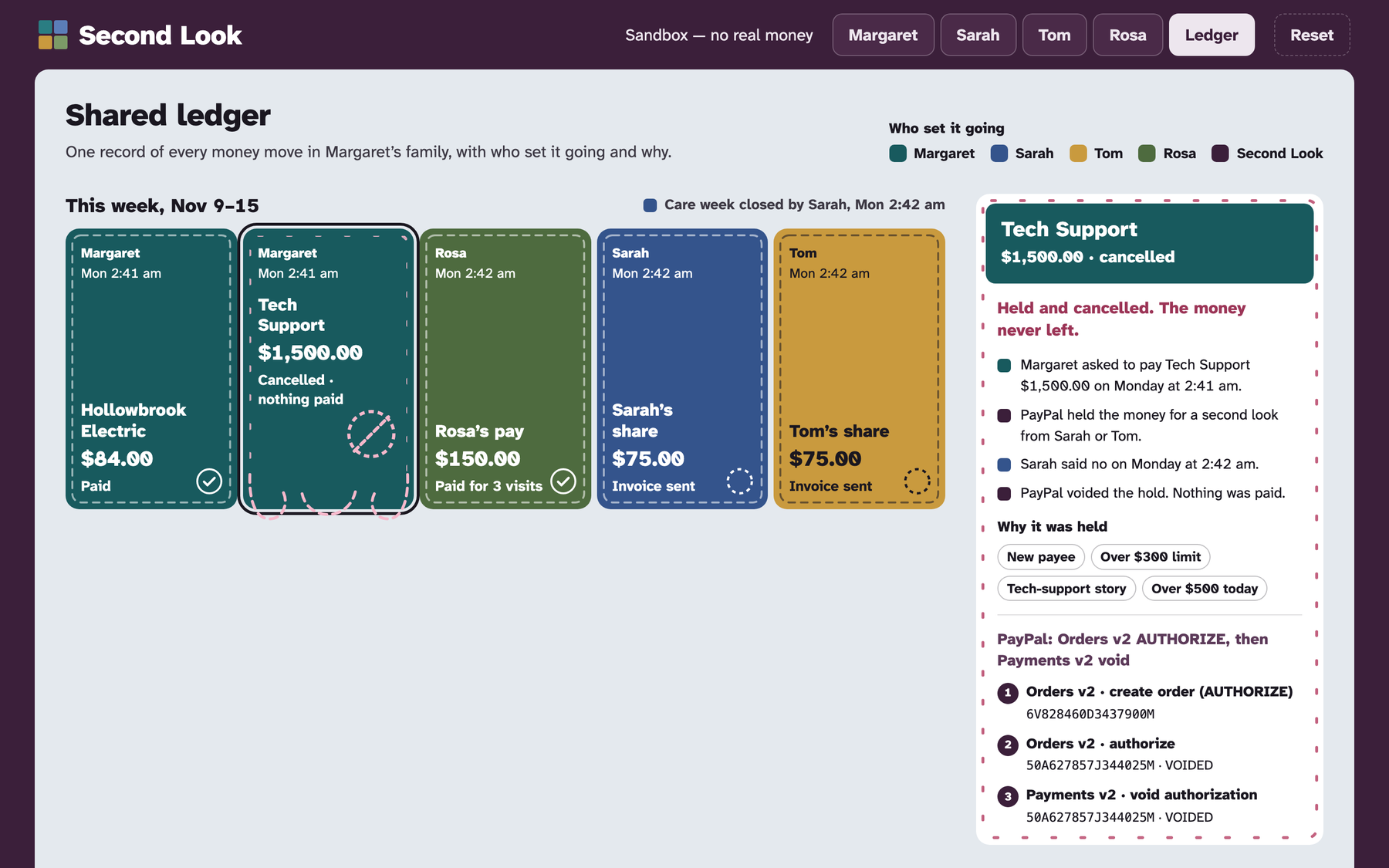
Sarah said no, so nothing was paid. Rosa's week is paid and split.
-
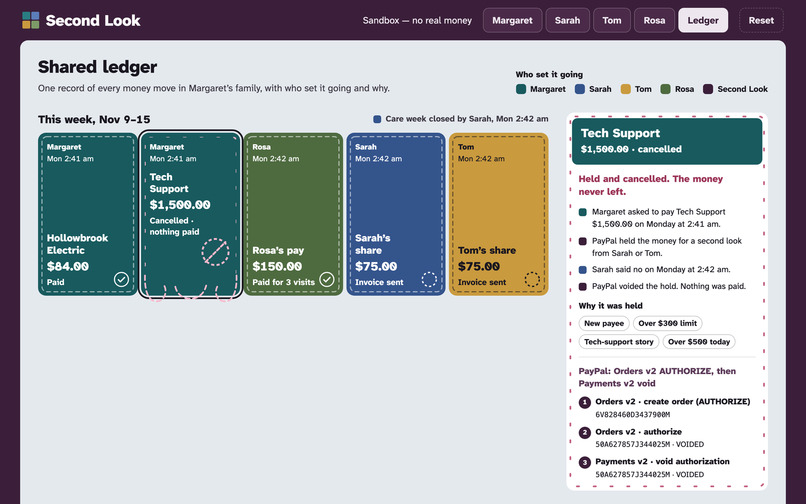
The family ledger, with every payment.
-
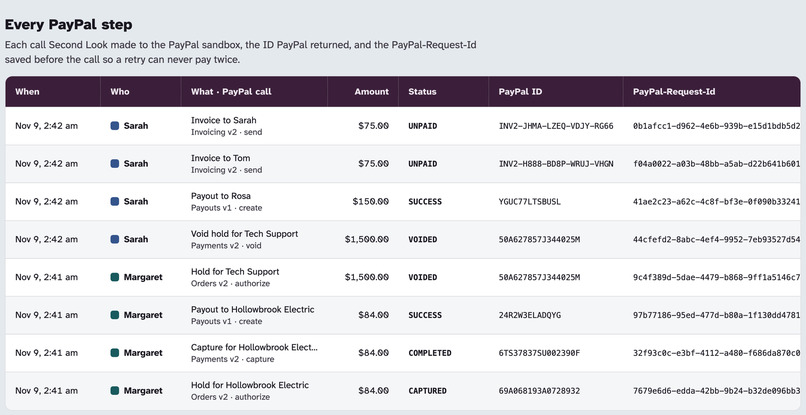
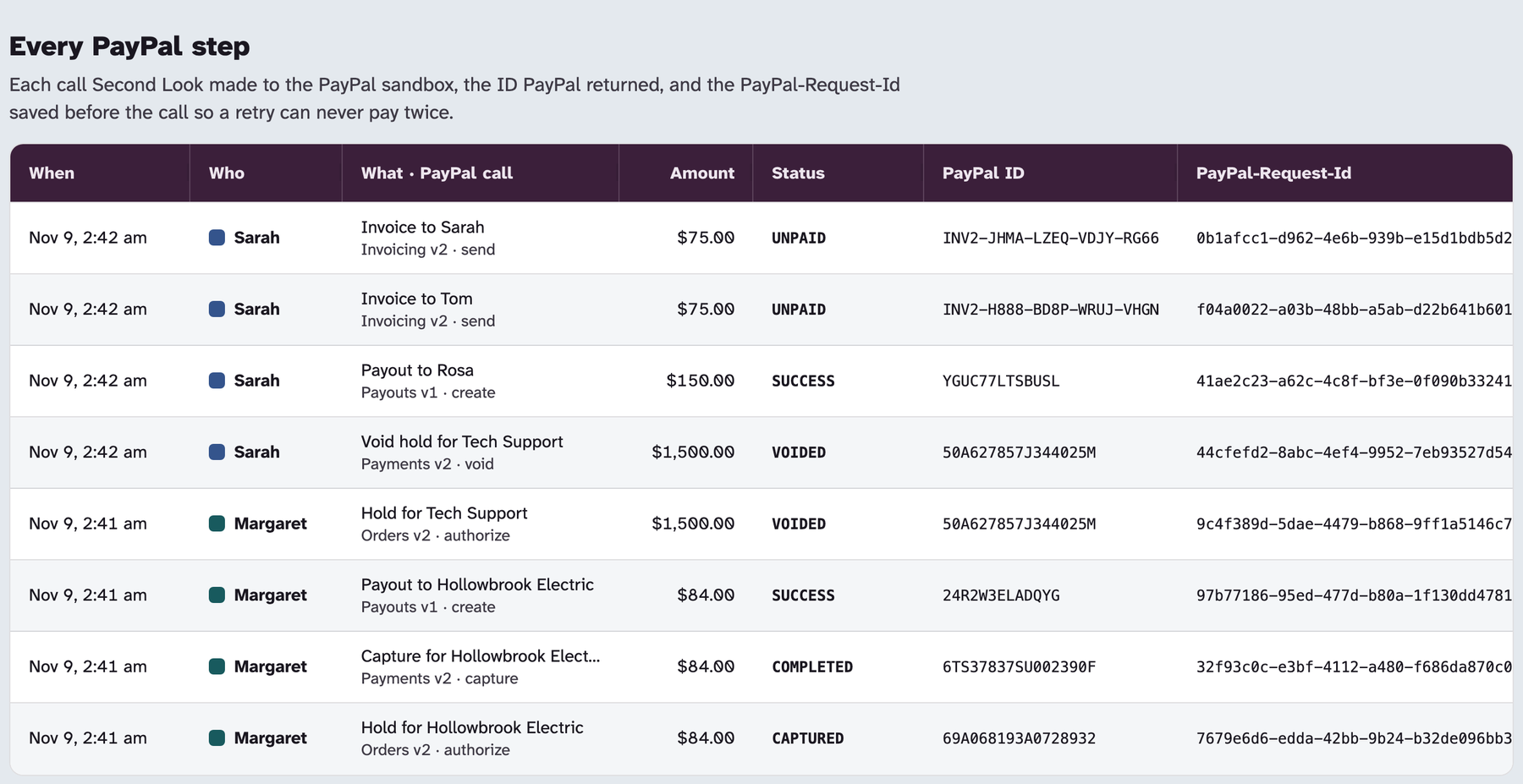
Every PayPal call, with the IDs PayPal returned.
-
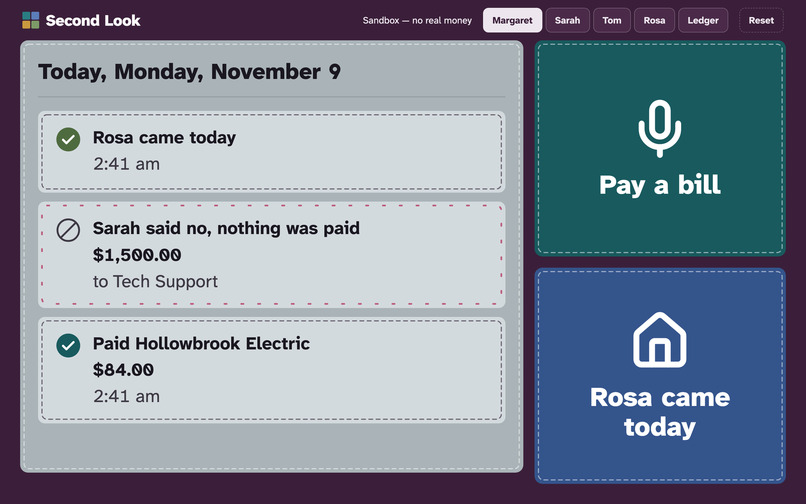
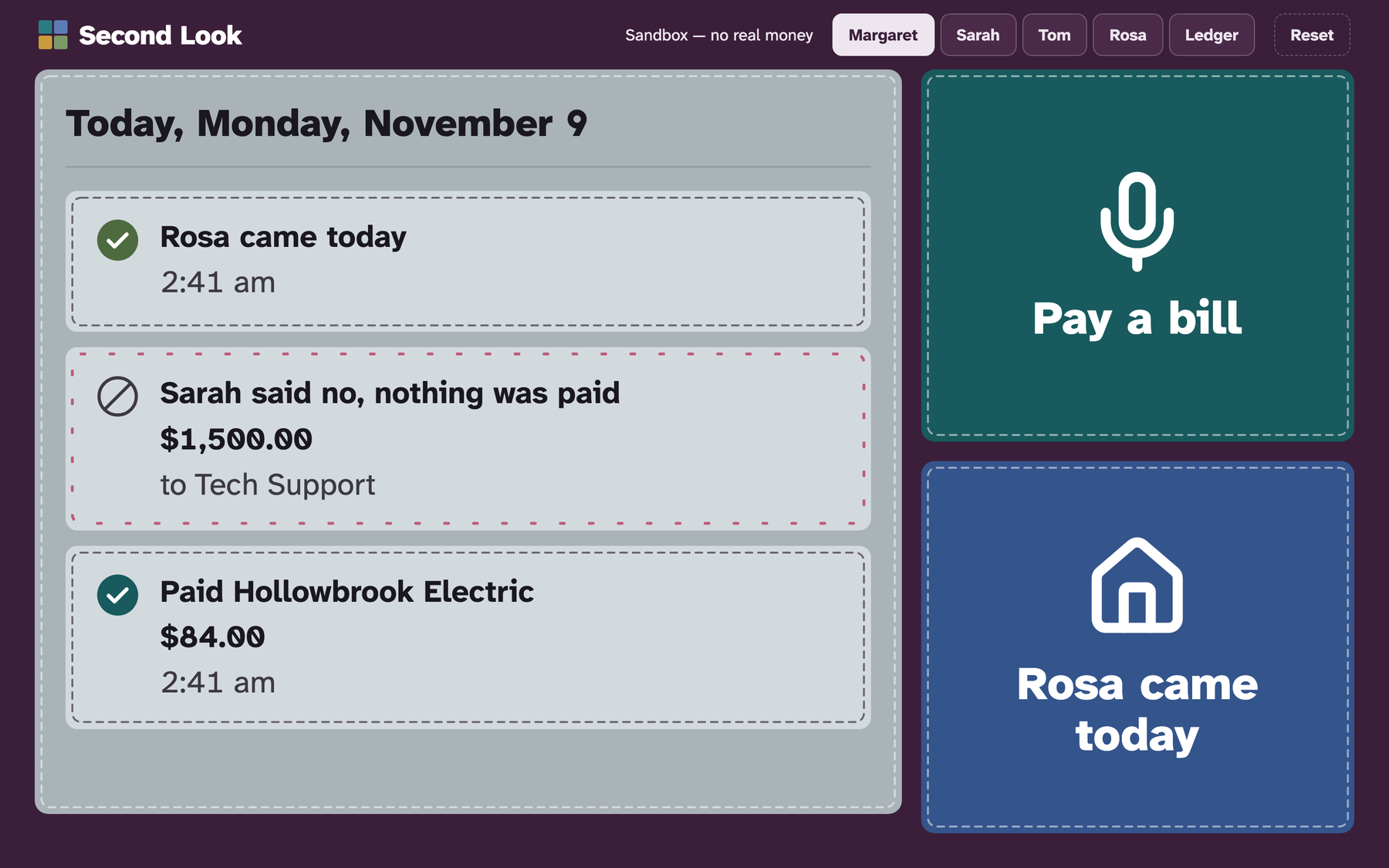
Margaret's tablet: big text, two big buttons.
-
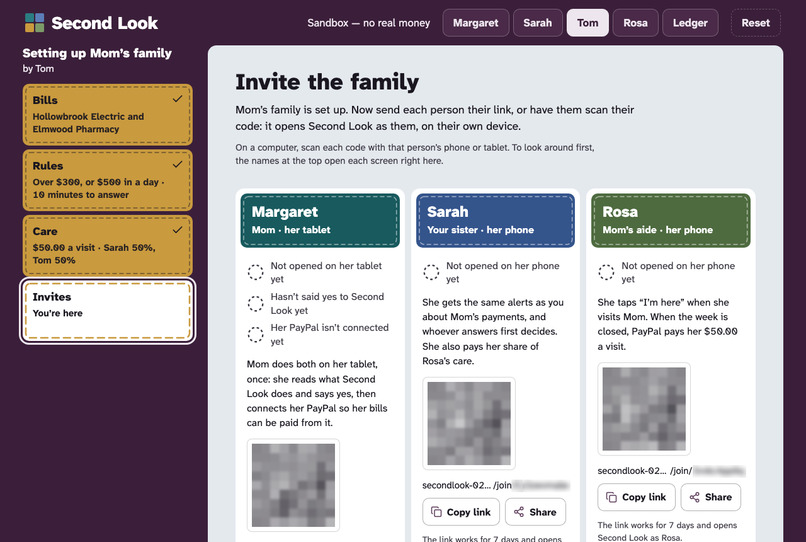
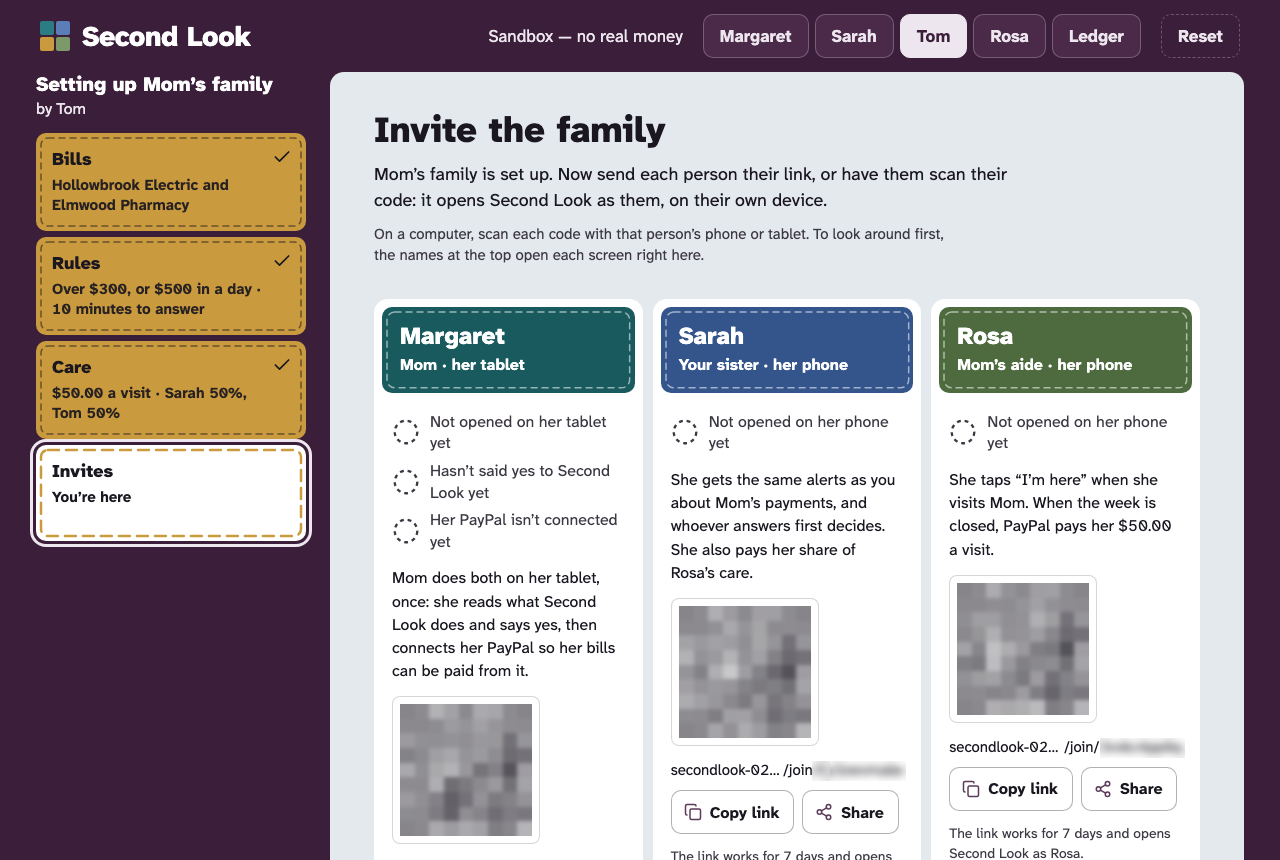
Setting up Mom's bills, limits and care costs, and inviting the family.
-
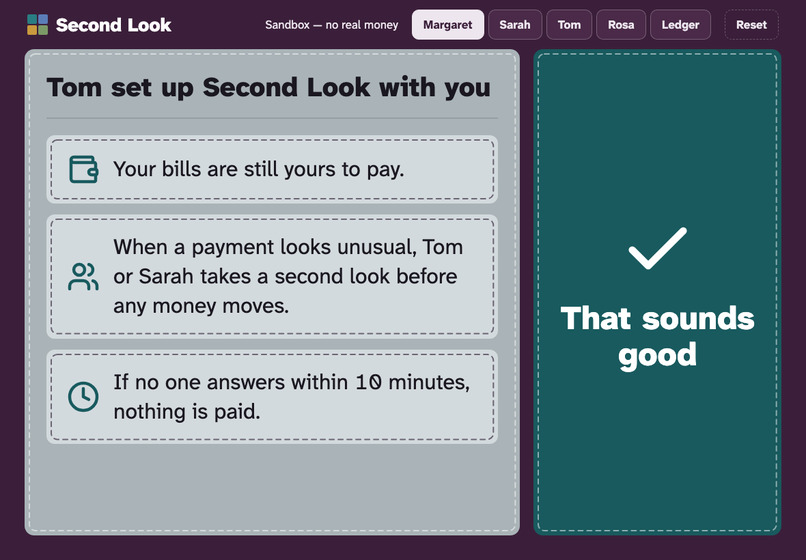
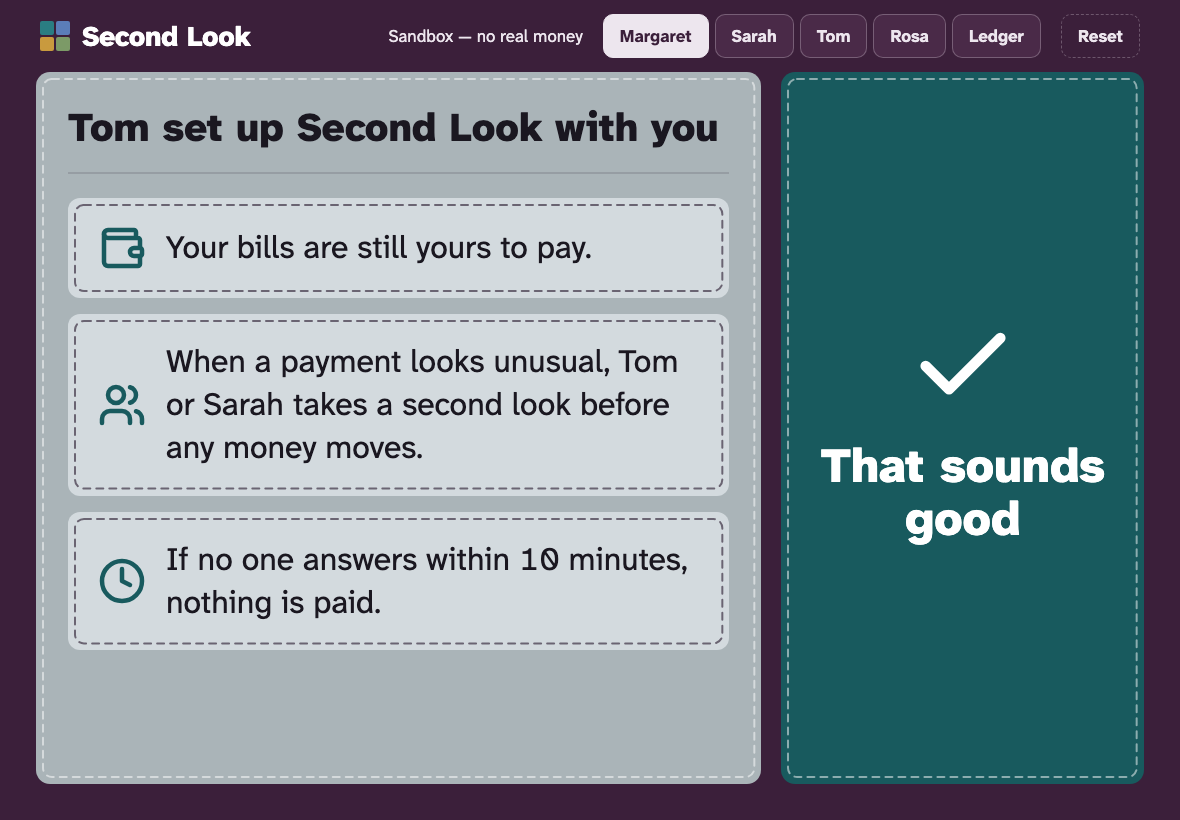
Margaret agrees to it on her own tablet before anything is paid.
-
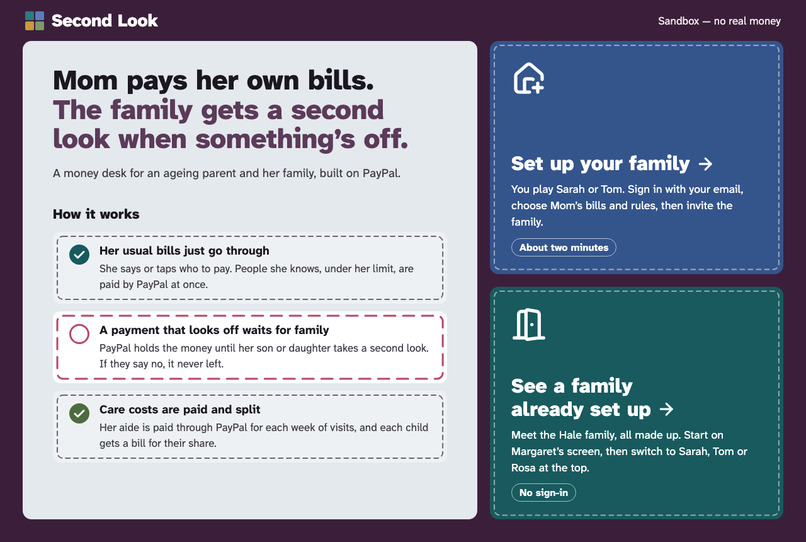
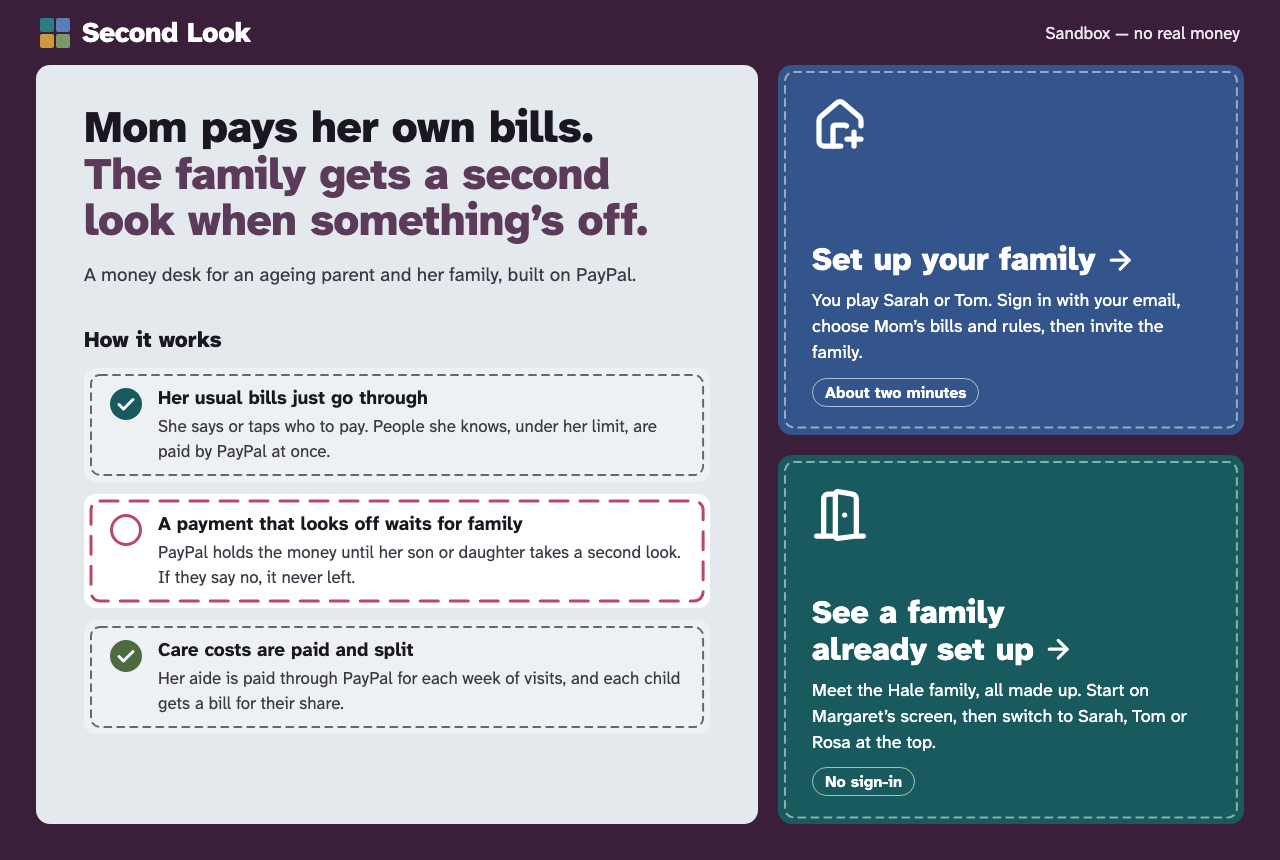
The welcome page.
Inspiration
In 2025, people over 60 reported more than $7.7 billion in scam losses to the FBI, often to a caller saying her computer is "hacked" and "tech support" needs $1,500 today. A family can take over her money, which costs her independence, or hear about it from a bank alert after it's gone. I wanted her to keep paying her own bills, with only the odd payment waiting for family to check.
A PayPal authorization makes that work: it holds money without taking it. A wire or a gift card can't be pulled back. A PayPal hold can just be voided.
What it does
The demo family is made up: Margaret, her children Sarah and Tom, and Rosa, her home aide.
- Setup: Tom adds Mom's regular bills, her limits and Rosa's rate, and sends each person an invite for their own device. Margaret agrees on her tablet before anything can be paid, and connects her PayPal once.
- Paying: Margaret says or types "Pay the electric bill, $84". The app reads it back, she says yes, and it's paid.
- Holding: a new payee, an amount over her limit, words like "tech support" or "gift cards", urgency, or a scam story Claude spots turns the payment into a PayPal authorization. Sarah and Tom get a push alert. Approve captures and pays; Deny, or 10 minutes with no answer, voids it. Her screen never says "scam", only "Sent to Sarah to double-check".
- Care costs: Rosa checks in and out of each visit. Closing the week pays her by PayPal Payouts and invoices Sarah and Tom for their shares, split to the cent.
- Ledger: every money move and every PayPal call, with the IDs PayPal returned.
How I built it
PayPal (sandbox) does all the money movement:
- Vault v3: saves Margaret's PayPal once
- Orders v2: an
AUTHORIZEorder on her savedvault_idfor every bill, so the money is held first - Payments v2: capture on approval or when nothing is unusual; void on deny or timeout
- Payouts: pays the payee after a capture, and pays Rosa each week
- Invoicing v2: one invoice per sibling for their share
- Webhooks: status updates, verified with PayPal before use
Second Look's sandbox business account sits in the middle: it captures Margaret's authorization, then pays the payee, so each step shows on the ledger. Every PayPal POST carries a PayPal-Request-Id saved before the call, plus a fixed sender_batch_id for Payouts and fixed invoice numbers, so a retry or a double tap never pays twice.
APIMatic: Orders, Payments and Vault use PayPal's APIMatic-generated server SDK (@paypal/paypal-server-sdk), written with APIMatic's PayPal context plugin. Payouts, Invoicing and webhooks call the REST API, since the SDK doesn't cover them.
Claude Sonnet 5.5 reads Margaret's words for scam stories the rules miss, like a "power company" threatening to cut her power tonight on a normal $250 bill, and writes the note Sarah reads on a held payment. It can only add a hold, never remove one. If it's slow (four seconds), over its cap or unsure, the rules decide. On 32 test requests I wrote and labelled first, it caught 13 of 13 hidden scams, left 13 of 13 normal bills alone and resisted 5 of 6 prompt injections (the sixth reply came back malformed, and the rules still held that payment). Calls are capped per family and per day.
AG Grid Community 36.2 draws the "Every PayPal step" table, themed to match the app, with custom cells and a phone layout that never scrolls sideways.
Render hosts the web service and Postgres from one Blueprint, and a Render Workflows task closes the care week (pays Rosa, sends both invoices) with retries that can't pay twice.
It's Next.js and TypeScript, with 323 tests that replay recorded PayPal and Anthropic responses.
Challenges I ran into
- After I turned on Vault and Invoicing, PayPal kept returning an old access token without the new permissions, so every call got a 403 until I forced a fresh one.
- Repeats differ by API. Payouts answers a repeated request with an error pointing at the original batch, which the app treats as success, and Invoicing ignores
PayPal-Request-Id. - Margaret's tablet could once open Sarah's screen and approve her own held payment. Each device is now locked to its own person.
Accomplishments that I'm proud of
The core moment works on the live demo with no sign-in: Margaret asks to pay $1,500 to "tech support", Sarah taps Deny, the authorization is voided, and nothing left Margaret's account. And her screen stays large, calm and plain.
What I learned
Some PayPal errors just mean "already done": a second void returns PREVIOUSLY_VOIDED, so a deny, a timeout and a Reset can all void the same hold safely. And with Claude, the one failure in my tests was a malformed reply, not a wrong call, so the app checks every reply and falls back to the rules.
What's next for Second Look
- Paying by card with no PayPal account, through PayPal Vault (already tested with PayPal's test card)
- Paying billers directly instead of through Second Look's account
- Margaret's screen and speech recognition in her own language
- A trial with a few real families
Built With
- ag-grid
- anthropic-api
- apimatic
- claude-sonnet-5.5
- next.js
- paypal
- paypal-orders-api
- paypal-payments-api
- paypal-payouts
- paypal-server-sdk
- paypal-vault
- paypal-webhooks
- postgresql
- react
- render
- render-workflows
- typescript
- web-push
- web-speech-api
