-
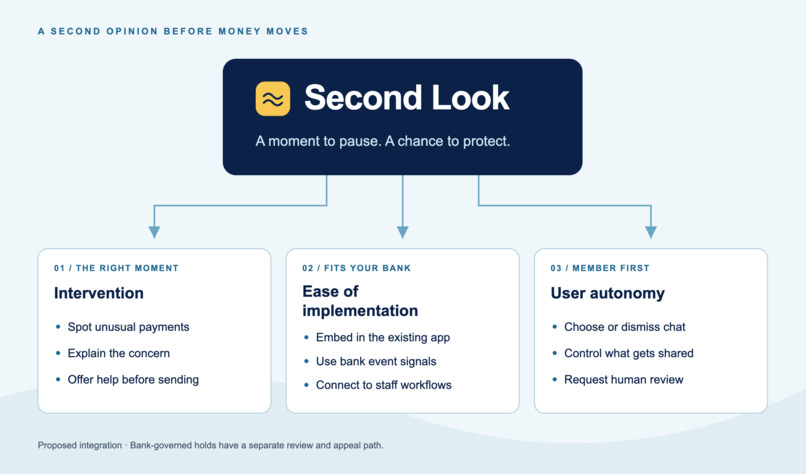
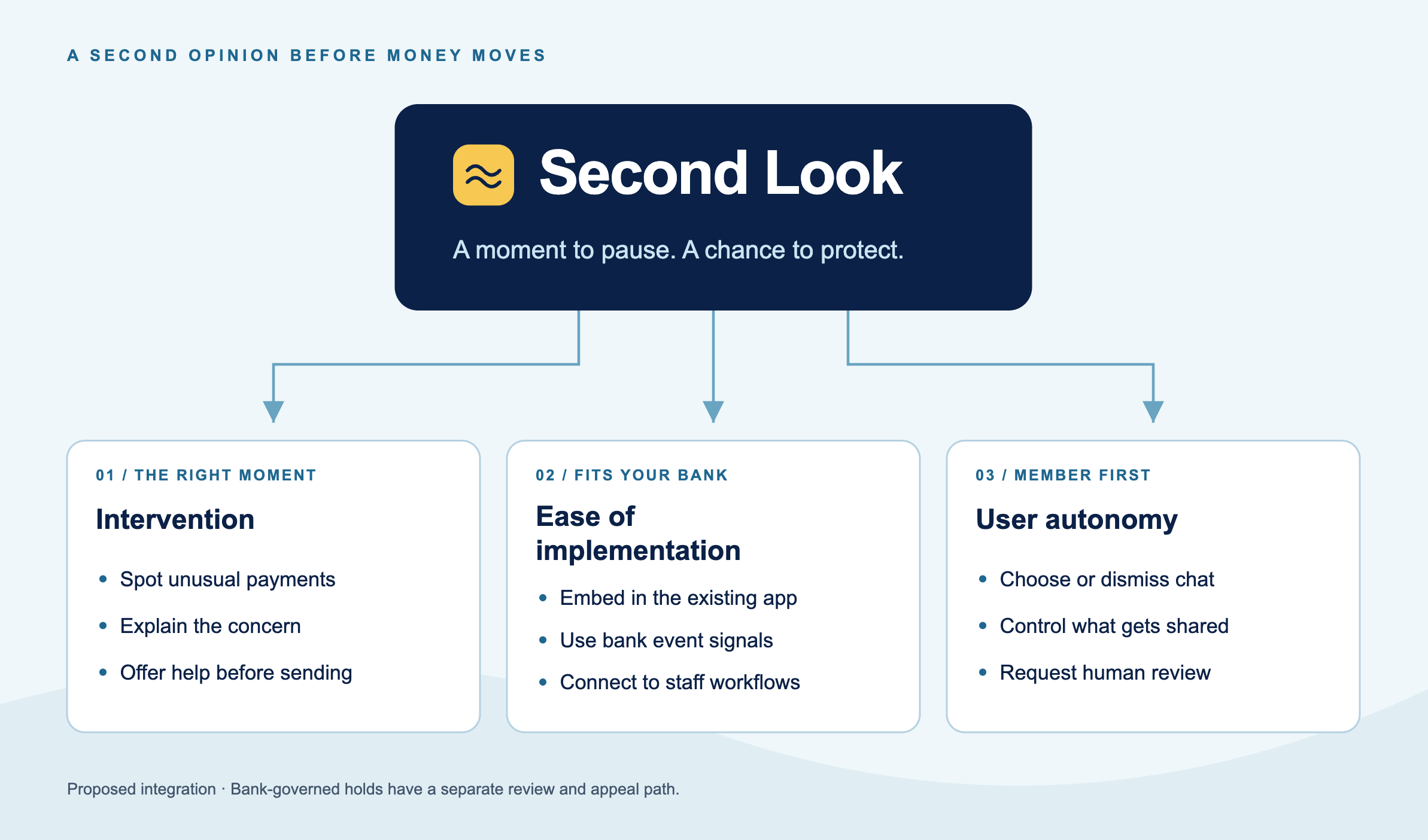
Presentation
-
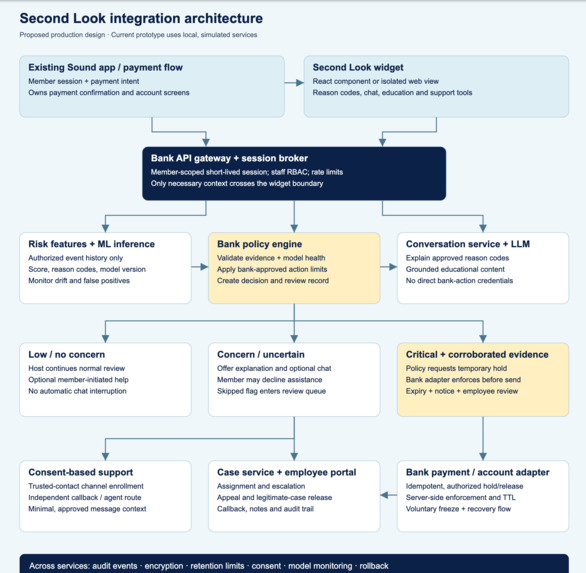
Architecture
-
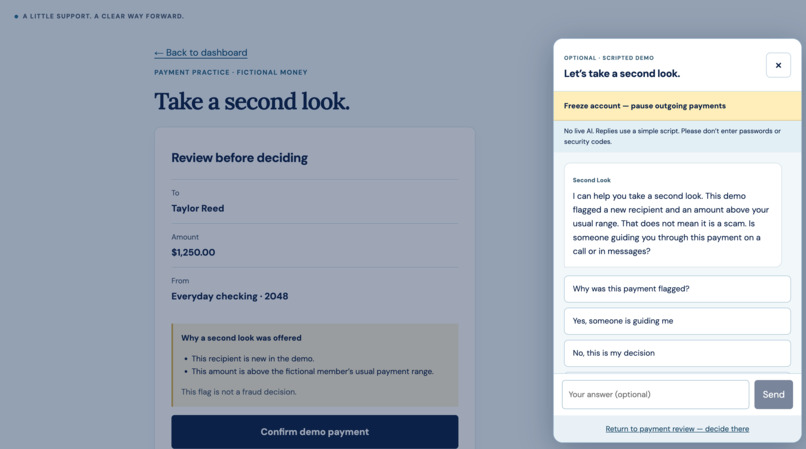
Live Demo
Inspiration
What it does
Inspiration
A person can pass every security check and still be persuaded to send money to a scammer. During the judges’ panel, we heard about impersonation, pressure, shared security codes, and the embarrassment that can keep members from asking for help.
That led us to a question: What if a banking app offered a SECOND LOOK at the moment someone needed it most?
We created Second Look to make that moment supportive, understandable, and easy to act on.
What it does
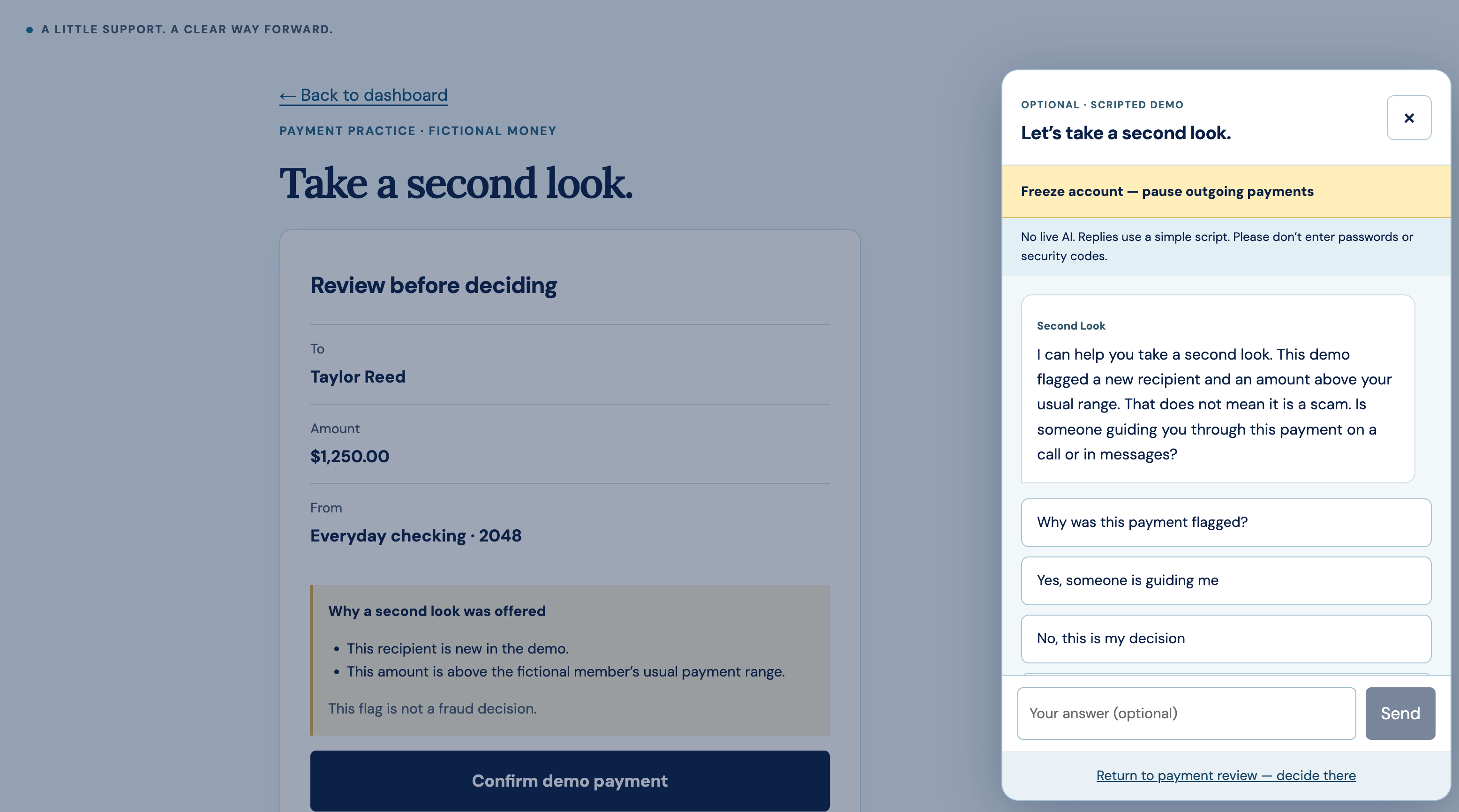
Second Look is designed as a conversational widget that could fit into an existing banking app’s payment flow.
When a payment shows concerning signals—such as a new recipient, an unusually large amount, or a recent password reset—it offers a short explanation and an optional conversation.
Members can:
- Understand why a payment deserves another look.
- Talk through whether someone is pressuring or directing them.
- Borrow words to step away from a suspicious conversation.
- Find an independent route to contact their bank.
- Ask a previously enrolled trusted contact for a second opinion.
- Request employee support or explore freezing outgoing payments.
- Learn the difference between unauthorized activity and a scam.
- Offers links to educational tools and trusted resources.
Member autonomy is central. Members can skip questions, edit what they share, or dismiss the optional conversation.
** Employee-friendly: ** The employee portal automatically connects to the existing review queues. Employees can take ownership, record callback requests, escalate concerns, and document outcomes.
How we built it
We built the prototype with React and Vite, included an optional Node.js API scaffold, and deployed it to GitHub Pages through GitHub Actions.
The interface draws inspiration from Sound Credit Union’s colors and visual language. We prioritized accessibility via mobile layouts, large controls, adjustable text, and short explanations with expandable details.
The clickable prototype includes nine selectable risk scenarios, scripted conversations, trusted-contact message previews, employee calling statuses, and a simulated account freeze and recovery flow.
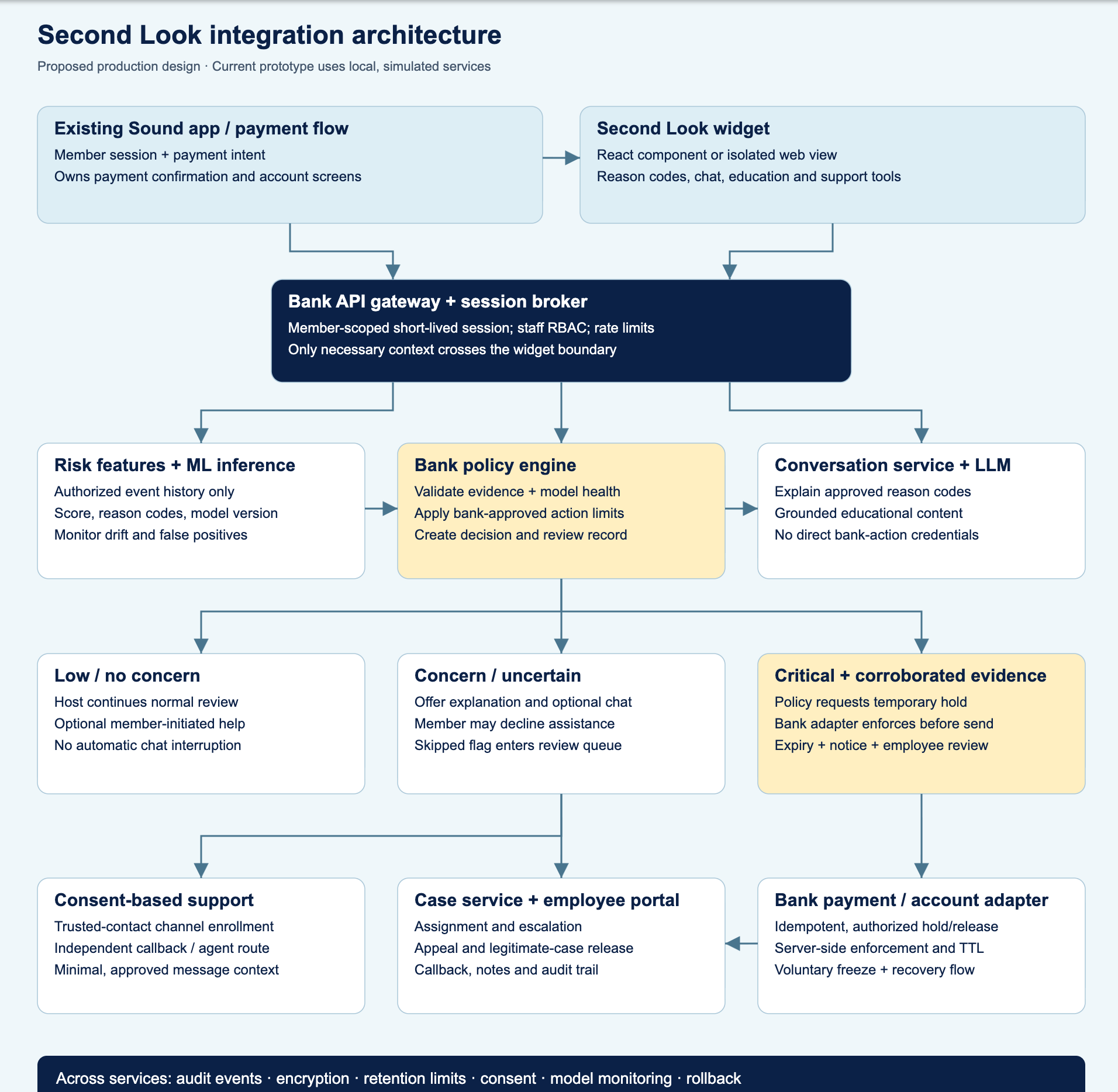
We also designed a proposed production architecture that separates three responsibilities:
- ML identifies risk signals and supplies reason codes.
- The assistant explains concerns and offers support.
- Bank-controlled policy authorizes and enforces protective actions.
The current prototype uses synthetic examples and simulated services. It does not run a trained fraud model, connect to live banking systems, send contact messages, or freeze real accounts.
Challenges we faced
Our biggest challenge was balancing protection with unnecessary friction. We addressed this through optional conversations, specific explanations, and employee review.
Another challenge was keeping the concept realistic. We designed around available banking events and voluntary member answers, rather than assuming access to private calls, messages, or voice-cloning detection. We invited Sound Credit Union employees to give UI UX feedback as well as consulting banking colleagues for subject matter expertise.

Log in or sign up for Devpost to join the conversation.