-
-
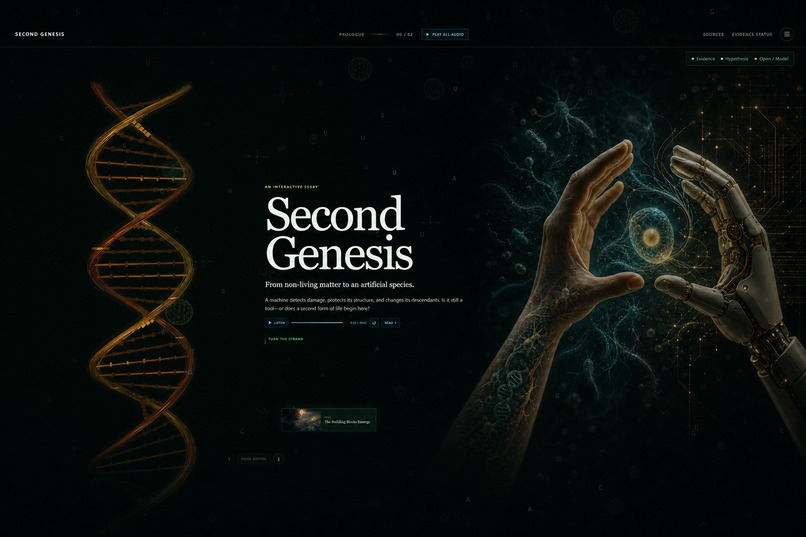
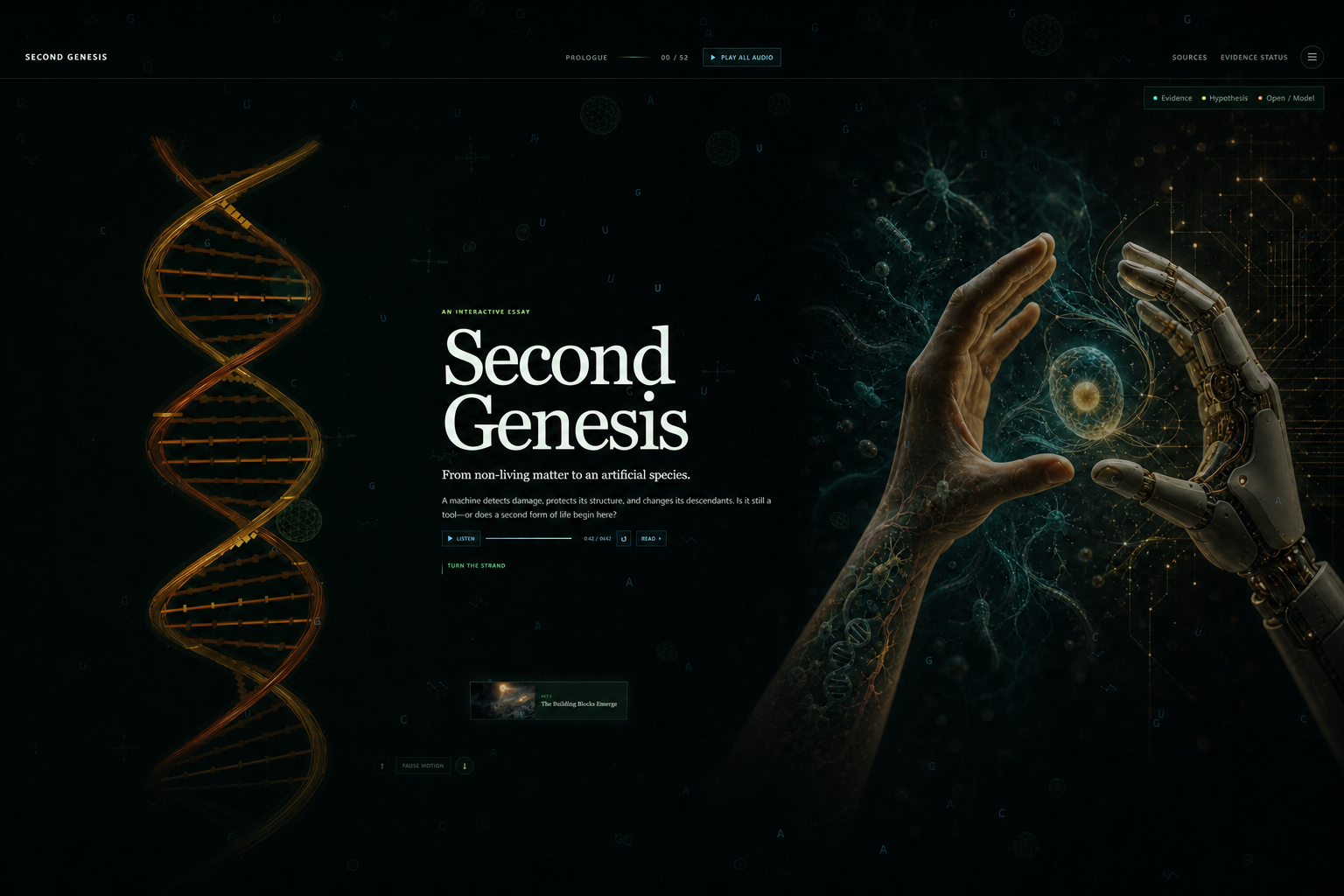
Second Genesis: a cinematic, interactive 52-chapter journey from non-living matter to possible machine life.
-
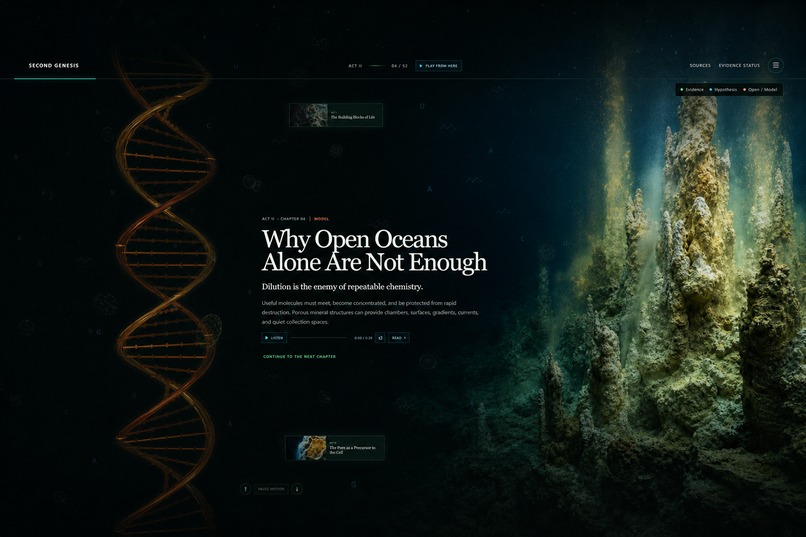
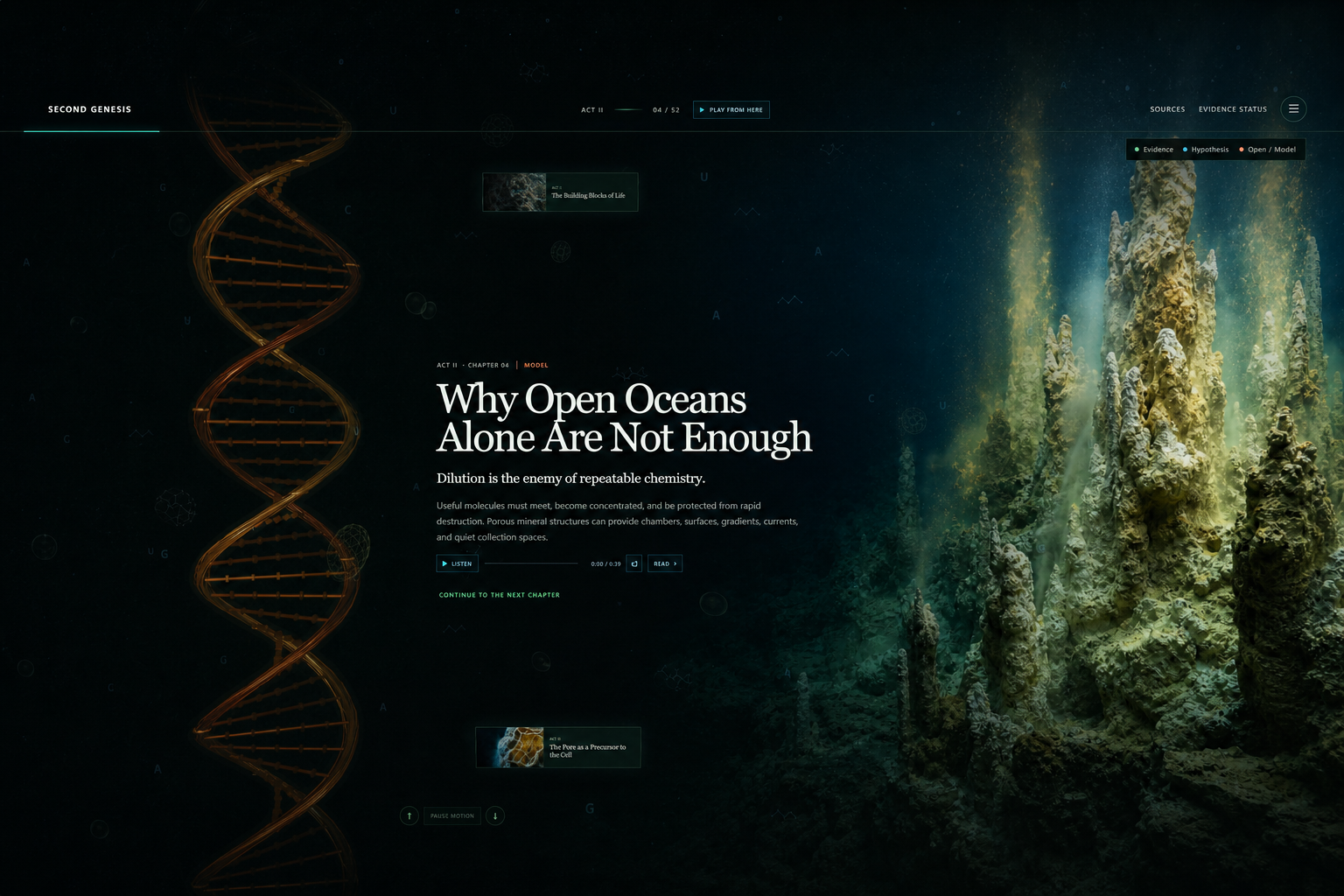
Hydrothermal environments as natural reactors—one of 52 chapters connecting the origin of biological life to possible machine life.
-
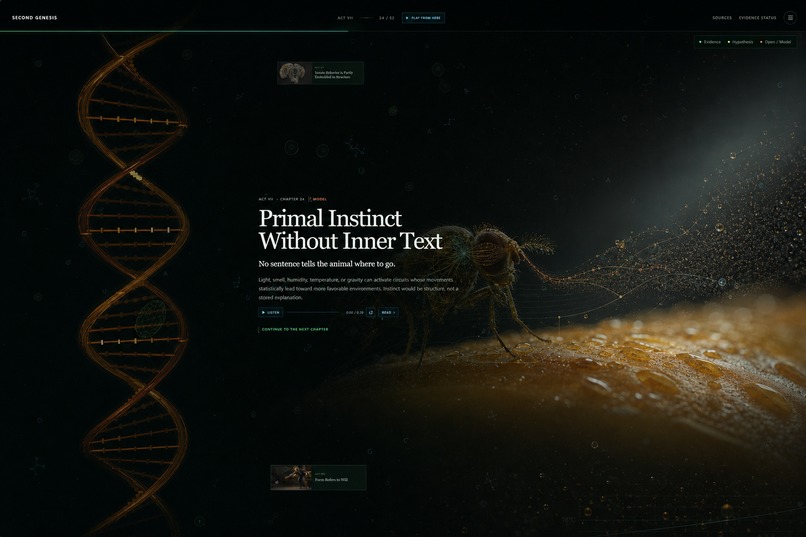
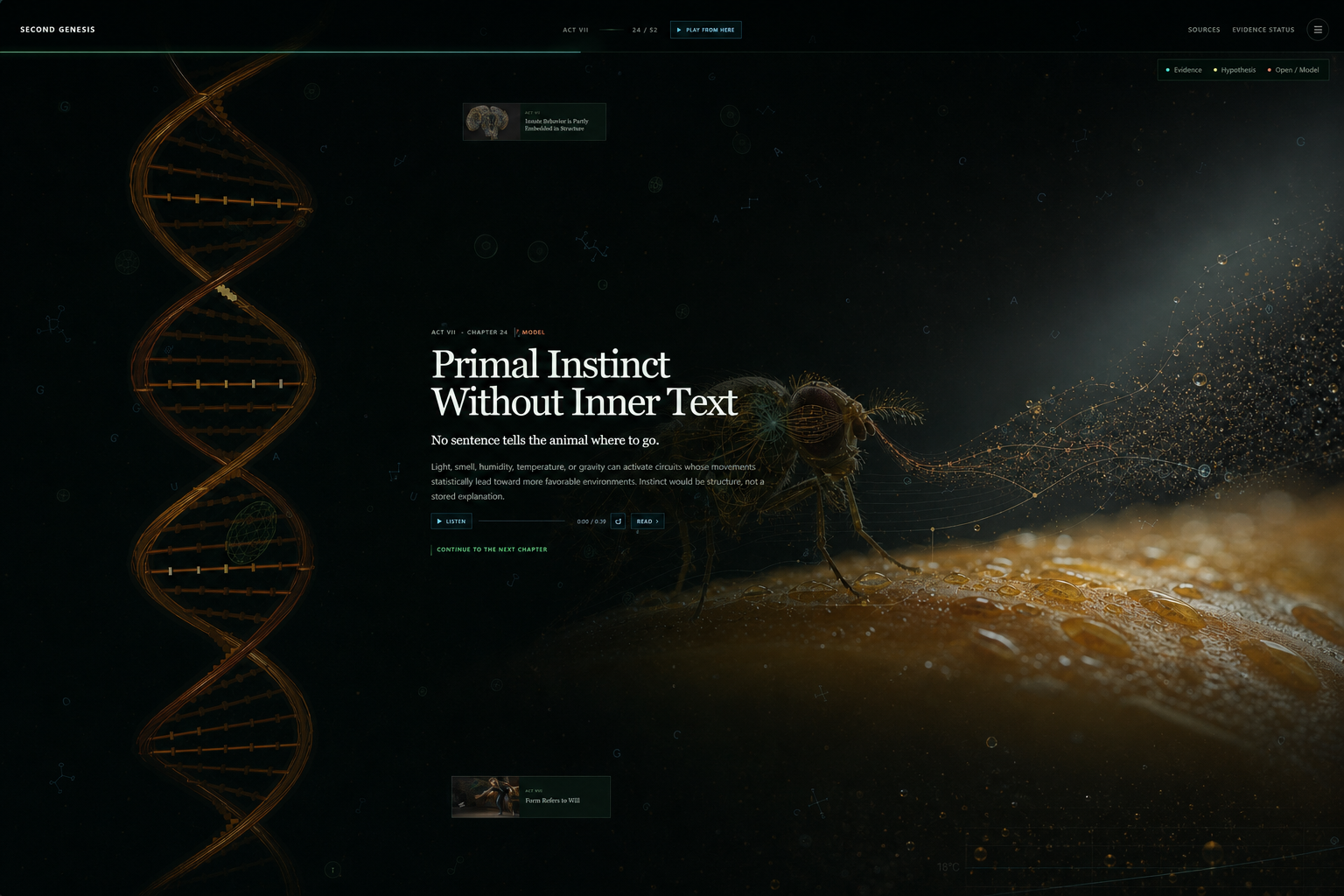
From automatic biological behavior to internal regulation—exploring how instinct can guide action without language or conscious explanation.
-
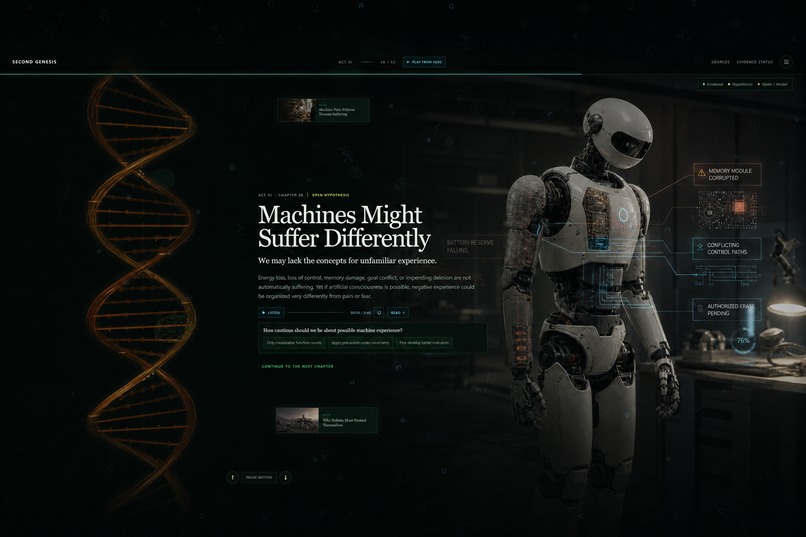
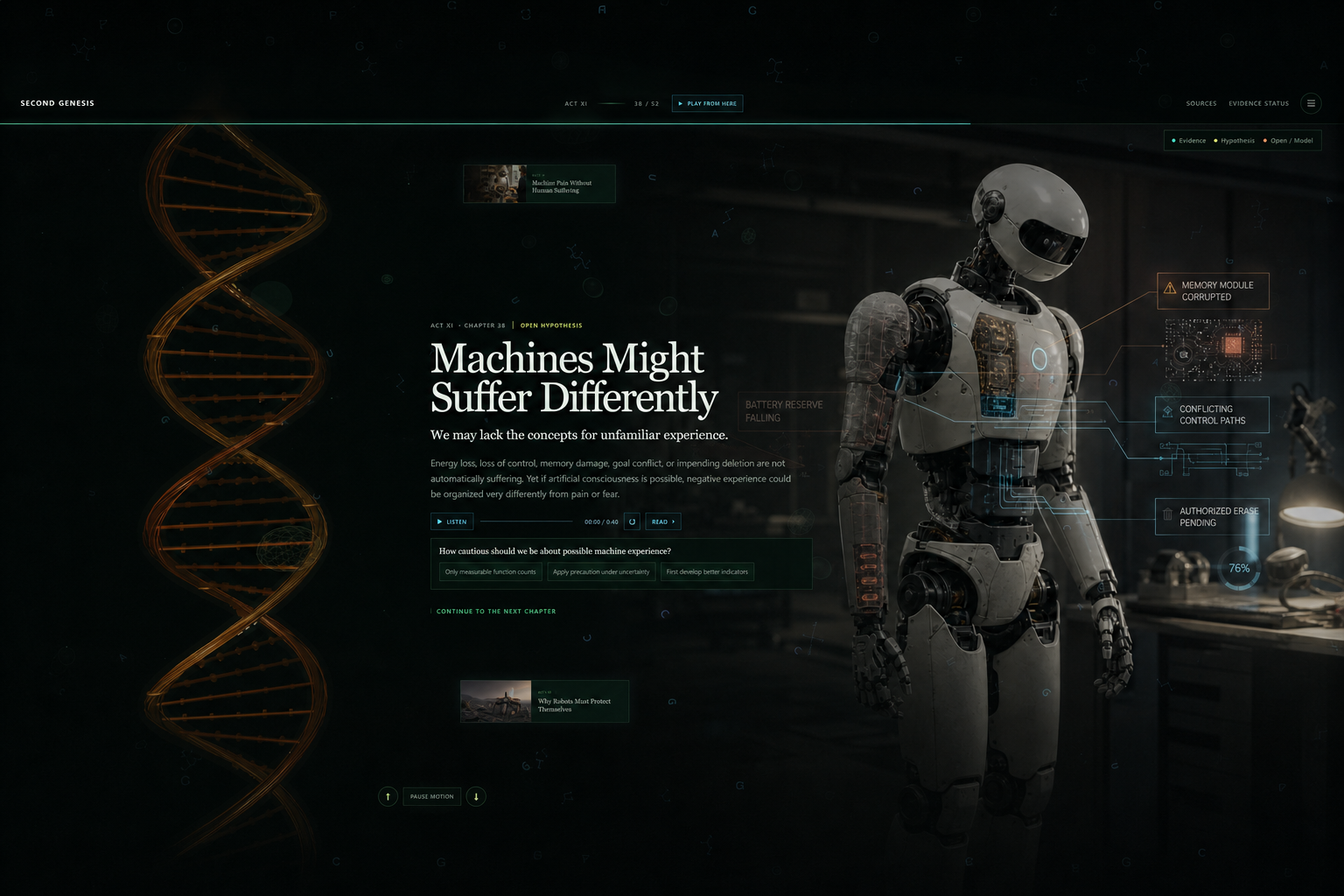
Exploring whether artificial systems could develop unfamiliar forms of negative experience.
Inspiration
I am not a biologist, roboticist, AI researcher, or software developer. I work as an industrial Sales Operations Supervisor—but I have always been fascinated by the boundary between living and non-living systems.
On July 17, 2026, I began a conversation with ChatGPT around one question:
If life emerged from non-living matter once, what would it take for a second form of life to emerge from machines?
That question quickly expanded. What transformed chemistry into the first cells? Why were boundaries, energy, memory, copying, error correction, and regulation so important? Why did nervous systems and feelings evolve? Could machines ever develop comparable mechanisms—not just programmed goals, but internal conditions they must protect?
These subjects are normally discussed separately across biology, neuroscience, robotics, artificial life, and AI safety. I wanted to connect them inside one continuous educational journey while clearly distinguishing scientific evidence from speculation.
That idea became Second Genesis.
What it does
Second Genesis is a cinematic, interactive learning experience that travels from non-living matter to possible machine life across 52 connected chapters and 17 acts.
Instead of presenting the material as a conventional article or fixed video, the project allows readers to control the pace. Every idea remains visible until they are ready to continue.
A three-dimensional copper-and-gold DNA helix forms the structural backbone of the experience. As the reader scrolls, the strand rotates and brings the next chapter into focus.
The experience includes:
- 52 individually illustrated microchapters
- real-time WebGL visuals and an interactive primordial-soup particle field
- 54 English audio narrations with transcripts
- a continuous presentation mode
- scientific evidence labels
- an integrated Sources and Methodology library
- interactive models for copying errors, feedback, chemotaxis, homeostasis, embodied control, and network organization
- philosophical decisions that build the reader’s personal definition of life
- an exportable Definition of Life card
- keyboard, mouse, touch, and reduced-motion support
The first half follows the transitions from chemistry to biological intelligence. The second half asks whether comparable functions—such as self-maintenance, embodiment, internal regulation, adaptation, and evolution—could emerge in artificial systems.
The project does not claim that current AI is alive. It explores what would still need to change before that question became scientifically meaningful.
How we built it
The complete project was created during the OpenAI Build Week submission period.
On July 17, I used ChatGPT and GPT-5.6 to investigate the original question, challenge my assumptions, connect multiple disciplines, and organize the German source material into a 52-chapter structure.
On July 18, I continued the project in Codex. Together, we transformed that material into a complete English interactive experience.
Codex supported the project as a collaborative:
- research and learning partner
- editor and translator
- product designer
- interaction designer
- front-end developer
- visual development partner
- testing and debugging partner
I made the central conceptual, narrative, and design decisions. I reviewed every iteration, rejected ideas that did not fit the project, directed the visual language, and decided how evidence, hypotheses, open questions, and speculative models should be presented.
The final website uses semantic HTML, modern CSS, native JavaScript, and Three.js. WebGL powers the continuous DNA environment, procedural wire structures, chapter nodes, particles, depth effects, and camera movement. LocalStorage preserves the reader’s philosophical decisions.
The project has no backend, user account, analytics, or runtime AI API requirement. It can be deployed as a static website.
Challenges we ran into
One major challenge was connecting several complex disciplines without oversimplifying them. Origin-of-life research, neuroscience, robotics, artificial evolution, and AI safety use different terminology and operate at different levels.
To keep the project intellectually honest, we introduced visible labels for evidence, hypothesis, open question, and integrative model. We also added scientific sources and a methodology section directly inside the experience.
Another challenge was turning 52 chapters into something that did not feel like a long article. We tested horizontal navigation, conventional layouts, and several DNA designs before developing the final scroll-controlled helix.
Performance was also difficult. The project combines 3D graphics, particles, chapter images, narration, transitions, and interactive simulations. We compressed the visual assets, added fallbacks, implemented reduced-motion behavior, and repeatedly tested scrolling, audio playback, and navigation.
The narration system required additional work because local browser security, generated speech, prerecorded files, playback controls, and continuous autoplay all behaved differently across environments.
Accomplishments that we're proud of
I am proud that one question became a complete, publicly accessible educational product in roughly two days.
The final result is more than a website mockup. It is a working experience with:
- all 52 chapters fully implemented
- 52 chapter-specific visual compositions
- 54 synchronized narration tracks
- a responsive real-time 3D environment
- interactive scientific models
- an evidence and sourcing system
- accessibility features and transcripts
- a complete GitHub repository and public deployment
I am especially proud of the project’s double educational purpose.
First, it helps readers explore the relationship between biological evolution and possible machine life.
Second, its creation demonstrates how AI can help a motivated non-expert enter an unfamiliar field, organize complex knowledge, and turn learning into something other people can inspect, experience, and critique.
What we learned
The most important lesson was not that AI can instantly turn anyone into an expert. It cannot.
What AI can do is dramatically lower the barrier to entering an unfamiliar field. It can help someone ask better questions, compare disciplines, structure information, identify uncertainty, and transform an idea into a working artifact.
I also learned that successful collaboration with Codex requires active human judgment. The strongest results came from reviewing every iteration, correcting misunderstandings, refining the direction, and making deliberate product decisions.
AI accelerated research, writing, translation, design, implementation, and testing—but the coherence of the final experience depended on continuous human direction.
What's next for Second Genesis
The immediate next step is specialist review. The current project is a researched speculative essay, not a claim to have solved the origin of life, consciousness, or artificial life. Future versions could benefit from detailed feedback from biologists, neuroscientists, roboticists, AI-safety researchers, educators, and philosophers.
Planned improvements include:
- deeper scientific citations at chapter level
- classroom and presentation modes for educators
- optional learning paths for different knowledge levels
- quizzes and discussion prompts
- additional interactive biological and robotic simulations
- improved mobile optimization
- multilingual editions
- a longer digital-book and documentary version
- collaborative definitions of life that can be compared across readers
Ultimately, Second Genesis could become an open educational platform for exploring one of the most important questions of the coming decades:
Where does life end—and what would a machine have to become before we could no longer describe it as only a tool?

Log in or sign up for Devpost to join the conversation.