-
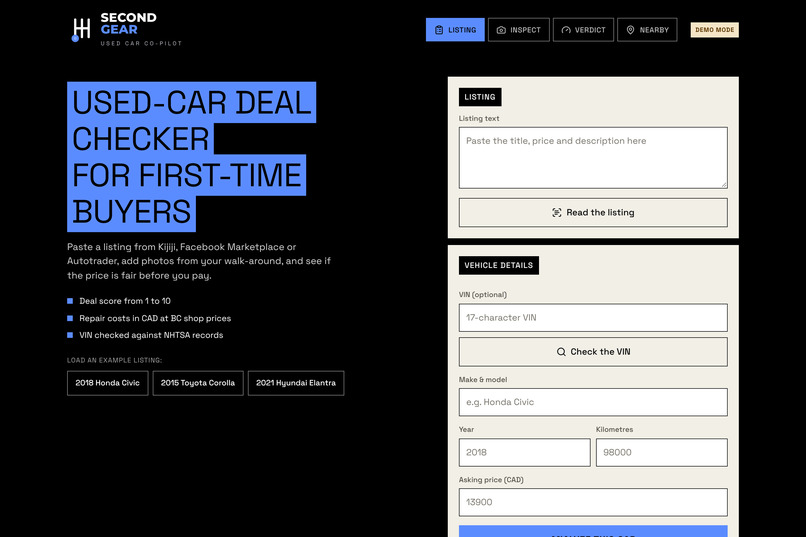
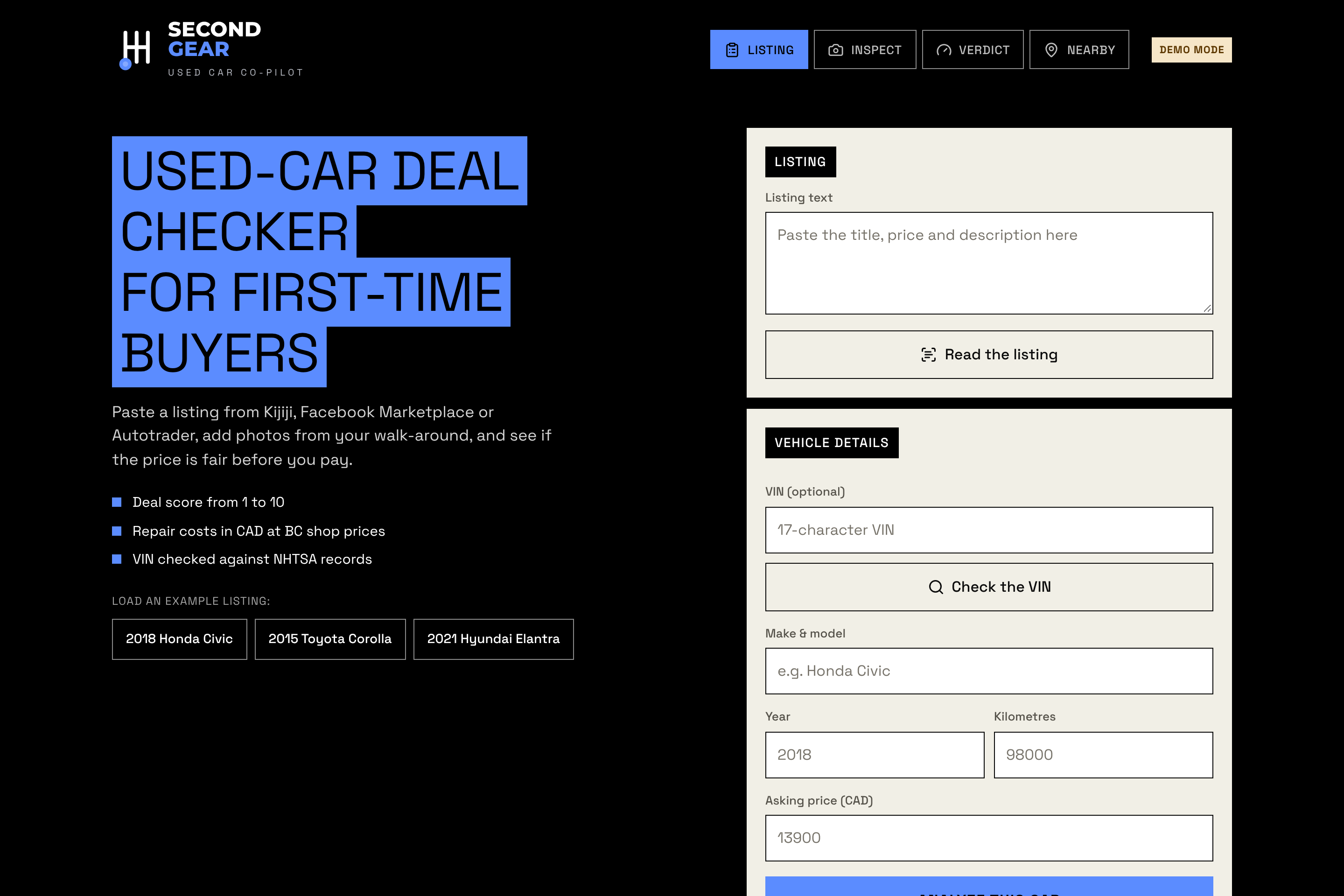
Paste a listing or load an example, and Second Gear sizes up the deal.
-
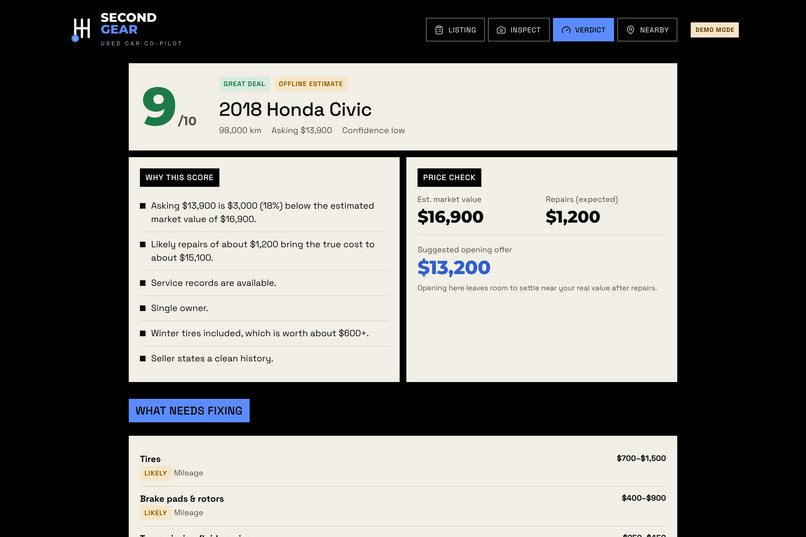
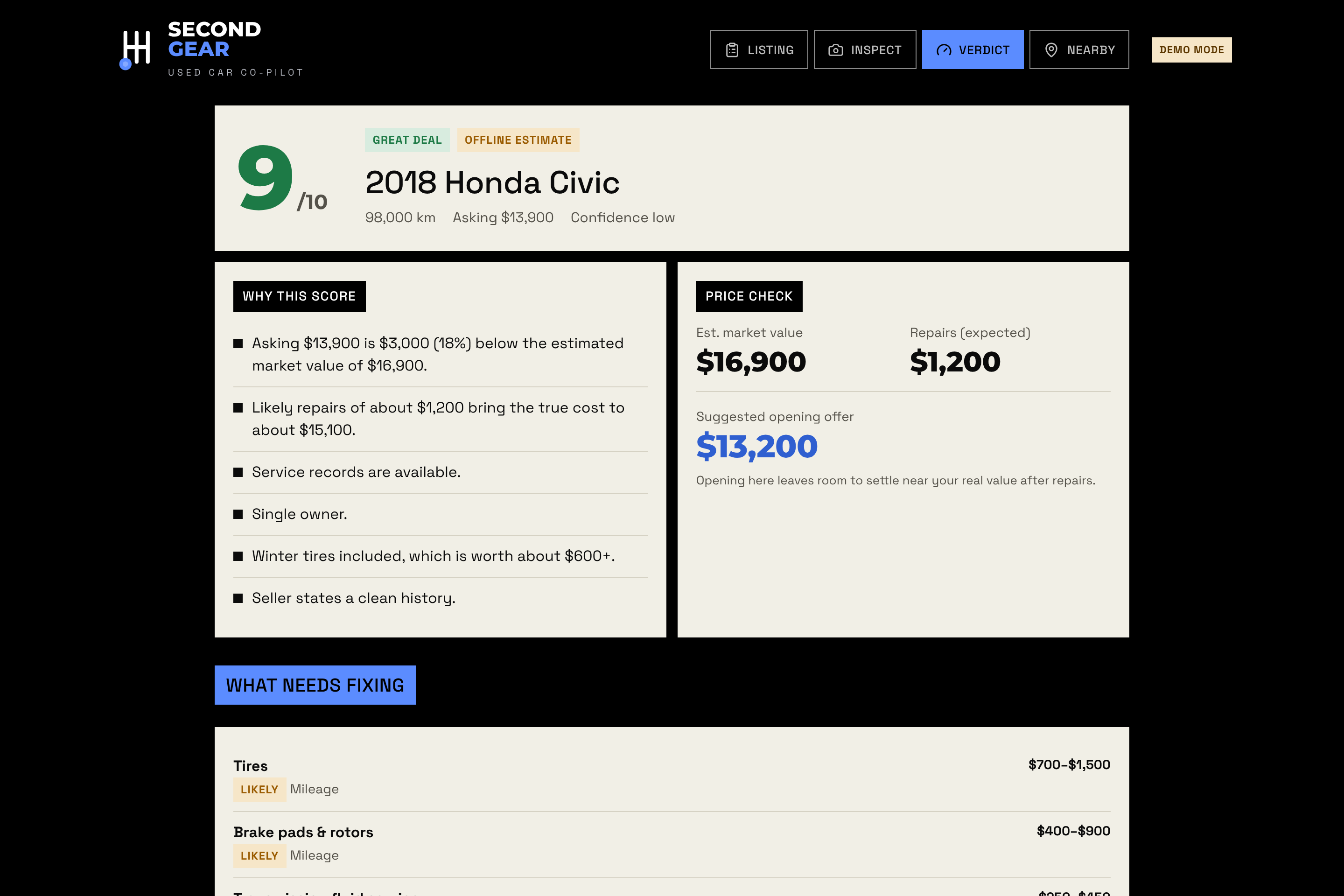
A 2018 Honda Civic scores 9/10, with estimated market value, expected repairs and a suggested opening offer.
-
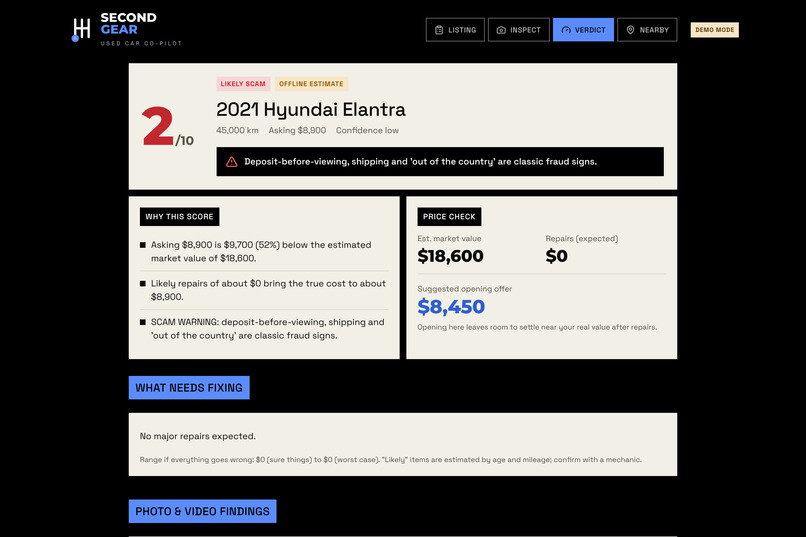
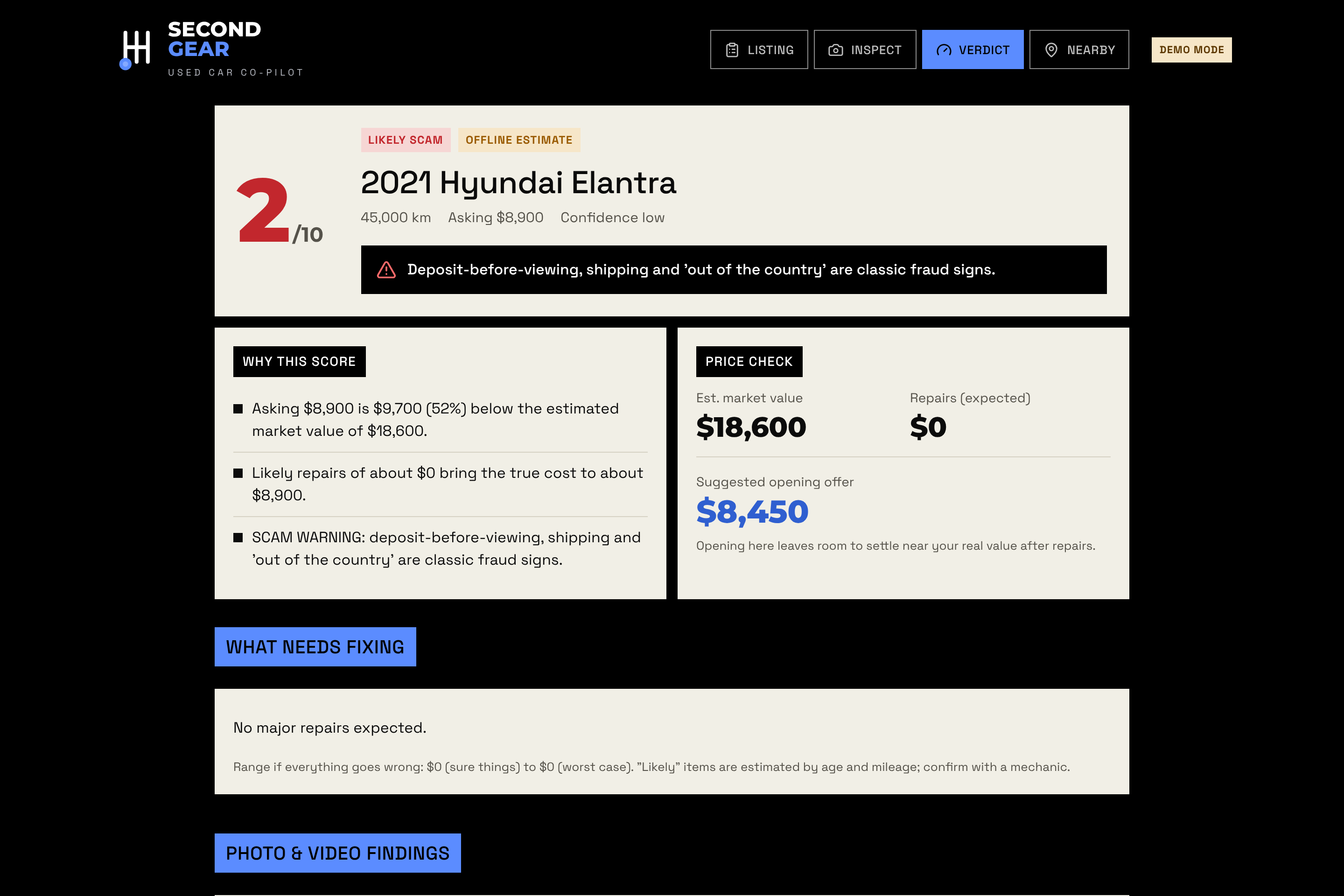
Scam signs like a deposit before viewing and shipping cap the score at 2/10 and trigger a warning.
-
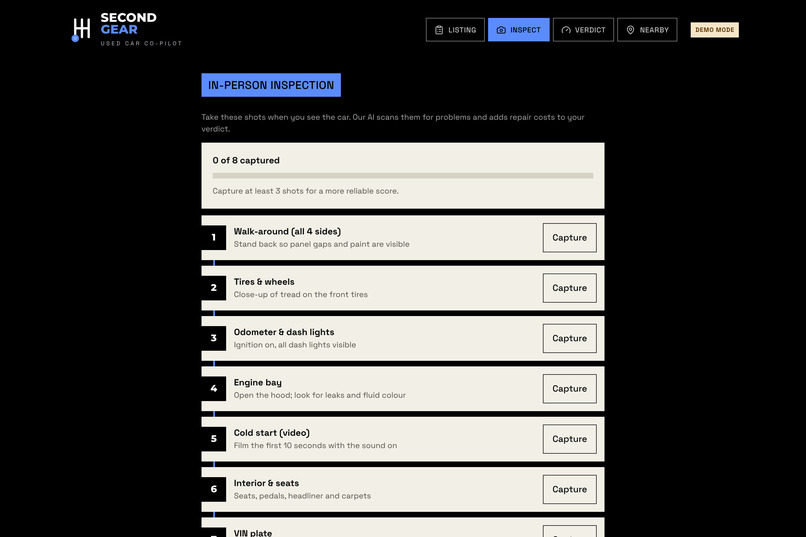
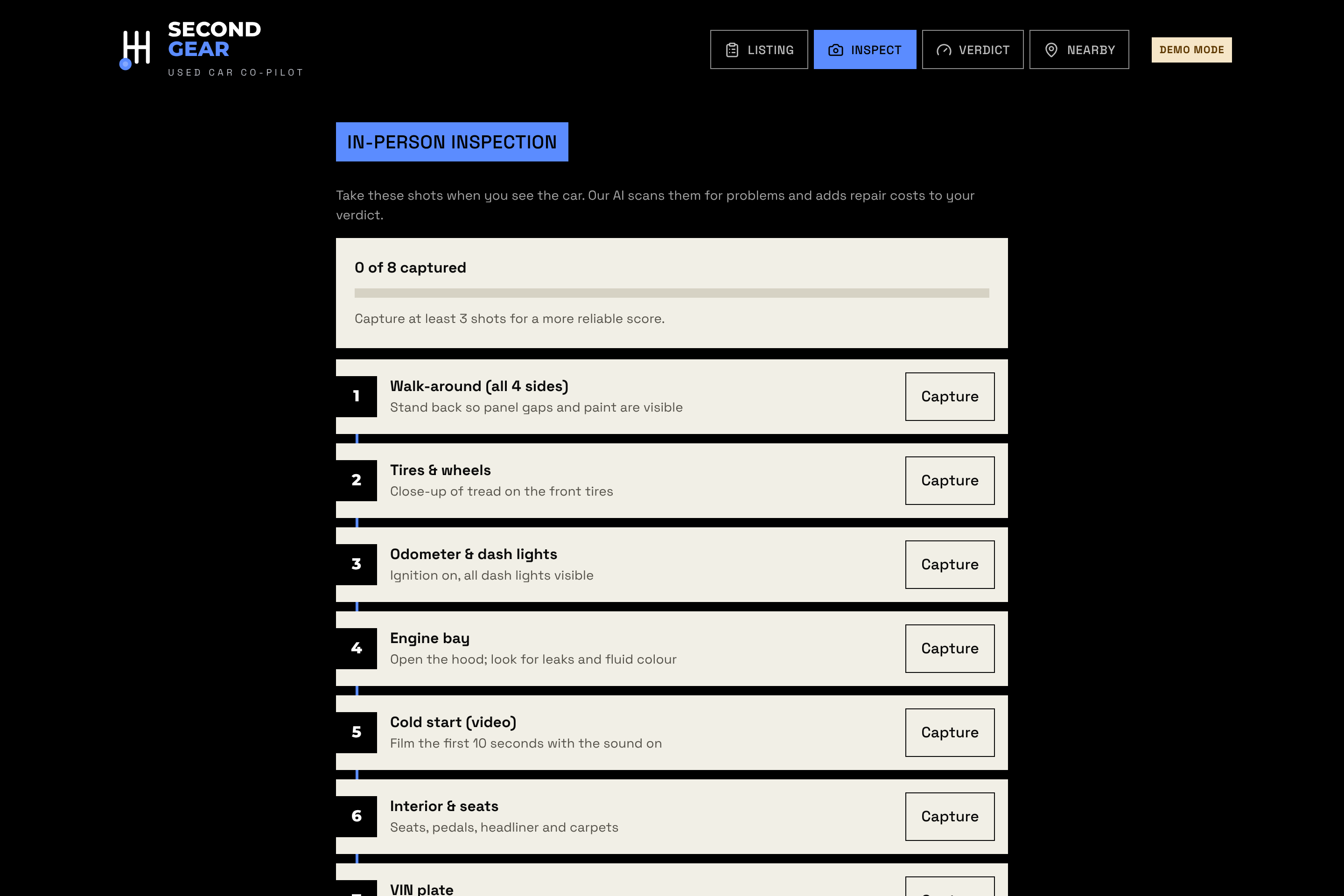
Eight guided photos to take when you see the car in person.
Inspiration
Buying a used car privately is stressful, especially for first-time buyers. Sellers can leave out problems, misstate the year or mileage, or run outright scams, and most buyers don't know what a fair price is or what to check. We have all dealt with this problem in our lives, especially Grayson who had to buy a used car on Facebook Marketplace last month.
What it does
- Deal score (1–10): compares the asking price to an estimated fair value minus expected repairs.
- Guided inspection: walks you through 8 photo spots (tires, odometer, engine bay, VIN plate, underbody and more). Claude reviews your photos and flags anything that contradicts the listing.
- Repair budget: likely costs in CAD at typical BC shop prices.
- Scam detection: flags red flags like deposits before viewing, shipping, or pressure to act fast.
- Questions to ask the owner: specific to the model and year.
- VIN check: built into the listing screen. Decodes the VIN with the free NHTSA database, warns you if the listing's year or model doesn't match, and can fill in the details for you.
- Works offline: if the AI is unavailable, it falls back to a built-in estimator and says so.
How we built it
- The web page (index.html) collects the listing and your photos, and shrinks them on your phone.
- A small Python server (server.py) sends them to Claude. The API key stays on the server and is never sent to the browser.
- Claude must answer in a fixed format, so every result (score, repairs, findings) lands in the right place on screen.
Challenges we ran into
- Limited Coding Experience: as first year engineers, we decided to try something new and joined this hackathon
- Idea Generation: the theme gave us a lot of ideas, but we wanted to find a problem to solve and not just bringing back an old software.
- UI and Front-End making the front end look visually appealing was a major problem. We wanted it to look not too intimidating.
- Linking the VIN Check having to link the VIN through the NHTSA vPIC to the code was a problem that we overcame and figured it out.
Accomplishments that we're proud of
- Participating in the Hackathon as first year engineers, this experience was a little scary going into it, but I am so proud of what we have learned and created.
- The Afterlife Score if the car is not worth it to drive, it gives you the worth of the parts in the car and gives a score from 1 to 100.
- VIN Check linking the NHTSA vPIC website and checking the information against the listing and showing potential differences
- Scam Detection we found a way to integrate AI to check for common scam used-car sale scams. It caps the score at 2, no matter how good the deal is when it detects a scam.
What we learned
- Coding as a group we have learned so much about coding and how to integrate an API into an idea
- Problem Solving the front-end and the VIN check really tested our critical thinking on how to integrate it into the main code
- Working on presentations and elevator pitches we learned as a group how to build a brand, an identity, and how to really sell a product.
What's next for Second Gear
- Prices are AI estimates, not live market data. Next: connect a real pricing source.
- The VIN check only compares the year and model, and its results aren't sent to the AI yet. Next: give Claude the decoded VIN details too, so its analysis can use them.
- Built for a single demo server. Next: host it online and save results to a database.
- Creating ThirdGear for used AND new cars.

