-
-
-
How is Agentboxd used
-
Explore all universities in the USA
-
Why students can trust Second Chance
Inspiration
I was exicted when I got accepted to Loyola. The offer came with 50% financial aid, and for a moment it felt like studying in the US was finally within reach.
Then I looked at what I would still have to pay: more than ₹20 lakh a year.
I was trying to make sense of financial aid on my own. The offer sounded generous, but the percentage alone didn't tell me whether I could afford to attend. I had to look through university pages and figure out which conditions applied to me.
We built Second Chance for students facing that same uncertainty. We wanted them to have a better starting point, with the university's own sources close at hand and questions they could take to a financial aid office.
What it does
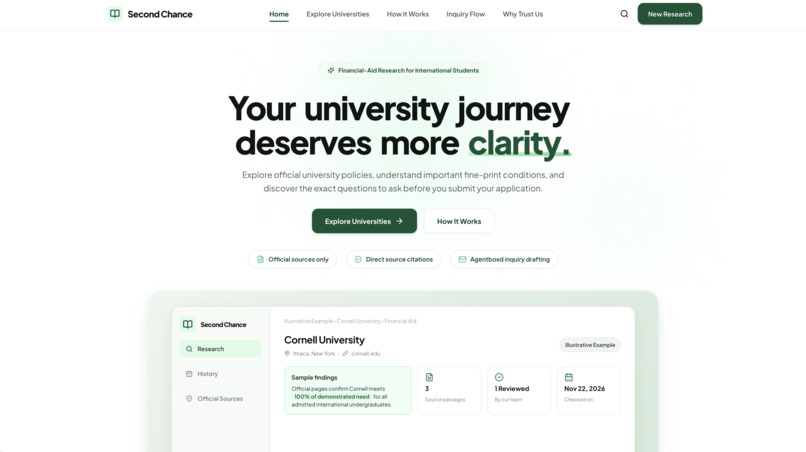
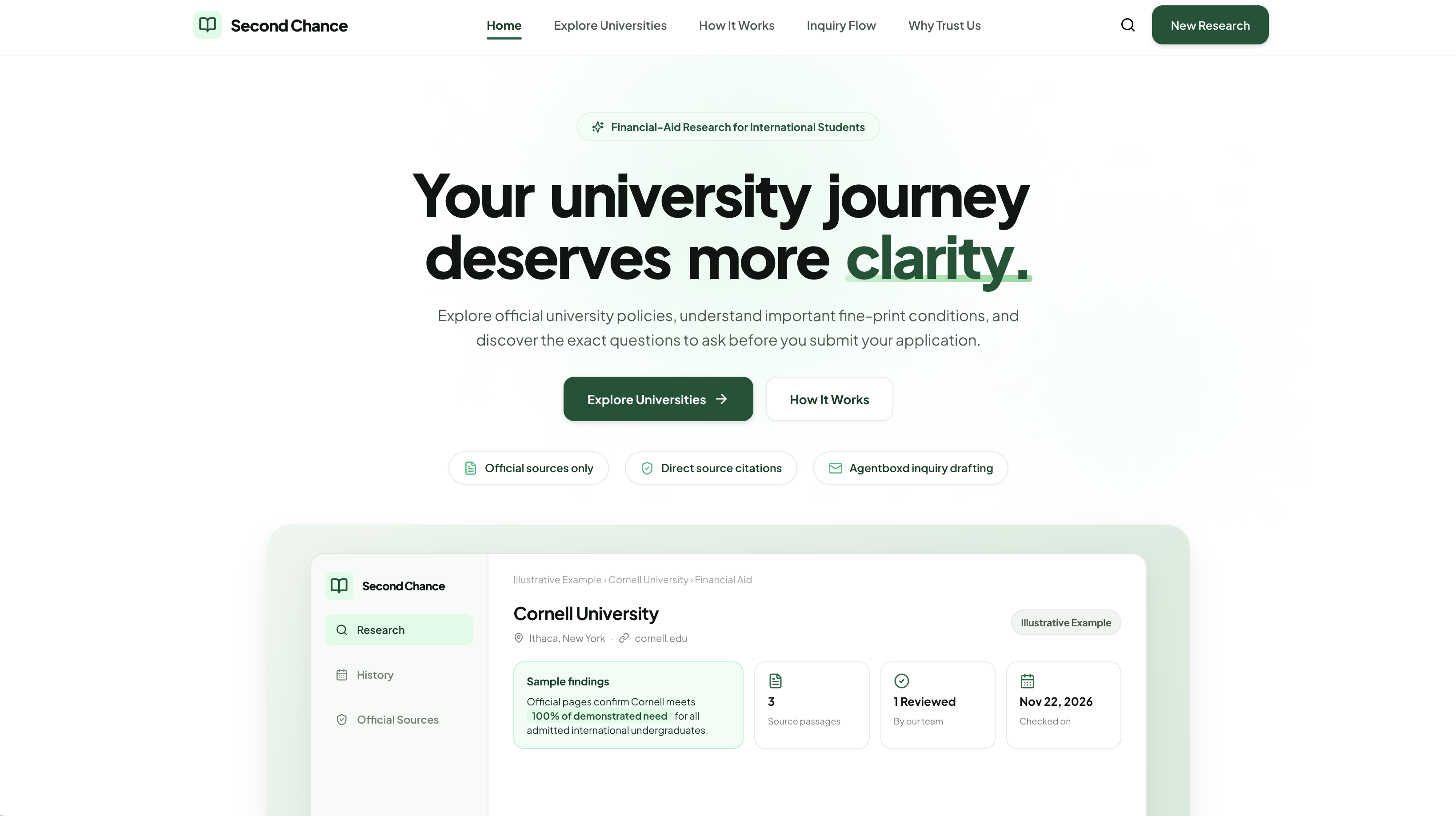
Second Chance helps international undergraduate applicants explore financial aid information from US universities.
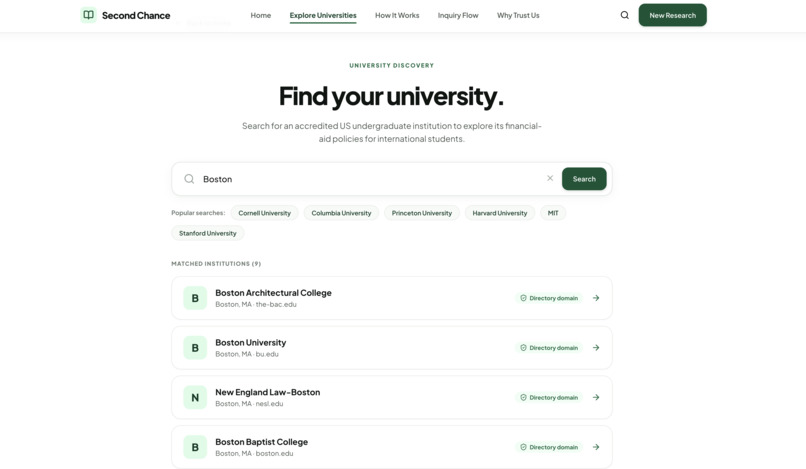
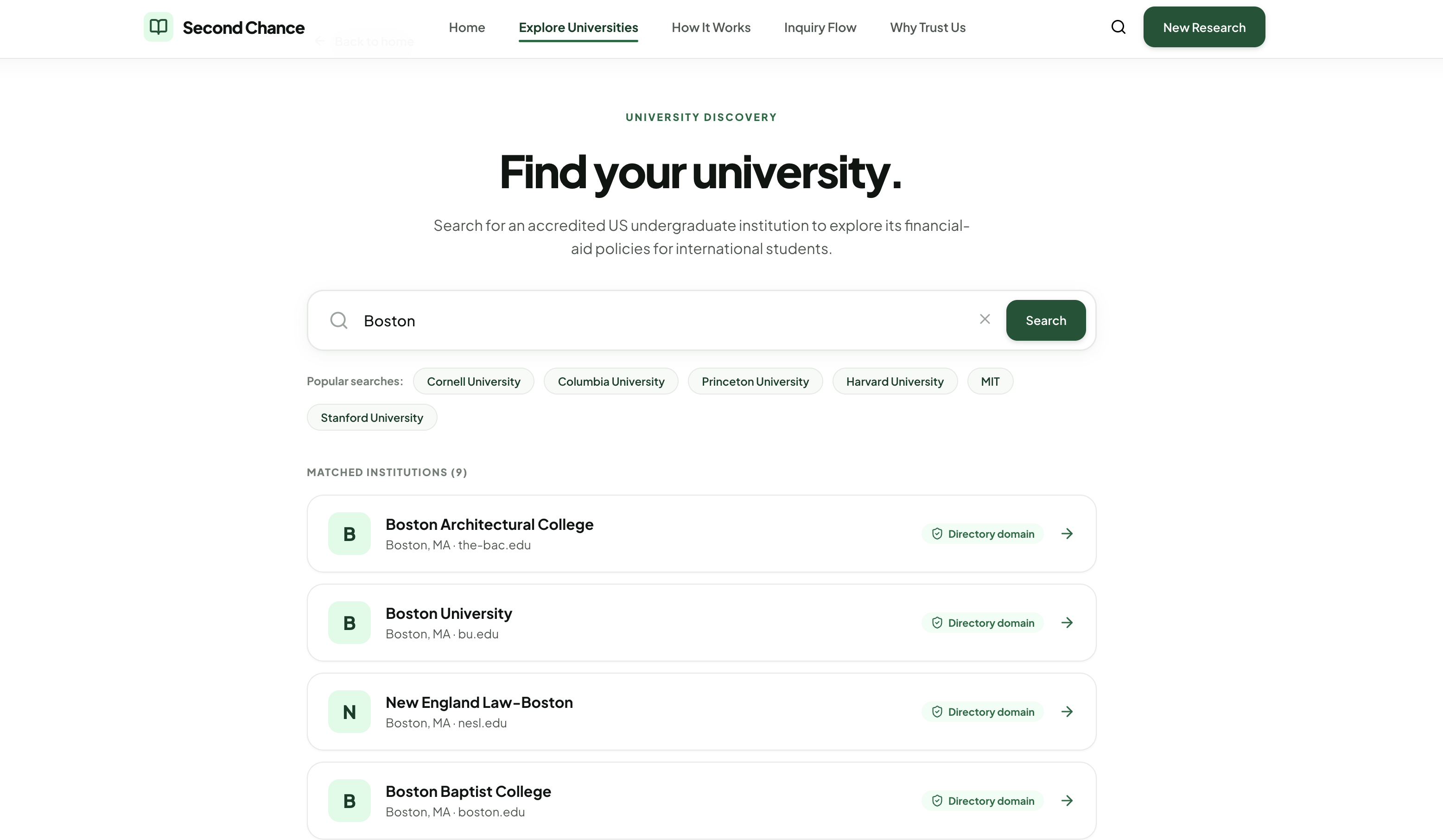
- Search for a university. Choose the right school from the results.
- Read the evidence. See policy passages alongside links to their sources and review details when available.
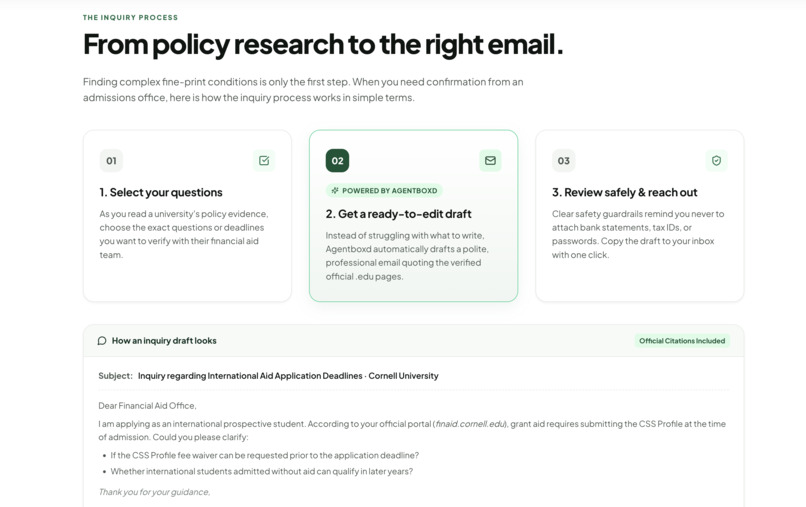
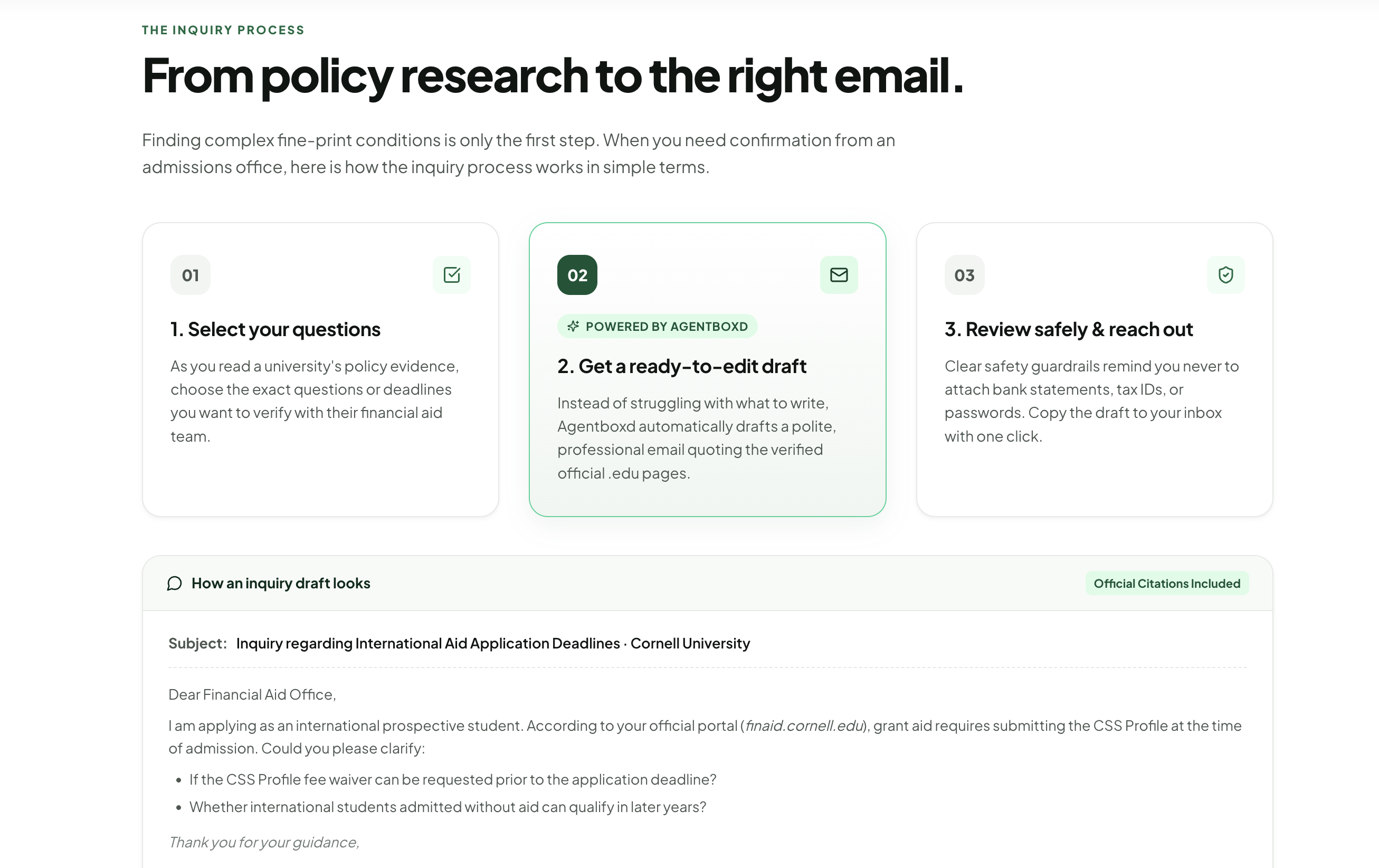
- Work out what to ask next. Browse a checklist of questions and copy or export it.
- Check the result's status. The app can show whether information is fresh, cached, stale or unavailable.
The goal is to make it easier to check the fine print before an applicant makes a decision.
How we built it
We built the interface with React and Vite, and the API with FastAPI. A SQLite cache stores evidence so the app can reuse previous research.
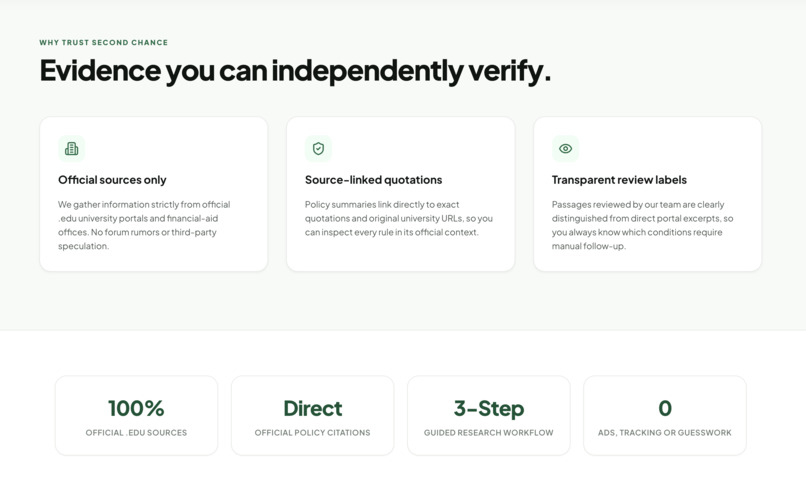
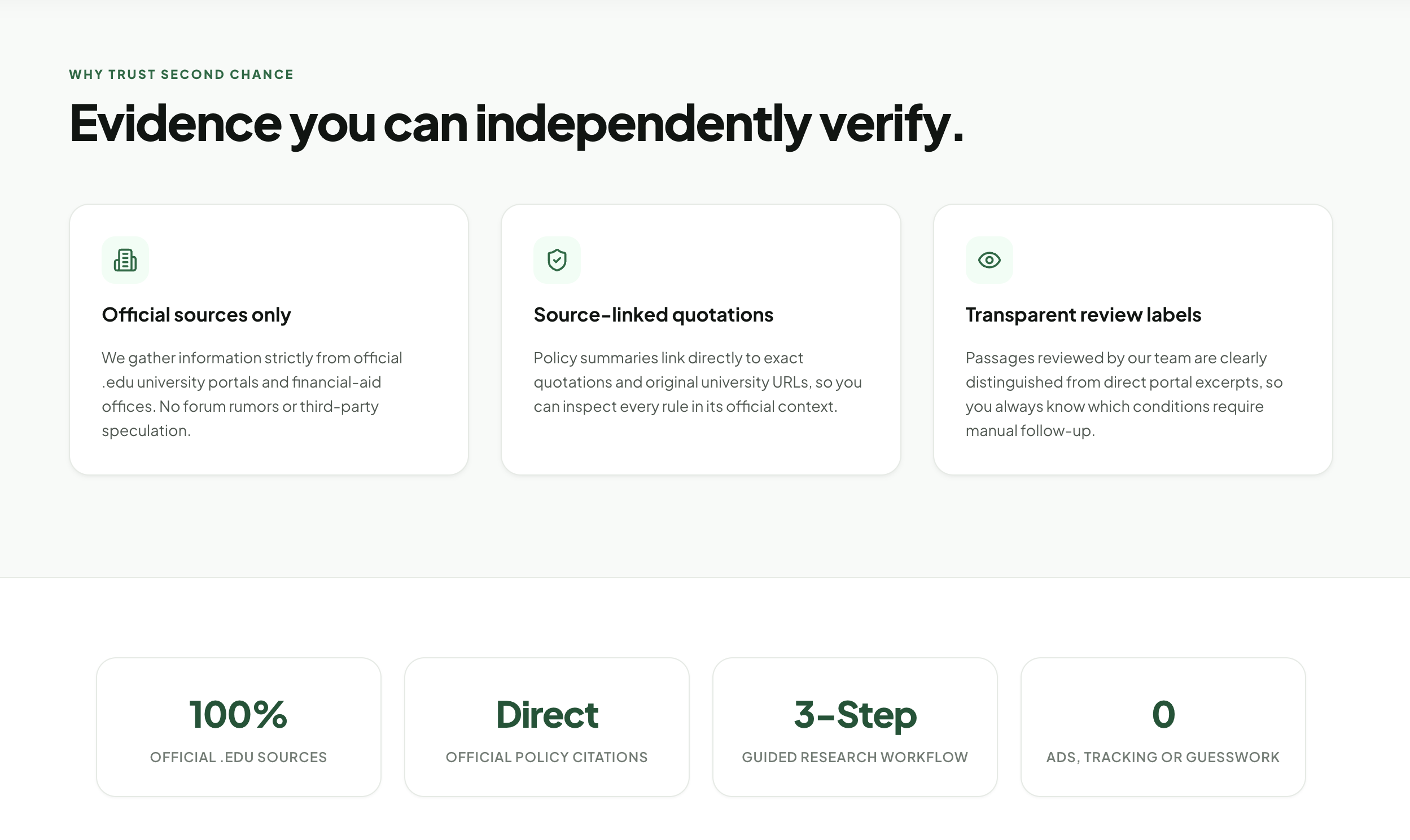
For selected universities, the app uses curated records. For others, it can use College Scorecard to find the institution and Tavily to discover pages on its domain. The research service then looks for financial aid passages and returns their source links. Automatically discovered passages are marked as unreviewed.
If the app can't find usable evidence, it can return an unavailable result instead of inventing an answer. University coverage depends on available sources and configuration.
Challenges we ran into
A university name in a search result isn't the same thing as a reliable financial aid answer. We had to think about how to identify the right institution, keep research within its domain and show students where a passage came from.
We also had to handle information that may be old or incomplete. A cached result is useful, but a student needs to know when they're seeing something that might need another check.
What we learned
An aid percentage can feel like an answer while leaving the hardest part unresolved. The questions around it matter: which conditions apply, when forms are due, and what the student still needs to confirm.
Building this made us care as much about showing uncertainty as showing a result. We want students to be able to open the source and have a better conversation with the university.
What's next
We'd like to expand the reviewed university records, make it easier to track policy changes, and explore ways to help students understand the costs an offer still leaves them with.
Try Second Chance
View the code and setup instructions on GitHub
Second Chance is a research starting point, not a financial aid, admissions or cost decision. Policies change, and a passage may not contain every condition. Confirm current requirements directly with the university.

