-
-
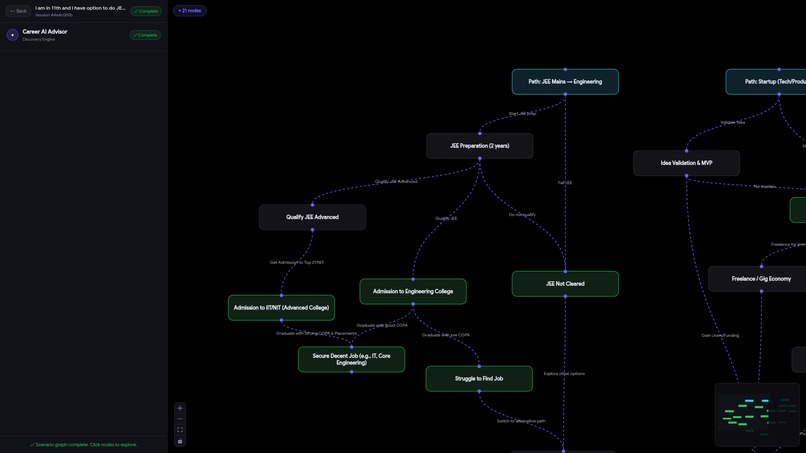
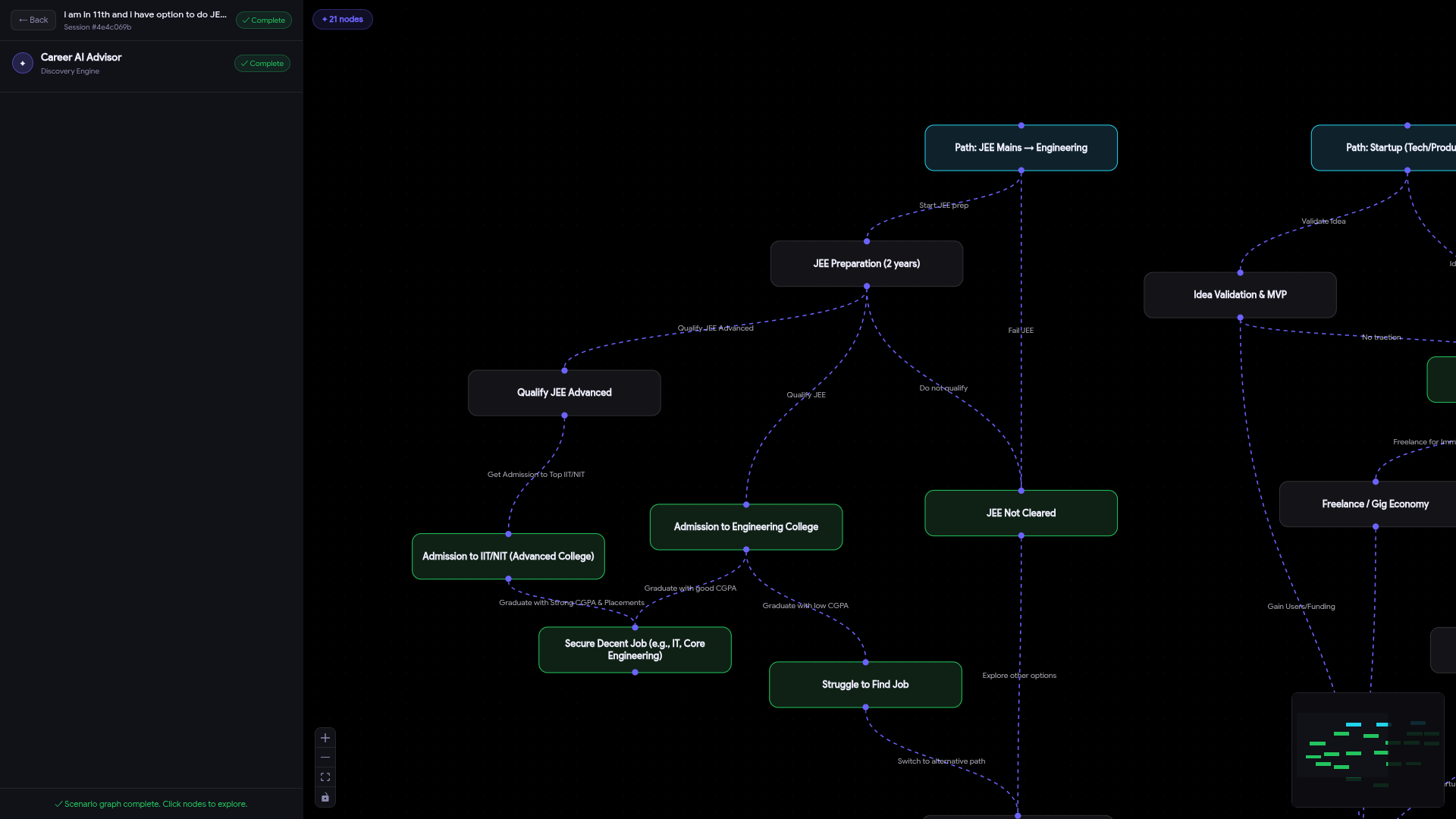
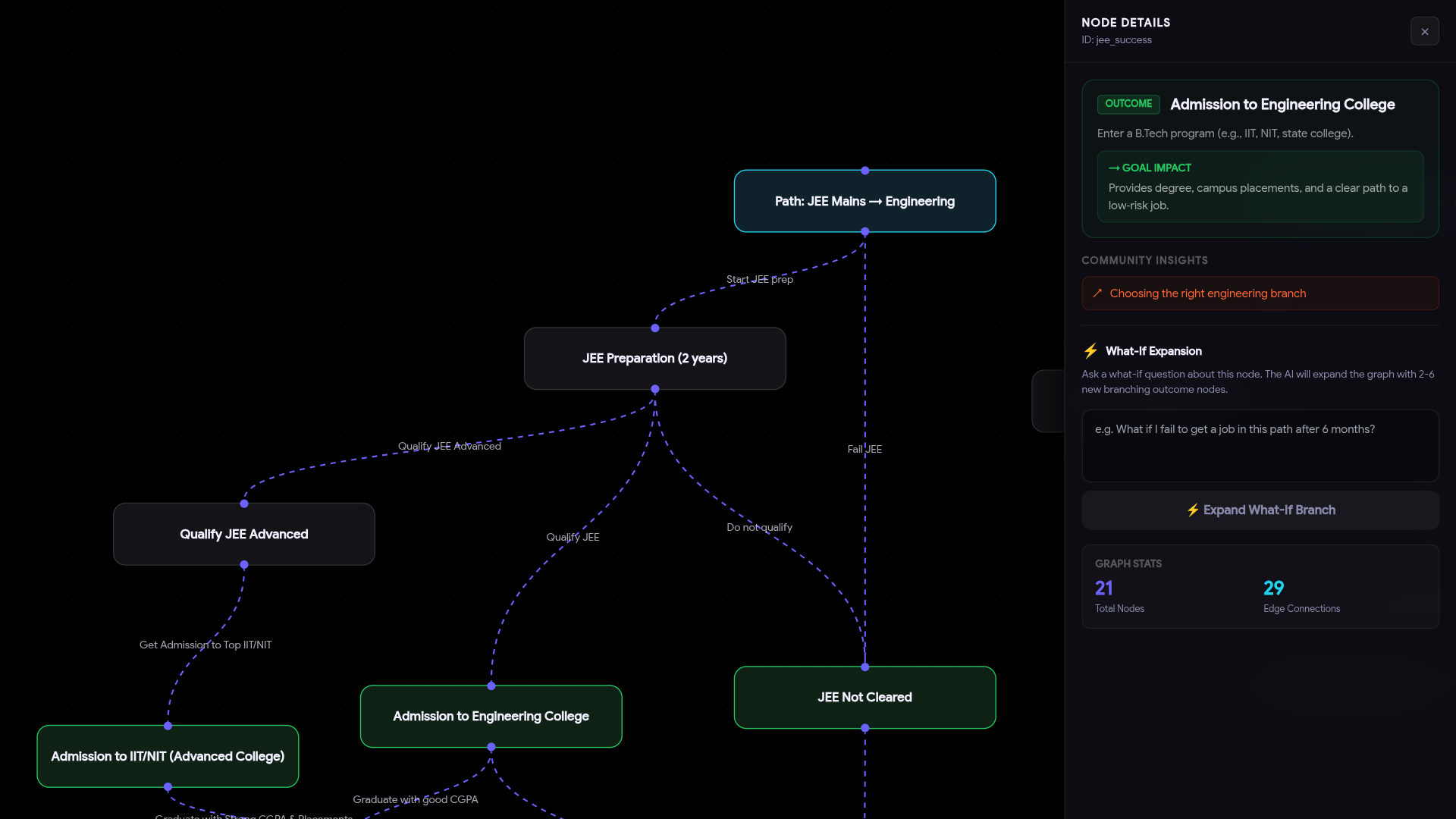
scenario graph
-
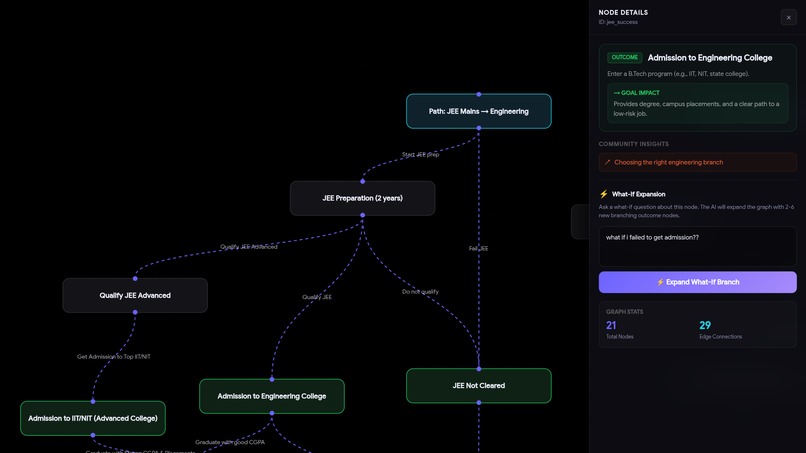
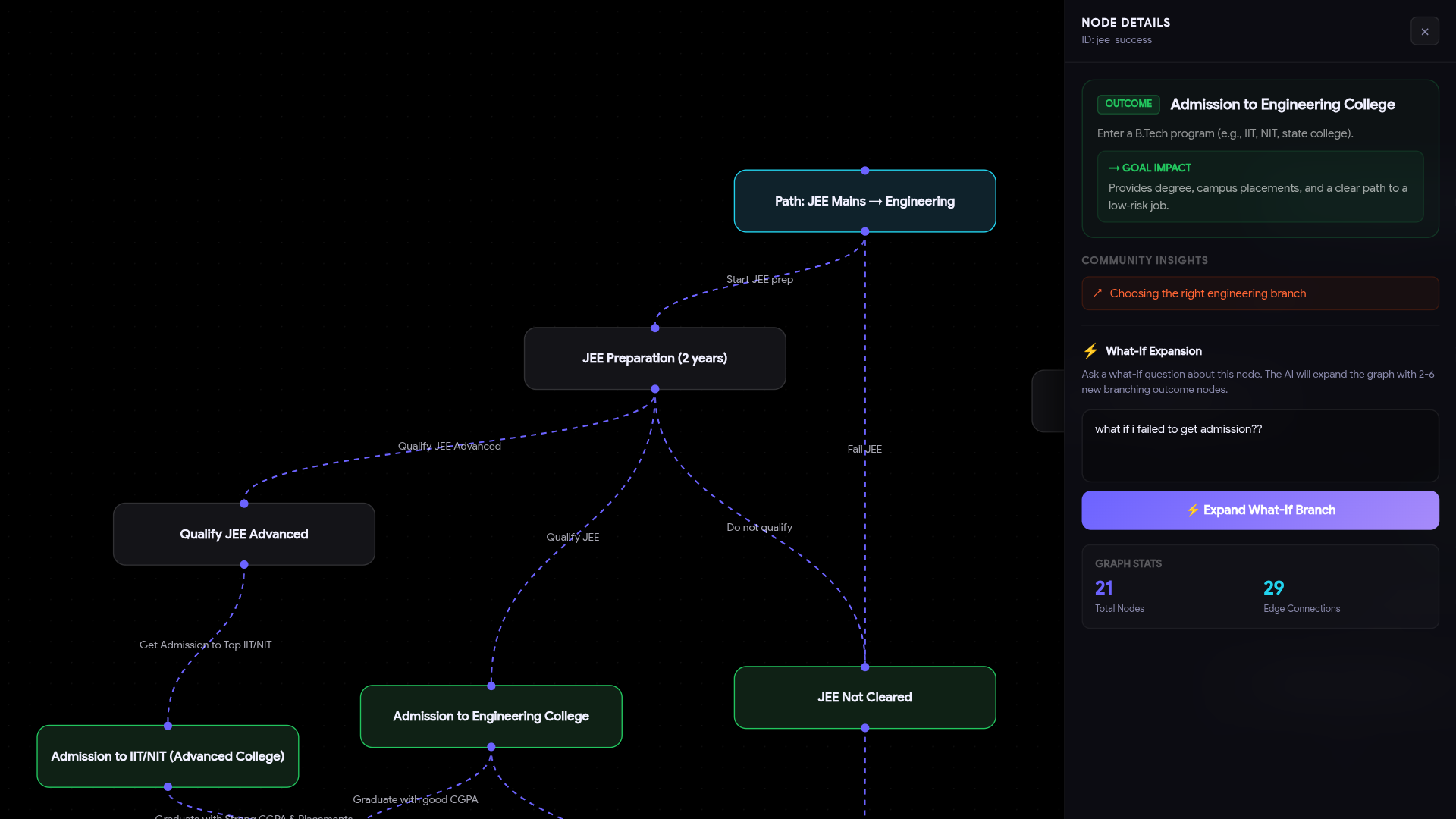
Exploring 'what-if' scenario
-
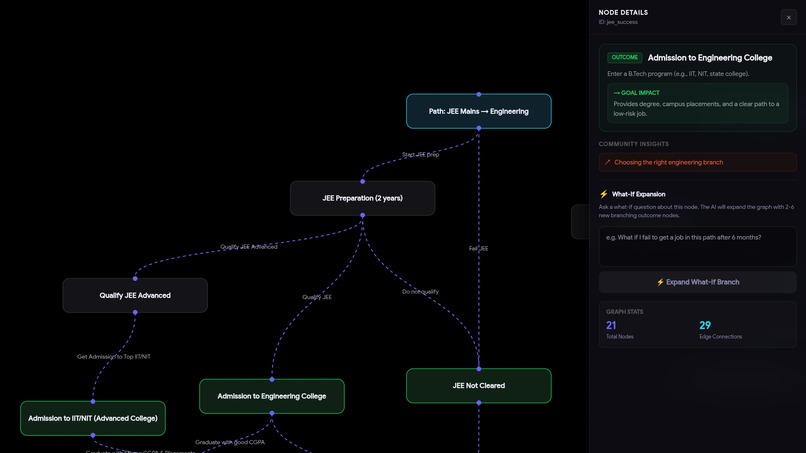
nodes detail
-
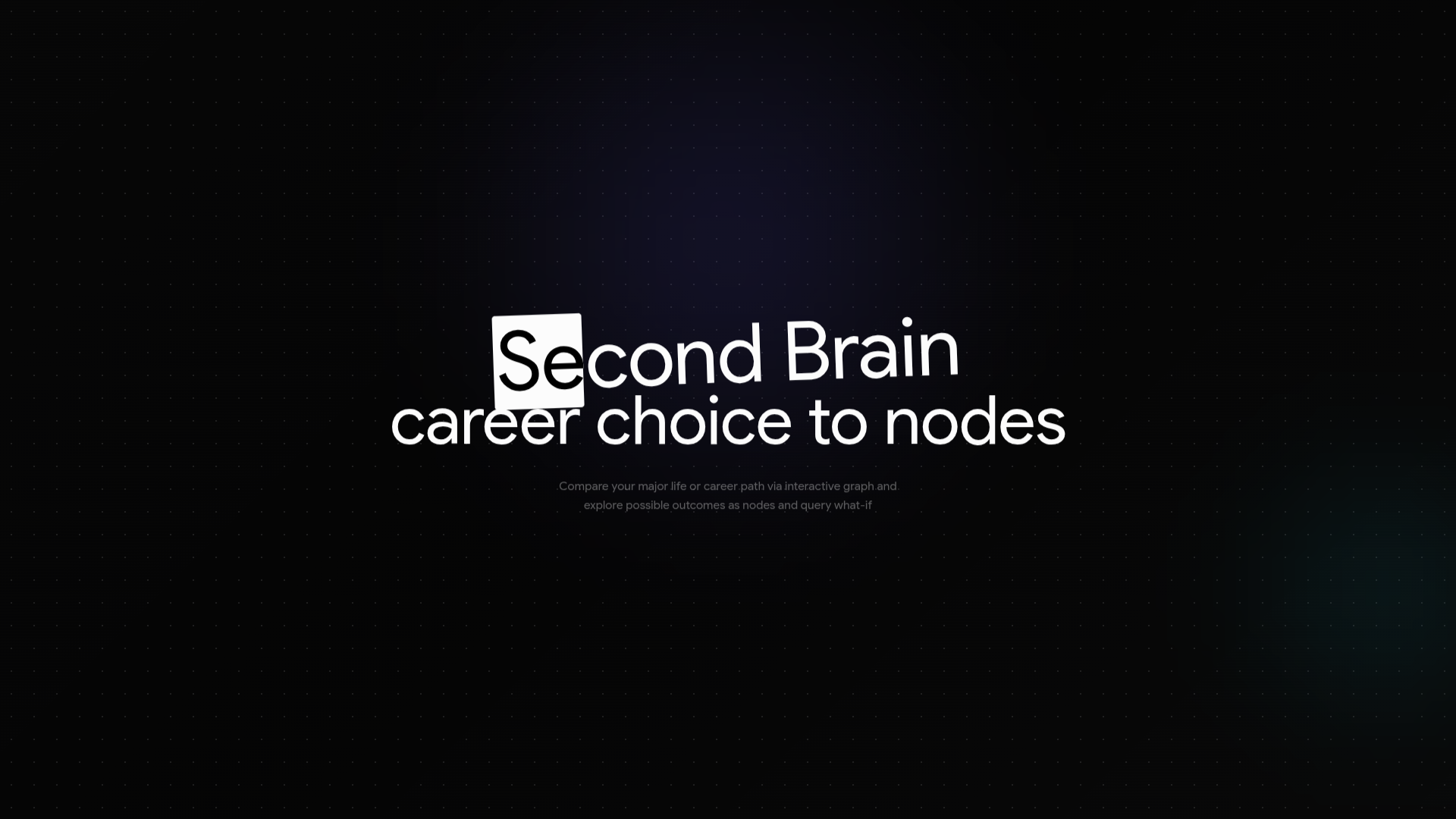
landing page animation
-
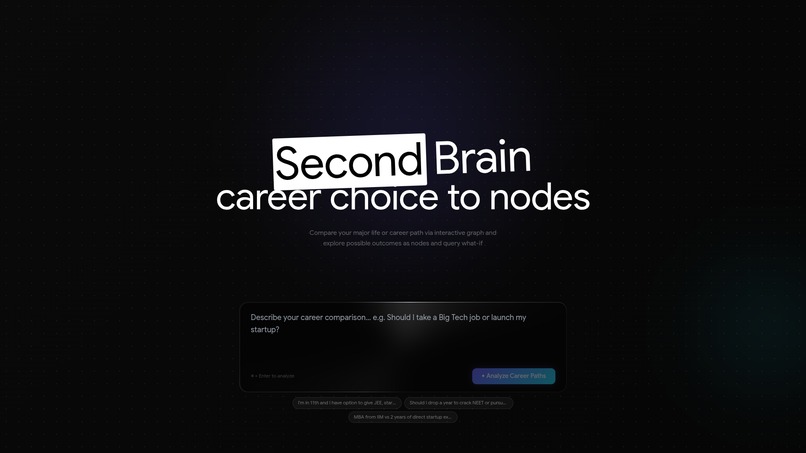
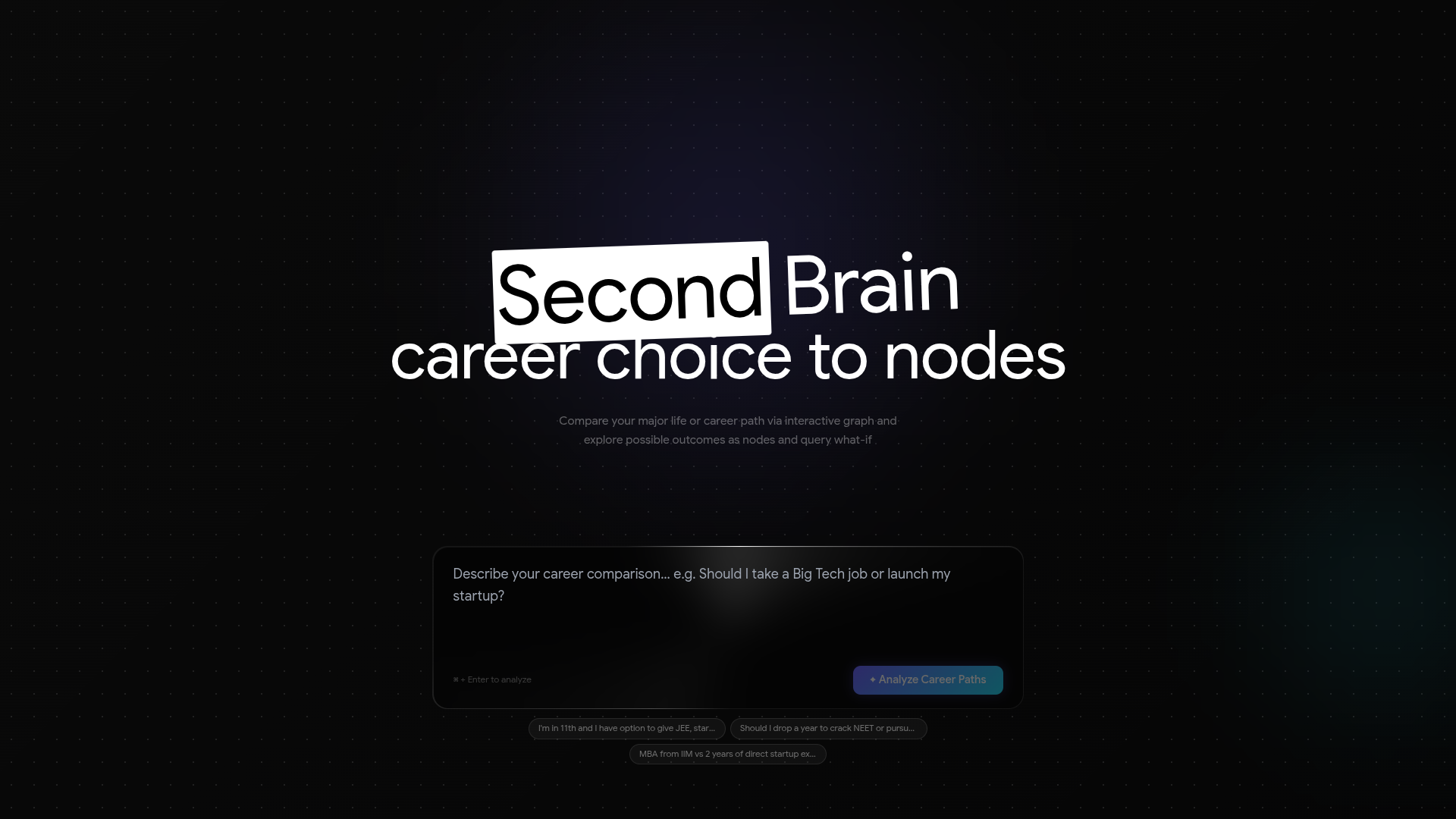
landing page
-
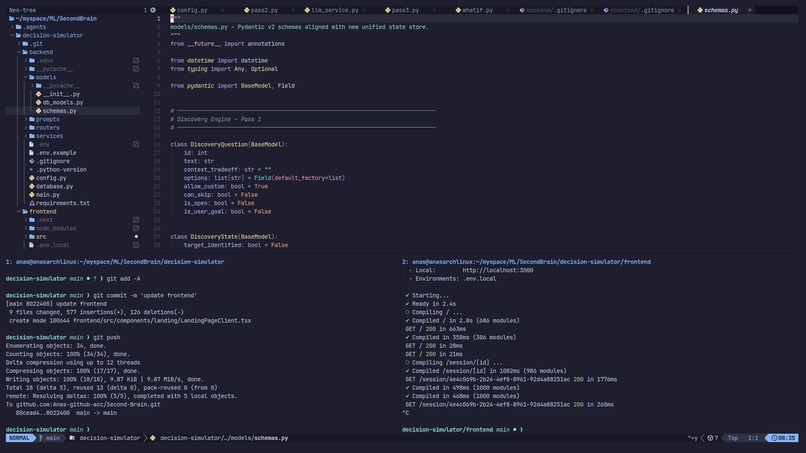
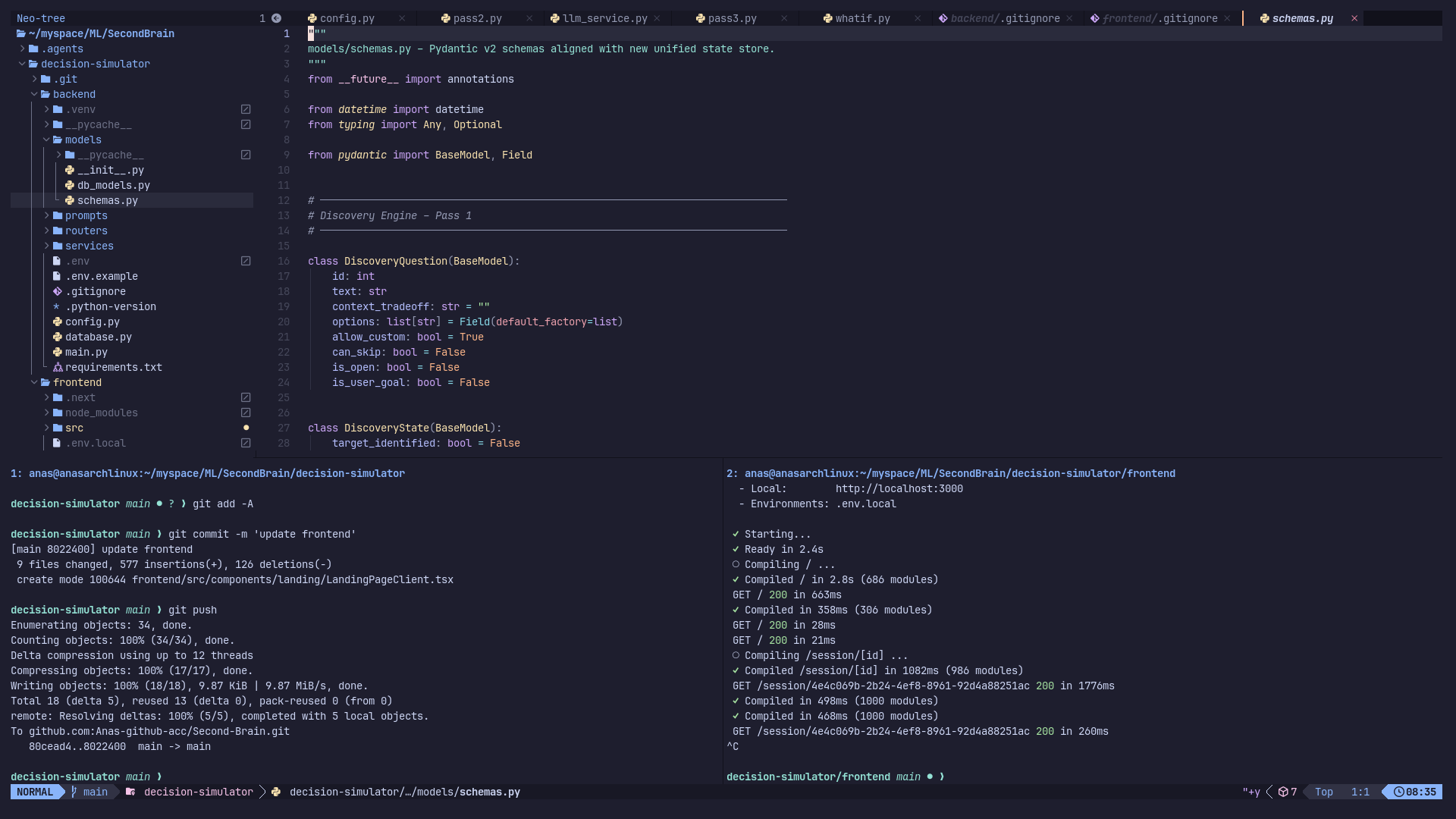
background running codebase
Inspiration
There’s a general tendency for many people to make their most significant life and career decisions using less-than-complete amounts of data and scattered sources of information, accompanied frequently by a relatively high level of emotional bias. These are typically large decisions such as which job to accept, whether to join a startup, whether to enroll in a grad school program, whether to move to a new city, or whether to pursue a whole new career. Typically the information on making such decisions is limited to generalized resources and simple pros and cons lists.
When investigating this issue, we found that the most challenging aspect of making any decision lies in actually understanding the range of potential futures that exist as a result of the available decision-making options.
Therefore, we set out to create this AI tool to allow users to visualize and ultimately evaluate their decision-making options through exploration.
What it does
This project provides a visual method for exploring major life and career choices using a scenario-based graph, rather than relying on traditional advice or trying to create lists of pros and cons.
Users state their goal and the life or career paths they are interested in pursuing. The simulator finds the relevant missing data, asks the next question(s) based on those identified gaps, and generates a visual graph of various possible scenarios for their goal. Each candidate path has unique outcomes, possible failures, risk management, and opportunities that help users better understand how each path will potentially affect their long-term objectives.
This system was created with the goal of helping users reason through and make decisions in a structured way; it is not intended to provide recommendations in the form of direct approval (e.g., approval for a course of action).
How we built it
We have built an AI-powered Life Decision Simulator that convert users major life and career decision into interactive graph of nodes that help user compare career paths easily and effectively.
Instead of generating list of pros/cons or bunch of advice, our system generates a Scenario Graph that is structured, interactive (allow user to interact and ask what-if query). It contains:
- Root nodes represent possible life or career paths.
- Downward Expanding Outcome nodes show possible outcomes, failure, risk mitigation, hidden tradeoff.
- Expandable nodes allow deeper exploration without overwhelming the user.
Users can click any node and ask "What if?" questions to generate new branches and explore alternative futures.
The goal is not to predict the future, but to help users reason through uncertainty.
Challenges we ran into
Avoiding Generic AI Response Initial prototypes were behaving like traditional AI assistants and produced recommendations instead of helping users reason through decisions. We redesigned and refined our system prompt to make our response more based on decision.
Too large output token reducing output quality Initially we instruct the LLM to response edges as the connection inside the nodes object increasing the output token size by 30%. To reduce this we used Adjacency Matrix Representation of graph saving 25% of output token.
Balancing Detail and Usability Providing every tradeoff and outcome simultaneously overwhelmed users. We introduced progressive reveals that expose deeper information only when the user chooses to explore it.
Accomplishments that we're proud of
- Built a complete AI-powered life decision simulator using only two core LLM call, significantly reducing latency and LLM cost.
- Generate reasonable response with open free model allowing anyone to use without any token cost.
- Designed a graph-first decision exploration experience instead of a traditional chatbot interface.
- Successfully transformed complex life and career decisions into an interactive nodes of graph that users can explore visually.
- Implemented progressive graph expansion, allowing users to reveal deeper outcomes, hidden tradeoffs, failure paths, and risk mitigation strategies on demand.
- Reduced graph generation token usage by approximately 25-30% by replacing nested edge definitions with an adjacency-based graph representation.
What we learned
In this study we discovered that decision support is a completely different type of system than a recommendation system.
The best AI systems do not always give you answers, but rather assist you in developing better questions, understanding your trade-off options, and reasoning through uncertainty.
We also found visual reasoning to be very important. Using connected graphs depicting future events made the exploration of complex decisions far easier than having only long-form text to describe the same event.
Lastly, we found that significantly reducing the number of times an AI call is made, along with the utilization of structured graph generation, greatly improves user experience and system efficiency.
What's next for Second Brain
- Introducing generate plan, this will generate a defined plan in report format
- Switching to better models for free.
- Personalized overall system
- Community-driven scenario validation
- Scenario comparison across different countries and industries
Built With
- fastapi
- next.js
- openrouter
- postgresql
- python
- react
- reactflow
- vercel


Log in or sign up for Devpost to join the conversation.