Inspiration
Meridian started from a problem we kept running into ourselves. As students, we constantly found ourselves stuck between multiple “good” options. Which course should we start first? Should we focus on grades, side projects, internships, or learning a new skill? We weren’t looking for someone to tell us what the objectively best choice was, we wanted a way to think through decisions without getting overwhelmed by uncertainty.
Most AI tools we tried either gave generic advice or confidently picked a single answer. Real life isn’t that simple. The “best” option depends on what success means to you and the circumstances you’re in. That’s what inspired Meridian.
What it does
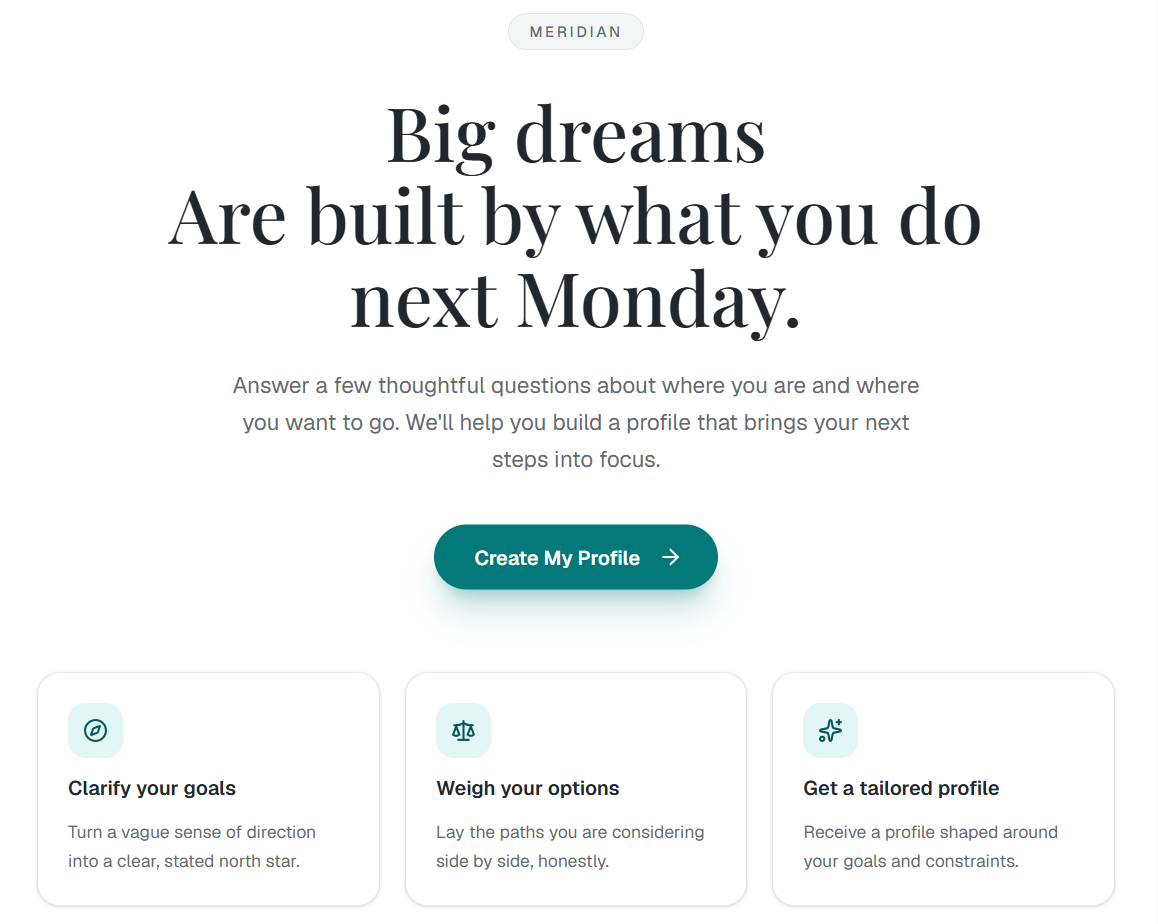
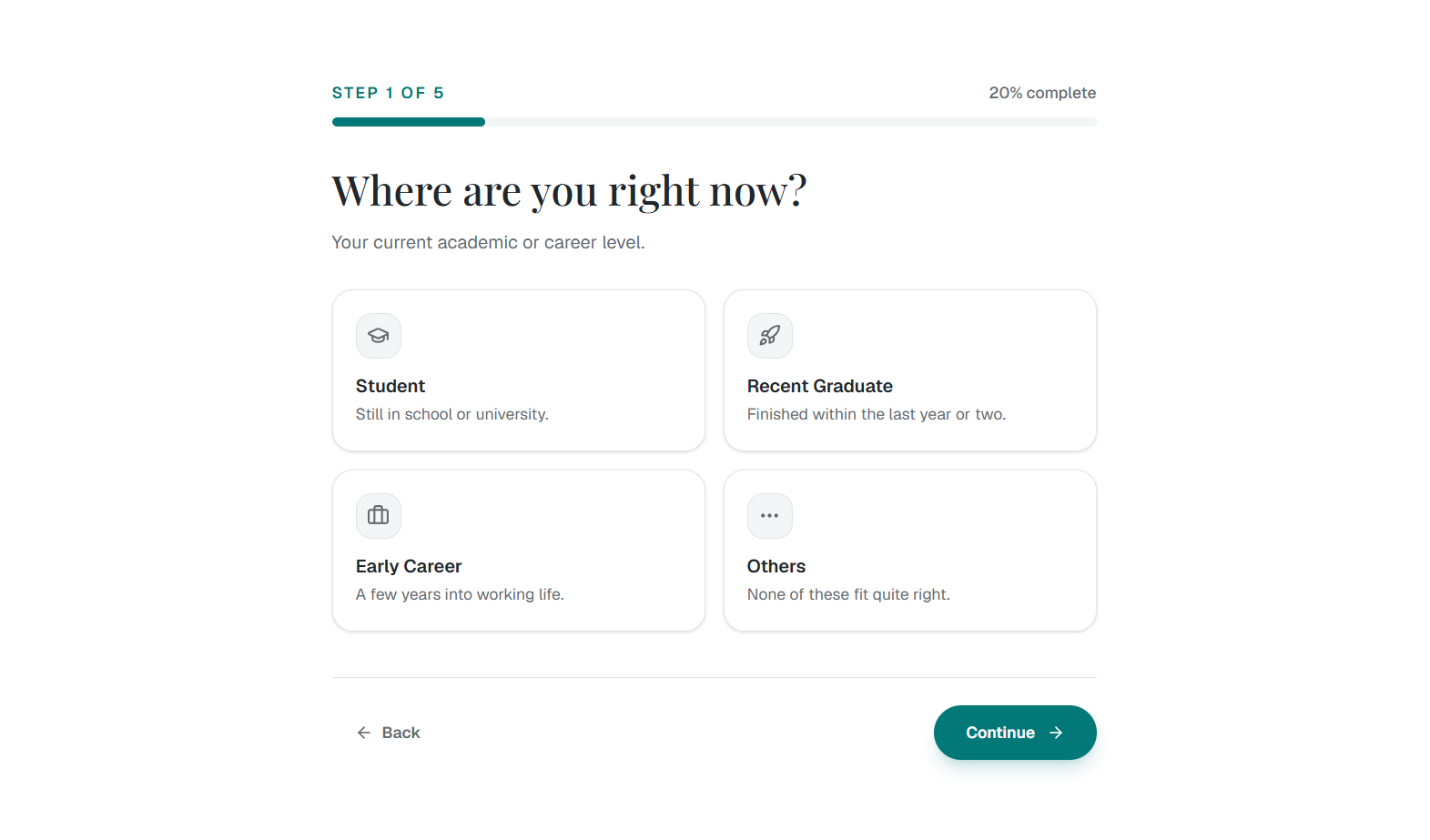
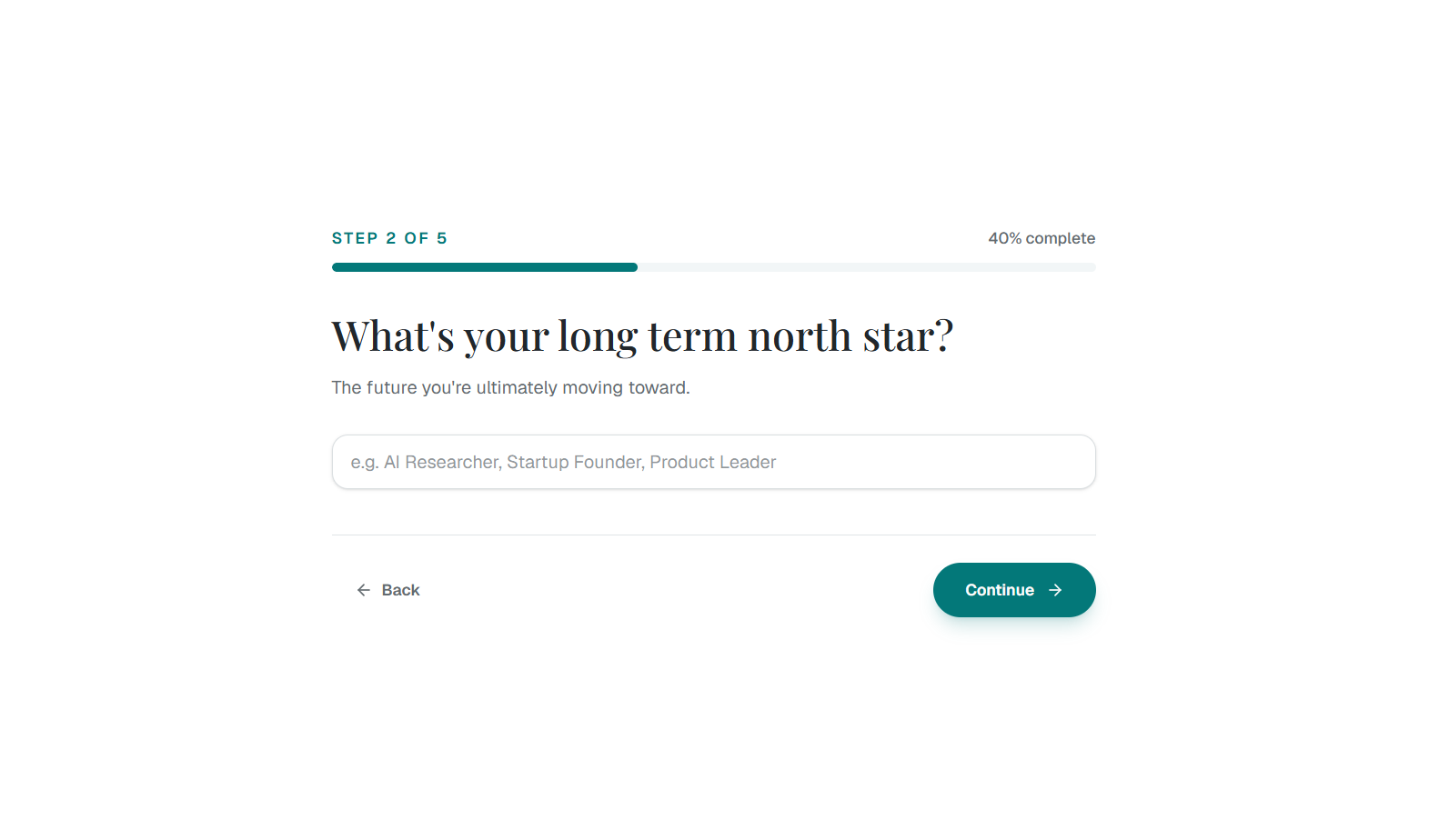
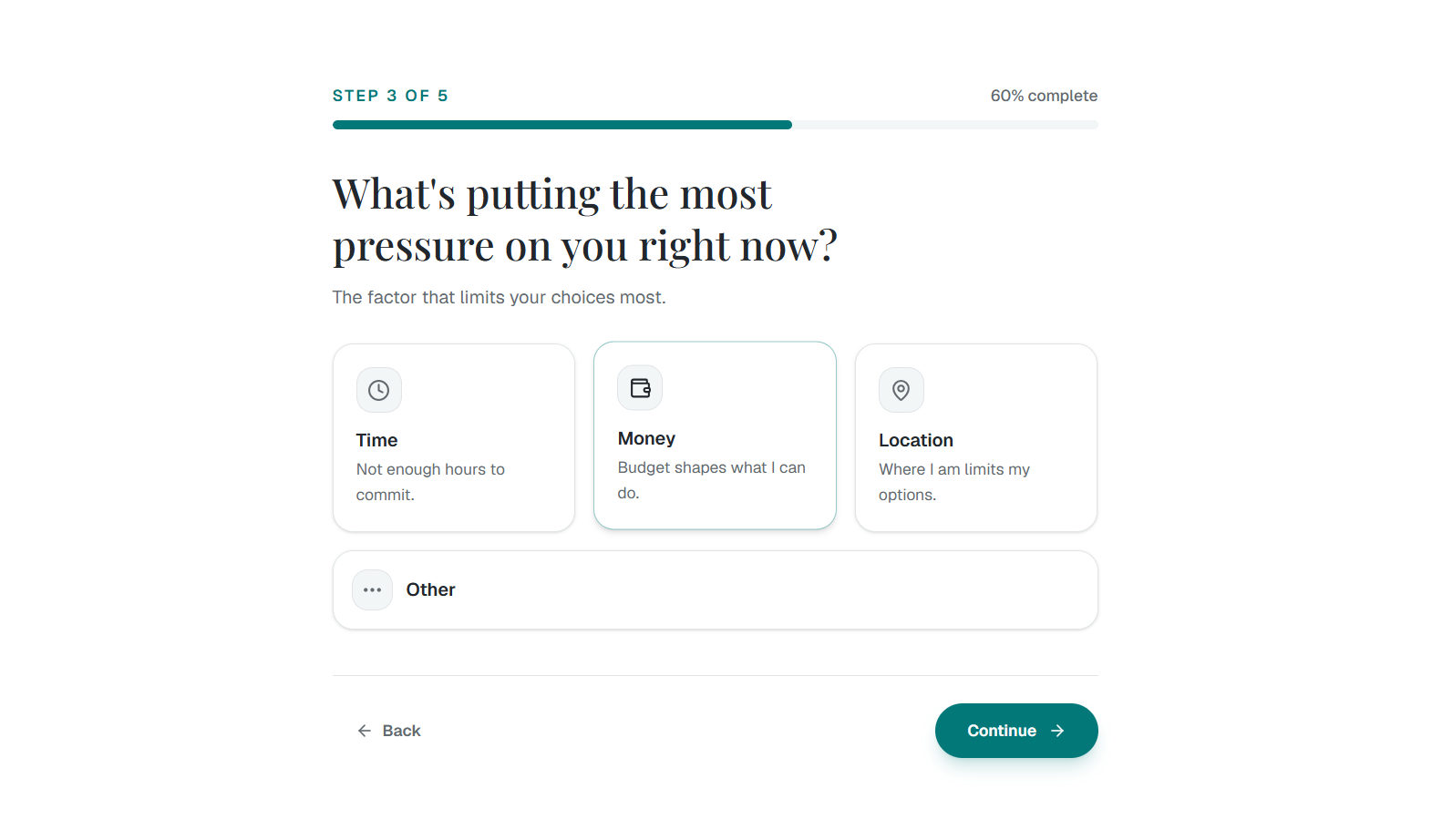
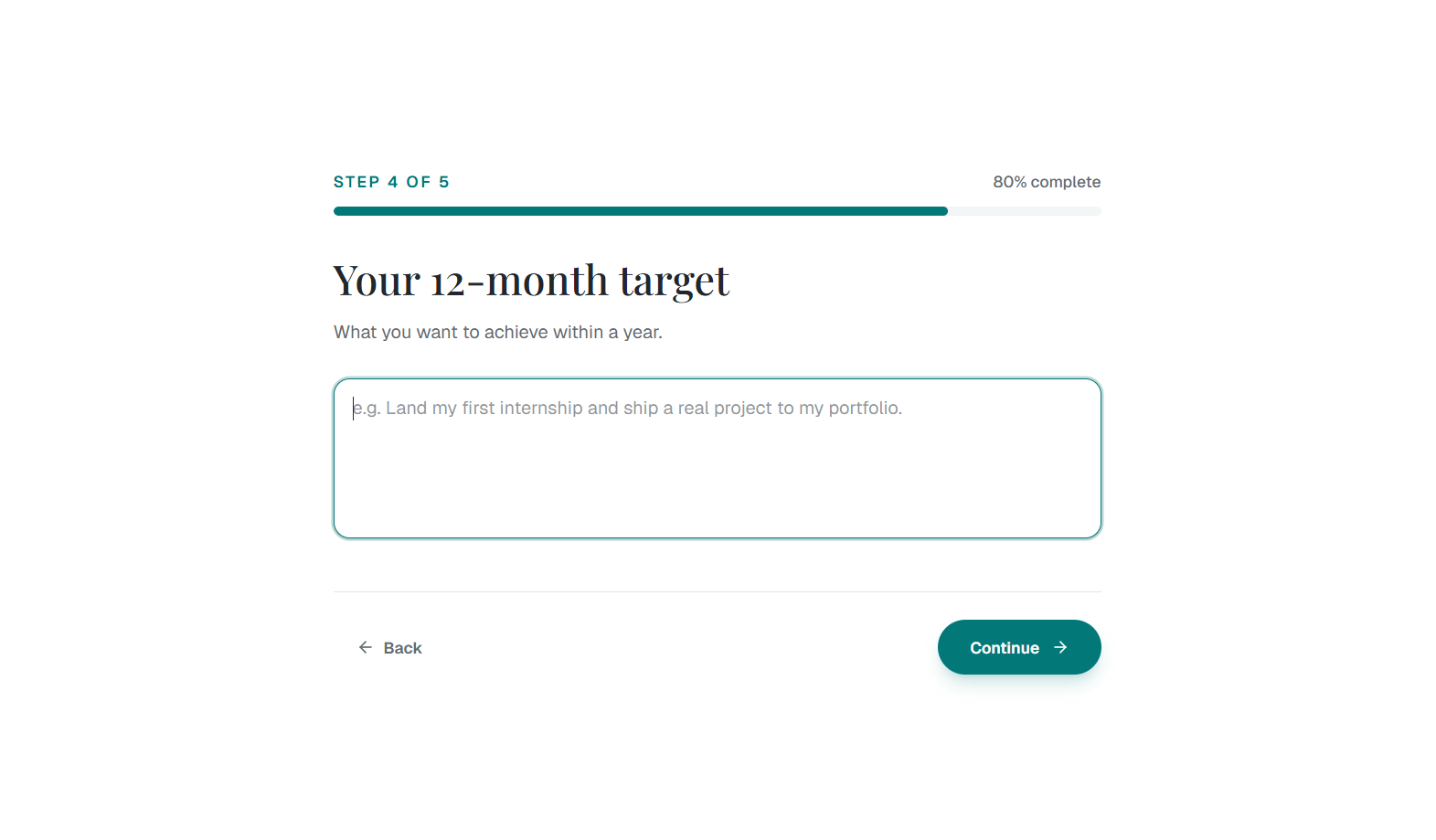
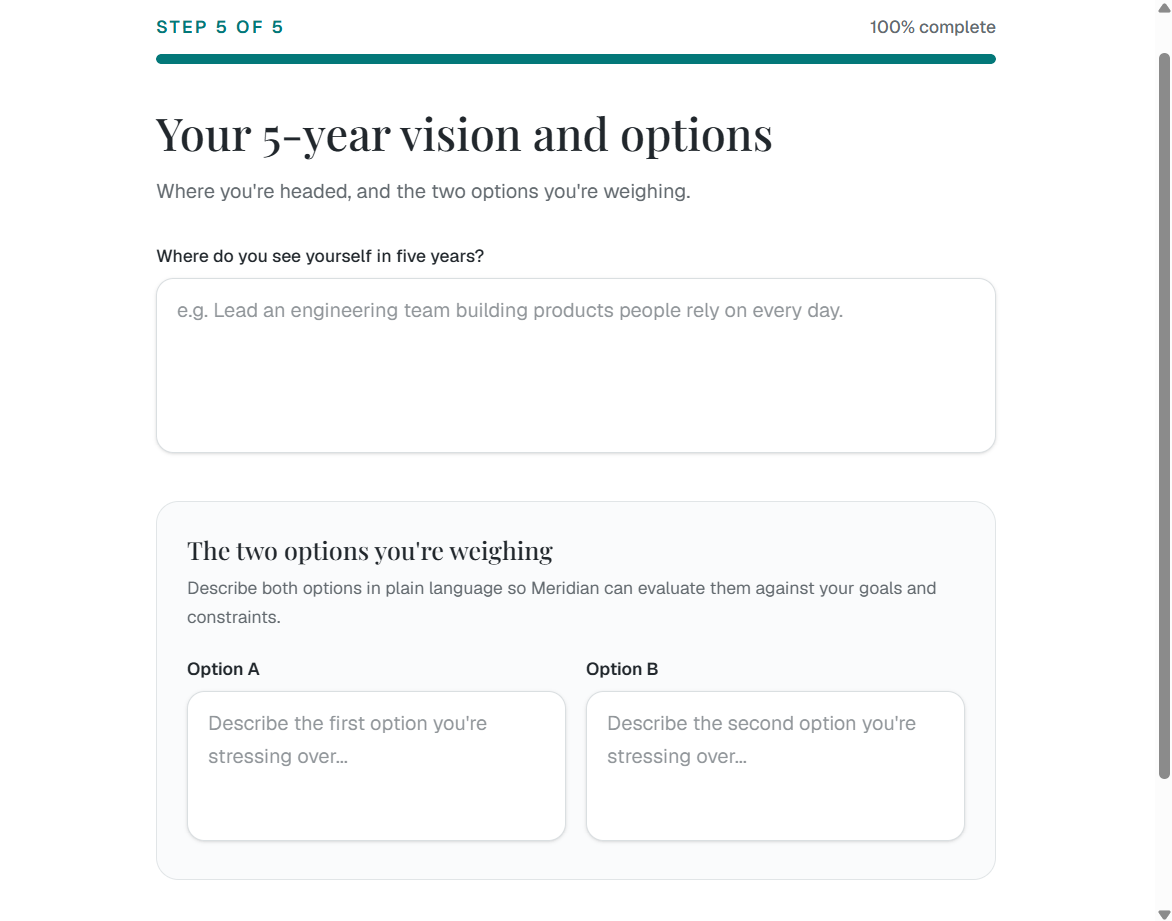
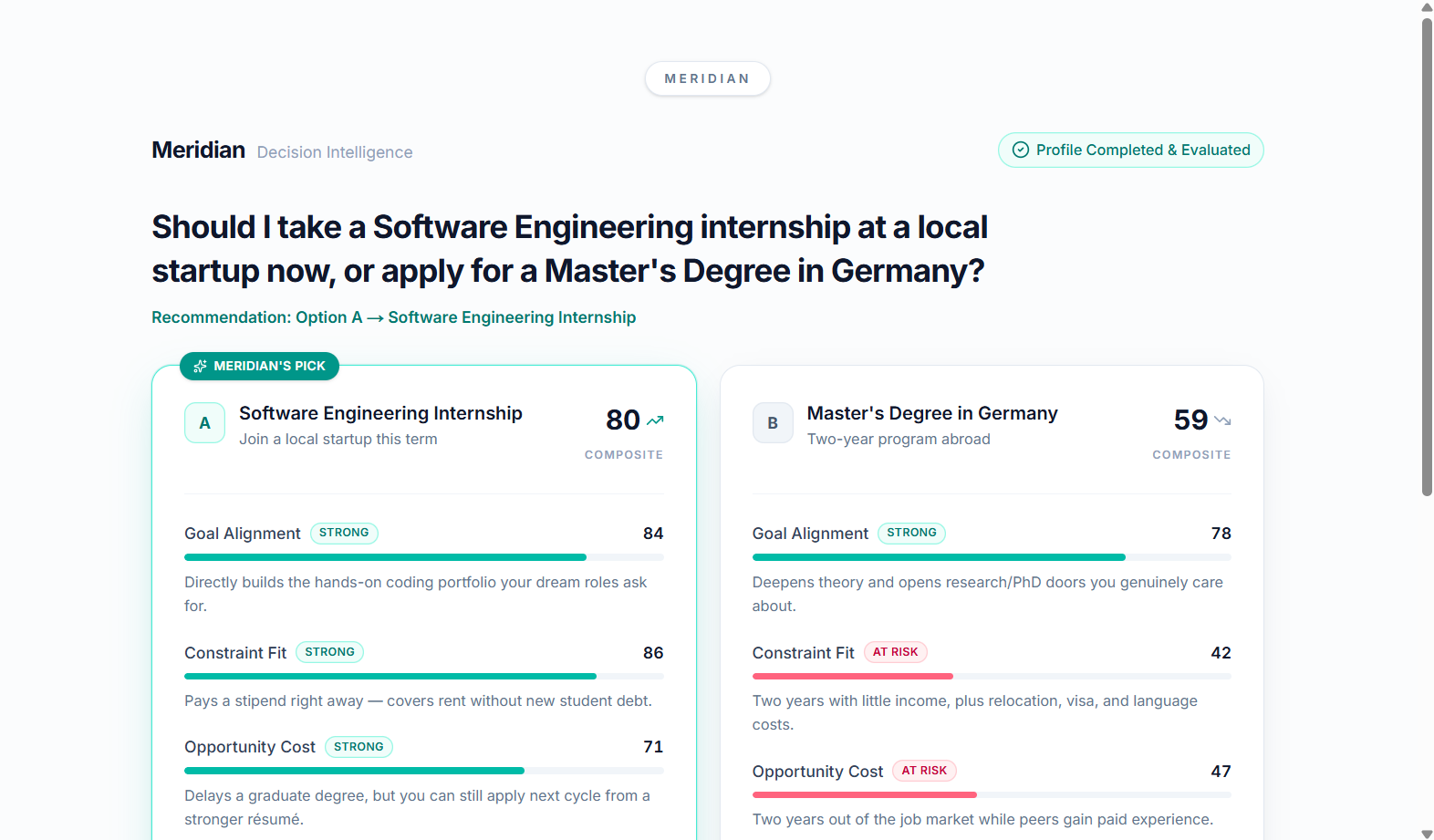
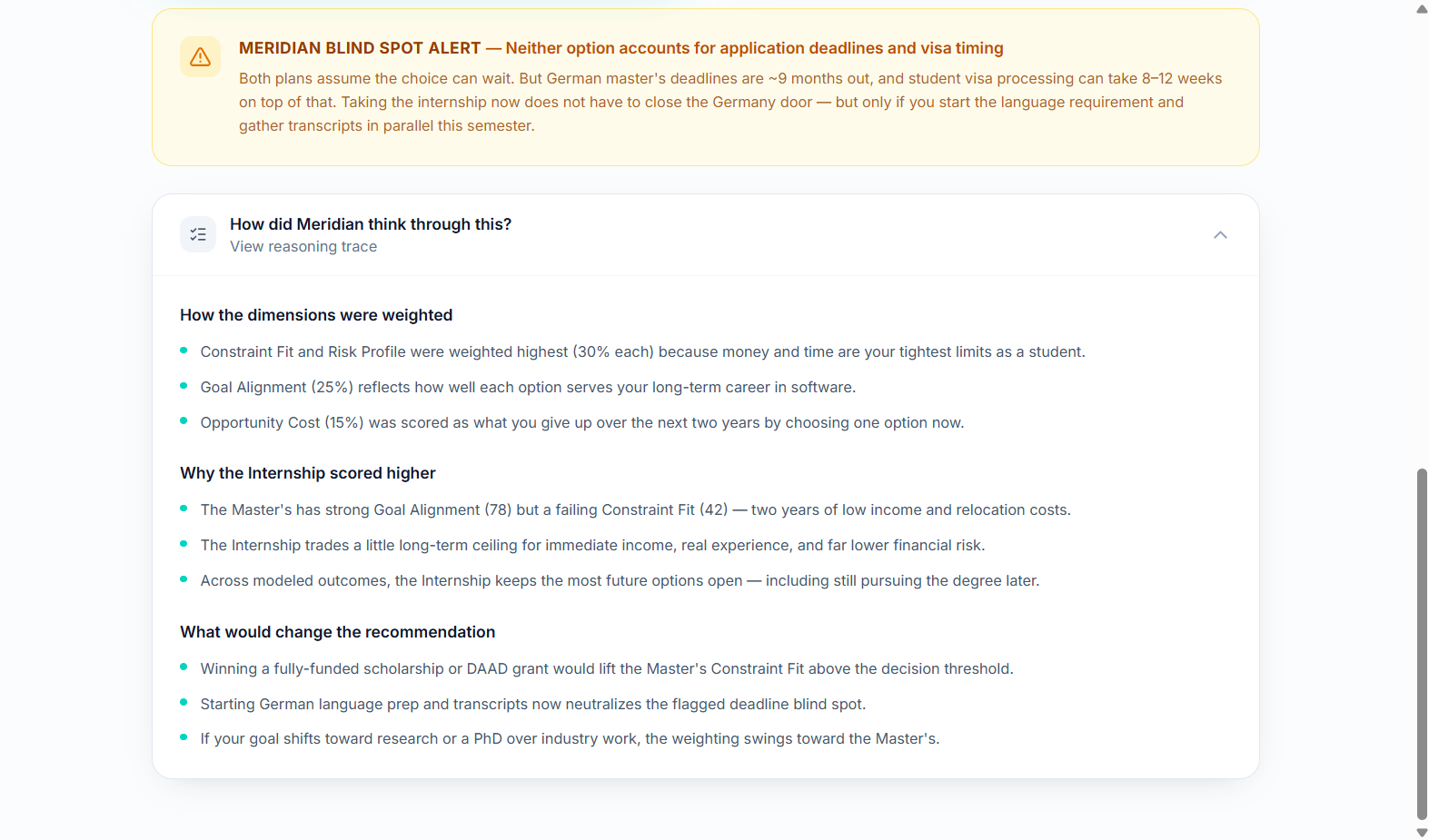
Meridian is a structured decision making framework, that helps users explore how different choices may play out over time. Instead of telling people who they should become, Meridian evaluates options through the lens of their OWN goals and circumstances.
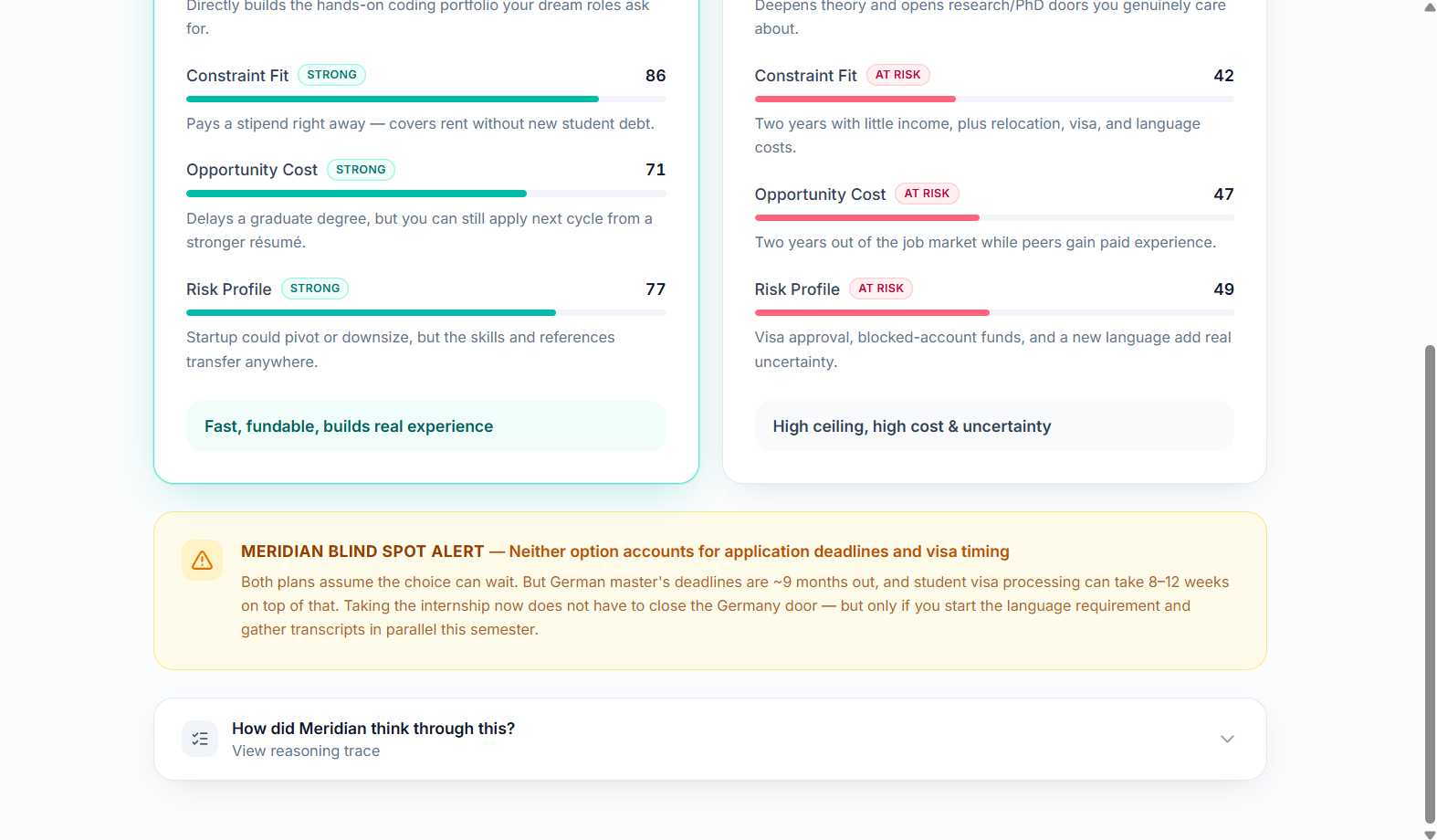
One of its key features is the Blind Spot Alert, which surfaces risks, trade-offs, and consequences that users may not have considered. Rather than declaring a winner, Meridian highlights the option that appears most aligned with the user’s priorities and explains why.
How we built it
While building it we focused more on reasoning rather than on recommendations. Instead of relying on a single prompt, we designed Meridian around multiple stages that examine goals, trade-offs, and hidden assumptions.
A lot of our effort went into making the outputs feel realistic and useful instead of generic. We repeatedly refined prompts, tested scenarios, and adjusted how the system reasons so that it would provide insight rather than simply tell users what to do.
Challenges we ran into
The hardest challenge was resisting the temptation to make Meridian an answer engine. It was easy to build something that always declared a winner but it is much harder to build something that respects uncertainty and recognizes that different people define success differently.
Another challenge was making sure the system could point out blind spots without sounding overly confident or pretending to predict the future. We wanted Meridian to help people think better, not think for them.
Accomplishments that we're proud of
We’re proud that we resisted the temptation to build another answer engine. Instead of trying to tell users what the “correct” decision is, we built a framework that adapts to different definitions of success and different circumstances and goes through structured and focused decision making.
We’re especially proud of the Blind Spot Alert. During development, we realized that people often overlook trade offs and unintended consequences, including ourselves. Seeing Meridian surface considerations we hadn’t thought about made us feel that we were building something genuinely useful rather than just another chatbot.
Most importantly, we’re proud that Meridian reflects a problem we personally faced and built a solution that we would actually want to use ourselves.
What we learned
We learned that designing AI isn’t just about getting impressive outputs. Defining what the system should not do was equally important. We intentionally avoided making Meridian overly confident or pretending it could predict the future.
Building Meridian taught us that uncertainty isn’t something to eliminate completely. Instead, it can be managed by thinking more clearly about goals, trade offs, and personal priorities.
What's next for Meridian
We want to continue improving Meridian’s reasoning and make its simulations feel more personalized and realistic. We’d like to expand beyond students, early professionals and support a wider range of decisions, from career and learning choices to finances and everyday planning.
We’re also interested in making the Blind Spot Alert stronger by helping users uncover assumptions and risks they may not realize they’re making.
Ultimately, we don’t want Meridian to replace human judgment. We want it to become a tool that helps people think through uncertainty with more clarity and confidence.
Built With
- gemini-api
- react
- tailwind
- typescript

Log in or sign up for Devpost to join the conversation.