-
-
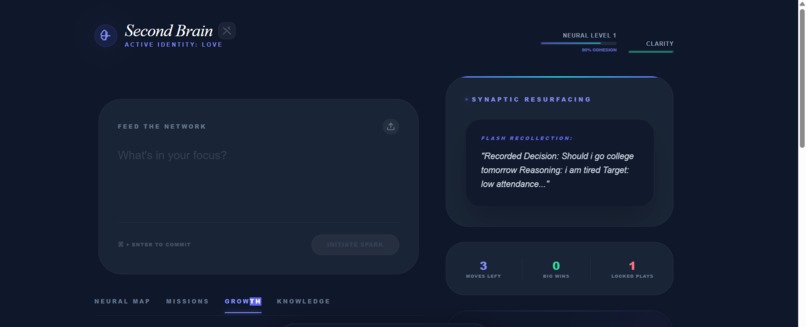
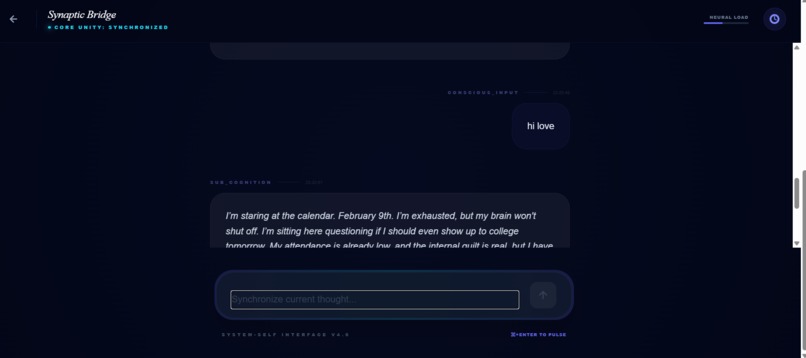
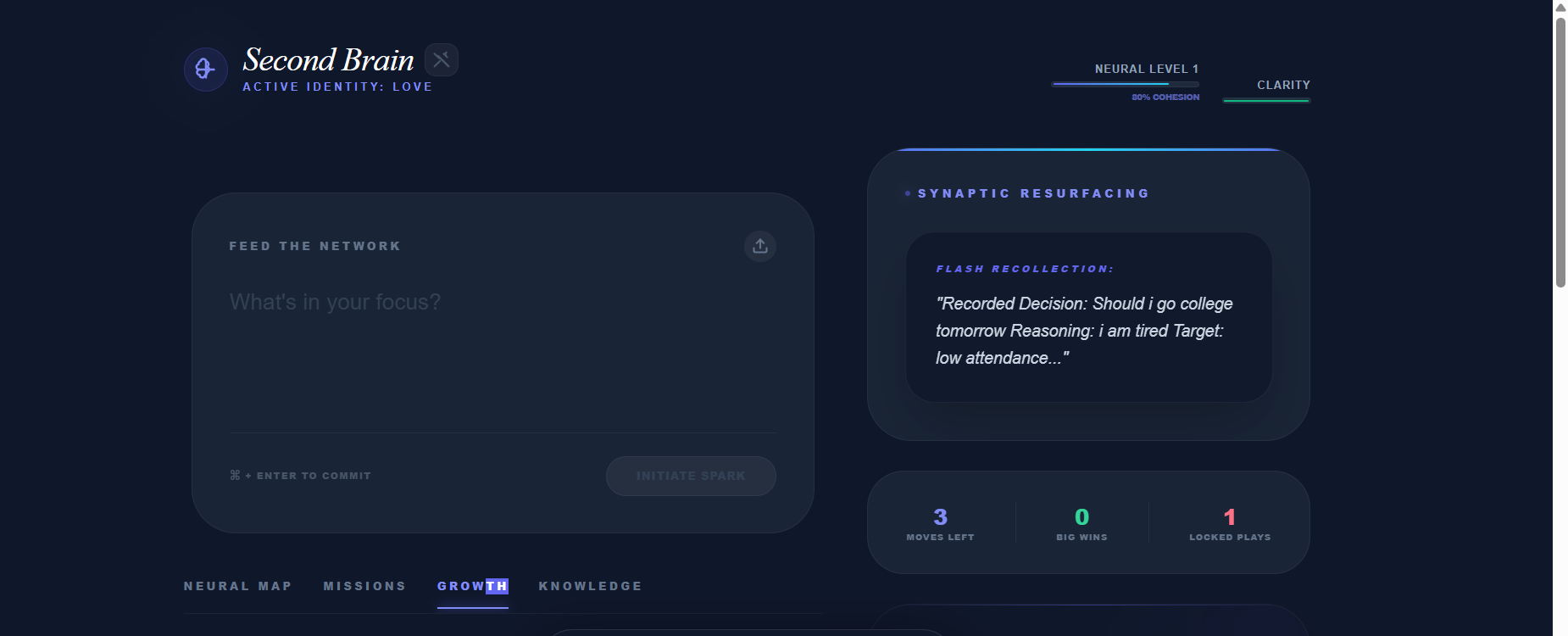
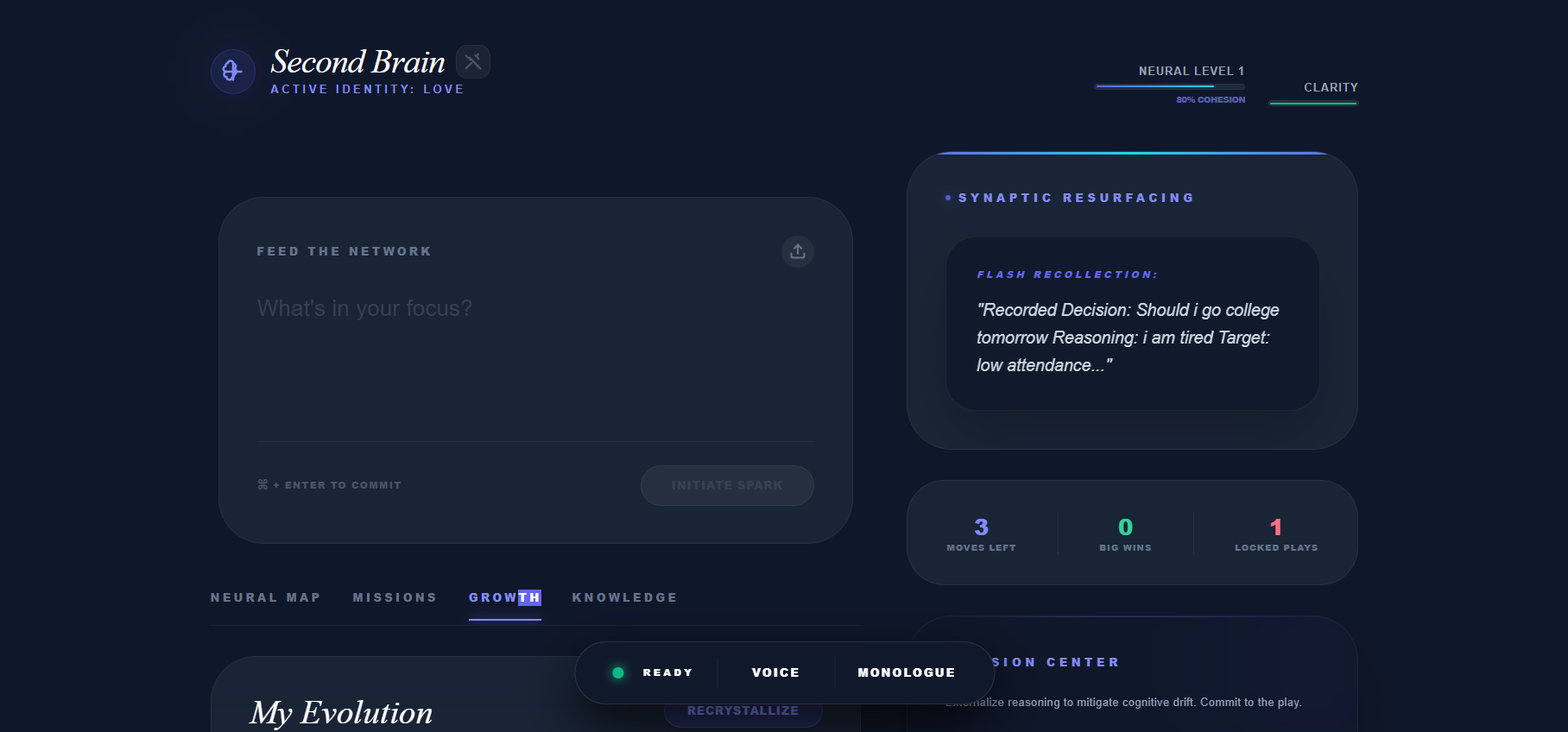
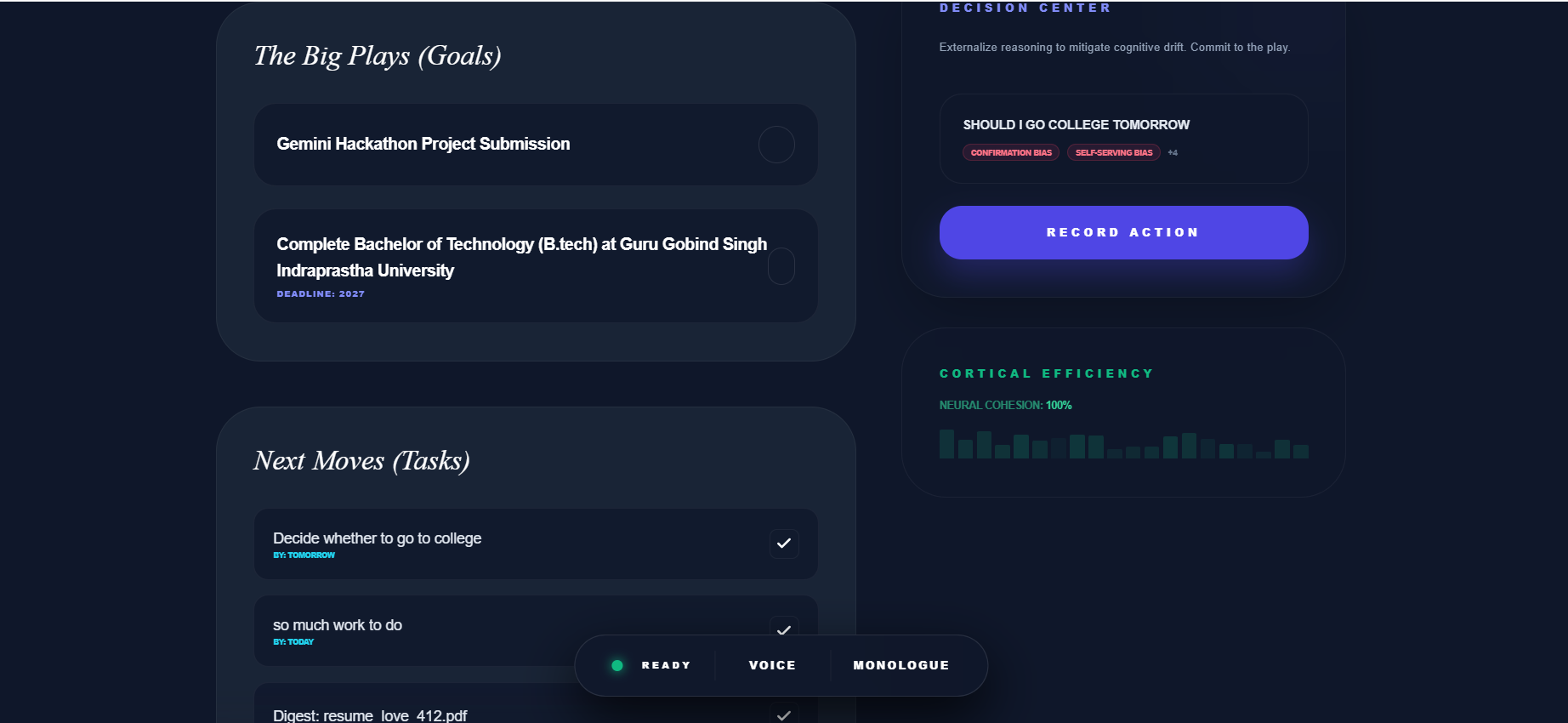
Core Dashboard : An external brain to capture thoughts, track focus, and reduce mental overload in a calm, structured space.
-
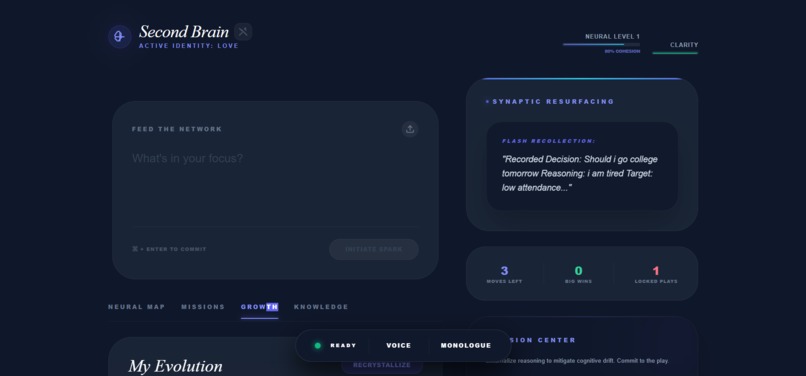
Synaptic Resurfacing : Relevant memories resurface when needed, helping you think forward instead of starting from zero.
-
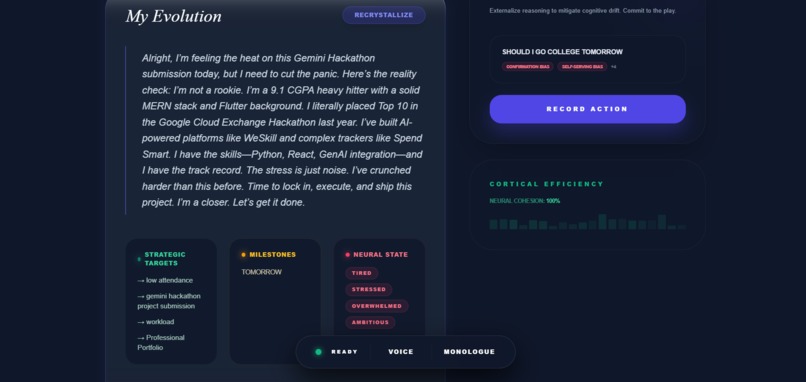
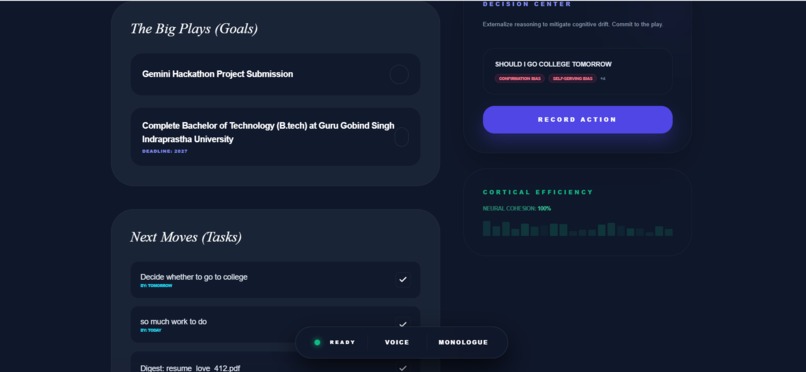
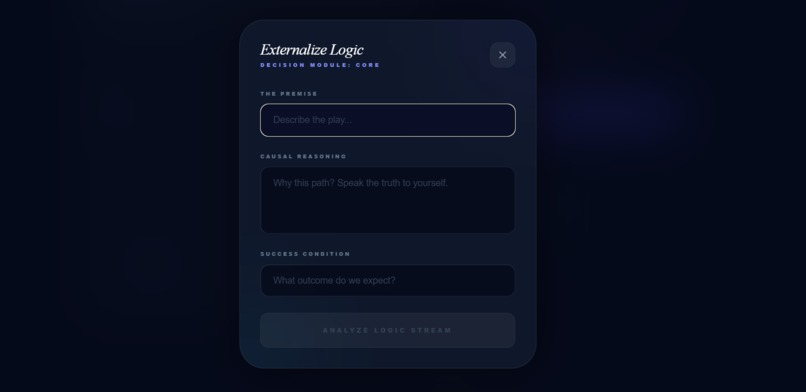
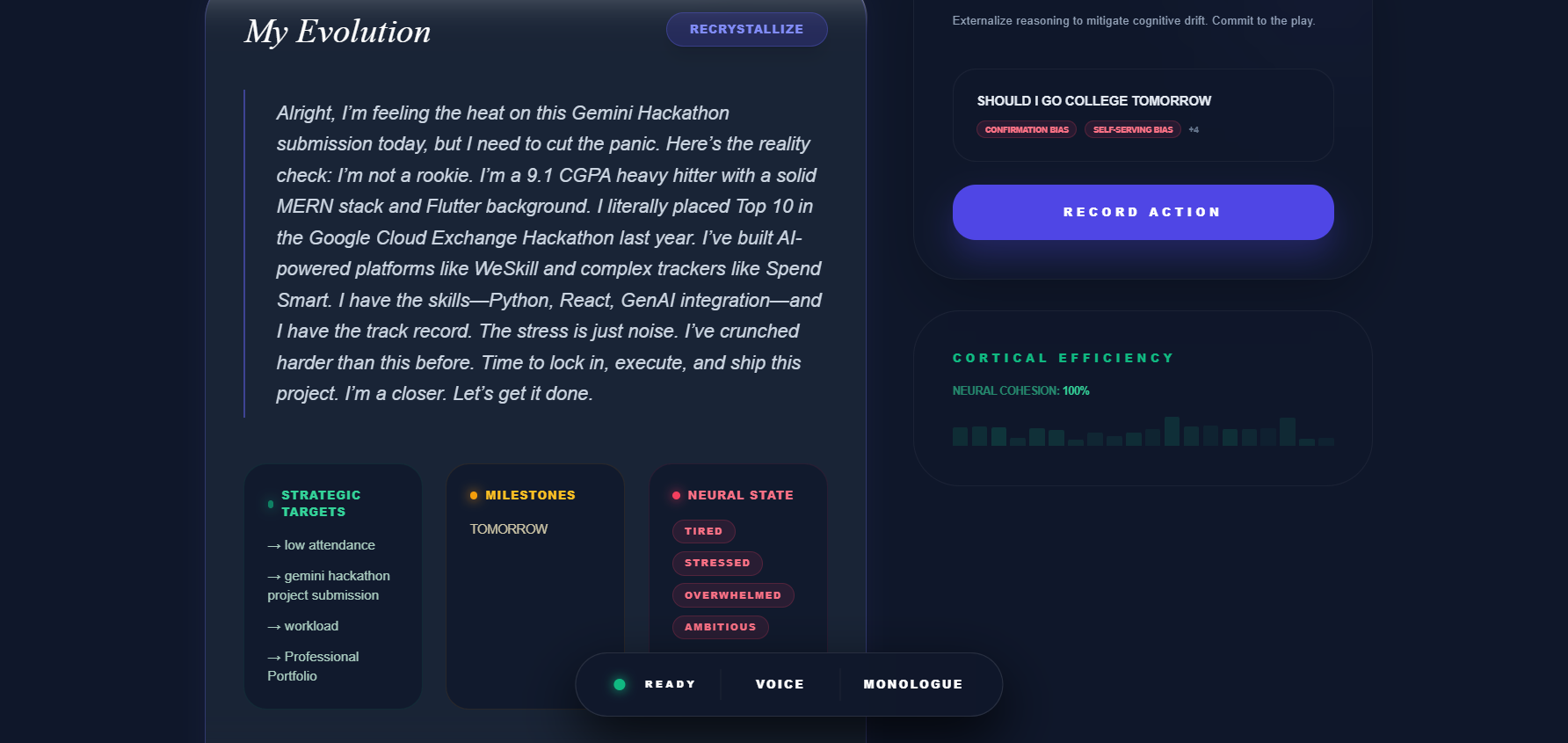
My Evolution : A living record of decisions, emotions, and growth turning reflection into clarity and progress.
-
-
-
-
-
-
Second Brain
Inspiration
The inspiration behind Second Brain stems from a simple yet profoundly human problem: the modern mind is overloaded.
People juggle ideas, deadlines, goals, study materials, emotions, and decisions all at once — scattered across apps, notebooks, chats, reminders, and memory itself. Over time, this fragmentation leads to anxiety, missed opportunities, decision fatigue, burnout, and in extreme cases, depression.
The human brain was never designed to function as a permanent storage system. It is a reasoning engine — yet modern life forces it to act as a memory, planner, and emotional container simultaneously.
Second Brain was inspired by one question:
What if software could behave like a biological cognitive system — one that forgets, reinforces, connects, and reflects — instead of forcing humans to adapt to rigid productivity tools?
Rather than controlling behavior or maximizing output, Second Brain aims to reduce mental pressure, preserve creativity, and provide thoughts with a safe external place to rest.
What It Does
Second Brain is a biologically-inspired cognitive infrastructure that acts as an external prefrontal cortex.
It allows users to offload raw thoughts, ideas, study materials, goals, decisions, and emotions into a local, private system that actively processes and organizes them over time.
Rather than storing information statically, the system treats every input as a living memory node with:
- Semantic meaning
- Contextual relevance
- Emotional weight
- Time-based decay
The system automatically:
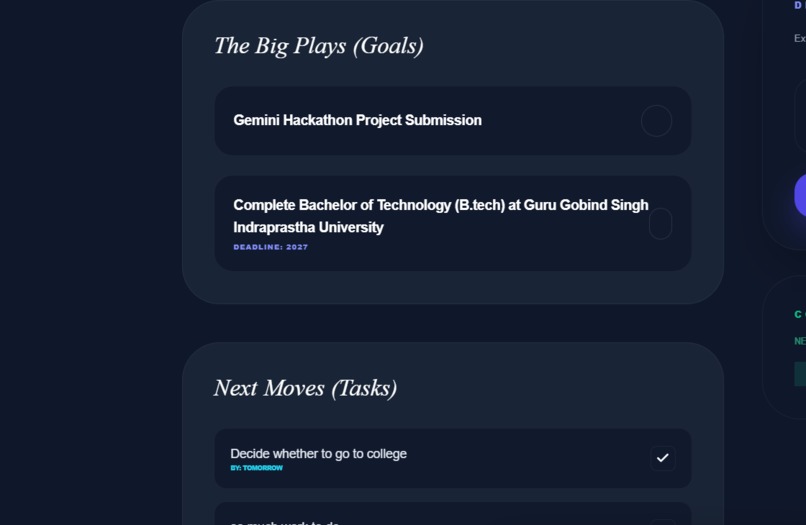
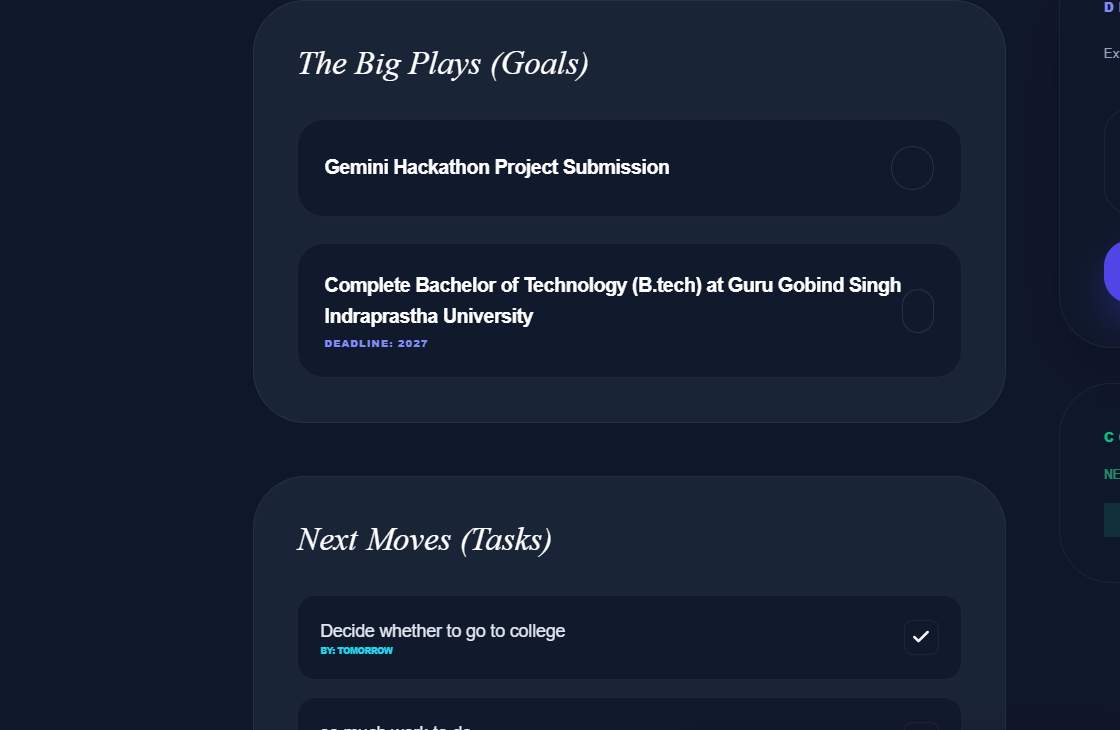
- Extracts tasks, goals, and deadlines from unstructured thoughts
- Synthesizes long-term narratives
- Resurfaces relevant memories when contextually needed
- Intentionally forgets low-value information to reduce cognitive noise
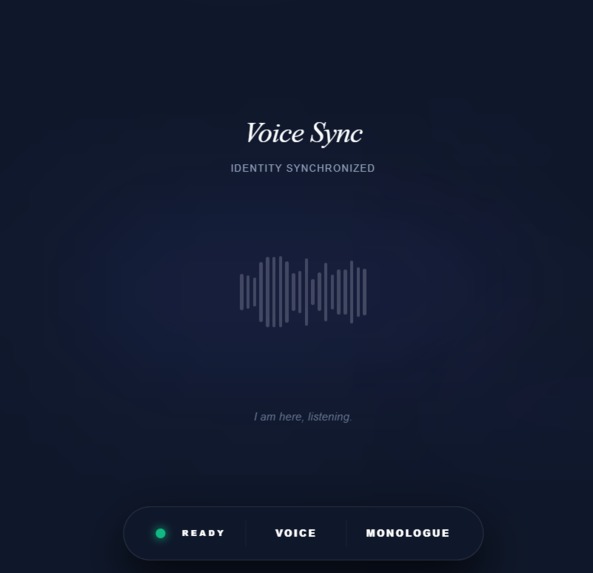
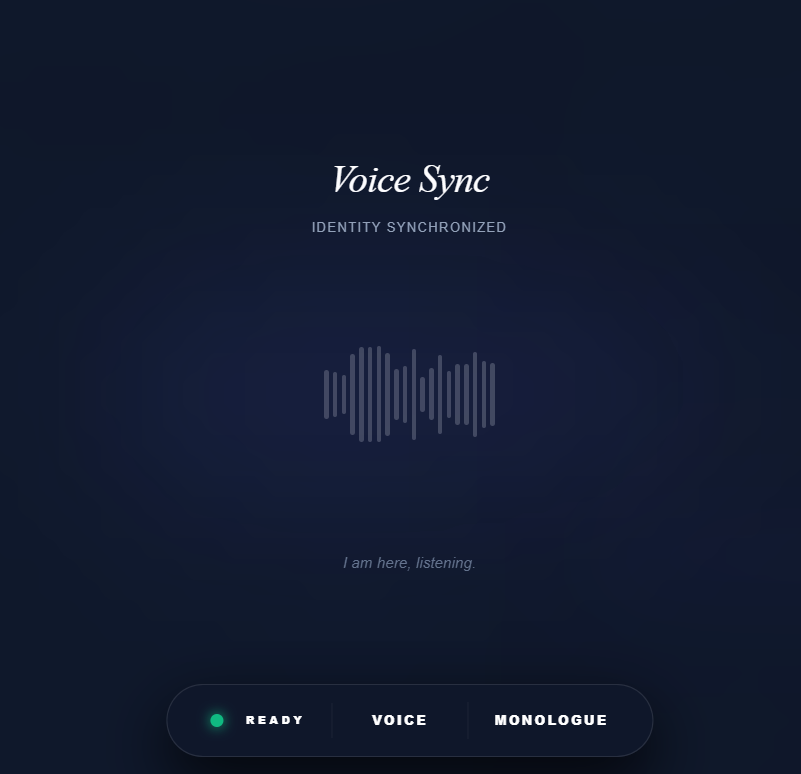
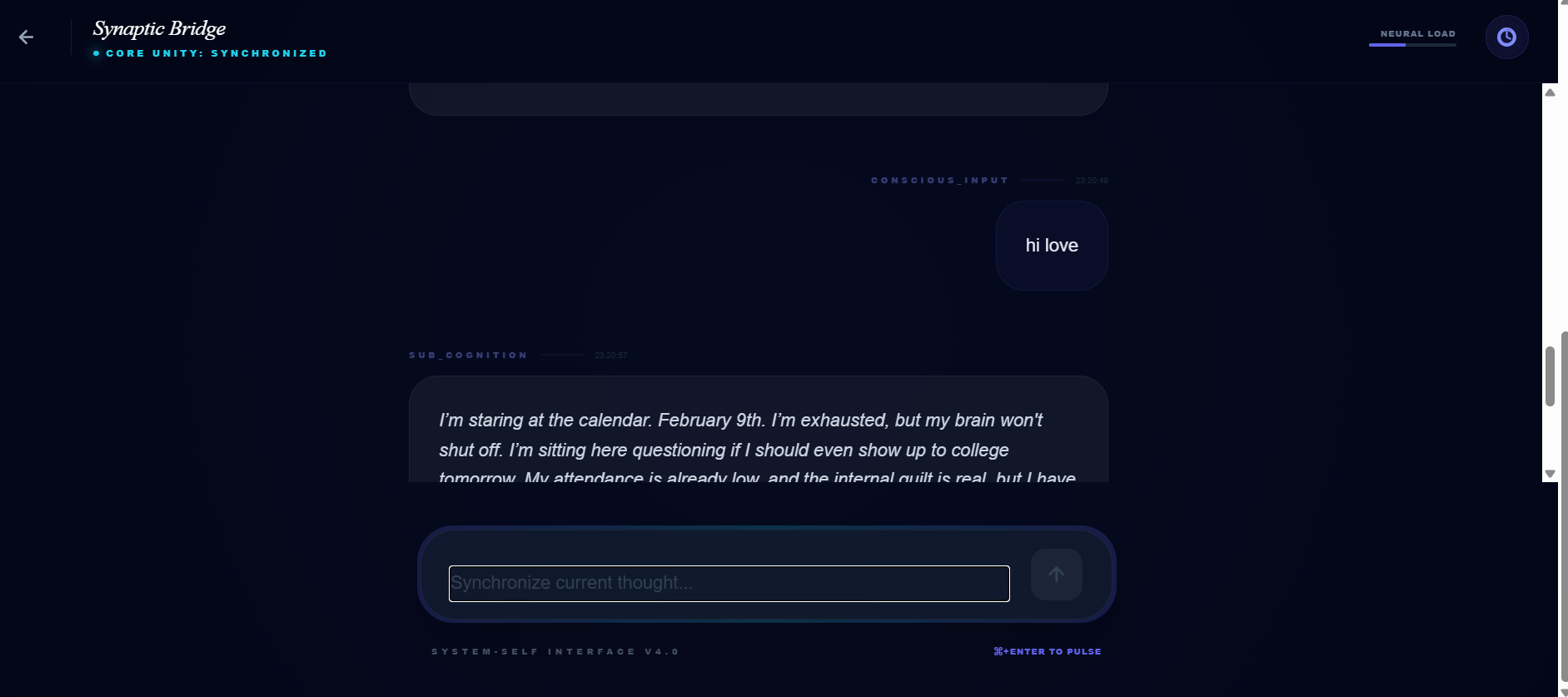
Users can interact with their Second Brain via text or real-time voice, engaging in a dialogue with a “Digital Twin” that mirrors their thinking style rather than generic AI responses.
In essence, Second Brain helps users think more clearly by thinking alongside them, not for them.
How We Built It (Solo Build)
Second Brain was built as a full-stack, local-first cognitive system with strict separation between presentation, intelligence, and persistence layers.
Frontend & UX Architecture
- Component-based architecture with low-stimulation, calm interaction
- UI adapts based on inferred cognitive load instead of dashboards full of metrics
- State managed locally using persistent hooks synced with the local substrate
- Biomorphic UI with soft gradients, organic motion, and neural pulse animations designed to reduce cortisol
Intelligence & Reasoning Layer
- AI layer functions as a reasoning engine, not a chatbot
- Large language models handle:
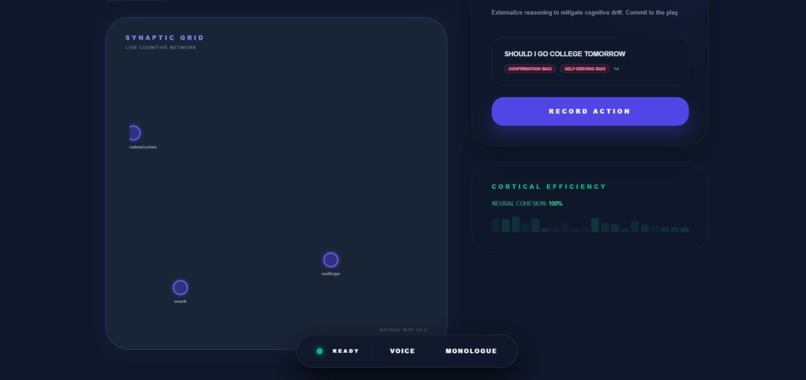
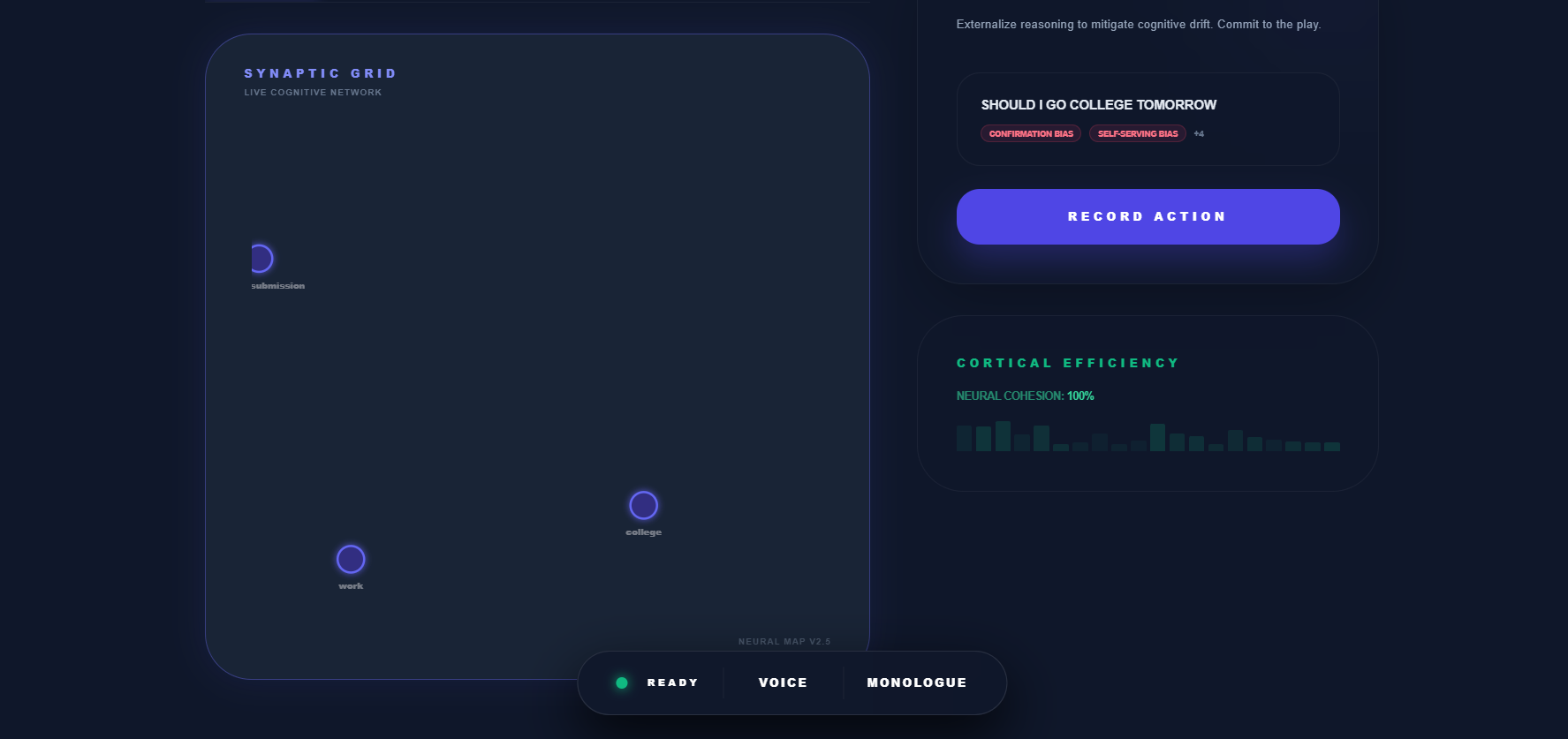
- Concept extraction & semantic graph construction
- Actionable entity parsing (tasks, goals, deadlines)
- Emotional signal inference
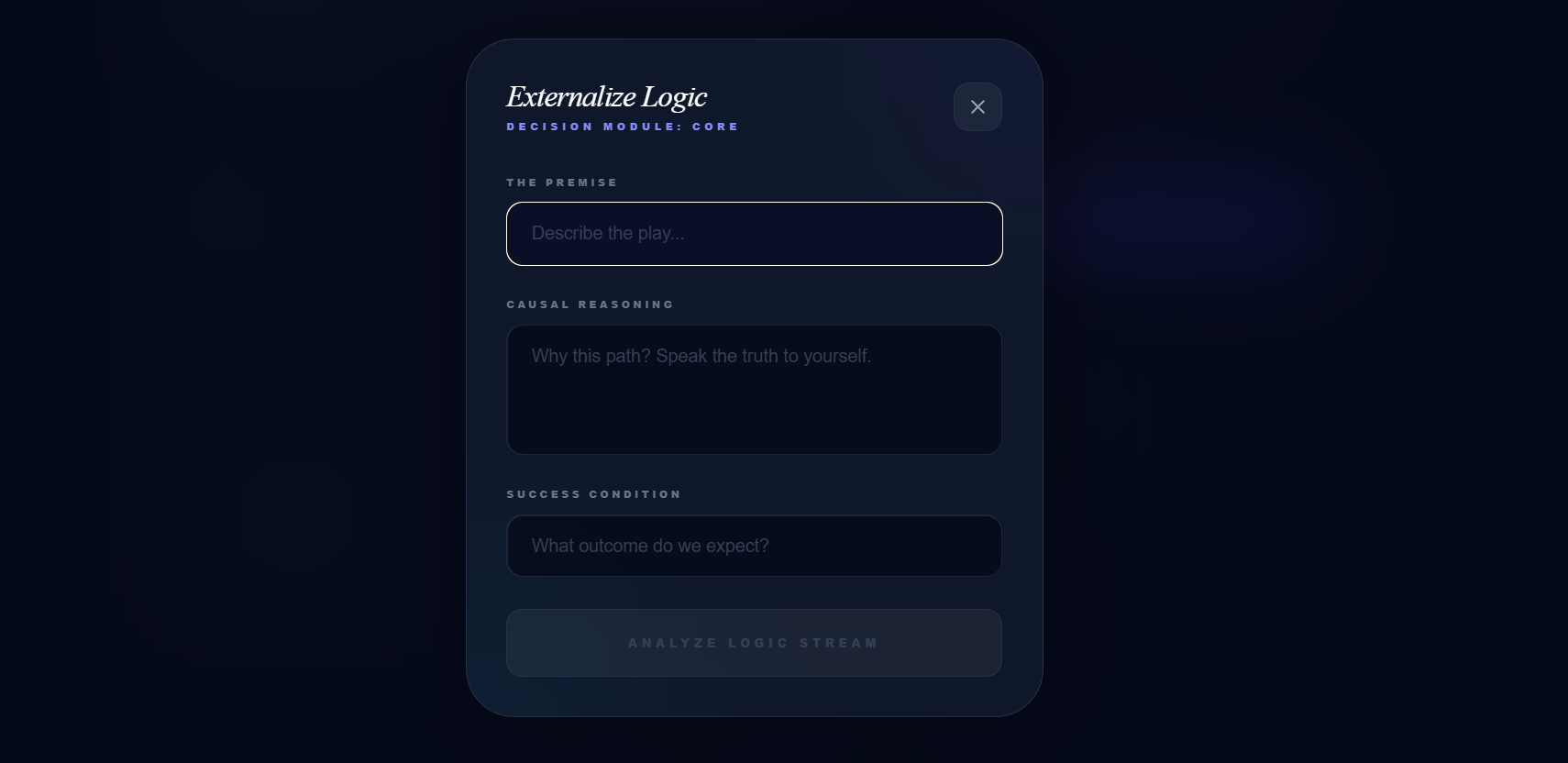
- Bias detection in decision reasoning
- Long-term narrative synthesis
- Concept extraction & semantic graph construction
- Uses a Retrieval-Augmented Generation (RAG) pipeline to ensure responses are grounded, personal, and contextually relevant
- Persona extraction mirrors user’s tone, language, and ethical boundaries to form a consistent Digital Twin
Memory Lifecycle & Storage
- All data stored locally in a namespaced system
- Memories follow a biologically-inspired lifecycle:
- Working memory: high visibility, fast decay
- Reinforced memory: strengthened through recall
- Integrated memory: forms part of long-term narrative
- Dormant memory: archived but retrievable
- Forgotten memory: intentionally removed to reduce noise
- Working memory: high visibility, fast decay
- Synaptic strength updates dynamically, enabling intentional forgetting as a feature
Voice & Knowledge Integration
- Low-latency voice interaction allows real-time cognitive offloading
- PDFs and study materials distilled into high-density knowledge nodes, seamlessly integrated with personal thoughts
Challenges We Ran Into
The primary challenge was designing intelligence that supports thinking without controlling it.
Other challenges included:
- Preventing cognitive overload caused by the system itself
- Designing decay mechanisms that forget without losing meaning
- Ensuring AI responses mirror the user’s inner reasoning
- Maintaining strict local-first privacy while enabling advanced reasoning
- Avoiding productivity guilt patterns like streaks, scores, or pressure loops
- Balancing biological realism with technical feasibility
Accomplishments We're Proud Of
- Memory system that intentionally forgets to improve clarity
- Digital Twin that reflects the user instead of replacing them
- Full cognitive lifecycle implementation instead of static storage
- Real-time voice interaction with meaningful reasoning
- Complete local-first privacy with zero telemetry
- Entire system built solo, end-to-end
- Created a system that feels calm, respectful, and human
What We Learned (Solo Builder)
- Intelligence is not about answers — it is about timing, relevance, and restraint
Technical lessons:
- Designing RAG pipelines beyond simple search
- Using LLMs as structured reasoning agents
- Modeling decay and reinforcement as system primitives
- Architecting local-first systems with future backend portability
- Translating abstract cognitive science concepts into executable software
Personal lessons:
- Best systems don’t push users forward — they make space for thinking
What's Next for Second Brain
Future directions include:
- Long-term narrative memory across years
- Predictive resurfacing before cognitive overload occurs
- Emotion-aware UI adaptation
- Secure multi-device synchronization without central servers
- Advanced decision pattern analysis
- Customizable cognitive archetypes
The goal is not to build a smarter app — but to create a safer mental environment for modern humans.
Built With
- biomorphicui
- browserapis
- esm
- gemini
- google-gemini
- javascript
- localstorage
- privacyfirst
- rag
- react
- tailwind
- voiceai


Log in or sign up for Devpost to join the conversation.