SeawolfEats: Bridging the Campus Dining Gap
Inspiration
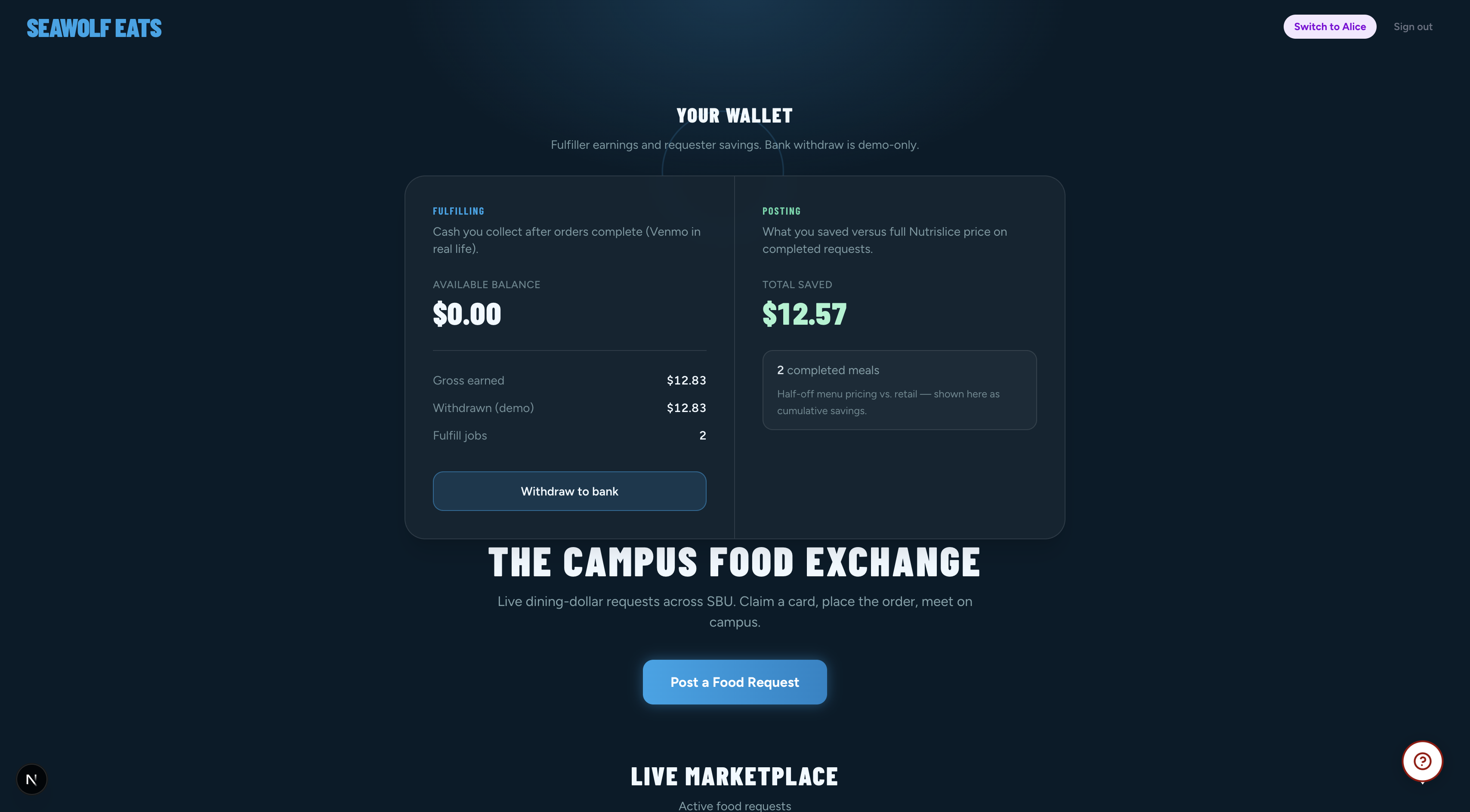
Every semester, commuters at SBU are getting crushed by $15 retail food prices, while resident freshmen are sitting on thousands of dining dollars that literally vanish into thin air at the end of the term. I’m building a peer-to-peer marketplace that fixes this. Commuters get their SAC burgers at a 50% discount, and residents turn their 'use-it-or-lose-it' credits into actual cash. It’s basically Uber Eats for the campus meal plan—making SBU affordable for everyone
We built this to bridge that gap, turning expiring credits into a win-win marketplace that makes campus life more affordable for everyone.
What it does
SeawolfEats is a peer-to-peer "arbitrage" platform for campus dining.
- The Requester: A commuter posts a desired order (e.g., a burger from the SAC) at a discounted cash price.
- The Fulfiller: A resident student with surplus dining dollars "claims" the order, places it via the Nutrislice app, and receives real cash in return.
The senior eats for a significant discount, and the resident student liquidates credits that would have otherwise vanished.
How we built it
We developed SeawolfEats as a modern full-stack application leveraging the following stack:
- Frontend: Next.js (App Router) with React, TypeScript, and Tailwind CSS for a responsive, mobile-first UI.
- Backend: REST-style API routes within Next.js handling authentication, user profiles, and order state.
- Database: MongoDB Atlas using the official Node.js driver. We designed collections for:
- Users: Profiles, SBU email verification, Venmo handles, and hashed credentials.
- Orders: Requester/Fulfiller IDs, location, line items, status tracking, and timestamps.
- State Management: Core flows are server-driven, ensuring concurrency checks when multiple users attempt to "claim" the same order.
Challenges we ran into
The primary hurdle was the Order State Machine. Designing logic for edge cases—such as a student claiming an order but failing to follow through—required a robust database schema. Additionally, since we lack direct API integration with Nutrislice, we had to innovate a manual "Proof of Purchase" confirmation system to build trust between anonymous student users.
Accomplishments that we're proud of
- Functional Marketplace: Creating a working platform that solves a genuine student financial problem.
- Technical Synergy: Successfully implementing MongoDB CRUD operations to handle real-time status updates from
PENDINGtoCOMPLETED. - UX/UI: Building an intuitive dashboard that allows users to switch between "Requesting" and "Fulfilling" seamlessly.
What we learned
We discovered that the most impactful solutions often exist in inefficient markets, like campus meal plans. On the technical side, we deepened our expertise in:
- NoSQL Schema Design: Learning how to structure documents for high-frequency status changes.
- Marketplace Trust: Implementing lightweight "hardcoded" payment flows that facilitate peer-to-peer trust without the initial overhead of a full payment processor.
What's next for SeawolfEats
We’re ready to scale beyond the MVP:
- API Integrations: Incorporating Venmo or Zelle APIs to automate payment verification.
- Reputation System: Implementing a user rating system to ensure fulfillers remain reliable.
- SUNY Expansion: Scaling the platform to other SUNY campuses experiencing the same dining dollar surplus issues.
TypeScript, JavaScript, CSS, Next.js, React, React DOM, Tailwind CSS, PostCSS, Node.js, npm, ESLint, MongoDB Node driver, MongoDB (via scripts / optional backend), localStorage (browser), next/font (Google Fonts: Figtree, Barlow Condensed), Lucide React icons
Built With
- javascript
- mongodb
- next.js
- node.js
- react
- tailwindcss
- typescript

Log in or sign up for Devpost to join the conversation.