-
-
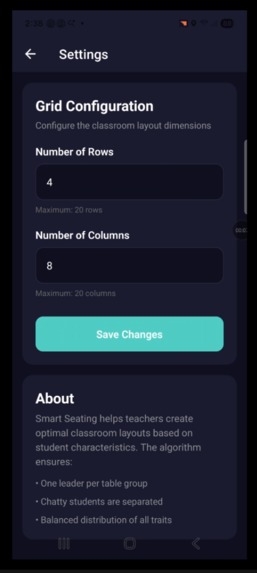
Settings / Grid Configuration Screen- Adjust the seating chart dimensions to your preferences.
-
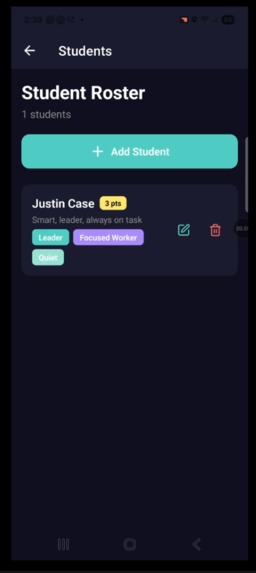
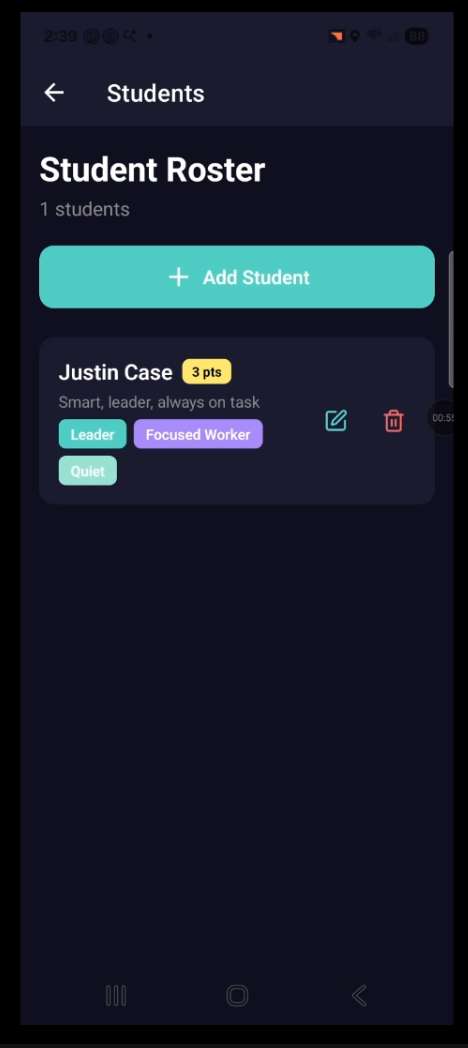
Student Roster- View all students in the class with their tags and points.
-
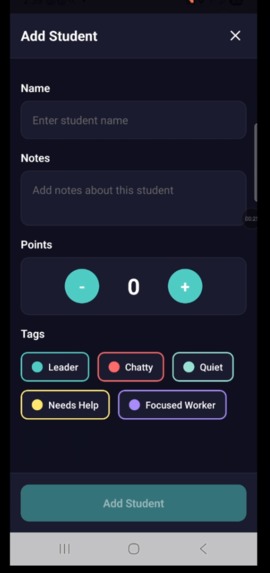
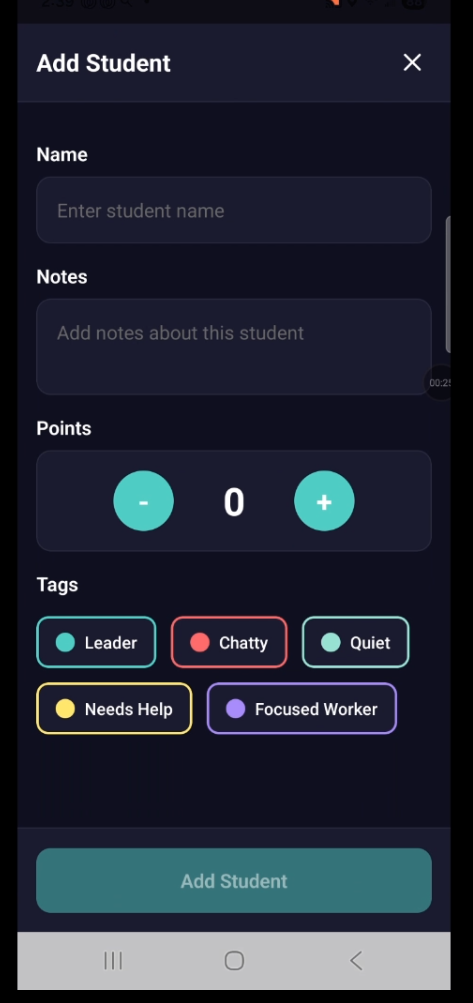
Student Roster / Add Student- Add new students, assign tags, points, and notes.
-
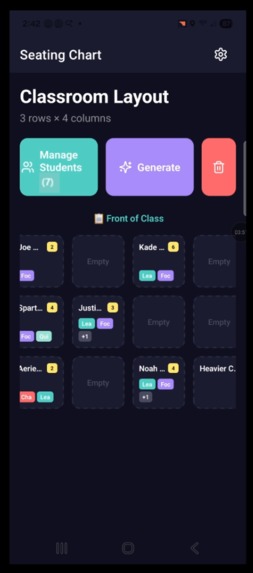
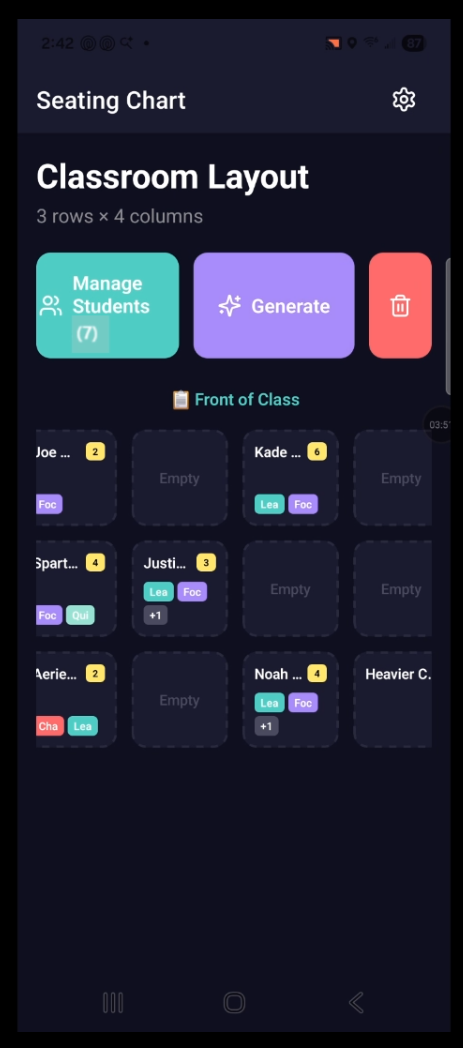
Seating Chart Generator- Automatically generate a seating chart that respects student tags and placement rules

Inspiration
Managing a classroom can be challenging, especially when students have different personalities, learning styles, and needs. Teachers often spend a lot of time figuring out where each student should sit to promote learning and maintain a balanced environment. I was inspired to create Seatly to make this process easier, more efficient, and even a little fun, giving teachers a tool to organize their classrooms thoughtfully.
What it does
Seatly allows teachers to add students to a roster, assign tags like Chatty, Leader, Quiet, or Focused, and generate a seating chart automatically. The app ensures rules are followed, such as not placing two chatty students next to each other or distributing leaders evenly. Teachers can also add notes about each student, assign points to track behavior or participation, and manually adjust the seating chart. The grid layout is fully customizable, so it works for classrooms of any size.
How we built it
The app was built using React Native and JavaScript. State management, user interactions, and data persistence were handled using simple React patterns and AsyncStorage, keeping the app lightweight and fast.
Challenges we ran into
The main challenge was designing an algorithm that could place all students correctly while respecting the tag rules. Early versions sometimes left a student out or placed conflicting students together. We also faced design challenges, like creating a grid that works for different classroom sizes and making the interface intuitive for teachers.
Accomplishments that we're proud of
We successfully built a seating chart app that reliably assigns every student, respects all rules, and provides teachers with notes and point-tracking features. The interface is visually clean, responsive, and works on both mobile and web. The algorithm is robust, making Seatly a practical tool that teachers can actually use in real classrooms.
What we learned
Through this project, we learned how to create a rules-based algorithm for seat placement, manage state effectively in a React Native app, persist data across sessions, and solve platform-specific issues. We also learned about user experience design for a mobile-first educational tool, balancing functionality with simplicity.
What's next for Seatly
Future plans include adding advanced filtering and sorting options, exporting seating charts as PDFs or images, tracking student placement trends over time, and possibly integrating analytics to help teachers make data-driven decisions about classroom arrangements. We hope Seatly continues to evolve into a versatile tool that supports teachers in creating an effective and engaging learning environment.


Log in or sign up for Devpost to join the conversation.