-
-
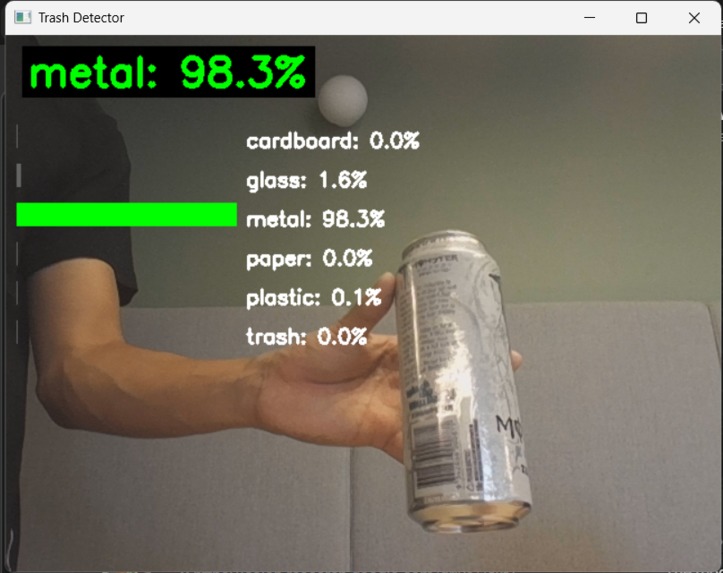
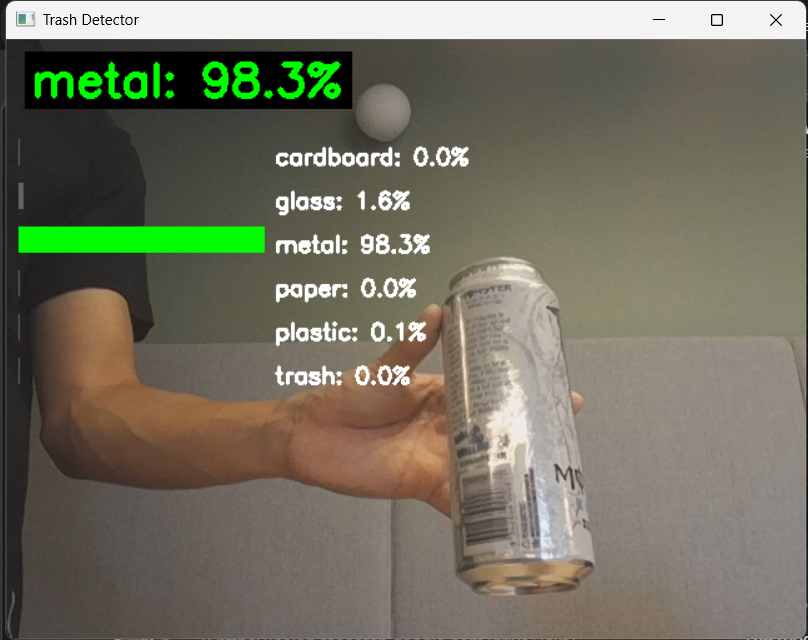
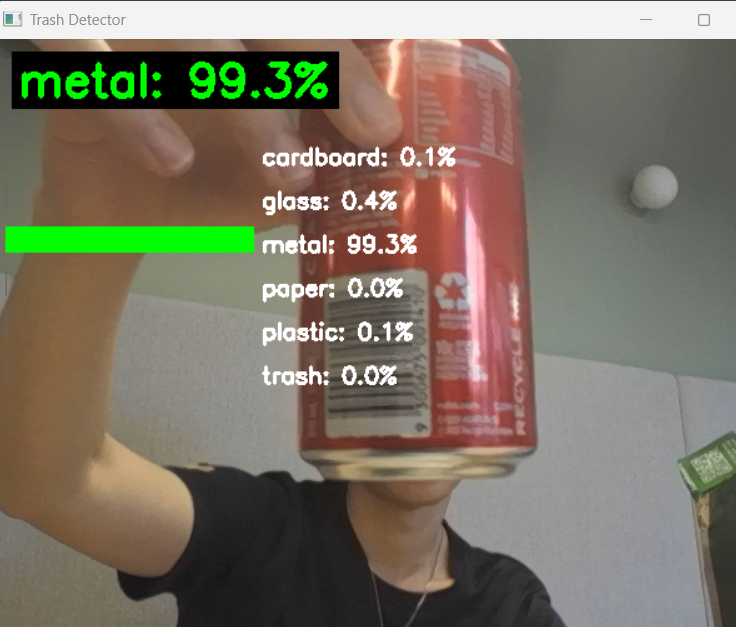
Metal Can Detected
-
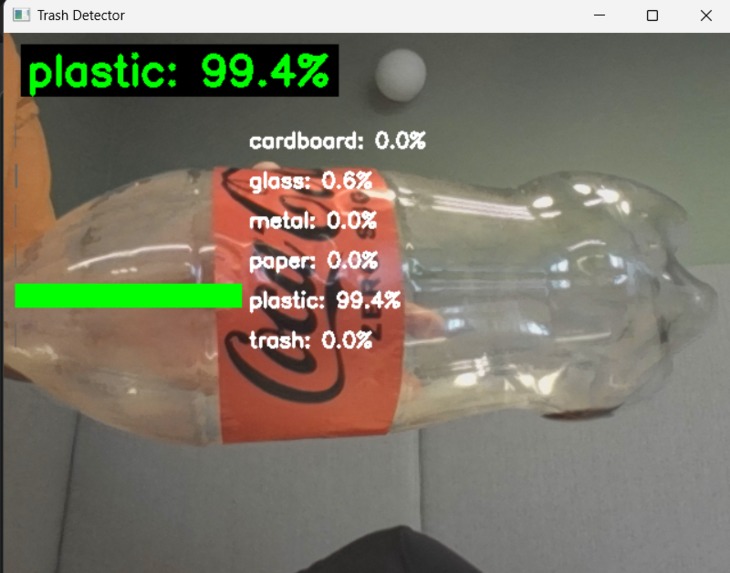
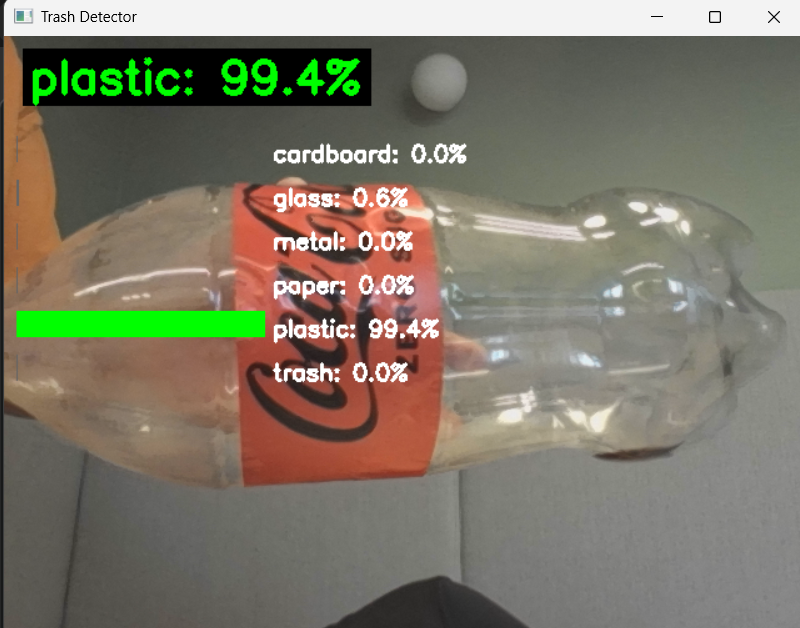
Plastic Bottle
-
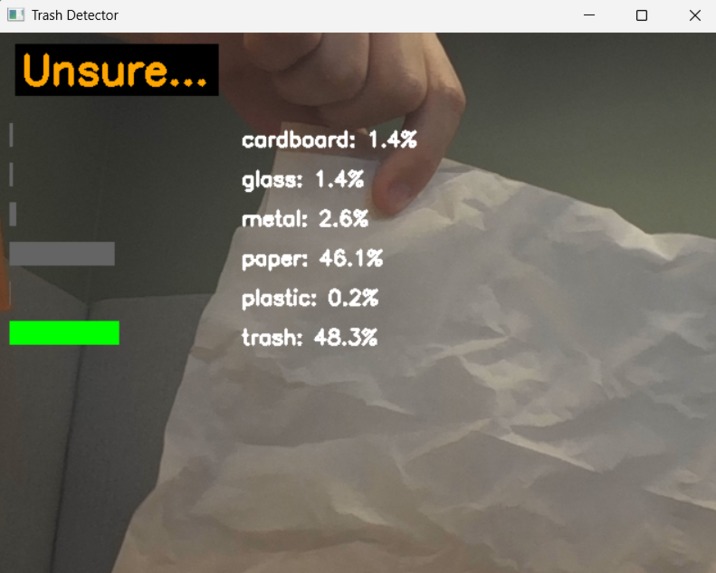
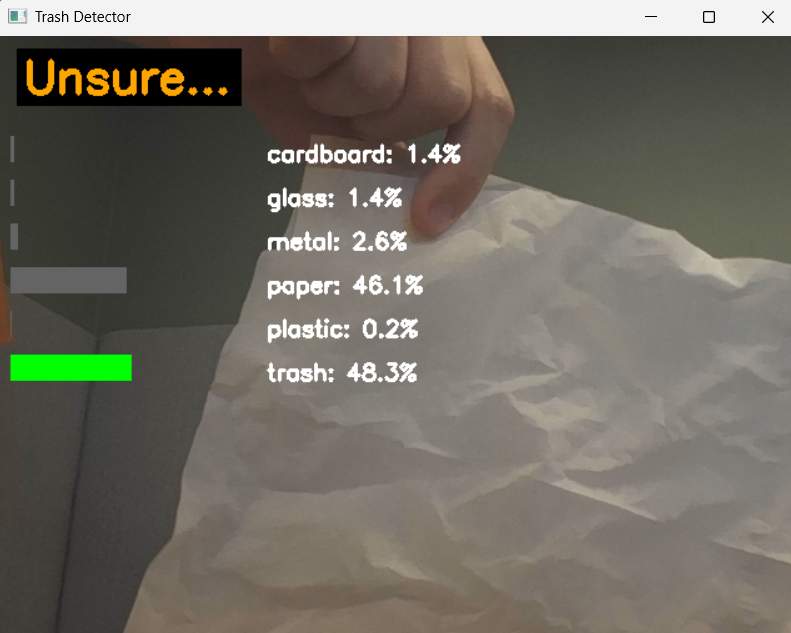
Tissue Paper(Unsure, but with percentage shown)
-
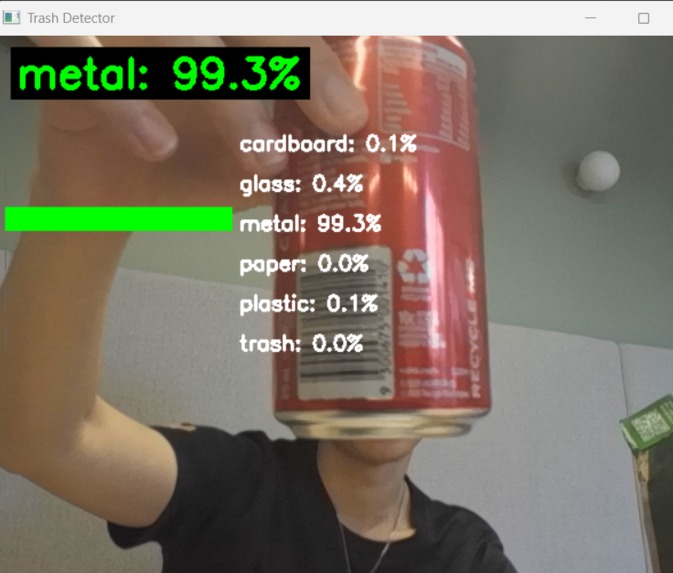
Coke Can
-
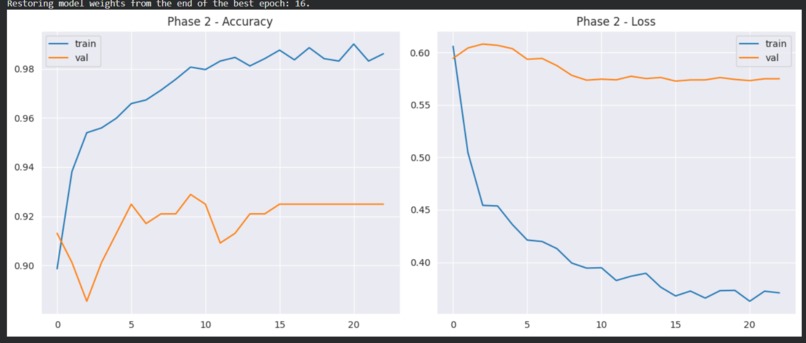
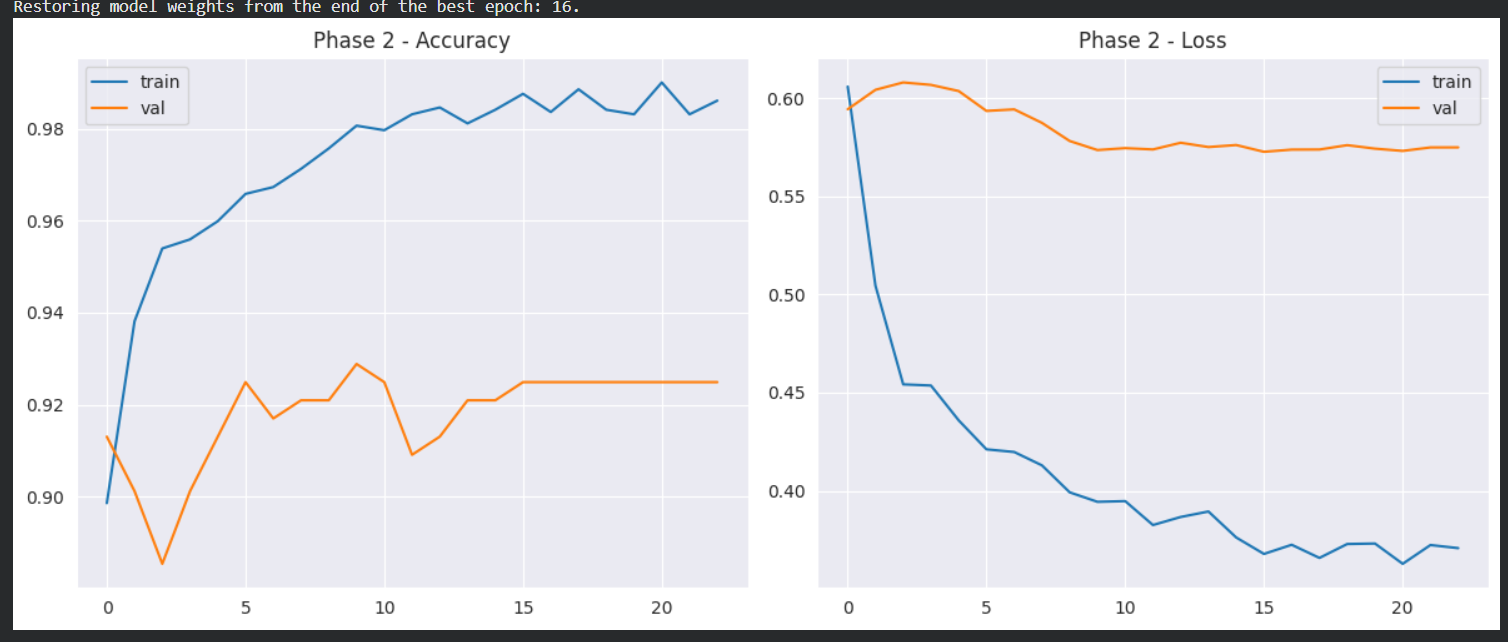
Accuracy of our AI Model after training, showing the percentages
Inspiration
Videos of aquamarine life on social media, particularly the Great Pacific Garbage Patch, videos regarding turtles having plastic straws stuck inside their noses, and requiring human help to be saved.
What it does
This project at the moment can detect different types of trash and can correctly identify the changes of what kind of trash upwards to 90% accuracy.
How we built it
We reused knowledge of one of our teammates that learnt about TensorFlow, then we also used OpenCV2 to get the camera feed working, then combined it with pretrained models like YOLOV8 and EfficientNetB3, we fed it datasets regarding basic trash(Bottles, Plastics, Cardboard, Paper, Glass, Metal, Trash, Et). We also used Claude AI and ChatGPT to double-check our model and request improvements on how to get better accuracy on our trash detection system.
Challenges we ran into
1) Finding Datasets -- we couldn't really create our own datasets because we didn't have enough time, and some public datasets already had codes and annotations that we couldn't use; as such, we had to find new and clean datasets to train our model.
2) Initially, the model was not learning well. It was consistently returning with low accuracy and learning rate values. We tweaked the model that we used from EfficientNetB5 to EfficientNetB0 to EfficientNetB3, which gradually improved our model. We also slowed down the training process, where we went from shoving the model with a ton of data to breaking the data down and ensuring the model had sufficient phases to run the data set in order to finally attain roughly 90% accuracy.
3) Lastly, we had to scrap implementing the robotics portion of this project as it was too difficult and ambitious to add in.
Accomplishments that we're proud of
1) We managed to practice Python more, as we are first-year students with quite a lack of experience regarding Python; this project helped us understand syntax more and how Pythonic styles are coded. 2) The model was able to return something, at least, rather than complete gibberish 3) We were able to create a Figma view of what our application would look like
What we learned
We learnt that machine learning takes a long time to complete, and the required amount of datasets is substantial. Since this is our first hackathon, we felt as if we were all over the place and that we should discuss things better and delegate tasks more. We should have also been able to communicate with one another more easily, ensuring that there isn't confusion between teammates.
What's next for SeaSweep
If we do continue on this project, we will look more into better models and look for more datasets or create our own datasets, so that we could produce a program that would be able to detect trash with a higher rate of confidence, as well as differentiate trash from aquatic life, humans, and other foreign objects in the ocean.
Built With
- efficientnet
- kaggle
- opencv2
- python
- tensorflow
- yolov8


Log in or sign up for Devpost to join the conversation.