-
-
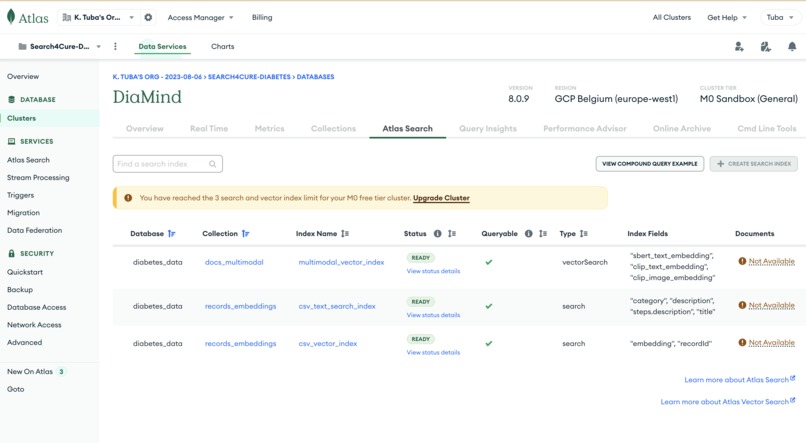
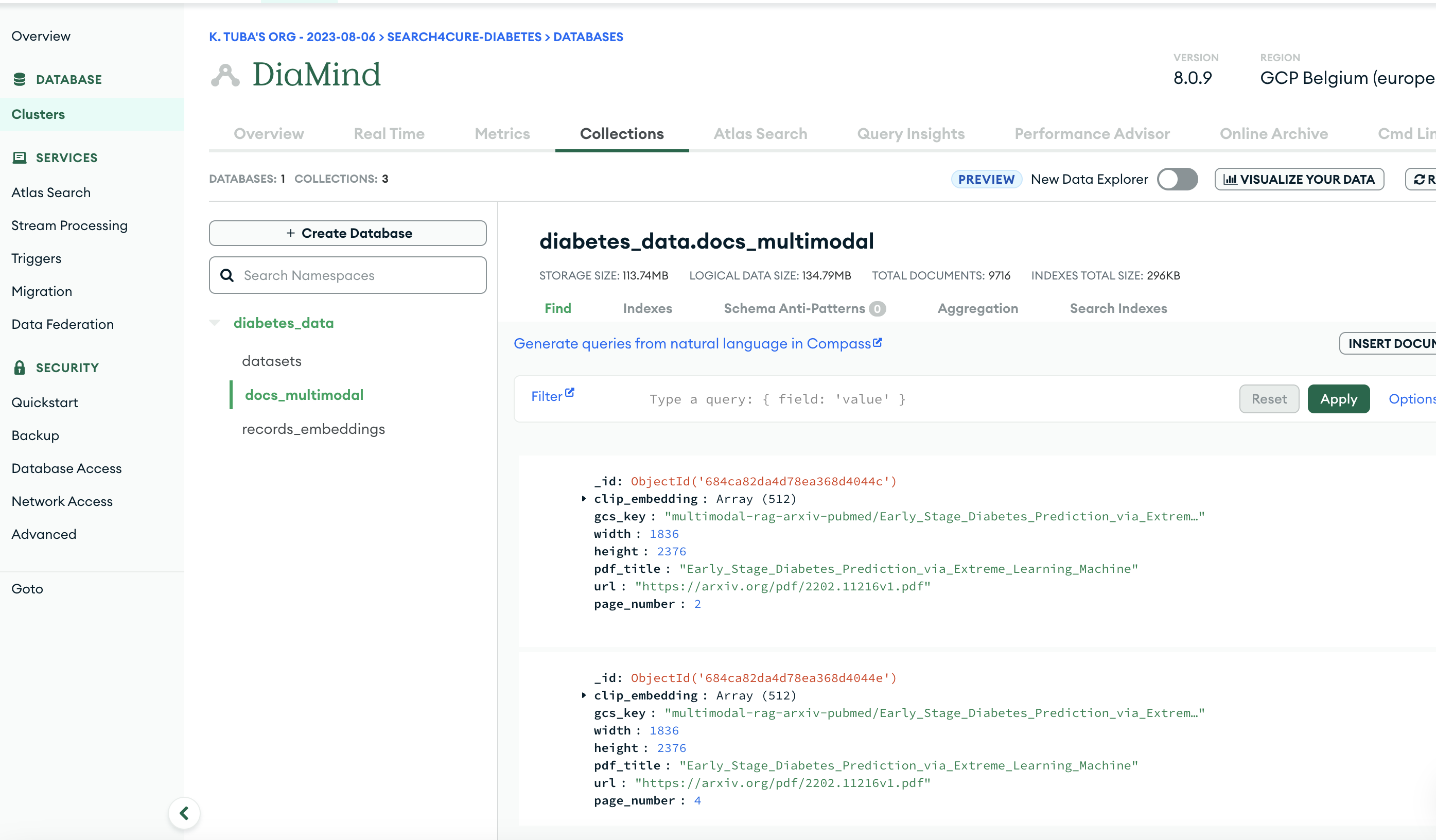
mongo-db-atlas-search
-
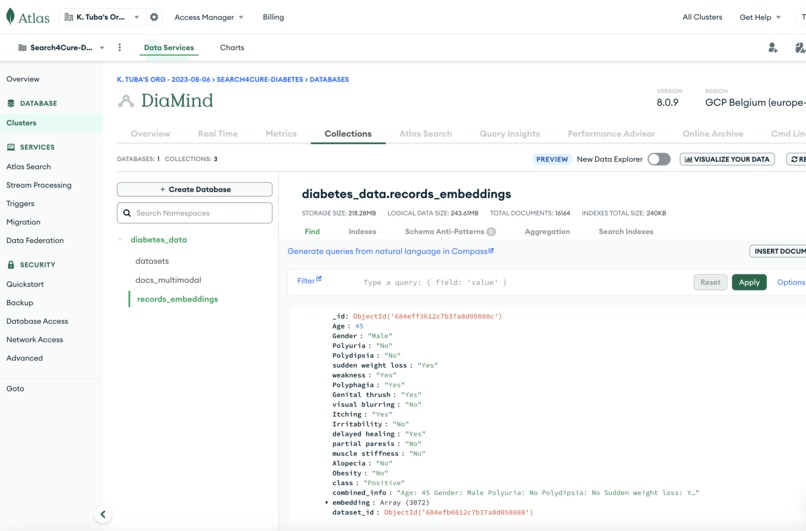
mongo-db-csv-records
-
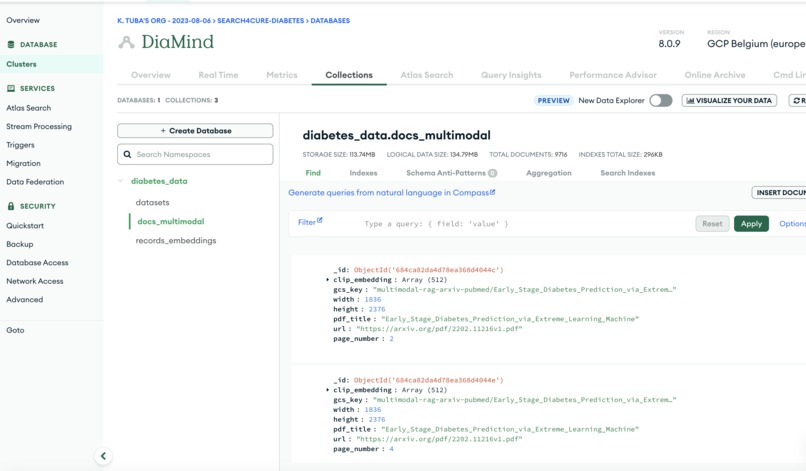
mongodb-multimodal-embeddings
-
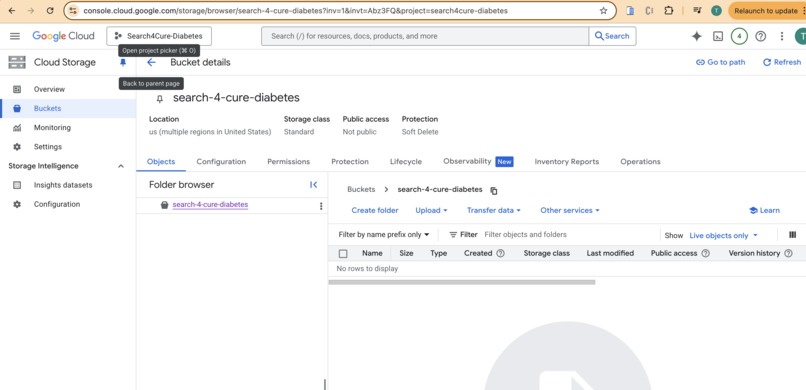
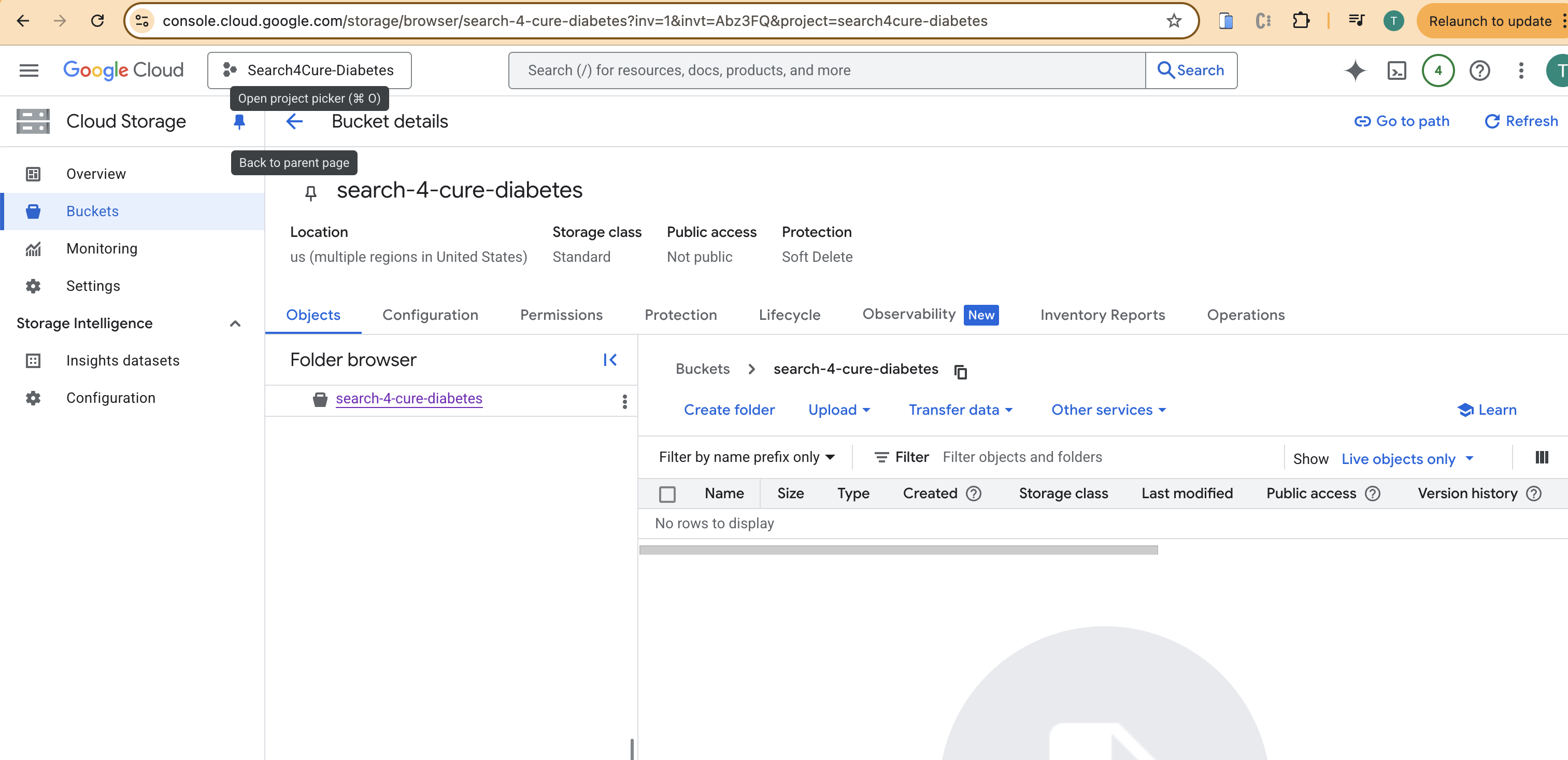
google cloud storage articke page bucket
-
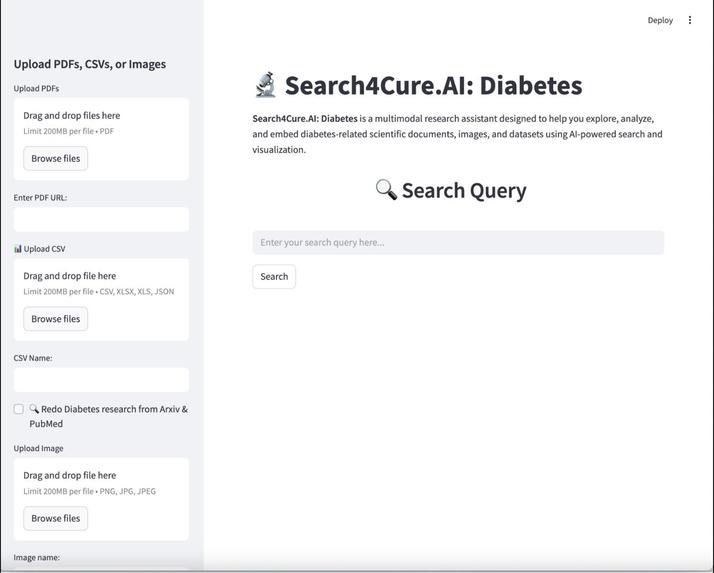
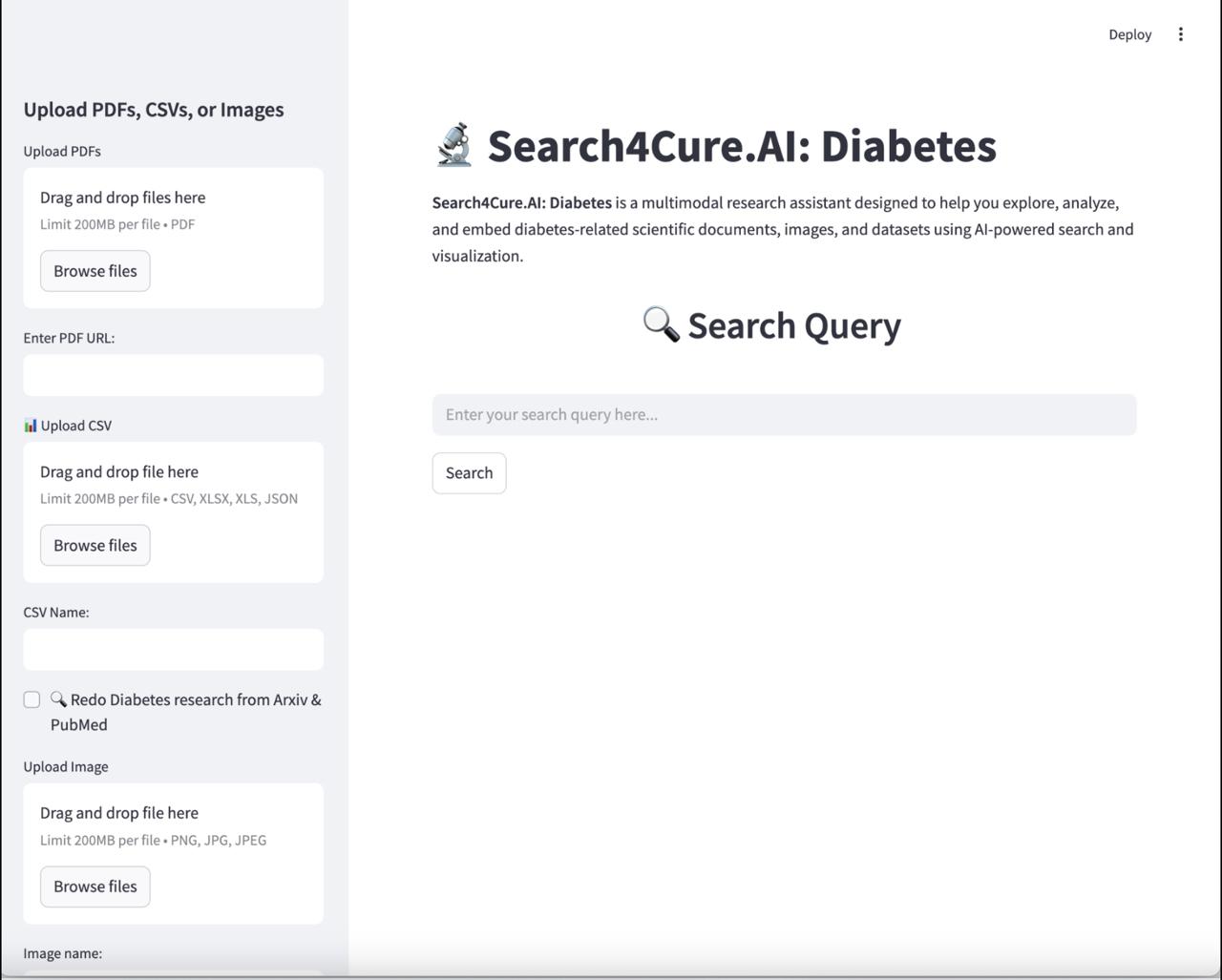
ui
-
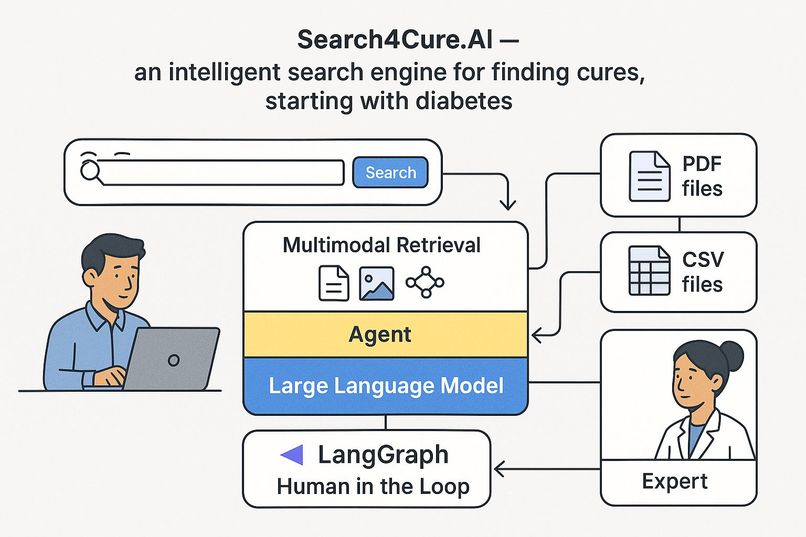
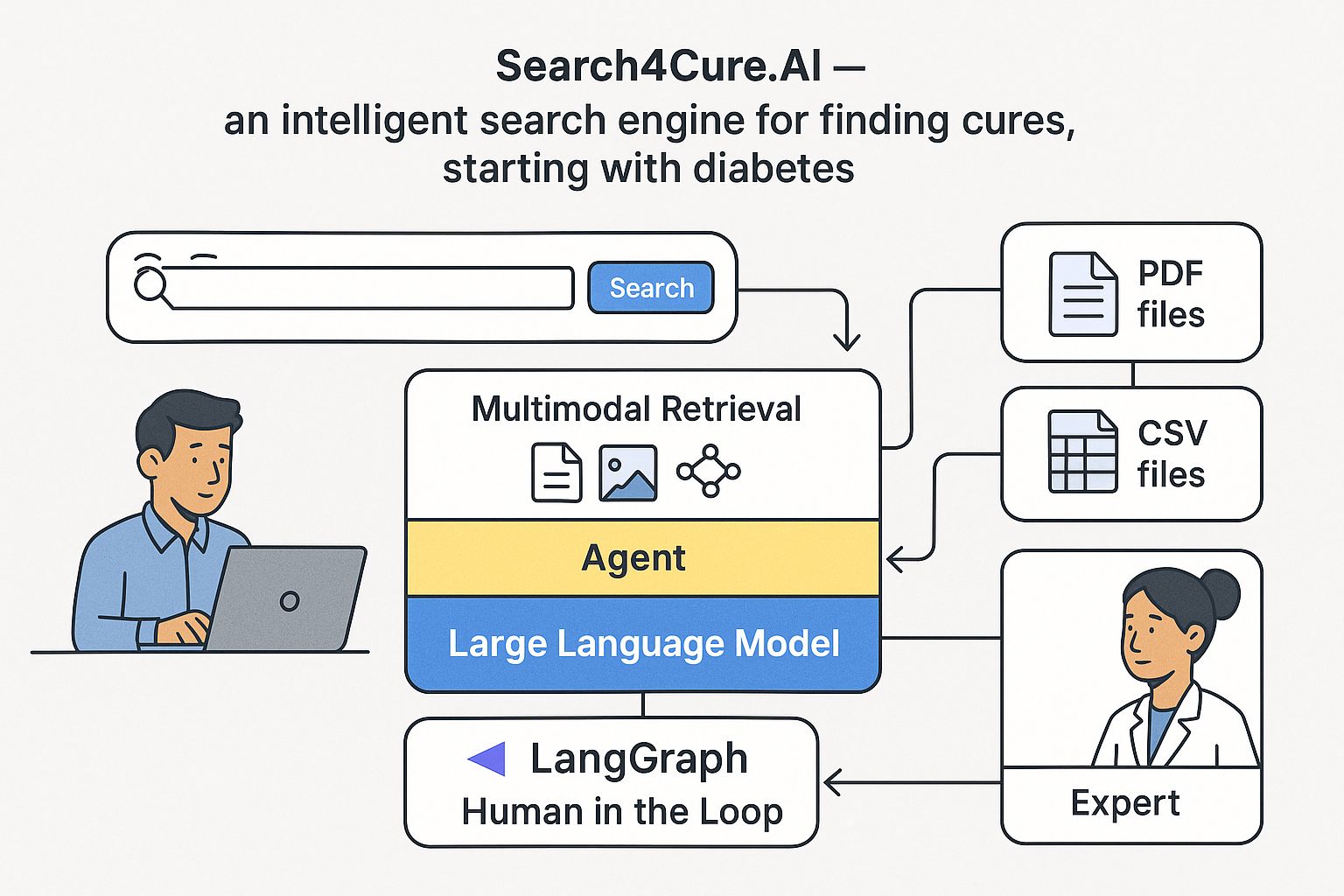
diagram
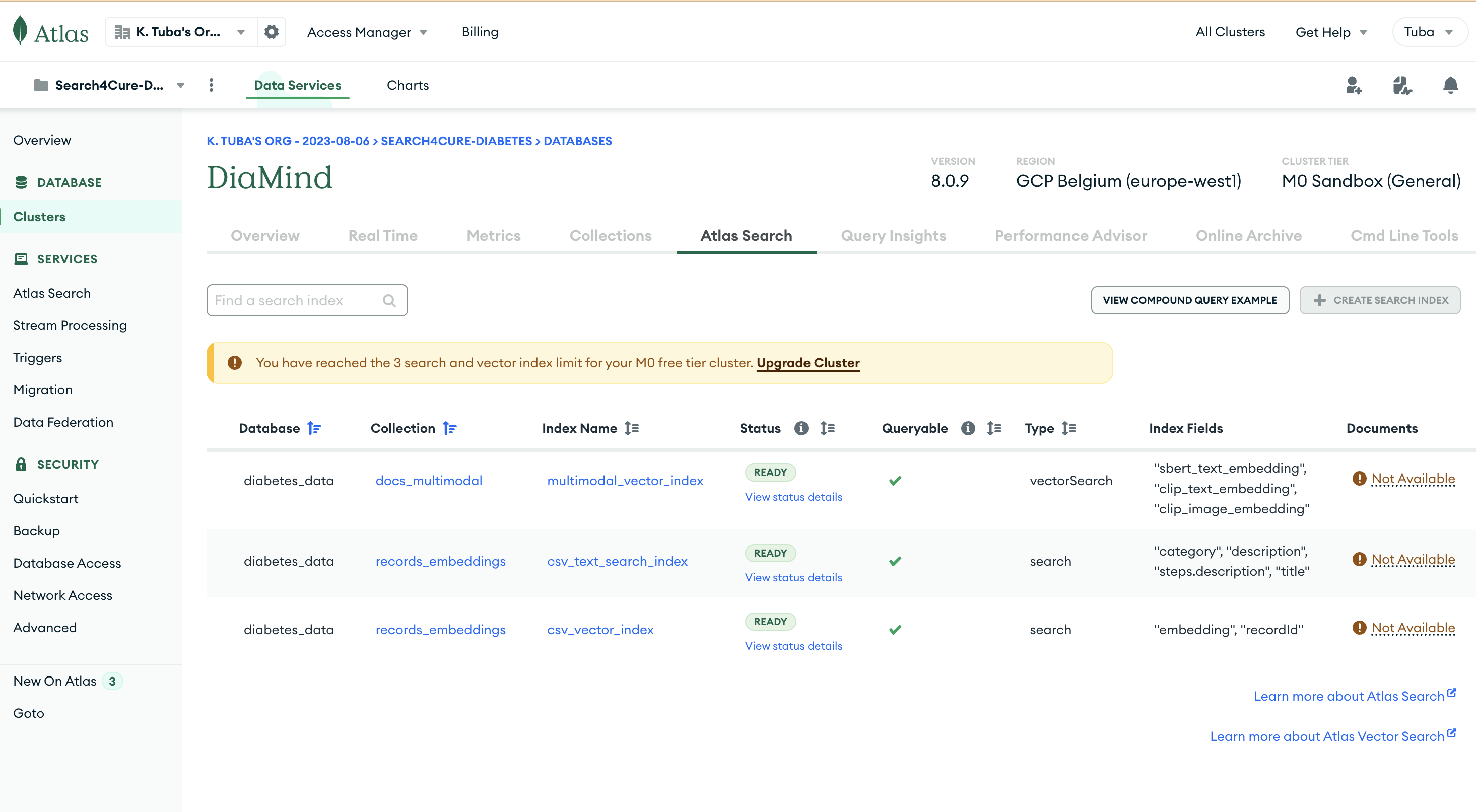
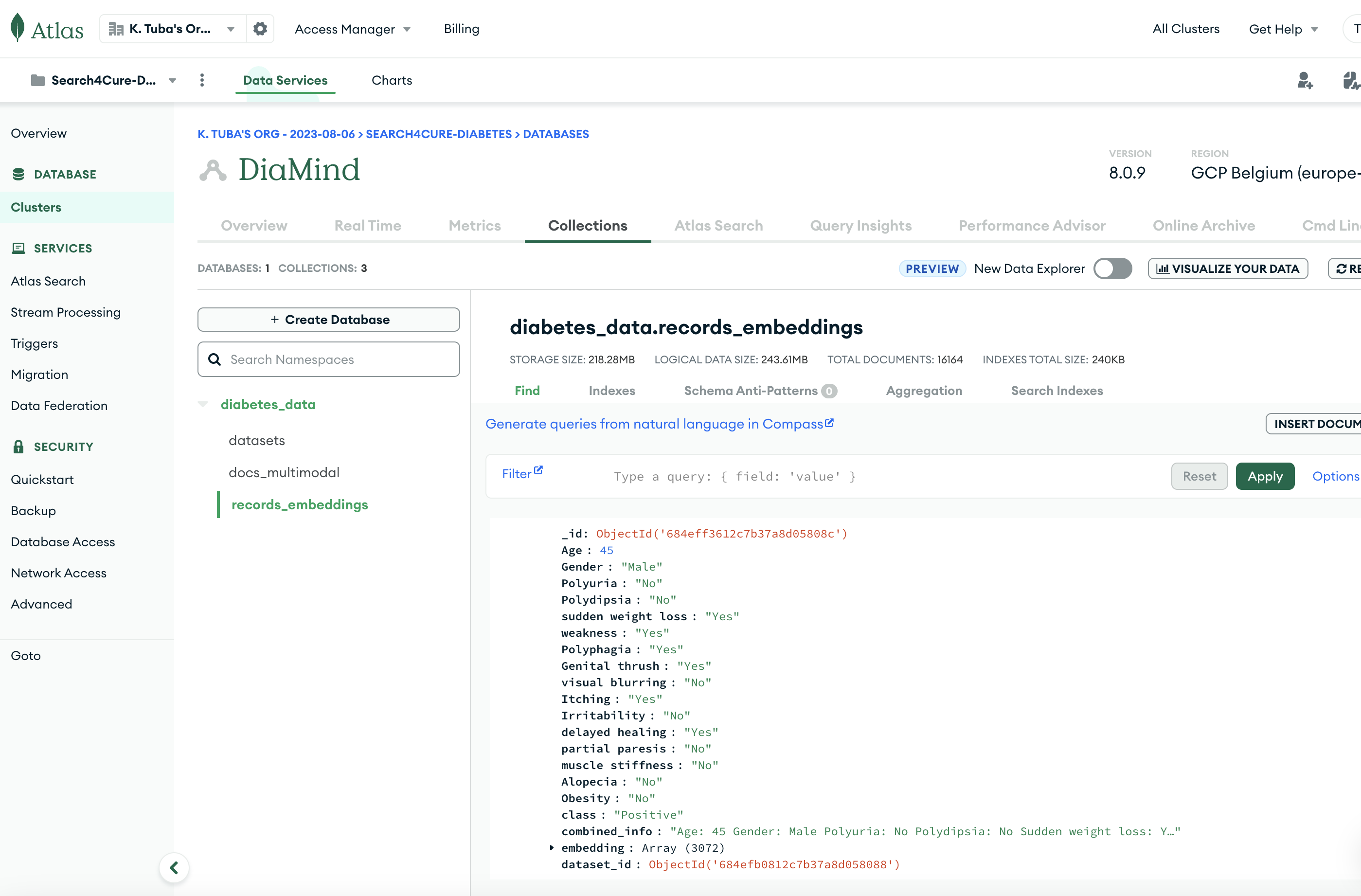
Search4Cure.AI-Diabetes
Inspiration
Diabetes is a chronic condition affecting millions globally, with a growing body of medical research being published every day. However, accessing and making sense of the vast amounts of research literature remains a significant challenge for both clinicians and researchers. We were inspired by the need for a smart, accessible AI-powered assistant that could help accelerate scientific discovery and decision-making in diabetes care and research. The idea was to combine multiple specialized agents, each with a distinct role, to collaborate like a research team—one that never tires and is always up to date.
What it does
Search4Cure.AI-Diabetes is a multi-agent research assistant designed to help users explore, synthesize, and extract insights from diabetes-related medical literature. The system accepts user queries and uses a team of LLM-powered sub-agents to handle document retrieval from embedded arxiv articles, summarization, csv file retrieval, multimodal reasoning (e.g., interpreting charts and figures), and insight generation. The agents collaborate via a central controller to provide a coherent and thorough response, along with a user-friendly interface that supports both natural language questions and structured queries.
How I built it
We developed the project using the ADK (Agent Developer Kit) framework provided by Google, which enabled us to compose and orchestrate multiple agents with ease. Here's a high-level overview of the tech stack and approach:
- Python 3.12 as the core development language.
- Google ADK to manage and deploy cloud-native LLM agents.
- LangChain and FAISS for document indexing, retrieval, and chunk-level semantic search.
- ** Gemini** for powering the reasoning and summarization capabilities of the agents.
- Google Cloud Run for deploying a scalable backend service.
- Streamlit and ADK UI components for building an interactive frontend experience.
- Docker for containerization and cross-environment compatibility.
Each sub-agent was designed with specific skills.
Challenges I ran into
- Multimodal analysis: Extracting and reasoning over images (graphs, tables) required integrating OCR and vision-language models, which added layers of complexity.
Accomplishments that I'm proud of
- Successfully deployed a production-ready multi-agent system on Google Cloud.
- Enabled seamless natural language interaction with scientific content.
- Integrated document-level and visual (multimodal) analysis into a unified agent workflow.
- Designed a modular backend that allows easy extension to other medical domains beyond diabetes.
What I learned
- The power and limitations of large language models in specialized domains like medicine.
- How to design modular, collaborative LLM agents using Google’s ADK and best practices.
- Cloud-native deployment strategies for AI agents, including Dockerization, service exposure, and permission scoping.
- How to integrate RAG (Retrieval-Augmented Generation) and multimodal tools into a cohesive research assistant.
What's next for Search4Cure.AI-Diabetes
- Broaden disease scope: Extend the system to cover other chronic diseases like cancer, cardiovascular disease, and Alzheimer’s.
- Fine-tune on medical corpora: Train custom LLMs or adapters on medical literature for even deeper domain understanding.
- Multilingual support: Add capabilities to process and summarize literature in languages other than English.
- Research collaboration assistant: Allow the assistant to help co-author scientific reports or grant proposals.
- Patient-facing features: Build a simplified frontend for patients seeking easy-to-understand summaries of the latest research.
Search4Cure.AI-Diabetes is just the beginning of building intelligent agents to accelerate medical understanding and empower both researchers and patients.


Log in or sign up for Devpost to join the conversation.