-
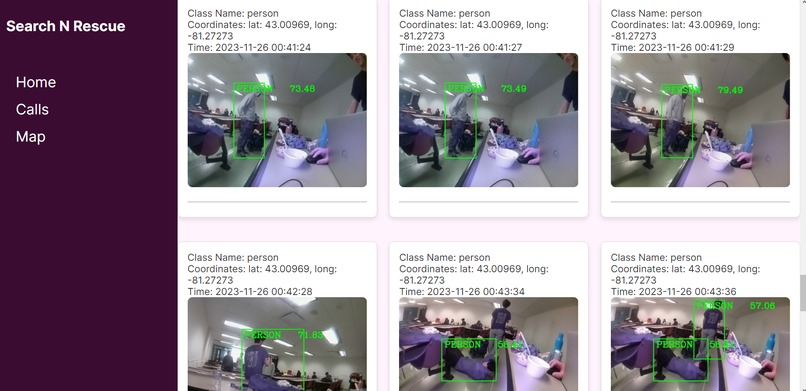
Page for Raspberry Pi Images
-
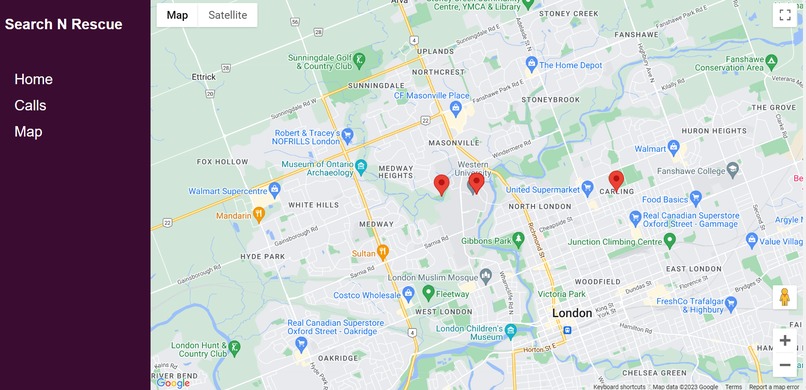
Map Page
-
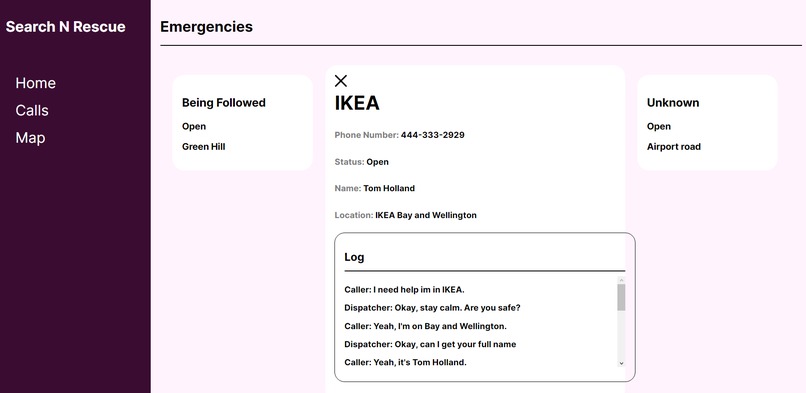
Calls page
-
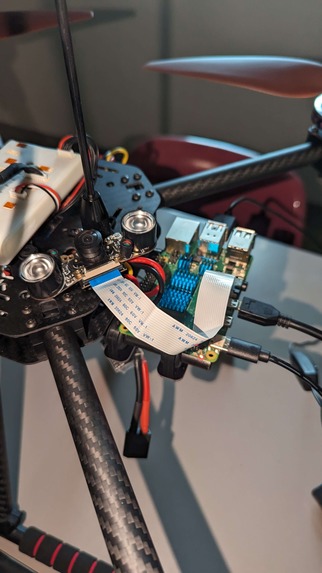
Raspberry Pi with Drone


Inspiration
Recognizing the importance of time in search and rescue situations, we aimed to develop a system that leverages AI to detect and report incidents more efficiently.
What it does
Safe Search is an AI-powered multi-faceted search and rescue system that allows search and rescue teams to effectively automate the most time consuming aspects of human recovery. We accomplish this goal through two distinct features: an AI-powered remote camera system to identify those who are lost and an automated call system using AI. This system allows search and rescue teams to more quickly receive information regarding the nature of emergencies and focus their efforts on supporting individuals in need. Where human responders are not available, AI leads the way.
How we built it
Safe Search utilizes a Raspberry Pi camera system to detect humans and traces of human activity through a pre-trained model. When an incident is identified, the system captures and transmits real-time data, including timestamp, location, and images, to a centralized dashboard. Simultaneously, an SMS alert is sent to rescuers via Infobip. The dashboard, powered by Google Maps integration, displays incident locations, providing a comprehensive overview for quick response.
Additionally, Safe Search's call center employs Twilio and GPT-3.5. This call center efficiently handles incoming calls, extracting essential information such as caller's name, phone number, location, and incident details. The extracted data is then dynamically displayed on the map, facilitating a coordinated and swift response to incidents.
Hardware: Raspberry Pi for on-board processing. Night Vision Camera module for image capture. KIT-HGDRONEK66 for drone base
Software: Infobip for SMS alerts. Twilio for call handling. Pre-trained AI model COCO for human detection. Google Maps API for incident visualization. GPT-3.5 for autonomous call center responses. MongoDB for storing incident information.
Challenges we ran into
- Integrating the drone hardware with the Raspberry Pi and ensuring real-time image processing.
- Developing a seamless communication system for incident reporting to the dashboard and SMS alerts.
- Ensuring accurate extraction and display of caller information in the autonomous call center.
- Fried speech controlling unit on drone causing drone losing power to motors
Accomplishments that we're proud of
- Successful integration of drone technology for efficient incident detection.
- Seamless communication between hardware components and the centralized dashboard.
- Autonomous call center capabilities, enhancing response efficiency.
What we learned
- Enhanced understanding of drone hardware integration and real-time image processing.
- Effective utilization of APIs for geographical visualization.
- Implementation of AI models for call center automation.
What's next for SafeSearch
- Implementing additional AI models for more precise incident characterization.
- Attaching the Raspberry PI to our drone
- AI Object Labeling to make pictures easier to understand.
Research
In 2021, 500,000 people were reported lost while camping, necessitating search and rescue efforts for their location. In Canada alone, 31,334 children and 33,393 adults went missing in 2022. Despite the fact that 77% of people are typically found within the first 24 hours, search and rescue teams are often understaffed and inadequately equipped for the time-sensitive nature of their missions. Safe Search aims to address this gap by offering an AI-powered drone service that empowers front-line defenders with innovative technology. Search and rescue operations are inherently challenging and unpredictable, with factors like time constraints and difficult terrains significantly influencing mission outcomes. Drones, with their speed, situational awareness capabilities, and detection tools such as thermal cameras, are positioned as valuable assets in improving response times and effectively locating and rescuing individuals. The search and rescue drone market is projected to grow from $3,254.4 million in 2023 to $11,648.1 million by 2033.
Citations
Aggarwal, N. (2022, March 2). Datawatch: Lost in the woods? Analytics might save your life. RTInsights. https://www.rtinsights.com/datawatch-lost-in-the-woods-analytics-might-save-your-life/ Crime, O. of the F. O. for V. of. (2018). Home: Federal ombudsman for victims of crime. https://victimsfirst.gc.ca/vv/MPI-RPD/index.html#:~:text=According%20to%20the%20RCMP’s%20National,cases%20left%20unresolved%20each%20year. Dotson, R. (2023, June 30). Statistics of getting lost and found. Survival Dispatch. https://survivaldispatch.com/statistics-of-getting-lost-and-found/ Drones for search and rescue operations | sar drones. (n.d.). Retrieved November 25, 2023, from https://www.flytbase.com/blog/drones-for-search-rescue Fact. Mr – search and rescue drone market size, share, growth, forecast analysis, by drone type(Consumer/civil, commercial, military) , by product type(Consumer/civil, commercial, military) , by end use vertical (Police & homeland security, others), & region—Global market insights 2023-2033. (n.d.). Retrieved November 25, 2023, from https://www.factmr.com/report/search-and-rescue-drone-market News, A. B. C. (n.d.). Why the first 72 hours in a missing persons investigation are the most critical, according to criminology experts. ABC News. Retrieved November 25, 2023, from https://abcnews.go.com/US/72-hours-missing-persons-investigation-critical-criminology-experts/story?id=58292638


Log in or sign up for Devpost to join the conversation.