-
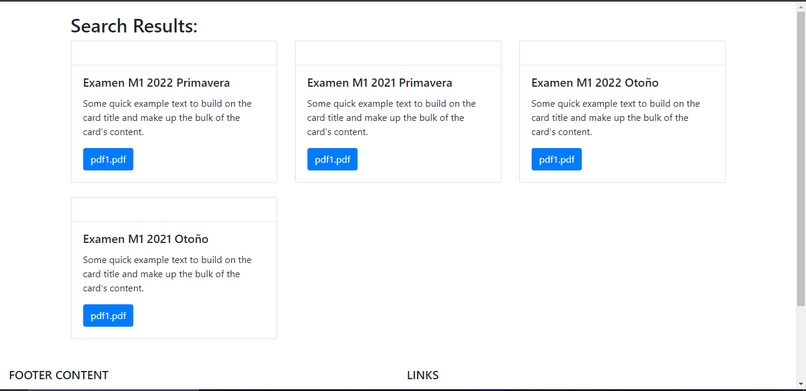
Output when searching: Quiero el examen de m1 primavera del año 2022
-

Index: We can see the talk button, and the input box for modify the input if needed


Inspiration
The inspiration for this project came from the need for a more convenient way to search and retrieve data from a large dataset using a search engine, while also incorporating voice recognition technology to make the search process more seamless and user-friendly.
What it does
This project is a search engine with voice recognition capabilities that enables users to search for data in a large dataset using voice commands. The search engine allows users to specify keywords, phrases or tags, and retrieve the relevant documents from the dataset. The voice recognition technology allows users to perform the search using their voice, making the process more efficient and hands-free.
How we built it
We built this project using Python, specifically leveraging the Natural Language Toolkit (NLTK) and the SpeechRecognition library to enable the search engine's natural language processing and voice recognition capabilities, respectively. The project also utilizes the JSON format for data storage and retrieval.
Challenges we ran into
Some of the challenges encountered during the development of this project include implementing the voice recognition feature to ensure that the system can recognize voice commands accurately, ensuring that the search engine returns relevant results based on user queries, and optimizing the search engine for efficiency when dealing with large datasets.
Accomplishments that we're proud of
One of the primary accomplishments of this project is successfully integrating the voice recognition technology with the search engine, making the search process more convenient for users. Additionally, the ability to retrieve relevant data from a large dataset accurately is another significant accomplishment.
What we learned
During the development of this project, we learned several things, including natural language processing techniques, voice recognition technology, and data storage and retrieval using JSON format. We also gained valuable experience in optimizing search engines for efficiency and accuracy.
What's next for Search Engine with voice recognition made with Python
In the future, we plan to enhance the search engine's functionality by incorporating more advanced natural language processing techniques, such as sentiment analysis, to enable users to search using more complex queries. We also plan to integrate machine learning algorithms into the search engine to enhance its accuracy and efficiency further. Additionally, we aim to make the search engine more user-friendly by incorporating more advanced user interface design features, such as voice-enabled prompts and visual cues, to improve user interaction with the system.

Log in or sign up for Devpost to join the conversation.