-
-
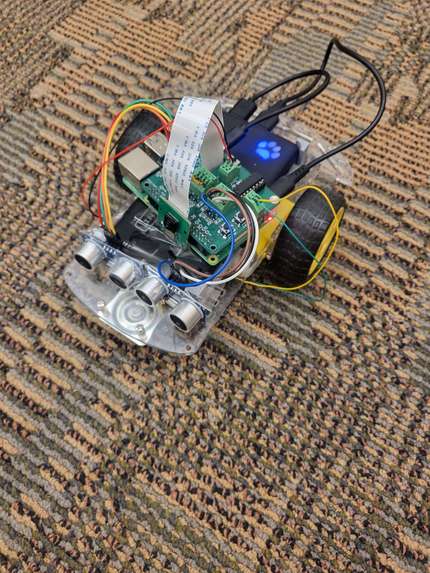
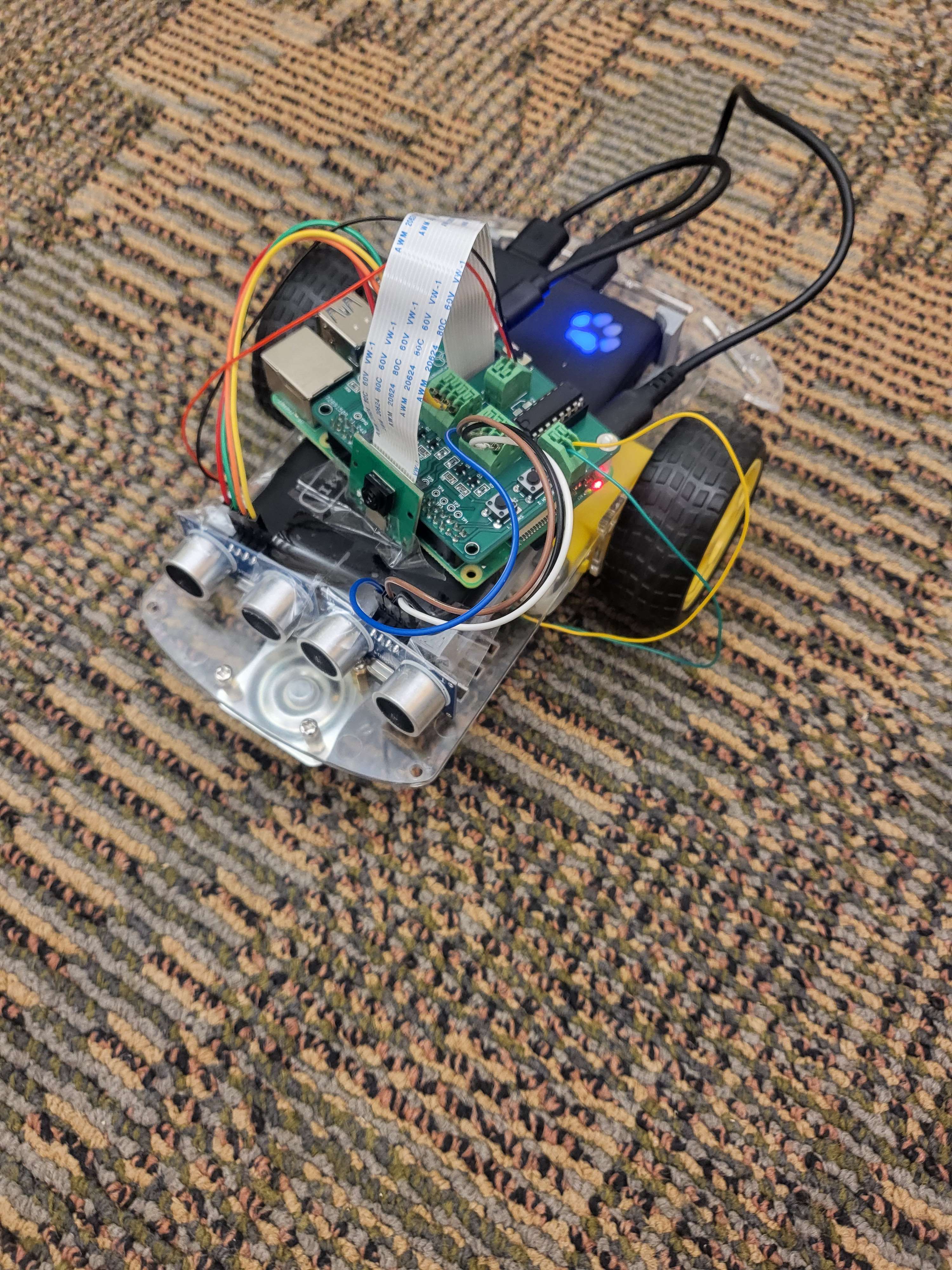
Isometric View of Search and Rescue Robot
Our Inspiration: At the University of Illinois Urbana-Champaign, we are passionate about systems, fascinated by computer science, and thrive on solving coding problems. Our inspiration for the hackathon revolves around leveraging our love for technology to tackle real-world challenges and push the boundaries of innovation.
What does our Search and Rescue Robot do? Our Search and Rescue Robot searches an area to find a predetermined object, in our case a green John Deere baseball cap. The robot does this by searching an area with a picture, searching the picture for the object, and stopping if it found the object or continuing if the object was not found.
Build Process:
- Assemble the car
- Setup the Raspberry Pi internet connection
- Create the algorithm to construct the camera function on our robot
- Create the algorithm to search around the room
- Rearrange sensors on the robot to be more accurate
Challenges and hardships: ⁃ The copper piece broke off of the motor, had to resolder and obtain a new motor ⁃ Raspberry Pi overheated, needed to change out for a different Raspberry Pi ⁃ The camera didn't recognize the target ⁃ Actual problem: The RGB values thresholds didn't cover all green shades ⁃ Solution: Use HSV values, as they cover more shades ⁃ When there is something nearby but is not the target ⁃ Image contouring ⁃ Algorithm to search room ⁃ Lack of time, so we used a strategy of going forward until we hit an obstacle, then spin if it's not the target, and keep alternating until it's found.
Our accomplishments: ⁃ Implementing the algorithm correctly ⁃ Various problem-solving and successful troubleshooting to fix bugs ⁃ Creating an autonomous robot successfully as a team ⁃ Using our various skills in programming, CAD, and engineering to complete the Hackathon
What we learned and the next steps for the Search and Rescue Robot: We had many key takeaways and insights from this Hackathon. The limited time made it so we had to go through our process as precisely and efficiently as we could. There are also simply many things that could just go wrong without notice. Our problem-solving skills showed throughout this project as there were many errors, inconveniences, and bugs that slowed us down. Overall, finding a balance between creating a project that is complex but not too difficult is essential, while making sure the robot is fully operational is the top priority. The next few things we would implement to our Search and Rescue Robot would be to fully optimize its travel time, use other indicators besides HSV values, and use a different method so that we can perform our Robot's task on humans if they ever need critical help.


Log in or sign up for Devpost to join the conversation.