
Why we chose this approach
At first, we considered developing advanced computer vision approaches to fly over an area and perform triage remotely. However, this is still an open research problem and it would be difficult to create a robust solution without significant effort that would extend far beyond this hackathon.
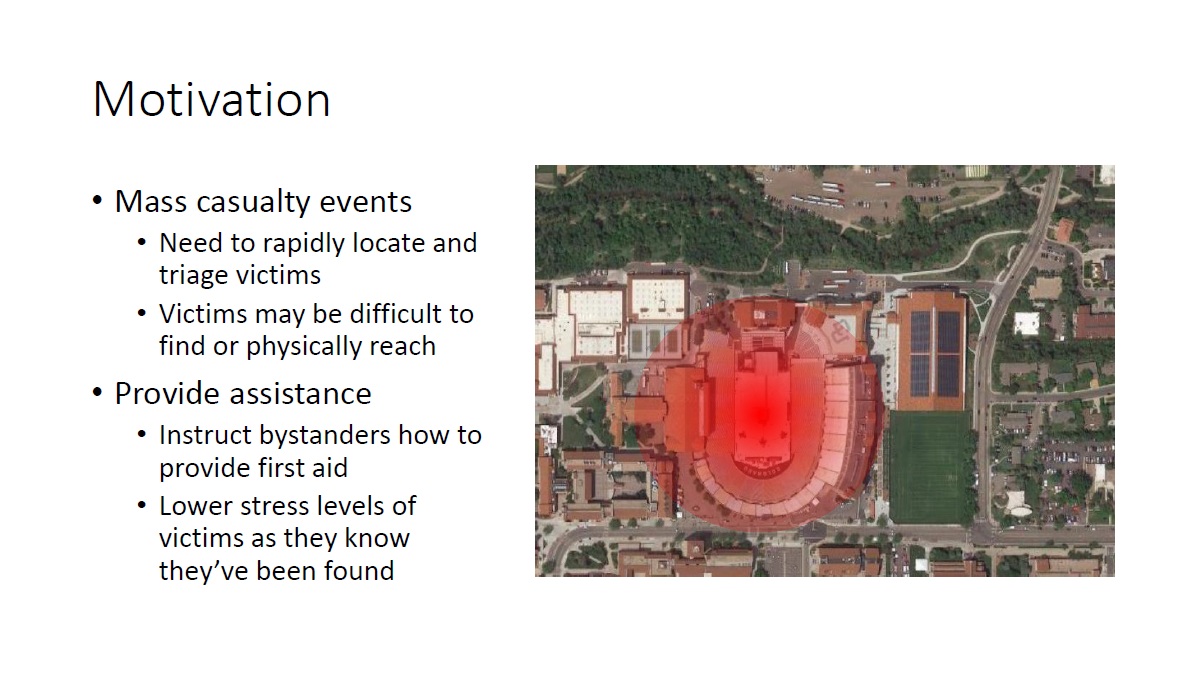
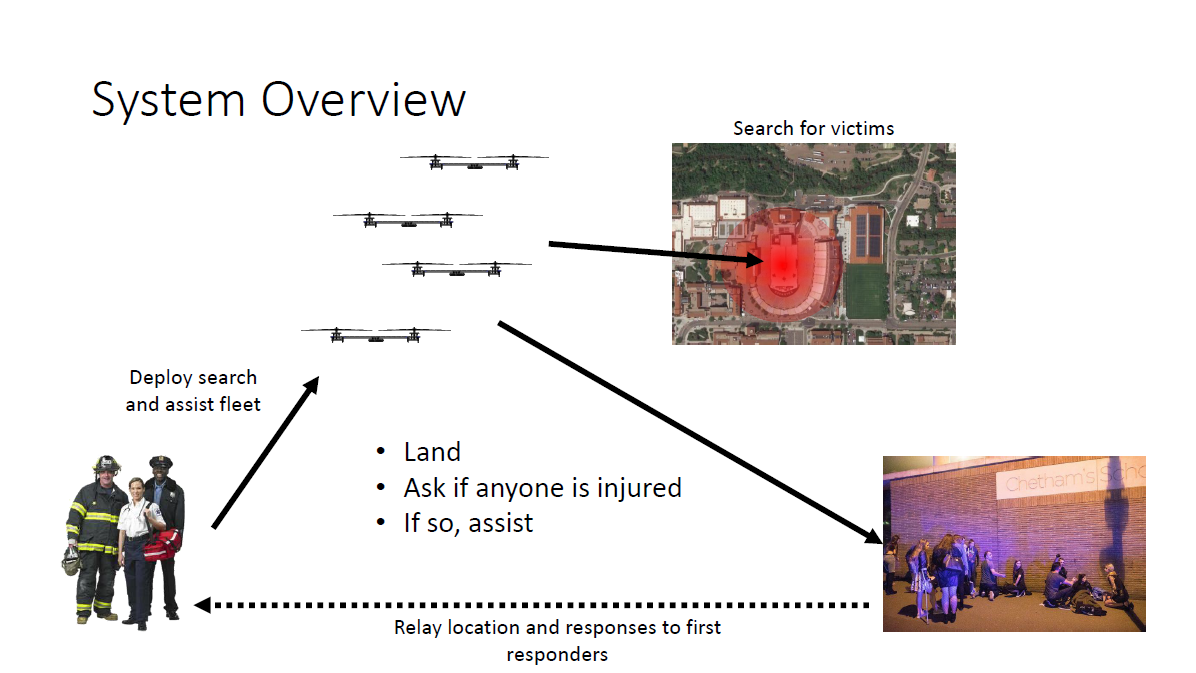
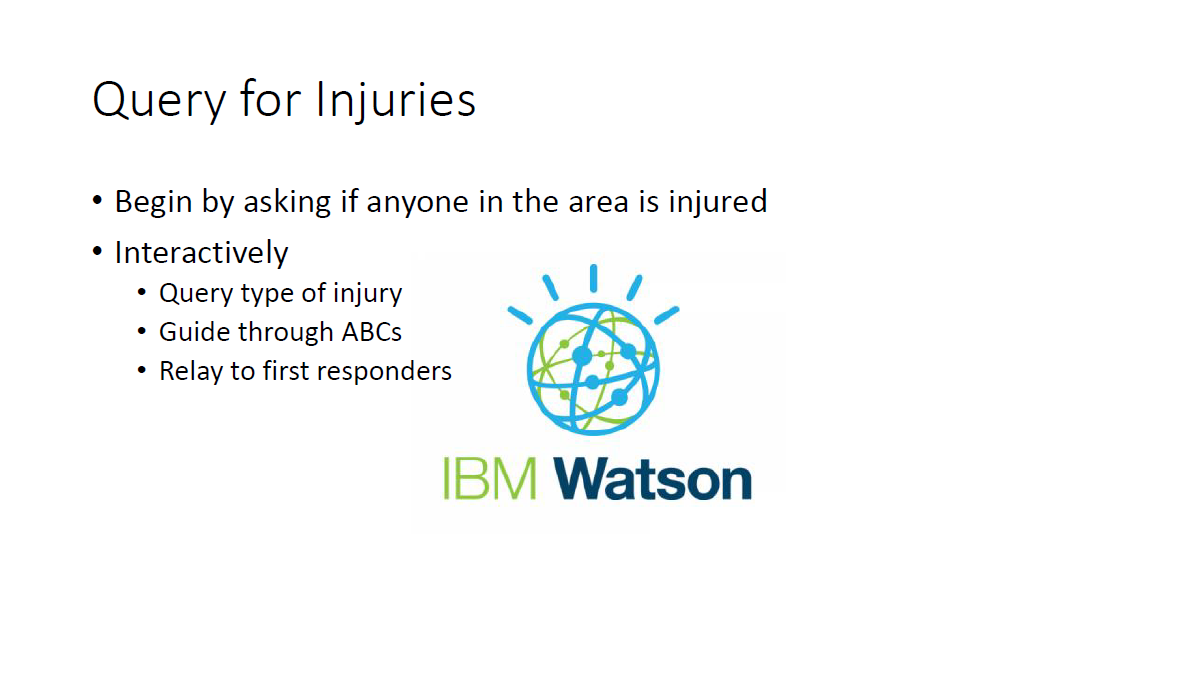
After brainstorming further, we came up with the idea to land and use Watson's conversational capabilities to simply talk with people and ask them if they're injured. This approach is straightforward and a robust implementation can be created using technology that exists today. Another benefit to this approach is that we can guide nearby bystanders to provide first aid, something that would be difficult for a robotic system to perform and could mean the difference between life and death for an injured individual. This system also has the potential to comfort victims and lower their stress levels by reassuring them that help is on its way.
Challenges we ran into
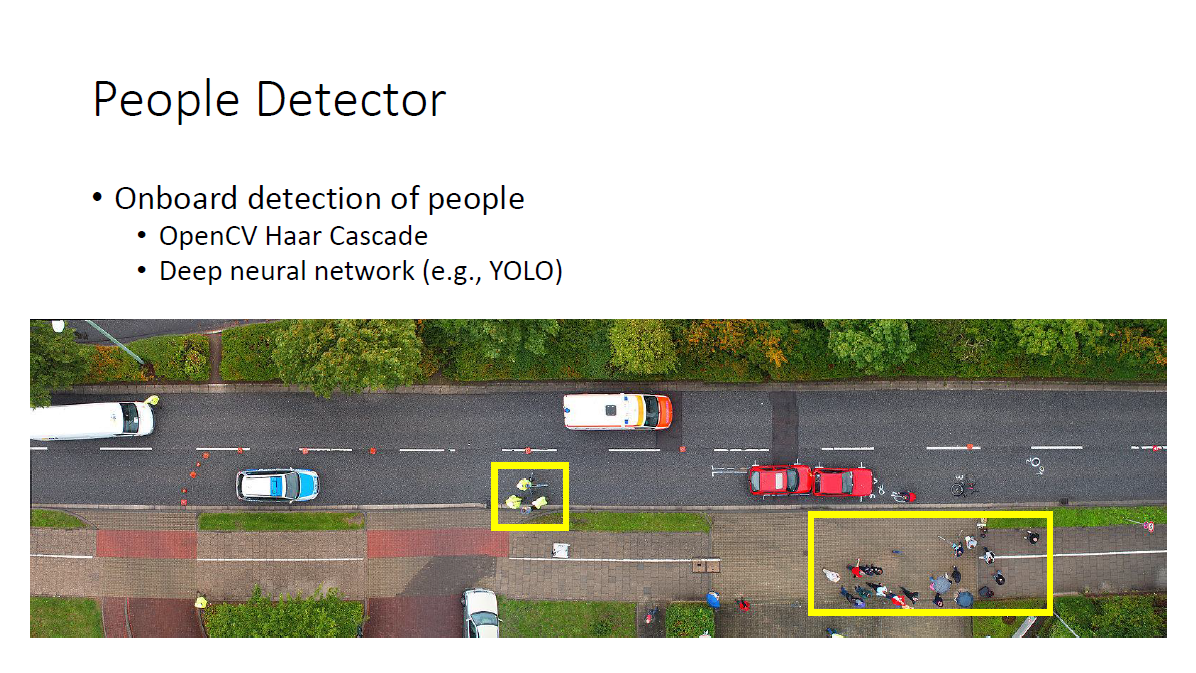
We initially tried to use IBM's Visual Recognition system in additional to their Conversation API, but found that the visual recognition system could not localize (i.e., detect) people out of the box. As such, we reverted to OpenCV. Although we did talk with the Flytbase folks about the possibility of using their neural-network-based object detection system.
Creating software that integrated multiple different APIs is also a challenge as it takes time to understand and utilize each API. It can also be difficult to integrate everything if you can find a single language that is supported by all APIs.
Built With
- acep
- computer-vision
- deep-learning
- flytbase
- ibm-watson
- opencv
- python


Log in or sign up for Devpost to join the conversation.