-
-
-
-
-
-
-
-
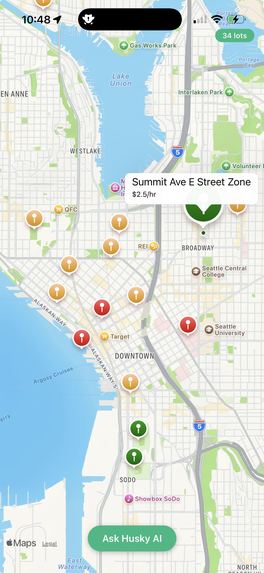
also works perfectly fine on ios
Inspiration
Parking in Seattle is frustrating, time-consuming, and unpredictable. We were inspired by our own experiences of circling blocks, unsure whether spots were available, affordable, or even safe. Existing solutions often lack real-time accuracy or fail to combine key information in one place.
SeaPark was created to solve this by giving drivers a live, reliable view of parking conditions, helping them make faster and smarter decisions.
What it does
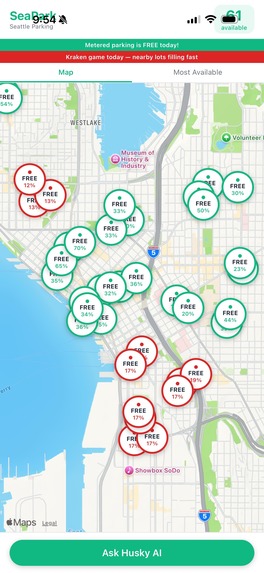
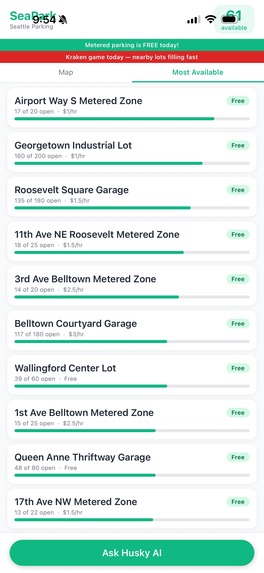
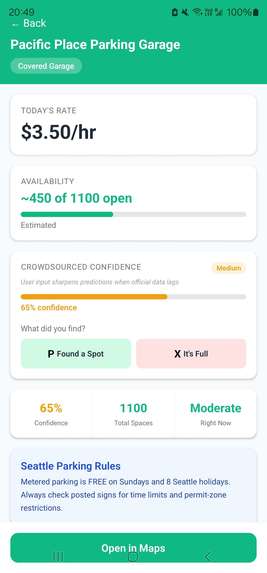
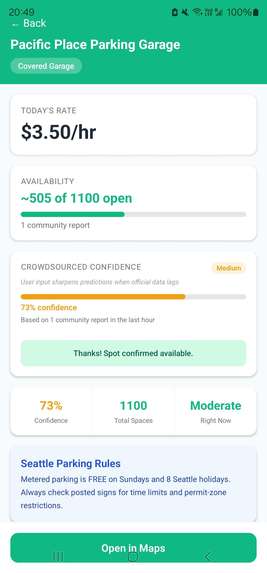
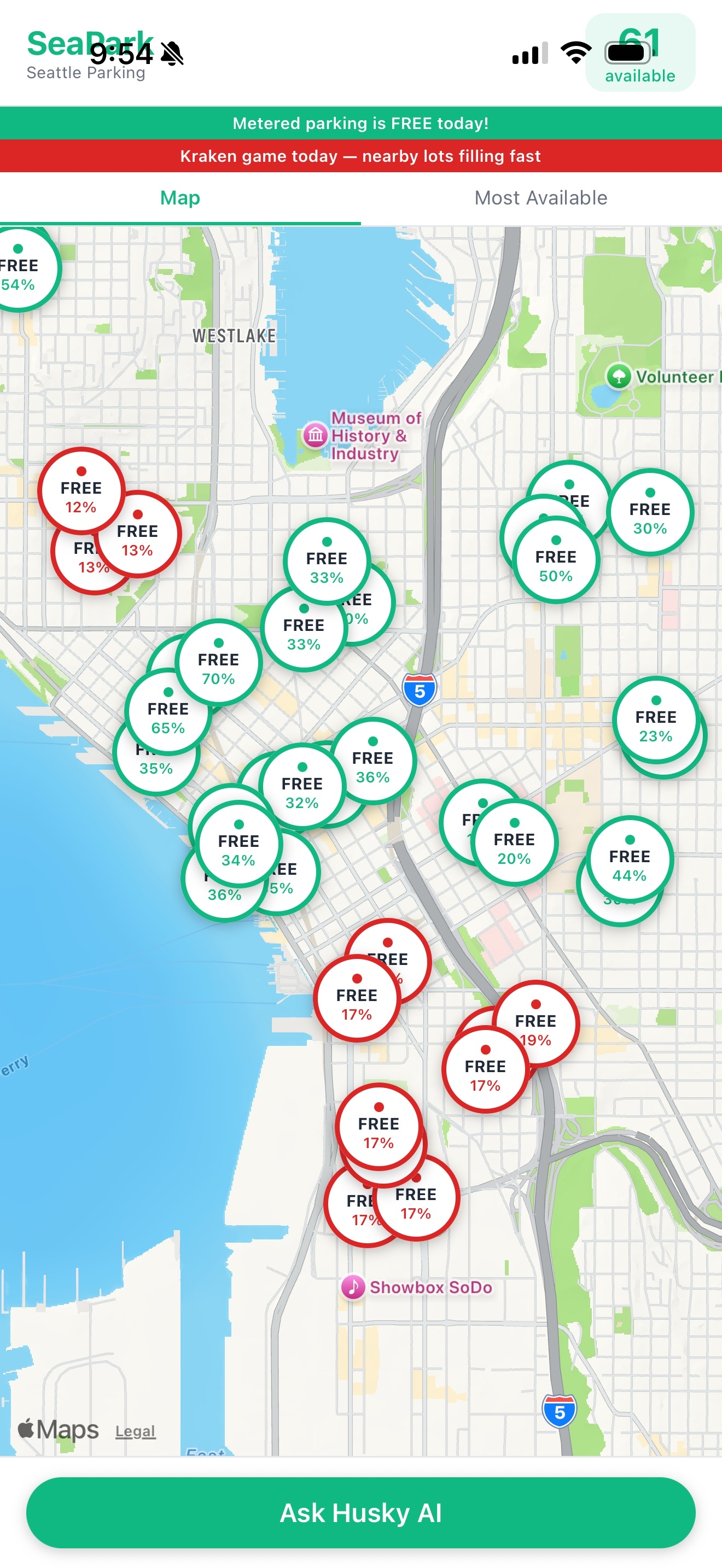
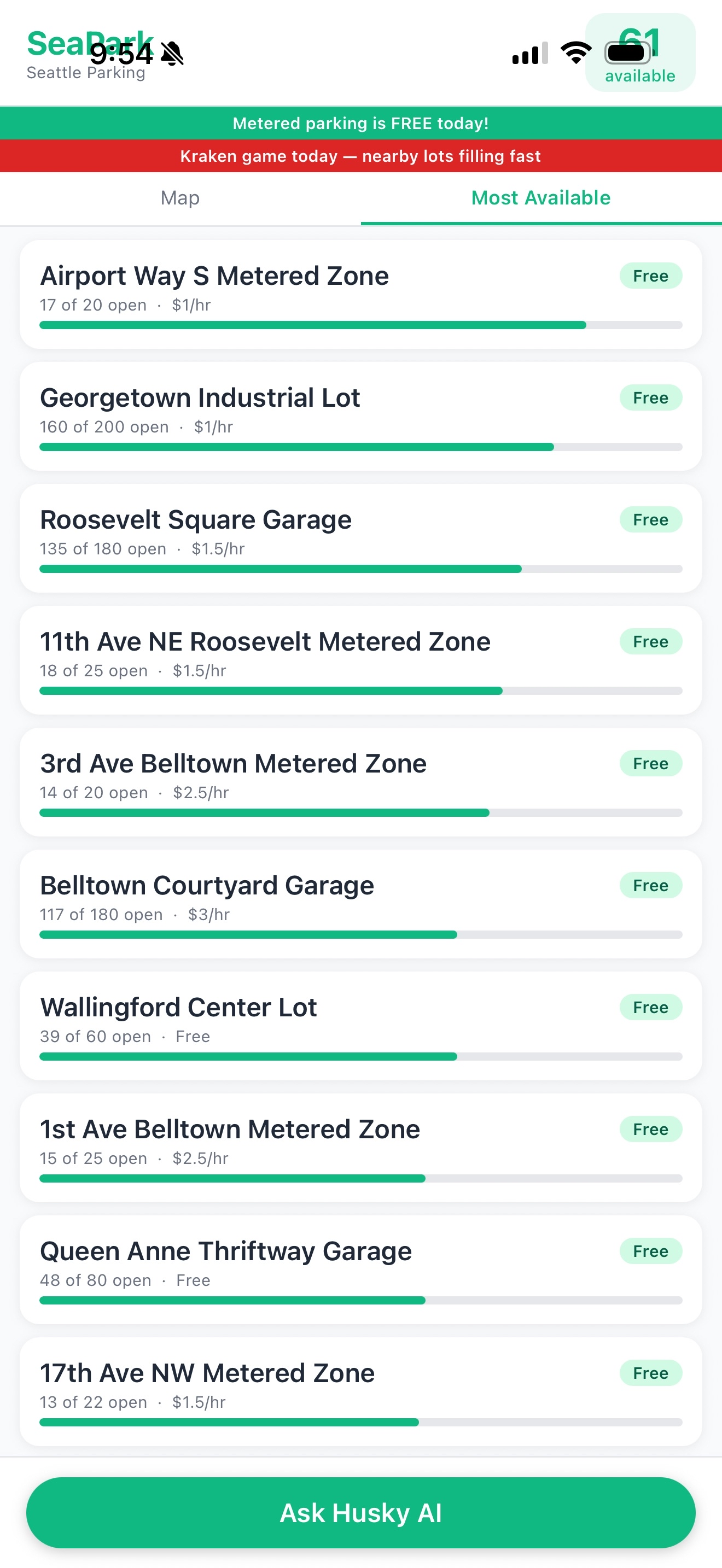
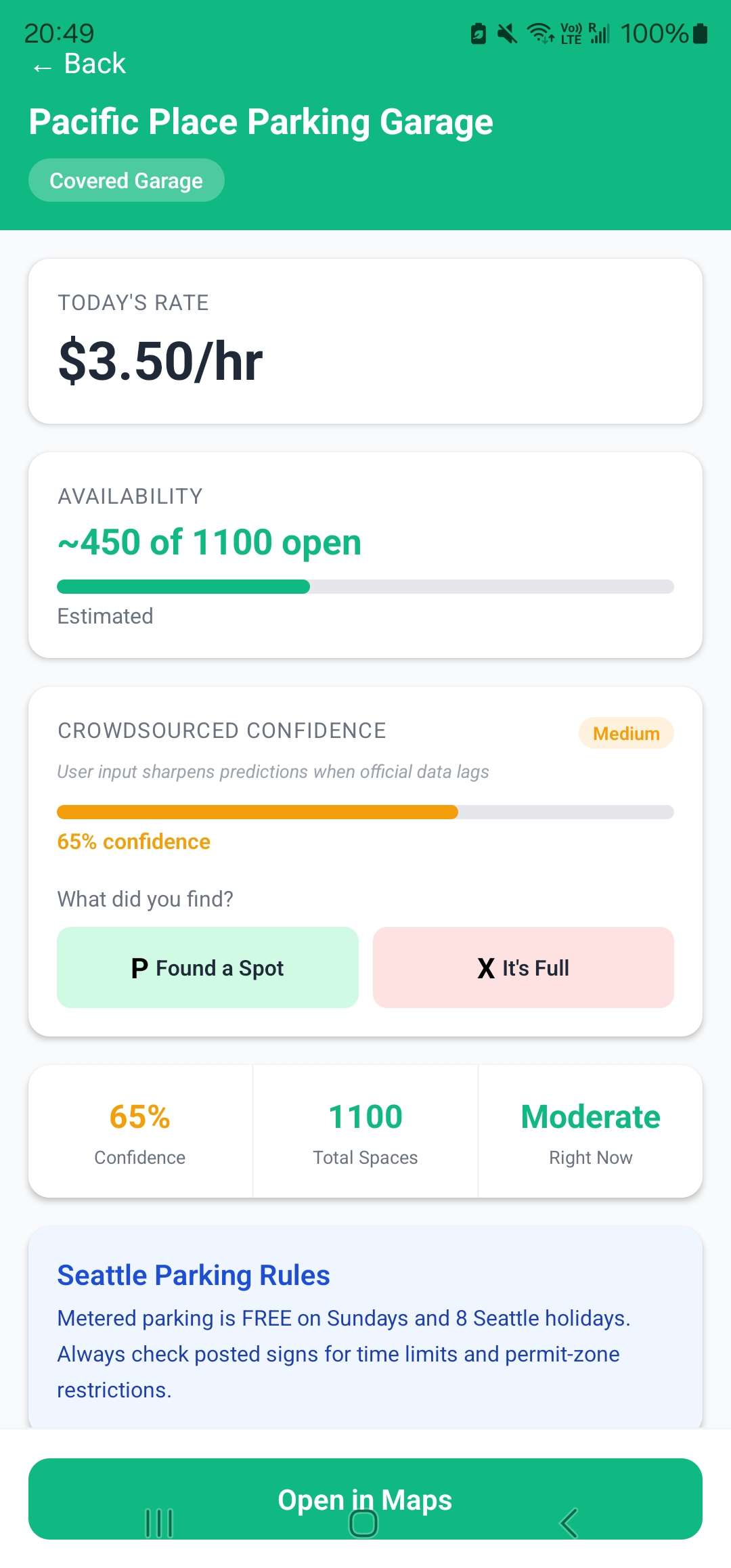
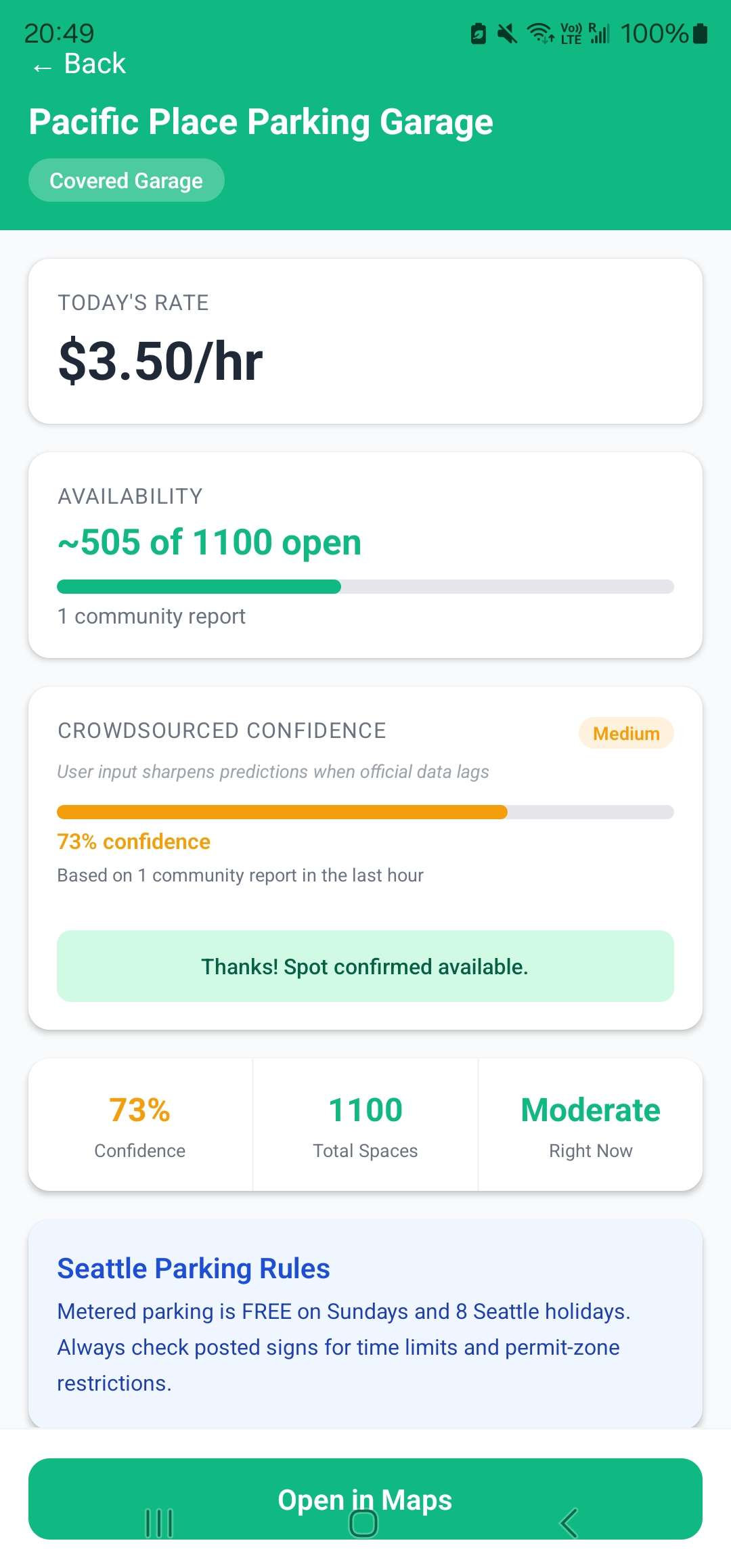
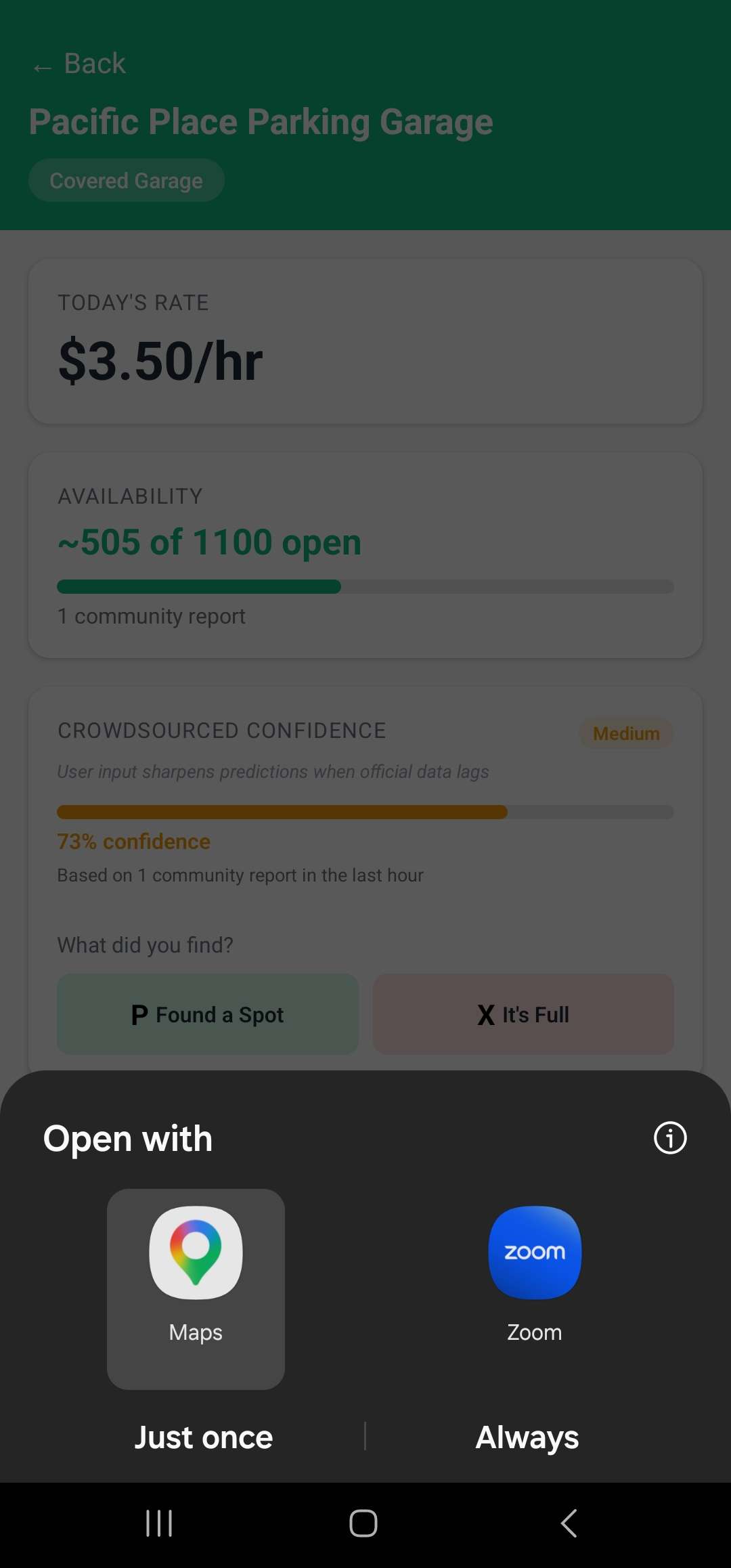
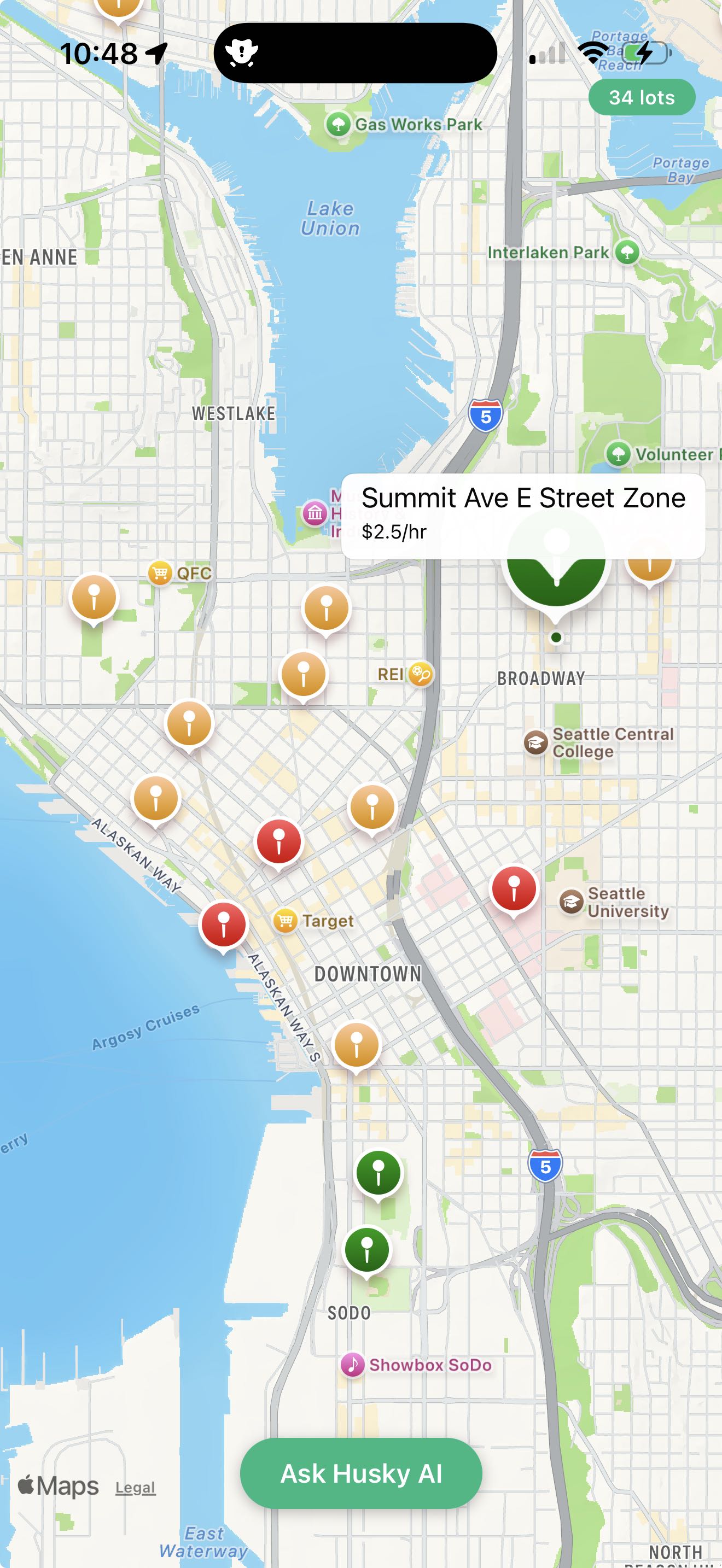
SeaPark is a real-time parking assistant that displays availability, pricing, and safety insights on a single interactive map. It combines public data with user-generated reports to give a more accurate picture of current conditions.
We model parking availability as a time-dependent function:
[ A(t) = A_0 - \lambda t + U(t) ]
Where:
- (A(t)) = available parking at time (t)
- (A_0) = initial availability
- (\lambda) = rate at which spots are occupied
- (U(t)) = user-reported updates
How we built it
SeaPark was developed as a mobile-first application:
- Expo Go with JavaScript and TypeScript for the frontend
- Python for backend logic and API integration
- Firebase for real-time database and syncing
- Public APIs for maps and parking data
- Socrata App Token from data.seattle.gov for high-frequency data retrieval and rate-limit management
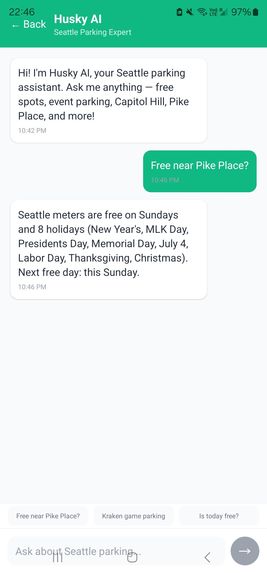
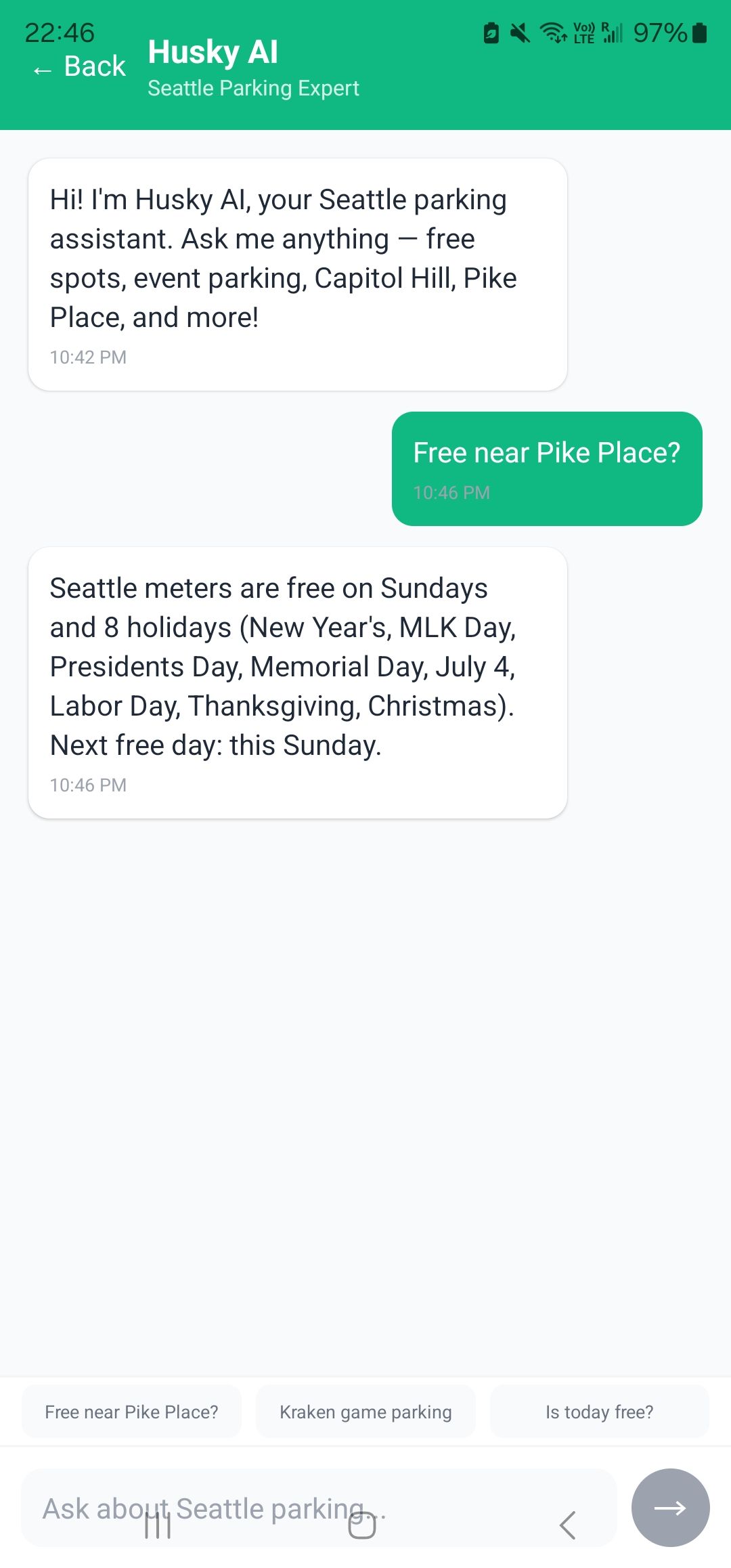
- Gemini API for natural language processing and intelligent parking assistance
- JSON for data exchange
Challenges we ran into
- Keeping real-time data fast and consistent across users
- Handling unreliable or outdated public data
- Optimizing map performance with multiple live layers
- Ensuring trust in crowdsourced reports
What we learned
- Building real-time systems with Firebase
- Integrating multiple APIs into one experience
- Designing efficient and clear map-based interfaces
- Balancing crowdsourced data with reliability
Built With
- expogo
- firebase
- javascript
- json
- public-apis
- python
- typescript


Log in or sign up for Devpost to join the conversation.