Inspiration
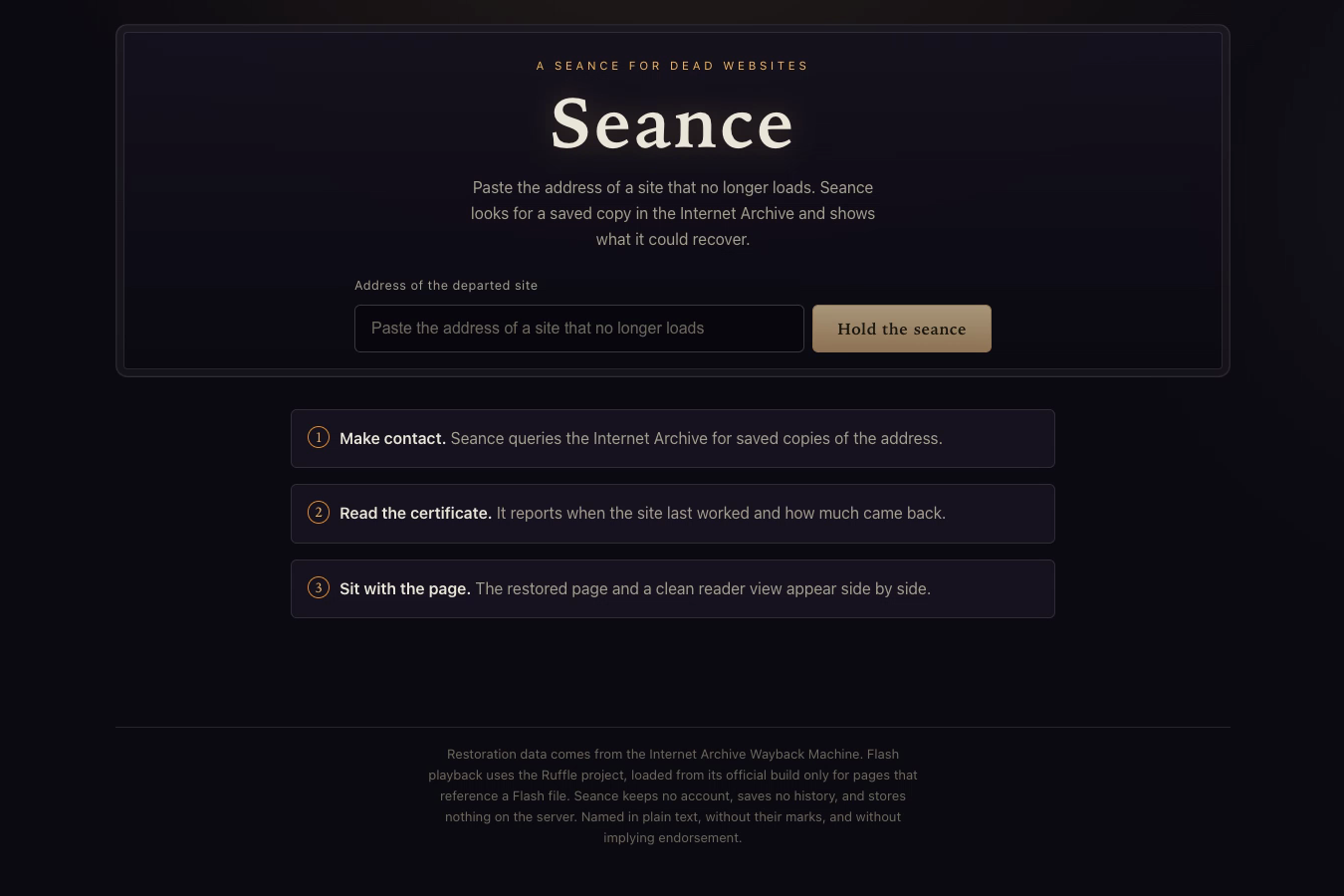
A lot of the early web is gone. School pages, old government sites, the Flash games people grew up with. The Internet Archive saved much of it, but opening a raw capture is slow, links jump back to the live web, and Flash does not run in any modern browser. We wanted a way to hold a seance for a dead site: call it back, see what is left, and be honest about what is missing.
What it does
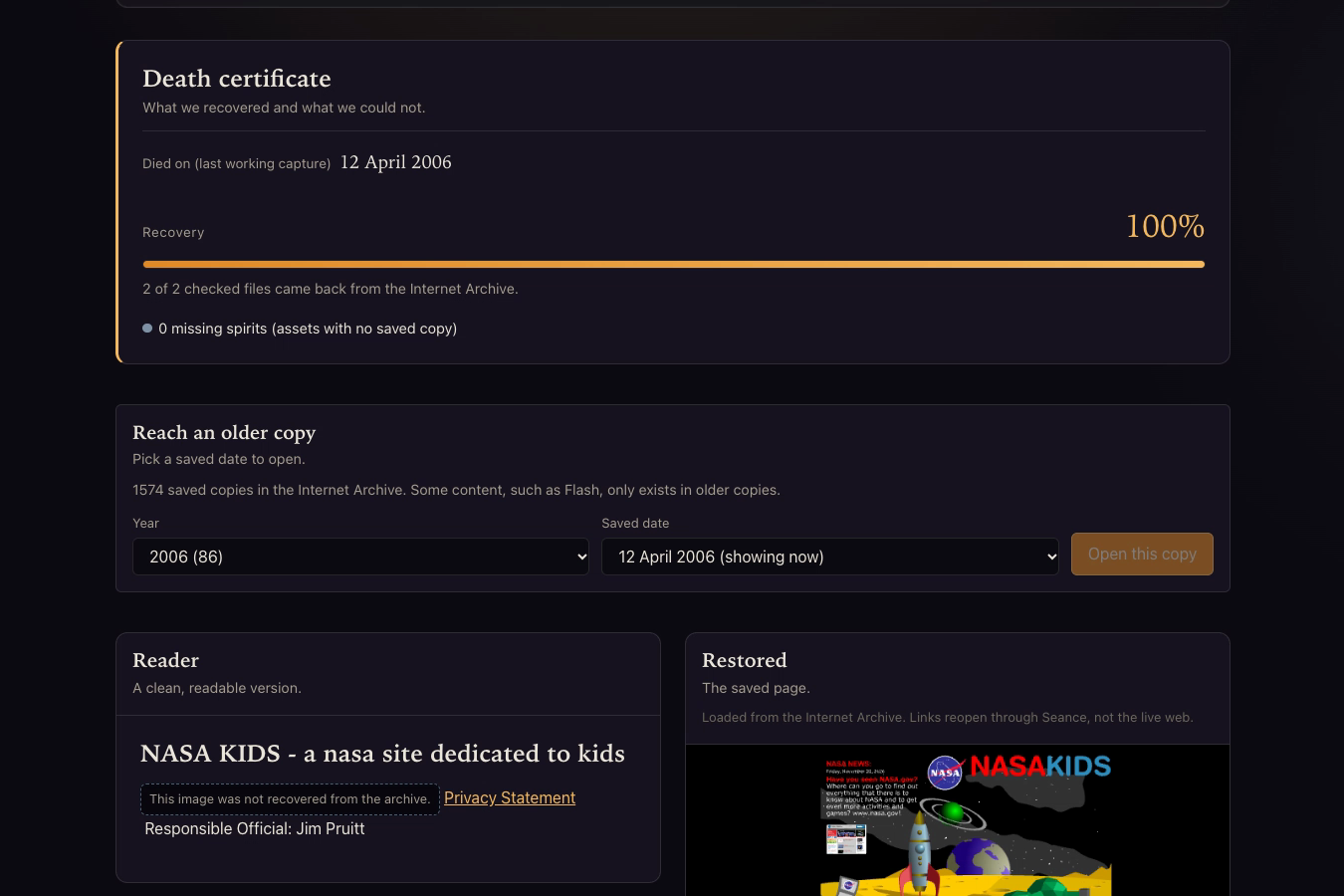
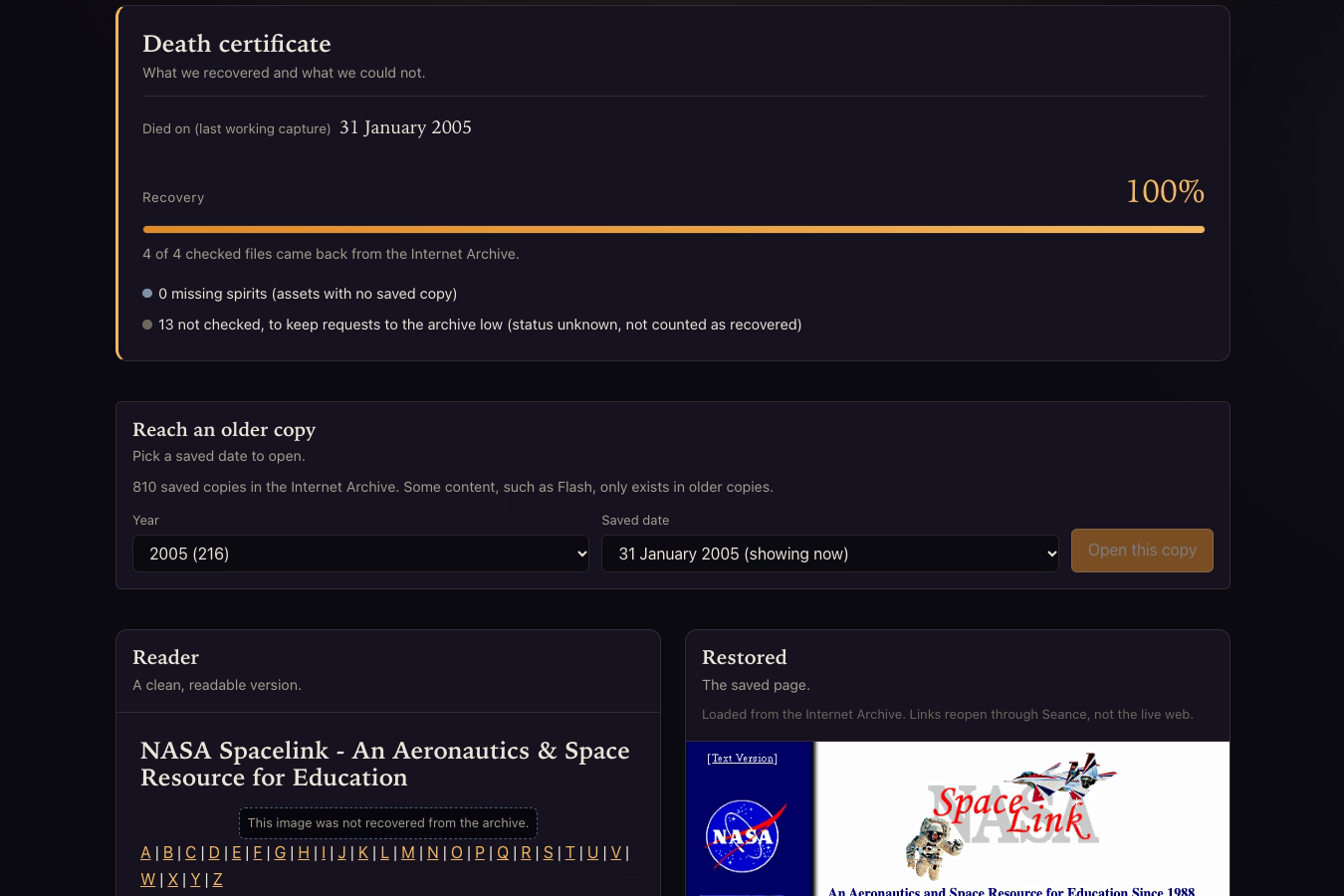
You paste the address of a site that no longer loads. Seance asks the Wayback Machine for its saved copies and shows which step it is on. It then writes a death certificate: the date of the last working capture, and how many of the page's files came back. Captures that are only redirect stubs do not count as alive, and a site that was still saved in the last 30 days is not called dead.
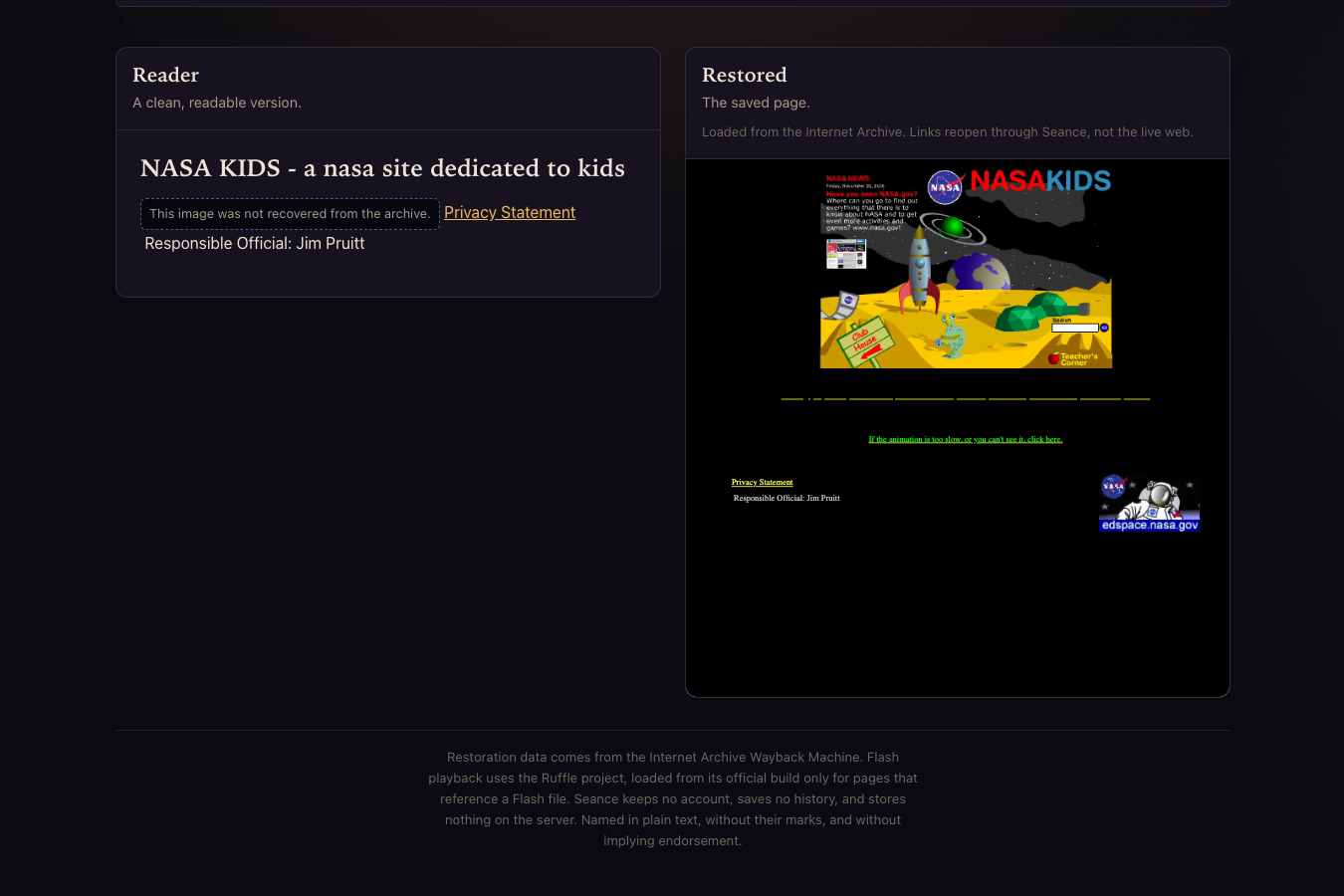
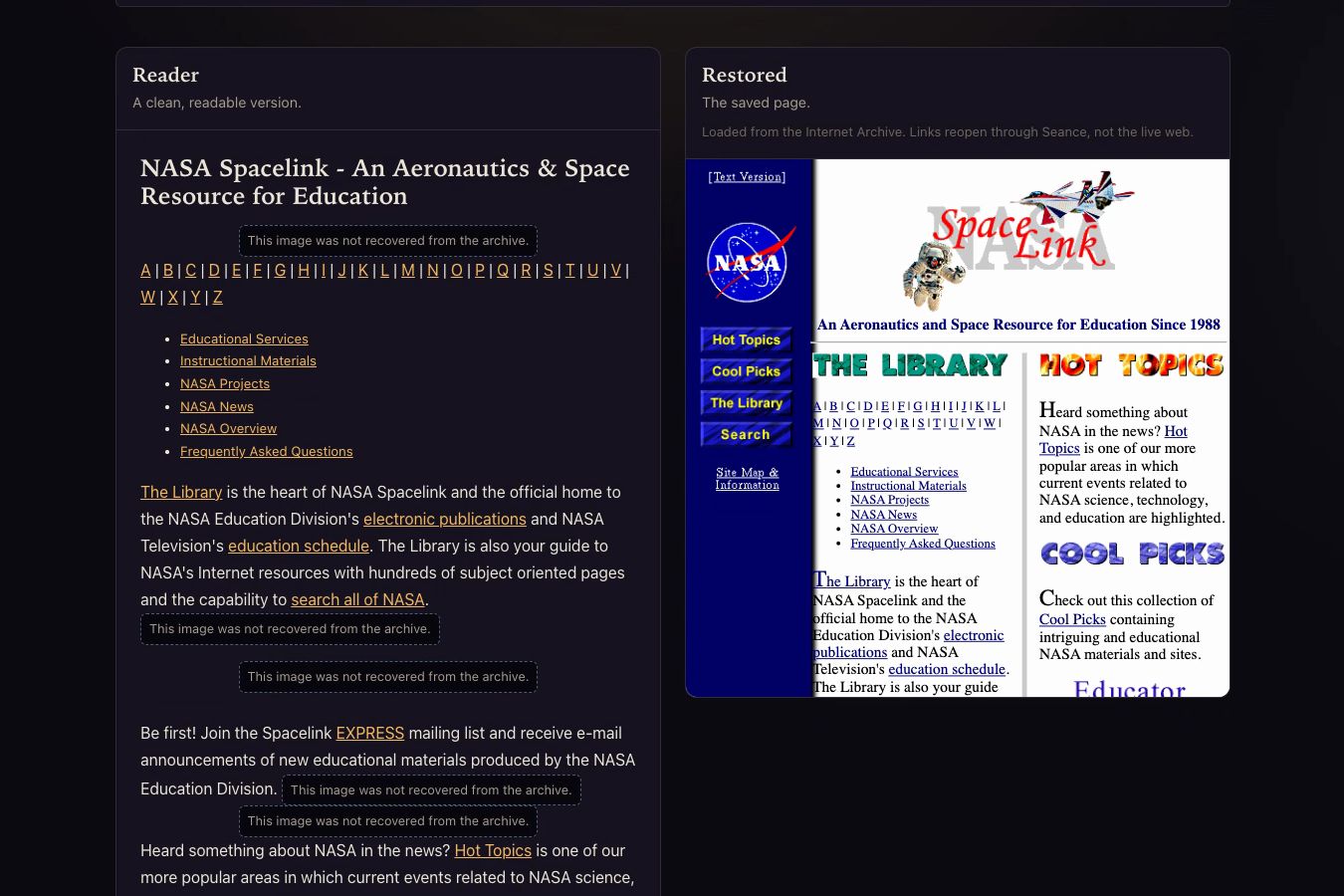
The page is rebuilt inside a sandboxed frame with every link, image, style, and Flash file pointed at the archive, so nothing reaches the live web. Archived Flash plays again through Ruffle, the open source Flash player. A reader view shows the same page as clean text that works on a phone, and a picker opens any older capture by year and date.
When the archive is slow or busy, Seance says so in plain words and offers a retry. It checks only a few files per page to keep requests low, and it reports the unchecked ones as unchecked instead of guessing.
How we built it
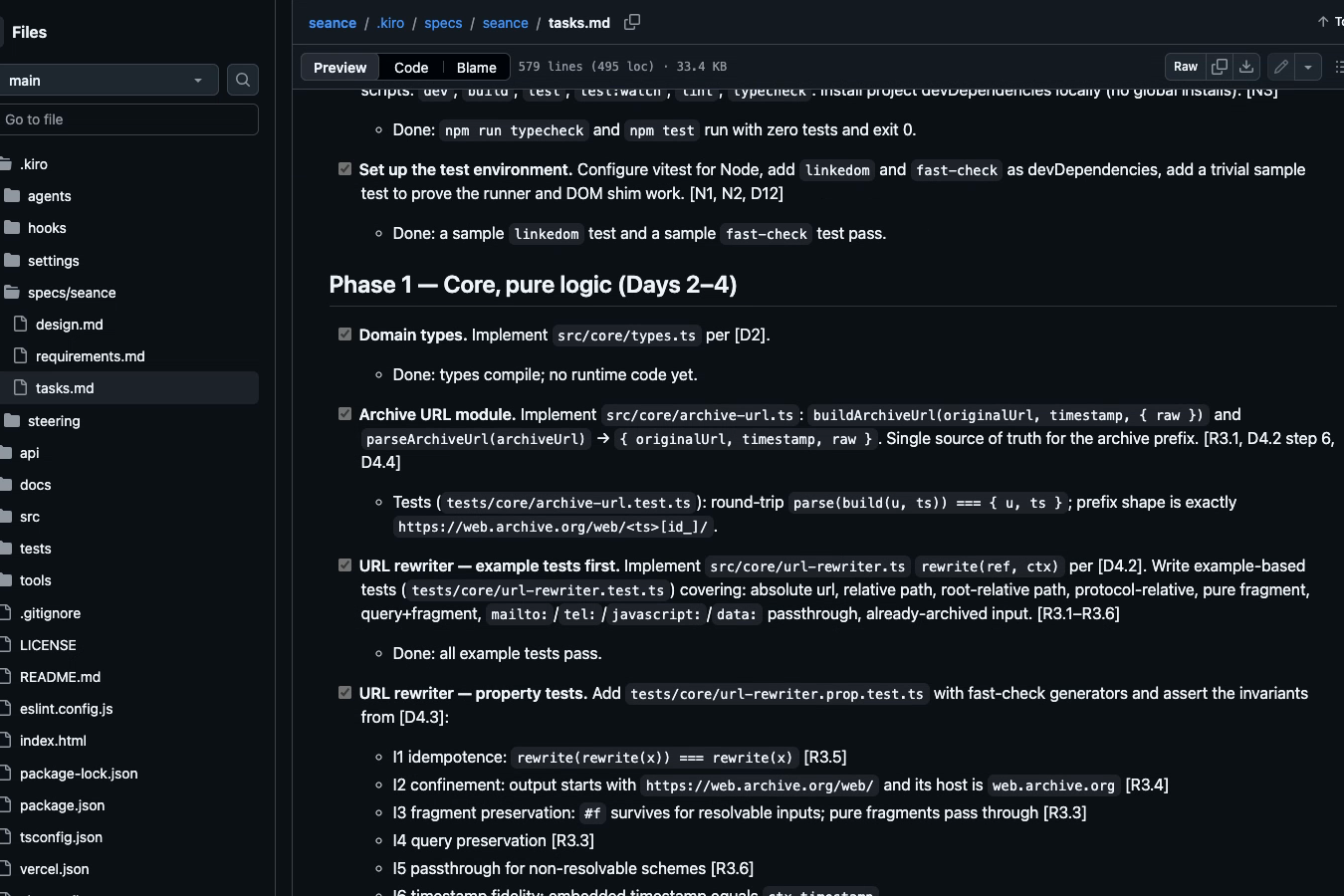
Everything was built with the Kiro CLI, spec first. Kiro wrote the steering docs, then requirements in EARS form, a design with six invariants for the link rewriter, and a numbered task list. A custom agent carried the steering and the spec into every run, and a postToolUse hook ran the test suite after each source edit. Each bug found while testing in a real browser went back into the spec as a new task with a failing test before any code changed. Property based tests (fast-check, 1000 cases each) guard the rewriter: it must be idempotent and must never produce a link outside the archive. A small Wayback MCP server lets Kiro search captures while building, and it found the public domain NASA pages used in the demo.
The app is React and TypeScript on Vite. Three small Node.js functions on Vercel proxy the archive (CDX search, snapshots, and Flash files with CORS headers so Ruffle can load them from the sandbox).
Challenges we ran into
The archive rate limits quickly, and our first version checked every file on a page, which got us blocked for a while. Archived pages fight back: meta refresh tags, scripts that navigate away, 1x1 tracking images that 302, and fixed width layouts. Flash could not load because the archive sends no CORS headers. Our production deploy also failed at first because the Edge runtime could not fetch from the archive, so the proxies moved to Node.js.
Accomplishments that we're proud of
The death certificate is honest. It only counts files the archive actually returned, names the ones it did not check, and does not call a live site dead. Flash from 2005 plays in the browser again.
What we learned
Writing the spec first made late bug fixes as careful as the first build. Turning each browser finding into a numbered task kept the code from drifting.
What's next for Seance
Batching asset checks so more files can be verified without stressing the archive, and shareable links to a restored page.
Built With
- fast-check
- internet-archive
- kiro
- mcp
- node.js
- react
- ruffle
- typescript
- vercel
- vite
- vitest
- wayback-machine
