-
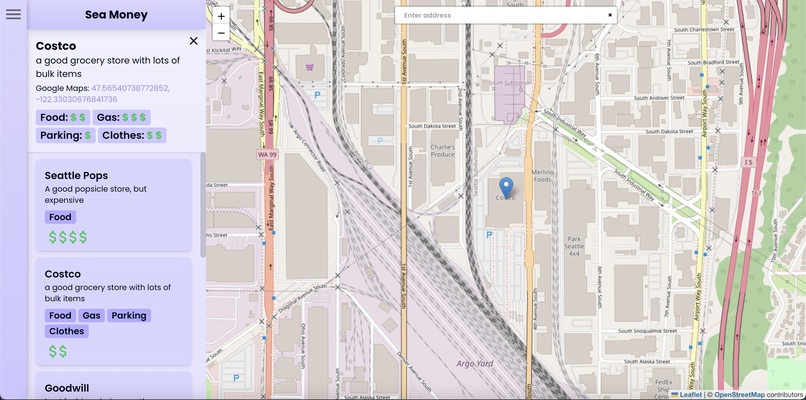
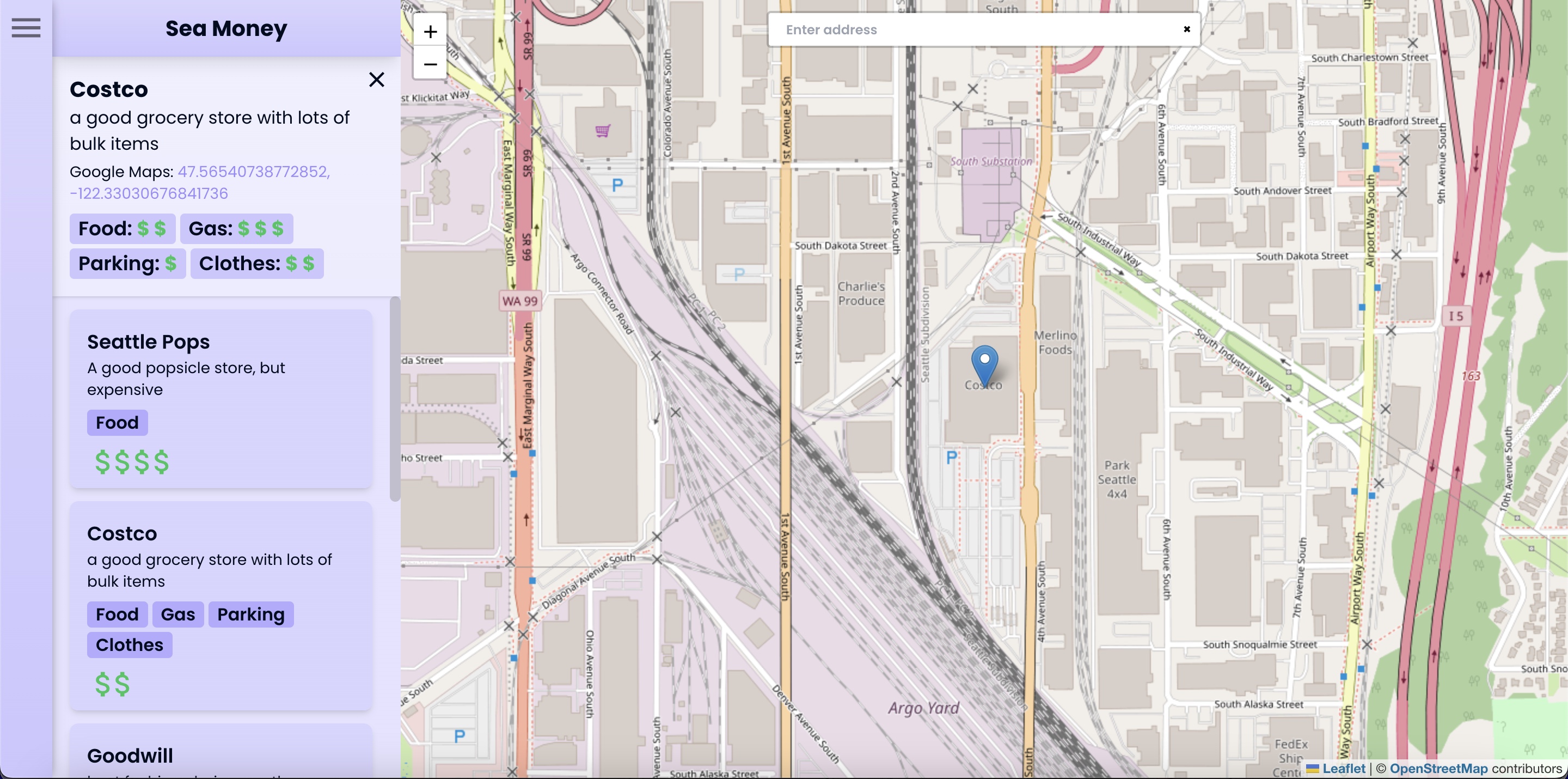
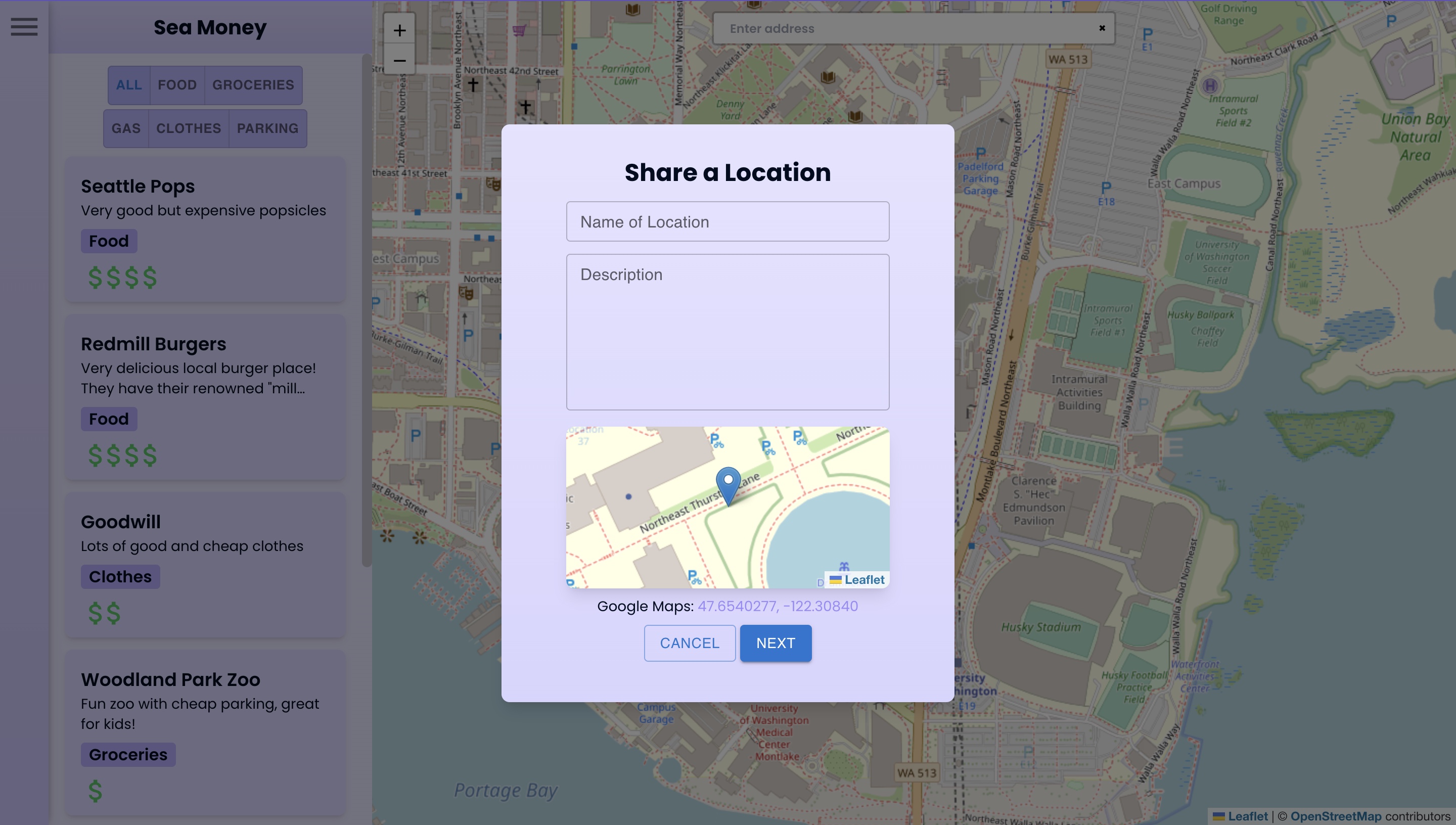
UI Screenshot
-
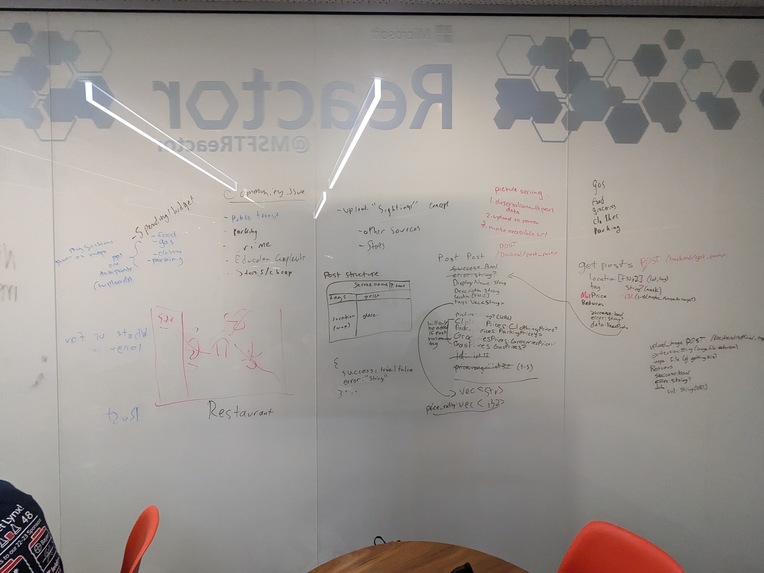
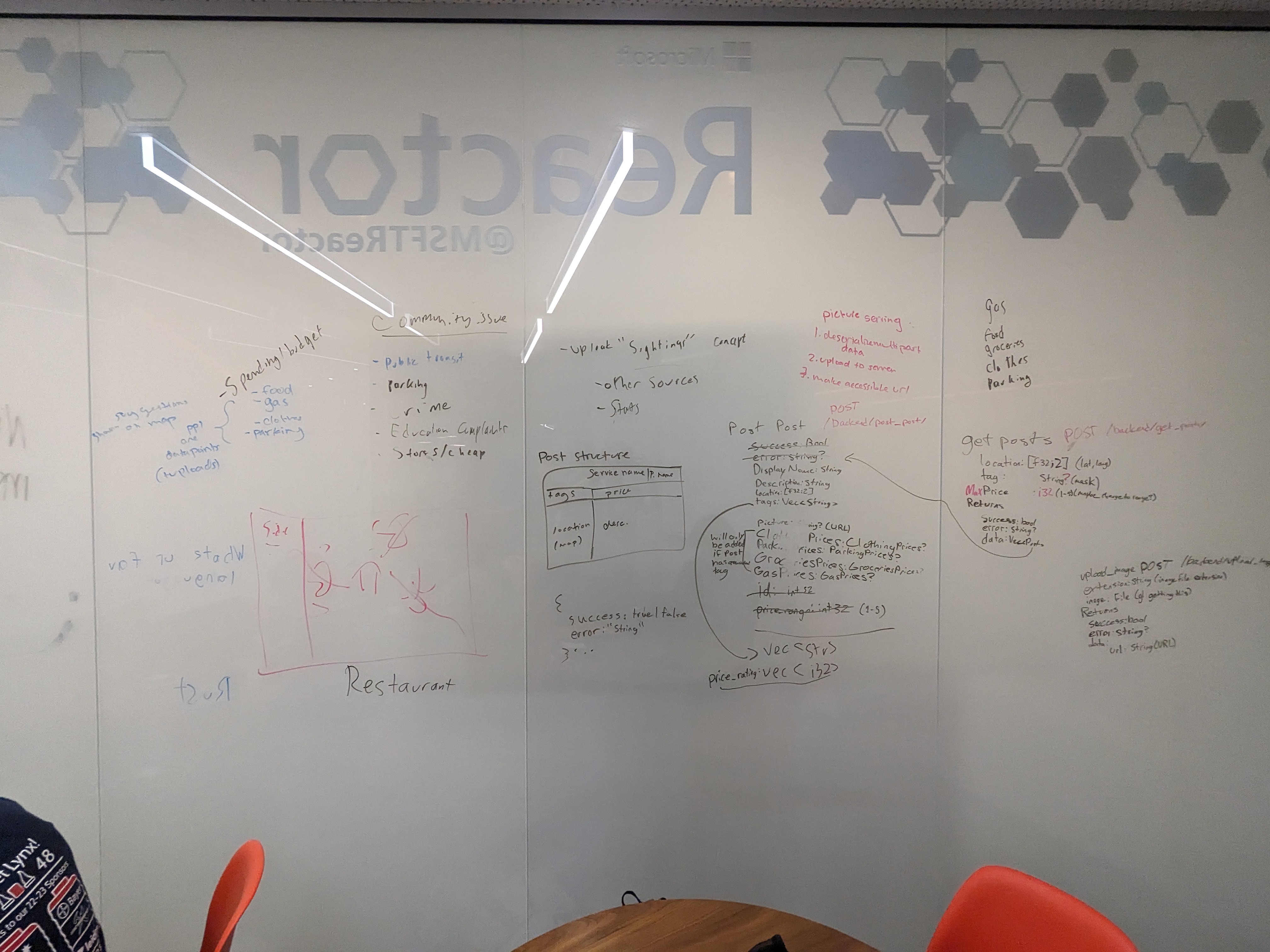
Brainstorming board
-
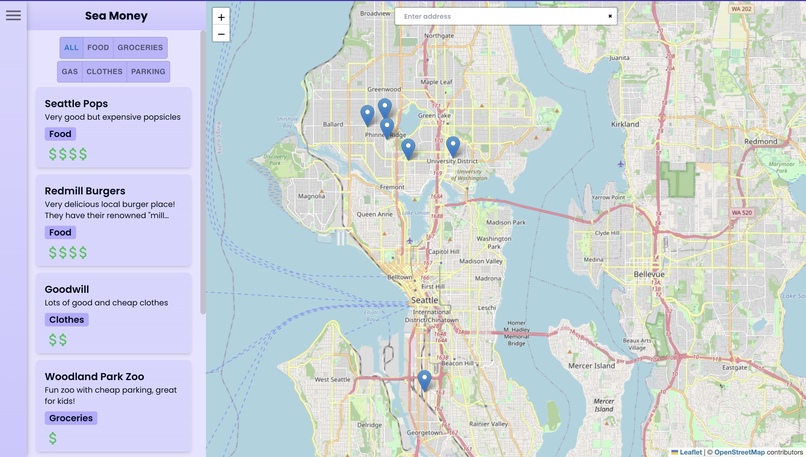
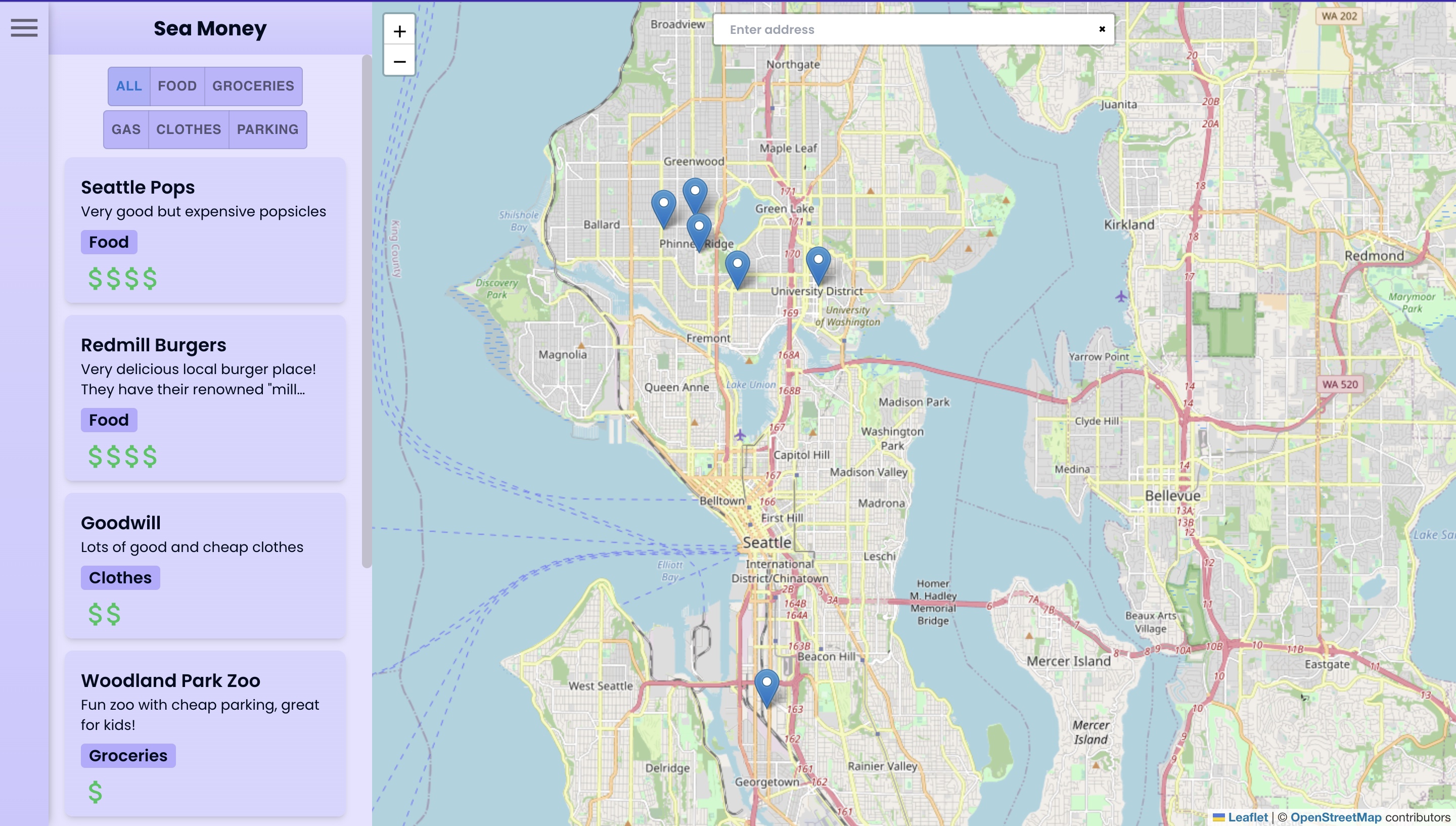
Full UI Screenshot
-
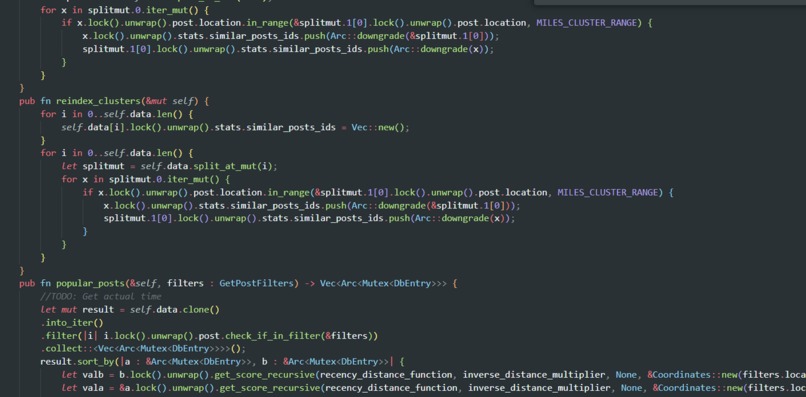
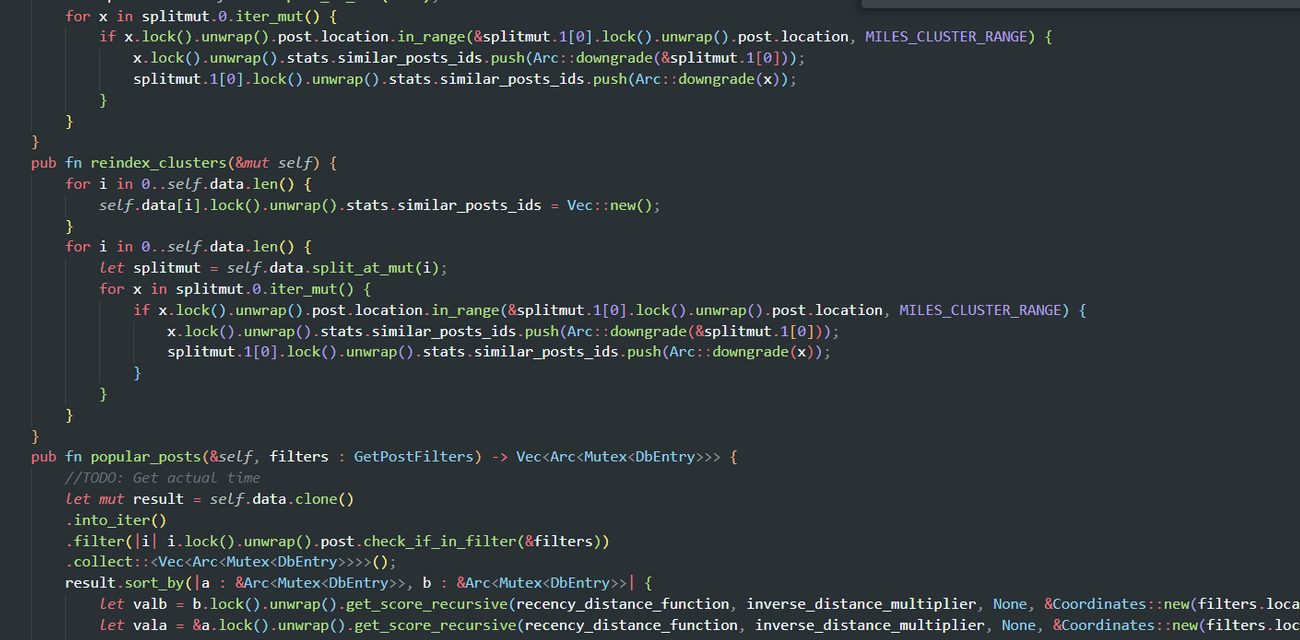
Multithreading for custom database sorting
-
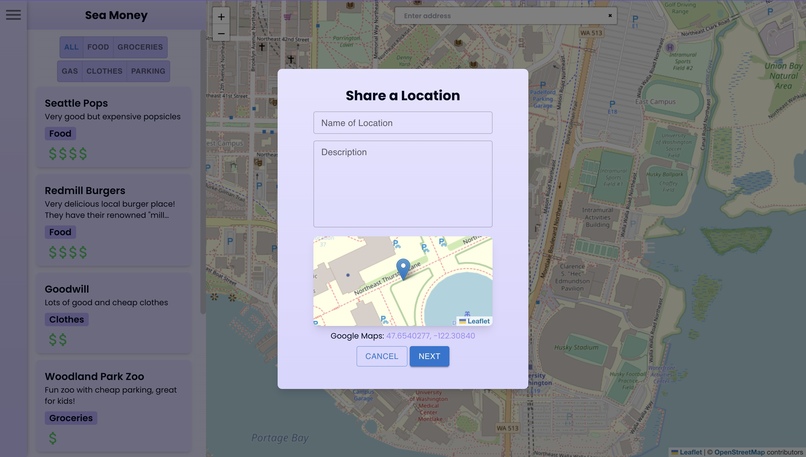
Adding content
Inspiration
With urban life being notoriously expensive, we decided to develop an effective way for Seattle residents to discover and access affordable groceries, gas, food, and other essentials.
Some in spiration that we took for this application was from user driven review and sightings apps such as google maps and GasBuddy. We used a similar concept of crowdsourcing, which enables a great community teamwork and collaboration dynamic to generate real-world information.
What it does
Our webapp, which is mobile-device compatible, uses data submitted by users to enable Seattle residents to locate inexpensive goods and services near them. It ranks datapoints by a reputation value, sorting using heuristics such as distance, post age, reputation (upvotes and downvotes on each), and clustering of similar posts, to more efficiently display the available services.
How we built it
We used the React framework to design the frontend of our web application and Rust's Rocket web framework to handle communications between the endpoints. The backend of our application also contains a custom indexed file database which stores user post data.
Challenges we ran into
Multiple times, we failed to communicate our ideas with each other and worked on conflicting versions of the same feature, such as, for example, developing the database to store and filter user posts; different members started working on completely different approaches without consulting each other, including a custom database written from scratch in Rust versus leveraging a SQL database, to store post data. We also experimented with using Weaviate for faster filtering.
Accomplishments that we're proud of
We’re proud of our modern and simplistic UI using the material design standards. Our backend is a powerful multithreaded server that can handle large amounts of comprehensive data, and is scalable for the future.
What we learned
Our team learned how to use new frameworks (React, Rocket) to minimize the amount of boilerplate we wrote and focus on truly writing new code to maximize the amount of time we had to innovate. We improved all our skills working in a structured environment for the purpose of a product, and our skills communicating and delegating tasks across multiple independent parties. We also improved our version control (Git), and even compromised on certain features in favor of the net progress of team and our final product.
What's next for SeaMoney
We plan to finish some things we didn't get to polish; like configuring image uploads (backend code to handle the form data already exists), the frontend of upvotes and downvotes to influence the reputation score, and authentication capabilities to be able to customize the recommendations based off the current user’s preferences and assets.


Log in or sign up for Devpost to join the conversation.