-
-
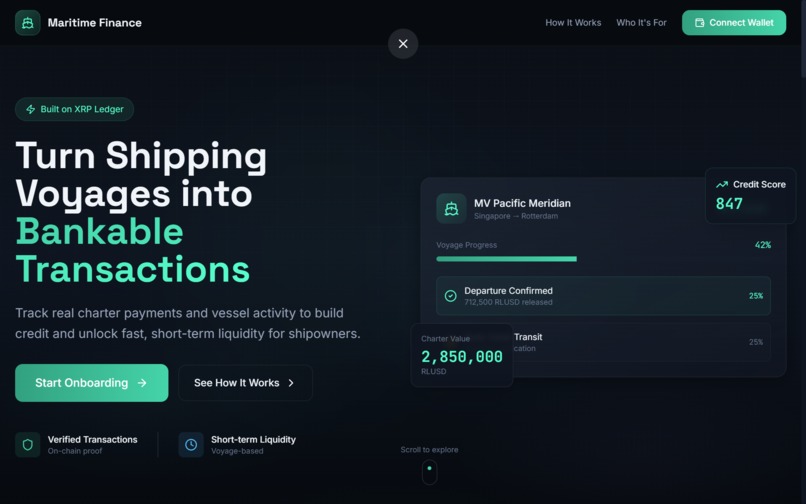
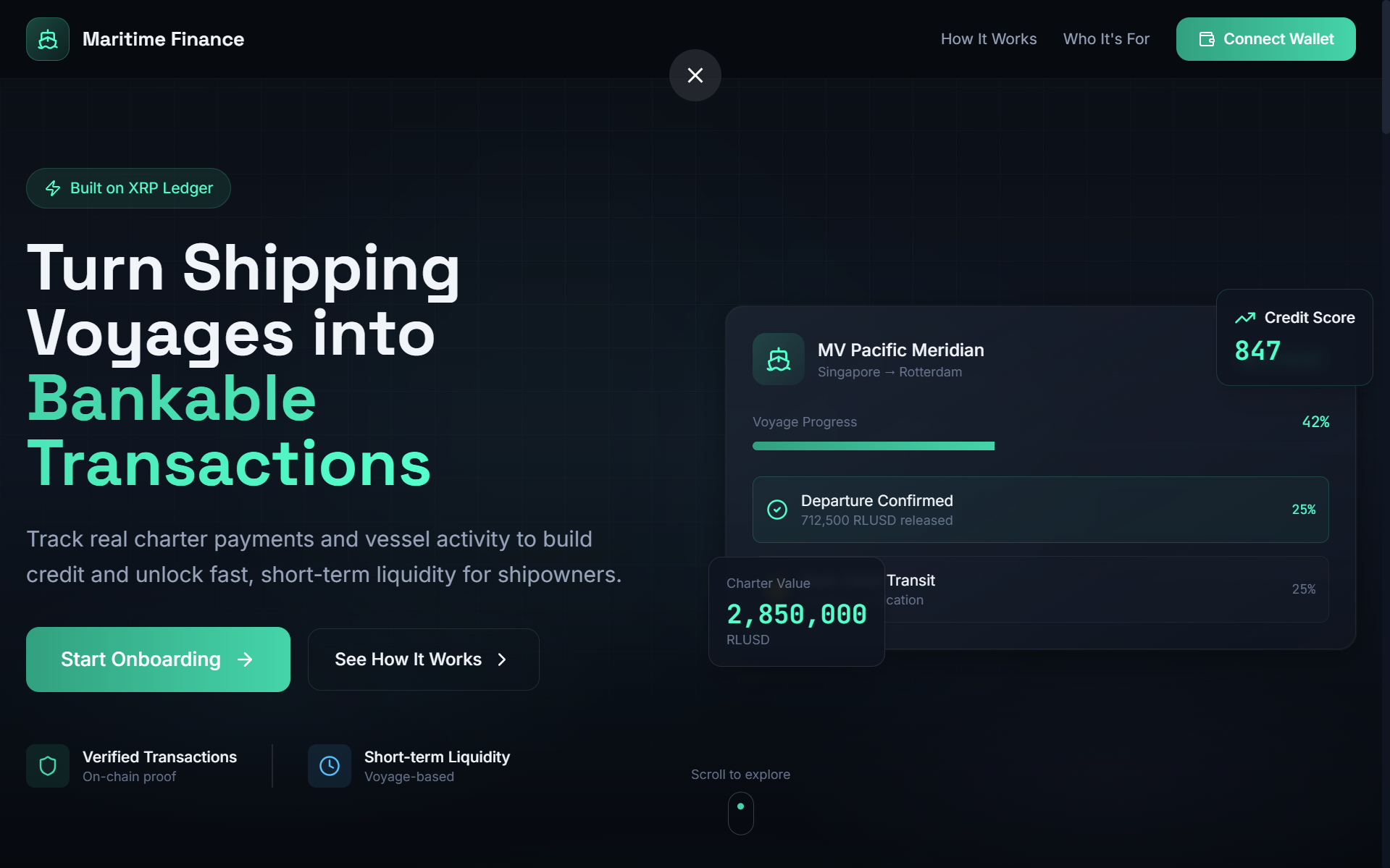
Landing Page
-
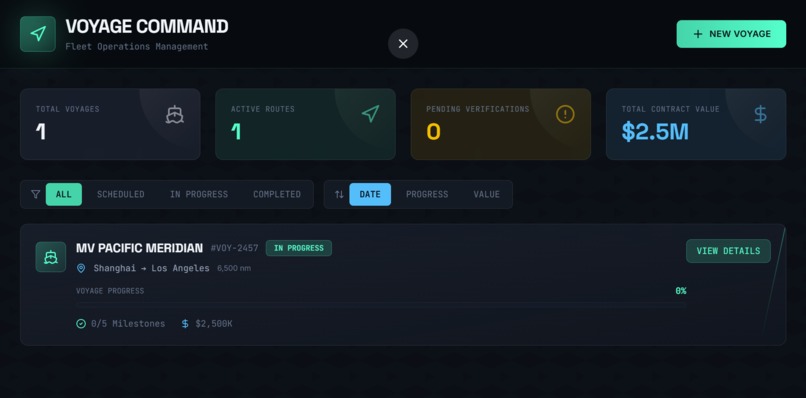
Voyage Dashboard
-
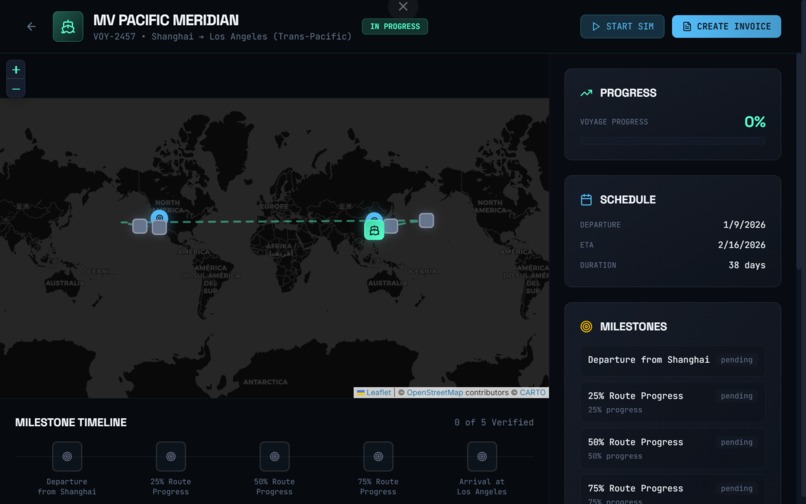
Voyage Live Map
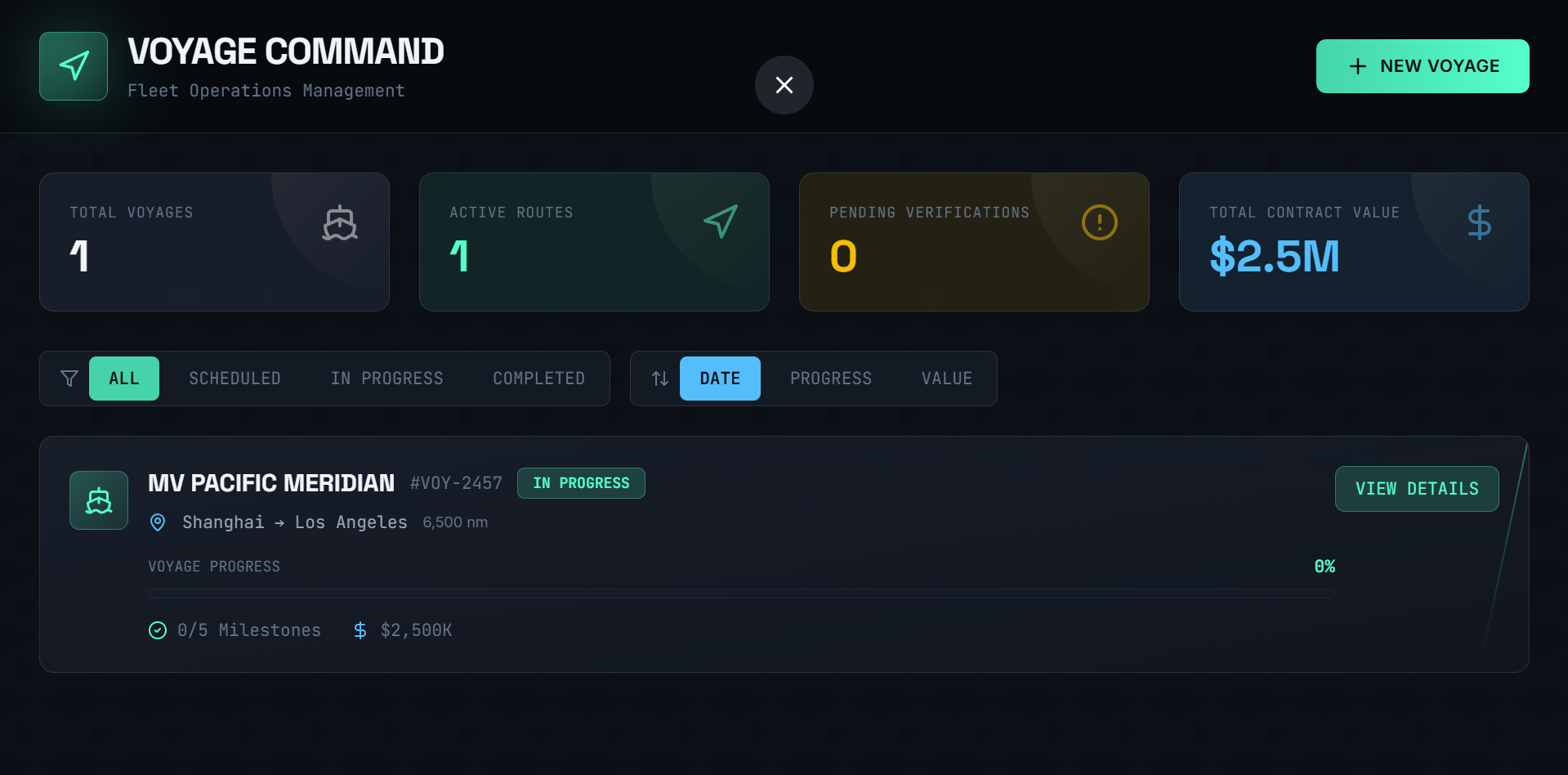
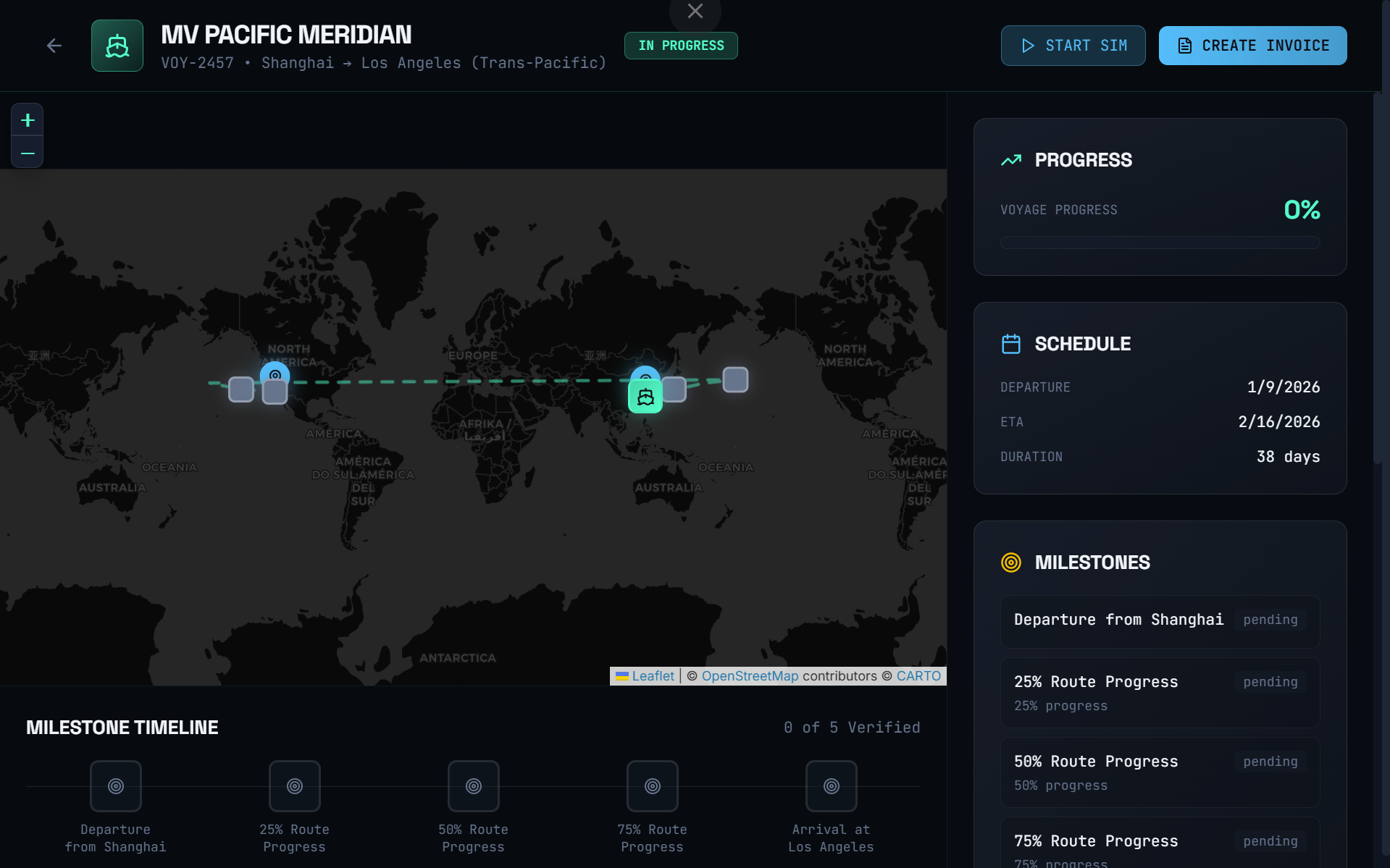
Inspiration Sea Link Finance was inspired by the friction we kept seeing in maritime finance: capital is tied up in paperwork and verification even when voyages and charter payments are predictable. We wanted to test whether on‑ledger proofs, standardized memos, and automated distribution could compress those timelines while keeping the ecosystem verifiable and auditable.
What it does Sea Link Finance is a maritime finance platform that links shipowners, charterers, and investors through a set of workflows: onboarding and identity verification, voyage creation and milestone tracking, invoice creation and payment, and registry‑anchored TER memos on XRPL. It also includes a waterfall finance simulator to demonstrate how charterer payments can be distributed to investors and shipowners based on predefined rules.
How we built it We built the UI as a multi‑route dashboard and paired it with XRPL‑backed transaction flows. The TER memo flow constructs a Payment with a deterministic memo payload and reads registry wallet history to display on‑ledger records. Onboarding stitches together wallet connection, DID creation, document upload, credential issuance, and credential acceptance. The waterfall finance module connects to the Hooks‑enabled Xahau testnet and models automated distribution from a single payment into investor recovery and shipowner payout. Voyage creation includes route selection, auto‑generated milestones, and simulated AIS progress to demonstrate real‑time updates and verification behavior.
Challenges we ran into The biggest challenges were aligning maritime business logic with a clean on‑ledger representation, making the XRPL flows intuitive for users, and ensuring the simulator modeled the core financial behavior without over‑engineering. Hook deployment and ledger state verification also add complexity, especially when balancing a demo‑friendly UX with realistic transaction lifecycles.
Accomplishments that we're proud of We delivered a cohesive workflow that bridges onboarding, financing, and operational tracking, and showed how XRPL‑anchored memos can serve as reliable records without an external database. The waterfall simulator demonstrates how payment distribution could become trust‑minimized, while the voyage and invoice flows capture real operational context.
What we learned We learned how to translate domain‑heavy maritime processes into clean, auditable data structures, how to structure XRPL interactions so they feel predictable to users, and how to prototype financial automation while keeping the UI grounded in real operational steps.
What's next for Sea Link Finance Next steps include replacing simulated voyage/AIS flows with real data feeds, strengthening TER scoring and credit evaluation, adding privacy‑preserving proofs, and hardening the hooks/transaction pipeline for production. We also plan to explore regulatory requirements and compliance workflows for real‑world deployment.
Built With
- c
- crossmark
- css
- git
- github
- javascript
- typescript
- vercel
- xrpl.js


Log in or sign up for Devpost to join the conversation.