-
-
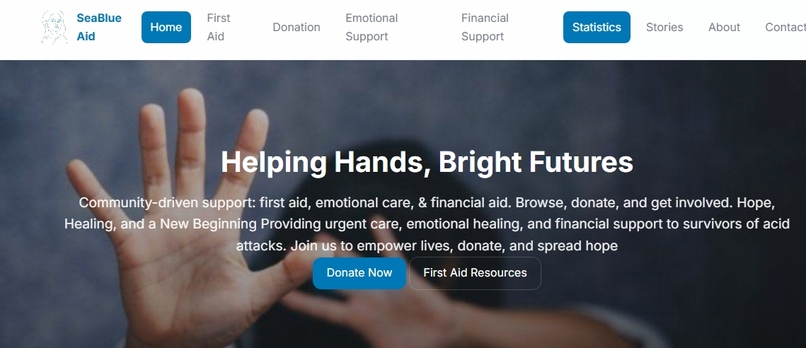
main page
-
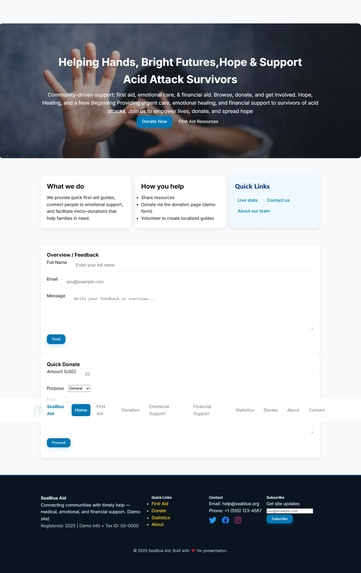
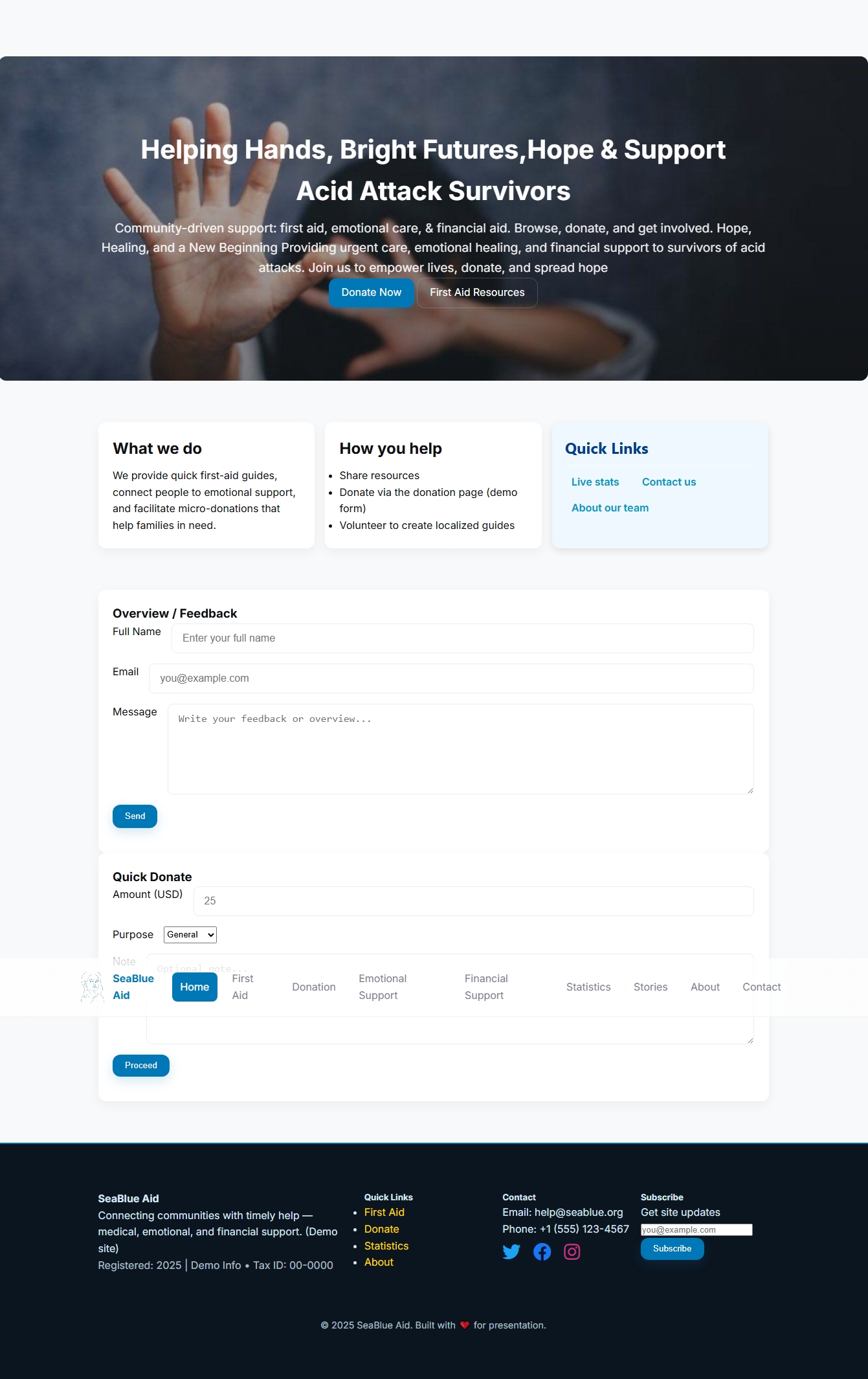
full home page
-
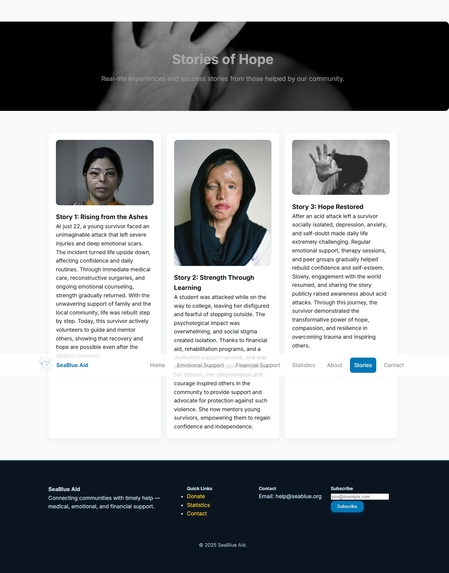
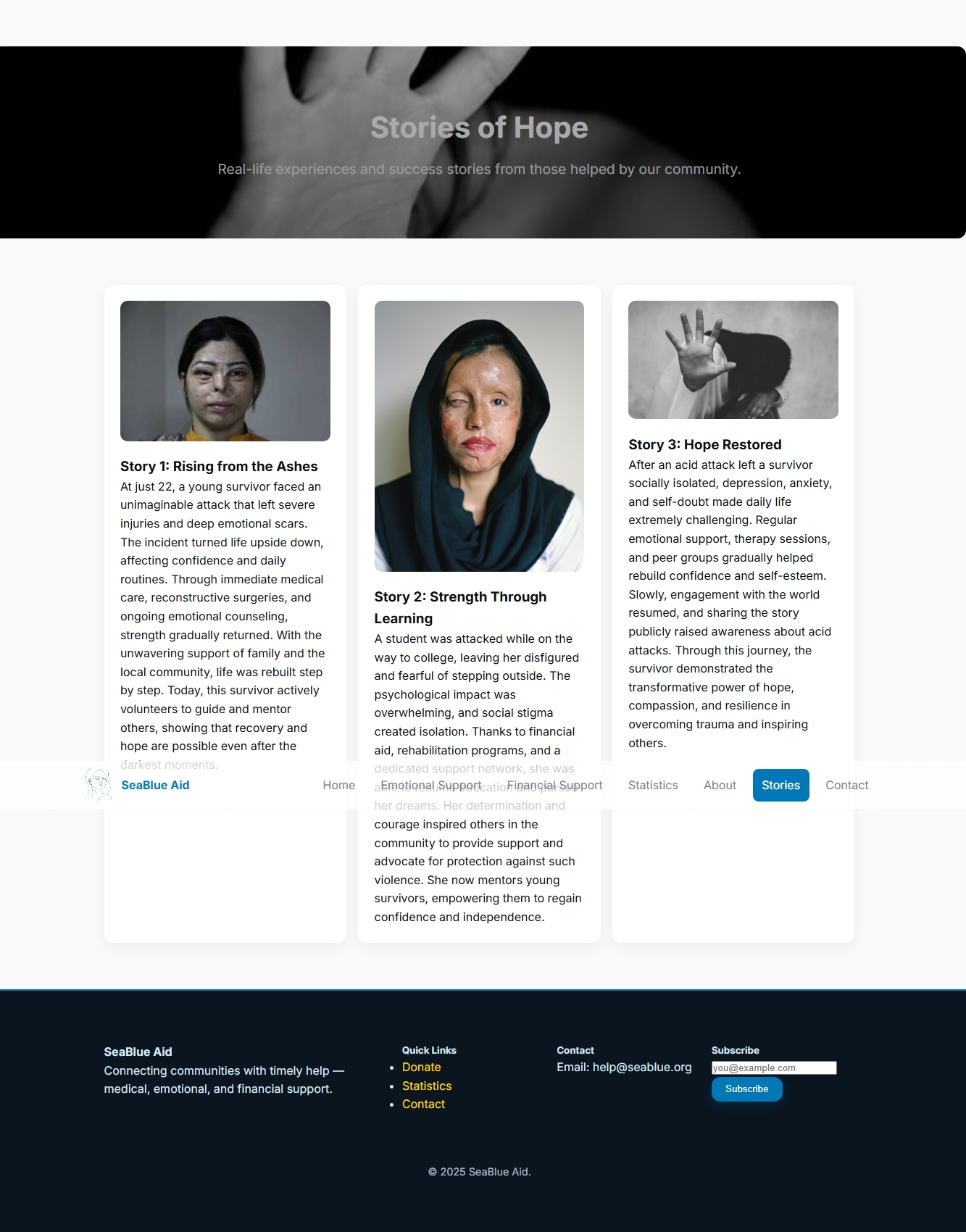
stories
-
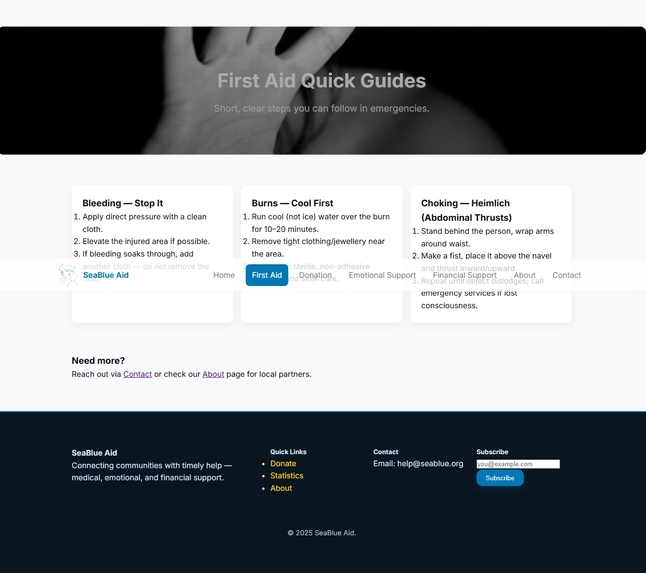
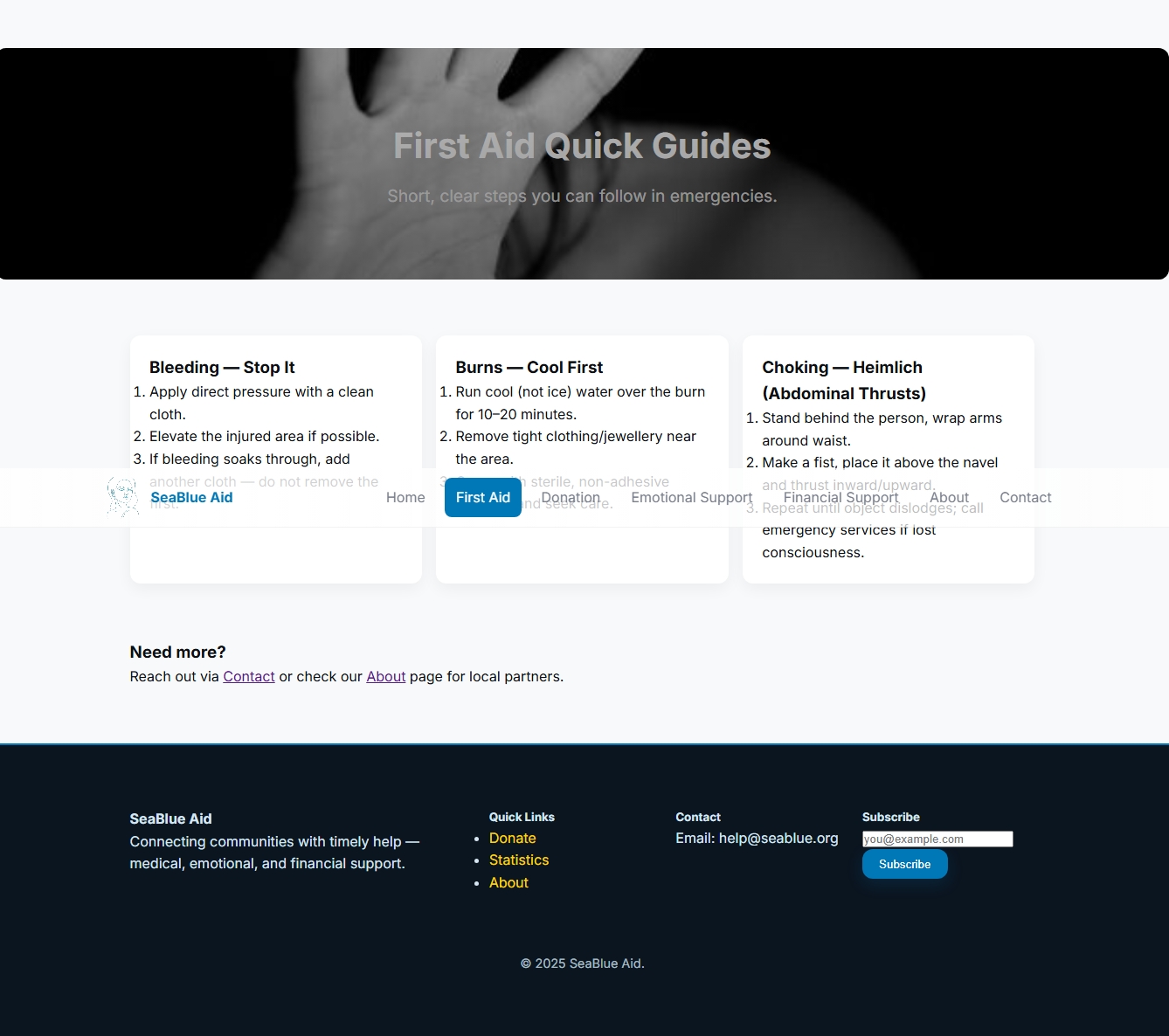
first aid
-
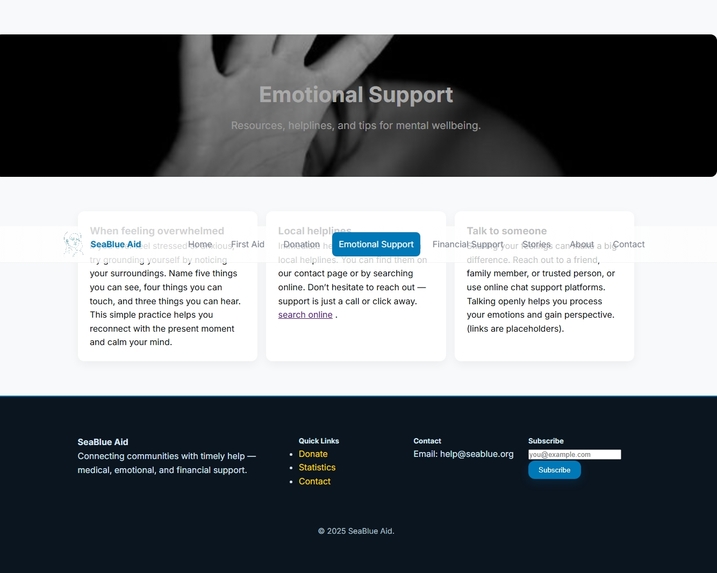
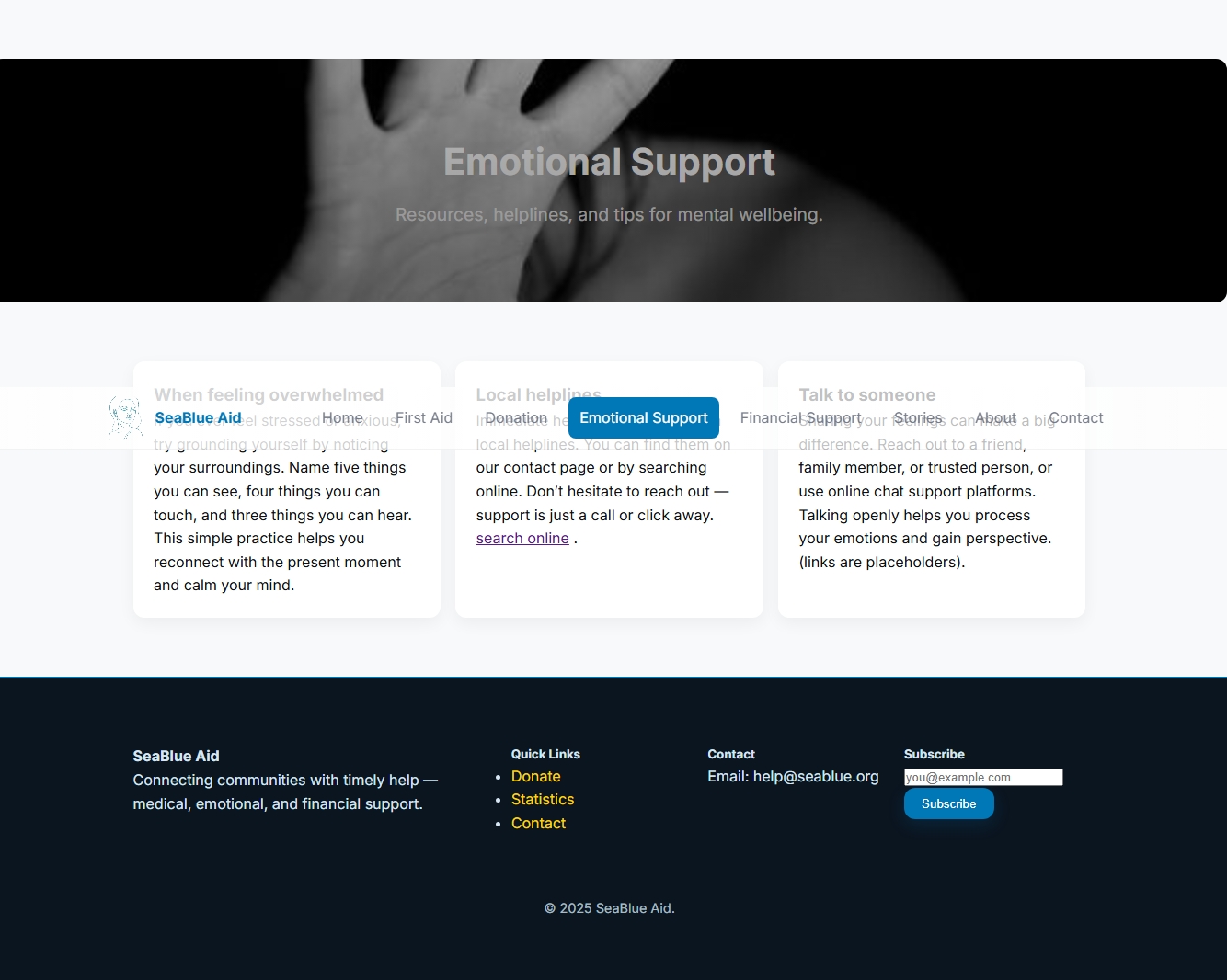
emotional support
-
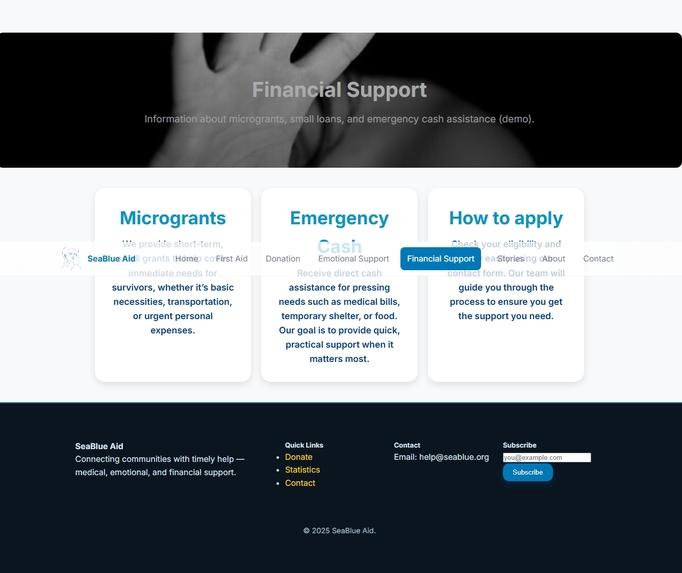
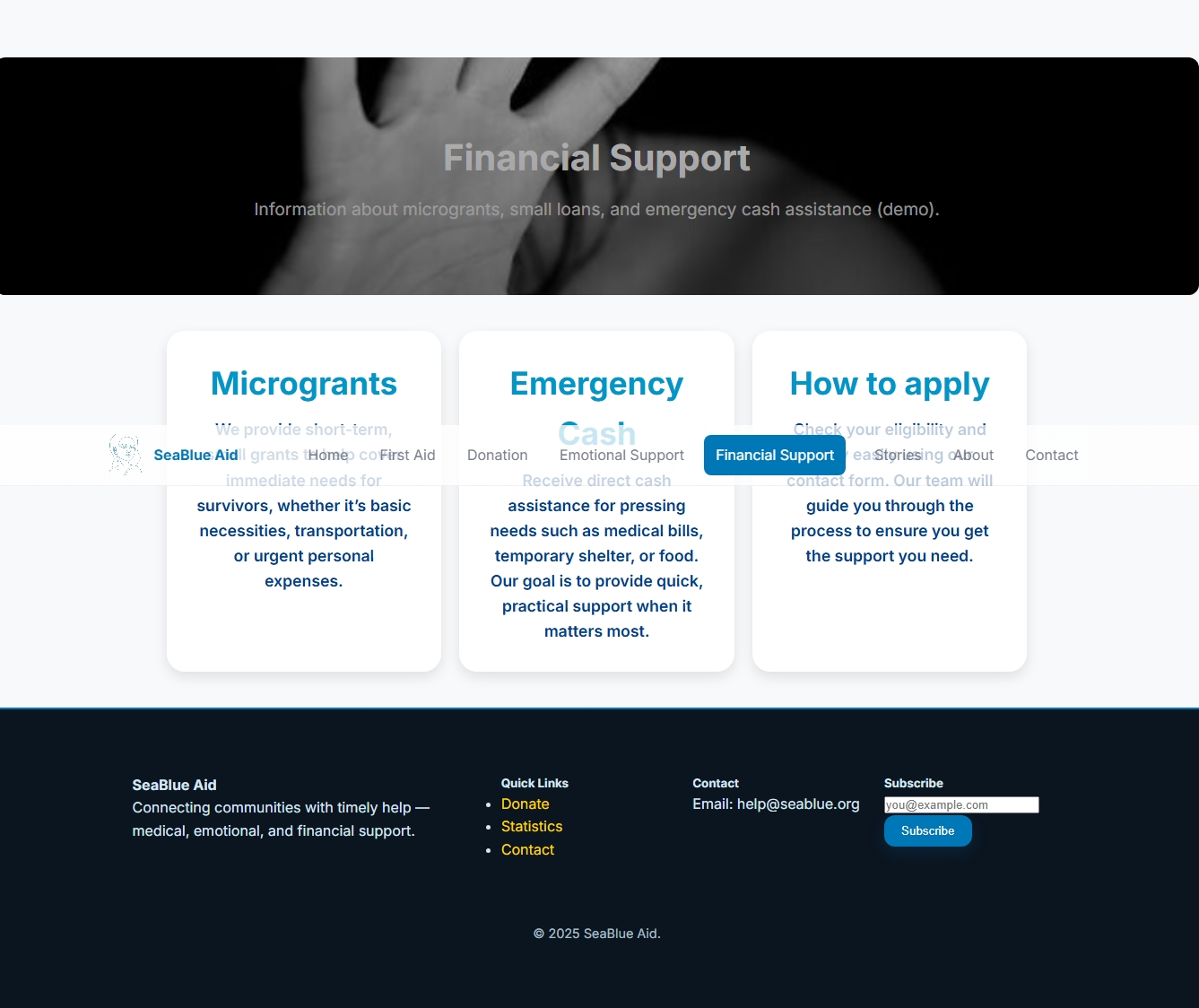
financial support
-
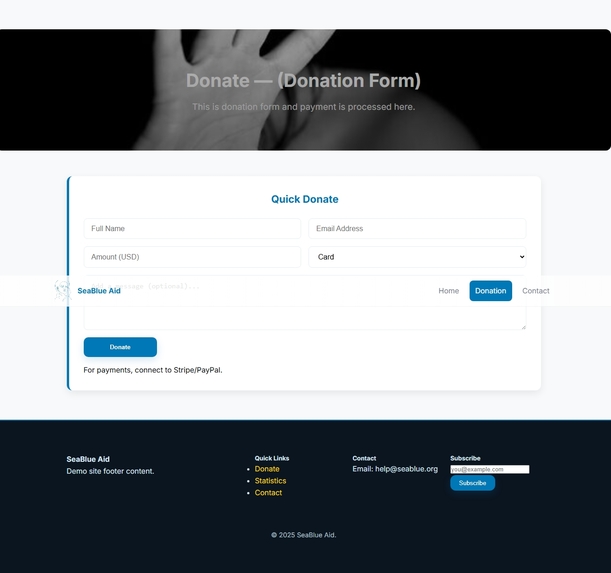
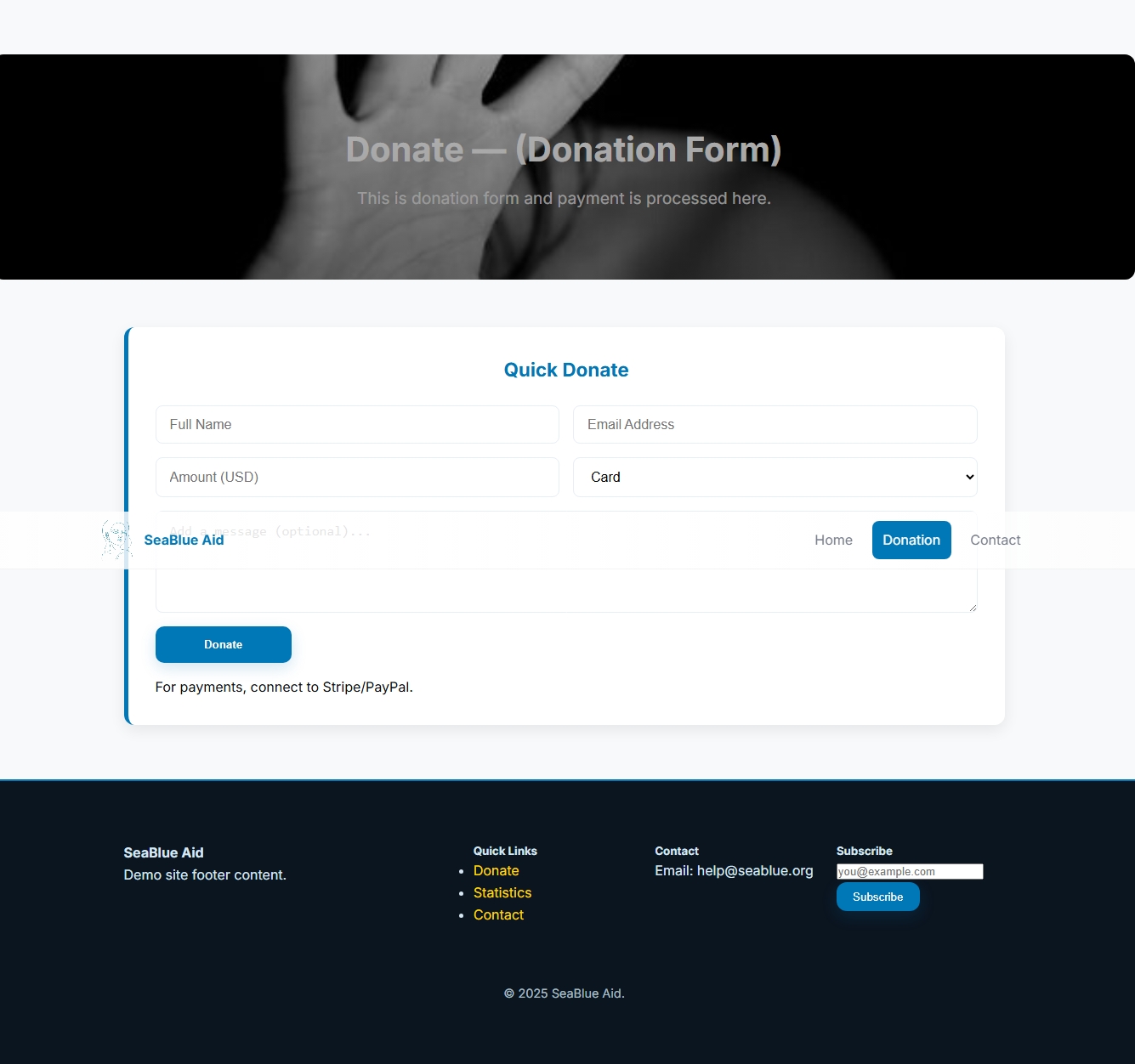
donation form
-
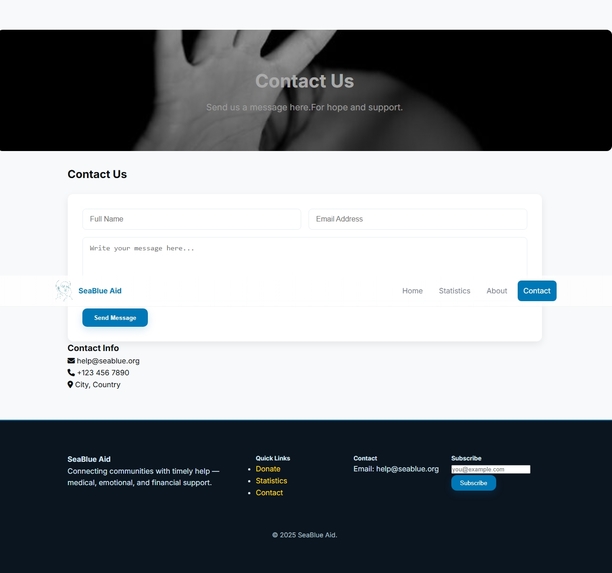
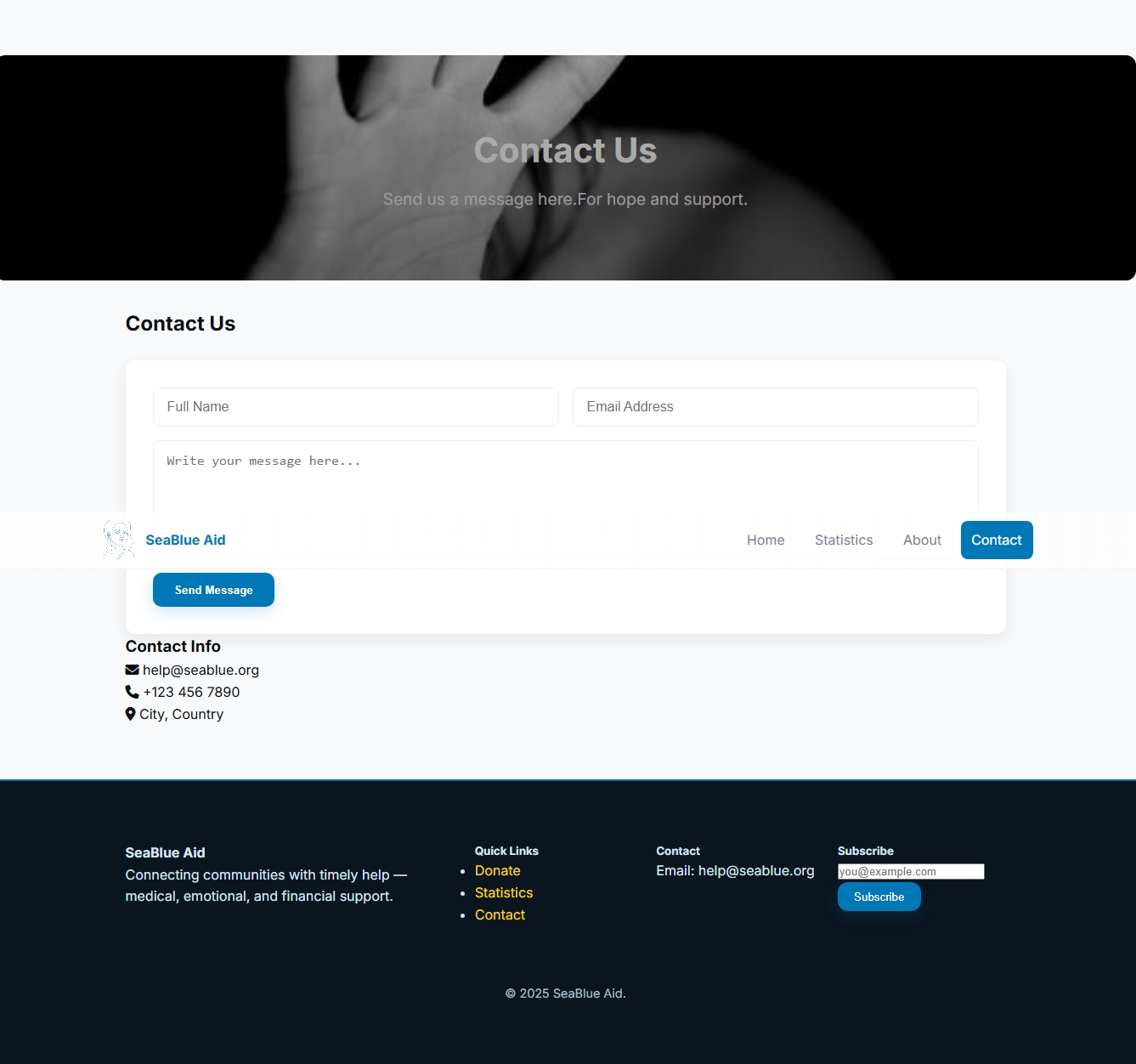
contact form
-
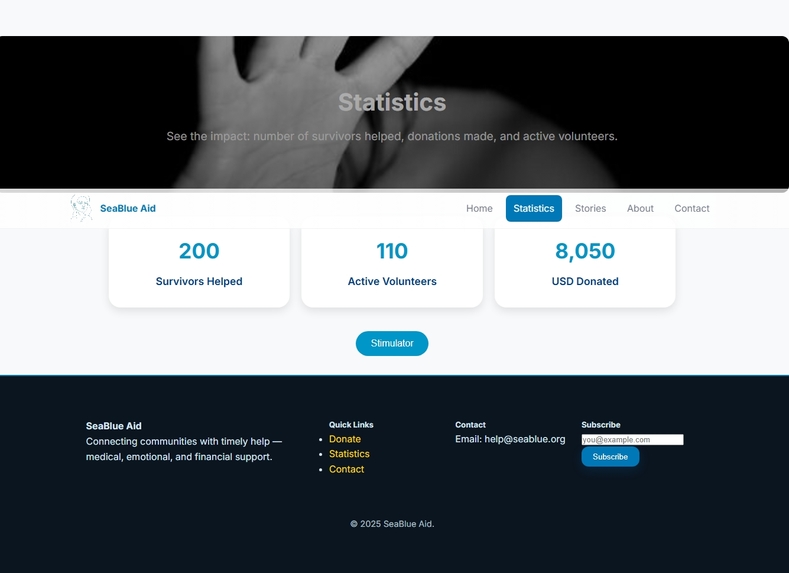
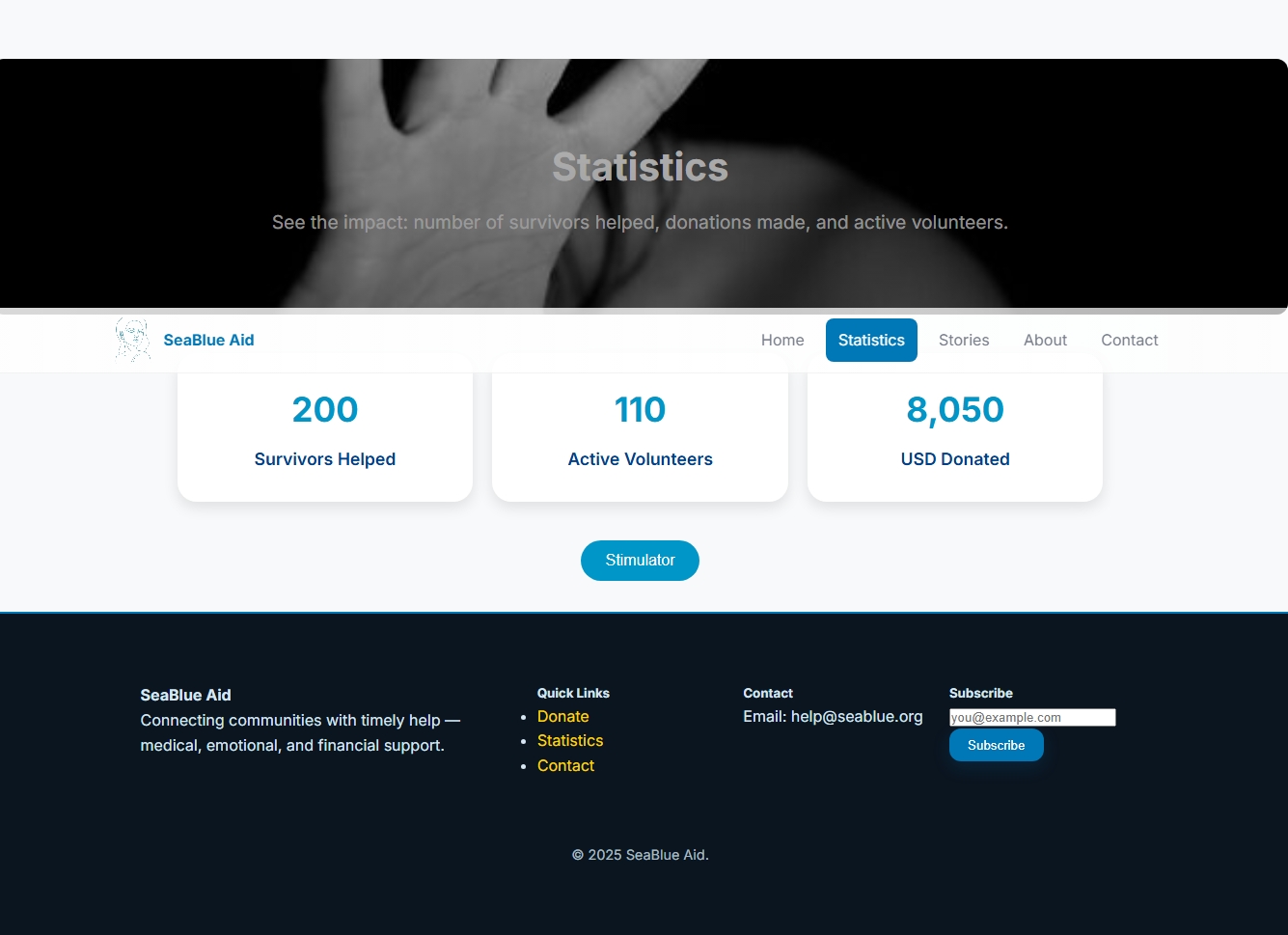
statistics
-
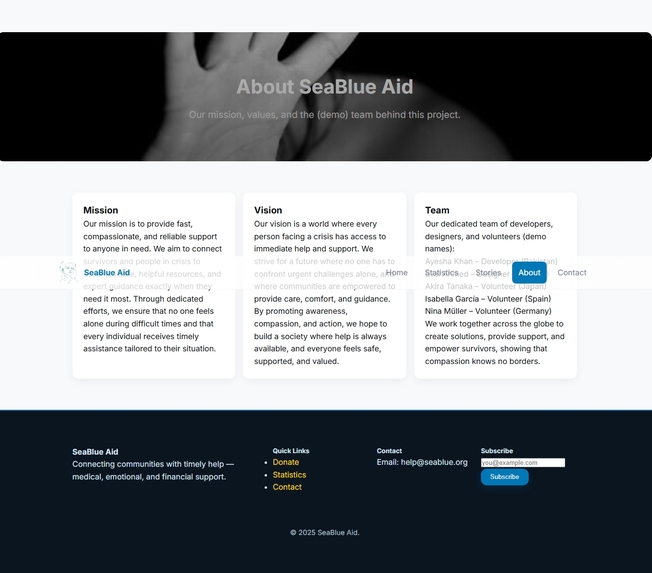
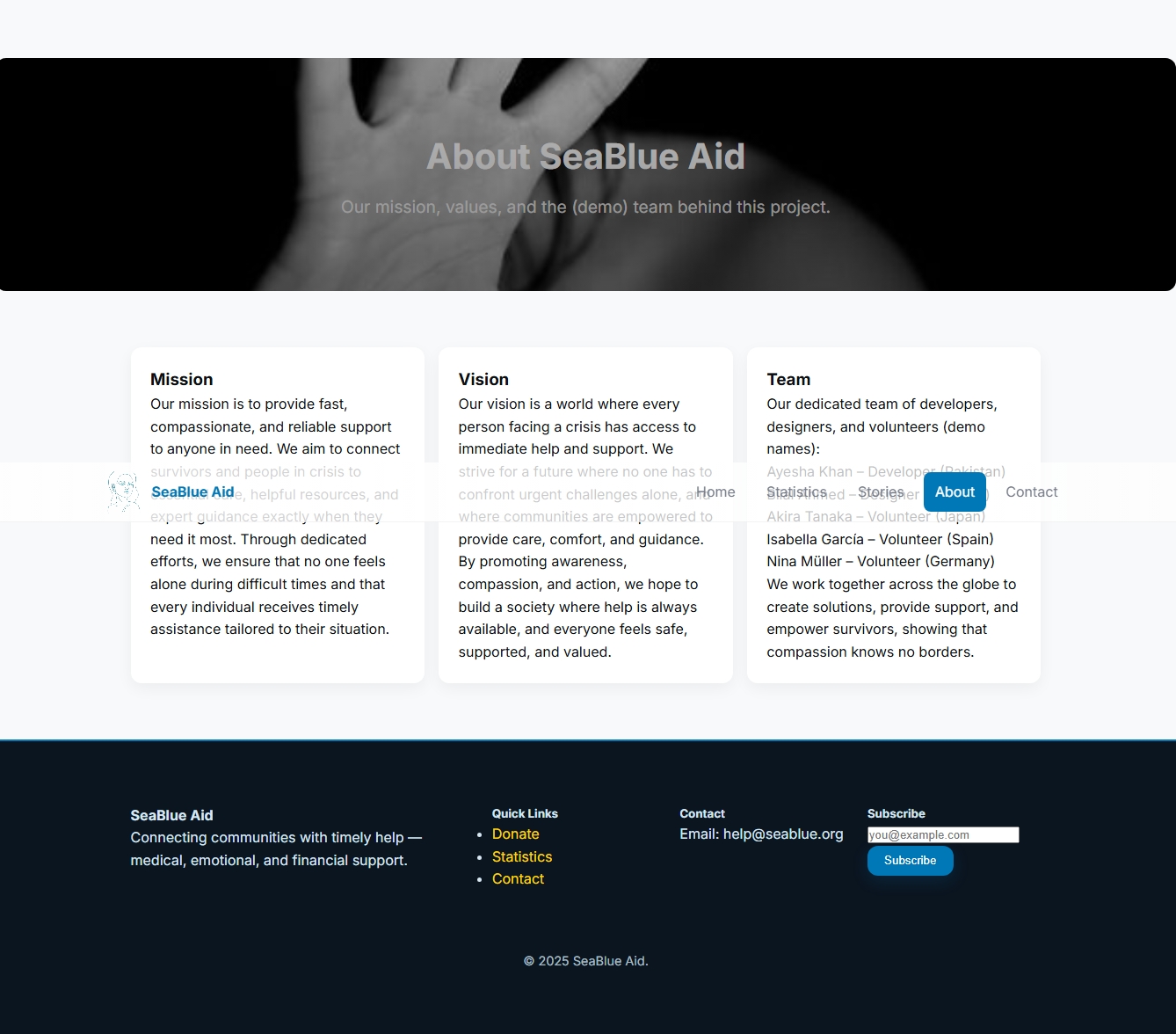
about
Inspiration
Acid attack survivors often face medical emergencies, social rejection, and financial struggles. This project was inspired by the need to build a digital safe space that raises awareness, shares survivor stories, and connects people with the right help. As a first-time hackathon participant, I dedicated 8–10 hours daily over several days to bring this vision to life, managing all coding, design, and deployment solo.
What I Learned
During this project, I gained experience in:
Building interactive live statistics counters using JavaScript
Structuring code with separate CSS and JS files for clarity and maintainability
Designing with empathy, balancing aesthetics with accessibility
Managing forms and subscriptions without backend support
This project taught me problem-solving, iterative testing, and workflow management, especially as a beginner working independently.
How I Built It
Frontend: HTML5 for structure, CSS3 for styling, JavaScript for interactivity
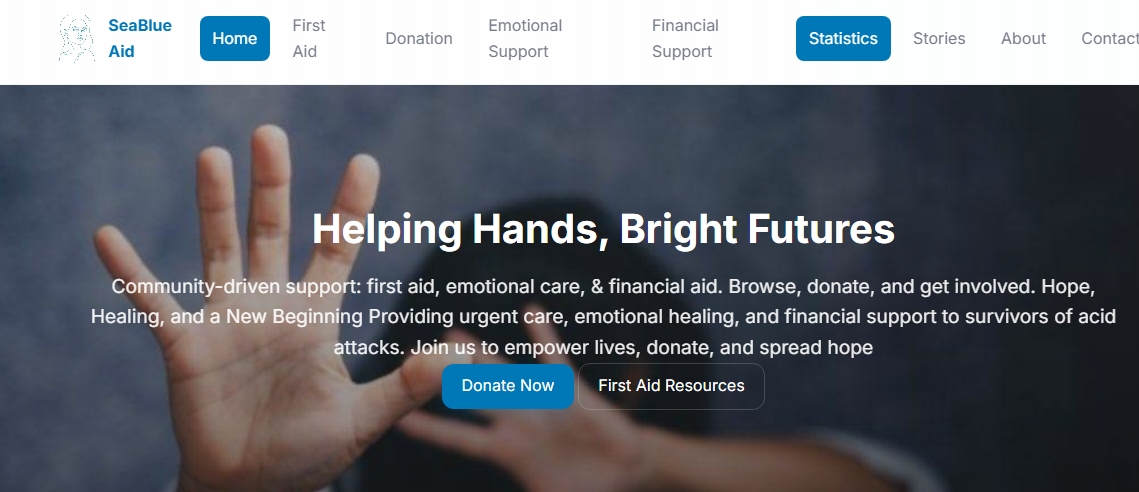
Features: Live animated counters, subscription/contact form, responsive layout
Design choices: Calming colors, clean typography, sections for first aid, emotional support, and resources
I created all visuals in Canva and developed everything in VS Code, putting in long, focused hours daily to ensure the website was polished, functional, and user-friendly.
Challenges & Solutions
Live statistics: Ensuring counters update continuously — solved with JavaScript logic and testing
Responsive layout: Ensuring professional appearance on all devices — addressed with media queries and flexible design
Performance: Keeping the site lightweight while adding animations — optimized images, CSS, and JS
Working solo as a beginner in a hackathon made these challenges tougher, but breaking tasks into steps, testing thoroughly, and iterating based on feedback allowed me to complete a fully functional, impactful project.
Built With
- css3
- html5
- javascript
- vanilla)


Log in or sign up for Devpost to join the conversation.