-
-
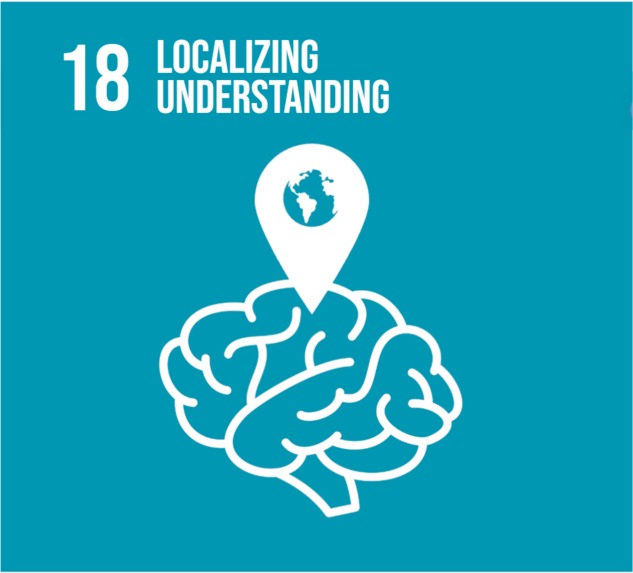
Proposed 18th SDG Graphic
-
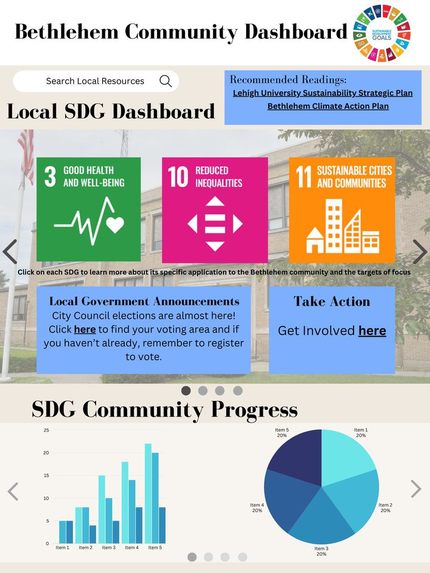
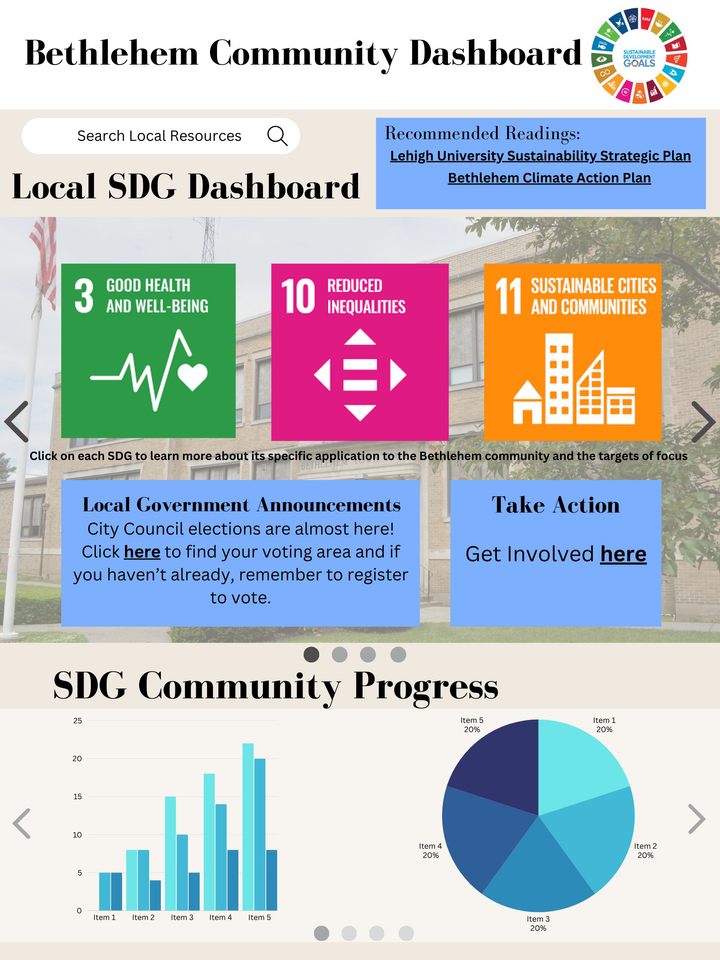
Conceptual Community Dashboard
Inspiration
Our team was inspired by what the Sustainable Development Goals do, but were concerned by their lack of progress as we approach the 2030 deadline. The SDGs provide global targets for sustainable development, but do not have a standard method for local implementation. To resolve this issue, the team realized that a new SDG, one that is fundamentally different from the other 17, needed to be created. Inspired by systems thinking, the team decided that the 18th SDG should be a universal framework to SDG localization that can be used anywhere in the world and require minimal resources. This framework is possible by connecting willing youth, universities, and local governments to work together towards SDG advancement in their so-called ‘university-community place’. Progress towards the goals will be tracked in an interactive SDG Community Database.
What it does
The SDG Community Database localizes the Sustainable Development Goals. The dashboard focuses on the 3 SDGs most relevant to the ‘university-community place’ and provides stakeholders with information and local resources that align with their missions. The dashboard is interactive and will allow stakeholders to provide feedback on whether or not the focus SDGs resonate with them and what sustainable development progress is being made. The website creates a unified space for SDG education, engagement, and feedback.
How we built it
Before creating the SDG Community Database, the team had to first determine which SDGs were most important to Bethlehem residents. To do so, we completed a literature review of the Bethlehem Climate Action Plan, Lehigh University Sustainability Strategic Plan, and other related documents, and reached out to community stakeholders to gather their thoughts on SDG progress in the city. Based on this research, we chose the 3 focus SDGs and built the dashboard around them. The major components of the dashboard are a homepage which details our idea and the focus SDGs, summaries of the 3 focus SDGs’ mission statements, the problems that Bethlehem faces and how the SDGs can work to resolve such issues (this information is based on our research), and local resources that stakeholders can access to further SDG advancement. The team chose Google Sites to realize the SDG Community Database, due to it being accessible and low-cost.
Challenges we ran into
The team’s primary challenge has been gathering and receiving feedback from the greater Bethlehem community on the project and focus SDGs because we are still in the ‘proof of concept’ stage. We will need to conduct surveys with the community and develop a research plan to effectively guide future project activities.
Accomplishments that we're proud of
The team used the Hackathon competition as a deadline to fully develop our SDG 18 idea and create a ‘proof of concept’ dashboard. We are proud of the work that we have put in over the past month, which included analyzing and synthesizing various data, and publishing the SDG Community Database. We were able to make our idea a reality!
What we learned
The team learned that the SDGs can be effectively and efficiently localized as long as stakeholders and residents are willing to think ‘outside the box’ and engage with the systems and university-community networks around them.
What's next for SDG: 18
The team’s next step is to engage with the Bethlehem community and gather feedback on the SDG Community Database and the focus SDGs that we proposed for the city. As we engage with stakeholders, the team hopes to further refine its SDG 18 framework and create a guide for localizing the SDGs that completely rewrites how the world works towards sustainable development.
Built With
- final-cut-pro
- google-sites


Log in or sign up for Devpost to join the conversation.