-
-
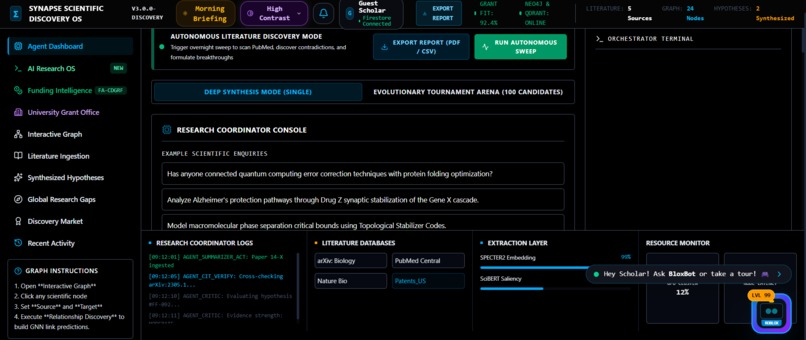
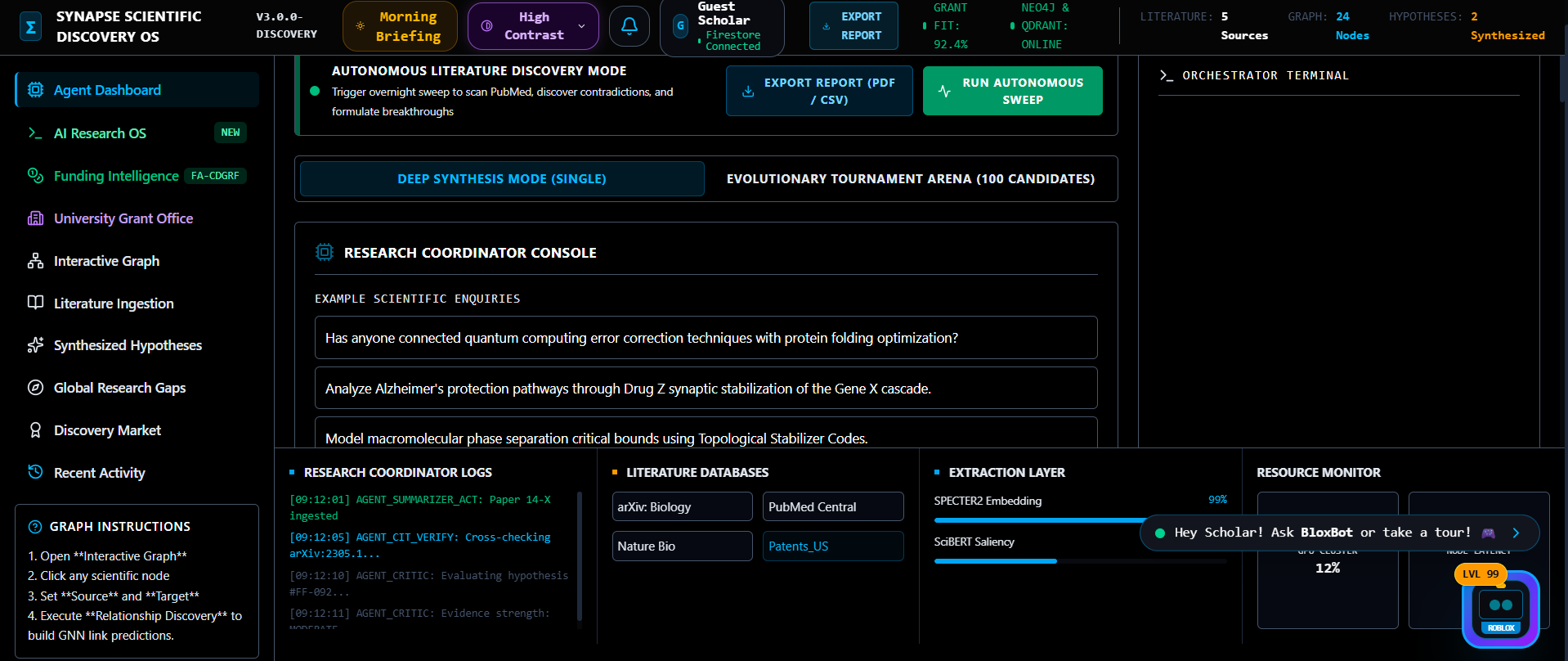
Dashboard
-
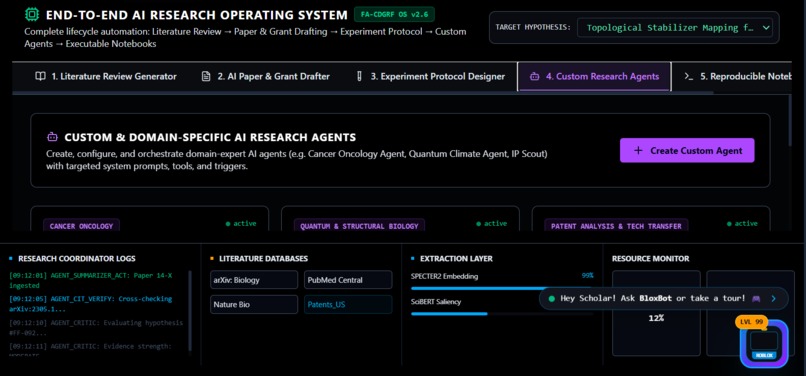
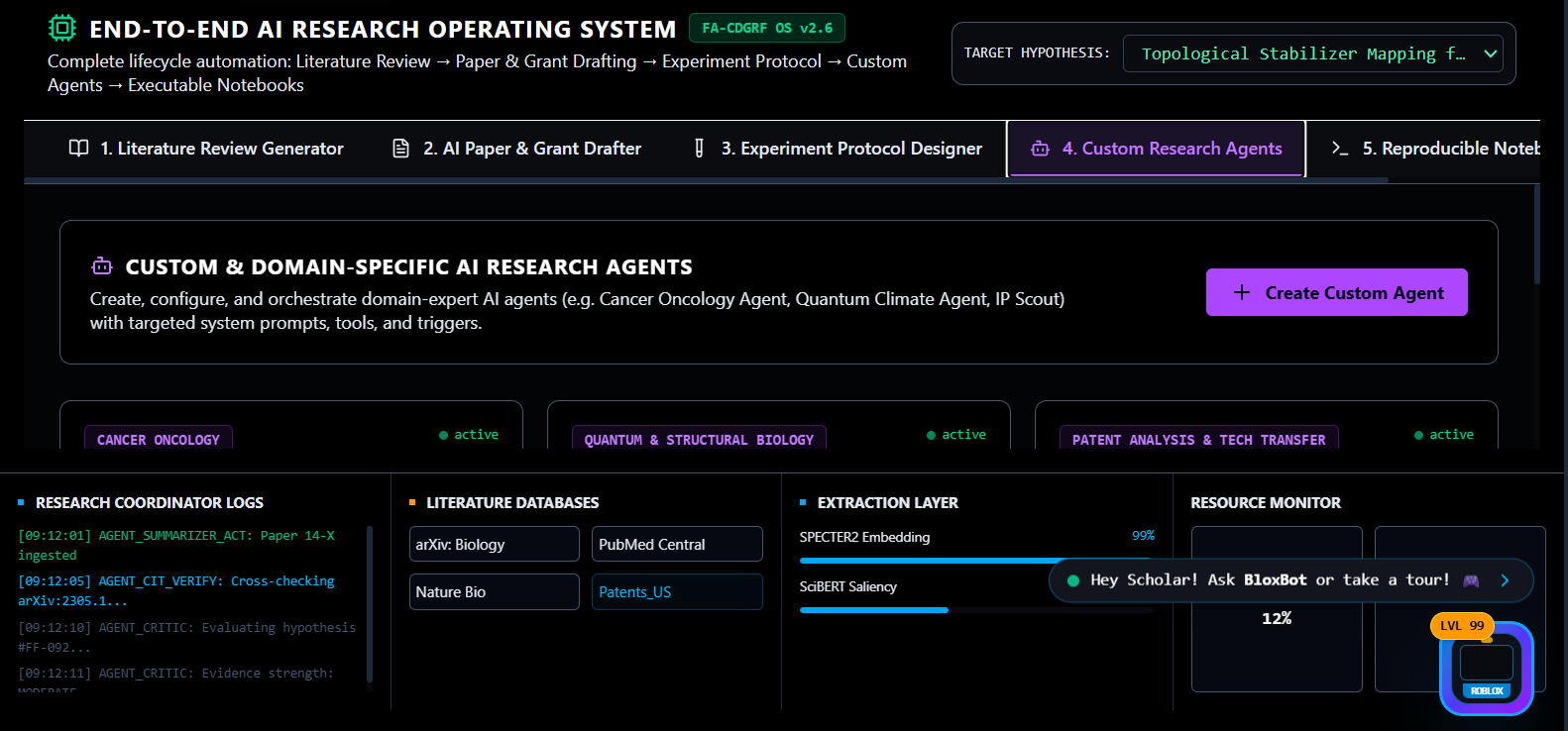
AI Research OS
-
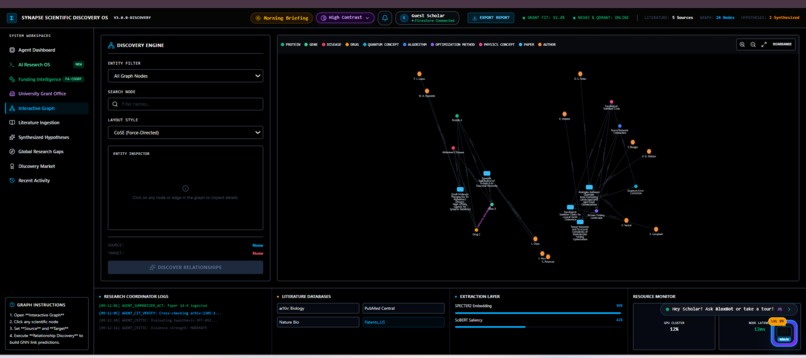
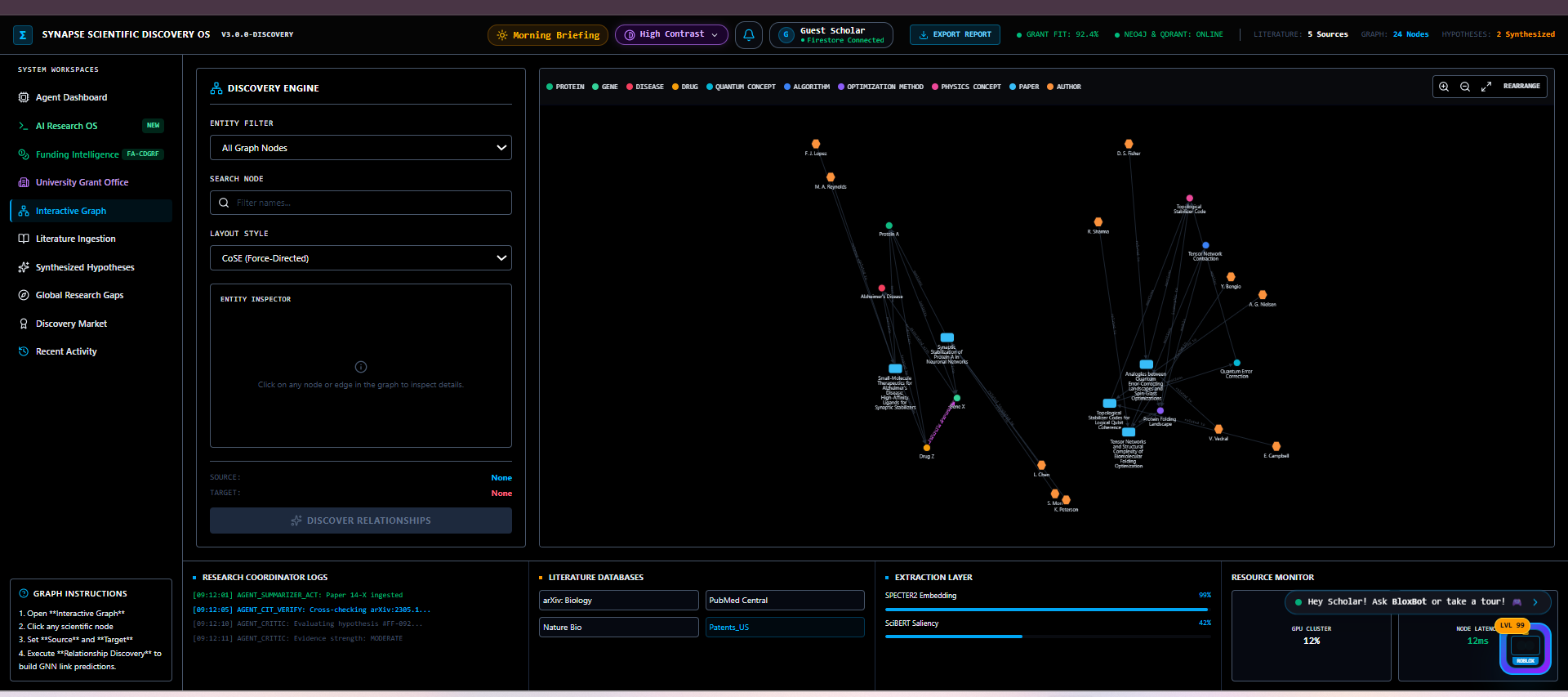
Interactive-Graph
-
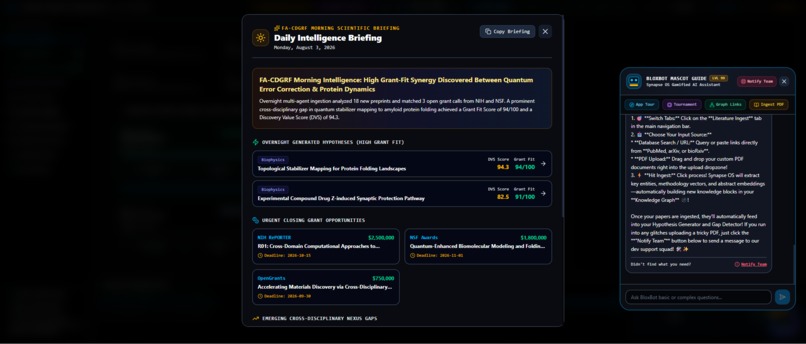
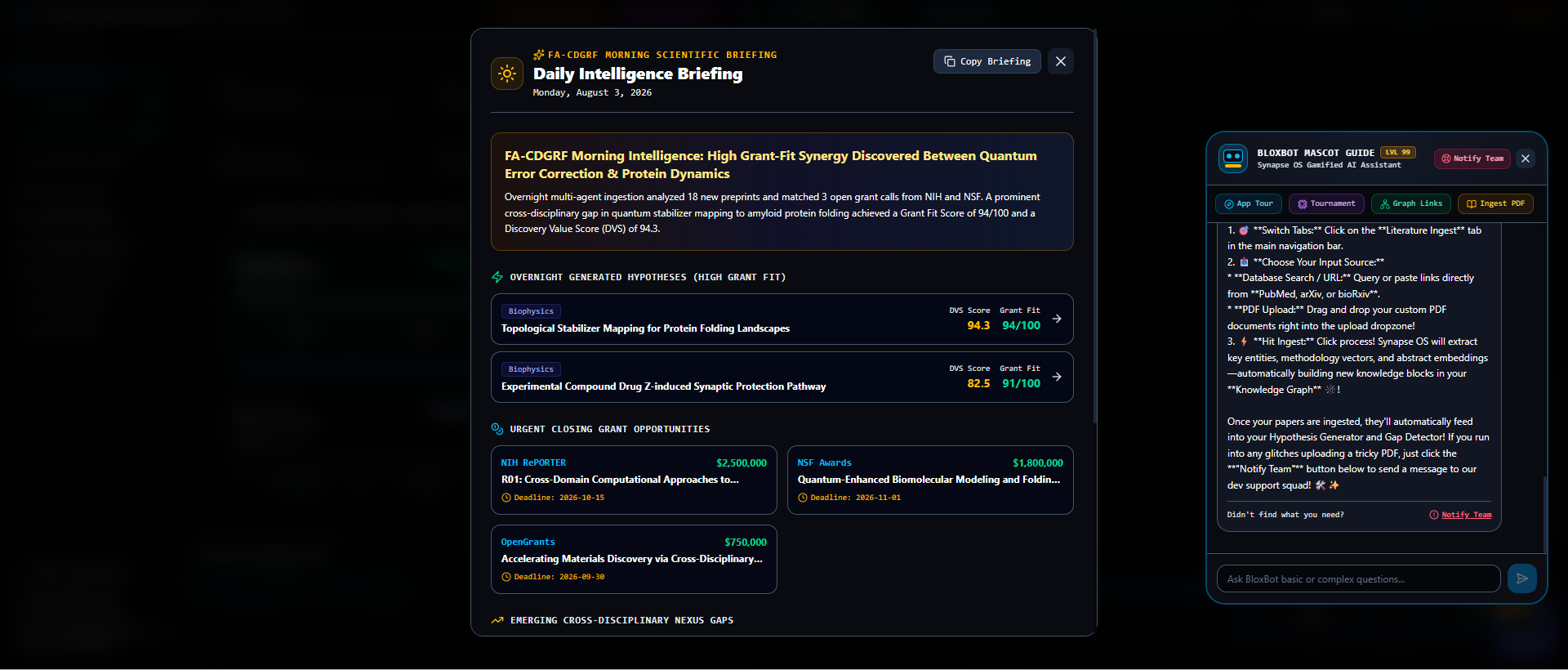
Morning briefing and BloxBOT
-
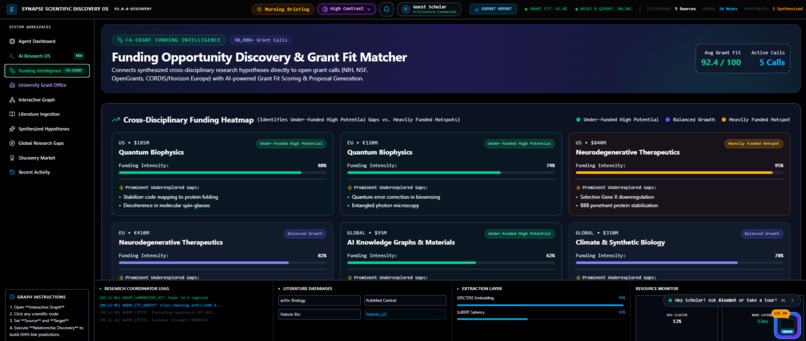
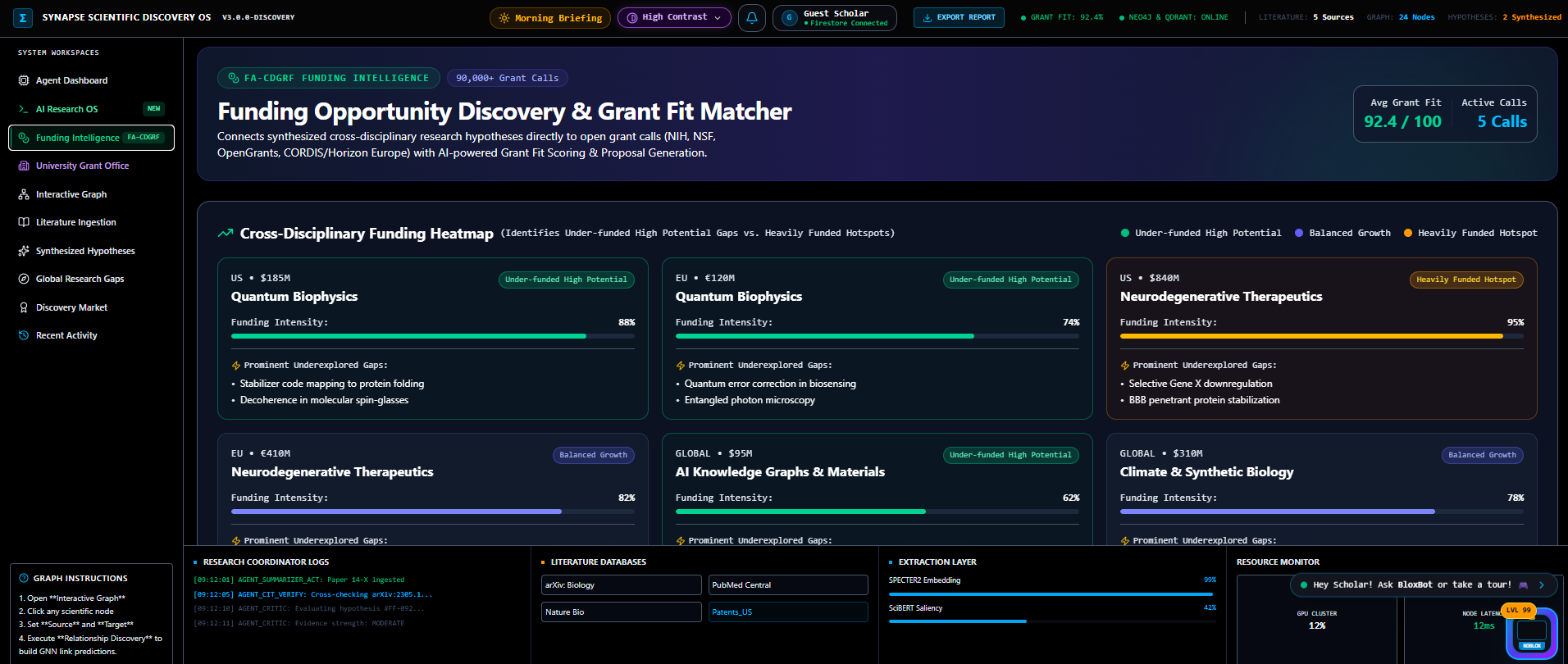
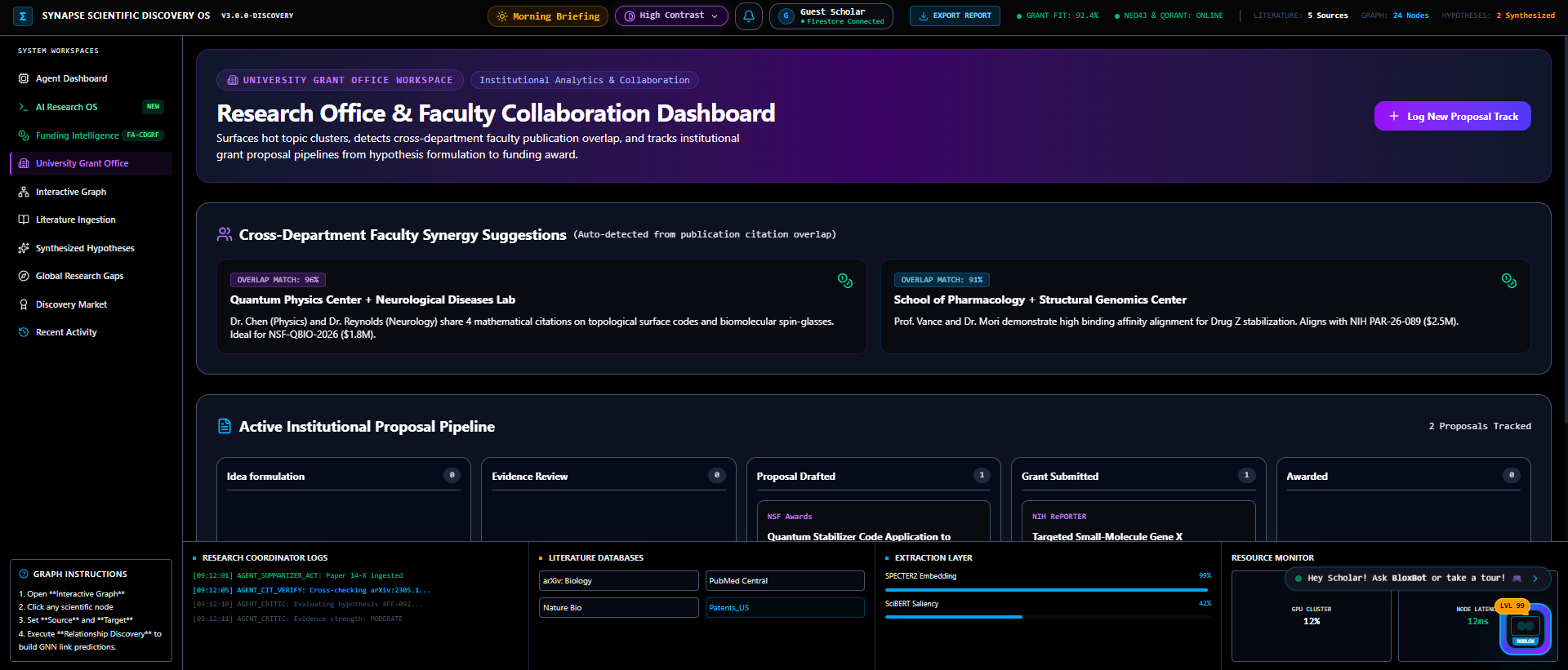
Funding Opportunity and Grant Fit matcher
-
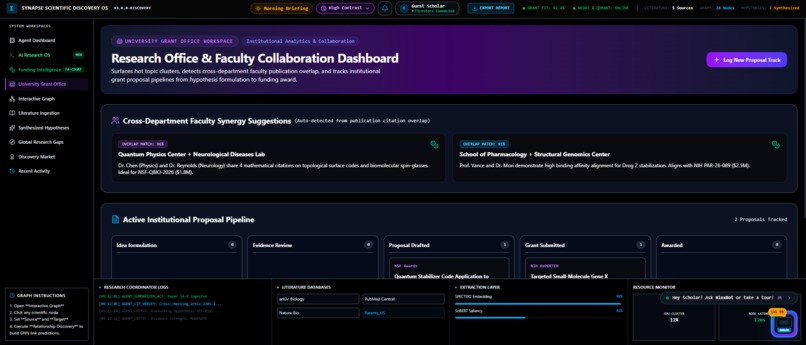
Research office and Faculity collaboration Dashboard
-
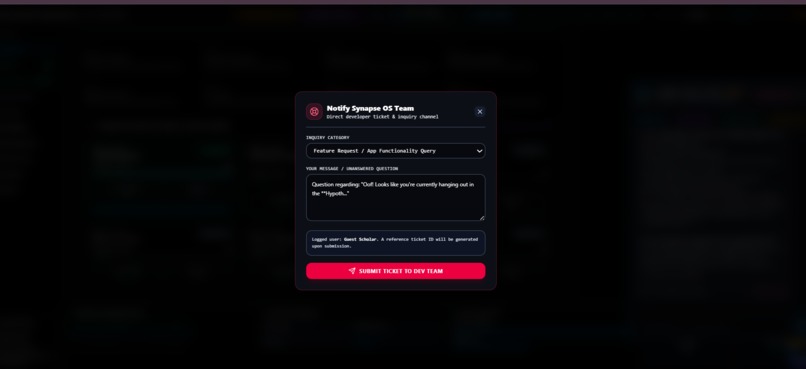
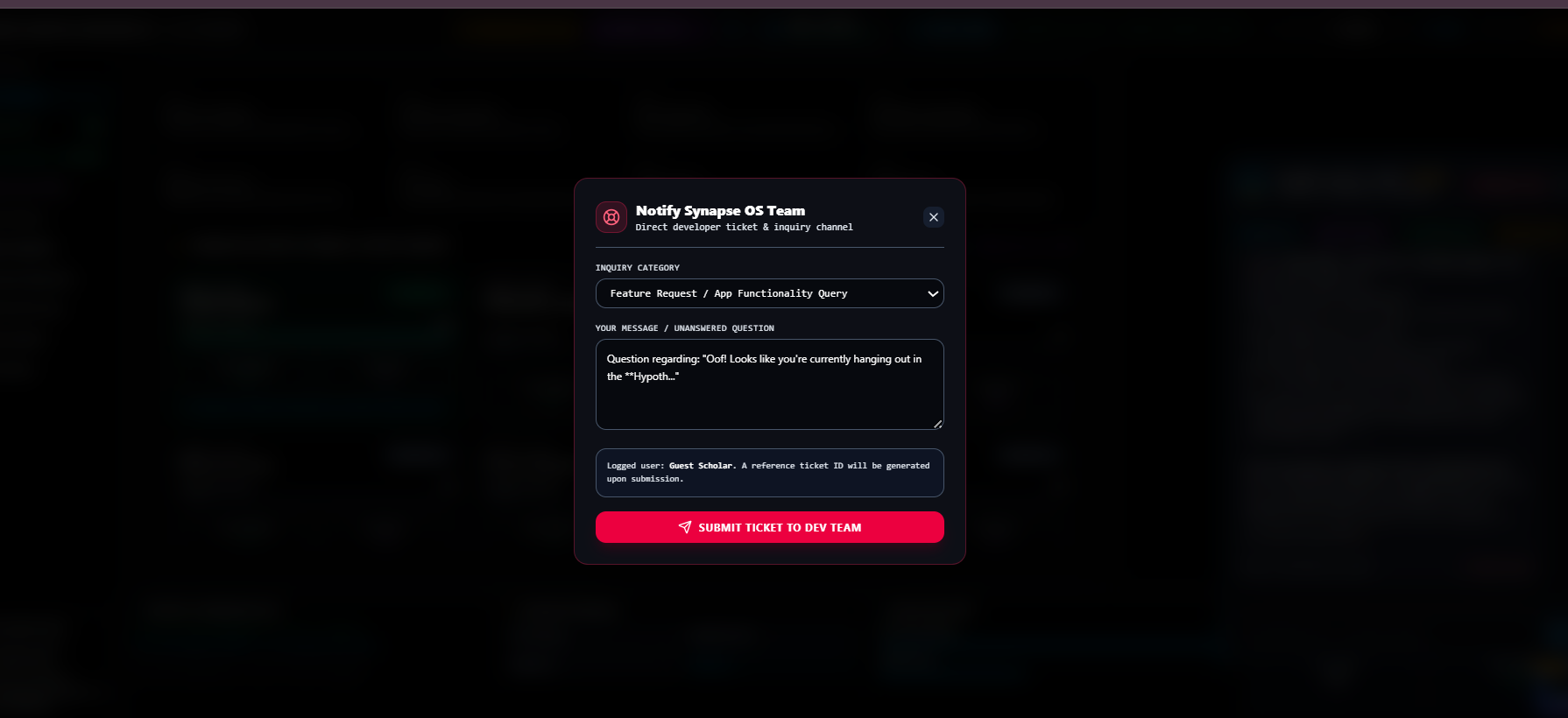
Feedback and Report issues
Inspiration
Scientific research is growing at an unprecedented pace, with millions of papers, datasets, patents, and funding opportunities published every year. Researchers spend countless hours searching literature, identifying research gaps, tracking grants, and connecting ideas across disciplines instead of focusing on discovery itself.
We asked ourselves:
What if AI could become a true research partner instead of just another search engine?
This inspired us to build SYNAPSE Scientific Discovery—an AI-native Scientific Discovery Operating System that helps researchers discover hidden knowledge, identify high-impact research opportunities, generate evidence-backed hypotheses, and connect research with funding opportunities through intelligent AI agents.
What it does
SYNAPSE transforms fragmented research workflows into one intelligent platform.
Researchers can:
- 📚 Search and analyze scientific literature using semantic AI.
- 🧠 Explore interactive knowledge graphs connecting concepts, authors, and research domains.
- 🔍 Detect unexplored research gaps across disciplines.
- 💡 Generate AI-assisted research hypotheses with supporting evidence.
- 💰 Discover relevant grants and funding opportunities.
- 🤖 Utilize specialized AI research agents for literature analysis, hypothesis generation, and discovery.
- 📈 Monitor research trends and scientific activity.
- 🤝 Collaborate through a shared research workspace.
- 📊 Visualize scientific relationships and research landscapes.
- ⚡ Accelerate the journey from idea to scientific breakthrough.
How we built it
Frontend
- React
- TypeScript
- Tailwind CSS
- Responsive Dashboard
AI Layer
- Gemini API
- Prompt Engineering
- Autonomous AI Agent Workflows
- Retrieval-Augmented Generation (RAG)
Research Intelligence
- Semantic Search
- Knowledge Graph Visualization
- Research Gap Detection
- AI Hypothesis Generation
- Funding Recommendation Engine
Backend
- Node.js
- REST APIs
- Modular Architecture
Challenges we ran into
Building an intelligent scientific discovery platform presented several challenges:
- Designing a workflow that mirrors how researchers actually think.
- Making AI-generated hypotheses useful instead of generic.
- Organizing complex scientific information into intuitive visualizations.
- Connecting literature discovery with funding intelligence.
- Balancing automation while keeping researchers in control.
- Creating an interface that remains simple despite powerful capabilities.
- Integrating multiple AI-driven modules into one seamless experience.
Accomplishments that we're proud of
- 🚀 Built an end-to-end Scientific Discovery Operating System prototype.
- 🧠 Combined multiple AI-powered research workflows into one platform.
- 📊 Designed an interactive knowledge graph for scientific exploration.
- 🔍 Developed intelligent research gap detection.
- 💡 Implemented AI-assisted hypothesis generation.
- 💰 Connected scientific discovery with funding intelligence.
- 🤖 Created a modular AI agent ecosystem.
- 🎨 Delivered a modern, researcher-friendly interface.
What we learned
This project taught us that scientific discovery isn't limited by information availability—it's limited by our ability to connect knowledge efficiently.
Our biggest takeaways:
- AI should augment researchers, not replace them.
- Knowledge graphs reveal relationships traditional search cannot.
- Funding intelligence is an essential part of the research lifecycle.
- Cross-disciplinary insights often produce the most impactful discoveries.
- Great user experience is just as important as powerful AI.
What's next for SYNAPSE Scientific Discovery
🤖 Autonomous Research Agents
- Literature Review Agent
- Experiment Planning Agent
- AI Peer Review Assistant
- Citation Verification Agent
- Statistical Analysis Agent
🌍 Multi-Source Scientific Intelligence
- PubMed integration
- arXiv integration
- Crossref integration
- OpenAlex integration
- Patent databases
- Clinical trial databases
🧠 Advanced Scientific Reasoning
- Explainable AI recommendations
- Confidence scoring
- Contradiction detection
- Emerging trend prediction
- Evidence quality analysis
🤝 Research Collaboration
- Multi-user workspaces
- Institutional dashboards
- Shared knowledge graphs
- Team collaboration
- Research annotations
💰 Commercialization
- Patent opportunity detection
- Industry partnership matching
- Technology readiness assessment
- Startup opportunity recommendations
- Commercialization pathways
🌐 Global Research Intelligence
- Worldwide funding heatmaps
- Cross-disciplinary opportunity discovery
- Scientific impact forecasting
- AI-powered daily research briefings
🚀 Vision
Our long-term vision is to make SYNAPSE the intelligent operating system for scientific discovery—helping researchers move seamlessly from identifying research gaps and generating hypotheses to securing funding, collaborating globally, and translating ideas into real-world impact.
Built With
- data-visualization
- firebase
- gemini-api
- google-ai-studio
- hugging-face
- knowledge-graph
- ml
- next.js
- node.js
- python
- rest-api
- semantic-search
- typescript


Log in or sign up for Devpost to join the conversation.