-
-
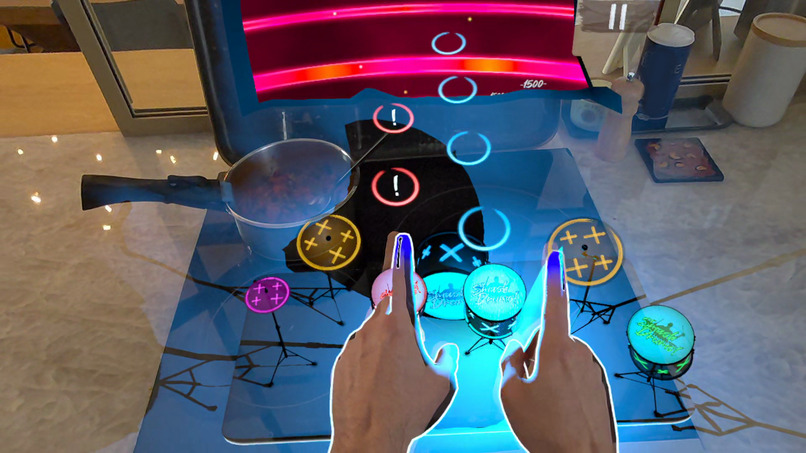
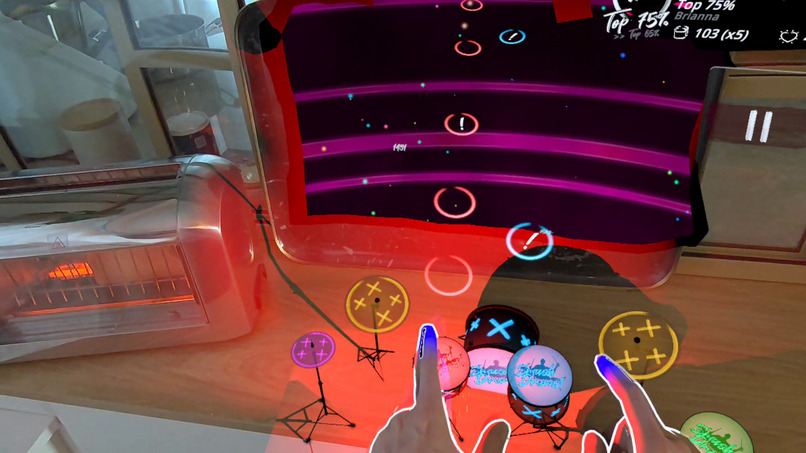
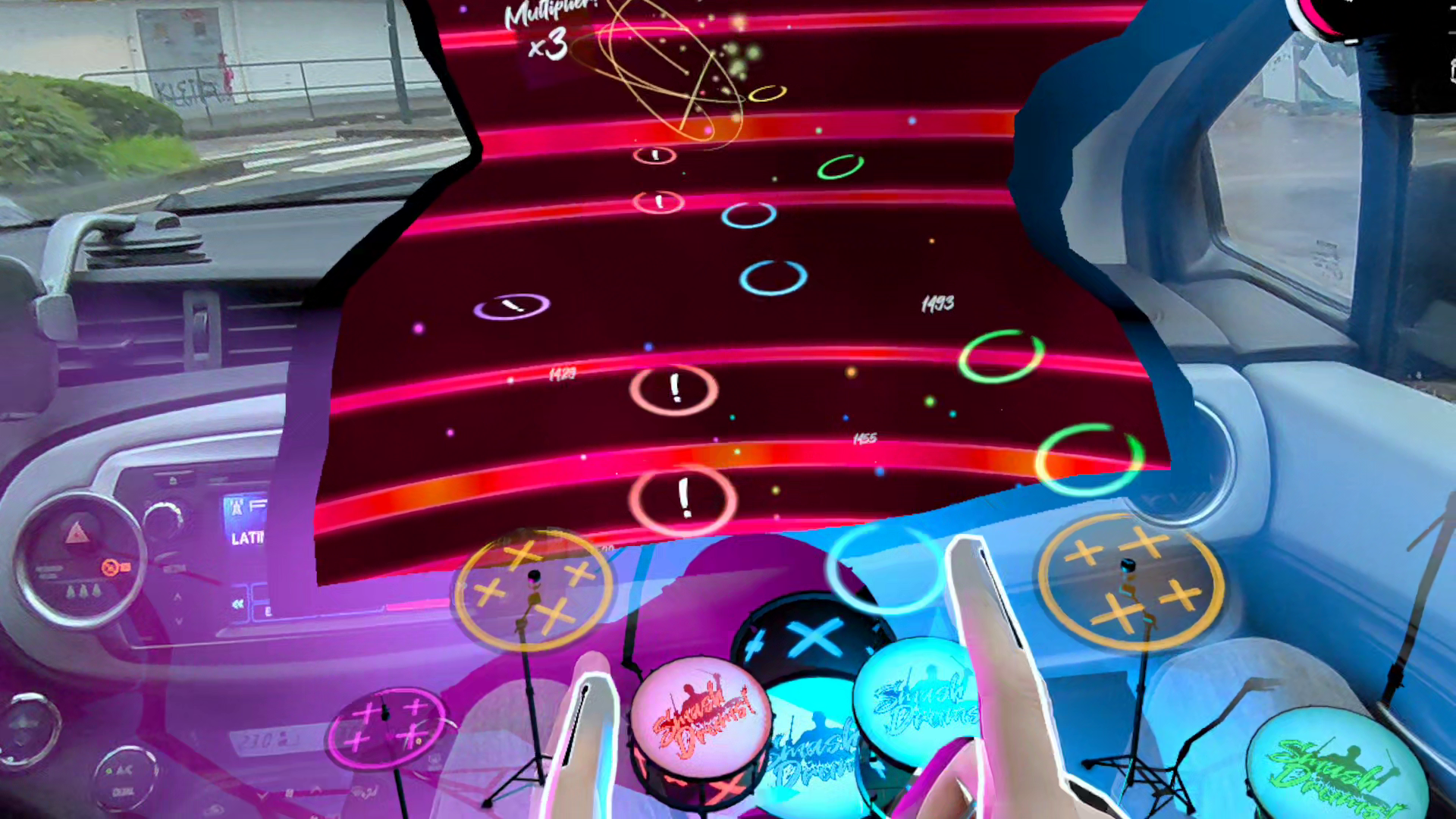
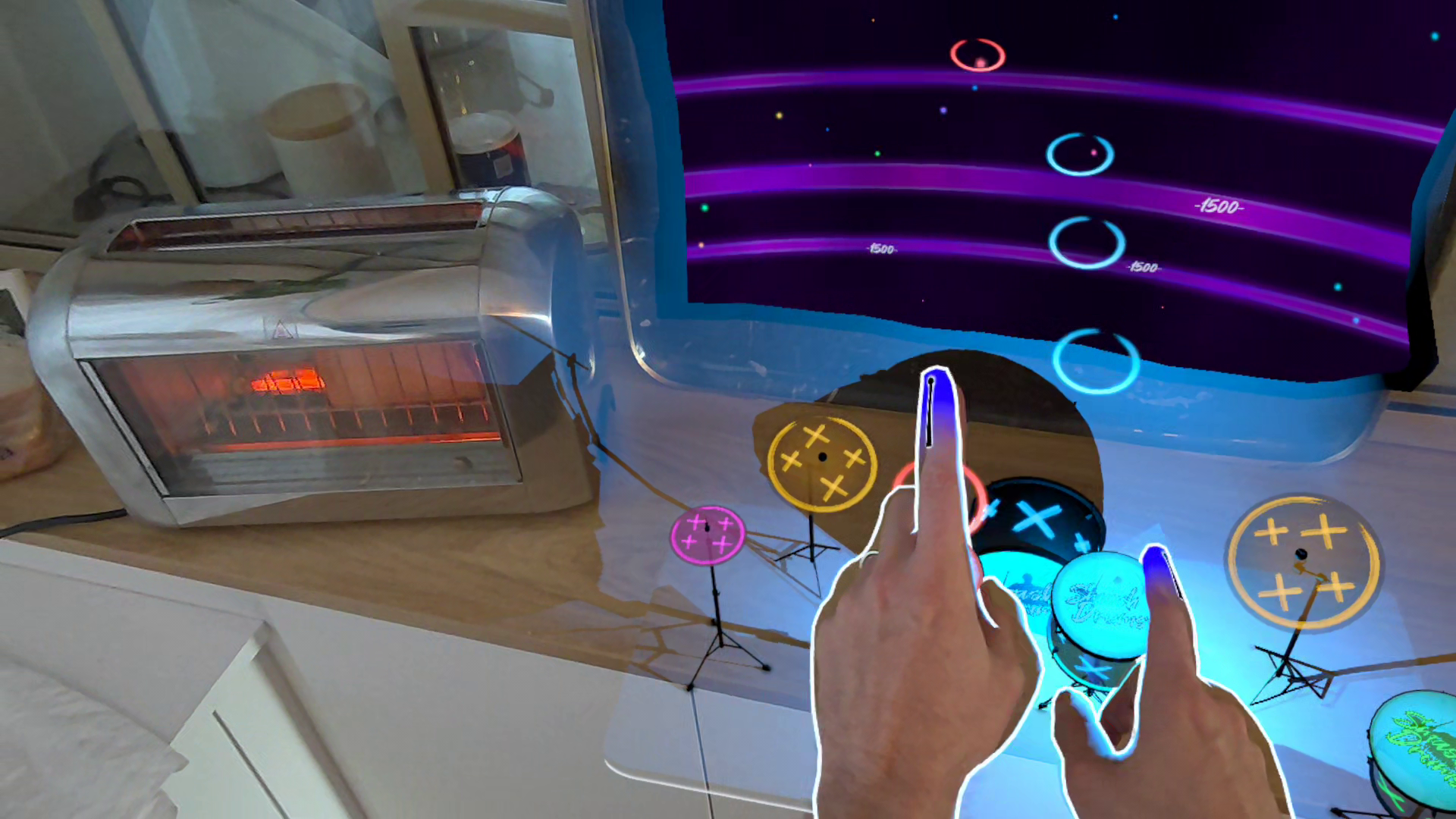
Finger drumming on a tiny drumkit? ✅
-
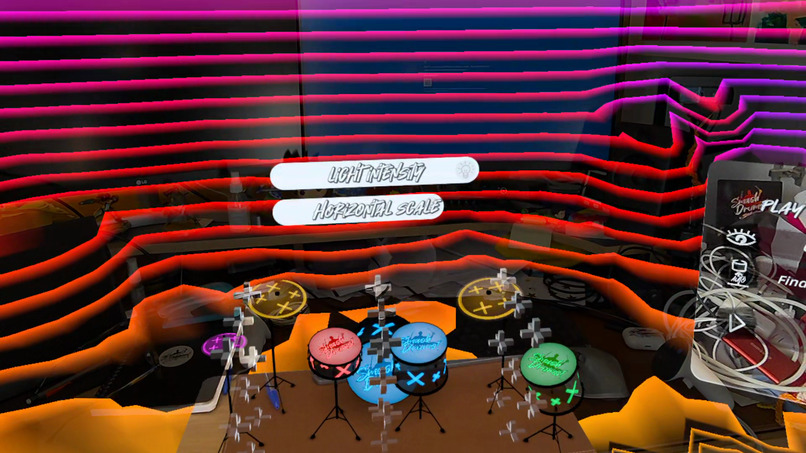
Automatic quick-scan: no room setup required
-
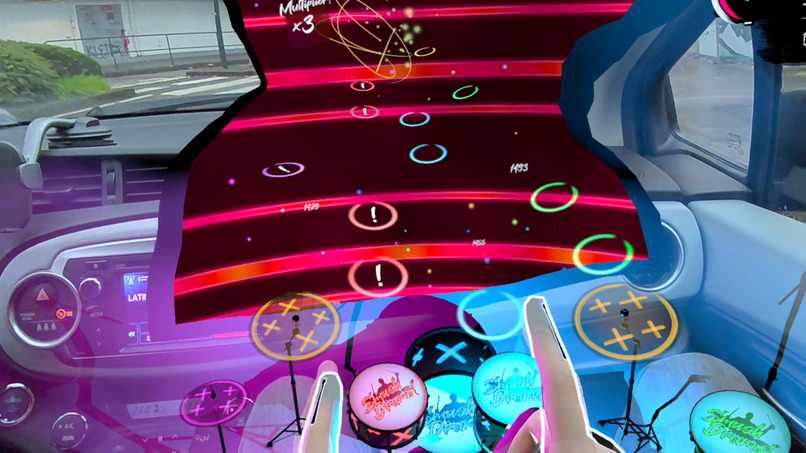
Travel-friendly: play anywhere
-
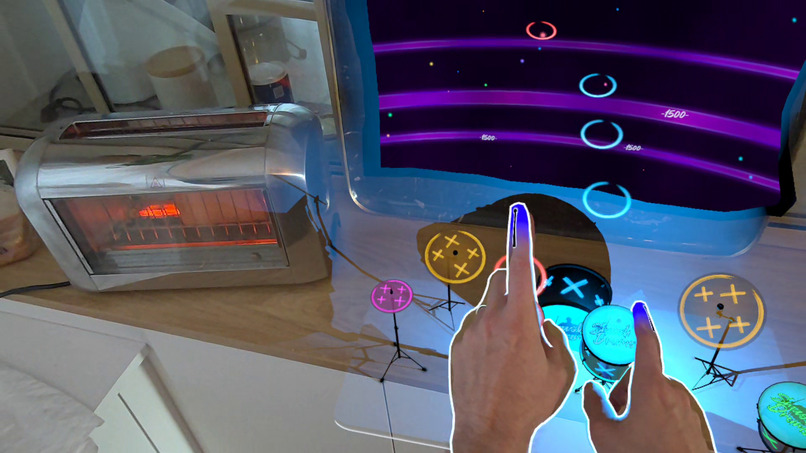
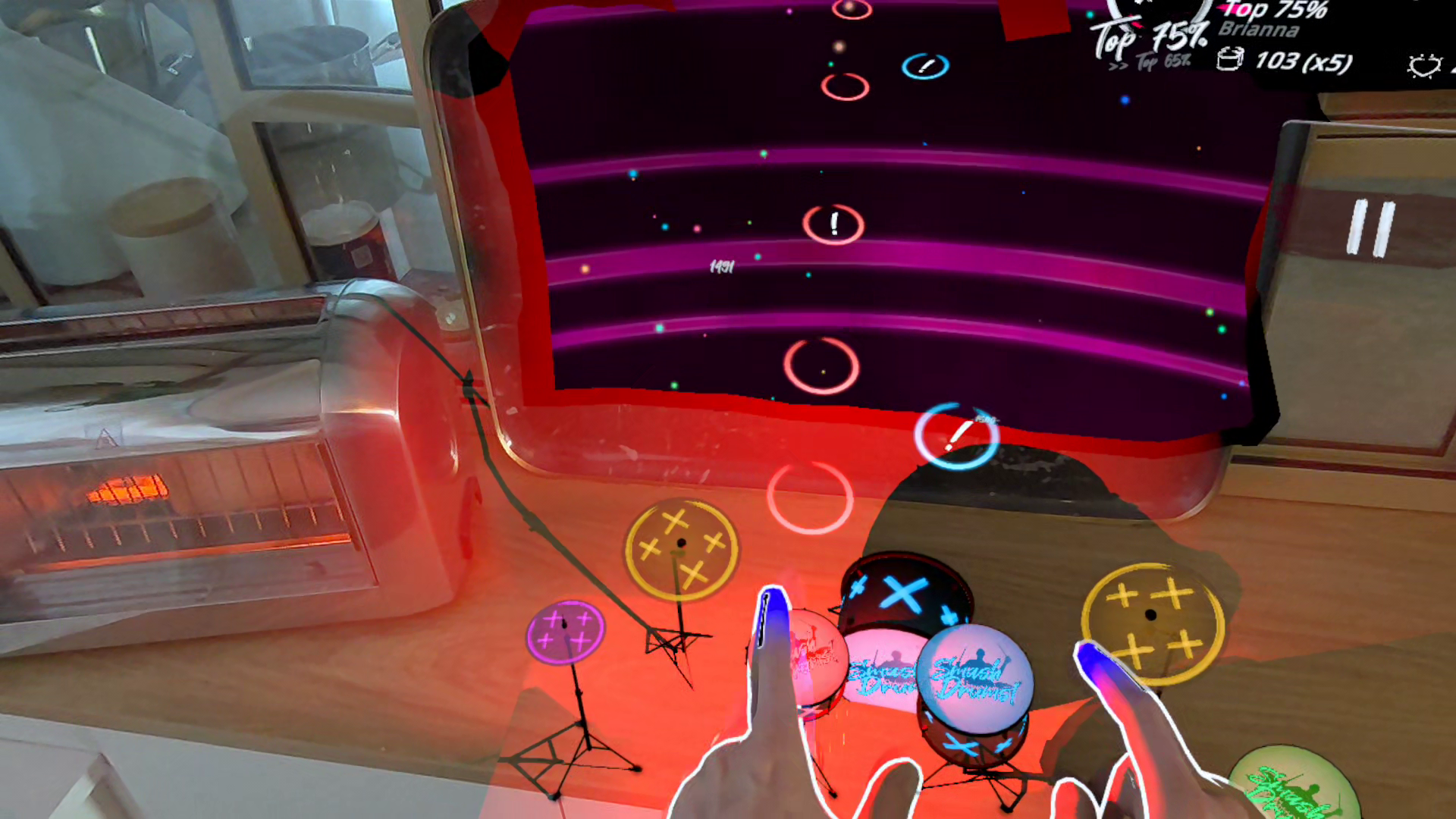
Real-time lighting and shadows
-
Meta VR Glasses-ready: grab and put the UI panel where you want
-
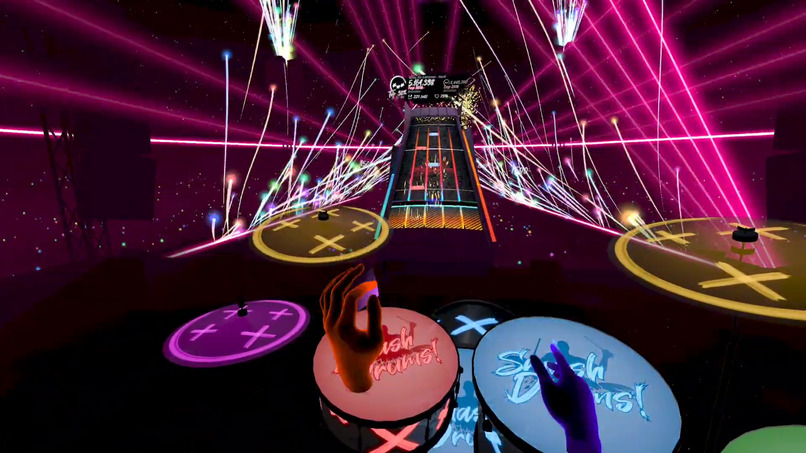
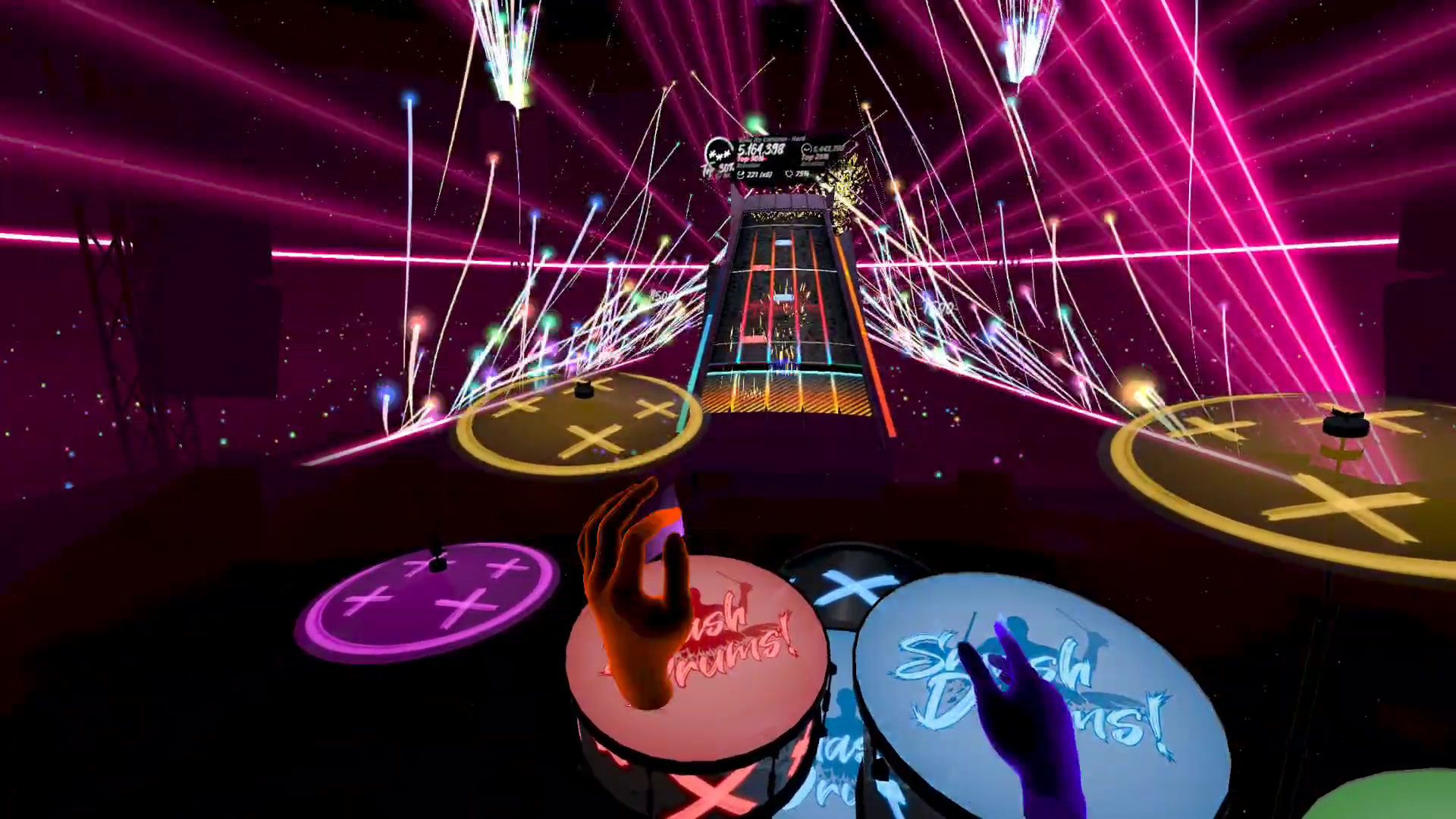
Full-game also playable with hands now
Inspiration
Smash Drums has always been about making you feel like a rock star. Loud music, explosive drums, and the irresistible urge to hit things really hard.
But what if you want to play on the go? On a train, a plane, or anywhere you can't exactly swing your arms around like a maniac?
That's what got me thinking: what if I shrank the drums, ditched the sticks, and put rock 'n' roll at your fingertips?
And that's how Tiny Drums was born. Same spirit, just a little more... travel-friendly.
What it does
Tiny Drums is a brand-new, hand-tracked mixed reality drumming experience, built right into Smash Drums.
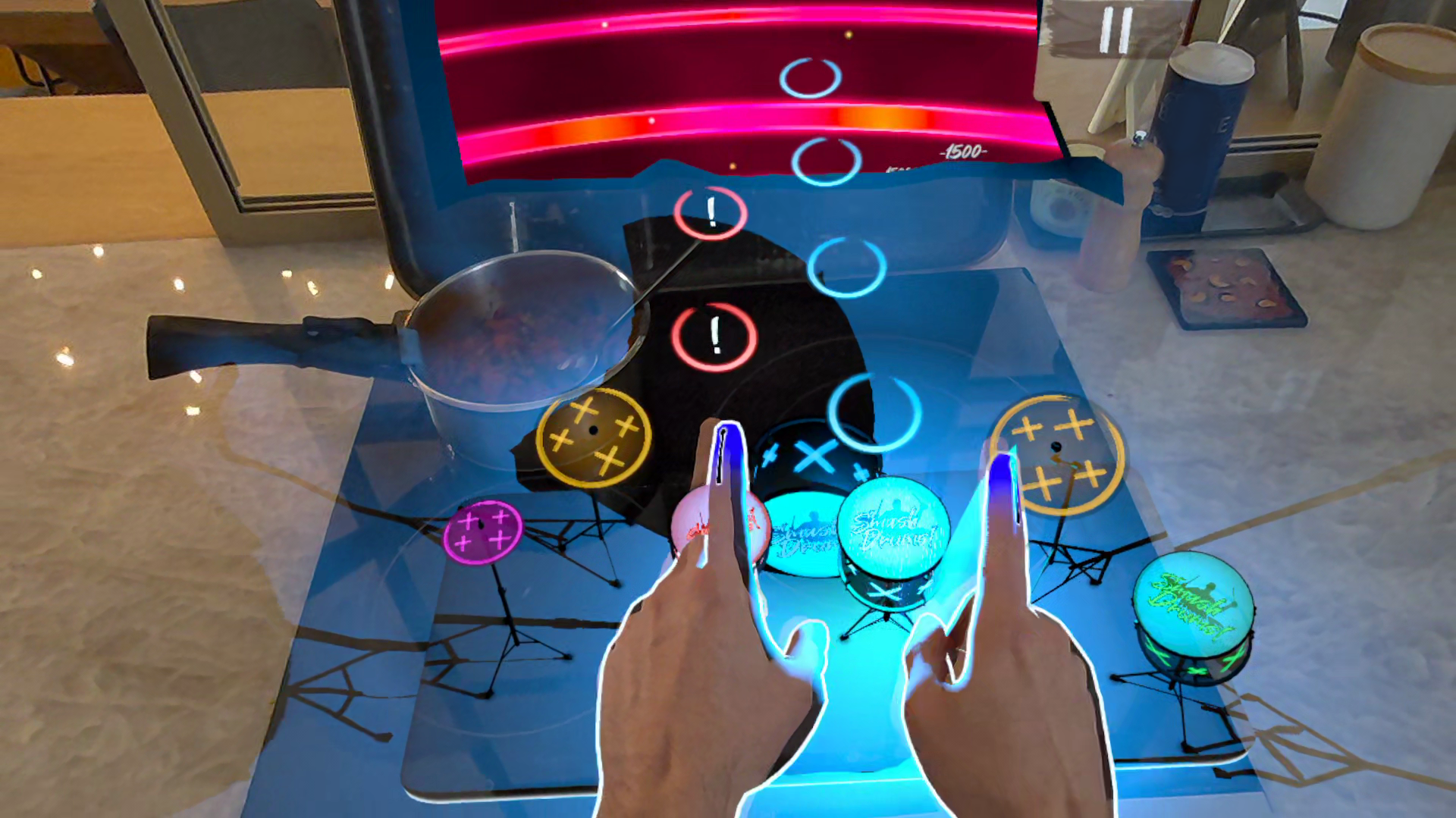
Play a miniature drum kit with your fingertips, wherever you are. Your living room, a hotel, a train, even a plane. No controllers, no room setup, no preparation. Just put on your Quest and rock out!
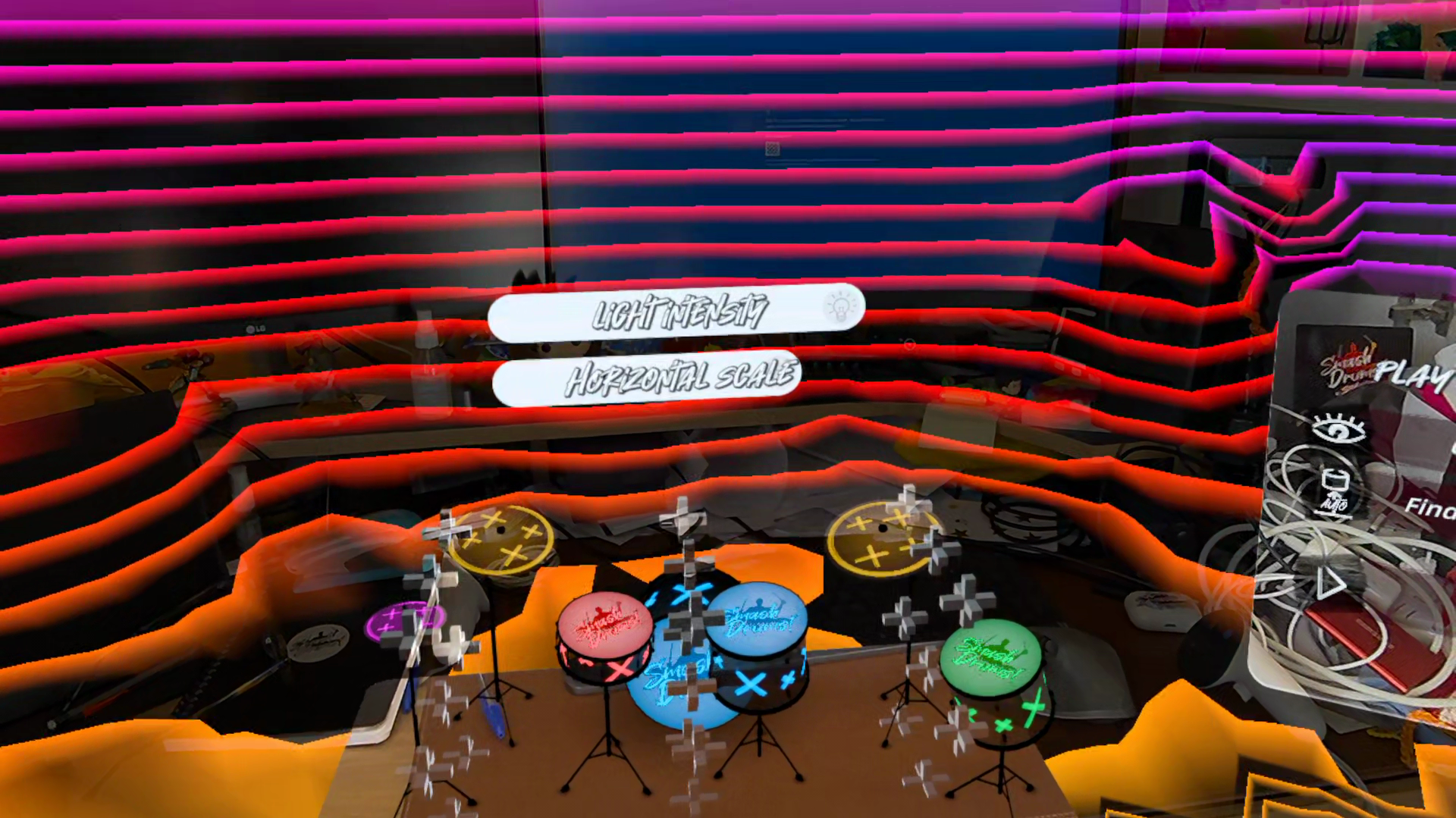
Thanks to a custom environment reconstruction system powered by Meta's Depth API, Tiny Drums builds a 3D model of your surroundings on the fly, with minimal performance overhead.
And here's where the magic happens: virtual lights illuminate your real environment, casting beautiful real-time shadows from virtual objects and your own hands.
You can even make shadow puppets on your actual walls!
⭐ As a bonus, the entire original Smash Drums experience is now playable with hand tracking, too! While this submission focuses on Tiny Drums, I felt this was worth mentioning.
How I built it
I developed Tiny Drums in Unity, using Meta Quest's hand tracking, Depth API, and mixed reality technologies, alongside several custom systems:
- Instant environment reconstruction: I leverage the Depth API to generate a lightweight 3D representation of the player's surroundings at runtime, without requiring Scene Setup or a previously scanned room.
- Performance-friendly rendering: The reconstructed geometry is designed to support dynamic lighting and shadows with minimal overhead, keeping the experience smooth on standalone hardware.
- Mixed reality lighting: Real-time virtual lights illuminate the reconstructed environment, with shadows cast by virtual objects and the player's tracked hands.
- Finger-first gameplay: A dedicated rhythm experience designed around natural finger interactions, rather than simply shrinking the original game and UI, using Meta ISDK.
- Meta VR Glasses ready: Tiny Drums is also designed with Meta VR glasses in mind: the game UI lives on a panel that players can freely position in their environment, while the entire drum kit can be resized to fit their space and preferences.
I also integrated hand tracking throughout the original Smash Drums experience, making the entire game playable without controllers. And therefore, future-proof.
Challenges I ran into
Turns out, fingers aren't tiny controllers. Who knew?
Making a rhythm game feel responsive with hand tracking meant rethinking interactions, timing, and feedback from the ground up.
But my biggest technical challenge was creating convincing mixed reality lighting without requiring a pre-scanned environment. Because you don't want to have to go through the room scanning process on the plane, do you?
The Depth API provides real-time depth information, but turning that into usable 3D geometry for lighting and shadows, while keeping the performance impact negligible, required some creative engineering.
The shaders were another challenge entirely. I had to develop custom shaders capable of receiving real-time shadows on passthrough surfaces, including hands, while also supporting selective box-shaped cutouts to keep the gameplay area visible when needed. Getting all of that to work together, without breaking the illusion of mixed reality, took quite a bit of experimentation. Nothing breaks the illusion of mixed reality faster than a depth mismatch between virtual objects and the real world, so I paid particular attention to getting that right.
And all of this had to work alongside fast-paced rhythm gameplay on a standalone headset.
Accomplishments that I'm proud of
I'm particularly proud of the environment reconstruction system. Being able to generate usable 3D geometry from the Depth API, with such a small performance footprint, opens up some really interesting possibilities for mixed reality.
The dynamic lighting turned out even better than I'd hoped. Seeing shadows from your own hands projected onto your actual surroundings is surprisingly convincing. I was also pleasantly surprised by how well the hardware handled high-resolution real-time shadows, making the whole effect look even better. And yes, I've spent more time than I'd like to admit making shadow puppets instead of testing the game.
I'm also happy that I managed to bring hand tracking to the entire original Smash Drums experience, not just Tiny Drums.
What I learned
Hand tracking is a very different beast from controllers, especially for a rhythm game. I had to reconsider a lot of things I'd taken for granted when developing the original Smash Drums.
I also learned quite a bit about the Depth API and its possibilities beyond occlusion. Using it to reconstruct enough of the environment for real-time lighting, without significantly affecting performance, was probably the most interesting technical part of this update.
There's still plenty I'd like to experiment with.
What's next?
More updates, the show must go on! 🥁🔥🤘
Built With
- c#
- metacoresdk
- metaisdk
- unity6


