-
-
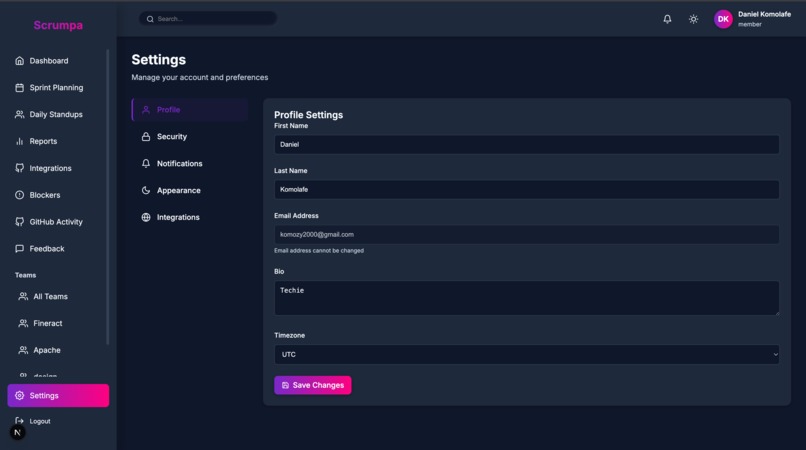
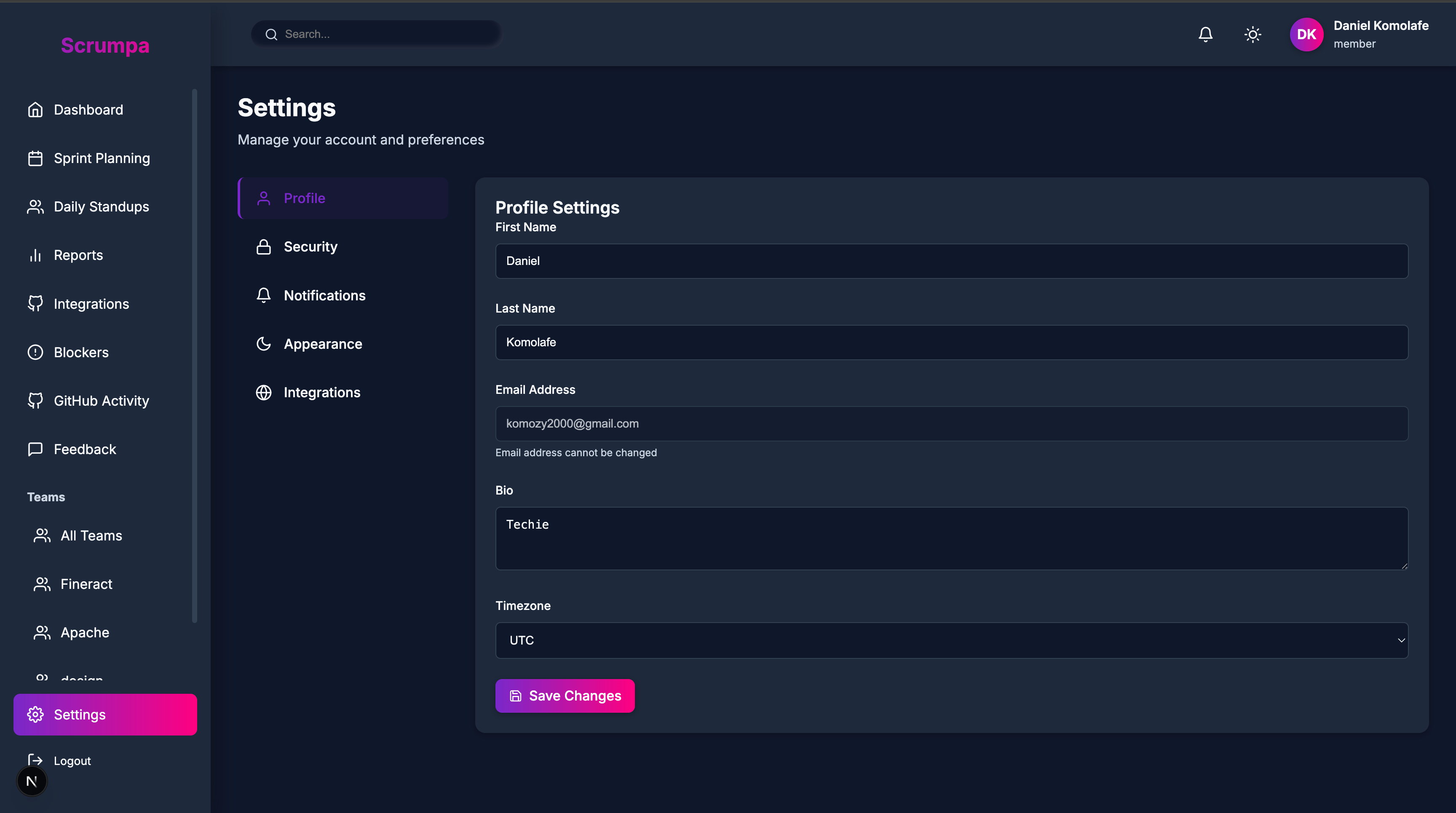
Settings page
-
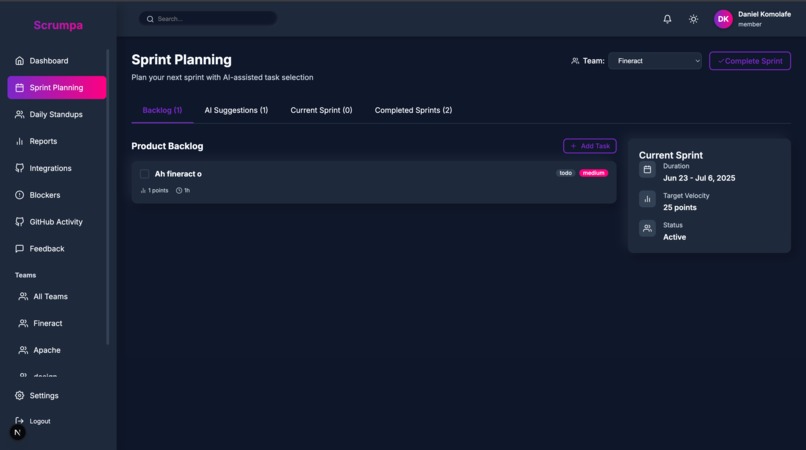
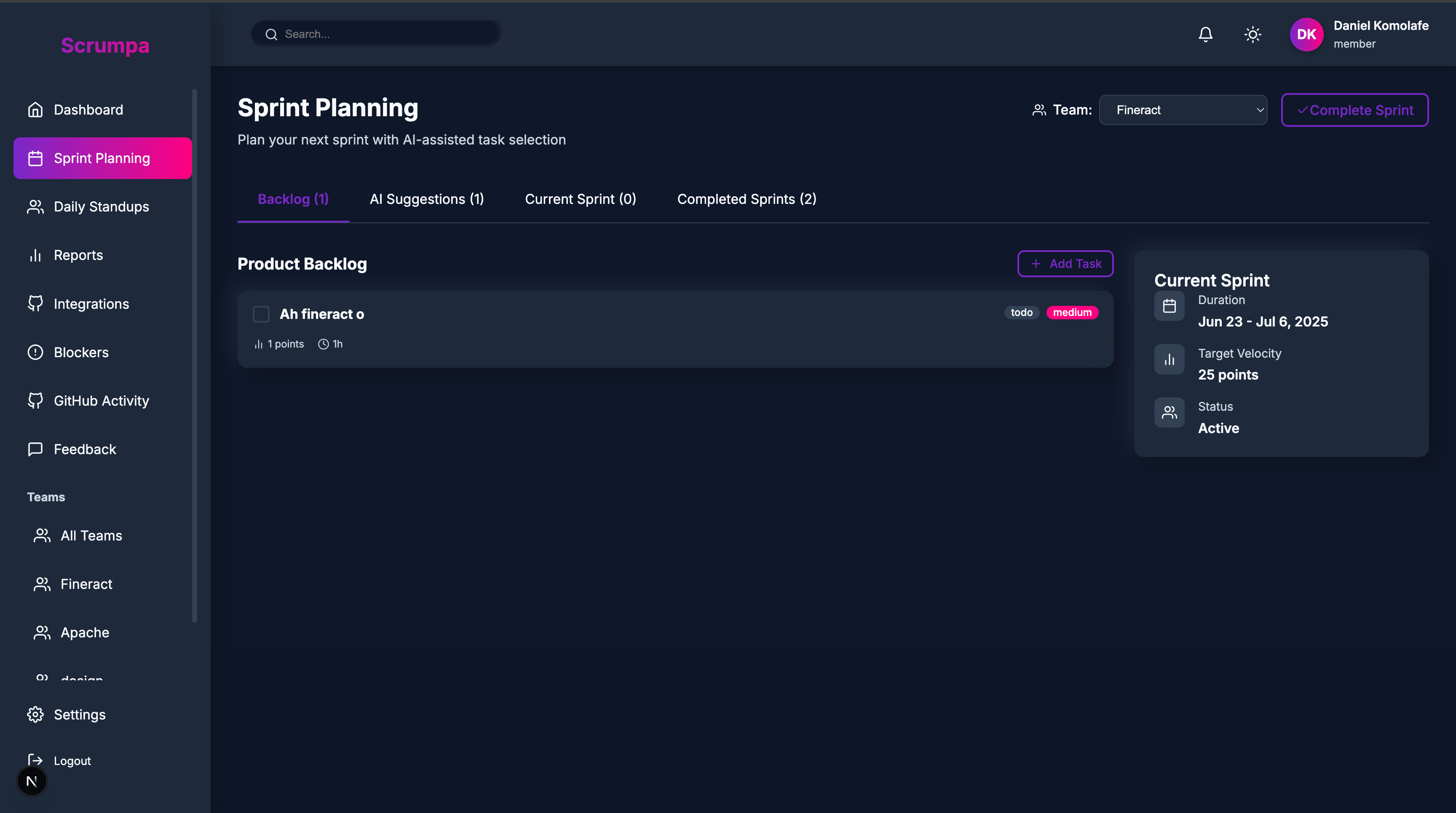
Sprint planning page
-
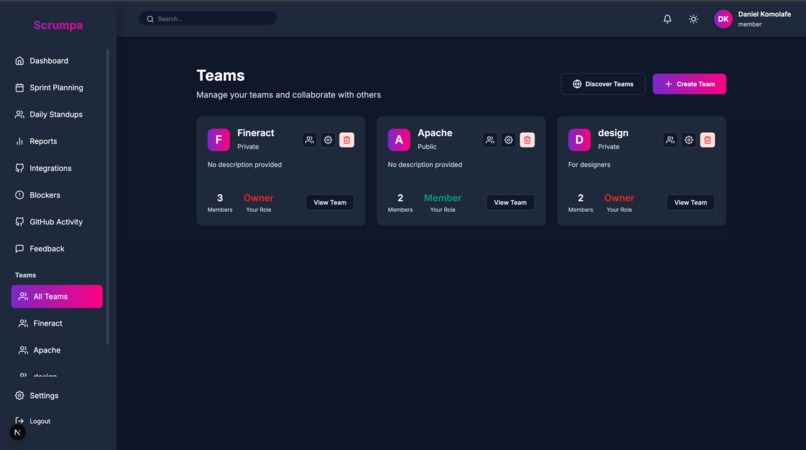
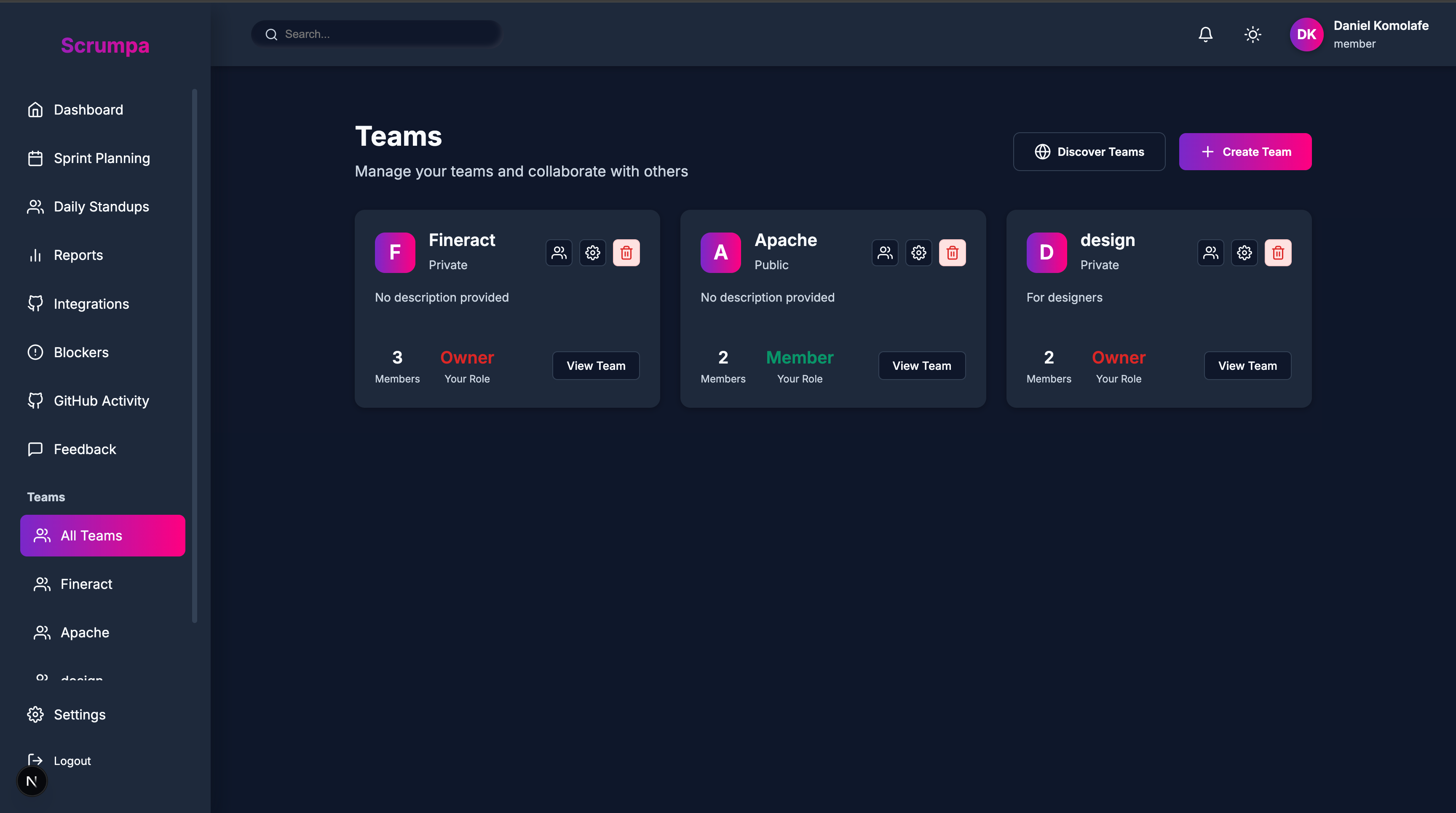
View your teams
-
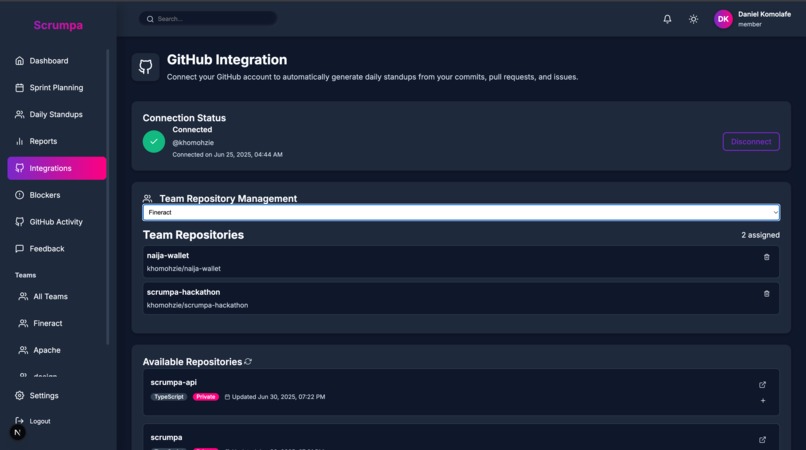
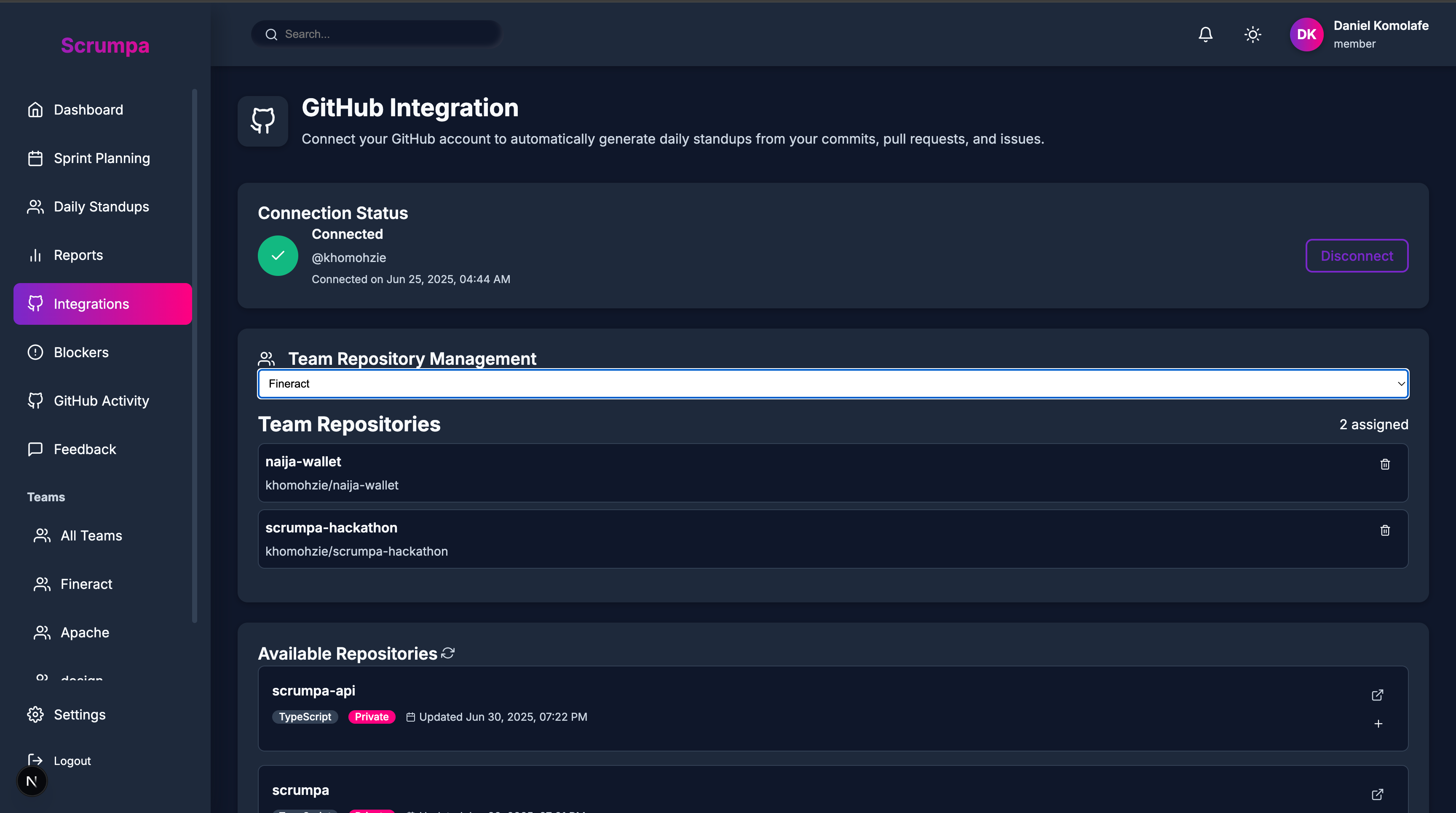
Integrations page (github only for now)
-
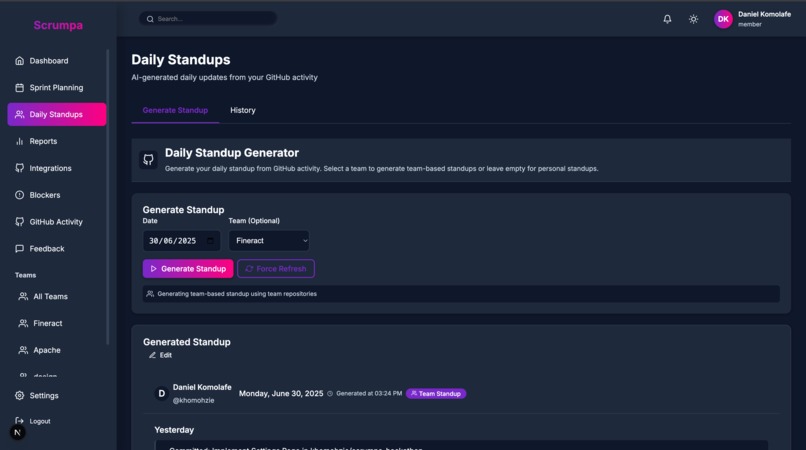
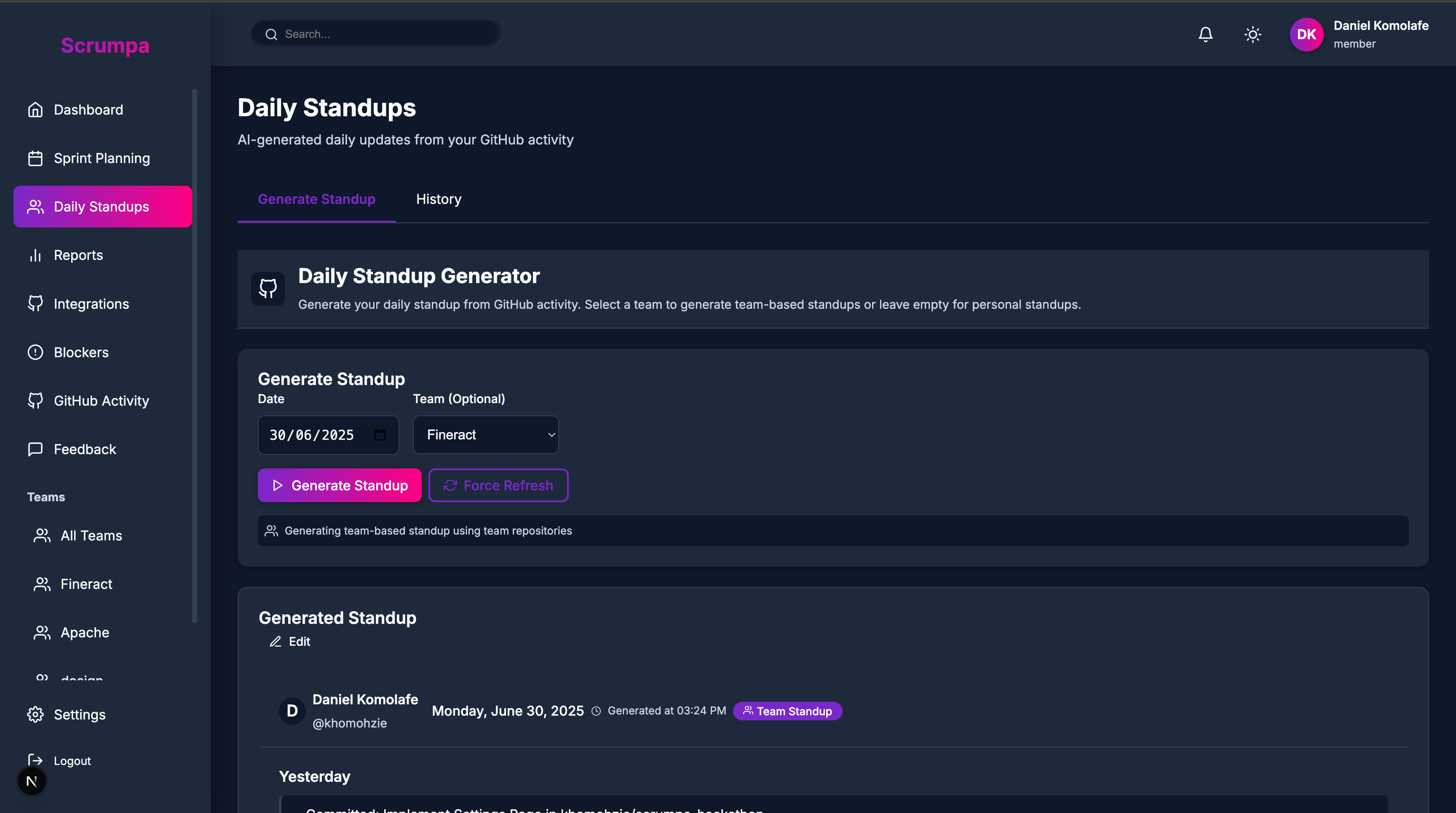
AI powered standup page
-
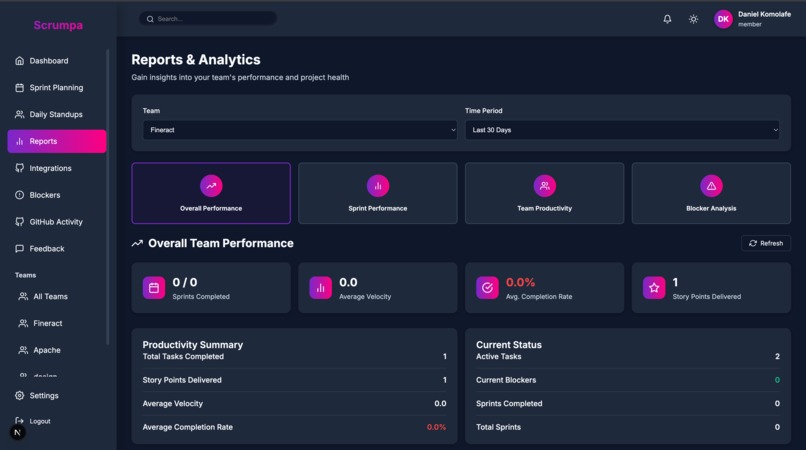
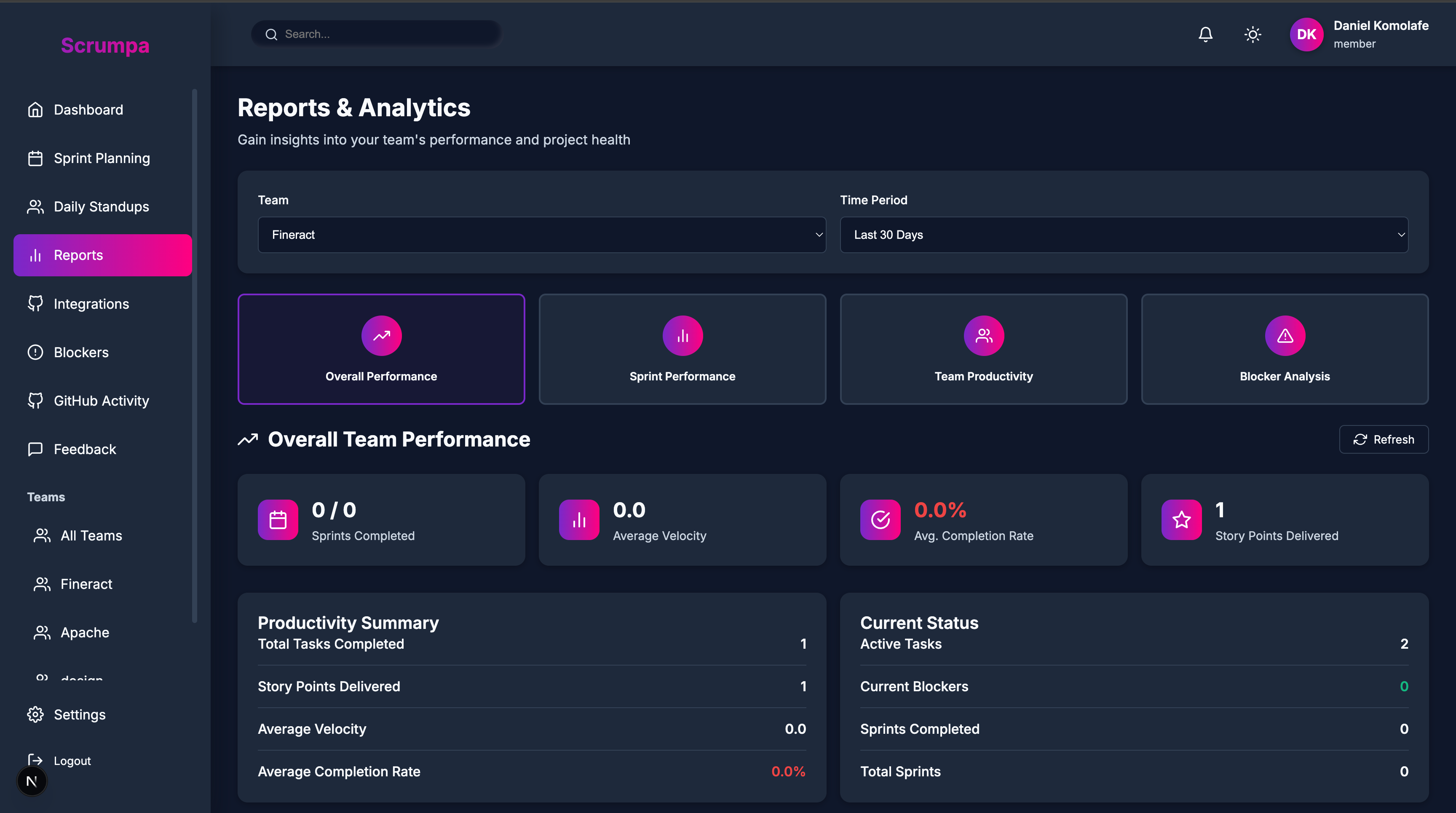
Report page
-
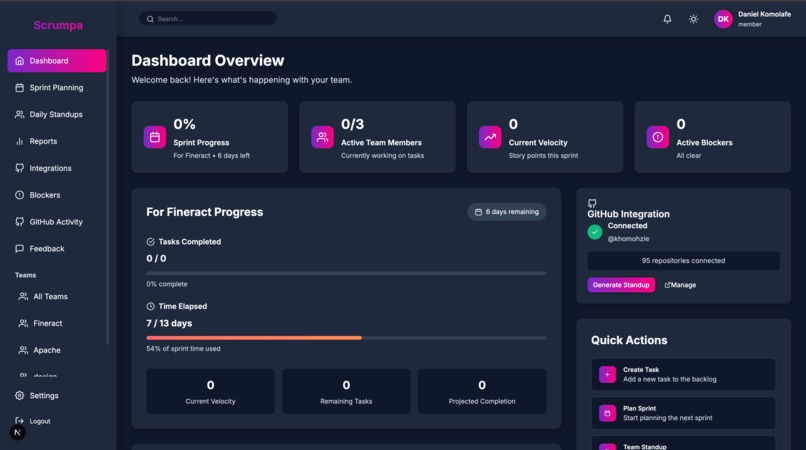
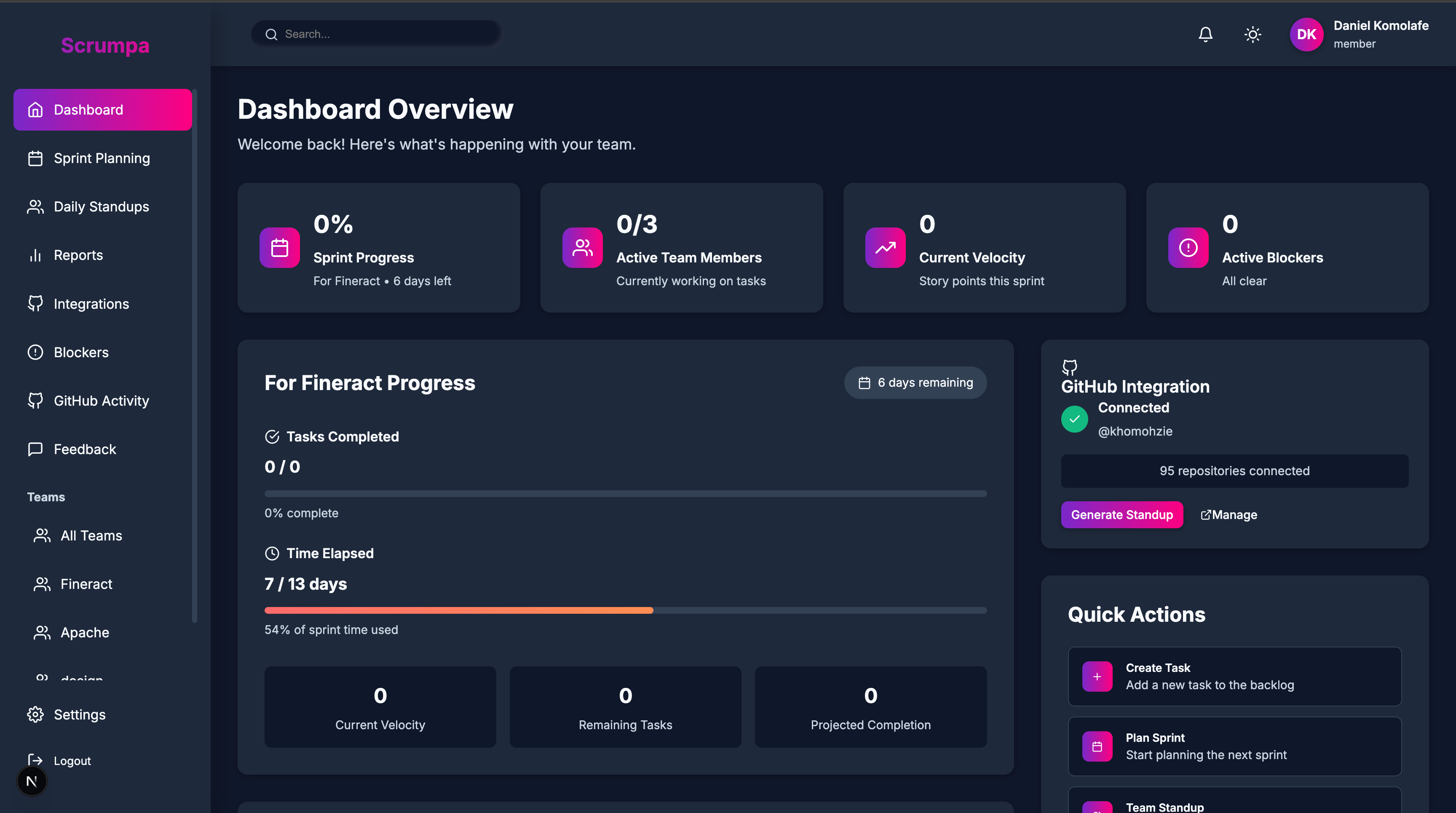
Scrumpa Dashboard
-
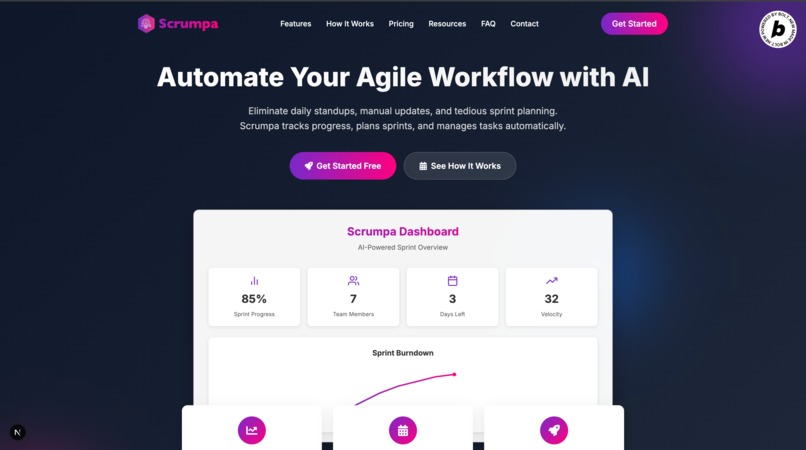
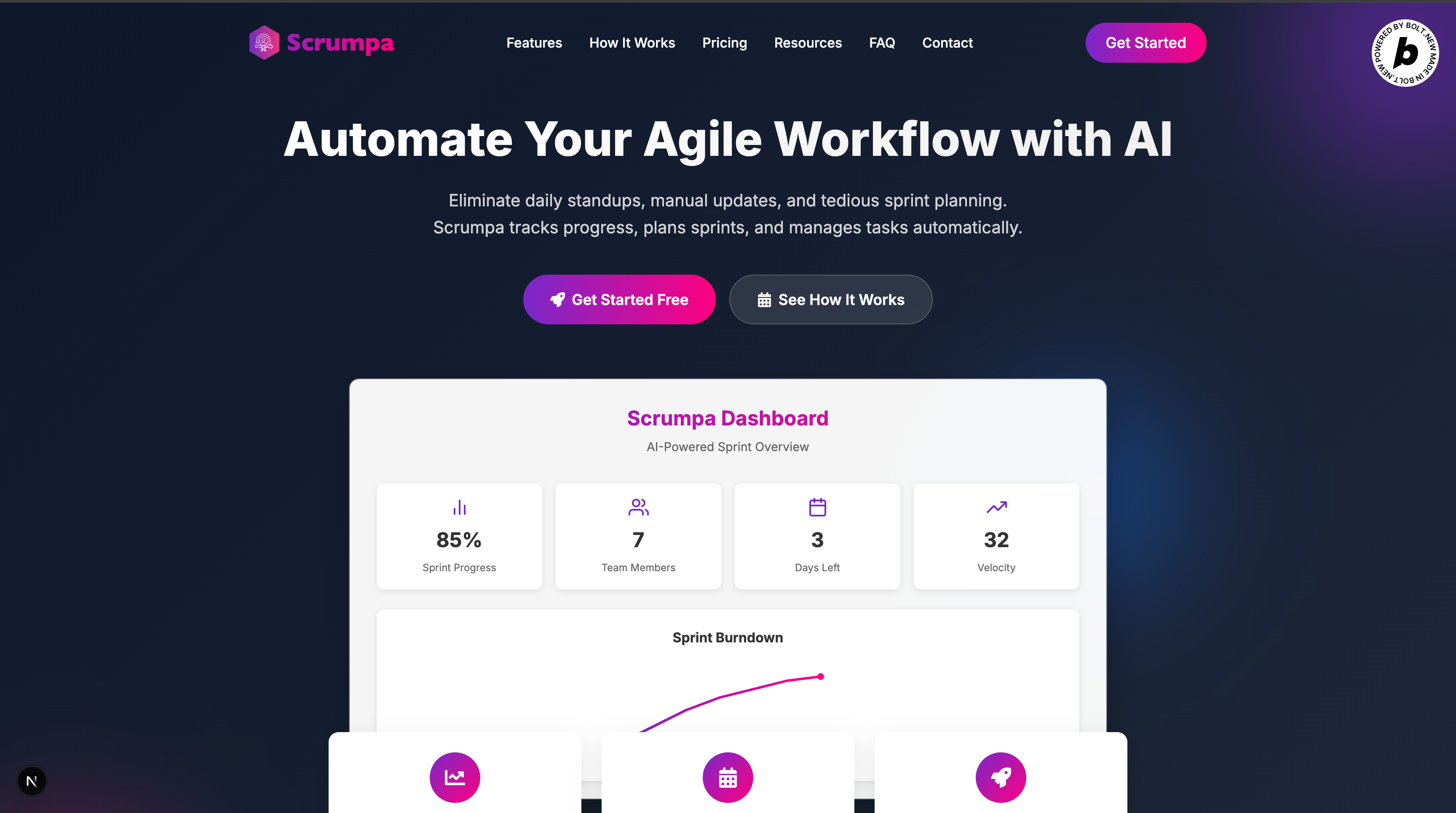
Landing page of Scrumpa
🚀 Scrumpa – Kill the Meeting, Keep the Momentum
💡 Inspiration
This project was born from a simple but powerful video I came across on Instagram:
“If you're looking for an AI project that will make you a hero to developers everywhere, build something that kills daily standups and replaces the Scrum Master. Nothing has damaged dev productivity more than Agile ceremonies and meetings.” https://www.instagram.com/p/DHG5m-YuwcY/
As a software engineer, I felt this deeply. Every day, I saw smart, focused developers getting bogged down by meetings that could’ve been emails or better still, automated.
So I decided to build Scrumpa, an AI-powered Scrum assistant that automates everything we hate about agile: daily standups, sprint planning, progress tracking, and blocker reporting. Scrumpa isn’t just a tool, it’s a rebellion against productivity theater.
What it does
My Bolt Hackathon project is Scrumpa, a cutting-edge SaaS platform designed to revolutionize Scrum project management through intelligent automation. The core idea behind Scrumpa is to streamline traditional Scrum processes and significantly enhance team productivity by leveraging Artificial Intelligence to automate routine Scrum Master responsibilities. This includes eliminating the need for daily standups, automating sprint planning, and providing smart insights into team performance and potential blockers.
How I Built Scrumpa
Scrumpa is built as a full-stack application, emphasizing a robust and scalable architecture.
Frontend (Client-Side):
Framework: Next.js (latest version, leveraging the App Router).
Language: TypeScript, ensuring type safety across the application.
UI/Styling: Styled Components for all styling, adhering to a clean, modern, and production-ready design. I consciously avoided Tailwind CSS and other UI libraries to maintain a consistent and custom aesthetic.
Icons: React Icons for all visual elements, providing a wide range of high-quality icons.
State Management: React Context API for global state, such as authentication, theme, and team information, ensuring efficient data flow.
Real-time Communication: Socket.IO client for real-time notifications and updates.
Backend (Server-Side):
Framework: Node.js with Express.js.
Language: TypeScript.
Database: Supabase, utilized for its PostgreSQL database capabilities and built-in authentication features. This allowed for rapid development and a robust data layer.
AI Integration: OpenAI API for generating intelligent task suggestions during sprint planning and for creating automated daily standups based on GitHub activity.
Authentication: JWT-based authentication with secure cookie handling.
GitHub Integration: Custom integration with GitHub's API to fetch user repositories, commits, pull requests, and issues, which are then used to power AI features.
Real-time Communication: Socket.IO server for pushing real-time notifications to connected clients.
Reporting: Implemented various report endpoints to provide insights into sprint velocity, team productivity, blocker trends, and overall team performance.
Key Features Implemented:
User Authentication & Profile Management: Full sign-up, login, logout, and profile update functionalities, including password changes.
Team Management: Users can create, view, update, and delete teams. Comprehensive team member management includes inviting members, handling join requests, updating roles (owner, admin, member), and removing members.
Sprint Planning:
*   Ability to create and manage sprints with defined goals, dates, and velocity targets.

*   A backlog system for tasks.

*   **AI-Powered Task Suggestions**: Scrumpa's AI analyzes the backlog and team capacity to suggest optimal tasks for the next sprint, helping teams plan more effectively.

*   Tasks can be assigned to sprints and marked as done.
- GitHub Integration: Users can connect their GitHub accounts, allowing Scrumpa to fetch their repository data. This data is crucial for:
*   **Automated Daily Standups**: AI generates daily standup reports (yesterday's work, today's plan, blockers) by analyzing GitHub commits, pull requests, and issues. Users can also edit these generated standups.

*   **GitHub Activity History**: A dedicated page to view all GitHub activity.
- Reporting & Analytics:
*   **Sprint Performance Report**: Visualizes sprint velocity, completion rates, and task progress over time.

*   **Team Productivity Report**: Shows individual and team-wide task completion, story points delivered, and completion rates.

*   **Blocker Analysis Report**: Identifies and categorizes blockers (stale tasks, PRs, dependency issues) and tracks their trends.

*   **Overall Performance Report**: Provides a high-level overview of team performance metrics.
Smart Recommendations: The dashboard features AI-powered recommendations to help teams optimize their workflow, such as suggesting scope adjustments, addressing blockers, or starting new sprints.
Real-time Notifications: A robust notification system that alerts users to team requests, invitations, and other important events in real-time.
Settings Page: A comprehensive settings area for users to manage their profile, security (password change), notification preferences, appearance (theme toggle), and integrations.
Bolt Badge Integration: The Bolt badge is prominently displayed on the main home page, linking back to Bolt.new.
Throughout the development, I adhered to the principle of building "the real thing" – no mock data, with every feature backed by a fully functional backend and database. This approach ensures that Scrumpa is not just a prototype but a production-worthy application.
What I Learned
Building Scrumpa for the Bolt Hackathon was an incredibly enriching experience. I gained significant insights into:
Full-Stack Development with Next.js App Router: Deepened my understanding of server components vs. client components, and how to effectively manage data fetching and state across this architecture. The middleware.ts for authentication and routing was a key learning area.
Supabase as a Backend-as-a-Service: Explored Supabase's capabilities beyond just a database, utilizing its authentication and real-time features. This was my first extensive use of Supabase, and I learned a lot about its integration with Node.js.
Advanced API Integrations: Gained hands-on experience with complex API integrations like GitHub and OpenAI, including OAuth flows, rate limiting considerations, and effective data parsing.
Real-time Communication with Socket.IO: Successfully implemented real-time notifications, which involved setting up both client and server-side Socket.IO, managing user connections, and emitting events.
AI Prompt Engineering for Practical Applications: Learned to craft specific and effective prompts for OpenAI to generate structured and useful output for features like standups and task suggestions. This involved iterating on prompts to get the desired quality and format.
Robust Error Handling: Focused on implementing comprehensive error handling across the entire stack, from API responses to UI feedback, ensuring a smoother user experience even when things go wrong.
Project Structure and Scalability: Reinforced the importance of a well-organized project structure with clear separation of concerns (controllers, services, models, utilities) to ensure maintainability and scalability.
Challenges Faced
The journey of building Scrumpa was not without its hurdles:
Backend-Frontend Integration Complexity: Connecting the Next.js frontend with a separate Node.js/Express backend, especially concerning authentication (JWT tokens, secure cookies, CORS policies), required careful configuration and debugging. Ensuring seamless data flow and error propagation across this boundary was a continuous effort.
Supabase Schema Design and Querying: Designing an optimal database schema in Supabase for complex agile entities (teams, members, tasks, sprints, repositories, notifications, recommendations) and then writing efficient SQL queries (or using the Supabase client library effectively) was challenging. Handling relationships and ensuring data integrity was crucial.
Real-time Data Consistency: Ensuring that real-time updates via Socket.IO were consistent with the database state and reflected accurately on the frontend without causing race conditions or stale data was a significant challenge.
OpenAI API Rate Limits and Cost Management: While developing, I had to be mindful of OpenAI's rate limits and potential costs, especially during rapid iteration. This influenced how often I called the API and the strategies for caching AI-generated content.
Next.js App Router Nuances: Adapting to the new App Router paradigm, particularly understanding when and where to use the "use client" directive, and how data fetching works in server components versus client components, presented a learning curve. Avoiding hydration errors and ensuring smooth client-side interactivity while leveraging server-side benefits was tricky.
Comprehensive Reporting Logic: Building the logic for various reports (sprint velocity, productivity, blockers) required aggregating data from multiple tables and performing complex calculations, which was intricate to implement correctly and efficiently.
Time Constraints: As with any hackathon, balancing the desire to implement many features with the need for robust, clean code within a limited timeframe was a constant challenge. Prioritization and efficient problem-solving were key.
Despite these challenges, the process of building Scrumpa was incredibly rewarding, and I'm proud of the functional and feature-rich application that emerged.
What Is Next for Scrumpa
Now that the MVP is live, I'm focused on:
Private beta onboarding: Bringing on 5-10 dev teams to validate the real-world usefulness and accuracy of AI standups.
Custom AI fine-tuning: Adapt Scrumpa’s tone and summarization style to fit different team cultures (dev teams vs product teams).
Launch public waitlist: Start building momentum, get feedback, and iterate quickly based on usage data.
Built With
- express.js
- nextjs
- openai
- redis
- styled-components
- supabase
- typescript

Log in or sign up for Devpost to join the conversation.