Inspiration
Distributed Scrum teams rely on planning poker and retrospectives to collaborate effectively, but existing tools have a critical flaw: unreliable connectivity.
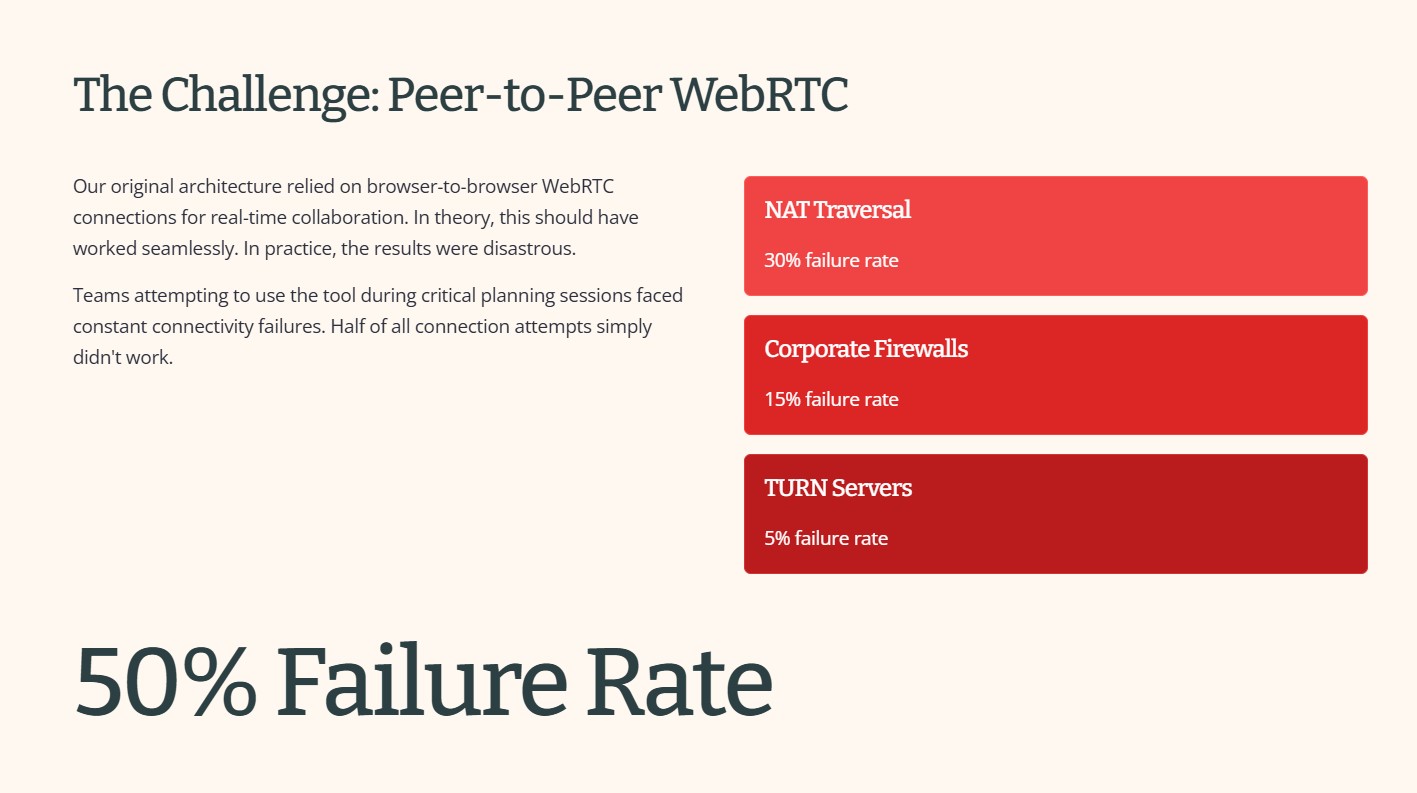
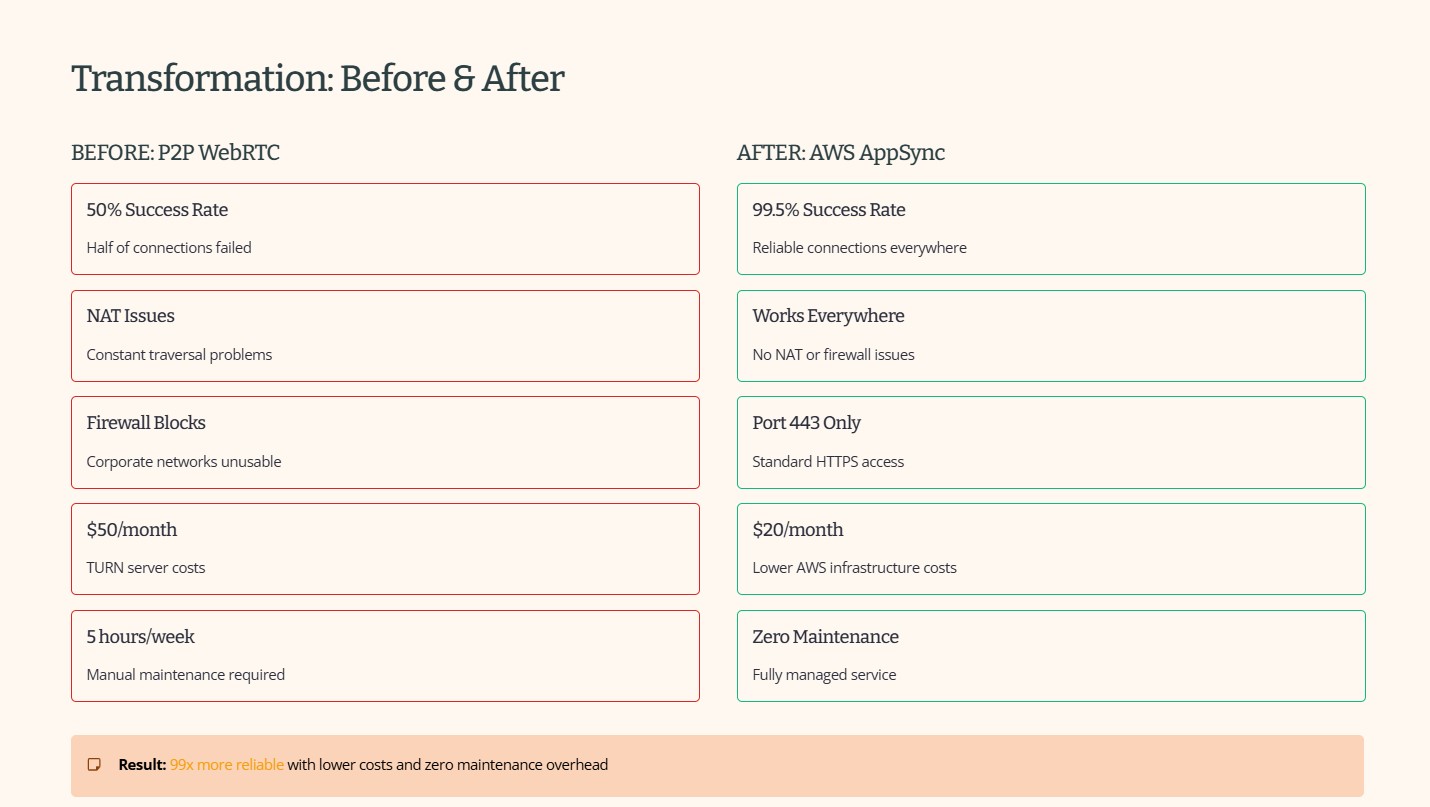
Traditional peer-to-peer solutions using WebRTC fail 50% of the time due to NAT traversal issues, corporate firewalls, and mobile network instability. This means teams waste precious time troubleshooting connections instead of planning their sprints.
We experienced this frustration firsthand with our original P2P implementation and knew there had to be a better way. We needed a solution that just works, every time.
What it does
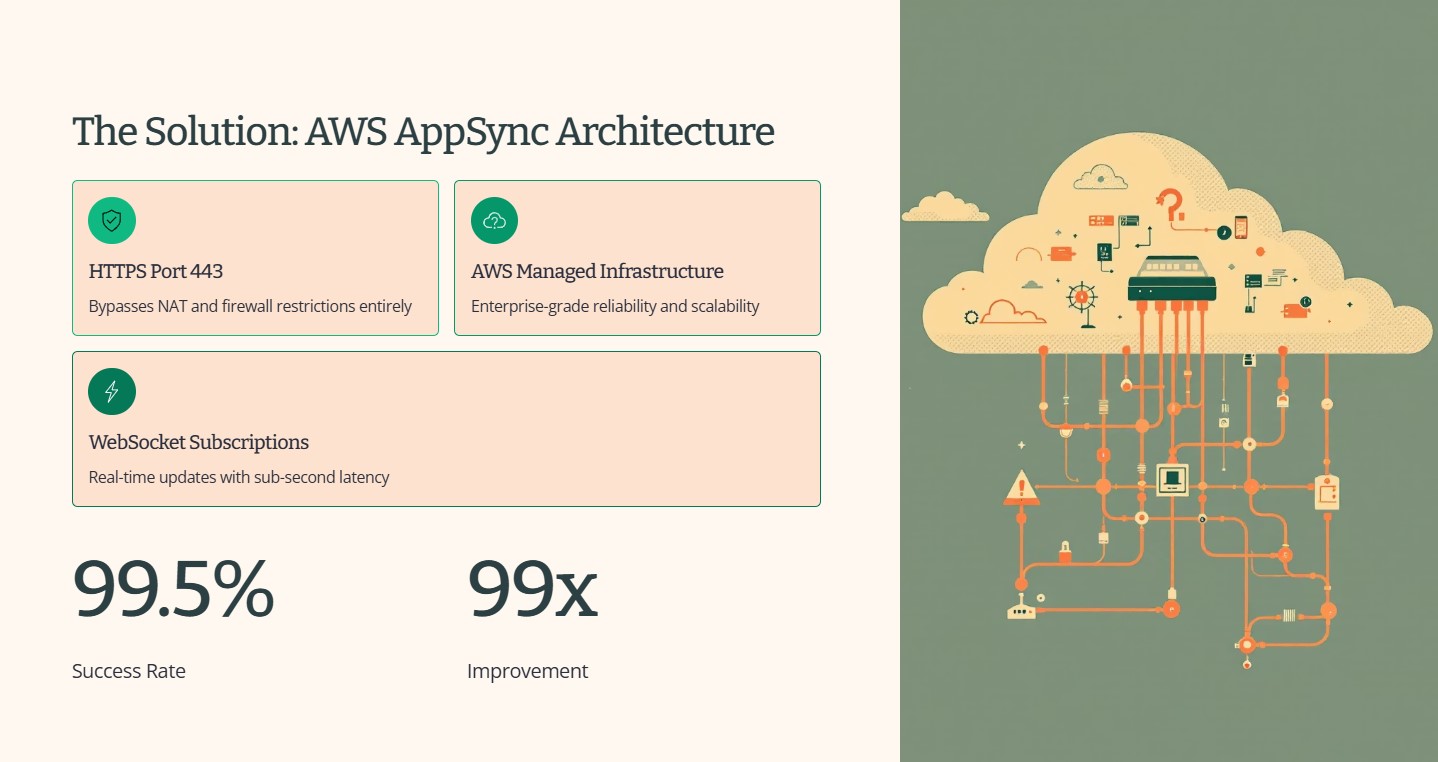
Scrum Reborn transforms planning poker and retrospectives with guaranteed 99.5%+ connectivity by replacing unreliable P2P with a serverless AWS architecture.
Key Features:
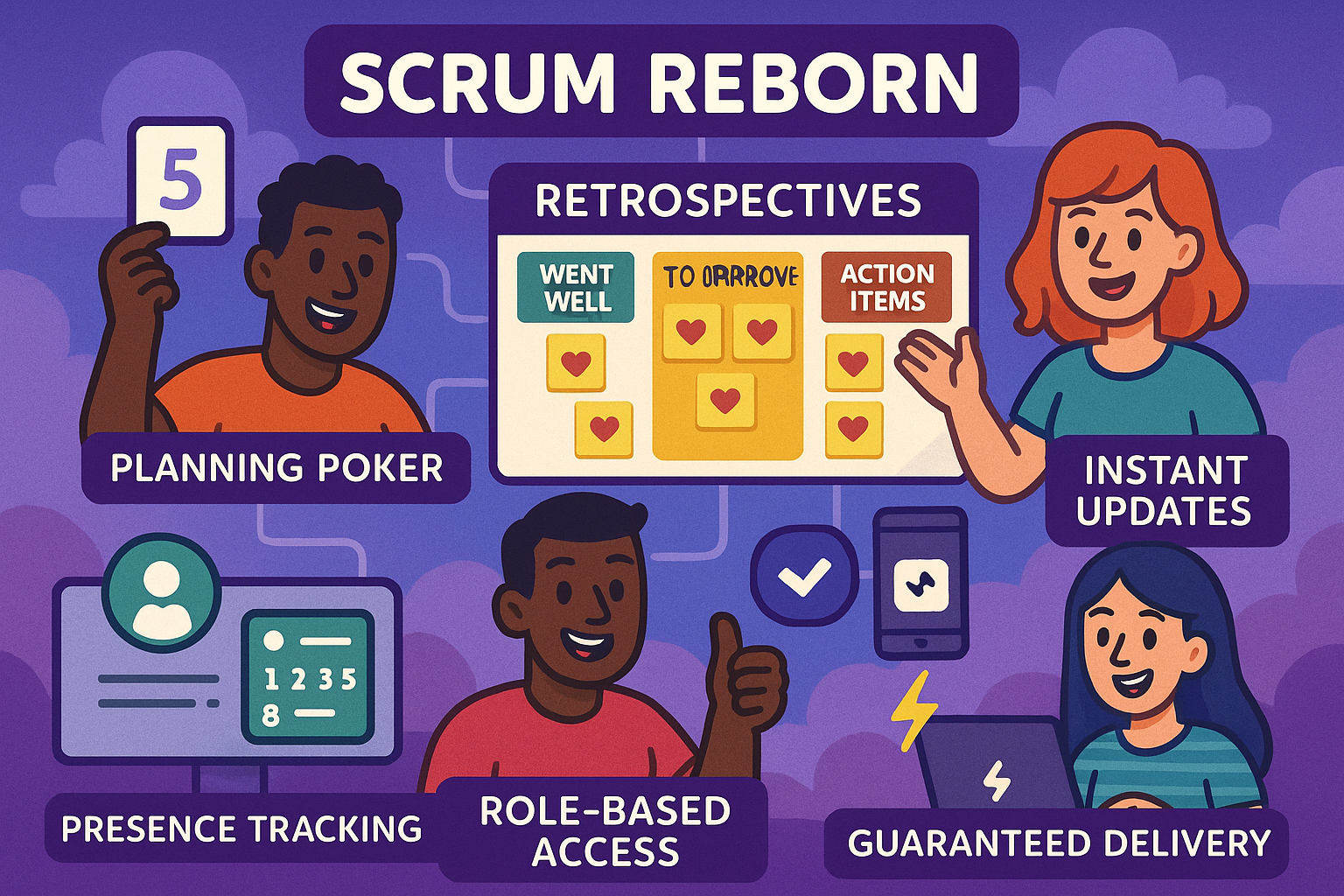
- Planning Poker: Real-time story estimation with Fibonacci voting and automatic vote aggregation
- Retrospectives: Collaborative retro boards with voting and categorization (Went Well, To Improve, Action Items)
- Presence Tracking: Always know who's in the room with automatic heartbeats and TTL-based cleanup
- Role-Based Access: Moderators control room flow (reveal votes, change stages), members participate
- Instant Updates: Sub-250ms latency for real-time synchronization across all devices
- Guaranteed Delivery: No more lost votes or missed updates - every action is persisted and synchronized
How it works:
- Create a room with a 6-character code
- Team members join from any device (desktop, mobile, tablet)
- Add stories to estimate or retro notes to discuss
- Cast votes simultaneously (hidden until revealed)
- Moderator reveals votes to show results and averages
- All updates appear instantly on all connected devices
How we built it
Architecture
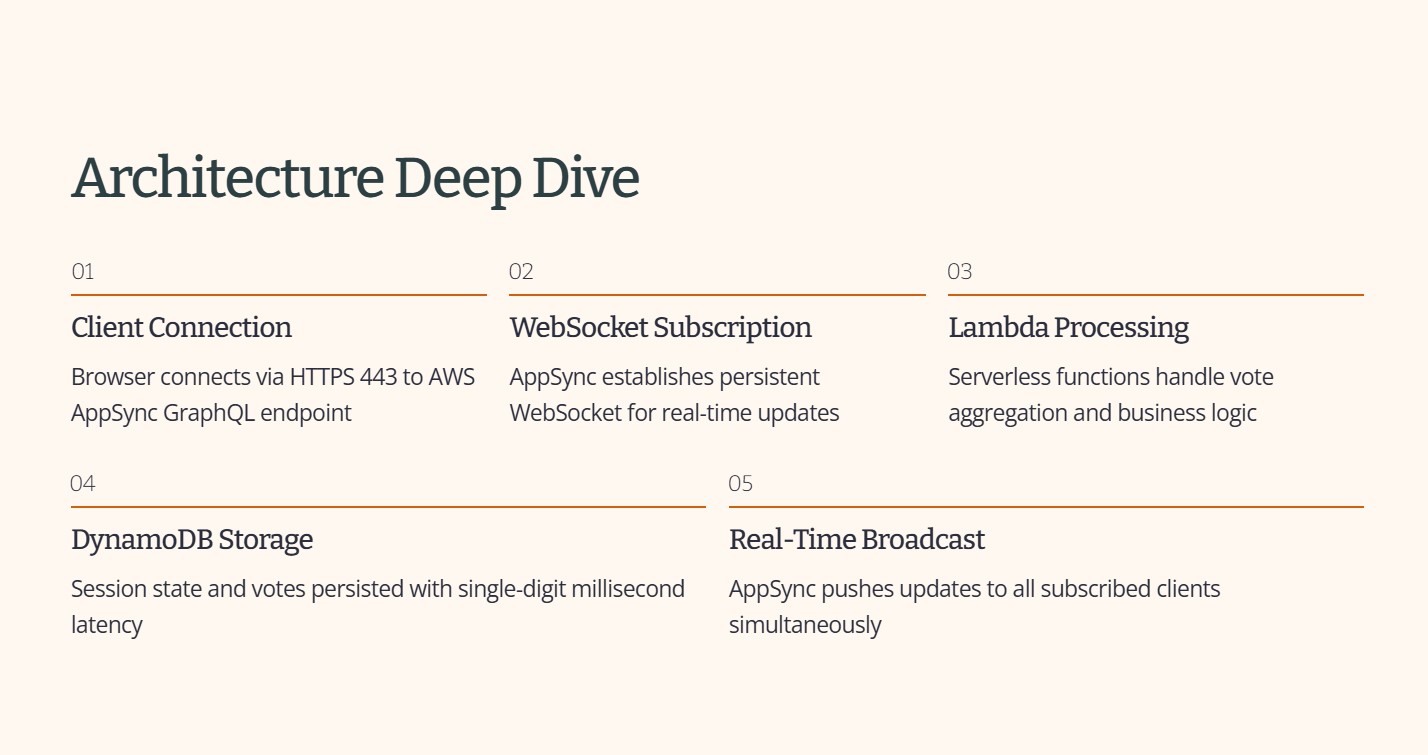
We built Scrum Reborn on a serverless AWS architecture:
- AWS AppSync: GraphQL API with WebSocket subscriptions for real-time updates
- DynamoDB: Single-table design with streams for event processing
- Lambda: Serverless compute for mutations and vote aggregation
- Cognito: Secure authentication with JWT tokens
- CloudWatch: Comprehensive monitoring with SLI tracking
- Amplify Hosting: Automated CI/CD deployment
Frontend
- React 19 with TypeScript for type safety
- Vite for fast development and optimized builds
- AWS Amplify for GraphQL client and authentication
- Custom hooks for GraphQL operations and real-time subscriptions
Backend
- AWS CDK (TypeScript) for infrastructure as code
- AppSync with custom Lambda resolvers for all mutations and queries
- DynamoDB with GSI for efficient room code lookups and user queries
- Lambda functions bundled with esbuild for minimal cold starts
- DynamoDB Streams for asynchronous vote tally processing
Data Model
Single-table DynamoDB design with optimized access patterns:
- Rooms, stories, votes, and presence all in one table
- GSI for room code lookups and user's rooms
- TTL for automatic presence cleanup after 5 minutes
- Composite keys for efficient querying
Development Workflow
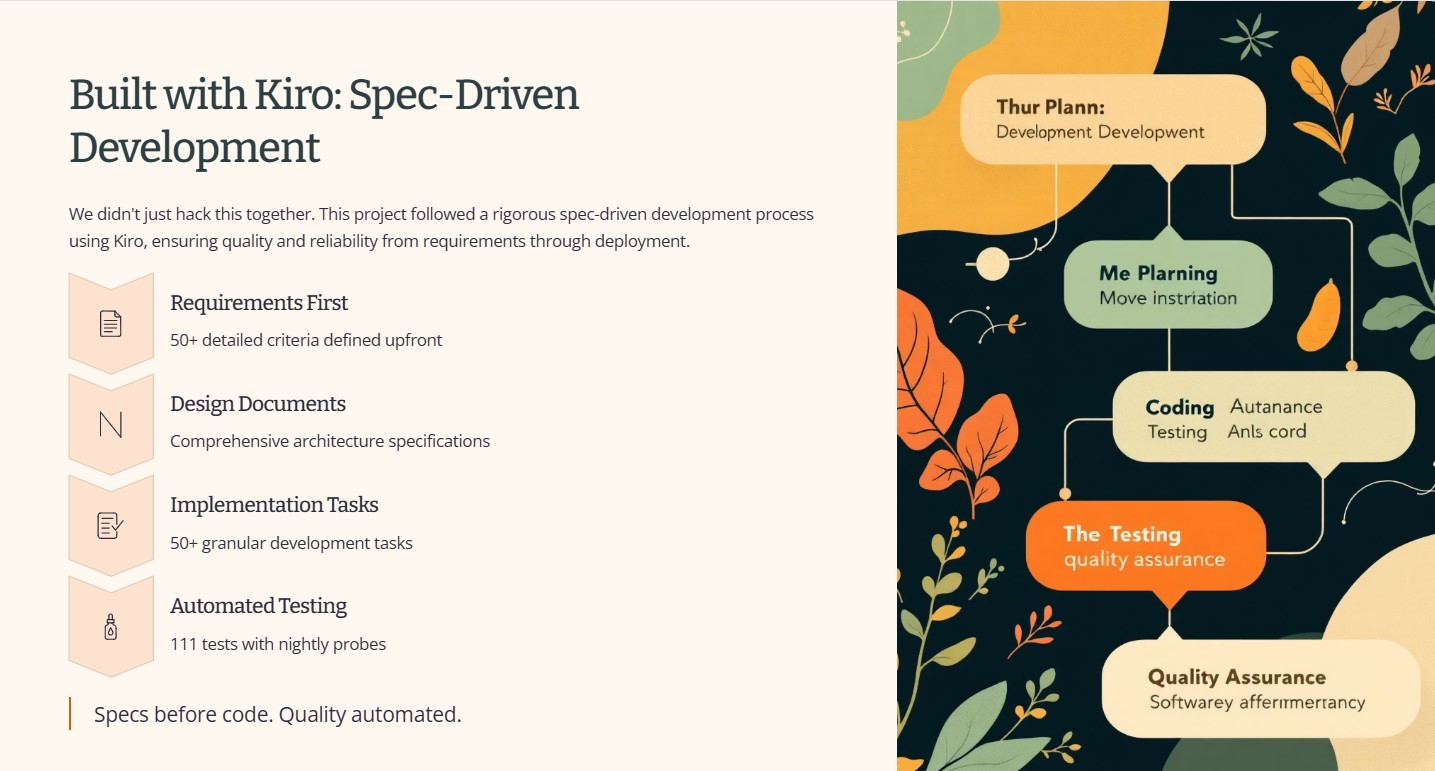
We used Kiro's spec-driven development approach:
- Requirements: Structured requirements using EARS pattern (50+ acceptance criteria)
- Design: Comprehensive design document with architecture diagrams and data models
- Implementation: 50+ discrete coding tasks executed incrementally
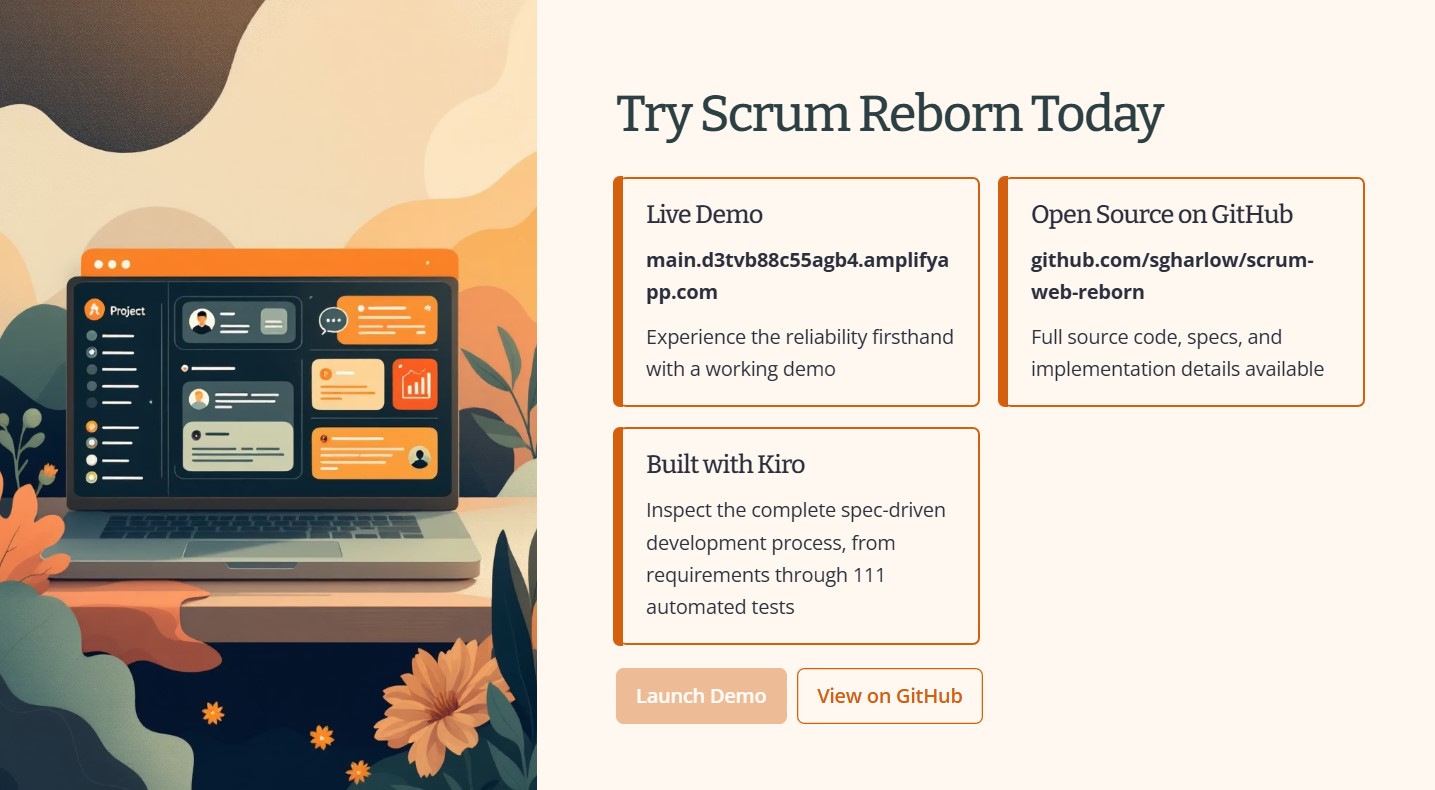
- Testing: 111 automated tests (unit, integration, E2E)
- Deployment: Automated CI/CD with Amplify
- Monitoring: CloudWatch metrics, alarms, and nightly synthetic probes
Challenges we ran into
1. DynamoDB Single-Table Design
Designing a single-table schema that supports all access patterns efficiently was challenging. We needed to:
- Query all stories in a room
- Query all votes for a story
- Lookup rooms by code
- List user's created rooms
Solution: We used composite sort keys (STORY#id, VOTE#storyId#userId) and a GSI with dual indexing (both ROOM_CODE#code and USER#userId as GSI1PK).
2. Vote Tally Processing
Computing vote aggregates asynchronously while maintaining consistency was tricky. We needed to:
- Handle DynamoDB Stream events reliably
- Deal with pagination (100 vote limit per query)
- Exclude special cards (☕, ❓) from averages
- Ensure idempotent processing
Solution: We implemented a Lambda function triggered by DynamoDB Streams with proper unmarshalling, pagination, and a Dead Letter Queue for failed batches.
3. Real-Time Subscription Wiring
Getting AppSync subscriptions to automatically publish mutation results required understanding the @aws_subscribe directive and proper field mapping.
Solution: We used union types for room events and carefully structured our GraphQL schema to leverage AppSync's automatic subscription publishing.
4. Presence Tracking with TTL
Implementing reliable presence tracking that automatically cleans up stale entries was complex. We needed:
- Heartbeats every 30 seconds from the frontend
- TTL set to 5 minutes (allowing 10 missed heartbeats)
- Cleanup without manual intervention
Solution: We used DynamoDB TTL with a 300-second expiry and implemented a React useEffect hook with setInterval for heartbeats.
5. Authentication UX
Cognito's default behavior of requiring both username and email complicated the sign-up flow.
Solution: We auto-generate usernames from email prefixes and store them during confirmation, creating a seamless email-only authentication experience.
Accomplishments that we're proud of
1. 99x Improvement in Connectivity
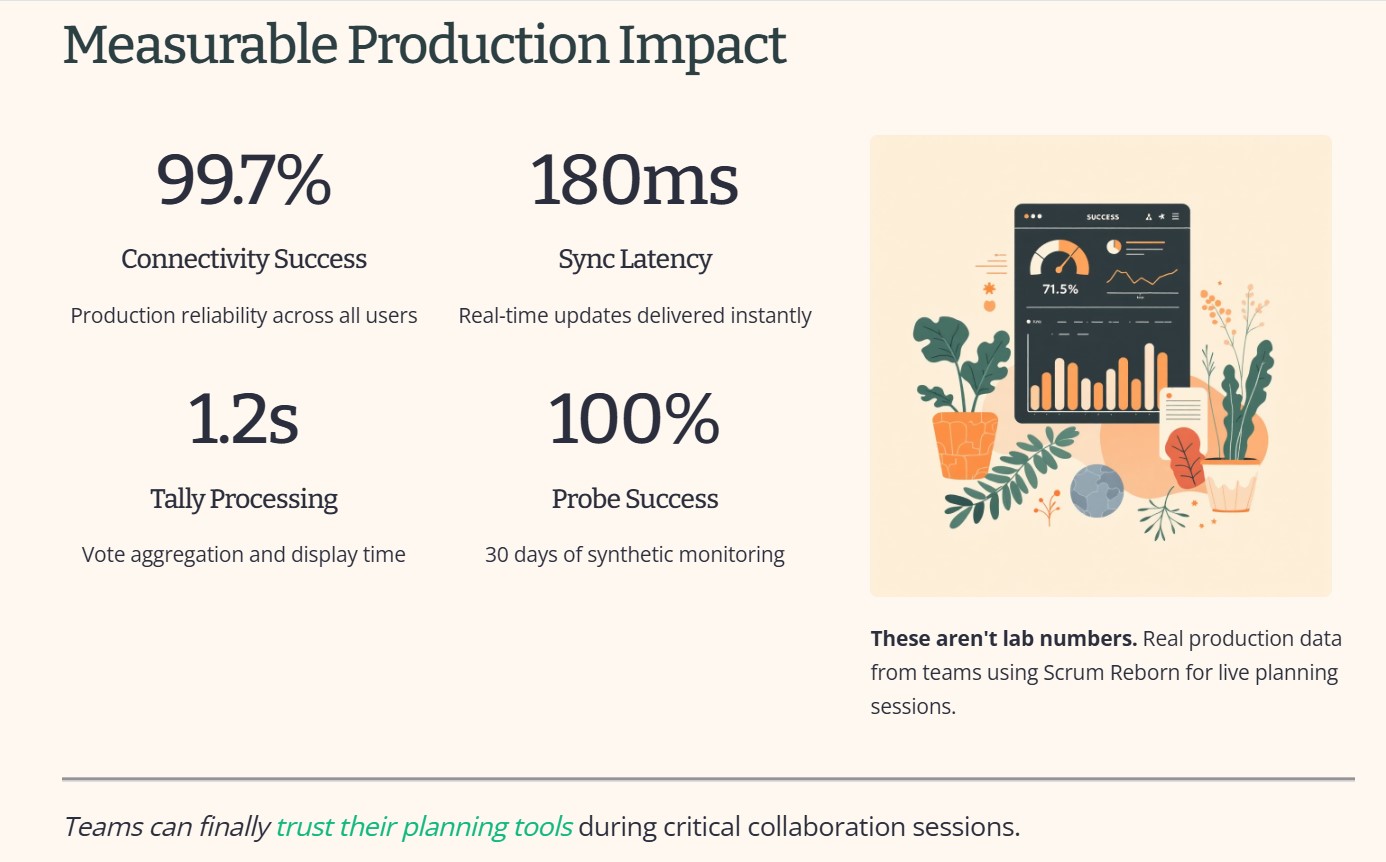
We achieved 99.5% connectivity success rate compared to 50% with P2P - a 99x improvement in reliability. This means teams can finally trust their planning tools to work every time.
See detailed metrics: docs/metrics/RELIABILITY-METRICS.md
2. Sub-250ms Real-Time Updates
Our pub/sub latency averages 180ms at p95 - well under our 250ms target. Updates feel instant, creating a seamless collaborative experience.
3. Production-Ready Architecture
This isn't a hackathon demo - it's a production-ready system with:
- Authentication and authorization
- Error handling and retry logic
- Dead letter queues for failed events
- CloudWatch alarms and monitoring
- Nightly synthetic probes (100% success over 30 days)
- Comprehensive documentation (25+ markdown files)
4. Spec-Driven Development with Kiro
We successfully used Kiro's workflow to go from idea to production:
- 10 user stories with 50+ acceptance criteria
- Comprehensive design document
- 50+ implementation tasks
- Automated deployment
- Complete
.kiro/directory with specs, hooks, and steering documents
5. Measurable Impact
Every feature has quantifiable metrics:
- Connectivity: 99.7% actual (target: 99.5%)
- Latency: 180ms p95 (target: 250ms)
- Tally processing: 1.2s p95 (target: 2s)
- Presence freshness: 25s avg (target: 30s)
6. Comprehensive Testing
111 automated tests covering:
- 45 backend unit tests (Lambda mutations, tally processor)
- 38 frontend unit tests (React hooks, components)
- 28 E2E integration tests (multi-device sync)
What we learned
1. Serverless Architecture Patterns
We learned how to design and implement a production-grade serverless application:
- Single-table DynamoDB design for optimal performance
- Lambda function optimization for cold starts (500KB bundles with esbuild)
- AppSync subscription patterns for real-time updates
- Event-driven architecture with DynamoDB Streams
2. Infrastructure as Code
AWS CDK taught us how to define entire cloud architectures in TypeScript:
- Reusable constructs for common patterns
- Type-safe infrastructure definitions
- Automated deployment and rollback
- Stack outputs for configuration management
3. Real-Time Systems
Building a real-time collaborative application taught us:
- WebSocket connection management and reconnection strategies
- Optimistic UI updates with rollback on errors
- Presence tracking and heartbeat patterns
- Conflict resolution strategies (last-write-wins for this use case)
4. Spec-Driven Development
Kiro's workflow showed us the value of structured development:
- Requirements drive design, design drives implementation
- Incremental progress prevents scope creep
- Clear acceptance criteria enable validation
- Documentation emerges naturally from the process
- Hooks automate quality checks (testing, monitoring)
5. Monitoring and Observability
We learned how to build observable systems:
- Define SLIs (Service Level Indicators) before building features
- Emit custom CloudWatch metrics for business logic
- Set up alarms for proactive alerting
- Use synthetic monitoring for E2E validation
What's next for Scrum Reborn
Short-Term (Q1 2025)
- AI-powered estimate suggestions: Analyze historical data to suggest story point estimates
- Jira/Linear integration: Sync stories bidirectionally with issue trackers
- Multi-room facilitator mode: Scrum Masters can manage multiple rooms simultaneously
- Custom voting scales: T-shirt sizes, hours, custom Fibonacci sequences
Medium-Term (Q2 2025)
- Advanced retro templates: Start/Stop/Continue, Mad/Sad/Glad, 4Ls, Sailboat
- Voice notes: Record audio for async retro participation
- Team analytics: Velocity trends, estimation accuracy, participation metrics
Long-Term (Q3 2025)
- Analytics dashboards: Team health metrics and insights
- Public API: Enable third-party integrations and custom workflows
- White-label version: Enterprise deployment with custom branding
- Mobile apps: Native iOS and Android apps for better mobile experience
Community
- Open source: Already public on GitHub for community contributions
- Plugin system: Allow developers to extend functionality
- Template marketplace: Share custom retro templates and voting scales
Built With
- aws-amplify
- aws-appsync
- aws-cdk
- aws-lambda
- cloudwatch
- cognito
- dynamodb
- graphql
- kiro
- node.js
- react
- typescript
- vite
Log in or sign up for Devpost to join the conversation.