Inspiration
As a team, we came together to discuss a key challenge that affects our day-to-day lives — whether at work, uni, or home. One of our teammates, who works in an operating theatre, highlighted a significant pain point around how items are prepared in that setting. This sparked the idea to start validating and prototyping a solution to tackle the issue. As we continued exploring and testing, we realised the tool had broader potential spanning procurement, sterilisation, and preparation — which ultimately shaped the solution we developed.
What it does
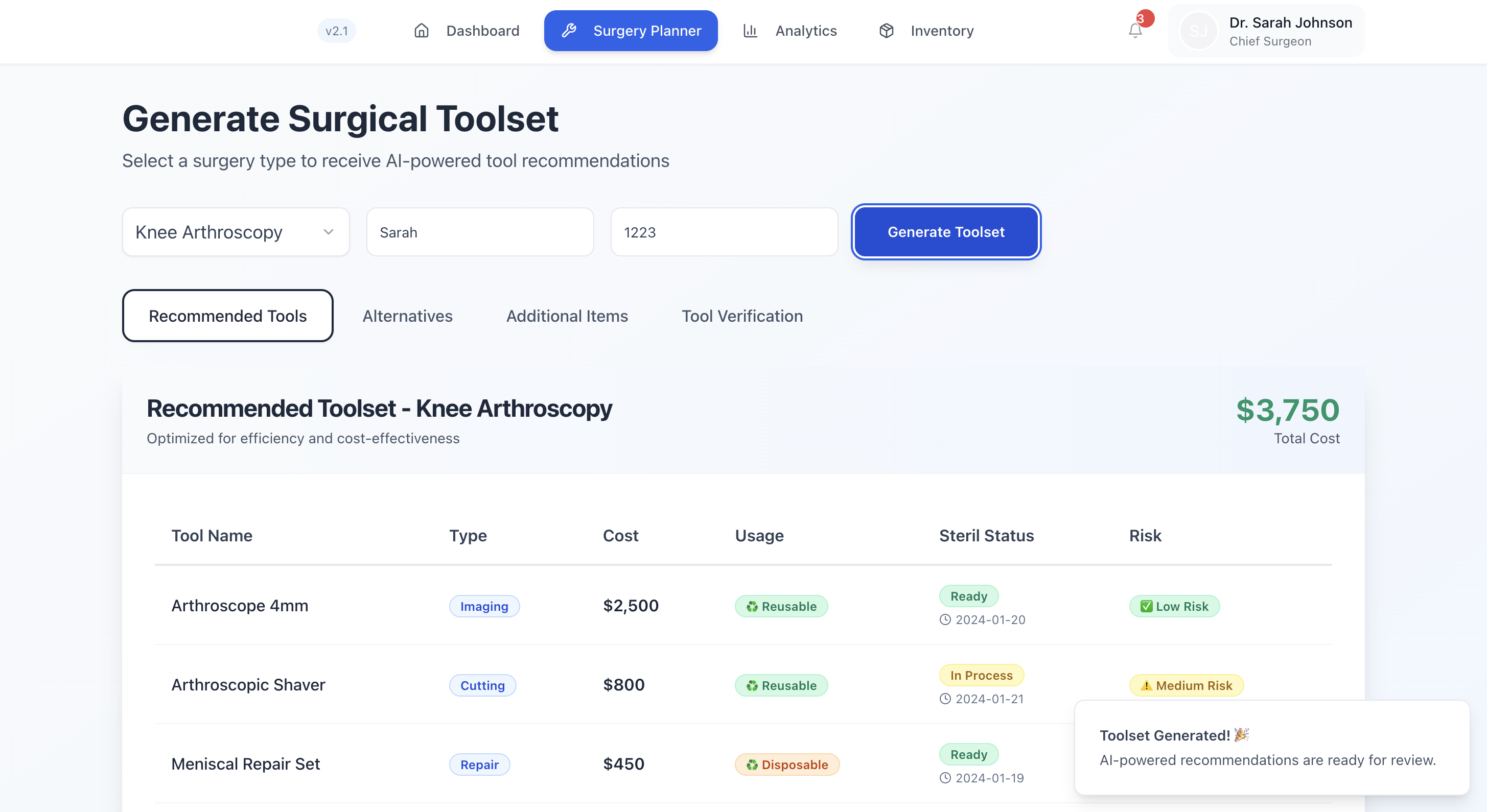
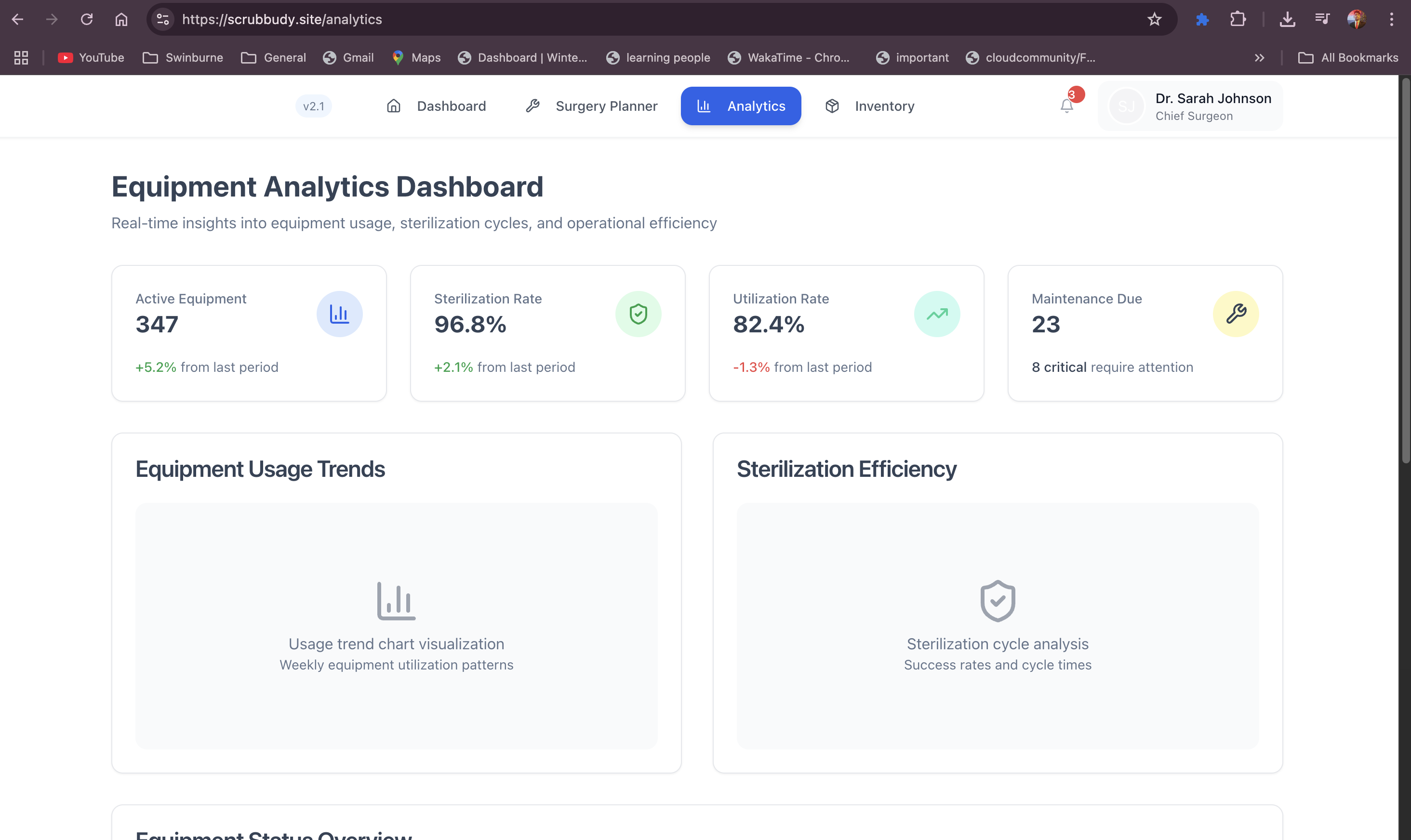
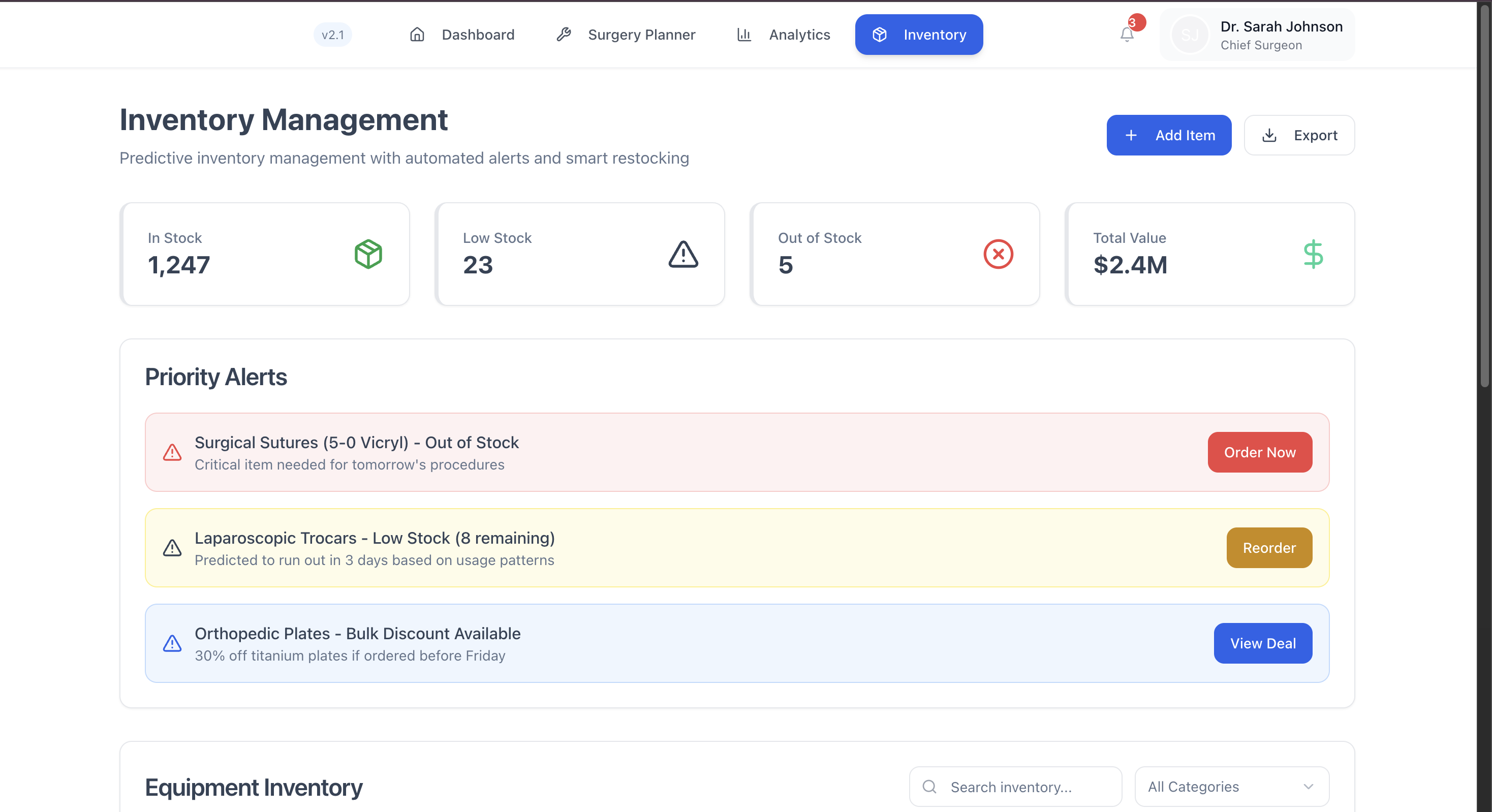
ScrubBuddy is an AI-powered surgical management platform designed to streamline perioperative workflows. It verifies surgical tools using computer vision, recommends the most appropriate equipment based on the procedure using GPT-4, and tracks usage and sterilisation cycles to predict maintenance needs. The platform provides real-time analytics and inventory insights to reduce delays, minimise human error, and improve patient outcomes.
How we built it
We kicked things off by building a frontend prototype so that the clinician team member could provide input on key design elements. This overlapped with our validation phase, during which we spoke with senior staff to better understand concerns across procurement, sterilisation, and equipment preparation as well as broad design features that they require. From there, we moved into development, building the frontend and backend using TypeScript, Tailwind, Vite, Node.js, JavaScript, React, and GPT. While part of the team focused on development, others worked on creating digital assets, refining the pitch deck, and conducting further research. To stay aligned, we held short, regular check-ins to update one another and work through any challenges that cropped up.
Challenges we ran into
One of the biggest hurdles we faced was the steep learning curve across the three-day sprint. With such a diverse mix of professional backgrounds, it took effort and open communication to bridge the gap between healthcare and tech knowledge. That said, we all approached the experience with a shared mindset — to learn from one another. This created a genuinely collaborative space where everyone supported and elevated each other.
Accomplishments that we're proud of
- Building a working prototype from scratch in just three days
- Designing a user-friendly UI with input from an actual clinician
- Receiving positive validation from hospital staff during testing
- Collaborating effectively across clinical, technical, and design disciplines
What we learned
Our main goal coming into the Founders Hack was to learn more about ideation, validation, and early-stage development. Each team member came from a different background, and we were all keen to understand one another’s roles, the technical knowledge each person brought, and how we could combine our strengths to solve a meaningful problem. Through this process, we deepened our understanding of perioperative care, backend development, and collaborative ideation.
What's next for ScrubBudy
Our next step is to pilot ScrubBuddy in hospitals across NSW to validate it in real clinical settings. We plan to expand support for more surgery types and specialty tools, and add barcode scanning and voice control for use during operations. We're also working on optimizing computer vision for faster, on-device recognition and ensuring our system meets HIPAA/GDPR compliance. To grow, we’ll explore accelerators, partnerships, and funding opportunities.
Built With
- gpt
- javascript
- node.js
- react
- tailwind
- typescript
- vite

Log in or sign up for Devpost to join the conversation.