-
-
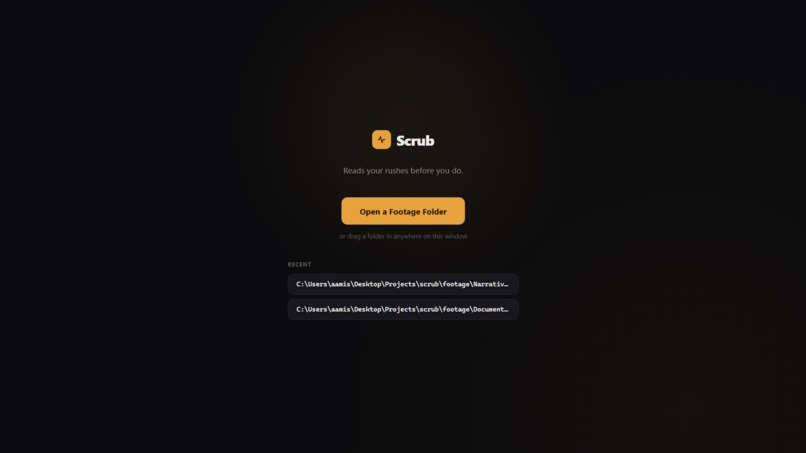
Landing
-
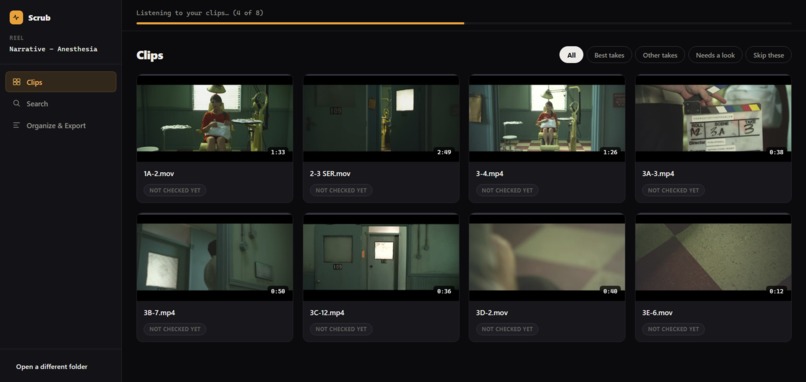
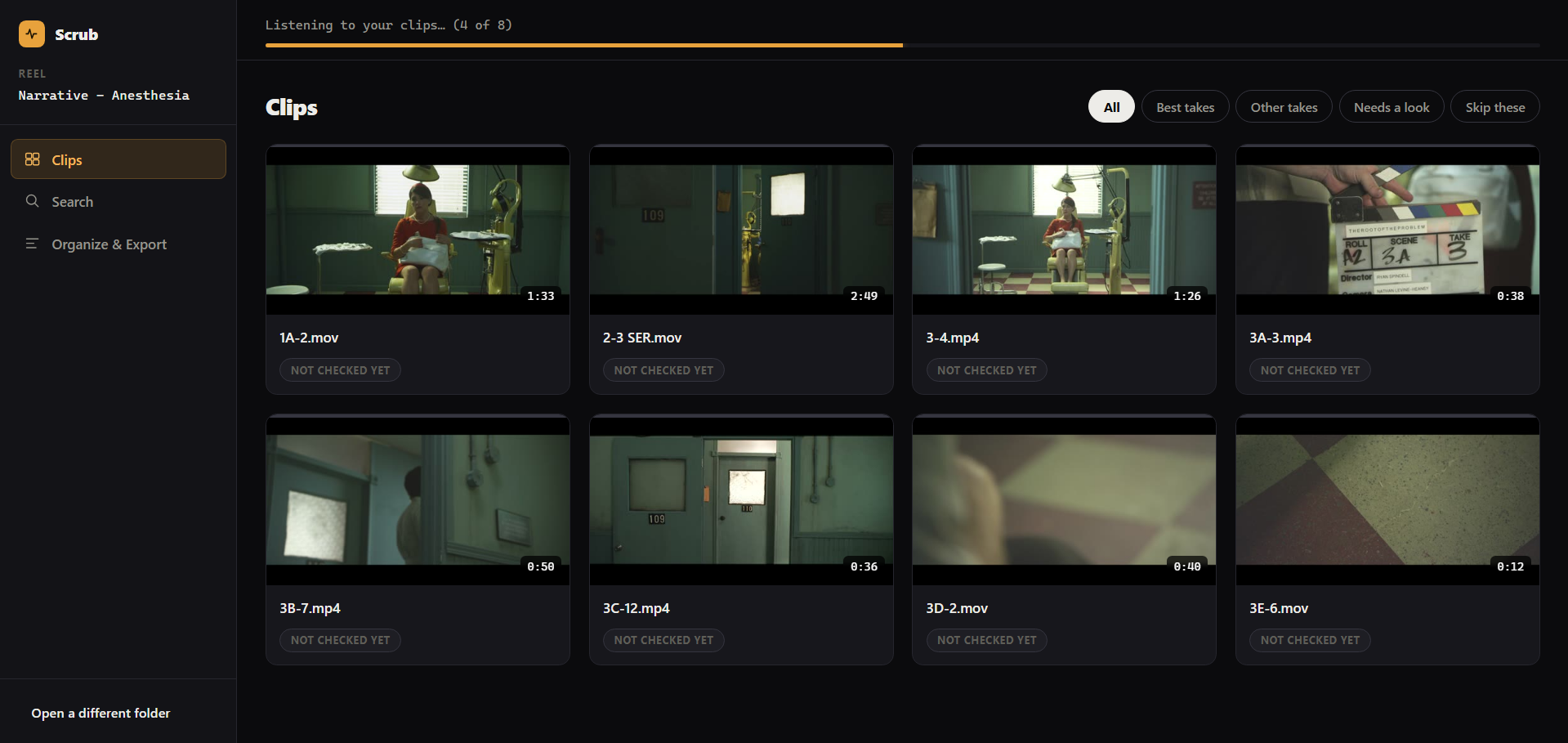
Clips
-
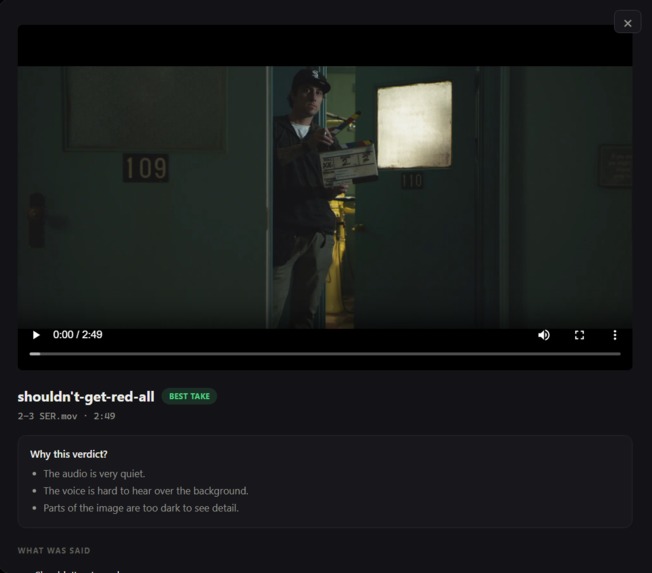
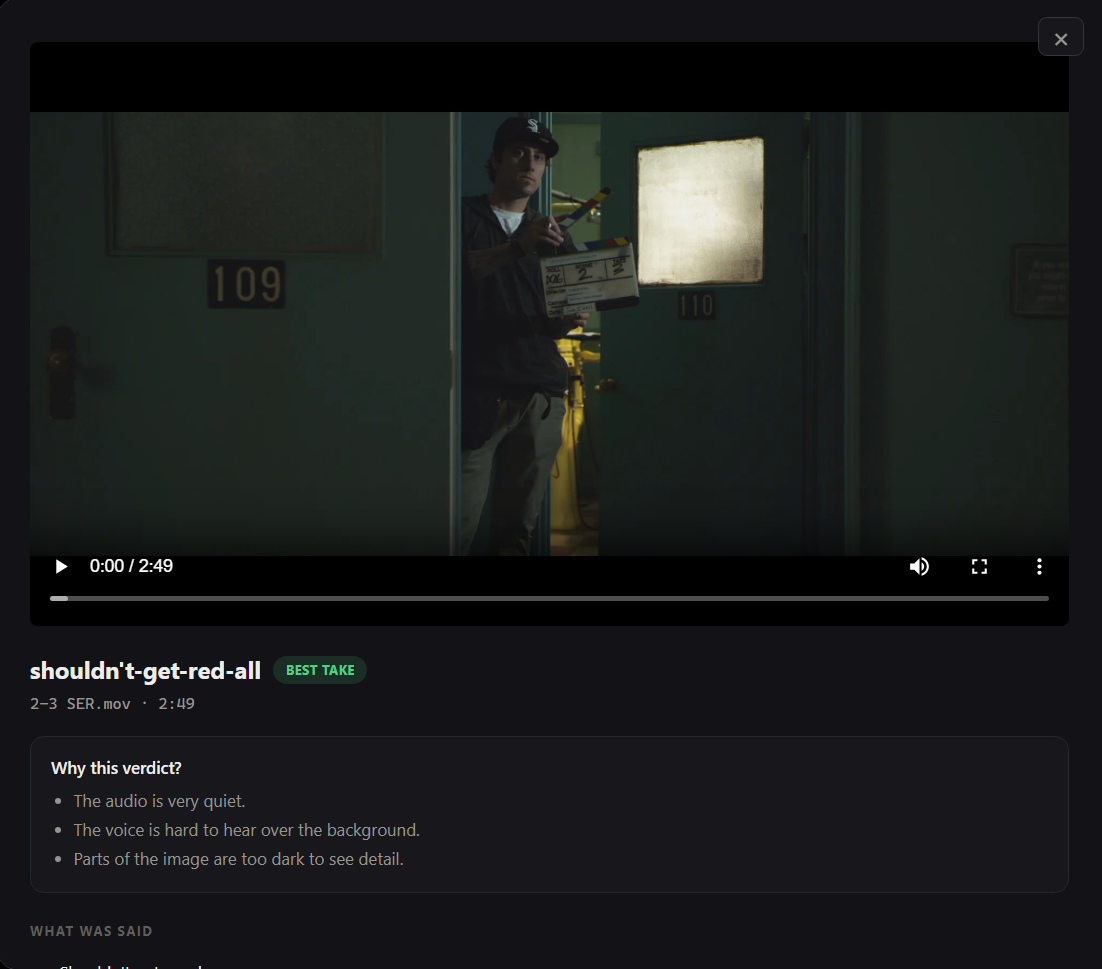
Individual clip
-
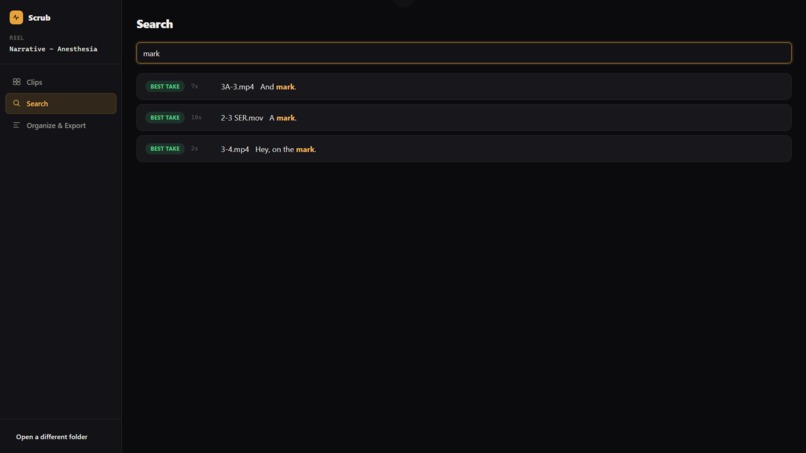
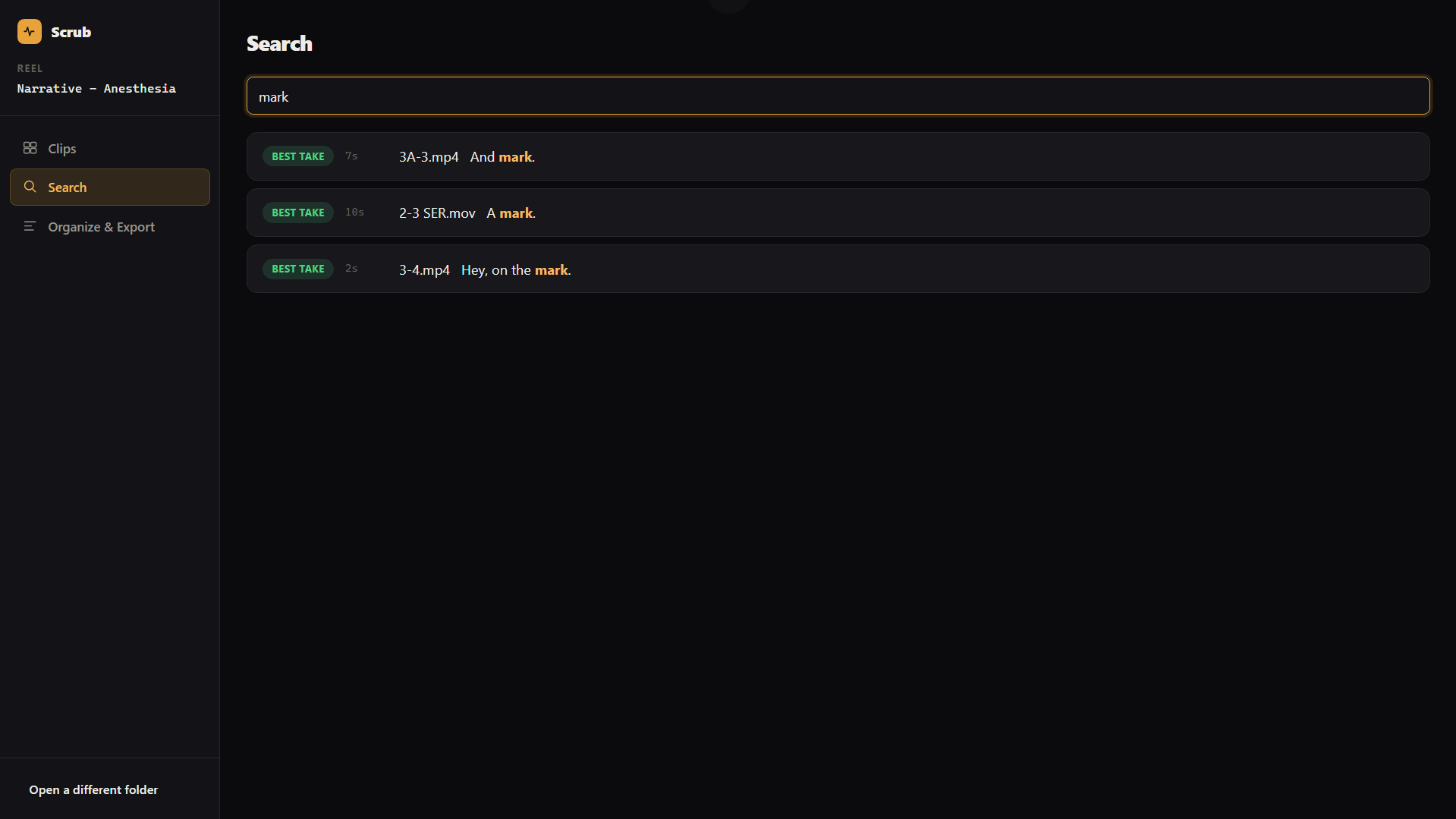
Search
-
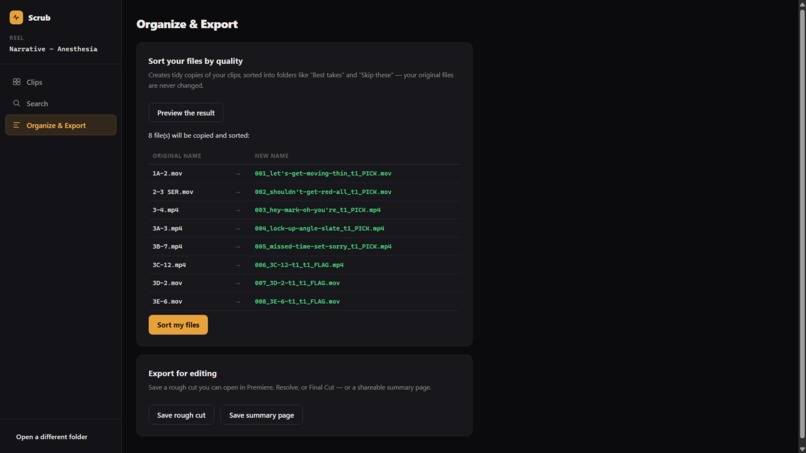
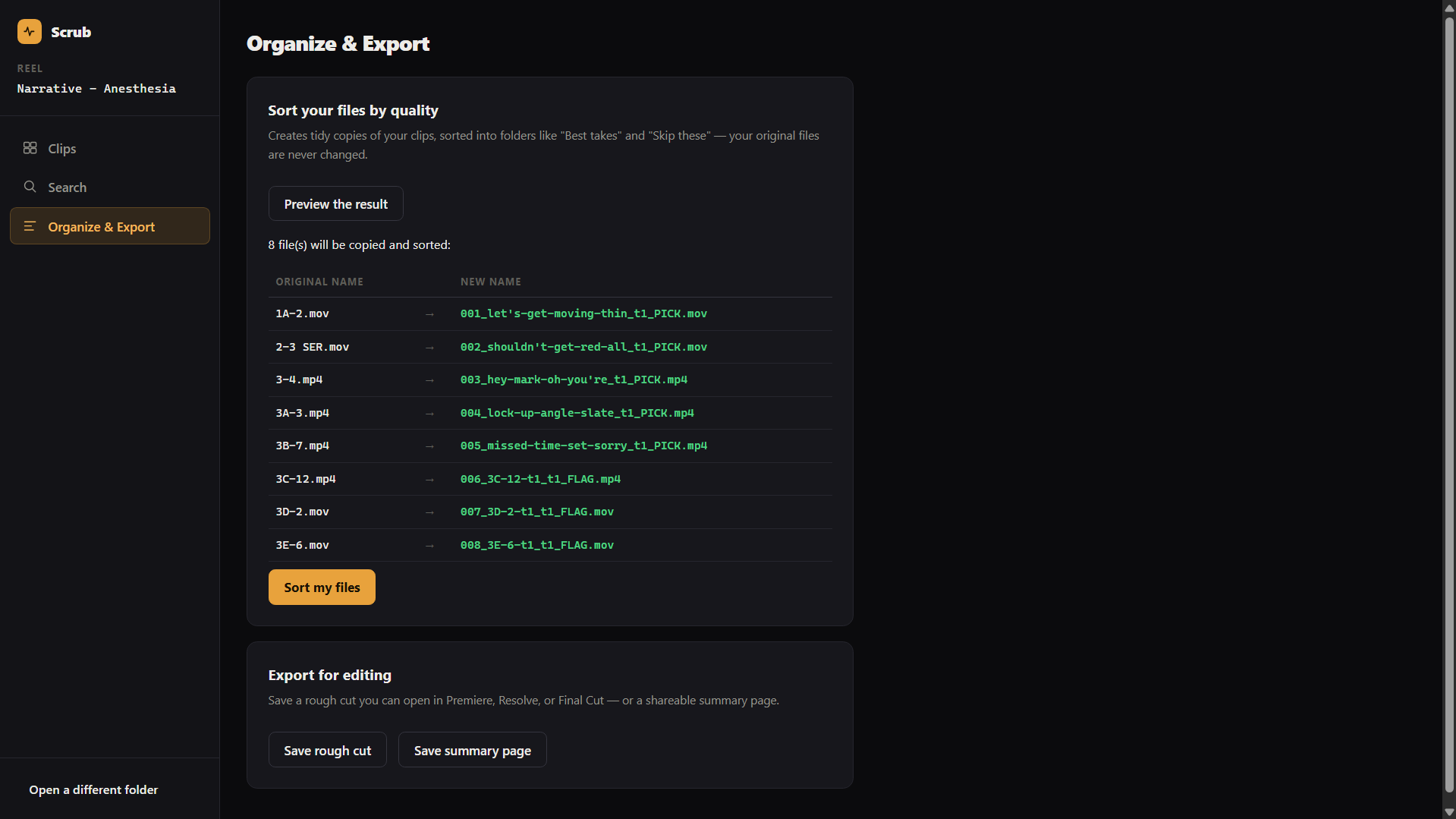
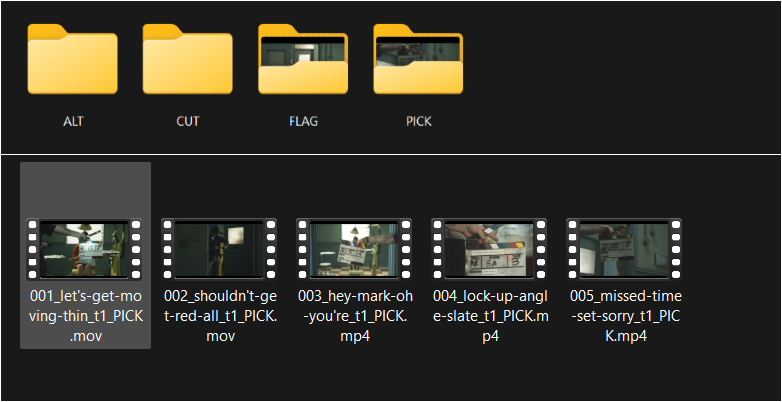
Organize & Export
-
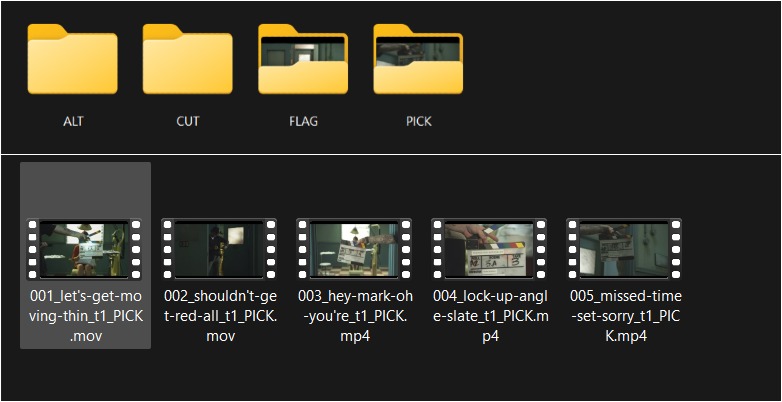
Results
Inspiration
Opening a new folder of video footage usually means spending hours scrubbing through clips to find the good takes, check audio, and write down notes. I wanted to build a tool that automates this tedious first step so editors can start actually editing right away.
What it does
Scrub acts as your automatic assistant editor. You point it at a folder of raw footage, and it automatically watches and listens to every clip. It checks for focus, exposure, and audio clipping, groups similar takes together, and creates a searchable transcript. It then grades the clips and tells you exactly why they were flagged, all happening 100% locally on your machine.
How I built it
I built Scrub using Python for the backend and Flask for the local web interface. For video and audio analysis, I used OpenCV, NumPy, and SciPy to measure technical metrics like exposure and audio levels. For transcribing the dialogue and making the footage searchable, I integrated faster-whisper for fast, offline speech-to-text processing.
Challenges I ran into
- Processing large video and audio files locally without making the user wait forever.
- Finding the right mathematical thresholds to accurately decide if a clip is "good" or "bad" based on focus and exposure.
- Figuring out how to automatically cluster different takes of the exact same shot together.
- Making the installation completely seamless so users just have to double-click a script to get started.
Accomplishments that I'm proud of
- Building a tool that runs entirely offline, ensuring complete privacy for creators and their unreleased footage.
- The take grouping feature, which puts multiple attempts at the same line side-by-side with the best one already picked.
- Creating a transparent grading system- Scrub isn't a black box; it tells you the exact numbers behind why a clip was flagged.
What I've learned
I learned a lot about audio and video signal processing, specifically how to programmatically detect things like audio clipping, silence, and camera focus. I also learned how to package local AI models (like Whisper) to run efficiently on a user's machine without a complicated setup.
What's next for Scrub
- Adding support for a wider variety of professional camera formats and codecs.
- Improving the take clustering accuracy using more advanced visual and audio similarity checks.
- Building direct plugin integrations for editing software like Premiere Pro and DaVinci Resolve so users don't even have to leave their editor to use Scrub.

Log in or sign up for Devpost to join the conversation.