ScrollBreak
Inspiration
ScrollBreak came from something very personal.
I realized that I was spending way too much time on my phone, especially on apps where I would start with “just a few minutes” and then suddenly lose a huge part of my day scrolling without even noticing. It started feeling like my attention, energy, and motivation were being drained little by little. What inspired me to build this project was that struggle — the feeling of wanting to do better, wanting to be more present, and wanting to take back control of my time.
Instead of just complaining about the problem, I wanted to build something that could actually help. I wanted to create an app that could act like a small interruption to unhealthy habits and remind people that their time matters. I know I’m not the only person dealing with this, so I wanted ScrollBreak to feel personal, practical, and meaningful.
What it does
ScrollBreak is a mobile app designed to help users become more aware of excessive phone use and endless scrolling habits.
The app focuses on encouraging healthier digital behavior by helping users:
- track how long they have been using their phone
- become more aware of long scrolling sessions
- receive reminders to pause and take a break
- build better habits around screen time and attention
The goal is not to shame users for using their phones, but to gently guide them toward balance, self-awareness, and more intentional use of technology.
How I built it
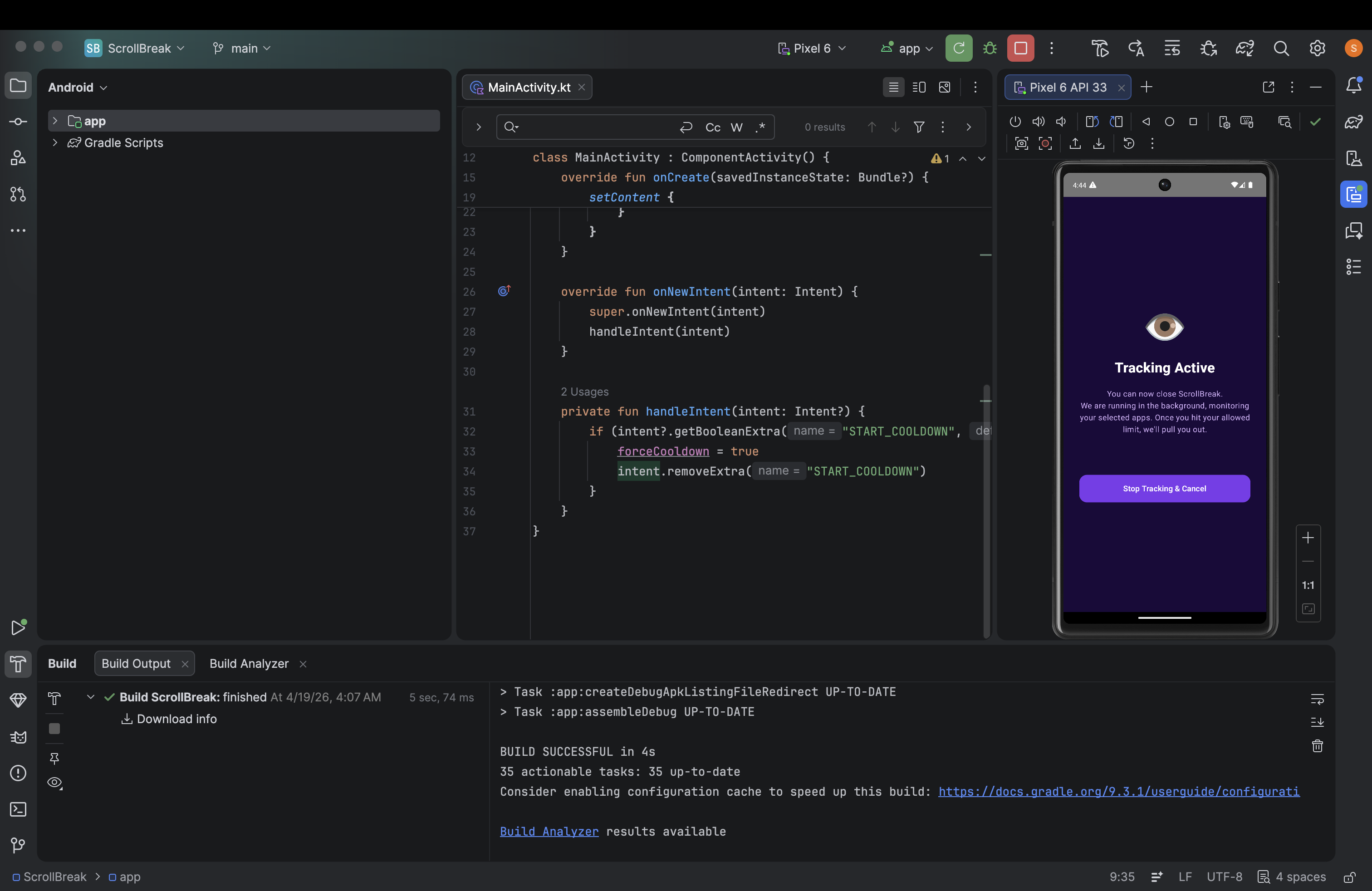
I built ScrollBreak as an Android app using Android Studio for development. During the process, I also used Antigravity as part of the workflow while building and shaping the app experience.
The project involved designing the app structure, creating the user interface, and connecting the logic needed to make the experience feel simple and useful. I wanted the app to feel clean, direct, and supportive rather than overwhelming. The focus was on building something that a real person could actually use when they are trying to improve their relationship with their phone.
This project was not just about coding features. It was also about turning a real-life problem into a working product idea. Every decision came back to one question: how can this app help someone pause, reflect, and regain control of their time?
Challenges I ran into
One of the biggest challenges was turning a very human problem into a technical solution.
It is easy to say “people spend too much time on their phones,” but it is much harder to design an app that responds to that problem in a way that feels helpful instead of annoying. I had to think carefully about how to make the app motivating without making it feel judgmental.
Another challenge was the development process itself. Building inside Android Studio, organizing the app structure, and making everything work together took patience and problem-solving. There were moments where things did not work the way I expected, and I had to keep adjusting, testing, and learning as I went.
A big part of the challenge was also personal: building something inspired by a struggle I deal with myself. That made the project more emotional, but it also made it more real.
Accomplishments that I'm proud of
I’m proud that I took a personal issue and turned it into something creative and useful.
Instead of staying stuck in frustration about wasting time on my phone, I built a project around it. That means a lot to me. I’m also proud that I kept going through the learning process and used tools like Android Studio and Antigravity to bring the idea to life.
Most of all, I’m proud that ScrollBreak is connected to a real purpose. It is not just an app idea — it is something that came from self-awareness, discipline, and the desire to improve everyday life.
What I learned
I learned that some of the best projects come from real problems.
This hackathon reminded me that meaningful software does not have to start with a huge company idea. Sometimes it starts with a simple question from your own life: what is something I genuinely wish existed for me right now?
I also learned more about Android app development, working inside Android Studio, and pushing through the trial-and-error process of building. On a deeper level, I learned that technology can be used not only to entertain or distract people, but also to help them become more mindful and intentional.
What's next for ScrollBreak
The next step for ScrollBreak is making it smarter, more personalized, and more supportive.
In the future, I would like to add:
- more detailed screen-time insights
- personalized break recommendations
- stronger habit tracking features
- progress dashboards and streaks
- a more polished and engaging user experience
I want ScrollBreak to grow into something that genuinely helps people build a healthier relationship with their devices.
Final reflection
ScrollBreak is more than a project to me. It represents the decision to fight back against distraction and to build something meaningful out of a real challenge.
A lot of people are struggling silently with attention, time, and digital overload. If this app can help even one person pause, breathe, and reclaim part of their day, then it is worth building.
Sometimes the best ideas come from the battles we are trying to win in our own lives.
Built With
- and-the-user-interface-was-developed-using-**jetpack-compose**
- declarative-way-to-design-the-app-entirely-within-the-kotlin-ecosystem.-for-the-build-system
- i-used-**gradle-with-kotlin-dsl**-through-the-`build.gradle.kts`-files
- jetpack
- kotlin
- modern
- where-it-was-needed-to-configure-the-background-tracking-permissions-for-the-app.-this-stack-helped-me-keep-the-project-clean
- which-gave-me-a-modern
- which-kept-the-project-setup-consistent-with-the-rest-of-the-stack.-the-only-place-i-used-**xml**-was-in-the-`androidmanifest.xml`
- xml


Log in or sign up for Devpost to join the conversation.