Inspiration
Moving to a new city is one of the most disorienting things a person can do. Not because it's bad, but because your nervous system hasn't caught up yet. That gap between how your body expected a place to feel and how it actually does — is what we wanted to measure. The smell of a new subway line, the scale of unfamiliar streets, the ambient noise of a neighborhood you haven't learned yet. These are real physiological signals, and journaling alone can't capture them. We wanted to build something that could. Scrivo started with a simple question: What if your emotional experience of a city became data, and that data became something you could feel?
What it does
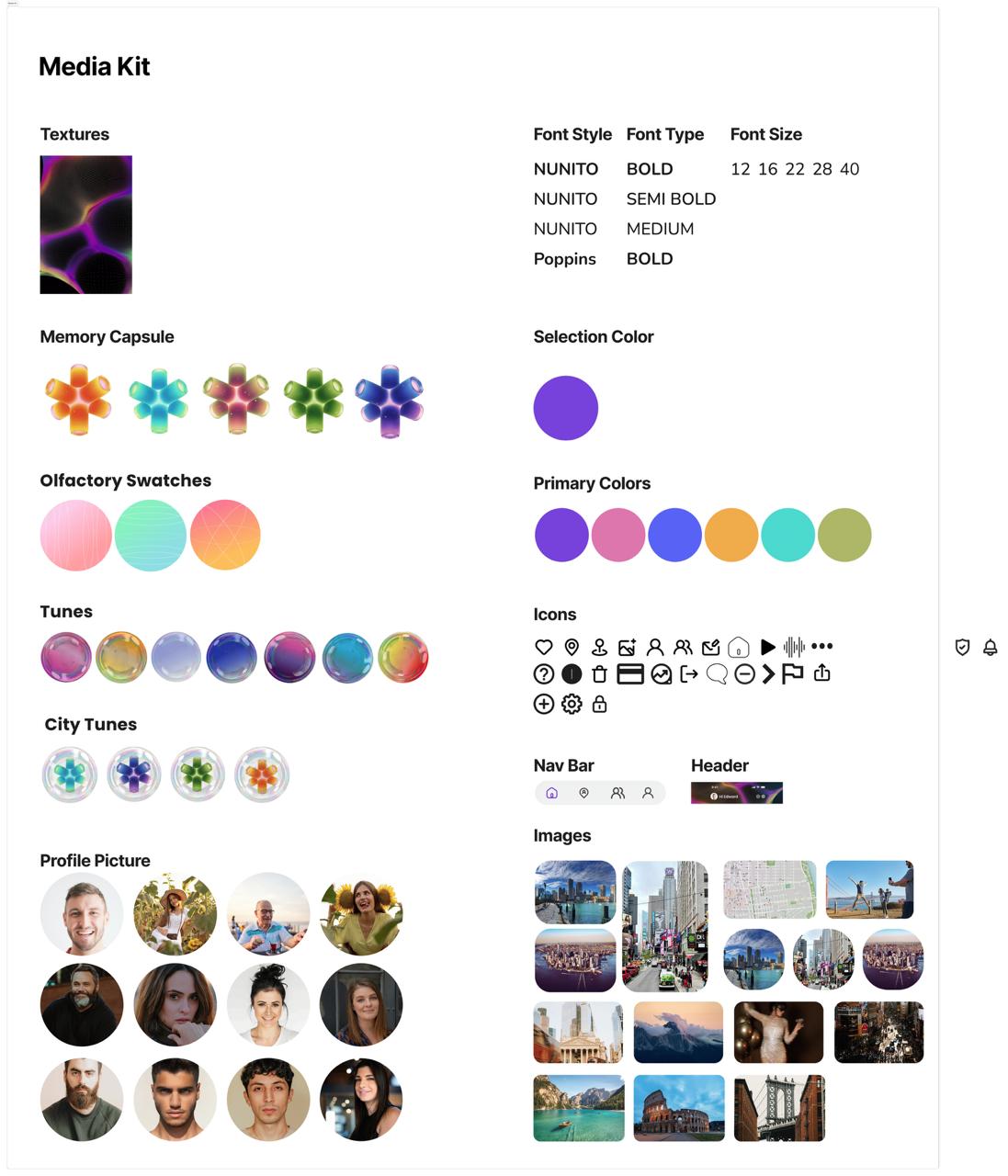
Scrivo is a digital emotion journal that tracks how you feel as you move through a new city, day by day, block by block. It registers emotional check-ins, tags them to time and location, and builds a living visual map of your urban emotional landscape.
But the part we're most proud of: AI-generated soundscapes, tuned specifically to your data.
How we built it
We started with the emotional data layer, a lightweight check-in interface that prompts users 2–3 times a day to record how they are feeling. These quick check-ins capture the user’s emotional state and experience of their environment.
Each check-in is timestamped and geotagged, then aggregated into a daily emotional profile.
For the AI tune generation, we mapped emotional vectors to musical parameters - tempo, key, instrumentation density, harmonic tension - using a rule-based system layered with a generative model fine-tuned on ambient music corpora. The output is a 60–90 second soundscape that evolves with your data over the course of days.
The social layer pulls anonymized emotional maps from all users and renders them as an interactive city grid - you can tap any city and listen to the AI tune that emerged from it.
What we Learned
We learned that emotion is messier than any model wants it to be. Early on, we tried to force clean categories - happy, sad, anxious, calm - and the data felt lifeless. Real urban emotion is ambivalent. You can feel expansive and overwhelmed at the same time, standing in Times Square.
We think people would engage more consistently when there's an artifact at the end - the tune, the visual - something that makes the act of logging feel worth it. And our instinct is that the social layer could be the most emotionally resonant part: not just seeing your own data, but experiencing someone else's city through sound.
Challenges We Faced
The subjectivity problem. Emotion is self-reported. Two people in the same plaza can feel completely opposite things. We handled this by never claiming objectivity - Scrivo isn't a sensor, it's a mirror.
The music generation gap. Translating emotion into sound in a way that feels meaningful rather than random was challenging. We experimented with different approaches before finding a system that created soundscapes that felt emotionally resonant.
Keeping it lightweight enough to be a habit. The biggest risk for any tracking app is abandonment. We spent significant time reducing friction - defaulting to 3-tap check-ins, sending gentle location-aware nudges, and making the tune generation feel like a reward, not a task.
What's next for Scrivo
A few directions worth exploring: letting the AI tune evolve over weeks into a sonic autobiography. A collective soundscape per neighborhood, where everyone's data merges into one track. Memory replay, revisiting how a city felt a year ago. And eventually, making that emotional data useful beyond the app entirely.
Built With
- figjam
- figma
- figmadesign
- figmamake
- figmaprototype
- figmaslides
- unsplash
- vizcom


Log in or sign up for Devpost to join the conversation.