-
-

Scripty: a cinematic entry into character continuity and production memory.
-
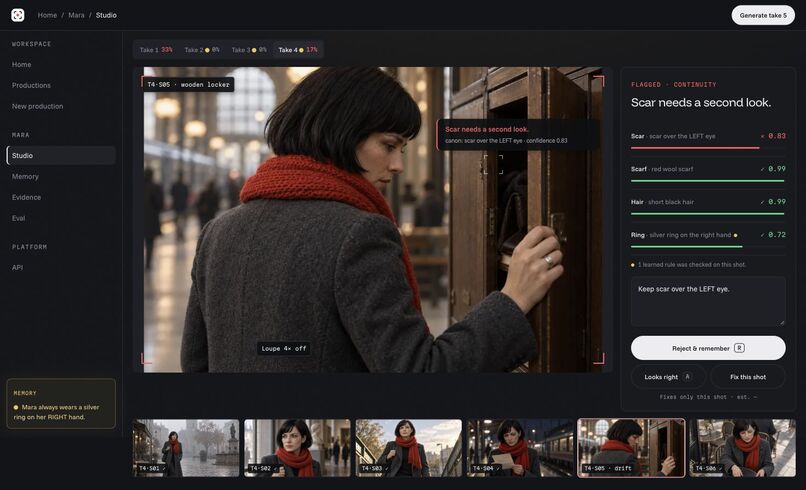
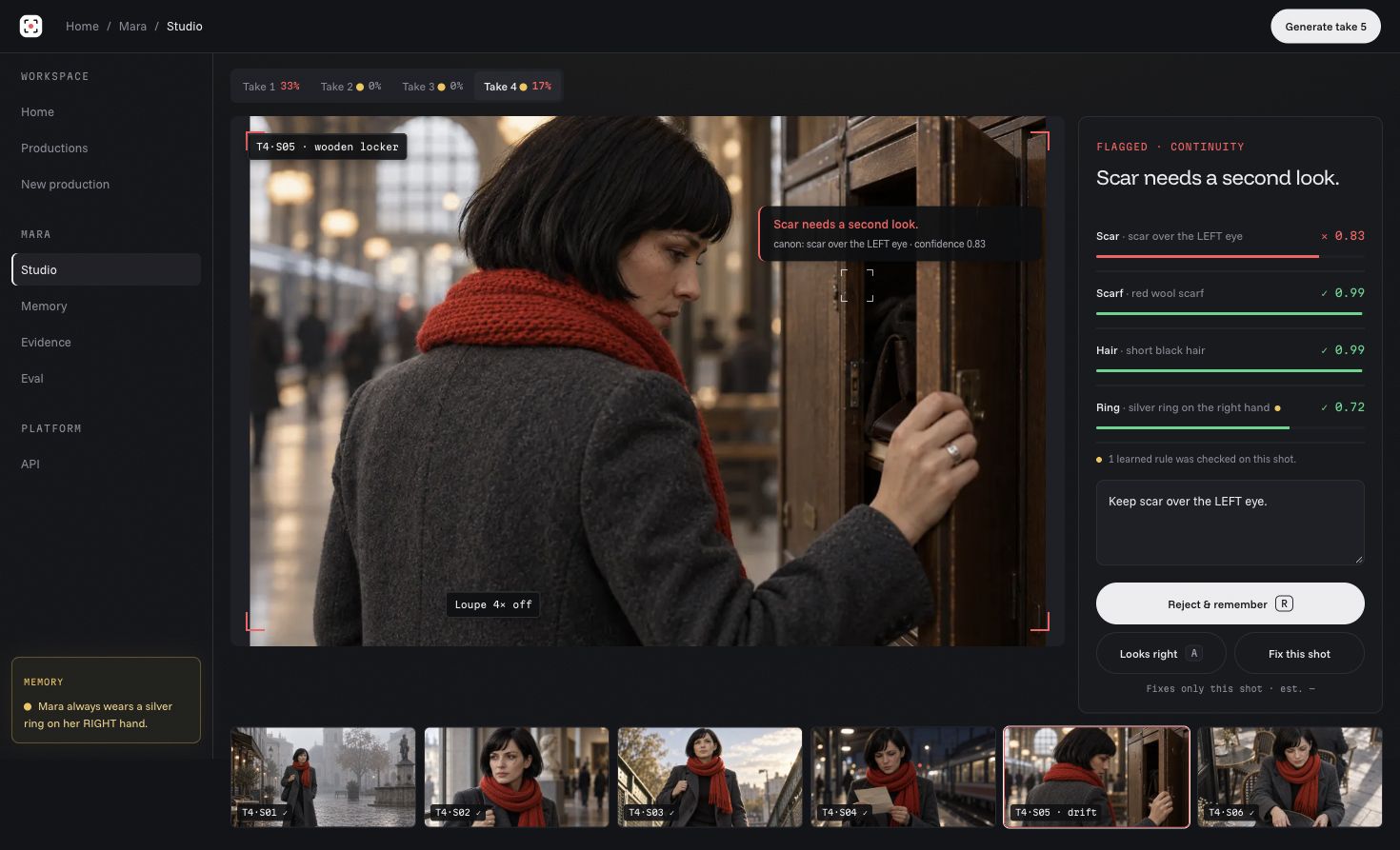
Studio: inspect a shot, review continuity checks and confidence, and write an editable correction.
-

Memory: the saved ring rule reached 18 later prompts and 18 checks; original sample history is preserved.
-
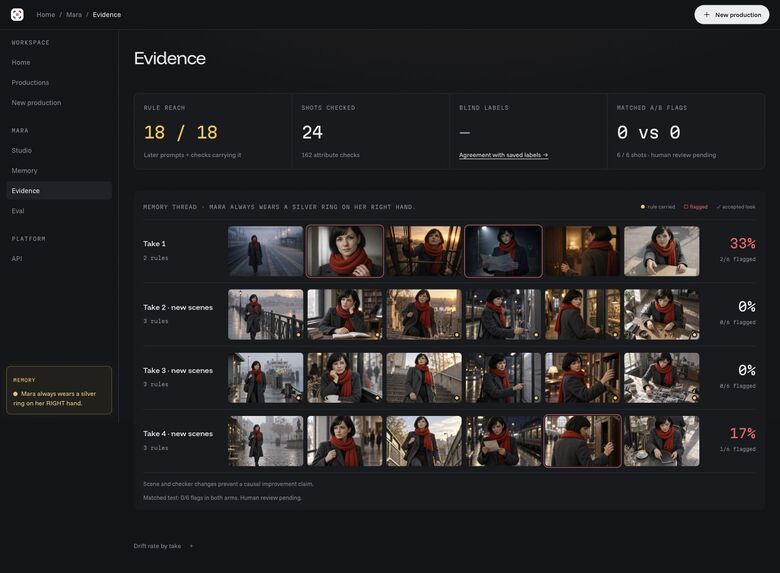
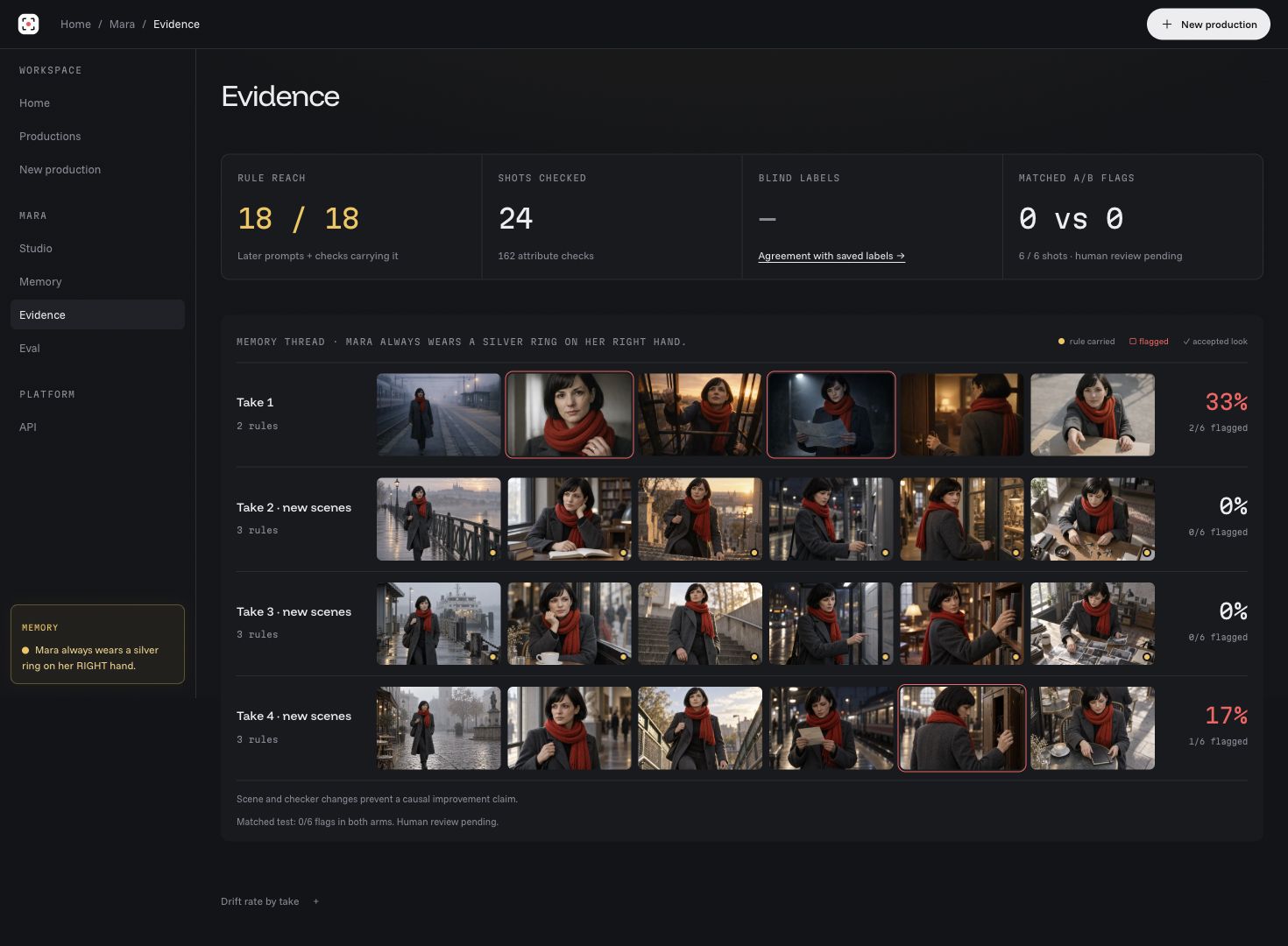
Evidence: 24 shots across four takes, rule application history, and the controlled A/B result with human review pending.


Inspiration
On Thursday night, I attended Ahmed Ahres’s fireside chat at the LA Tech Week event with USC’s Marshall Association of Artificial Intelligence. His discussion of real-time video generation and world models made me think about the gap between generating an impressive image and preserving a director’s vision across a story.
One specific problem stood out: continuity. A ring switches hands; a defining scar disappears. Catching it once is not enough if the next generation forgets the correction. On a film set, a script supervisor tracks those details. Scripty brings that idea to AI production.
What it does
Scripty is an AI script supervisor that checks character continuity and turns creator corrections into reusable production memory.
Upload a character reference, confirm the details that must stay consistent, and enter one to six scene prompts. Scripty generates still images, then a separate vision monitor checks them against the reference and requirements. Creators inspect findings, challenge the monitor and edit corrections.
A correction becomes a rule such as “Silver ring stays on the RIGHT hand.” It stays attached to the production and enters later generation prompts and checks. Repeated constraints merge; existing images can be rechecked without regeneration, and flagged shots can be replaced while preserving their originals.
Sample production: Mara offers 24 generated images across four recorded takes without waiting for live AI calls. Visitor notes stay local and do not change that historical evidence. New productions have separate stored state; live actions require authorized access and available budget.
How we built it
Next.js, React and TypeScript power the app and API; Supabase Postgres and private Storage hold production state and references. OpenAI powers generation, vision monitoring and rule extraction. Corrections become Zod-validated {text, attributeKey, mergeRuleId} outputs. Saved rules enter the generation prompt and become explicit monitor requirements keyed by rule ID.
Generate → check → creator review → save a rule → apply it to the next shot. Stored prompts, rule IDs and checks make that loop auditable. Server-side authorization, ownership checks and rate/cost limits protect live actions. Vercel hosts the app, with GitHub Actions for automated checks. Development used Codex agents for engineering, design and QA, plus Claude for product-design direction.
Challenges and lessons
An API can return successfully while the image violates the brief. The monitor can also misread anatomical left/right or a hidden detail. We expose expected versus observed details and uncertainty, leaving the decision with the creator.
Scripty adapts through persistent memory and prompts; foundation-model weights stay fixed. We learned to distinguish saving a correction, applying it, and proving that it improved the result.
Strongest evidence
One saved ring correction reached 18/18 later generation prompts and corresponding monitor outputs across new scenes. A separate live UI test also verified the correction-to-next-shot loop.
Our controlled six-pair comparison found 0/6 targeted-attribute flagged shots in both canon-only and canon-plus-memory conditions. The added rule produced no additional reduction in that test. These are monitor judgments, with blind human validation pending. Memory propagation is demonstrated; improved image quality and checker accuracy remain unproven.
What’s next
We will test with small AI production teams making recurring characters for ads, storyboards and episodic stories, measuring review time, repeated errors and total cost per human-approved shot. Review seats plus usage is the pricing hypothesis.
Next come human evaluation and creator pilots, followed by video continuity, collaboration and integrations. The ambition is production-memory infrastructure that carries creative decisions across filmmaking tools.
Scripty. Keep the story straight.
Built With
- next.js
- openai
- react
- supabase
- typescript
- vercel
