-
-
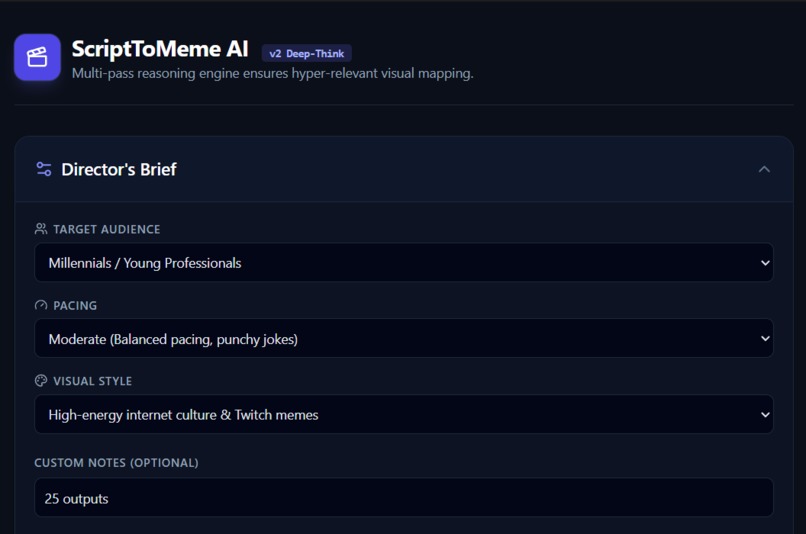
Home page
-
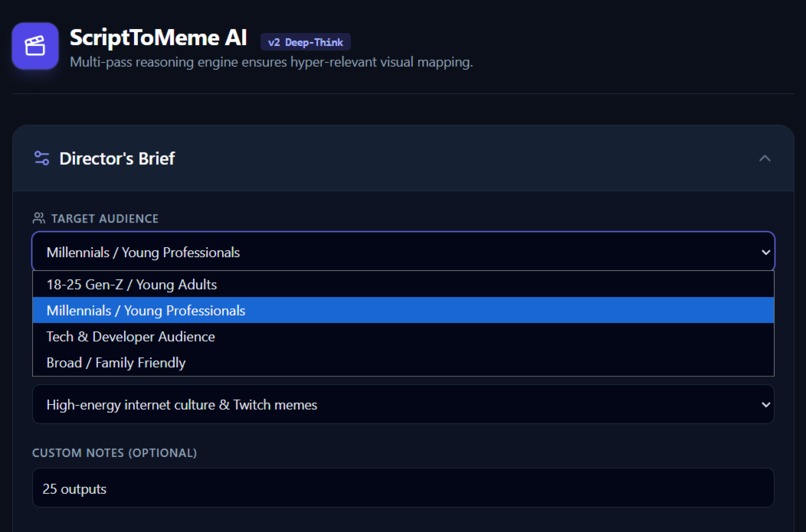
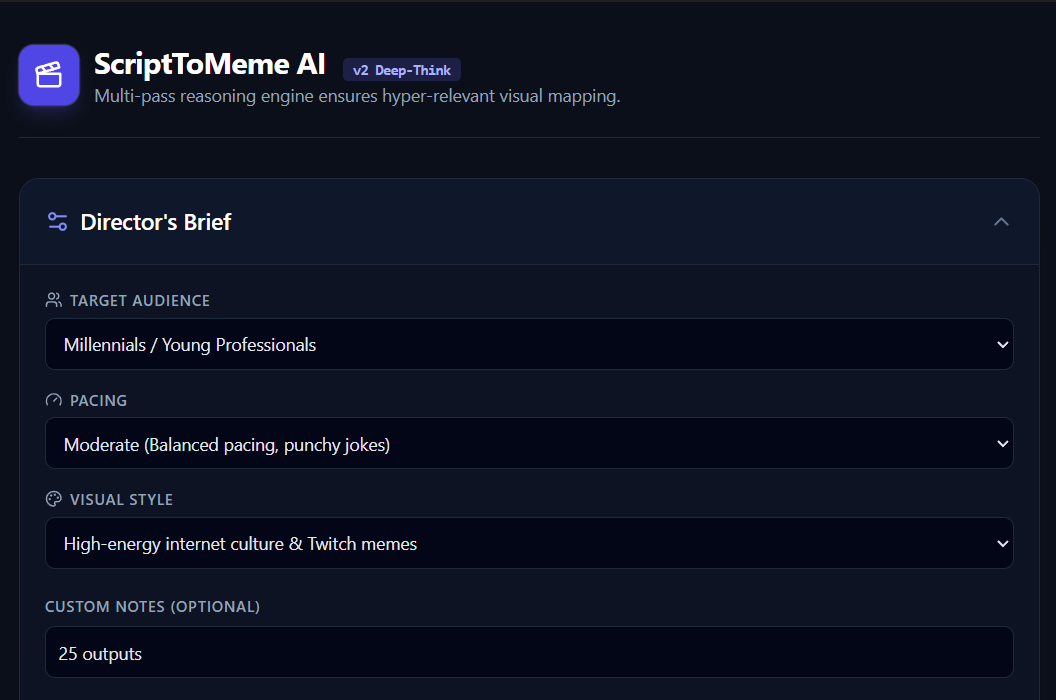
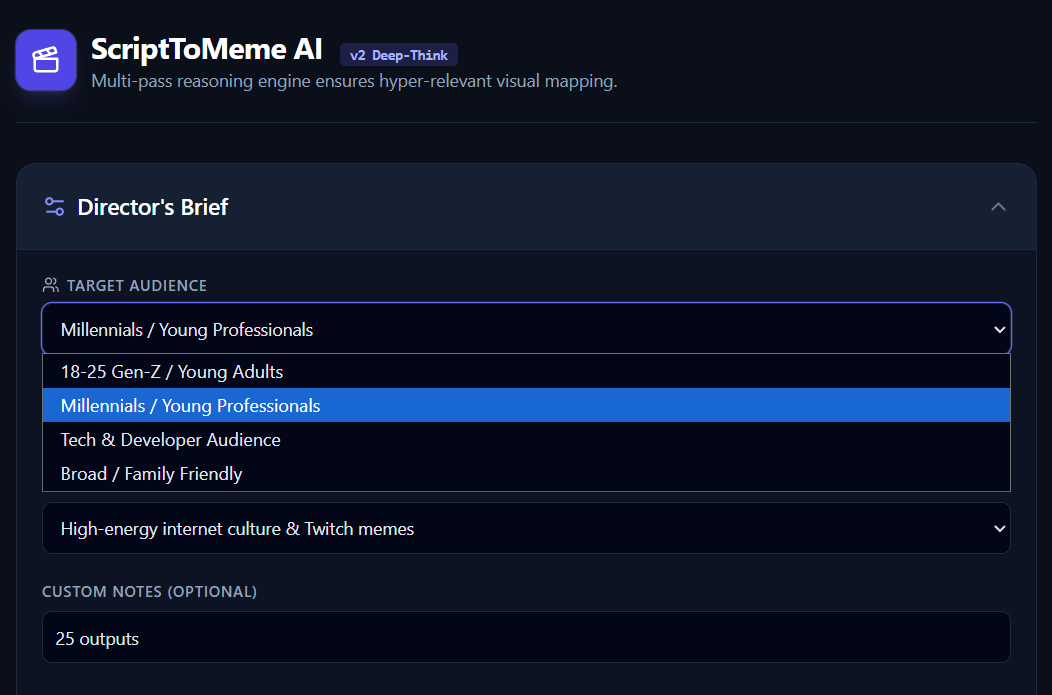
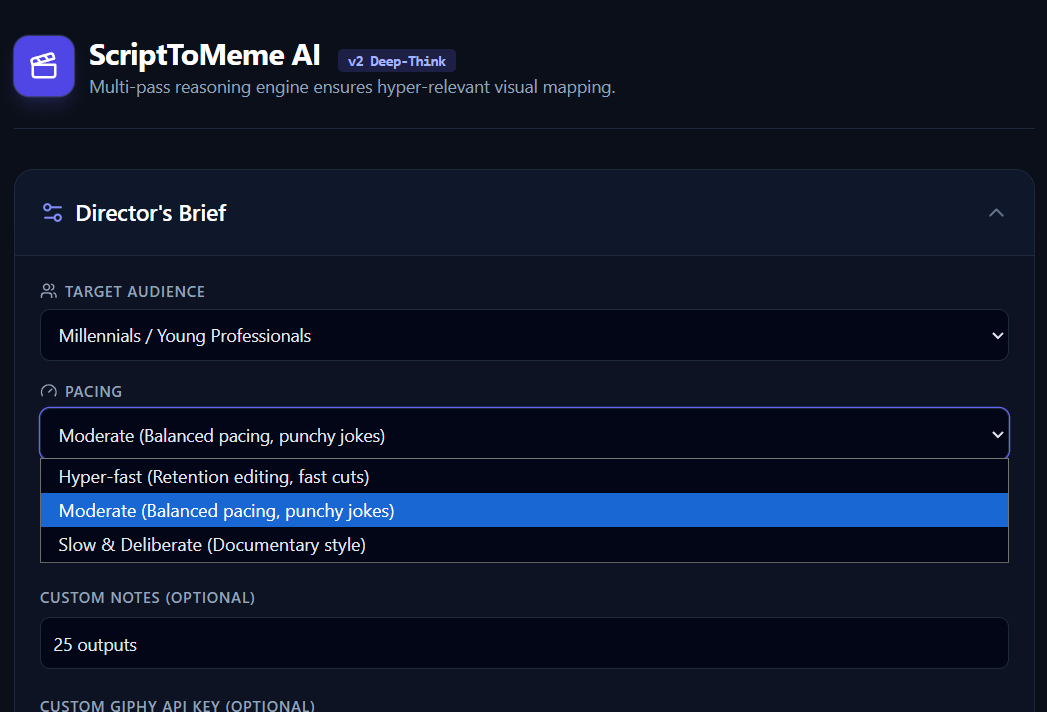
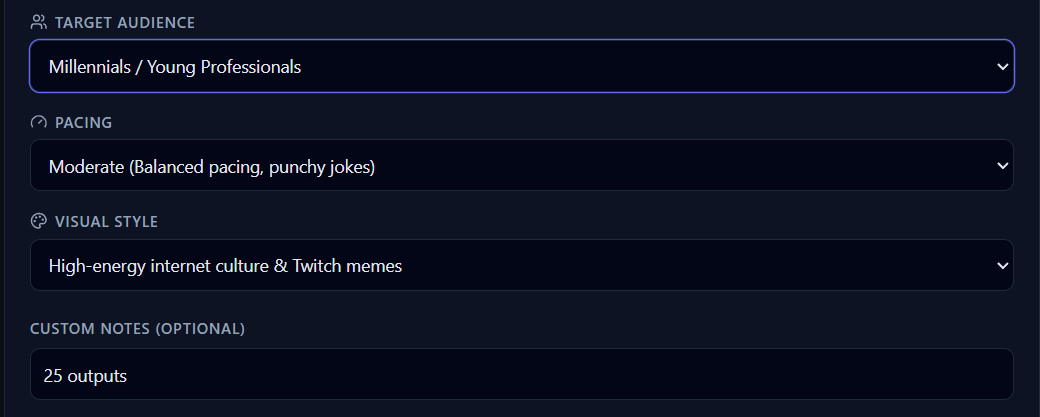
Creators choose their target audience and generation, helping AI deliver more relevant and context-aware meme and GIF recommendations.cetor
-
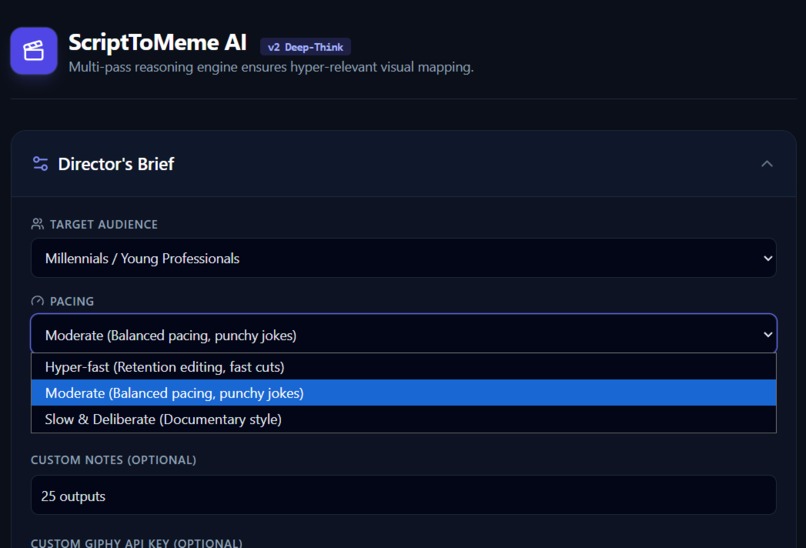
Creators control visual pacing, choosing how frequently memes and GIFs appear to match their video’s rhythm and editing style.
-
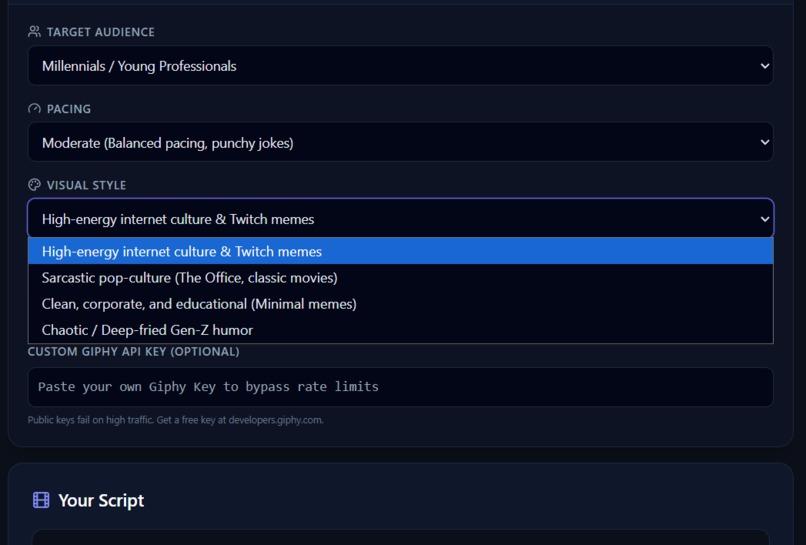
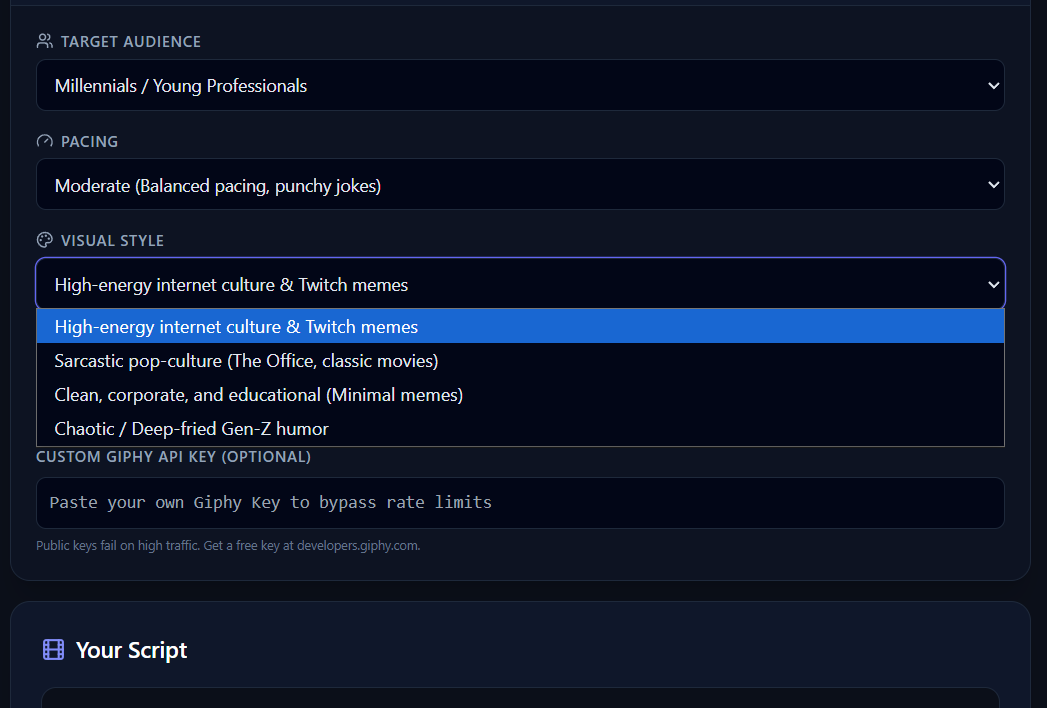
Creators can choose a visual style—from Twitch memes and pop culture to clean, corporate, or chaotic Gen-Z humor.
-
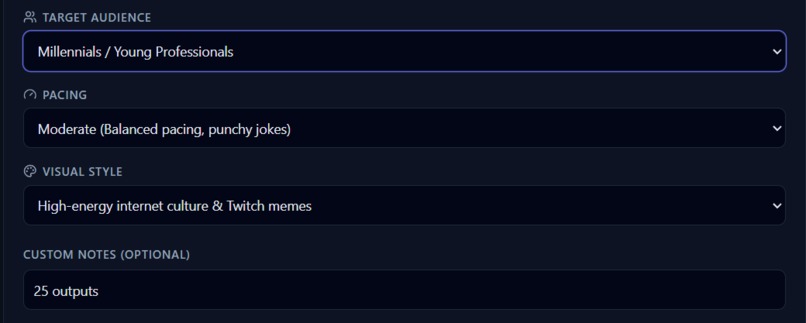
In "Custom Notes" user can write any extra instruction he wanted to share.
-
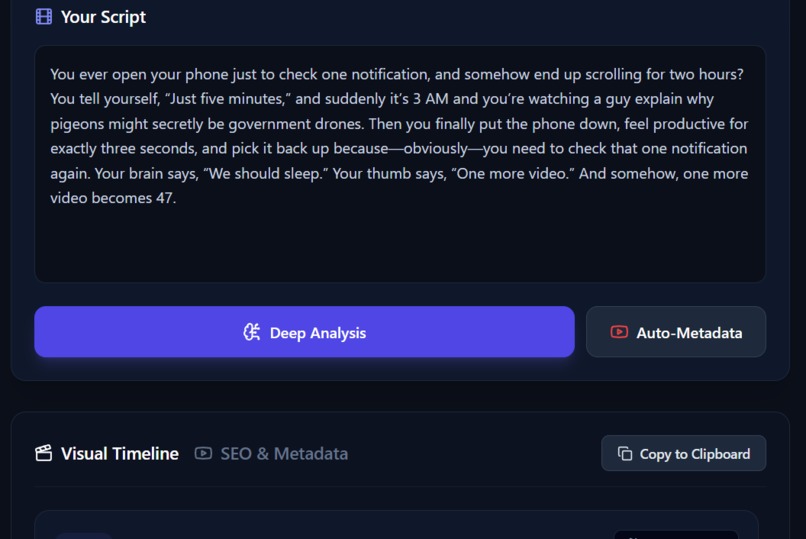
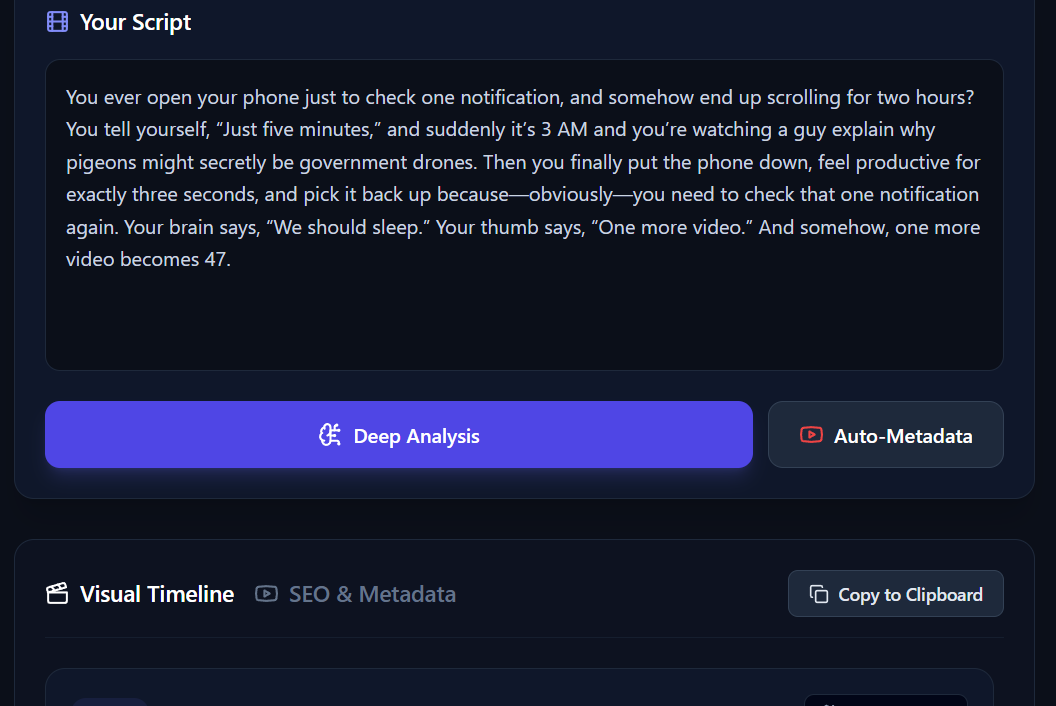
Creator pastes a YouTube script here and clicks **Deep Analysis**, letting AI understand its tone, context, emotions, and visual moments.
-
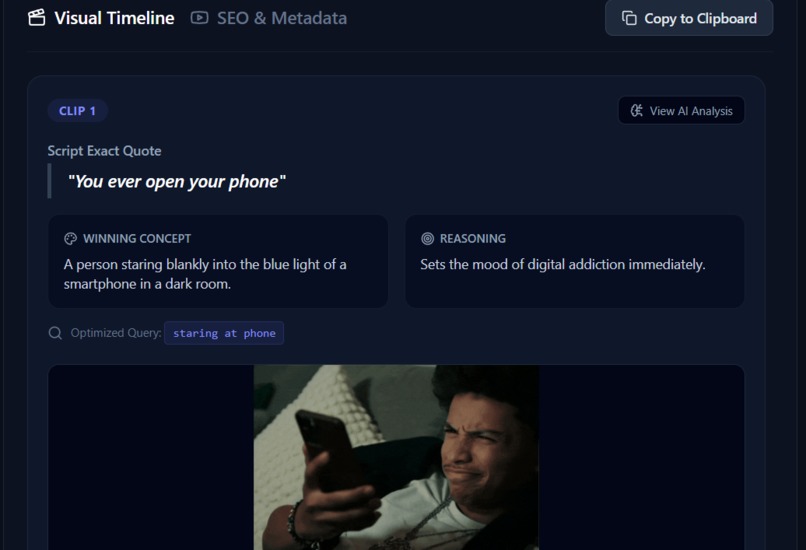
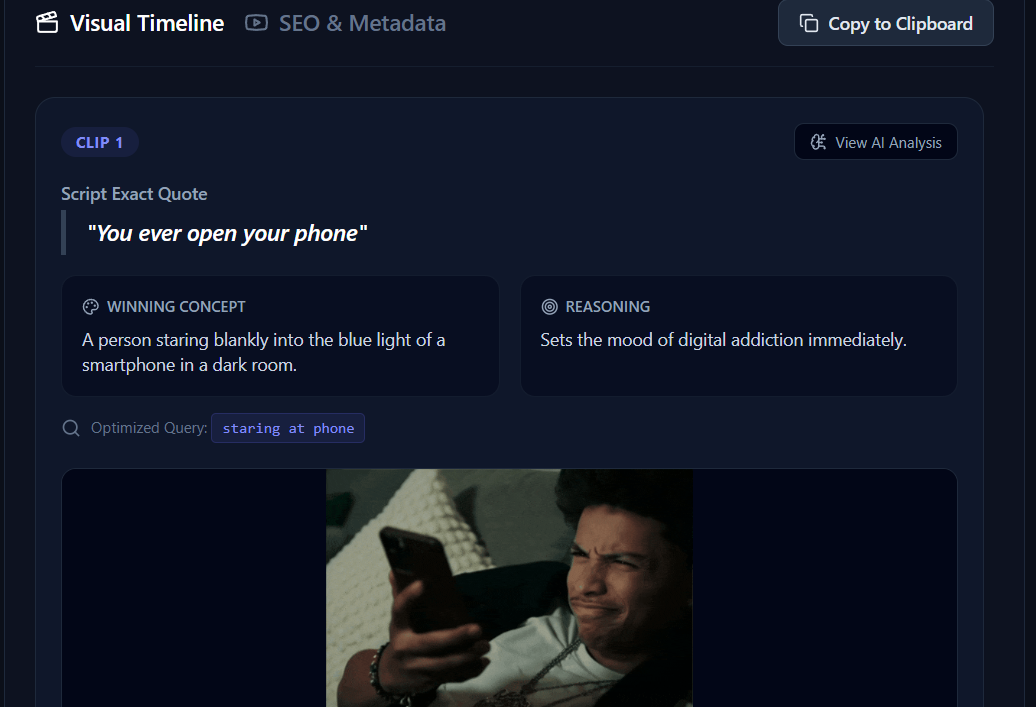
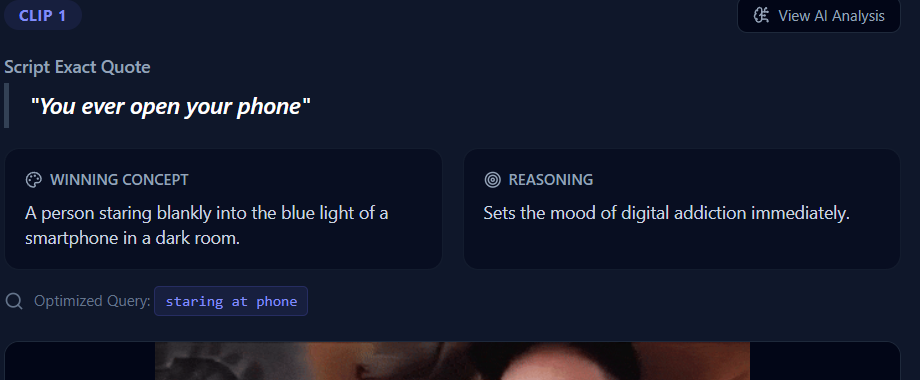
This is how visuals will be shown to creator
-
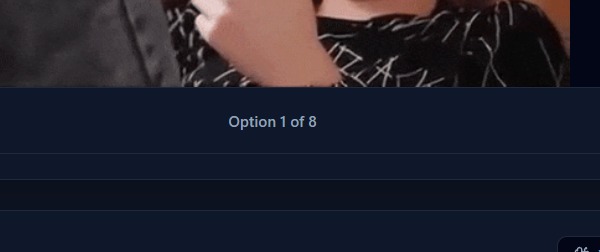
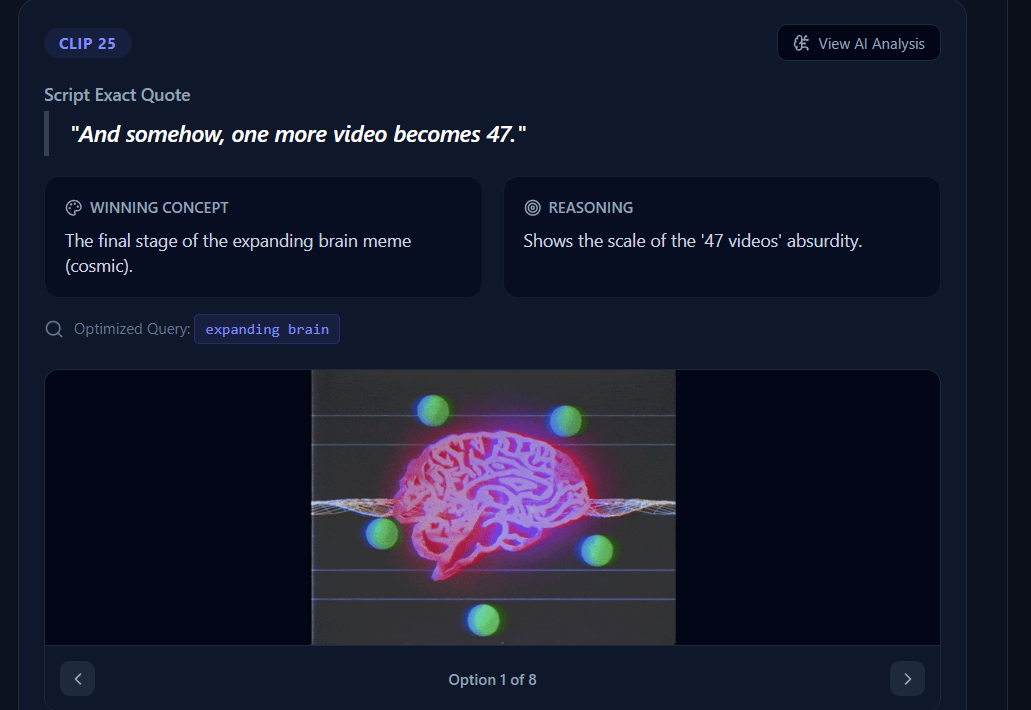
For every moment in the script ai shows 8 recommended option for that segment of line.
-
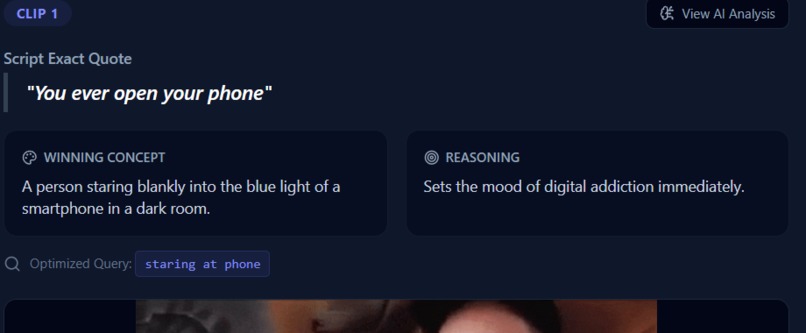
Everything will be shown from the line needed to voiceover to visual to be shown for it
-
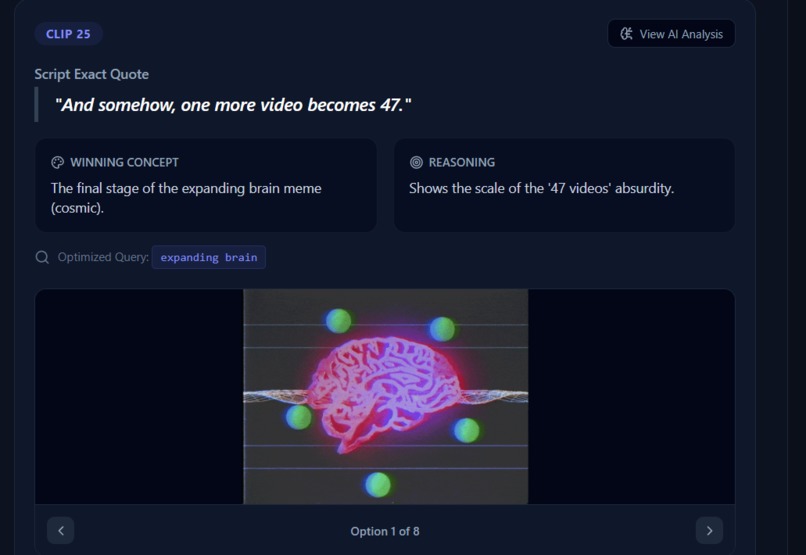
Since we in "Custom Notes" box wrote "25 Outputs " so Tool segmented script in 25 parts and gives 25 clips with 8 alternative for each clip.
About the Project
Inspiration
Creating a YouTube video often starts with a good script, but turning that script into engaging visuals can take hours. I noticed that creators frequently have to pause their editing, search for the right meme or GIF, and figure out which reaction best fits each moment of their script.
That led me to a simple question:
What if AI could understand a YouTube script and suggest the right meme or GIF for each moment?
That idea became ScriptToMeme AI.
How I Built It
The core idea is simple: I provide a YouTube script, and the system breaks it into meaningful moments. It analyzes the context, emotion, intent, and tone of each part, then suggests suitable memes or GIF-style reactions.
Instead of treating the script as one large block of text, ScriptToMeme AI turns it into a visual plan:
YouTube Script → Context & Emotion → Moment Detection → Meme/GIF Suggestions → Visual Plan
I designed the interface to keep the process simple, so a creator can quickly understand what visual could work at each point while editing a video.
What I Learned
One of my biggest learnings was that good meme selection depends more on context than keywords.
For example, a line about failing an exam could be funny, dramatic, sarcastic, or serious depending on the surrounding script. Simply matching keywords isn't enough—the system needs to understand the intention behind the line.
I also learned that AI becomes much more useful when it is designed around a real workflow rather than simply generating text.
Challenges
The biggest challenge was translating human humor and context into something an AI system could understand consistently.
I had to consider questions like:
- What emotion is being expressed?
- Is this moment funny, shocking, sarcastic, or dramatic?
- What type of reaction would communicate it visually?
- How can I avoid suggesting a meme that matches the words but completely misses the joke?
Another challenge was keeping the interface simple while handling multiple AI-driven steps behind the scenes.
What's Next
I want to take ScriptToMeme AI beyond recommendations and turn it into a complete AI-assisted YouTube video workflow—from script analysis and meme/GIF selection to timing, captions, and eventually automated video assembly.
The goal is simple:
Let creators focus on the story. Let AI handle the tedious visual search.


Log in or sign up for Devpost to join the conversation.