Inspiration
The problem
Script coverage — a written evaluation of a screenplay's story, characters, and production feasibility — is a real, expensive bottleneck in film and TV development. Professional coverage services charge $80-$449 per screenplay with a 3-14 day turnaround.
What it does
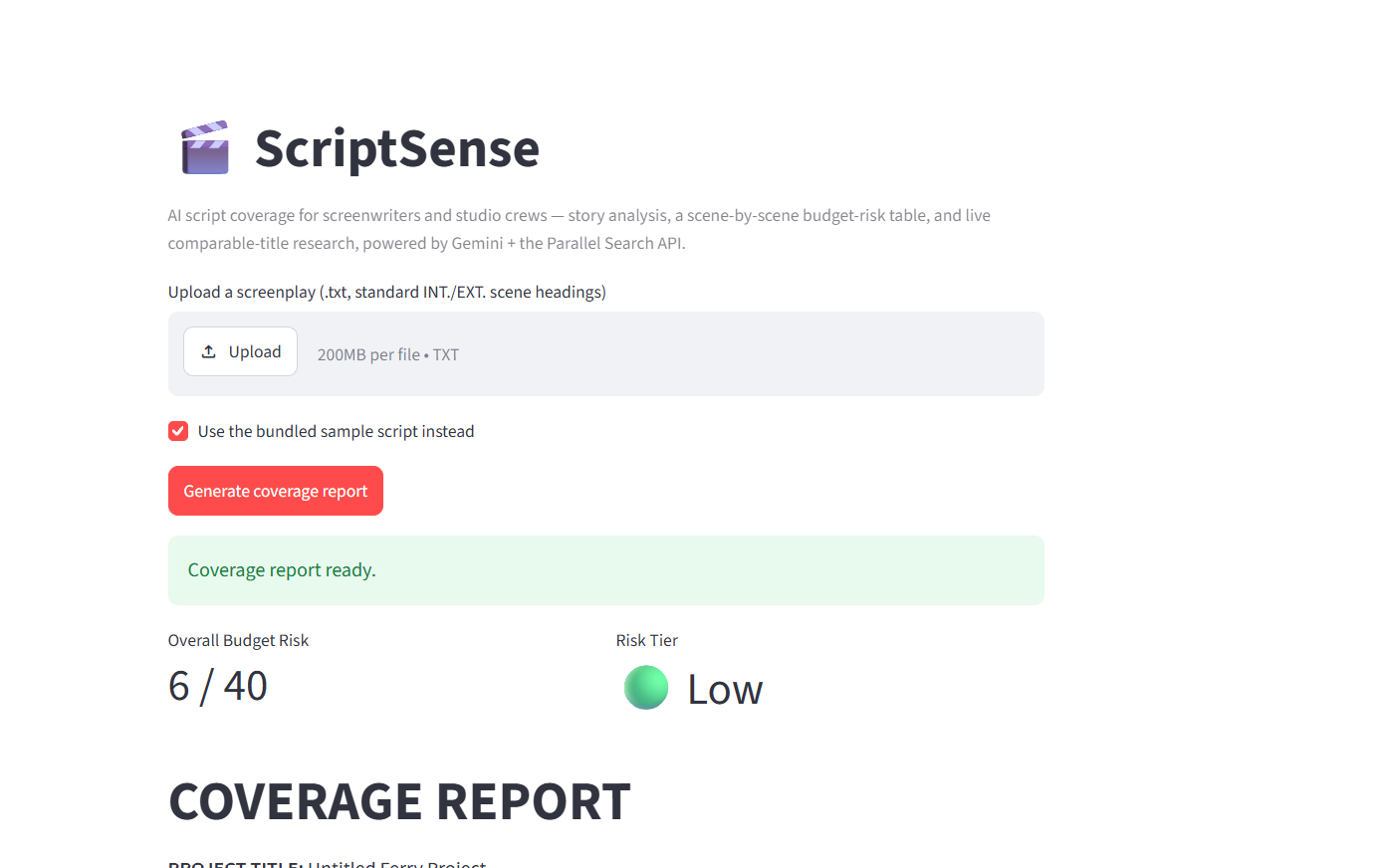
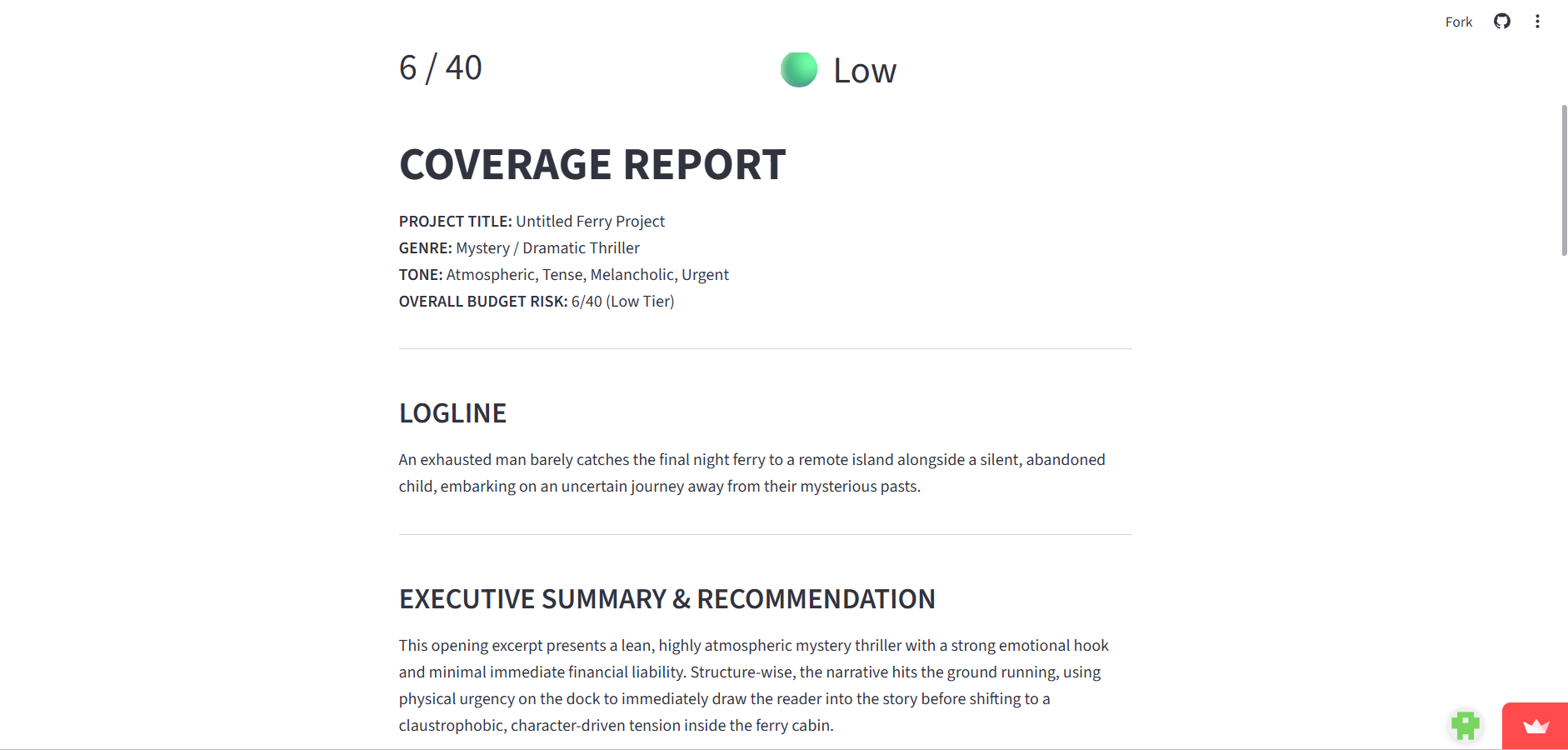
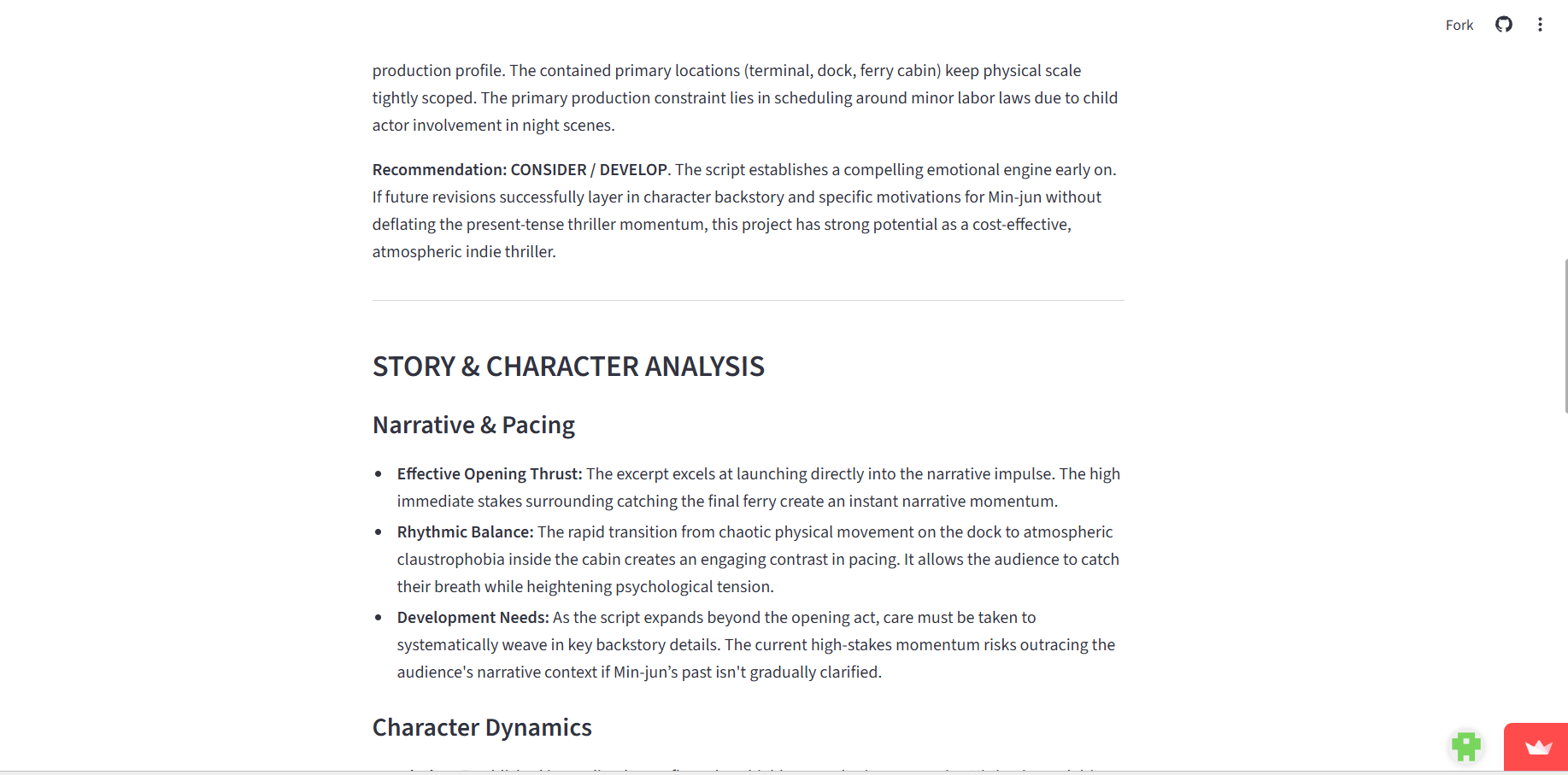
ScriptSense reads a screenplay end-to-end and hands back a finished coverage document:
- Parses the script into scenes using standard INT./EXT. headings
- Tags each scene with deterministic production-risk flags (stunts, VFX, night exteriors, crowds, animals, minors, weapons, chases, water work, pyrotechnics)
- Rolls those into one auditable Budget Risk Score (0-40) with a Low/Medium/High tier
- Analyzes the story with Gemini (logline, genre, tone, structural notes, character notes)
- Pulls real comparable-title research live via the Parallel Search API
- Synthesizes a final coverage report with a Consider / Consider with Reservations / Pass recommendation
How we built it
Scene parsing and risk-tagging are deterministic, auditable code — not left to the LLM — so every script produces consistent, trustworthy flags. Two Gemini passes handle story analysis and final synthesis, with Parallel Search grounding the market-positioning section in real produced titles instead of model guesswork. The UI is built in Streamlit for the required live demo.
Challenges we faced
Handling non-UTF-8 screenplay exports, making the Gemini calls resilient to transient failures, and building a risk-scoring heuristic that's genuinely auditable rather than another black-box LLM opinion.
What we learned
How to combine deterministic logic with LLM reasoning so the system stays explainable — the risk score and comp research are things a producer can actually verify, not just trust.
What it does
How we built it
Challenges we ran into
Accomplishments that we're proud of
What we learned
What's next for ScriptSense
Built With
- gemini-api
- google-gemini
- parallel-search-api
- python
- streamlit
