-
-
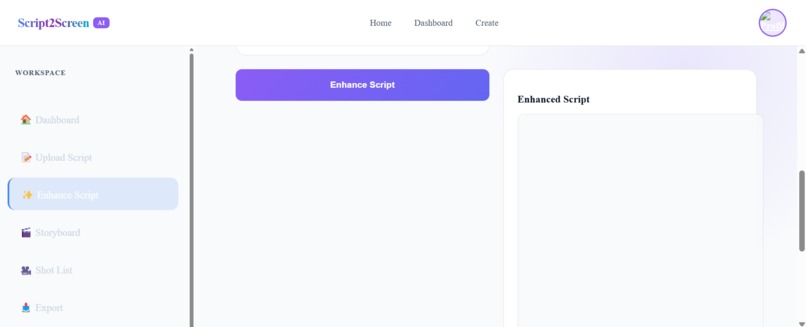
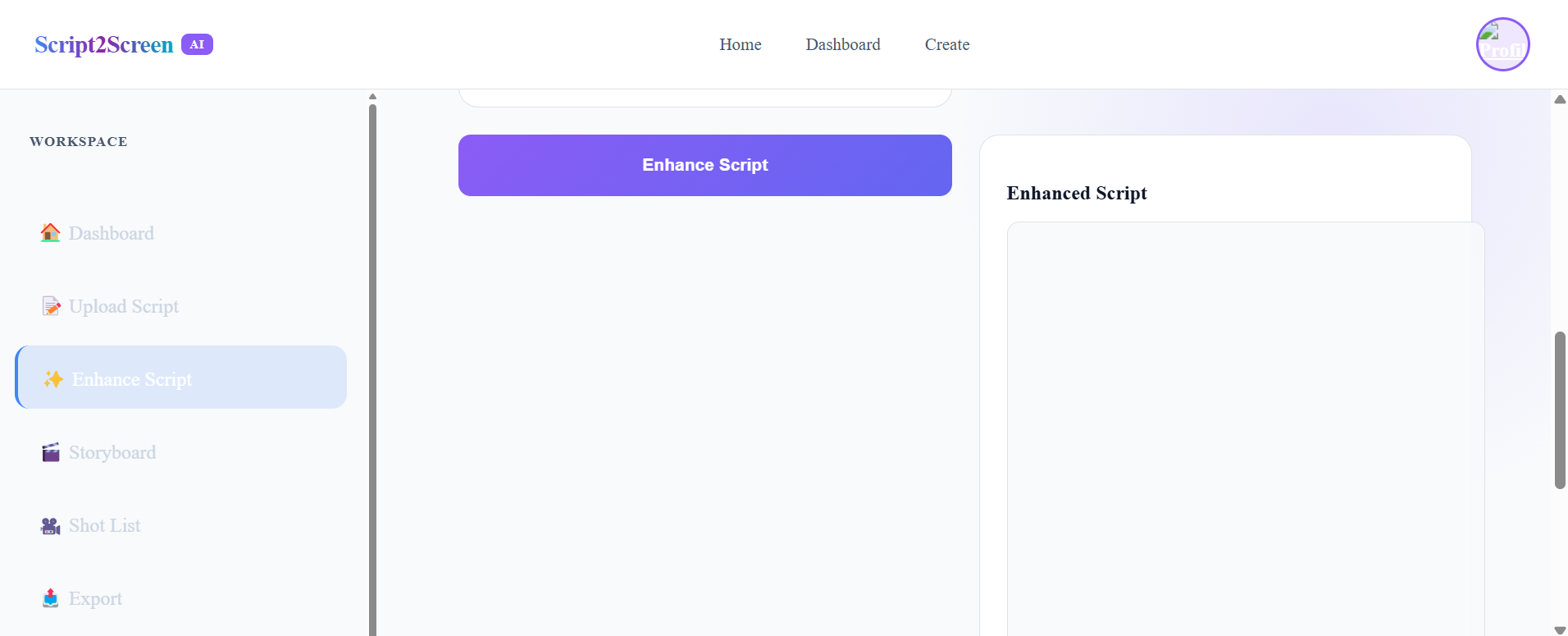
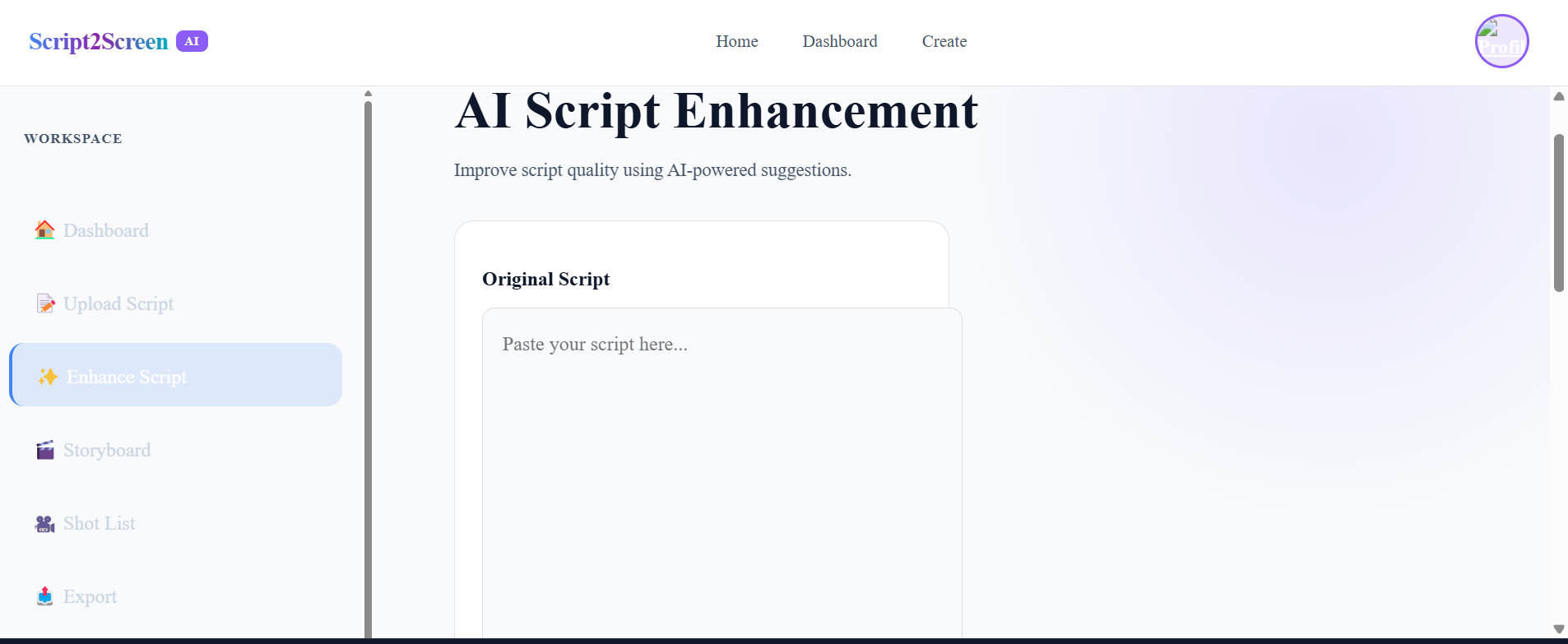
enhance
-
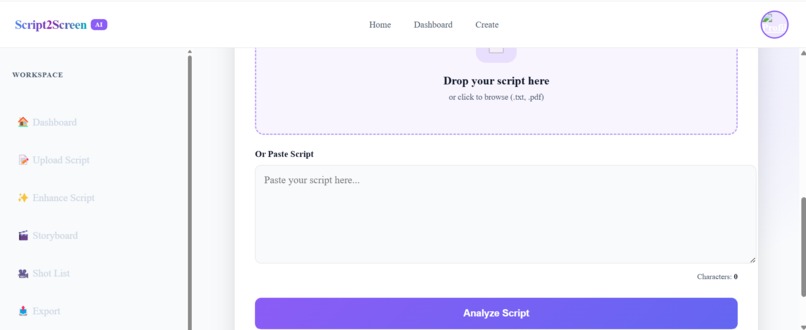
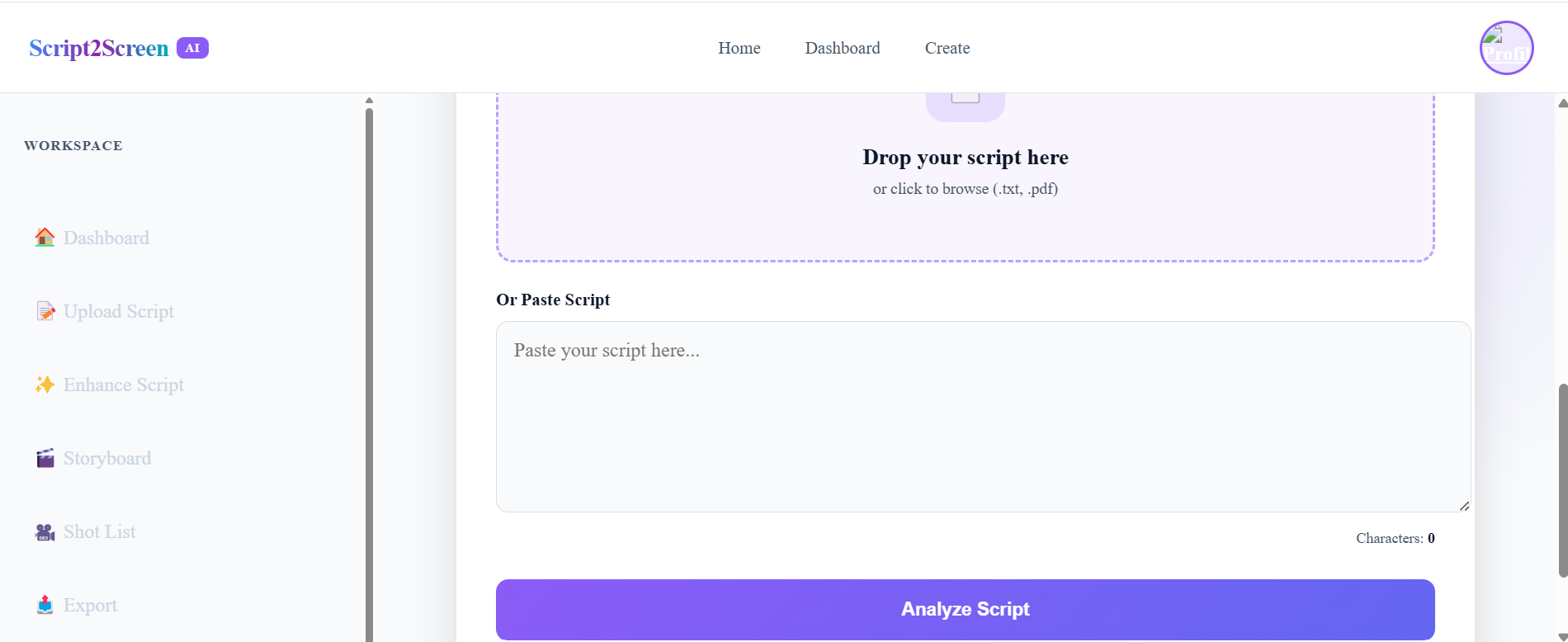
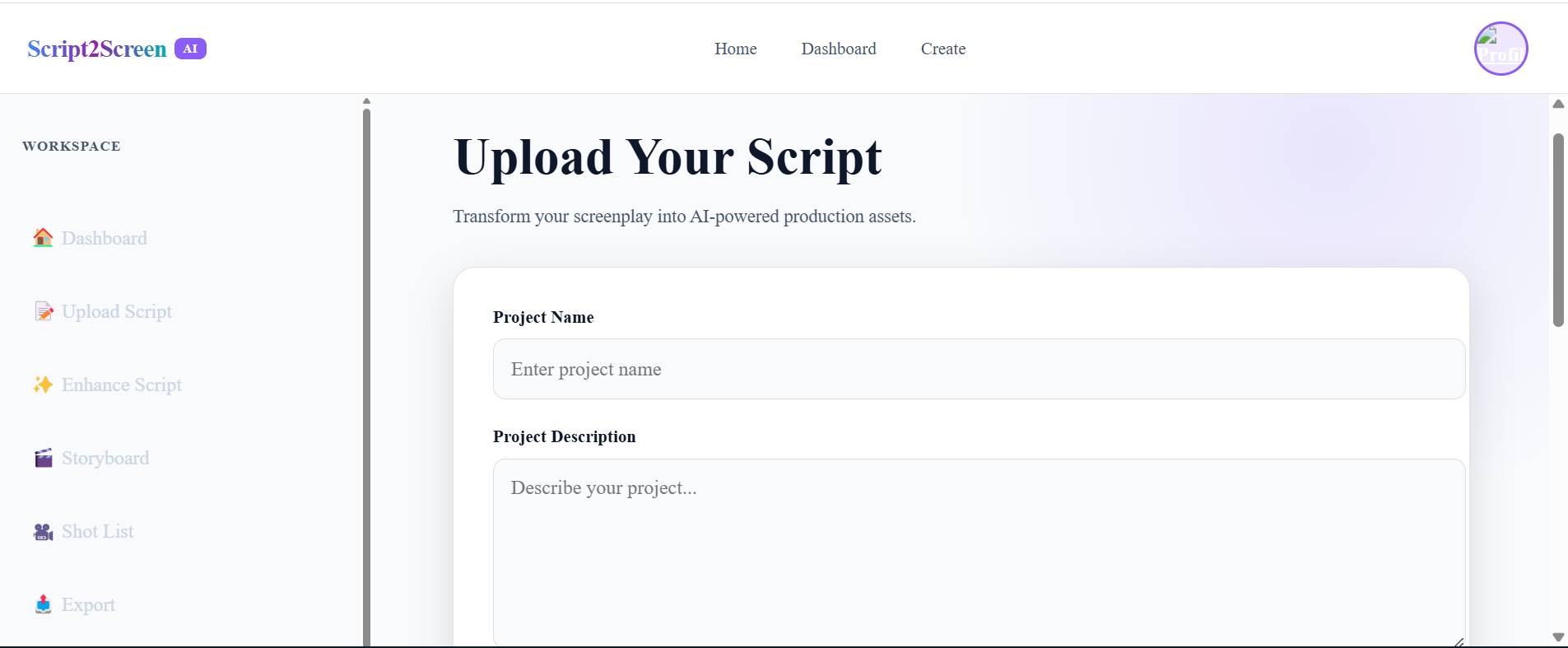
upload and analyze button
-
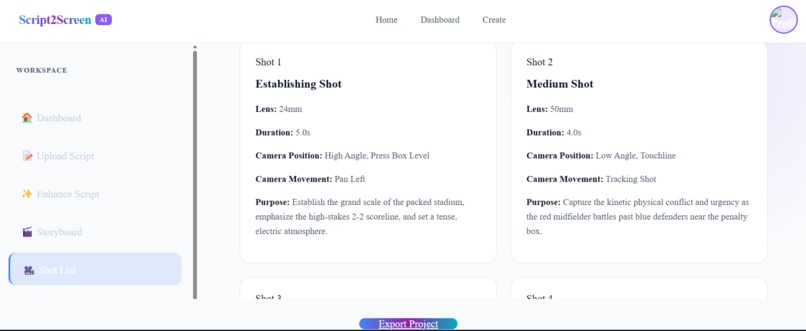
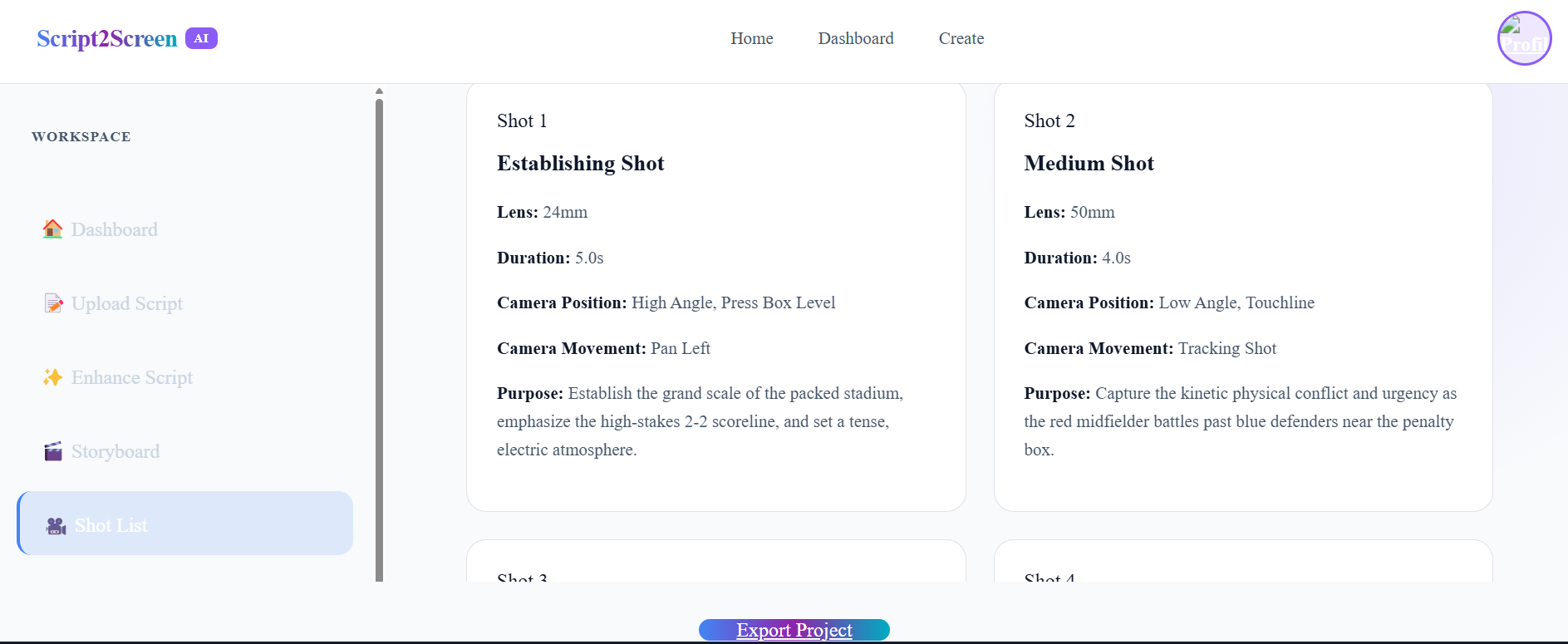
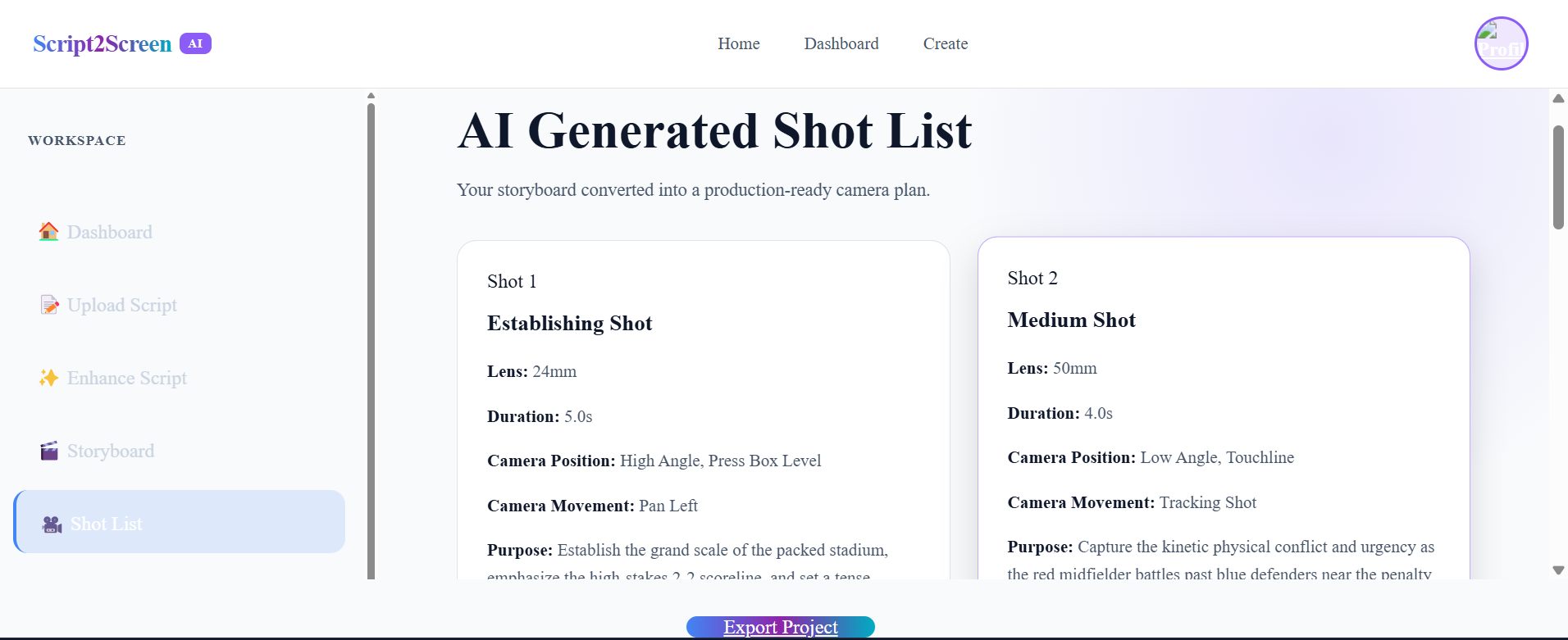
shotlist
-
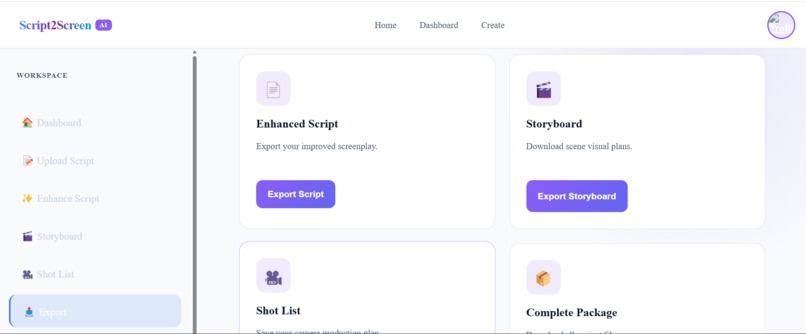
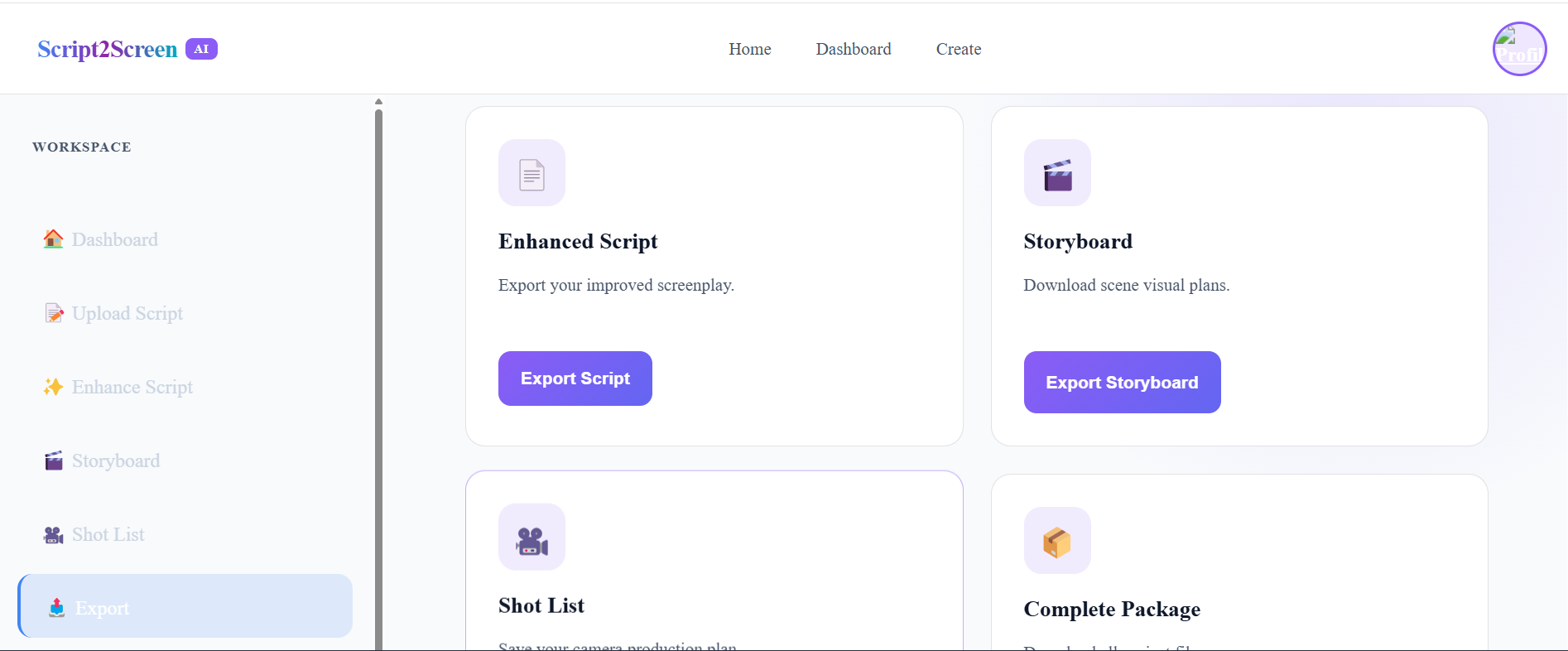
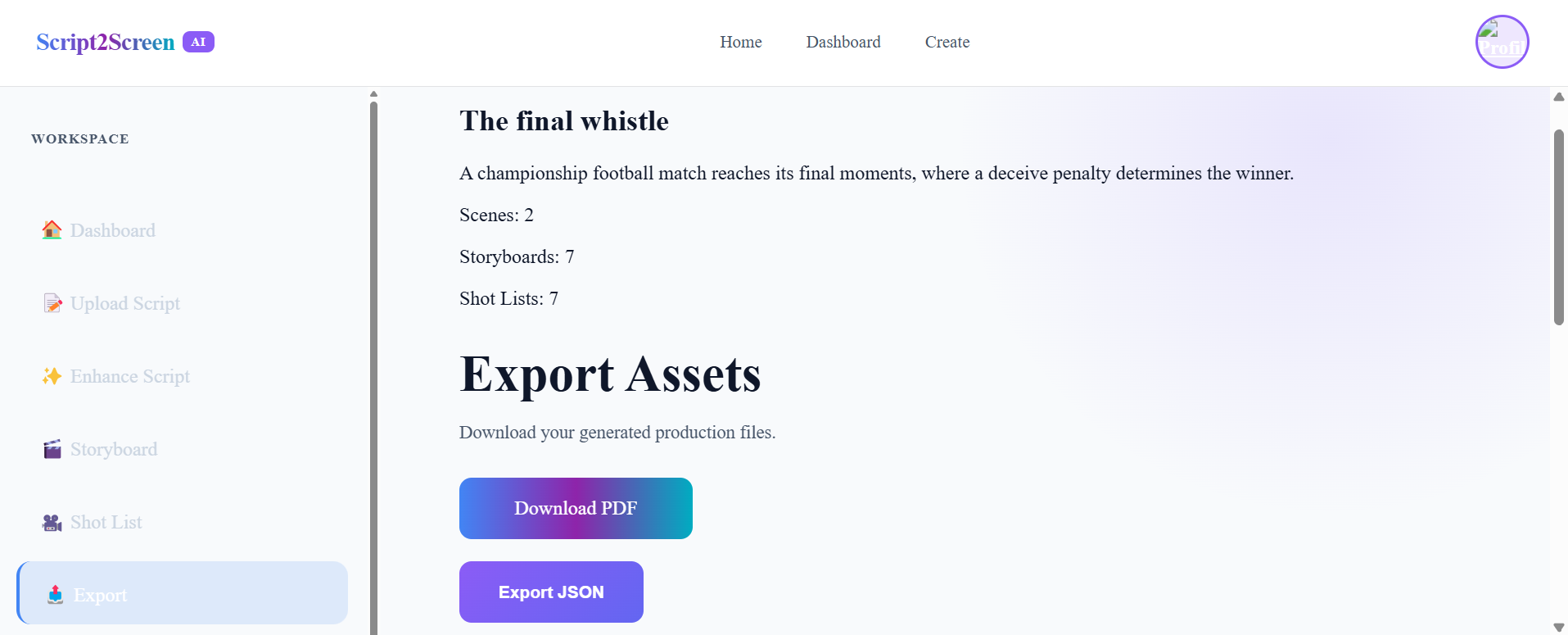
exports
-
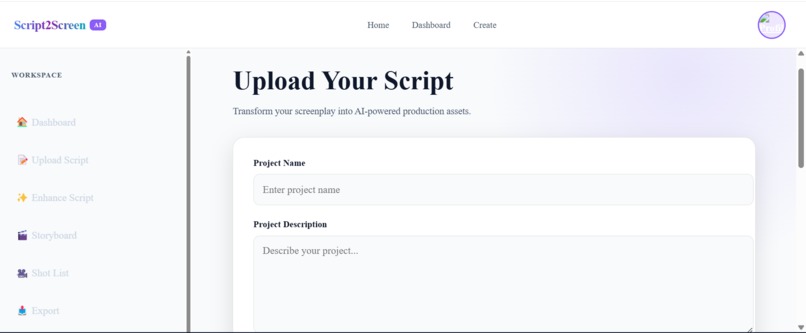
upload page
-
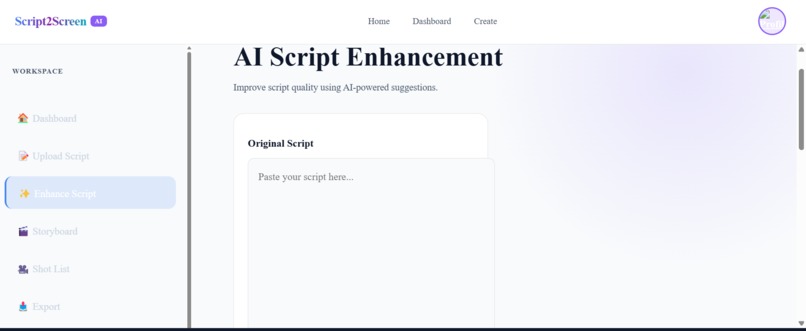
enhanced page
-
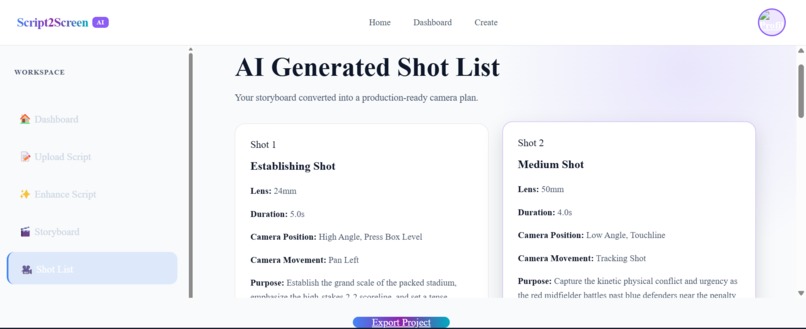
shot list page
-
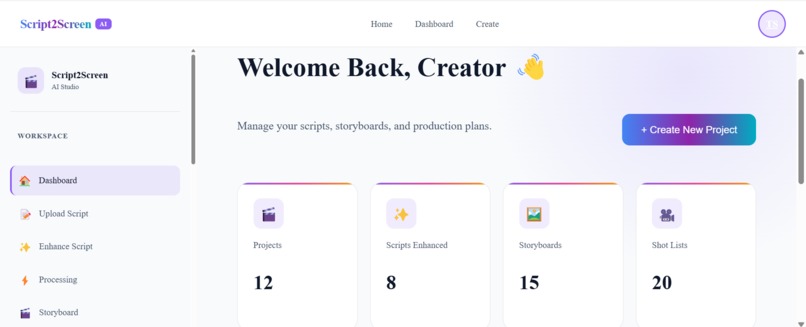
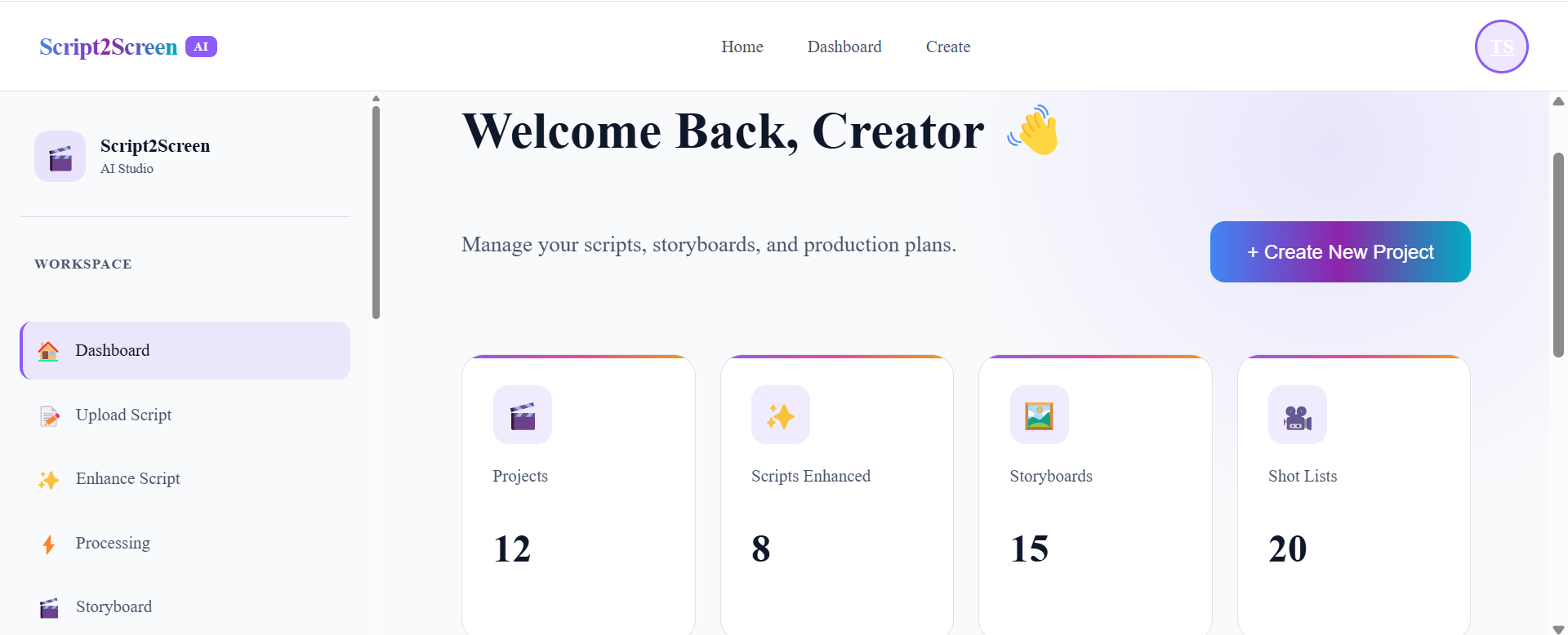
dashboard
-
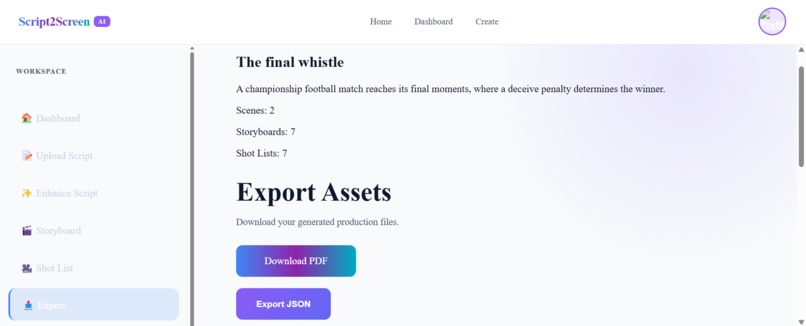
export page
-
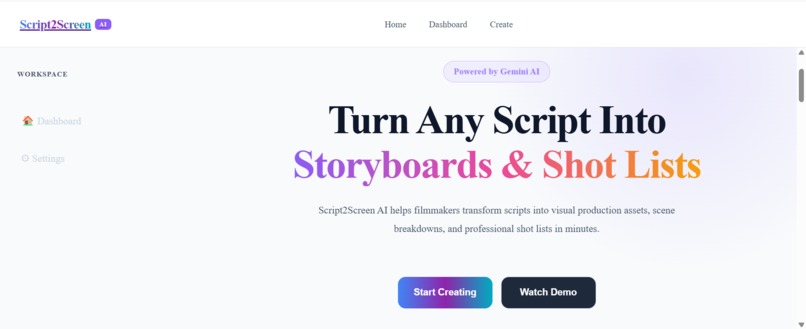
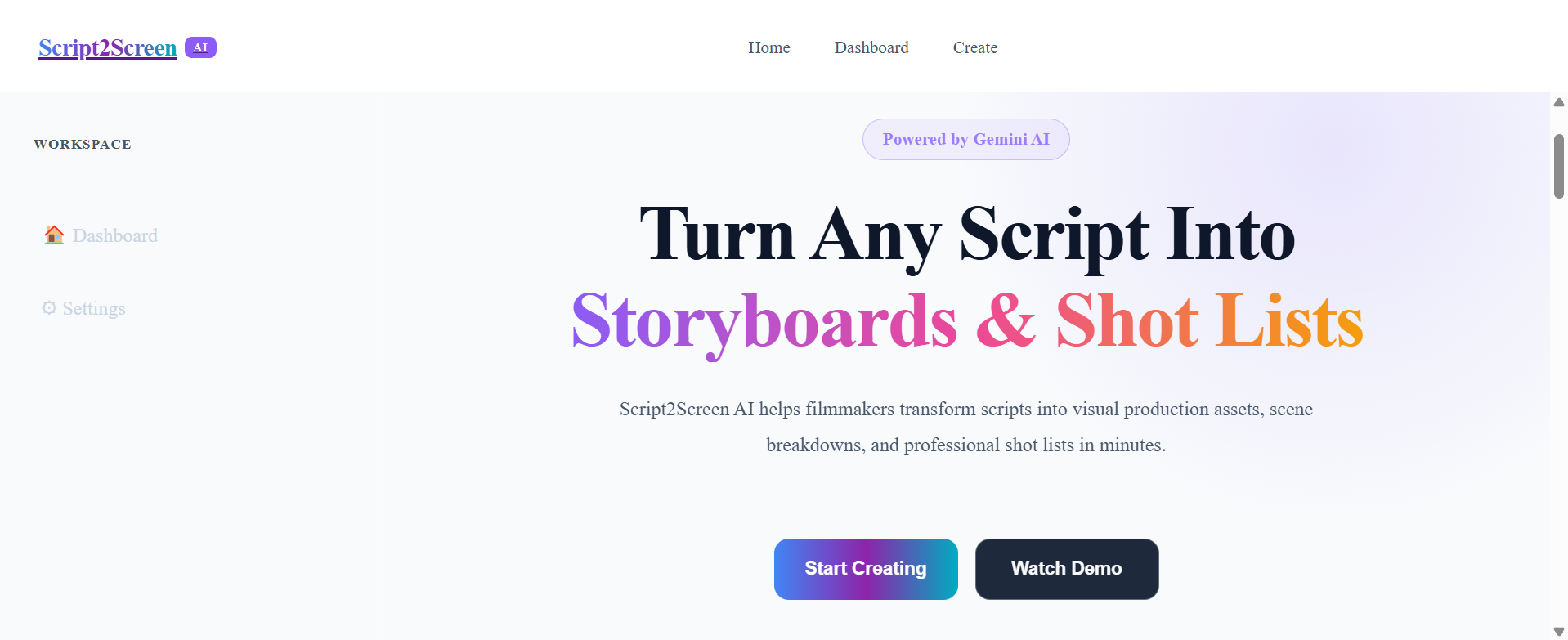
home page
-
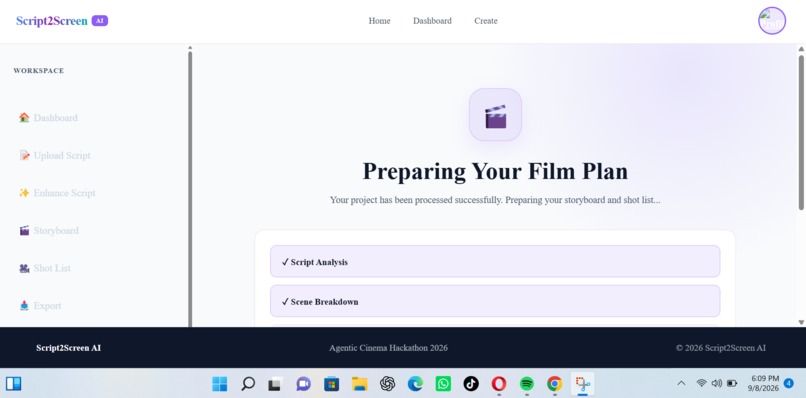
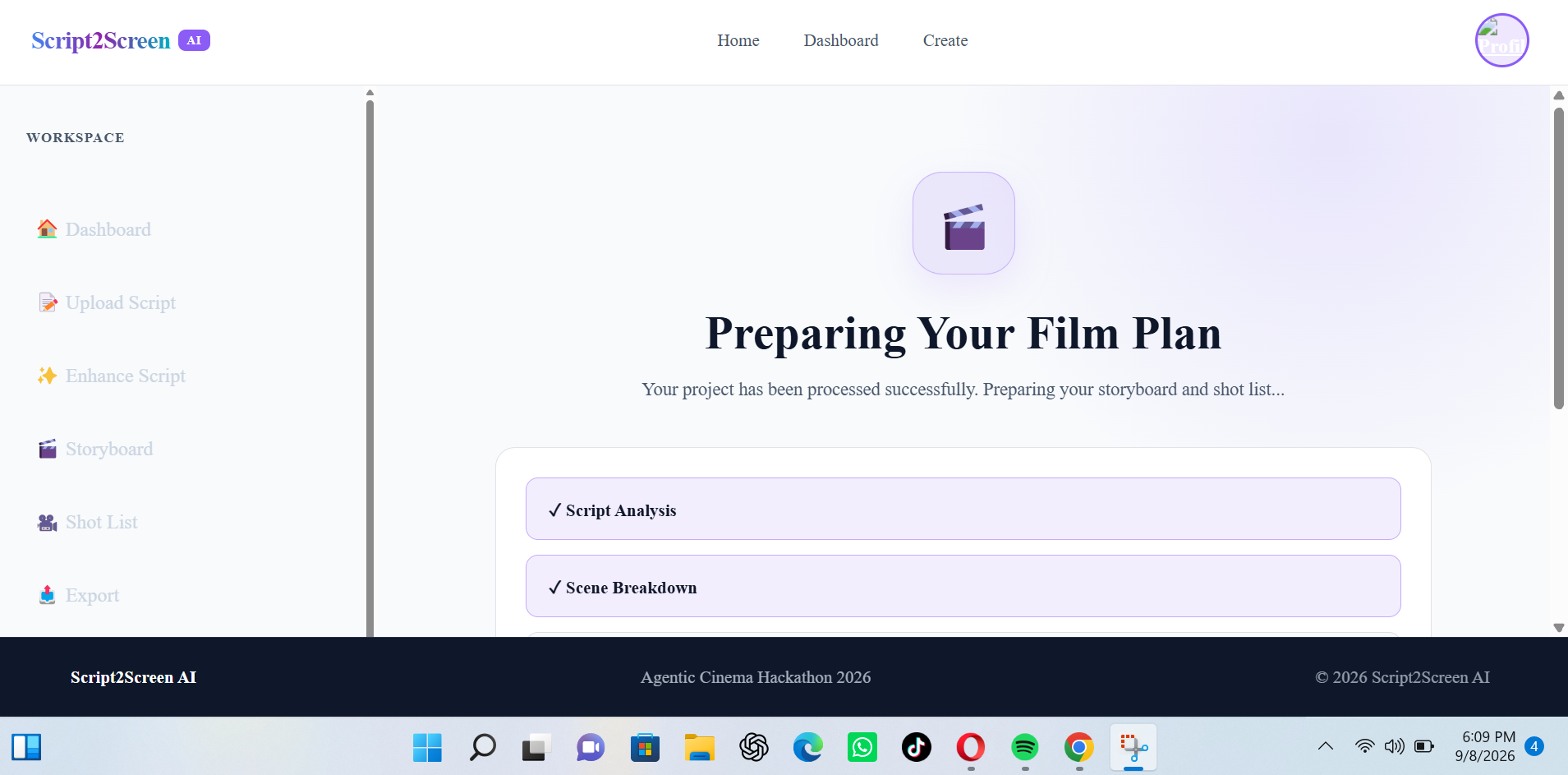
processing page
-
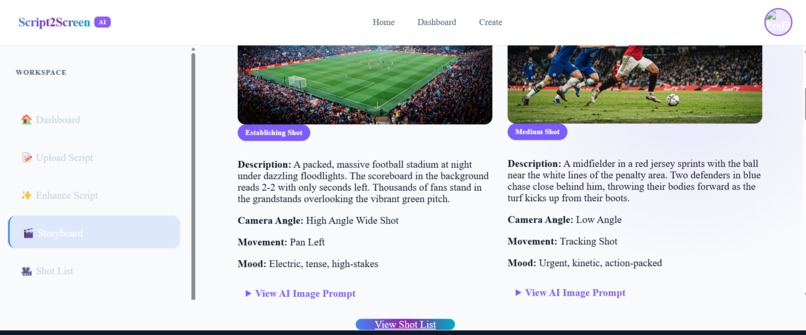
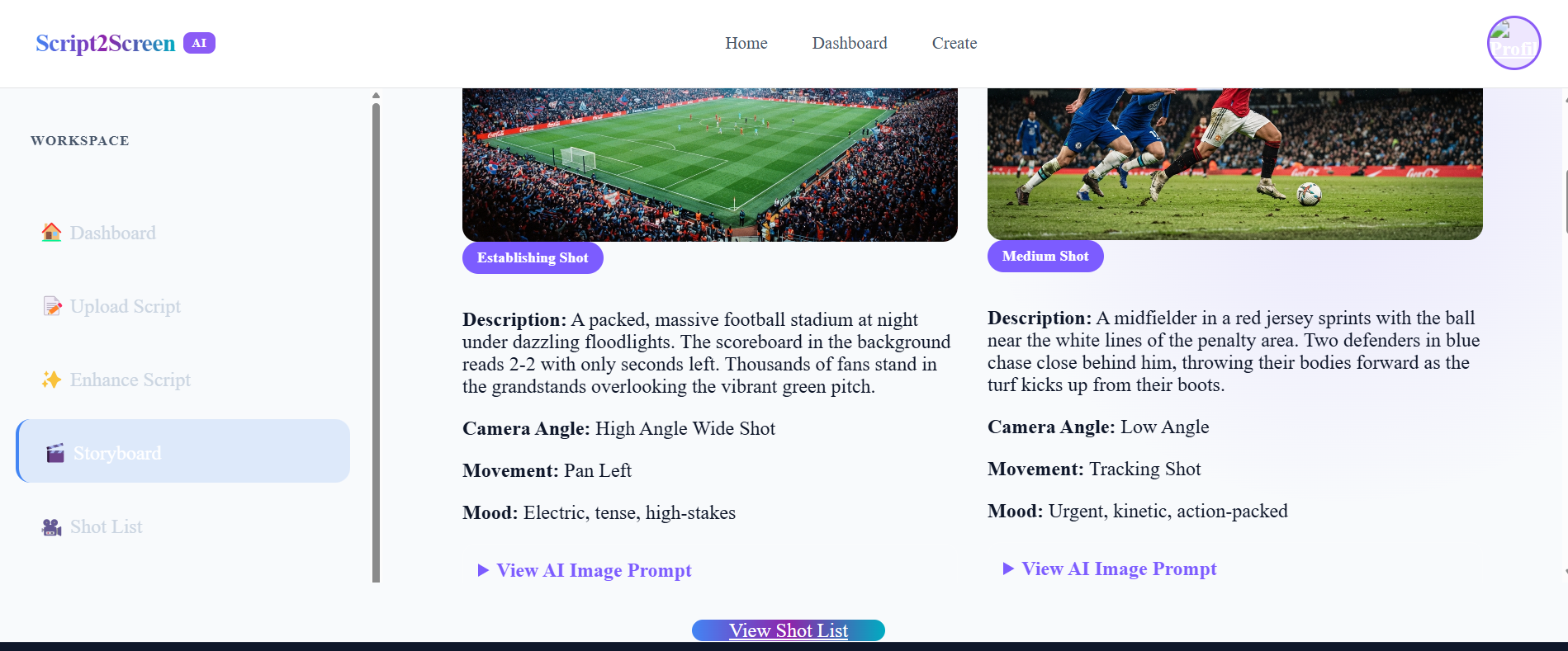
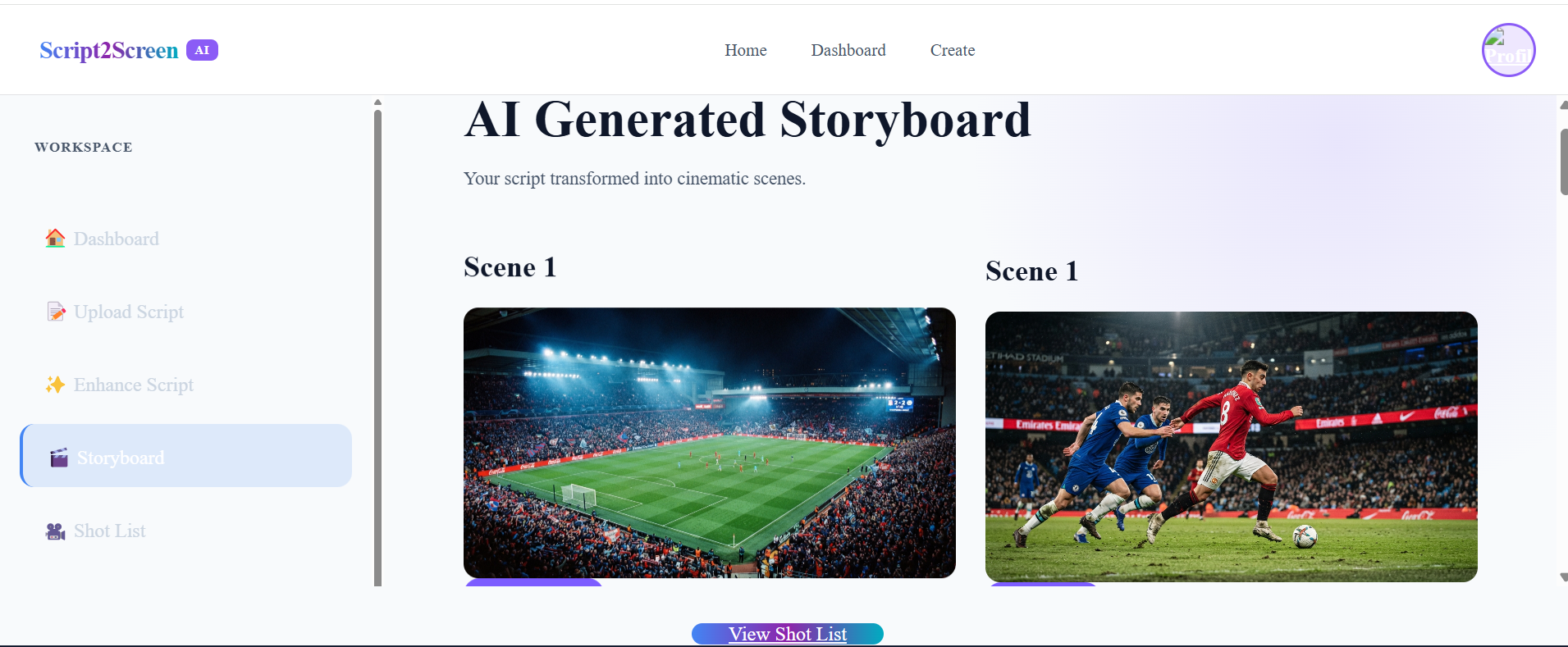
storyboard
-
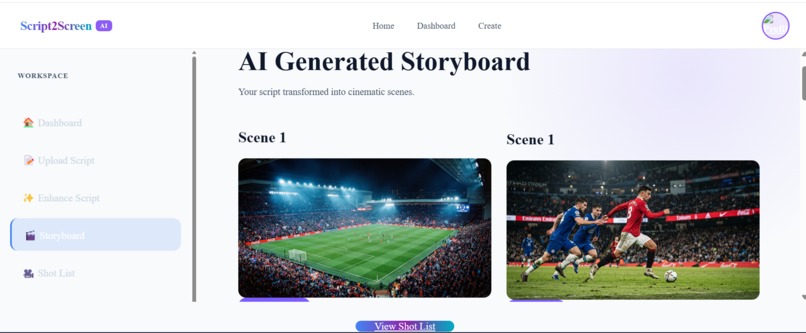
storyboards scene
Inspiration
Film production begins with an idea, but turning a screenplay into visual scenes, storyboards, and a production shot list can be time-consuming. We wanted to make this process easier for filmmakers, students, and creators who may not have access to a full production team.
Script2Screen AI was inspired by the idea of using AI to help creators move from a written story to a visual production plan while keeping the original story at the center.
What We Built
Script2Screen AI is an AI-powered filmmaking assistant that transforms a screenplay into a structured production workflow.
Users can upload or paste a script, analyze and enhance it, break it into scenes, generate storyboard visuals, create a production shot list, and export their project.
The application combines a web interface, a backend processing pipeline, a database, and Gemini-powered AI agents to connect these stages into one workflow.
How We Built It
We built the frontend using HTML, CSS, and JavaScript. The backend was developed with PHP and uses MySQL for storing projects, scripts, scenes, storyboards, and shot lists.
Gemini powers the AI processing stages, including scene analysis, storyboard generation, and shot-list creation. We also integrated image generation to produce visual references for storyboard scenes.
The application was developed and tested locally using XAMPP, then deployed using Google Cloud Run. We used GitHub to manage the project repository and track our changes.
What We Learned
We learned how to connect multiple AI-powered processing stages into a single application workflow. We also gained experience with API integration, database design, backend development, frontend development, cloud deployment, and handling structured AI responses.
A major lesson was that building an AI application requires more than generating a response. The output must be structured, stored, displayed, and connected to the next stage of the workflow.
Challenges
One of our main challenges was integrating the AI models and handling API errors, including quota limitations. We also had to ensure that the generated scene data, storyboard images, and shot lists remained connected to the correct project.
Other challenges included debugging the frontend and backend, managing database integration, deploying the application, and making the workflow simple enough for users to understand.
Future Improvements
We plan to improve the application with more advanced script enhancement, better control over visual styles, improved storyboard editing, additional export formats, and more production-ready collaboration features.
Conclusion
Script2Screen AI demonstrates how AI can support the filmmaking process by helping creators turn ideas into organized visual production plans. Our goal is to make the journey from script to screen more accessible, efficient, and creative.
Built With
- agent-platform
- css
- gemini-api
- gitthub
- google-cloud-run
- gooogle-cloud
- html
- javascript
- mysql
- parallel
- php
- powershell
- vscode
- xampp


Log in or sign up for Devpost to join the conversation.