INSIGHT by Scribe Report
Inspiration
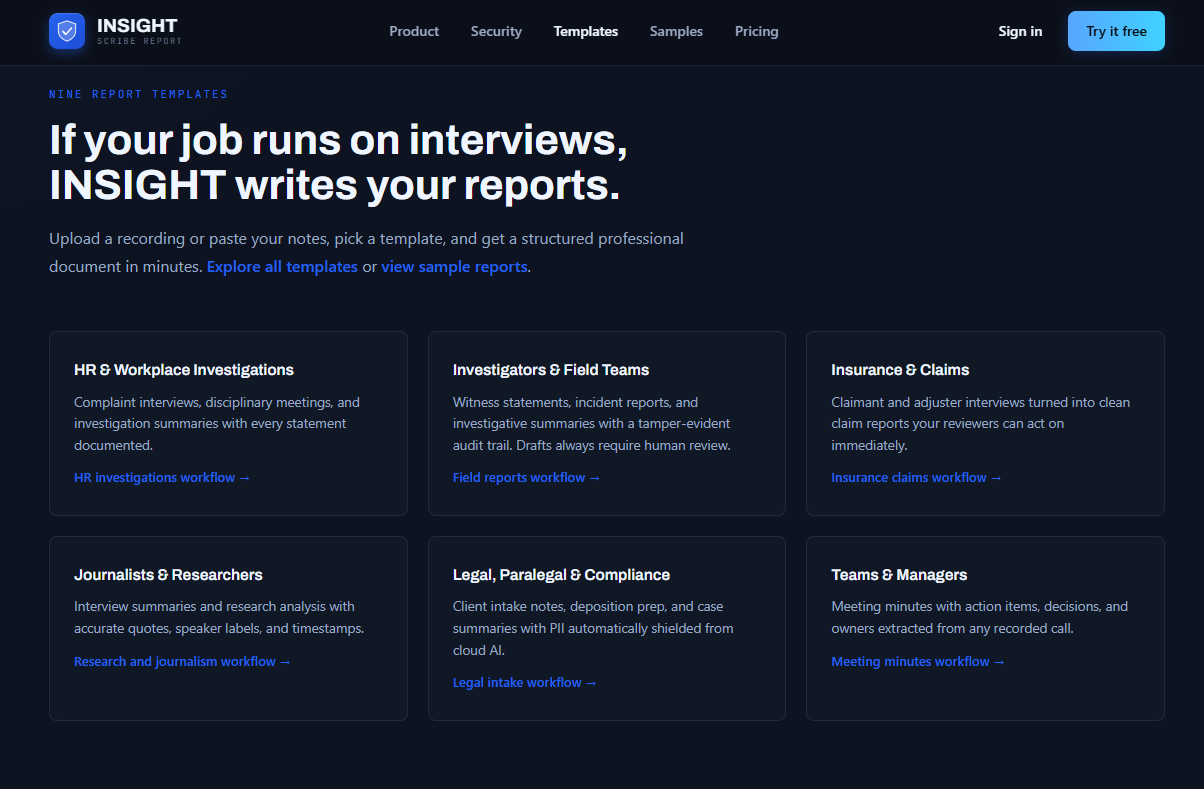
I built Scribe Report after recognizing how much time investigators, HR professionals, adjusters, researchers, journalists, and other professionals spend converting recordings into formal documentation.
A transcript alone is rarely the finished product. Users still need to identify important facts, organize the material, protect sensitive information, create a professional report, and maintain confidence in how the document was produced.
INSIGHT was created to bring that workflow into one application while preserving privacy, source fidelity, security, and human accountability.
What It Does
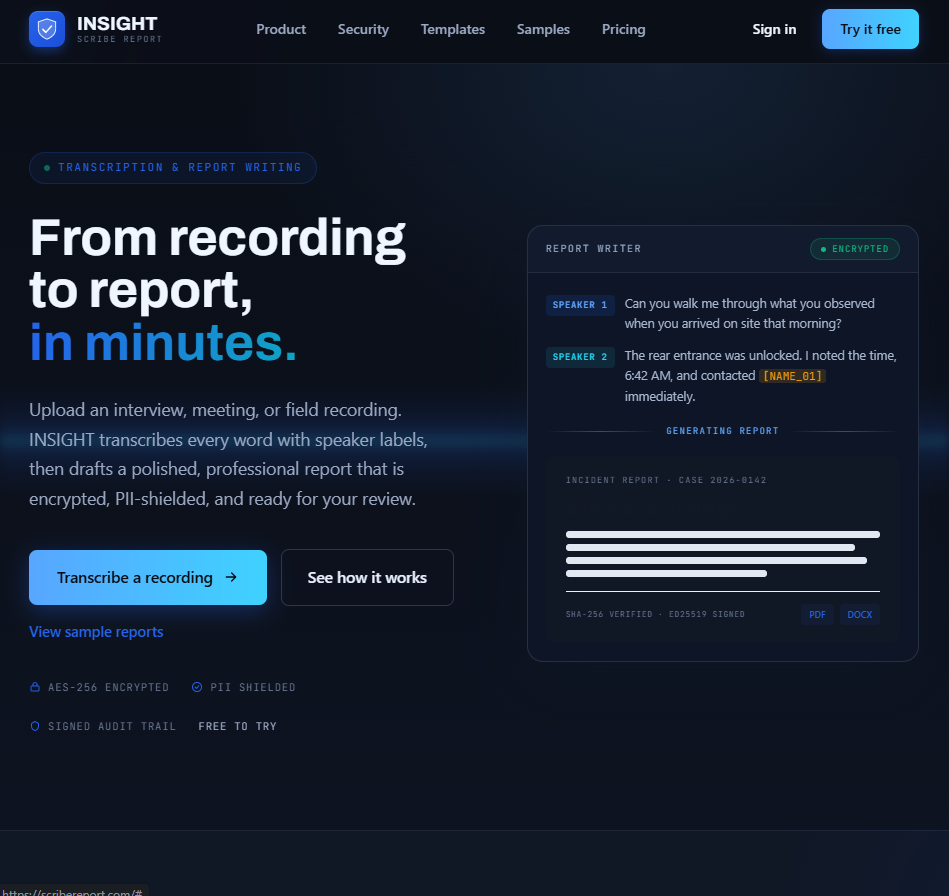
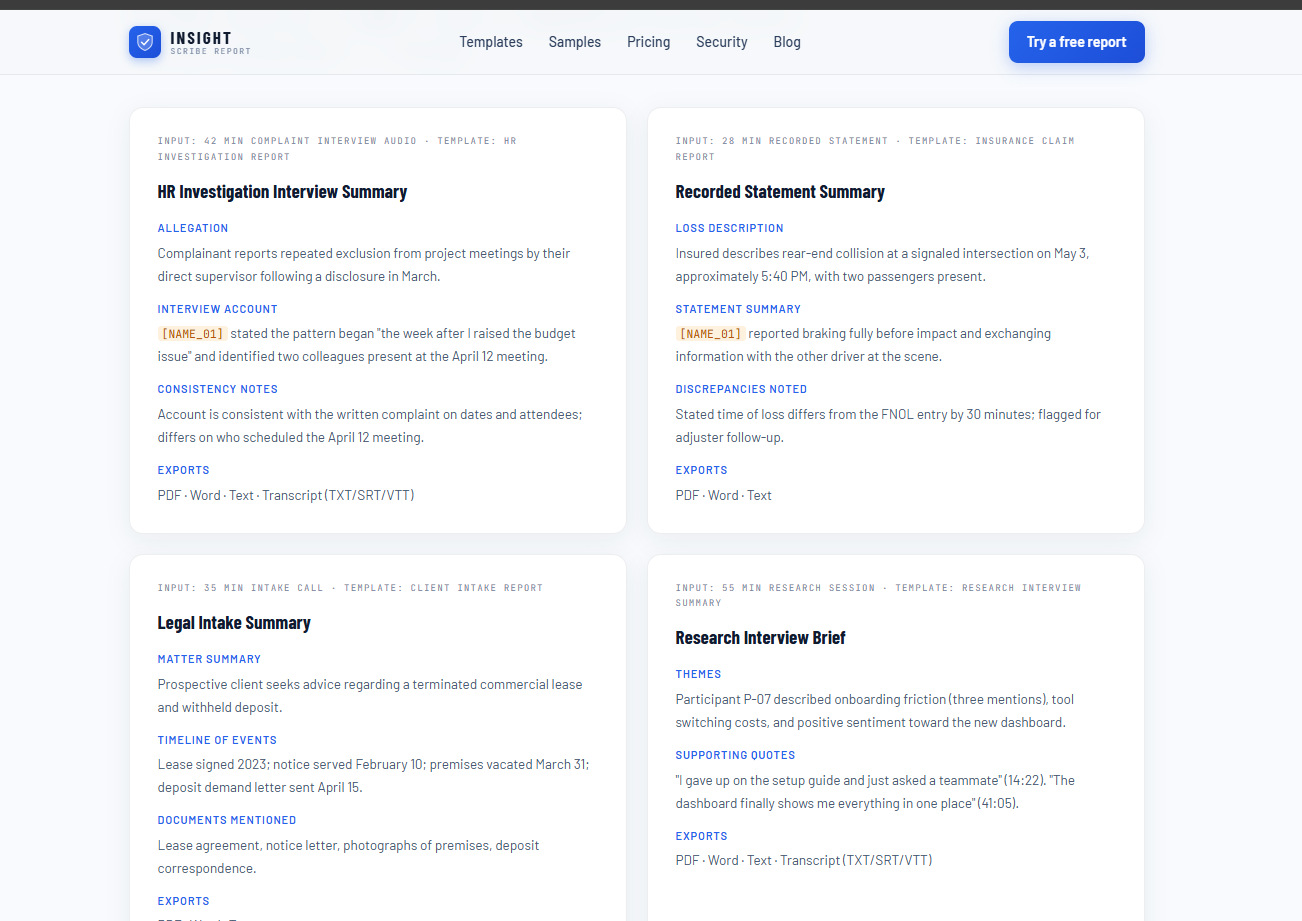
INSIGHT transforms audio, video, transcripts, or written notes into structured, review-ready reports.
The workflow includes:
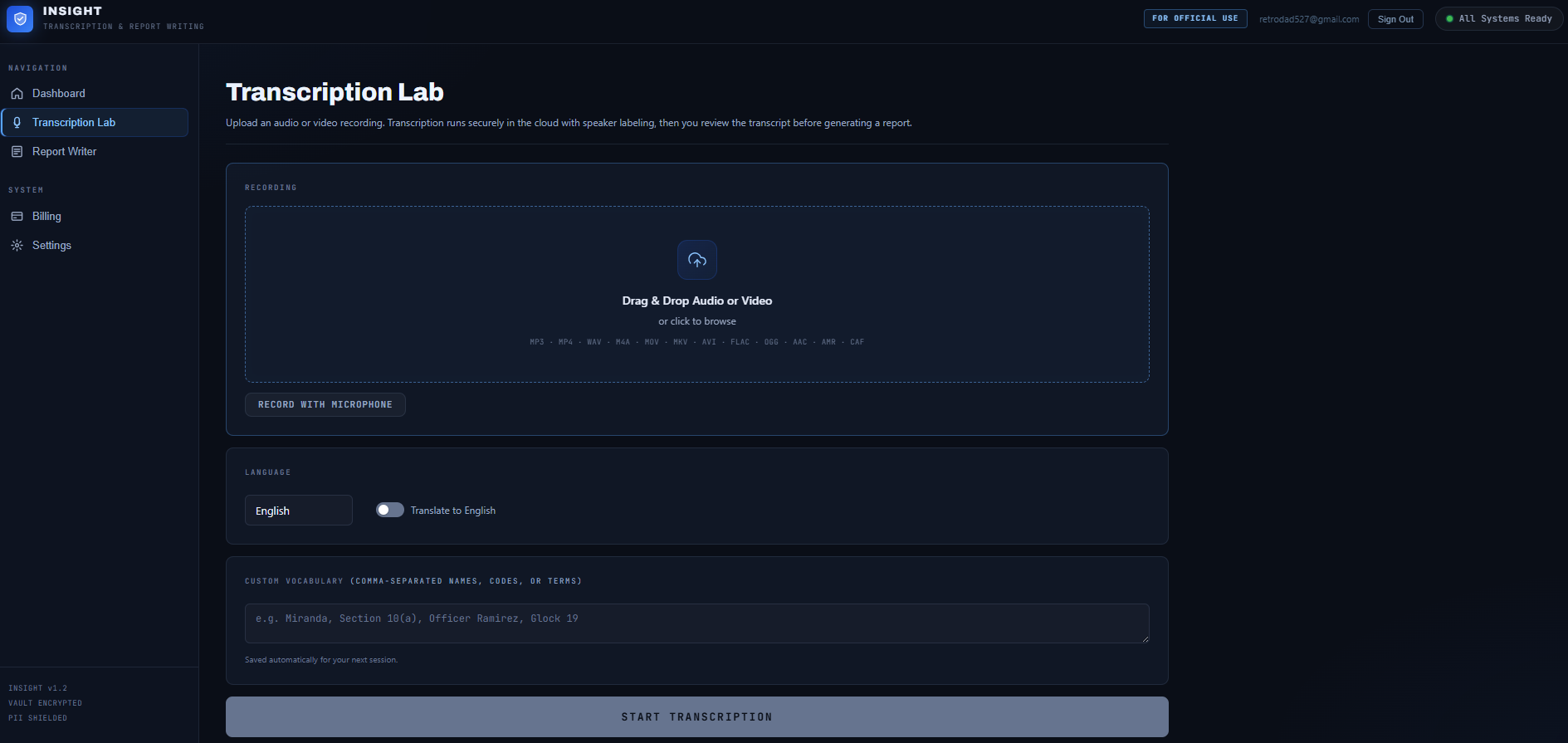
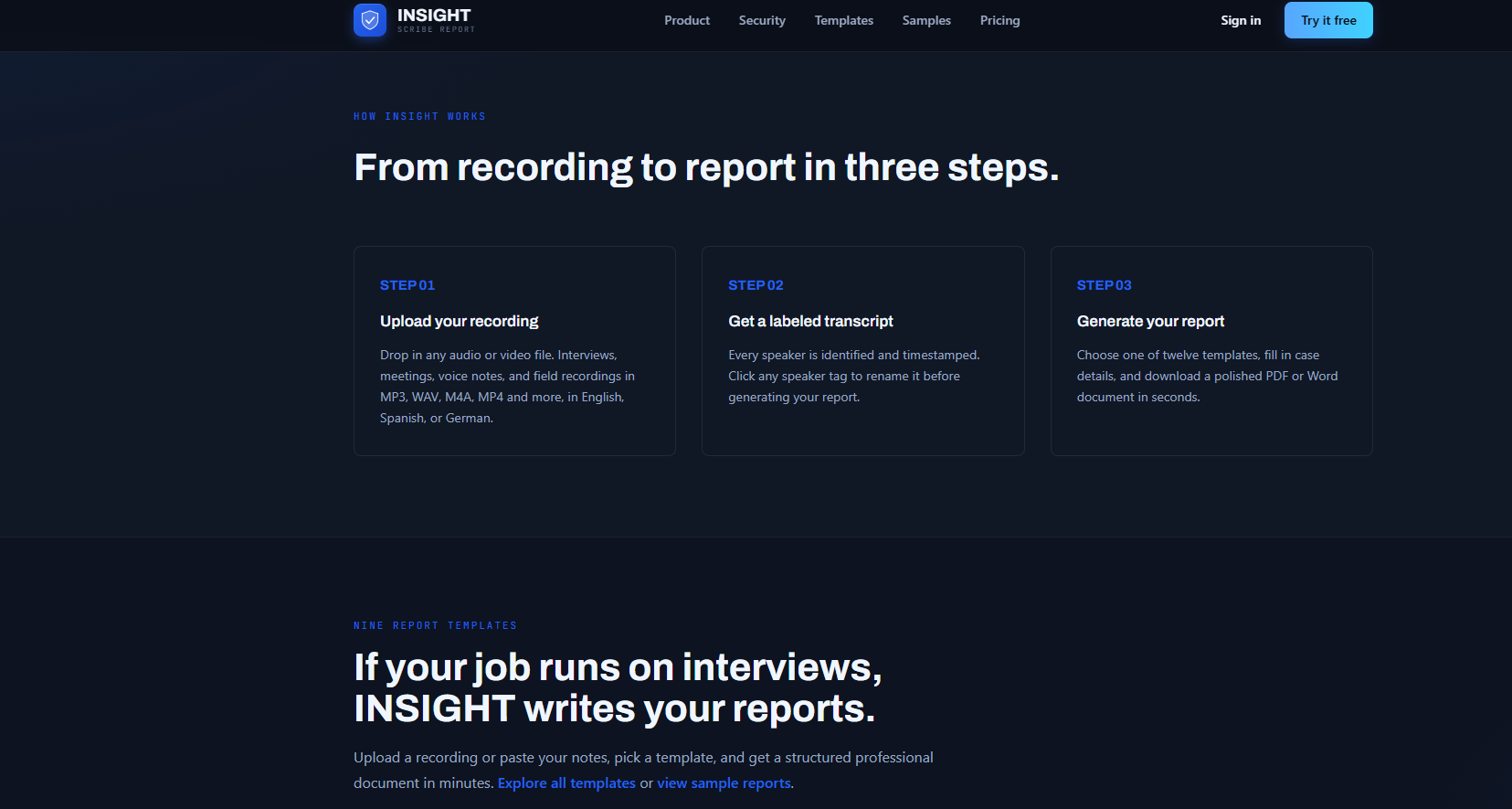
- Recording audio directly in the browser or uploading an existing file.
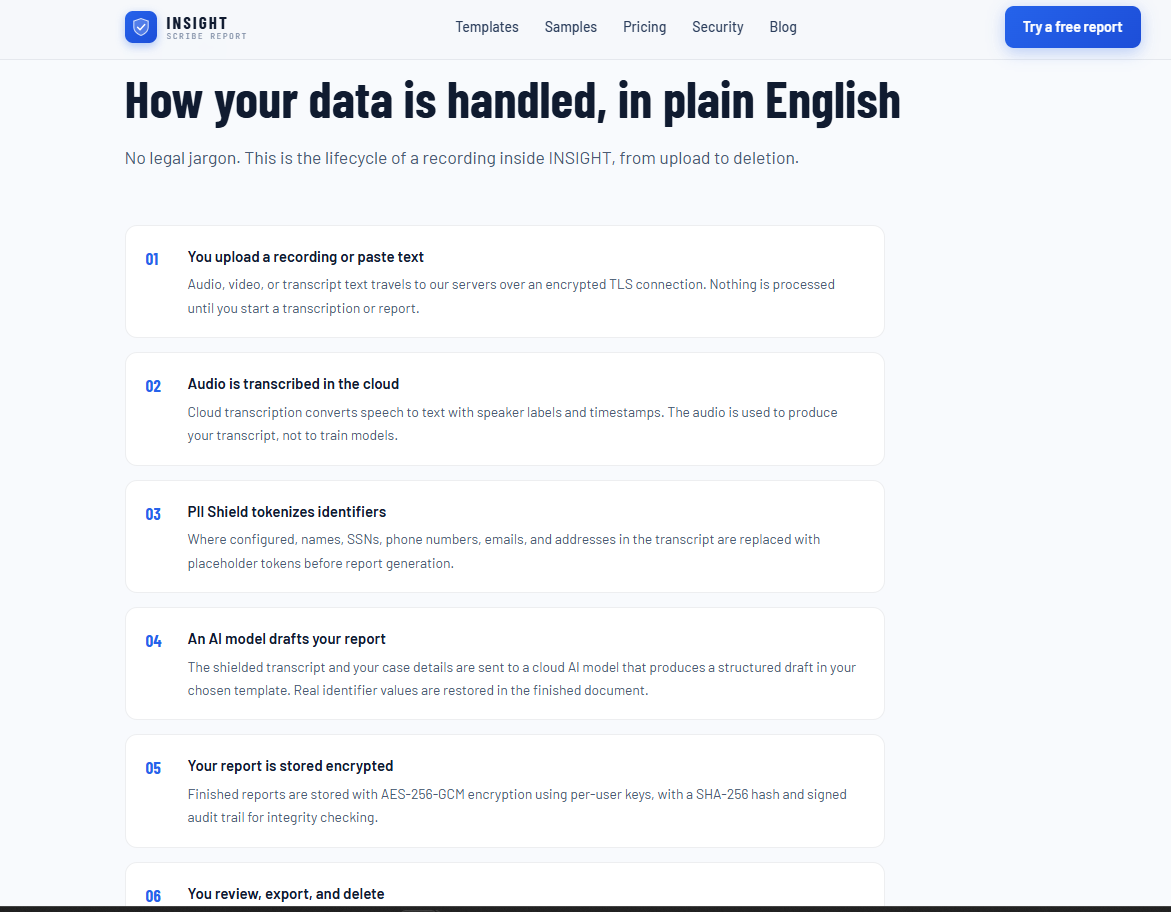
- Transcribing the recording with timestamps and speaker information when available.
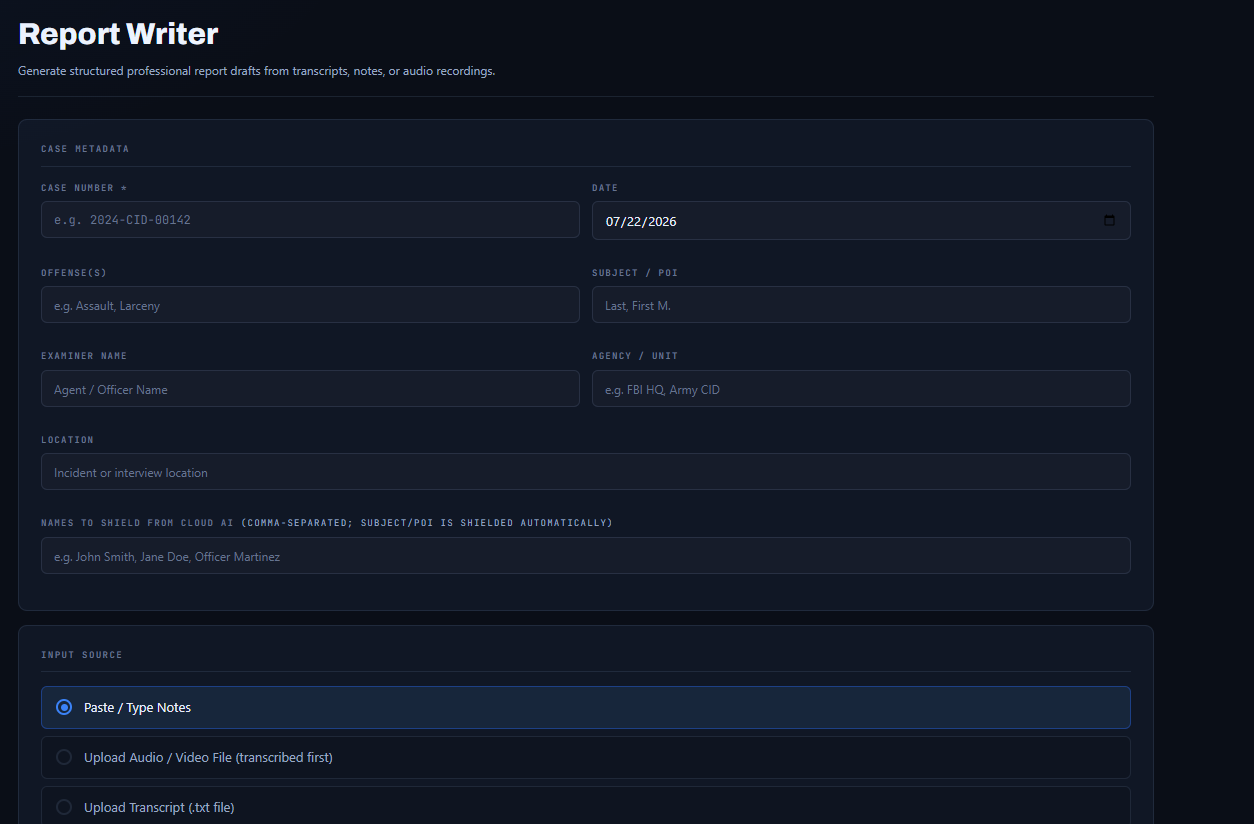
- Detecting and replacing personal information with randomized placeholder tokens.
- Sending only the protected transcript and metadata to GPT-5.6.
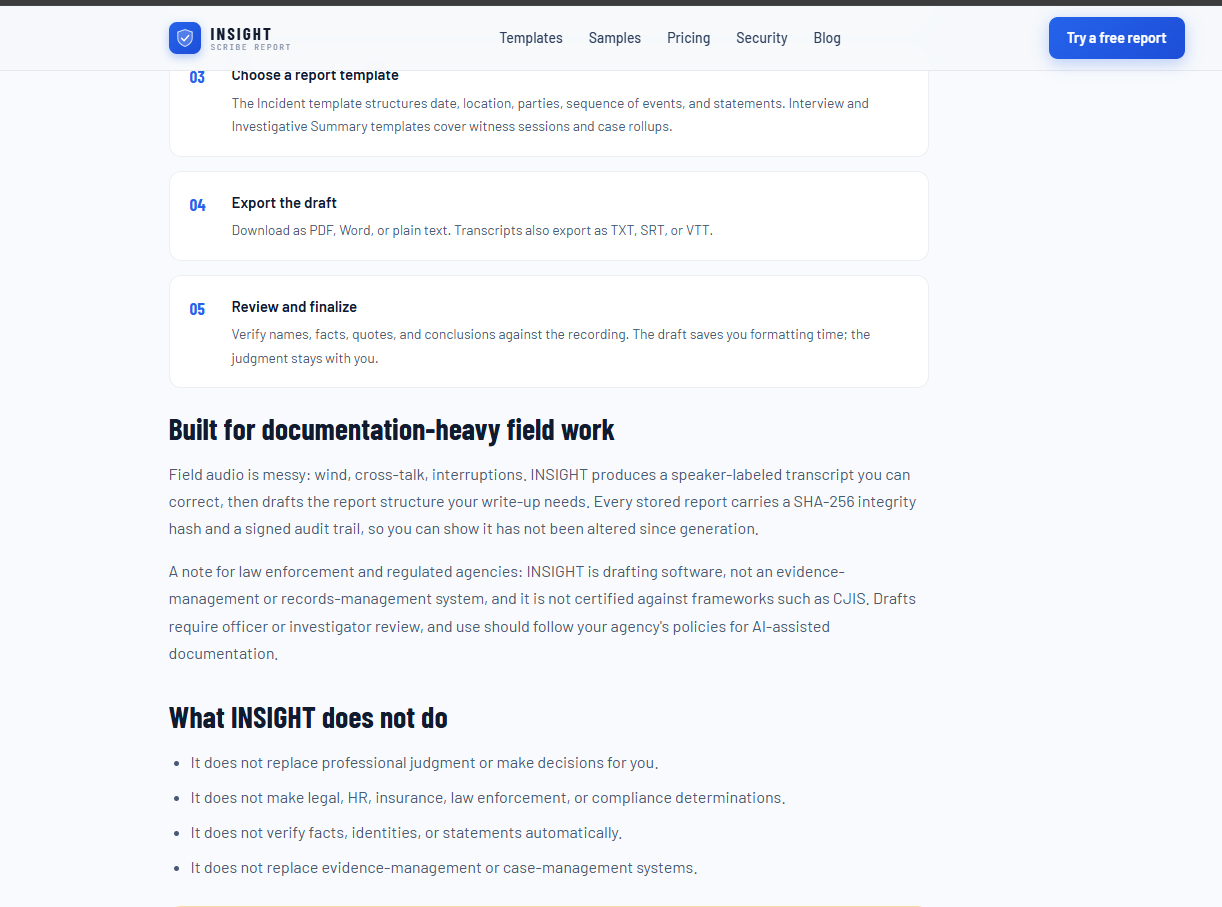
- Generating a source-faithful report using a selected professional template.
- Restoring protected information securely on the server.
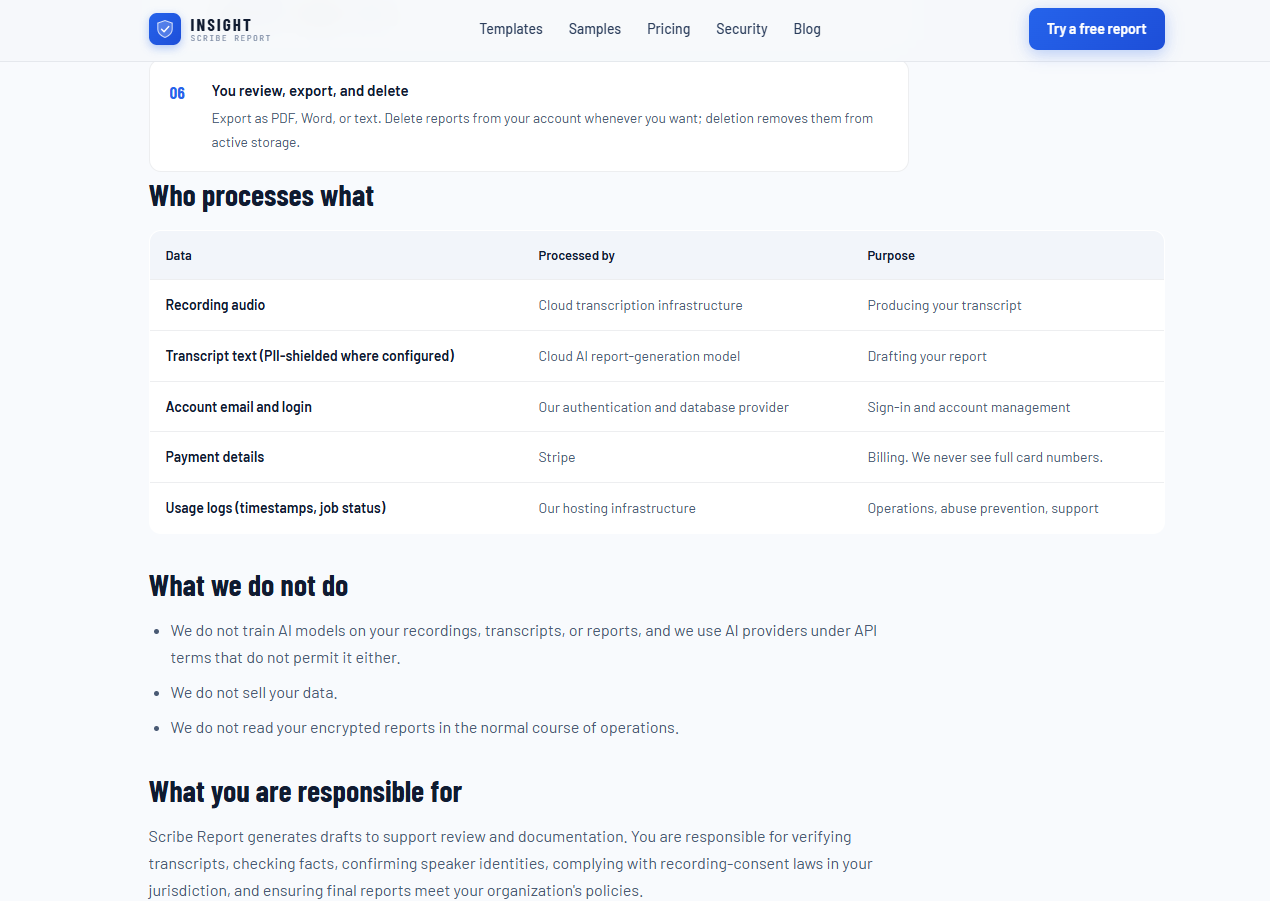
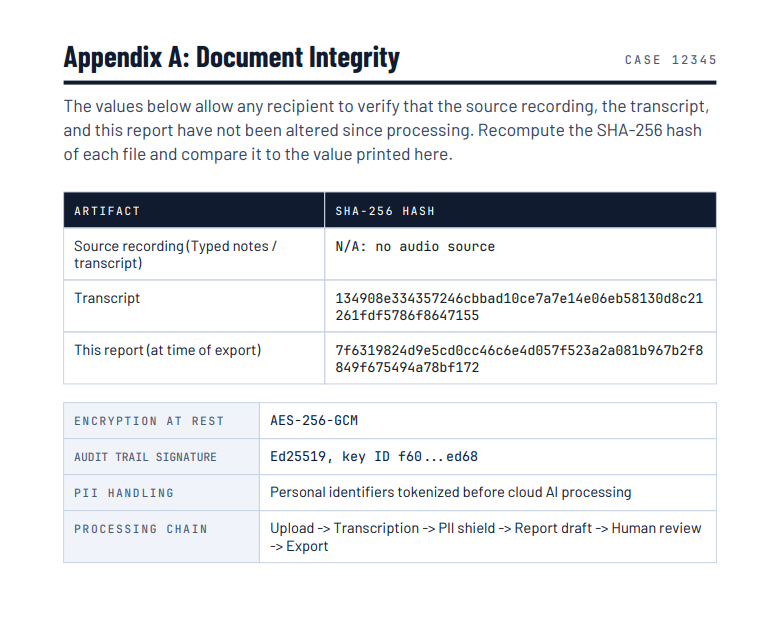
- Encrypting the report before storage.
- Creating signed audit records that can be verified in the application.
- Exporting the report as PDF, DOCX, or text.
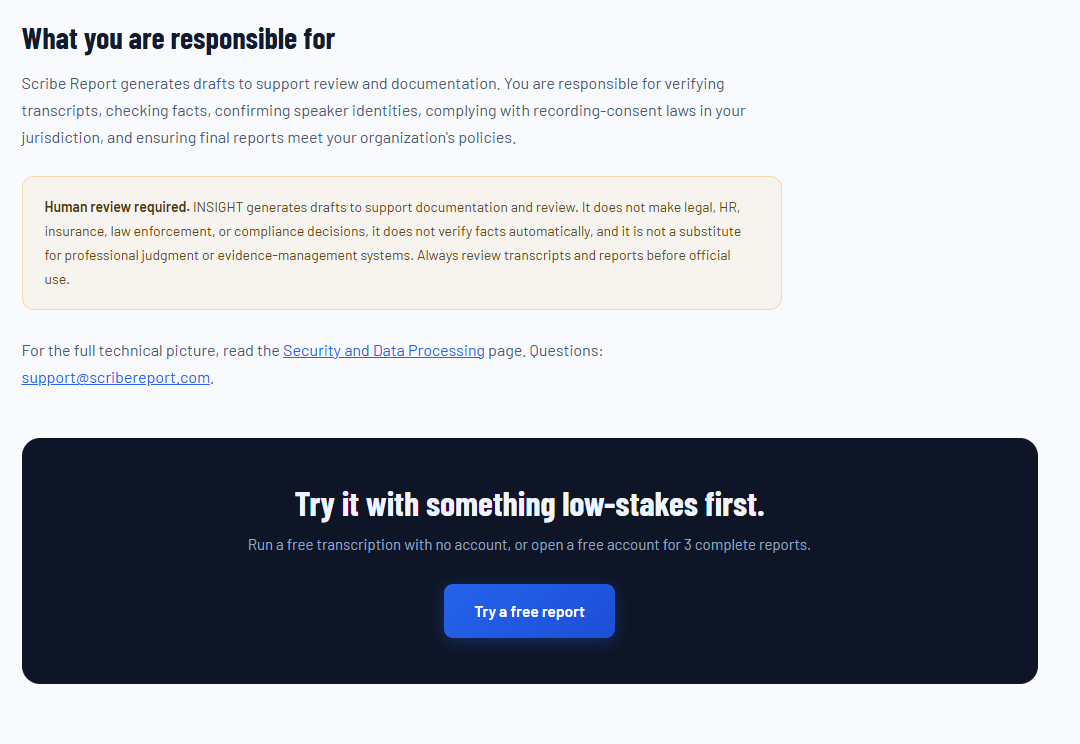
Every generated document remains a draft requiring human review.
How I Built It
The application is built on Cloudflare Workers with a browser-based frontend.
Technology Stack
- OpenAI GPT-5.6 through the Responses API for report generation
- Codex for codebase analysis, implementation, testing, debugging, documentation, and deployment
- Cloudflare Workers for the serverless API
- Cloudflare Workers AI for transcription
- fal.ai Whisper for premium transcription and speaker diarization
- Cloudflare R2 for encrypted report storage
- Cloudflare KV and Durable Objects for usage management
- Supabase for authentication and user records
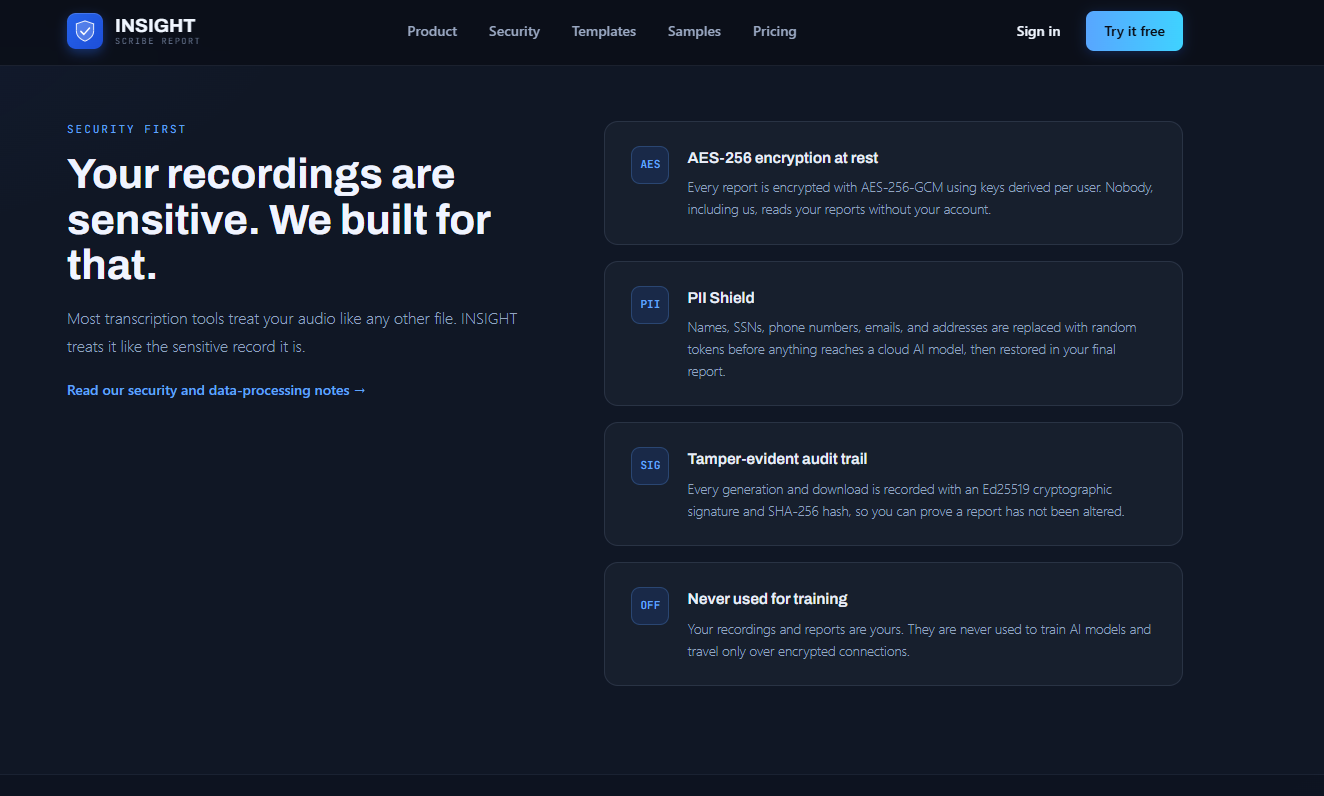
- Web Crypto API for encryption, hashing, key derivation, and digital signatures
- AES-256-GCM envelope encryption for reports at rest
- AES-KW and HKDF for per-report key protection
- SHA-256 for artifact integrity hashes
- Ed25519 for signed audit entries
- TypeScript, HTML, CSS, and JavaScript
- Vitest for automated Worker testing
- GitHub for public source control and Build Week evidence
OpenAI Build Week Improvements
Scribe Report existed before the event, so I clearly separated and documented the work completed during Build Week.
Working with Codex, I:
- Migrated report generation from GPT-4o to GPT-5.6.
- Moved the OpenAI integration to the Responses API.
- Added browser-based microphone recording.
- Normalized browser recordings into transcription-friendly WAV files.
- Added automatic transcription-provider fallback.
- Improved handling of empty transcripts and Whisper silence hallucinations.
- Built a read-only audit viewer that verifies Ed25519 signatures.
- Corrected audit canonicalization for nested metadata while retaining backward compatibility.
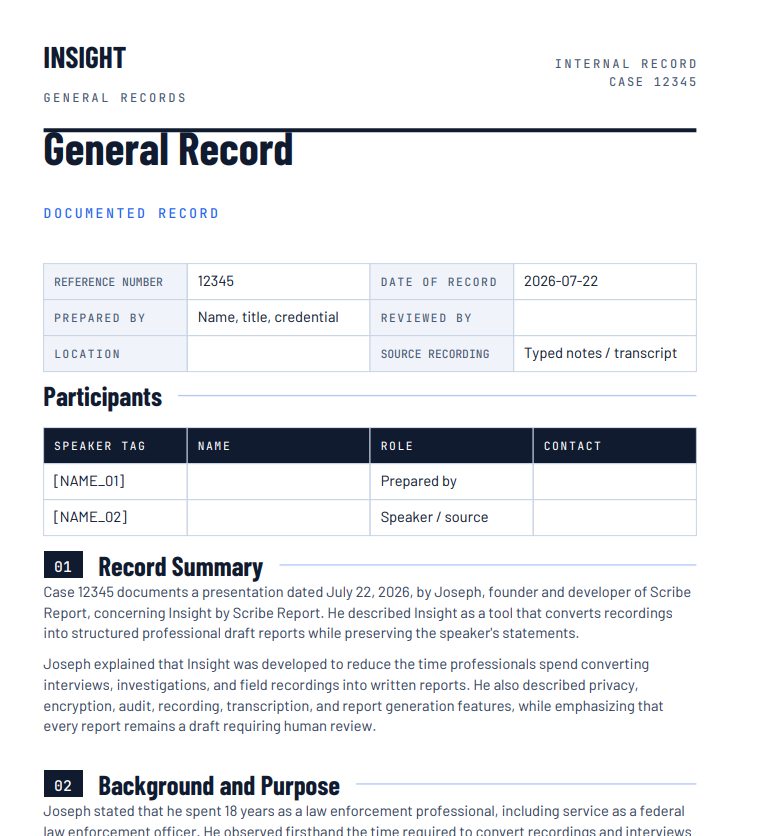
- Added a source-faithful General Record template.
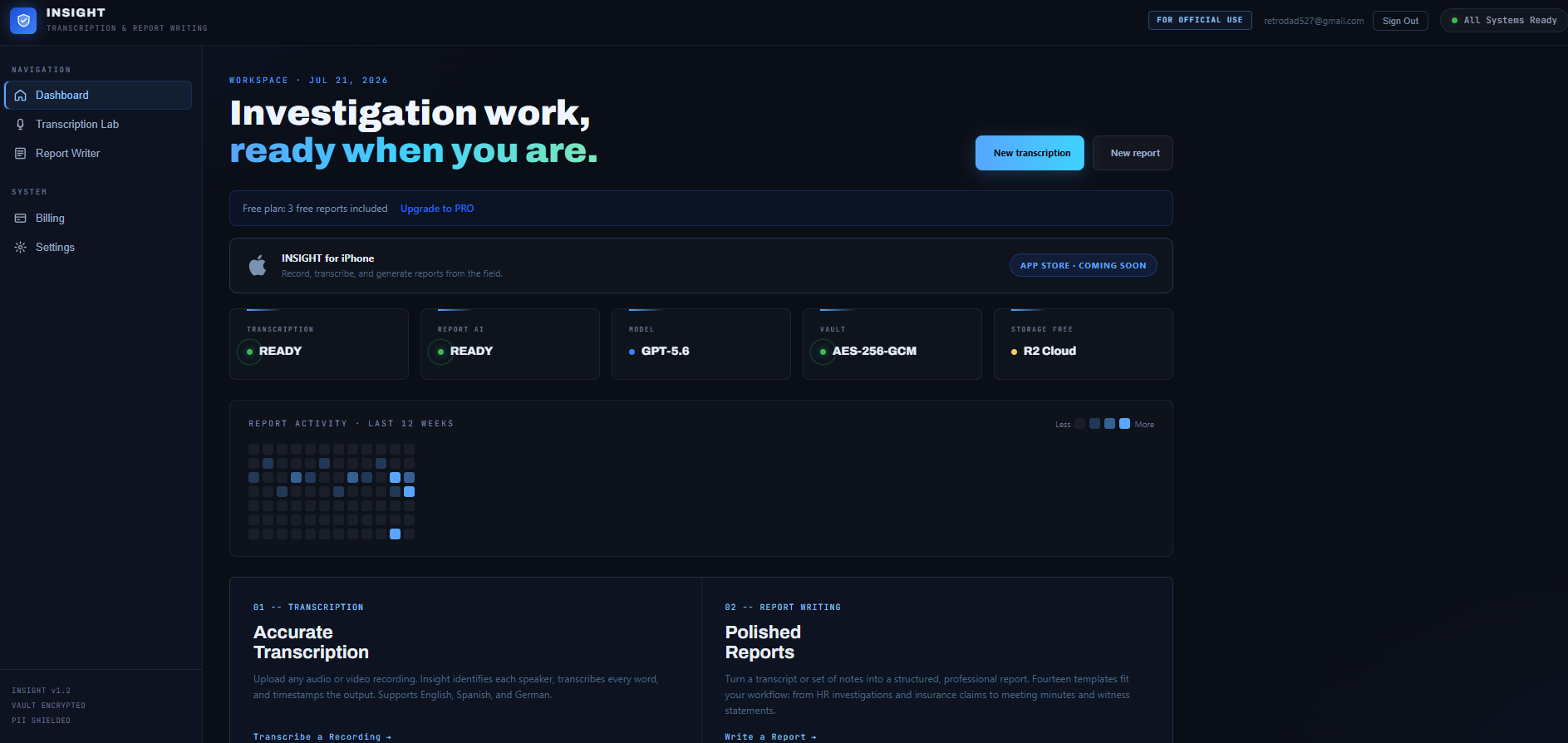
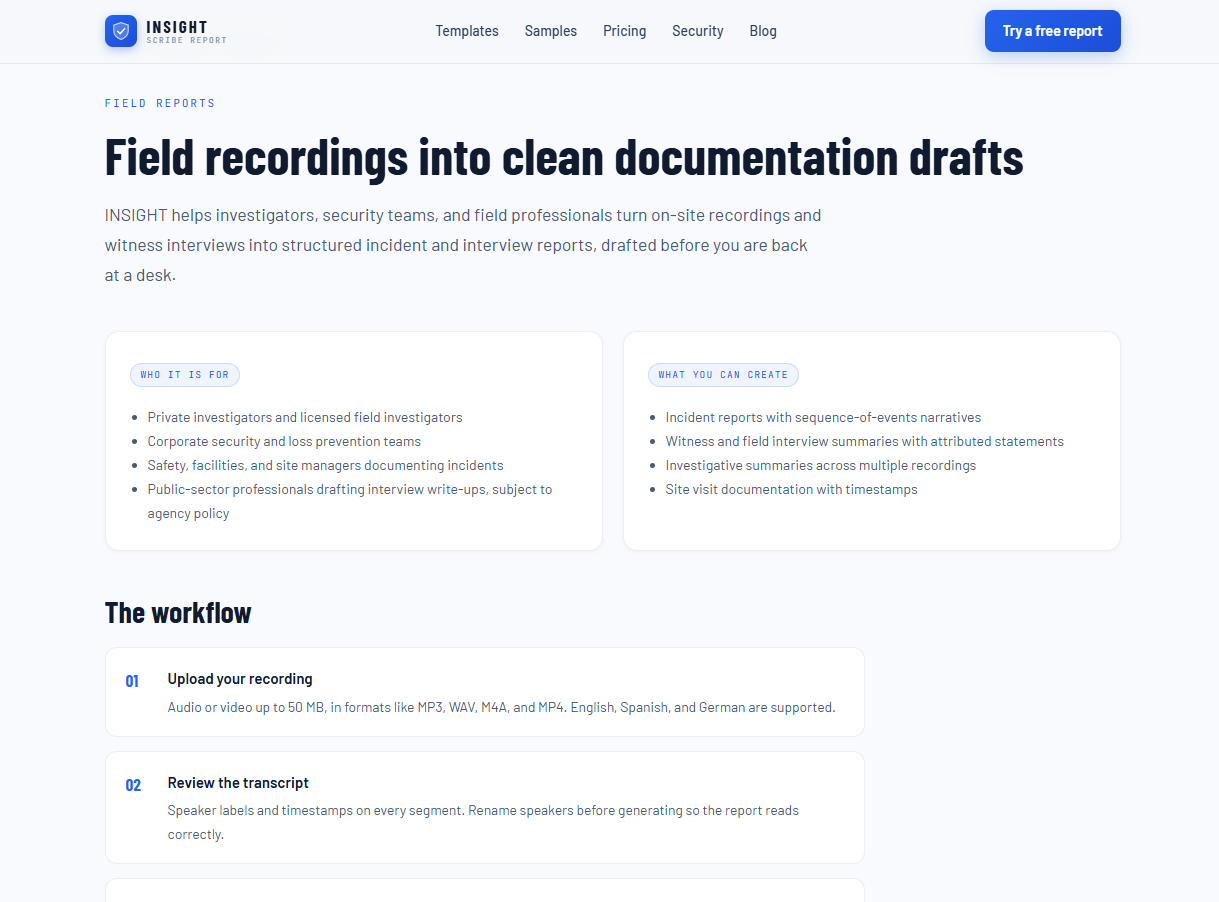
- Redesigned the public landing page and signed-in dashboard.
- Improved the General Record structure and removed unnecessary boilerplate.
- Expanded automated regression tests.
- Updated the architecture, security, encryption, and submission documentation.
- Deployed and tested the changes on the production website.
Privacy And Security
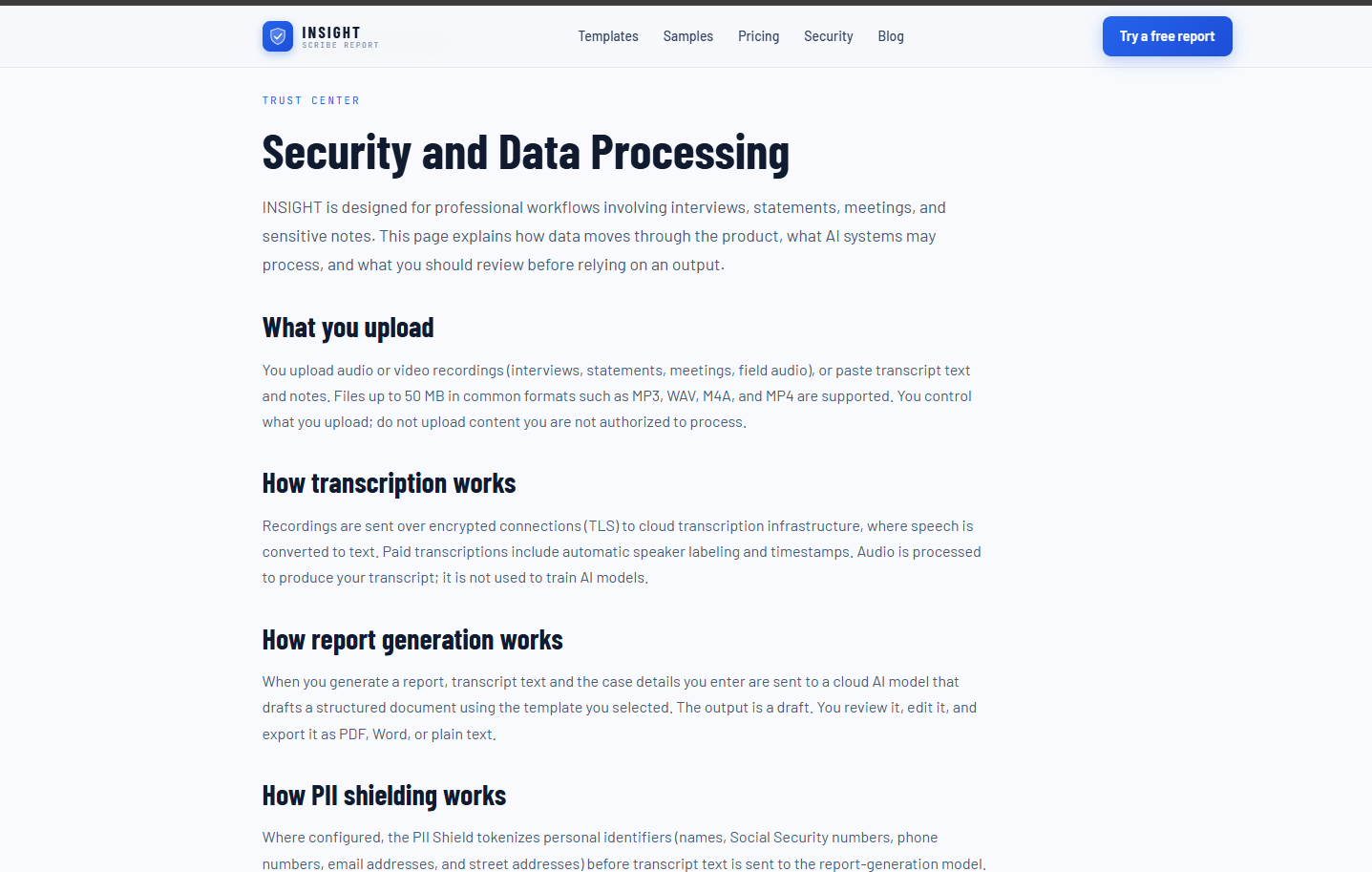
Privacy is part of the application architecture rather than an optional setting.
Before report generation, detected names and structured identifiers such as phone numbers, email addresses, addresses, dates of birth, Social Security numbers, and license numbers can be replaced with randomized tokens.
GPT-5.6 receives the protected text, not the private restoration map. After generation, the original values are restored inside the Cloudflare Worker.
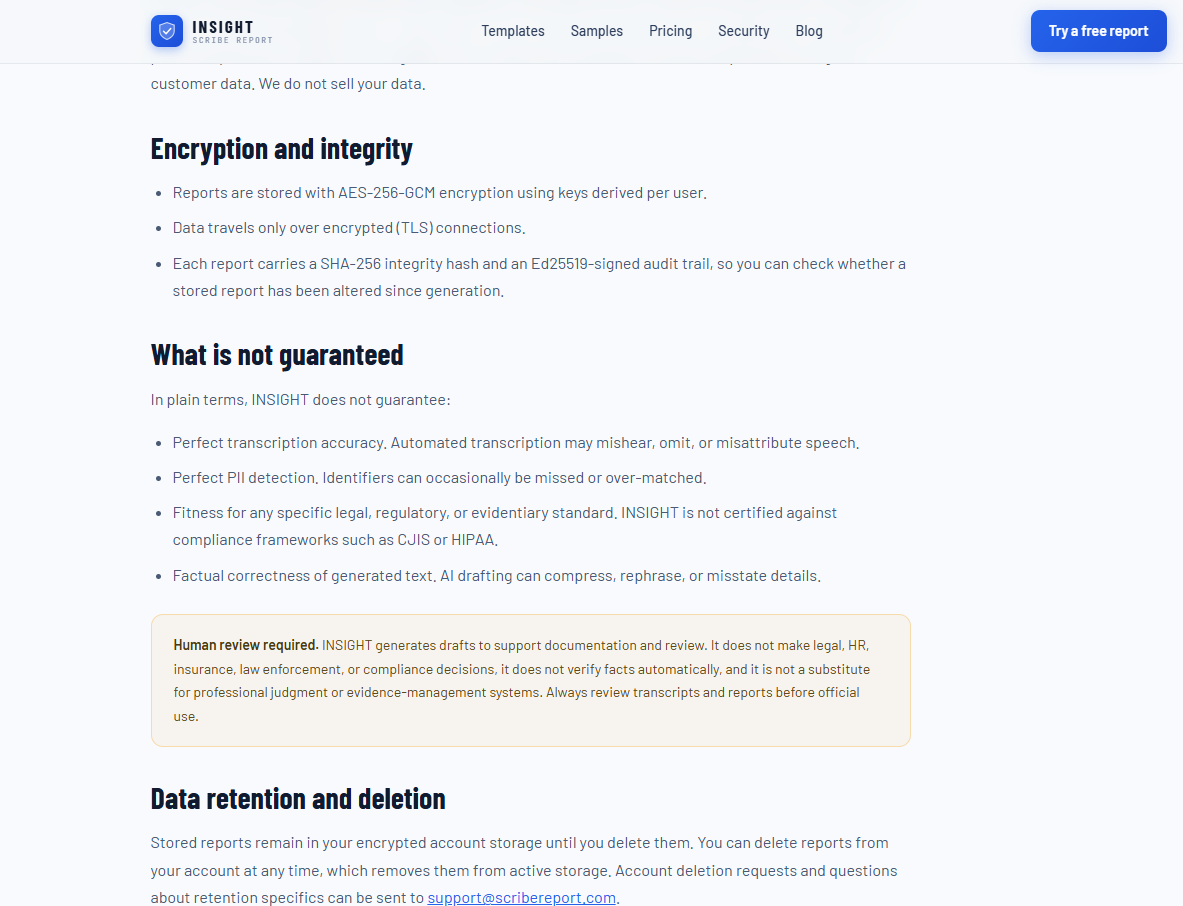
Each completed report is encrypted with a unique data-encryption key. That key is wrapped using a key derived for the user, and the encrypted report is stored in Cloudflare R2.
Audit records contain the action, timestamp, metadata, and an Ed25519 signature. The audit viewer verifies each signature and displays its status so users can inspect the document’s chain of custody.
Challenges I Faced
One major challenge was making browser audio recording reliable across browsers and transcription providers. Browser recordings can use different codecs and container formats. I added WAV normalization and bidirectional provider fallback so a failure from one transcription service does not immediately end the workflow.
Another challenge was preventing plausible but unsupported report content. GPT-5.6 is instructed to use only the supplied transcript and metadata, avoid resolving ambiguity through assumptions, and identify missing information instead of inventing it.
Signed audit verification also required careful canonicalization. Nested metadata must be serialized consistently before signing and verification. The implementation now uses deterministic recursive ordering while continuing to verify older entries.
The General Record template presented a design challenge because it needed to support many kinds of source material without producing vague or repetitive documents. I replaced rigid quotation and inventory sections with a concise summary, background, organized key information, actions, next steps, and a source note.
What I Learned
I learned that responsible AI application development is largely about designing the system surrounding the model.
A capable model is important, but professional users also need privacy boundaries, encryption, provenance, failure recovery, source-fidelity instructions, and a clear review process.
I also learned how valuable Codex can be as an engineering collaborator across an entire production workflow. It helped me understand an existing codebase, implement changes across the frontend and Worker, write regression tests, diagnose live failures, improve documentation, manage GitHub updates, and deploy verified fixes.
What Comes Next
Future improvements include:
- Confidence scoring and human review for uncertain PII detections
- Versioned report history with visual comparisons
- Structured Outputs for schema-enforced report sections
- Streaming report generation
- Expanded transcription-provider support
- More granular report approval and chain-of-custody workflows
Links
- Live application: scribereport.com
- Source repository: RetroDevops/ScribeReport
Built With
- 5.6
- ai
- api
- cloudflare
- codex
- crypto
- css
- fal.ai
- github
- gpt
- html5
- javascript
- open
- openai
- response
- supdabase
- vitest
- web
- workers

Log in or sign up for Devpost to join the conversation.