-
-
Log In screen
-
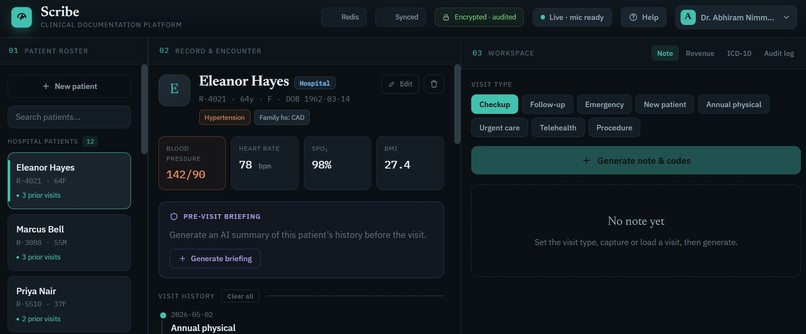
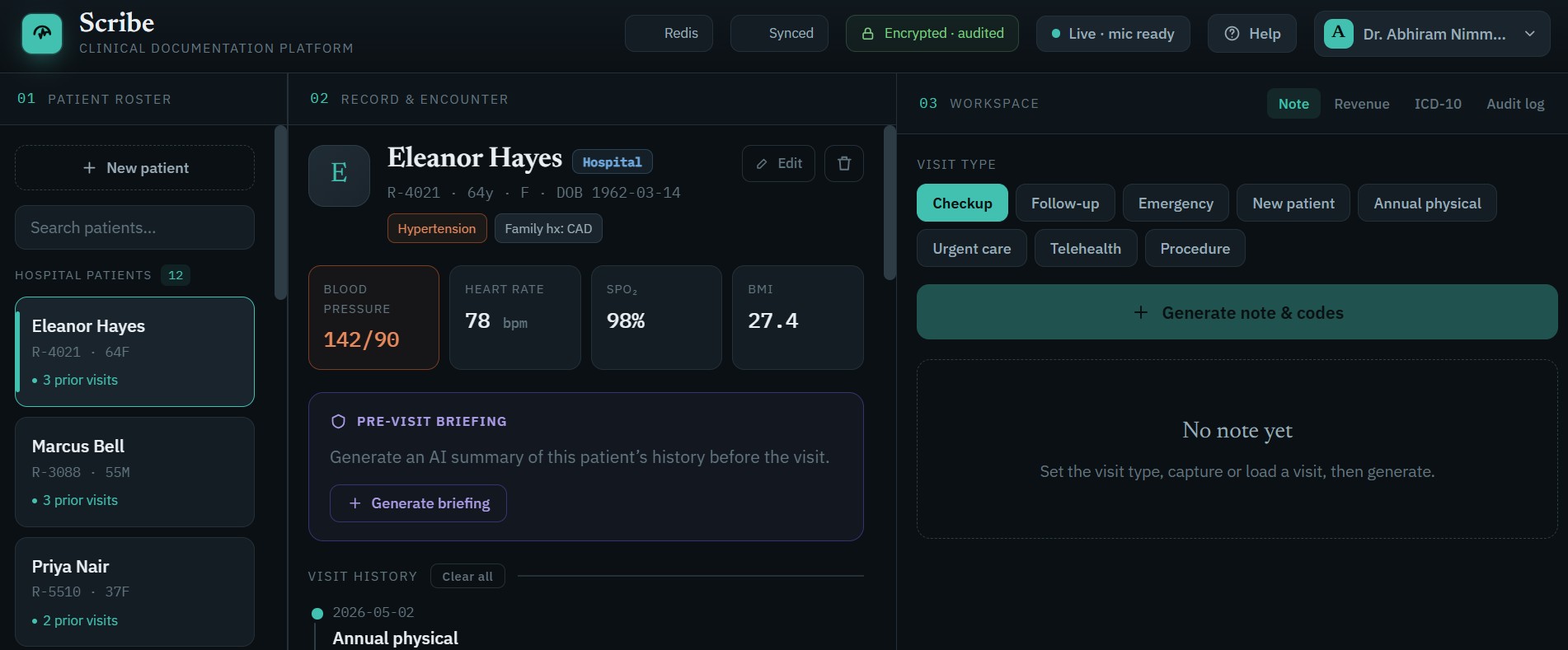
Patient Biometrics / Medical History
-
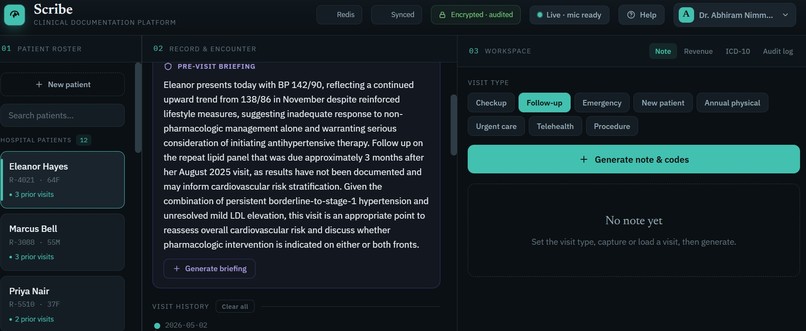
Medical History / Appointment briefing
-
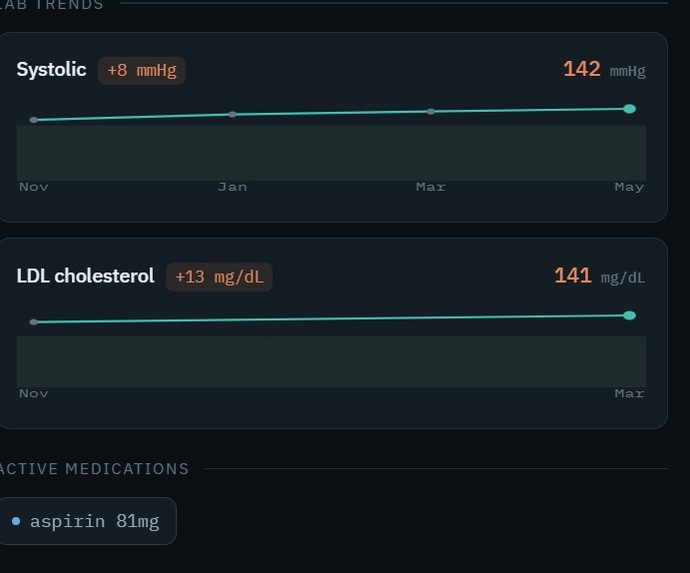
Patient Charts
-
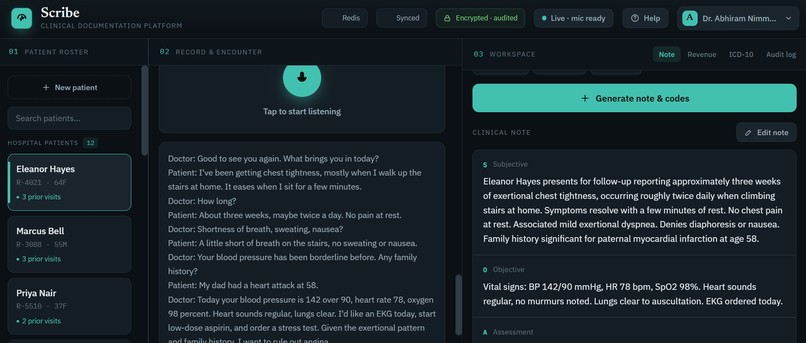
Appointment Recorder - Diagnosis / Plan generator
-
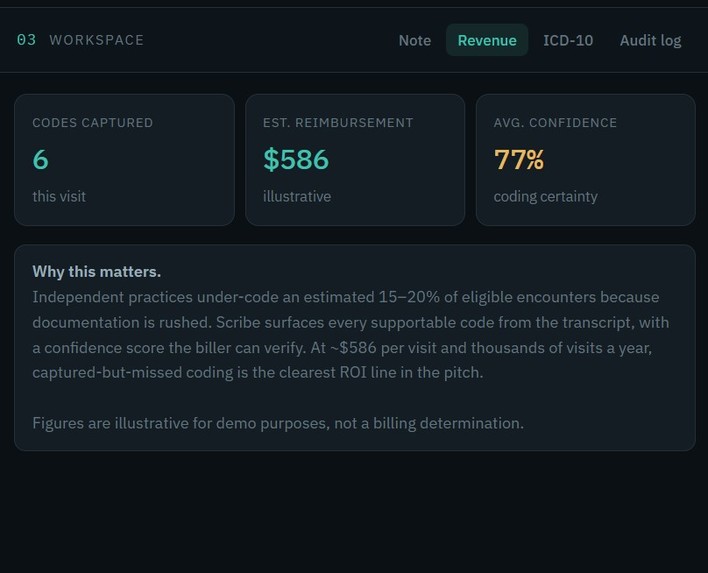
Finances Saved
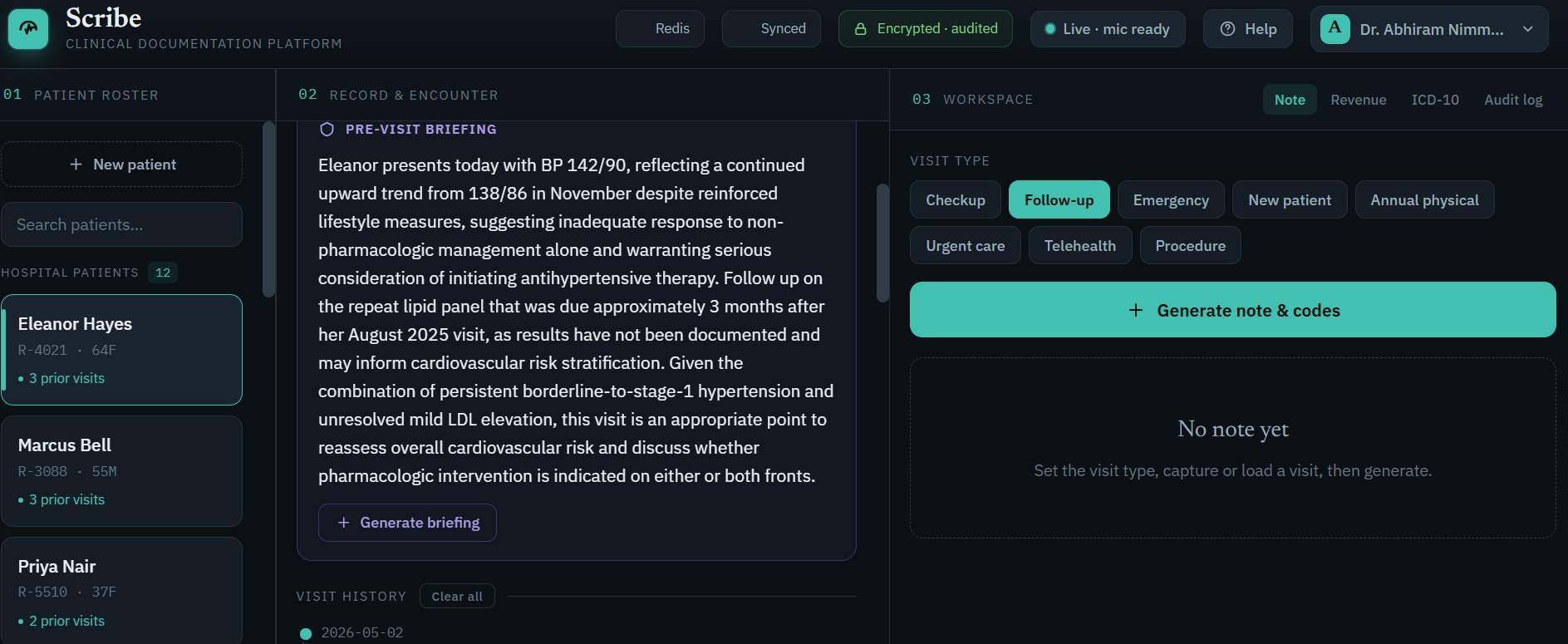
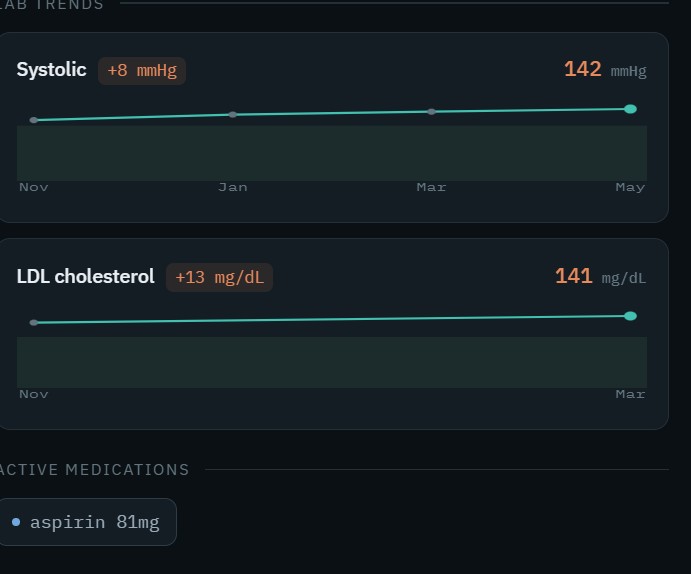
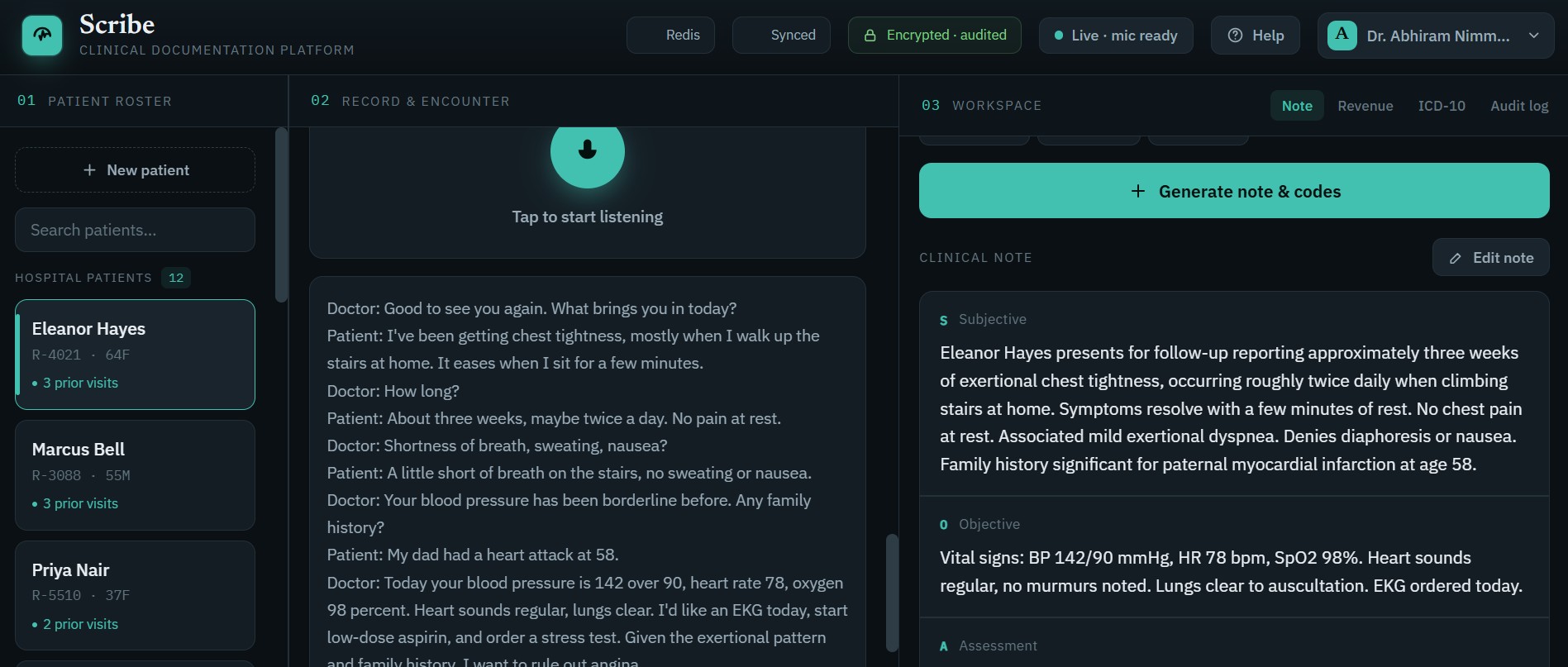
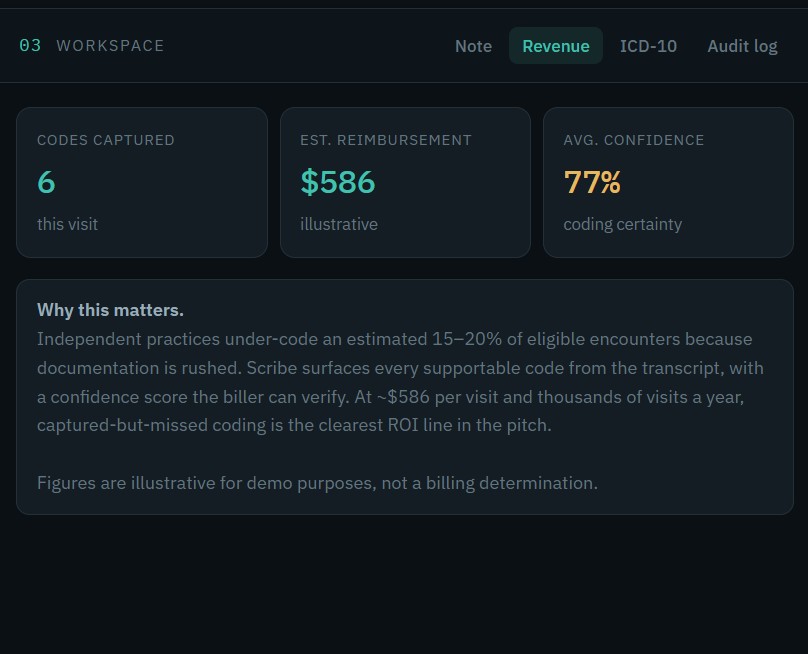
Inspiration - For every hour a doctor spends with a patient, they spend nearly two more typing it into the computer — often late at night, long after their family's asleep. It's the number one driver of burnout: in 2025, about 42% of physicians reported at least one symptom. And it's quietly closing small independent practices that can't absorb the load. The big AI companies are all chasing hospital systems on two-year contracts. Nobody's building for the small practice down the street that's drowning right now. So that's who I built Scribe for.
What it does -
Scribe listens to a visit and writes the full clinical note — Subjective, Objective, Assessment, Plan — with ICD-10 billing codes, each checked against a built-in reference so they're not made up. It also:
- Remembers the patient between visits and flags what's changed
- Briefs the doctor before they walk in
- Checks every new prescription against current meds for dangerous interactions
- Charts lab trends like A1C over time
- Surfaces the billing codes rushed practices miss (small practices under-code an estimated 15–20% of visits)
- Writes referral letters and plain-language patient summaries
- Handles appointments and a shared patient roster
- Logs every action and lets the doctor edit any note
That last part matters most. No doctor trusts a tool that puts words in their mouth — so every note is editable, and every change is tracked. The AI drafts; the doctor signs.
How we built it - One self-contained web app. Claude does the clinical reasoning — note, codes, briefings, letters, and the interaction check. Deepgram handles live speech-to-text and separates who's speaking. Records save to a backend so they work across the practice, with 12 fully built demo patients to show it off. I spent real time on how it looks, because if it feels like a hackathon toy, no doctor trusts it with a patient.
Challenges we ran into - The hard part was getting the billing codes reliable, since that's what keeps a practice's lights on, so I built a 50+ code ICD-10 reference to verify every suggestion in real time. The other challenge was trust: "Would a real doctor let this near a patient?" — which is why the interaction check, editable notes, and audit log exist. I also built a local fallback so the demo never breaks.
Accomplishments we're proud of - It works end to end: you talk, and out comes a verified, coded note, a safety check, a patient record that remembers, appointments, and a full audit trail. If Scribe gives a doctor back even half of those two admin hours, that's an hour a day returned to patients and family. It's honest about what it is — a tool for the doctor nobody else is building for. It will help people like my aunt be with her daughter more often.
What we learned - The real problem in clinical AI isn't hearing the words — it's reasoning over them safely and turning them into something a clinic can bill and trust. And "human in the loop" isn't a buzzword here; with careers on the line, it's the only reason a doctor would say yes.
What's next for Scribe - Pilot with one real independent practice, move records onto a HIPAA-compliant server, and build the EHR integrations so giving doctors their evening back becomes normal, not rare.
Built With
- anthropic-api
- claude
- css
- deepgram
- html
- javascript
- supabase


Log in or sign up for Devpost to join the conversation.