-
-
Function of our project
Inspiration
Many students struggle to keep up during lectures — whether it’s unclear handwriting, complex explanations, zoning out, or missing content when arriving late. We wanted to solve the real frustration of losing information when professors erase the board too quickly or when note-taking becomes overwhelming. Scribblr was inspired by blending traditional classroom tools with ambient AI to make learning more accessible and less stressful.
What it does
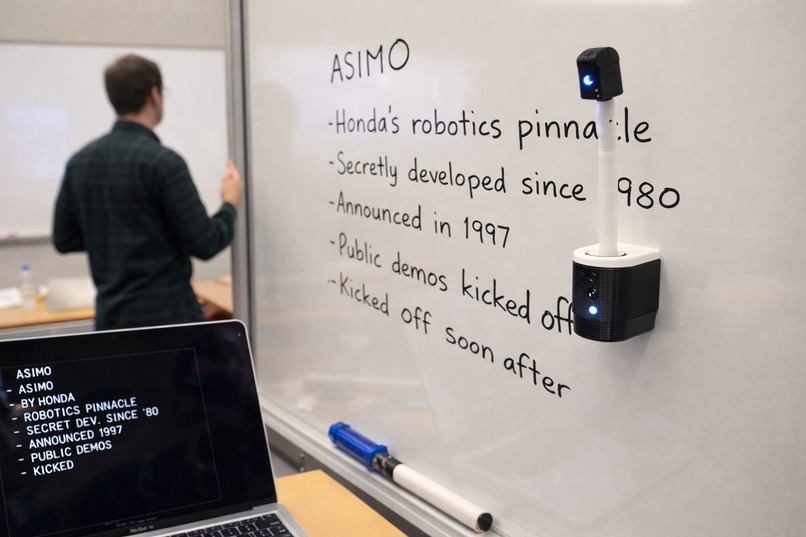
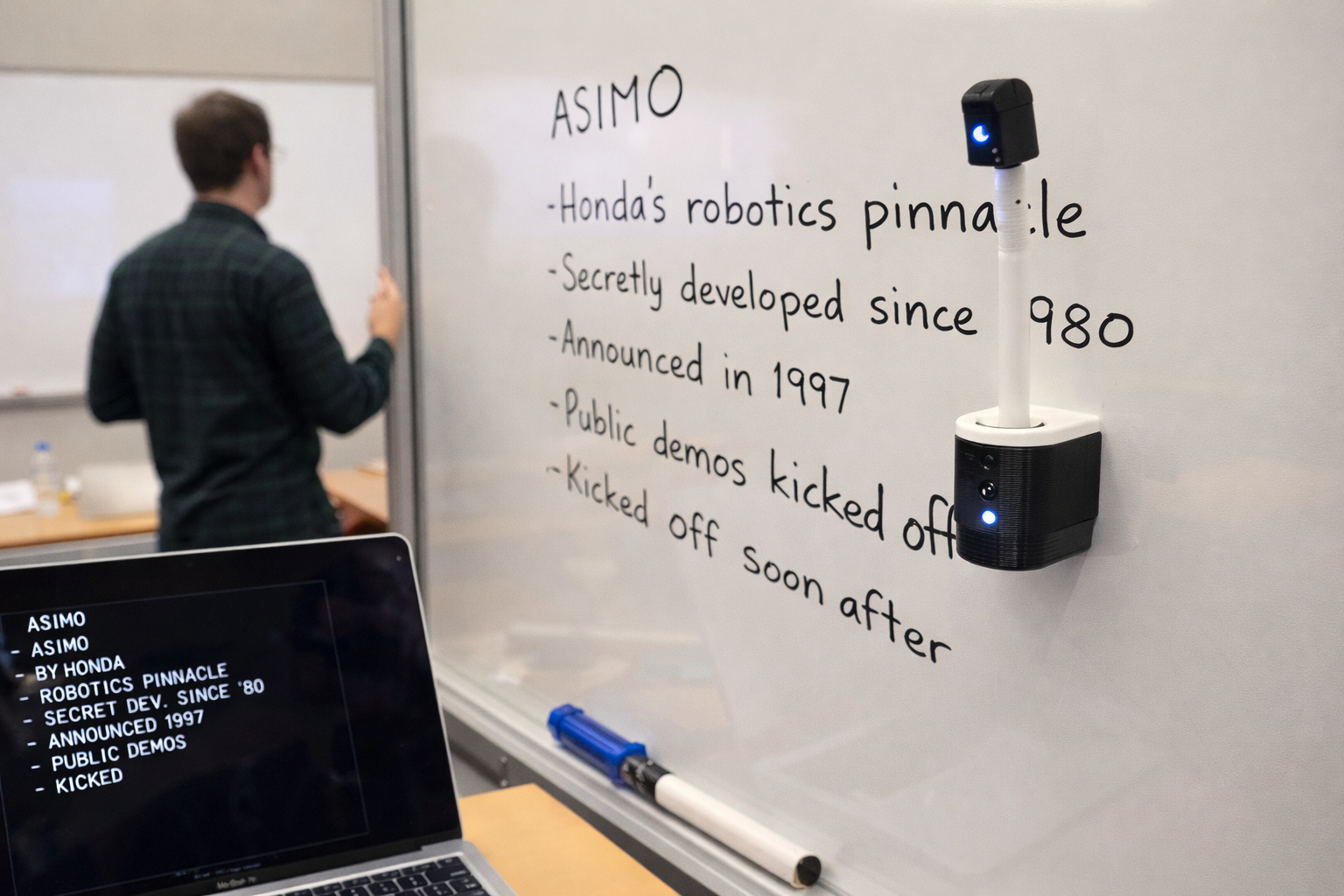
Scribblr is a 3D-printed smart pen holder that acts as an automated lecture assistant. Using cameras, microphones, and sensors, it captures spoken explanations and whiteboard content, then transcribes and summarizes lectures in real time. Instead of replacing note-taking, Scribblr enhances it by generating structured summaries as the lecture happens.
How we built it
We designed Scribblr as a compact hardware device combining vision, audio capture, and AI processing. The system listens to lectures, processes speech into text, and generates live summaries while monitoring the whiteboard visually. The workflow follows a pipeline of capturing → transcribing → summarizing → displaying, turning a simple desk object into an intelligent classroom companion.
Challenges we ran into
One of the biggest challenges was balancing hardware constraints with real-time AI processing. Integrating microphones, cameras, and sensors into a small 3D-printed form factor required careful design decisions. Another challenge was ensuring summaries remained accurate while keeping latency low enough to feel live during a lecture environment.
Accomplishments that we're proud of
We successfully transformed a familiar classroom object into an ambient AI assistant that strengthens traditional teaching instead of disrupting it. Seeing Scribblr transcribe and summarize lecture content live demonstrated the potential of combining robotics, AI, and education into one cohesive system.
What we learned
Building Scribblr taught us how powerful agent-like AI systems can be when embedded into physical environments. We learned how to integrate hardware and software workflows, design for real-world classroom usability, and think about accessibility from a student’s perspective.
What's next for Scribblr
Next, we want to expand personalized prompts and adaptive summaries tailored to different learning styles. We also plan to improve contextual understanding of lectures and explore ways Scribblr could integrate into collaborative classroom environments.

Log in or sign up for Devpost to join the conversation.