🎨 Inspiration
During group hangouts and online calls, games like Skribbl.io always brought out our competitive and creative sides. I wanted to recreate that fun—but with a personal twist. I added customizable avatars, hint-based guessing mechanics, a real-time chat with intelligent feedback, and smooth drawing tools to make the experience even more enjoyable and polished.
I built Scribble not just as a game, but as a platform where creativity meets fast thinking, all in real time!
🛠️ What It Does
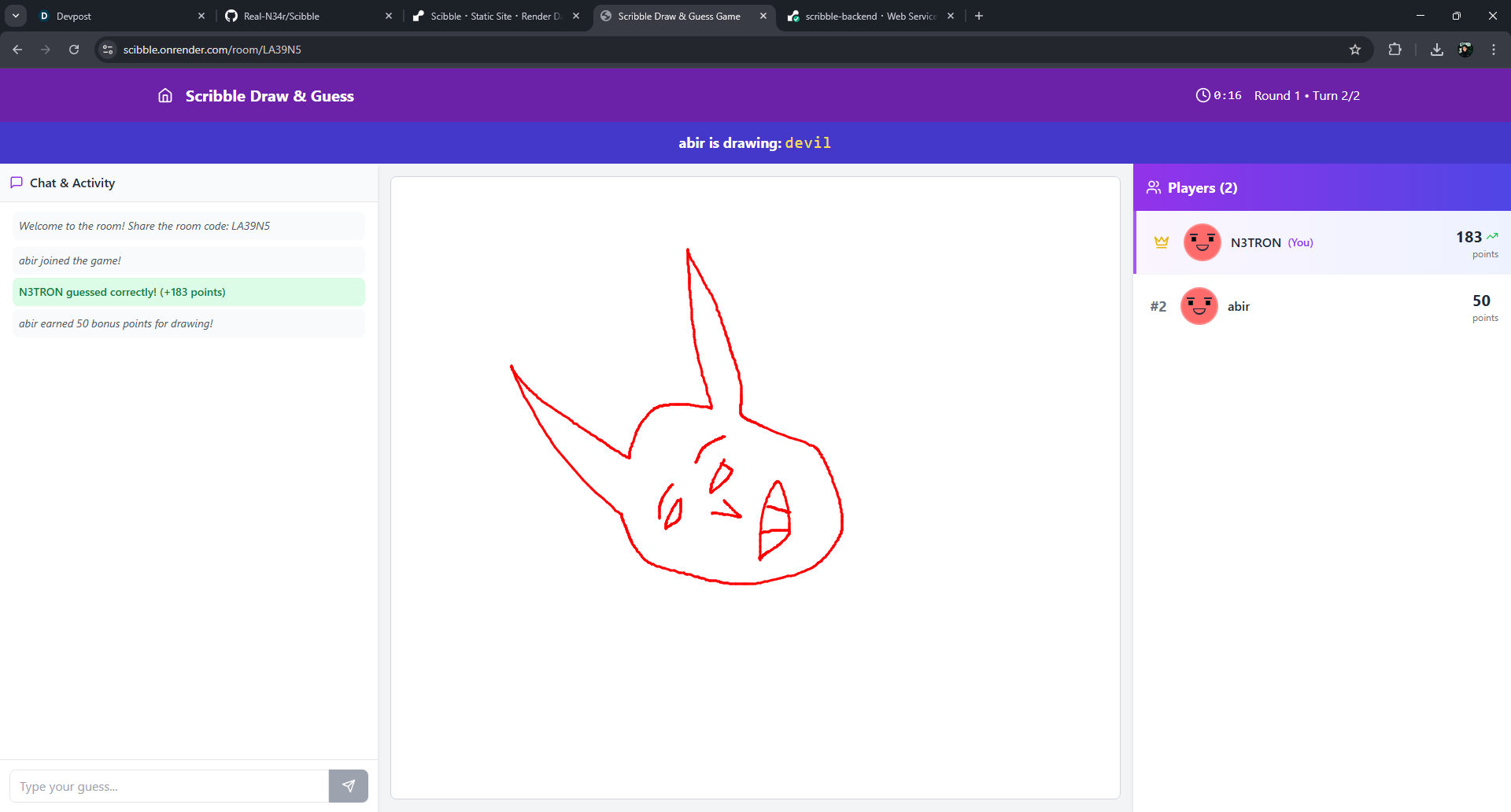
Scribble is a real-time multiplayer drawing and guessing game. In each round:
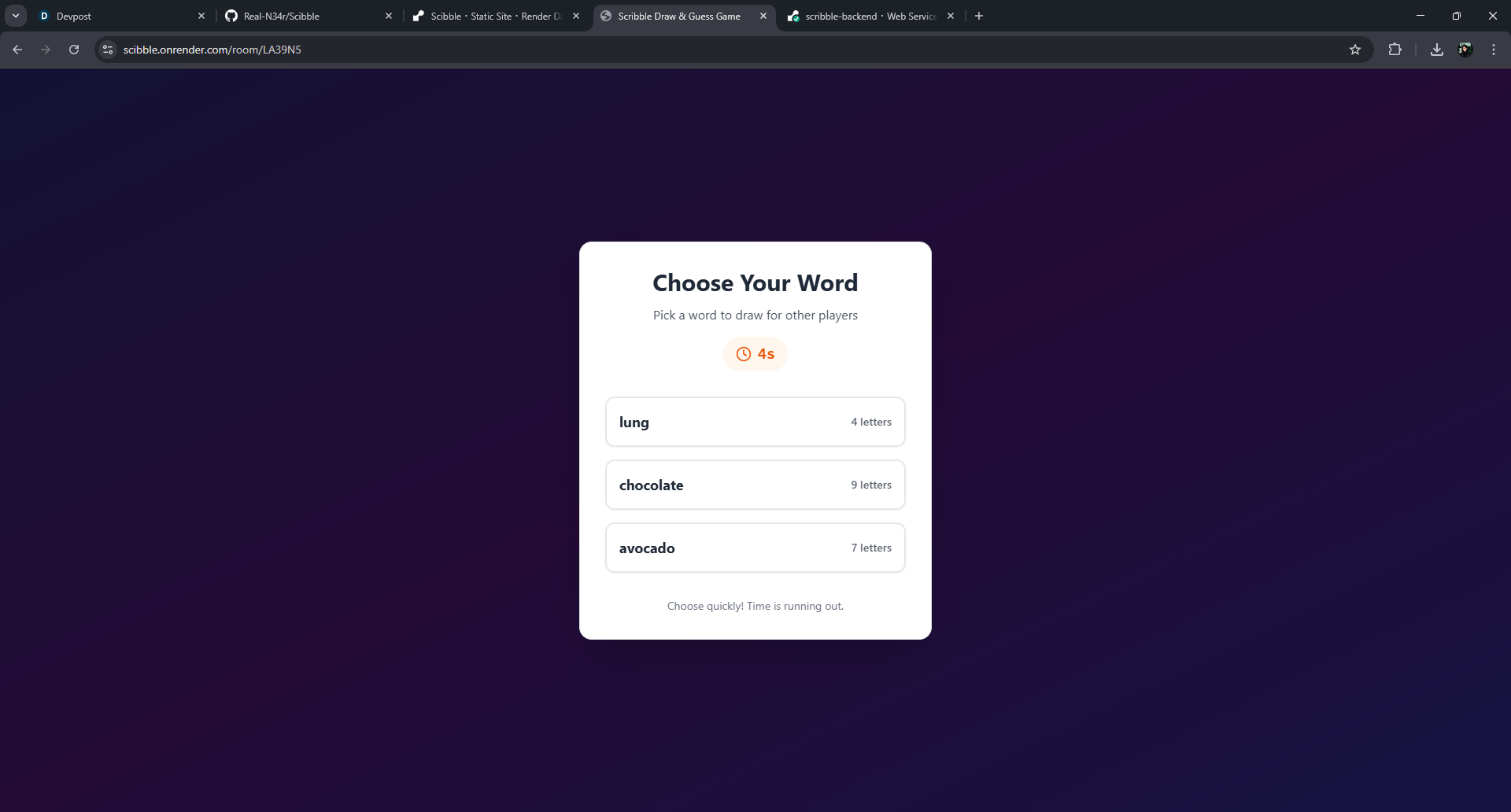
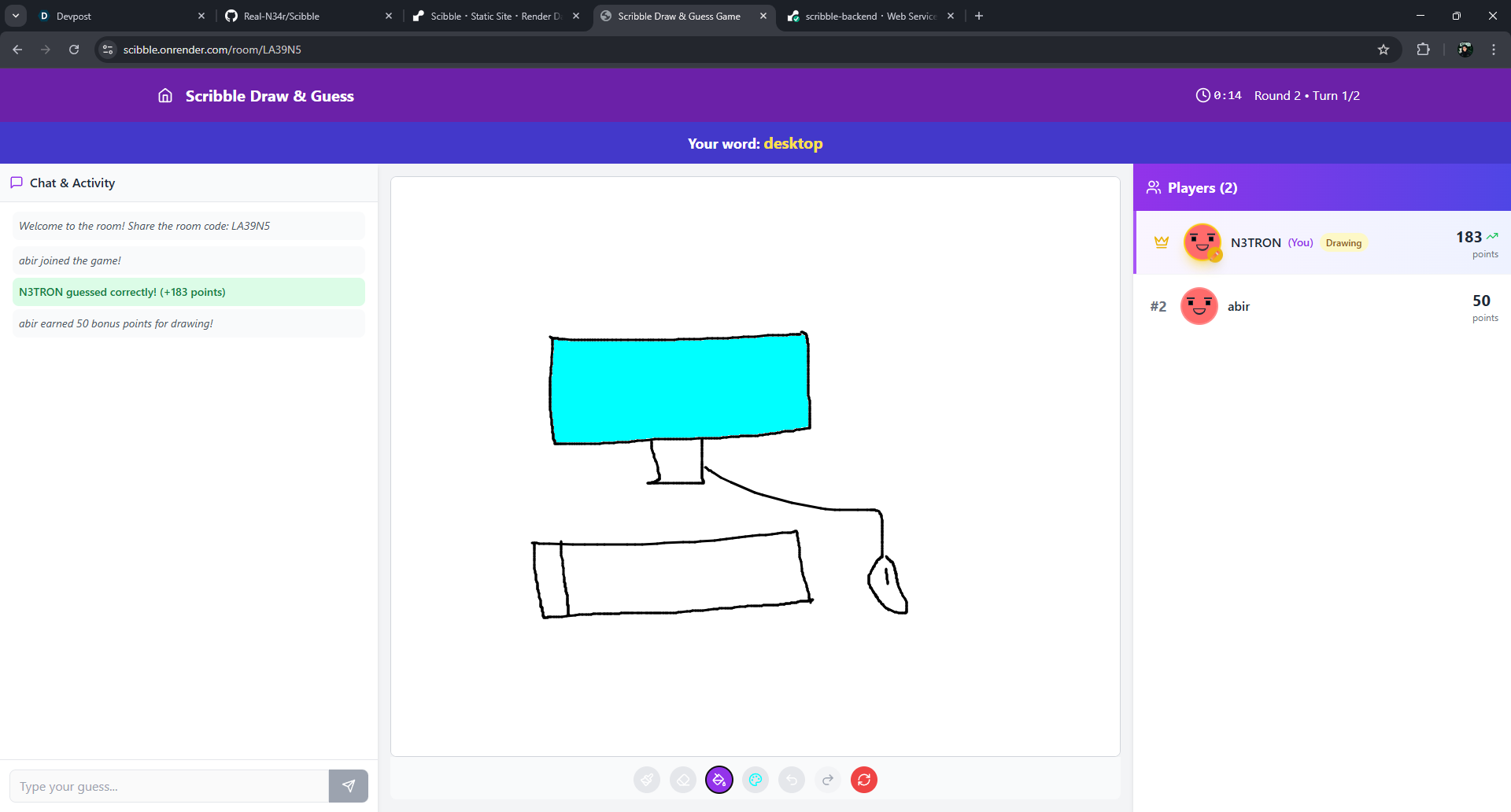
- One player selects a word from a list and draws it on a shared canvas.
- Others try to guess the word through the chat before time runs out.
- Players earn more points the faster they guess.
- The drawing player earns points only if someone guesses correctly.
- If no one guesses, the drawer loses points.
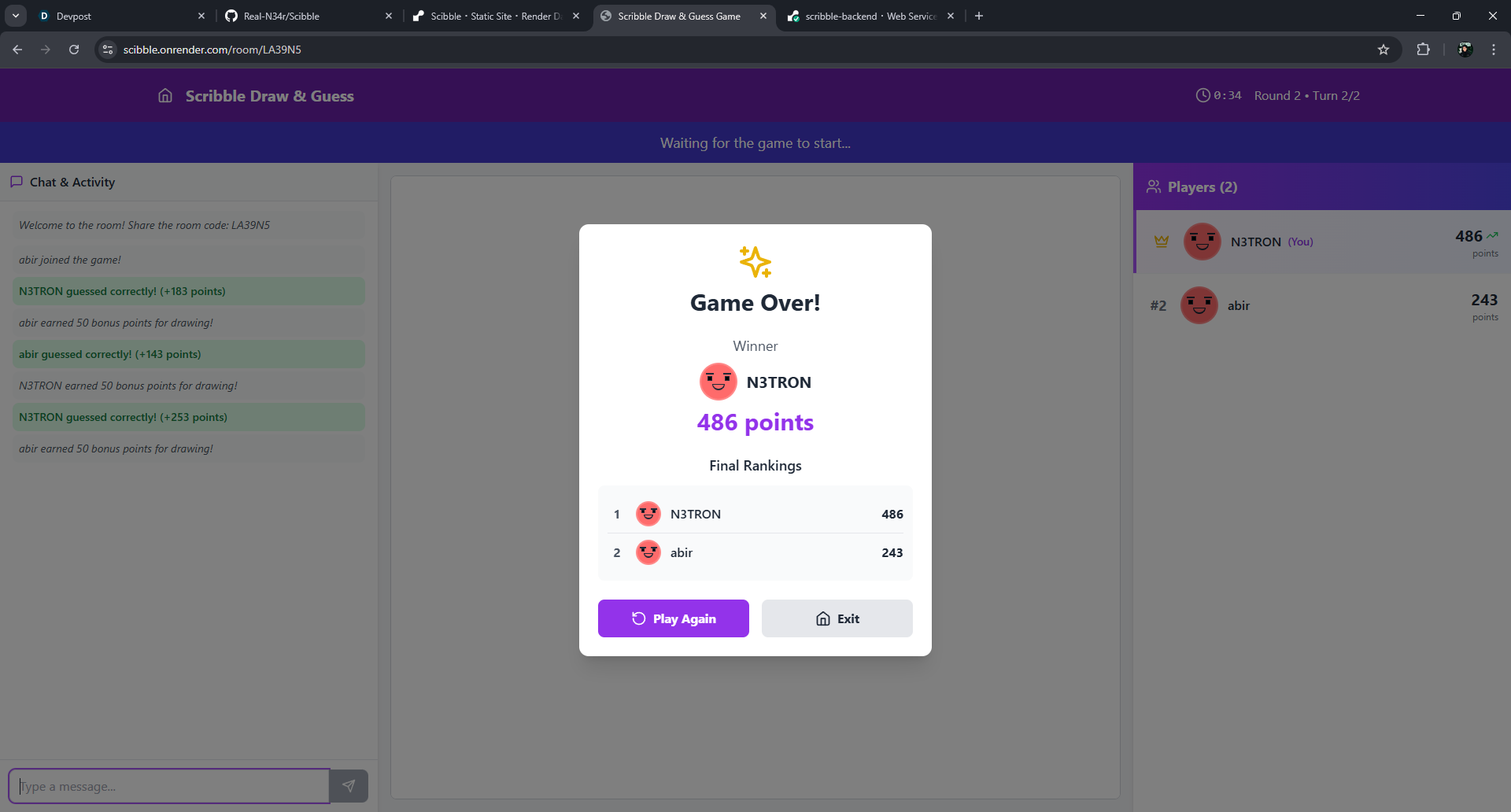
The game rotates through players across multiple rounds, and the one with the most points at the end wins!
⚙️ Key Features
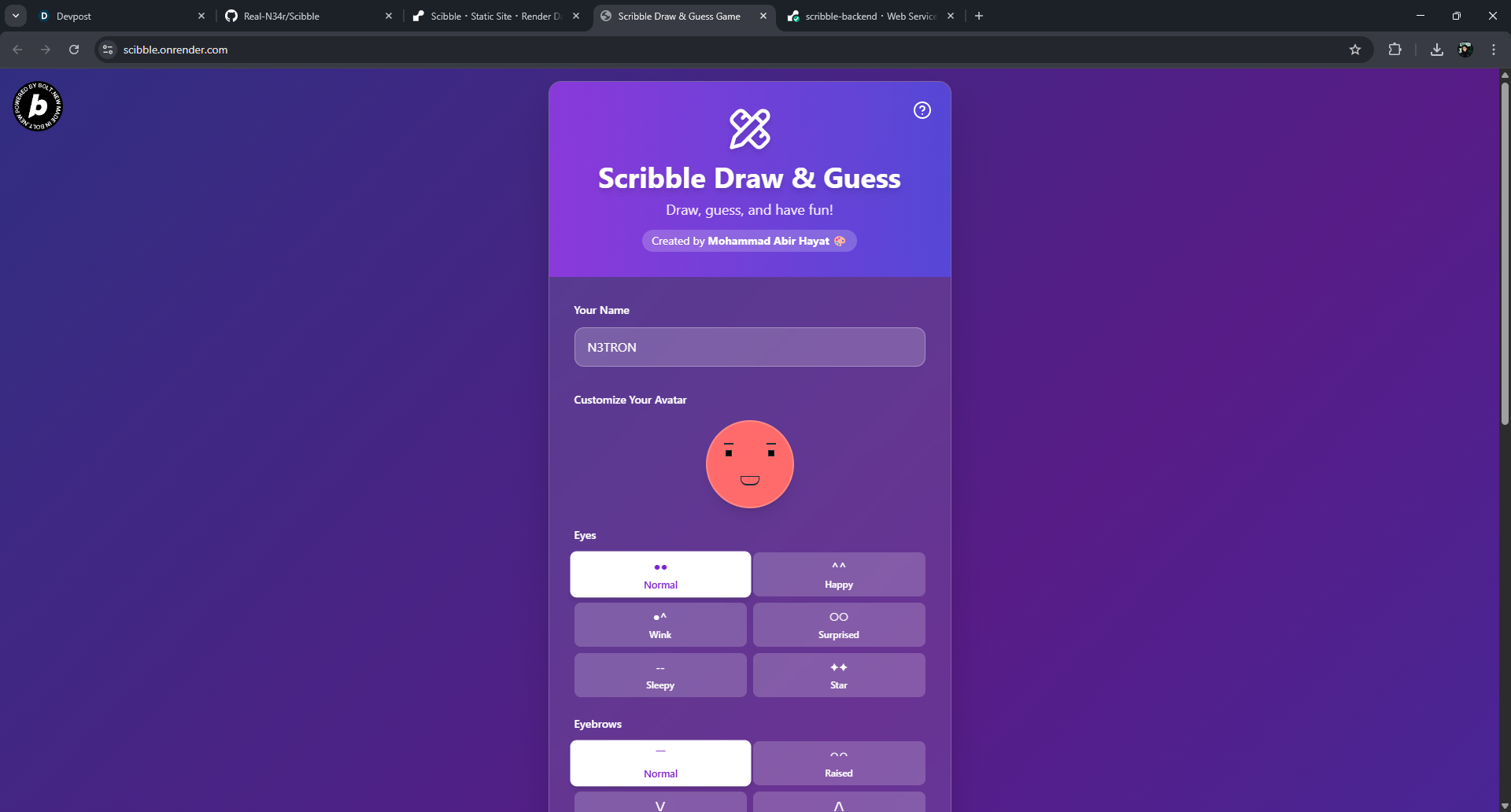
- 🧑🎨 Avatar customization (animated eyes, mouth, and colors)
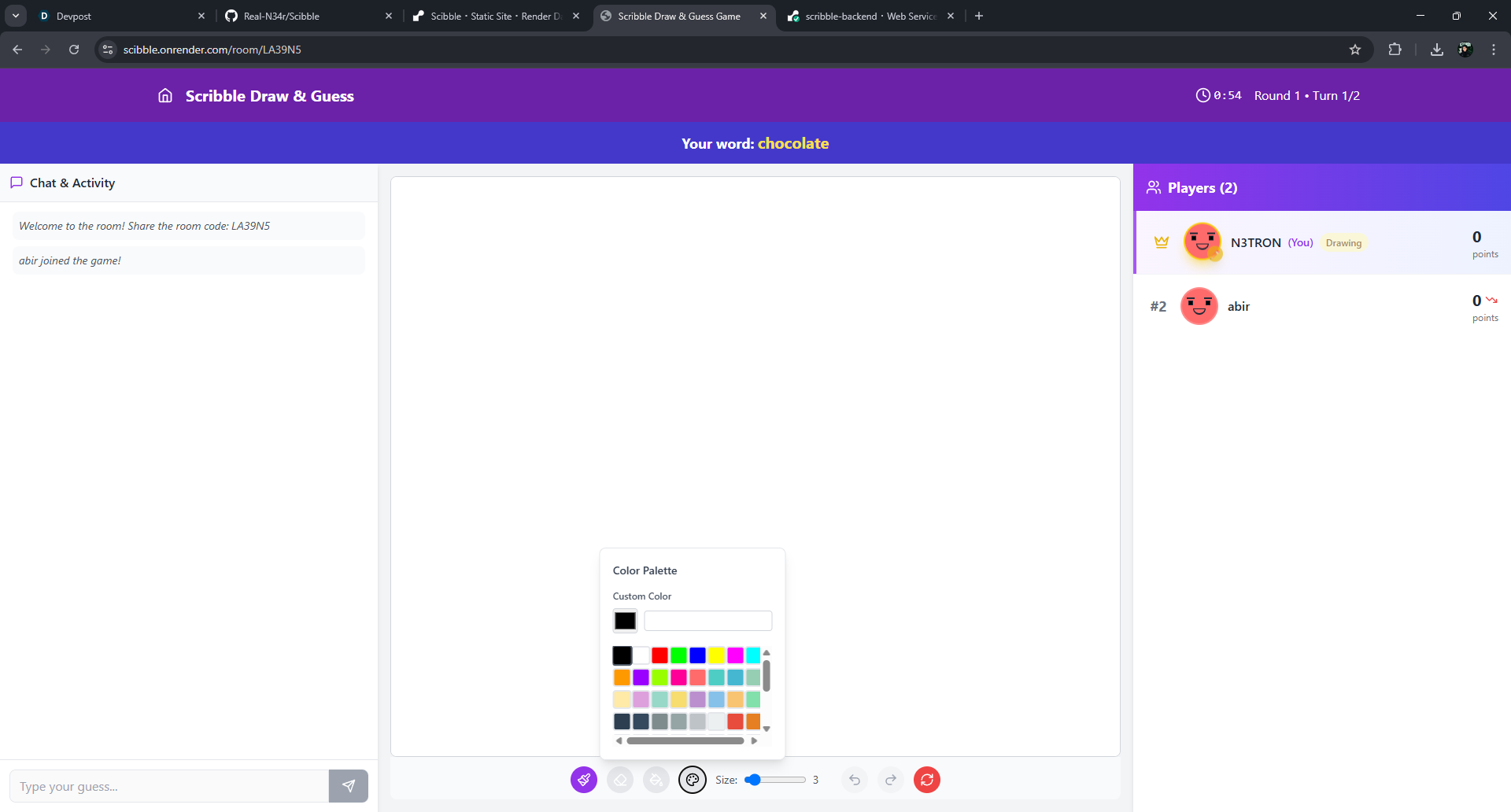
- ✏️ Smooth real-time canvas synced with Socket.IO
- 🎯 Scoring system based on speed and accuracy
- 🧠 Hint system: Letters of the word are revealed gradually
- 🛠 Drawing tools: brush, color picker, undo/redo, eraser, bucket fill
- 💬 Real-time chat and feedback for close guesses
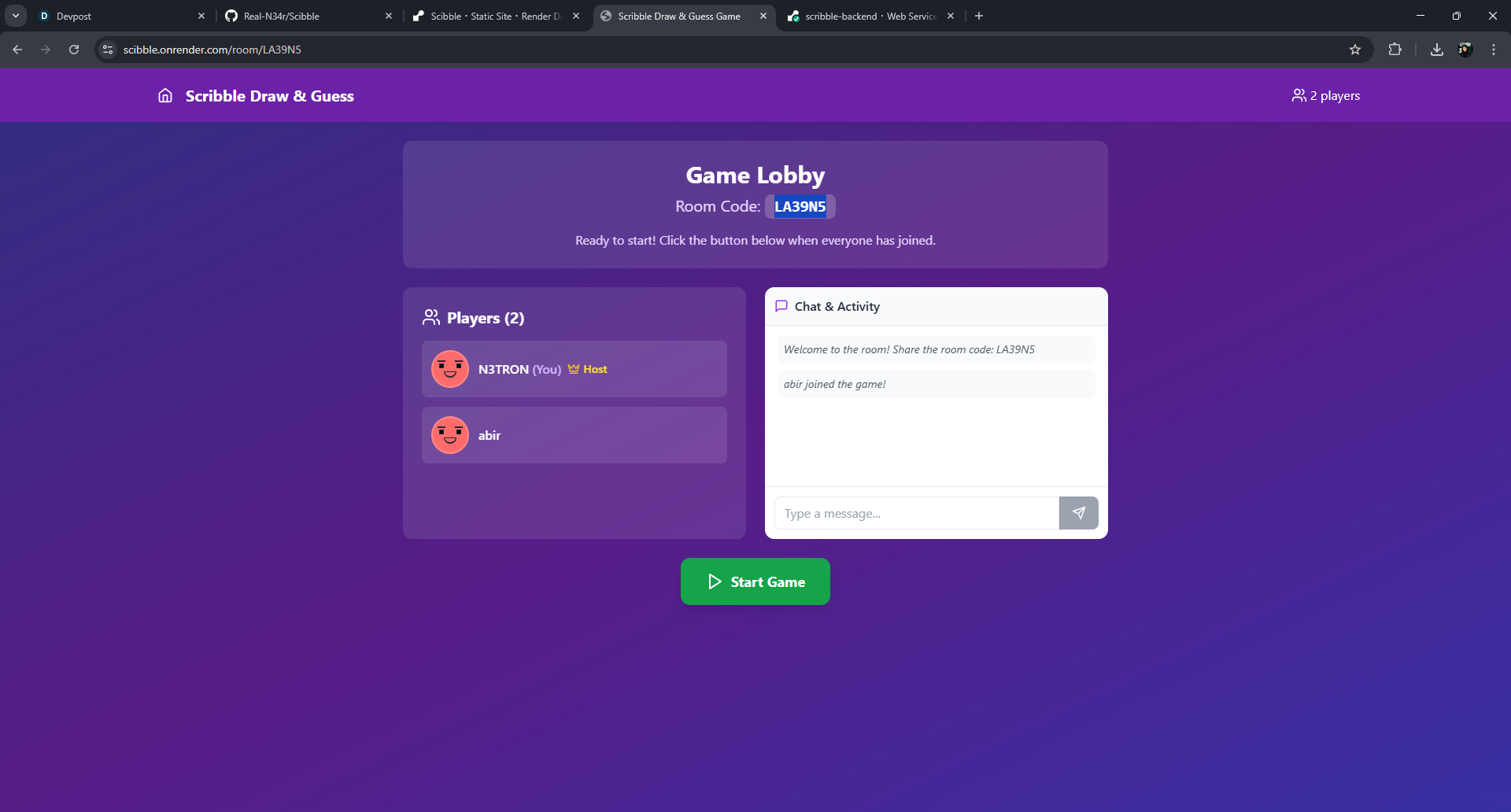
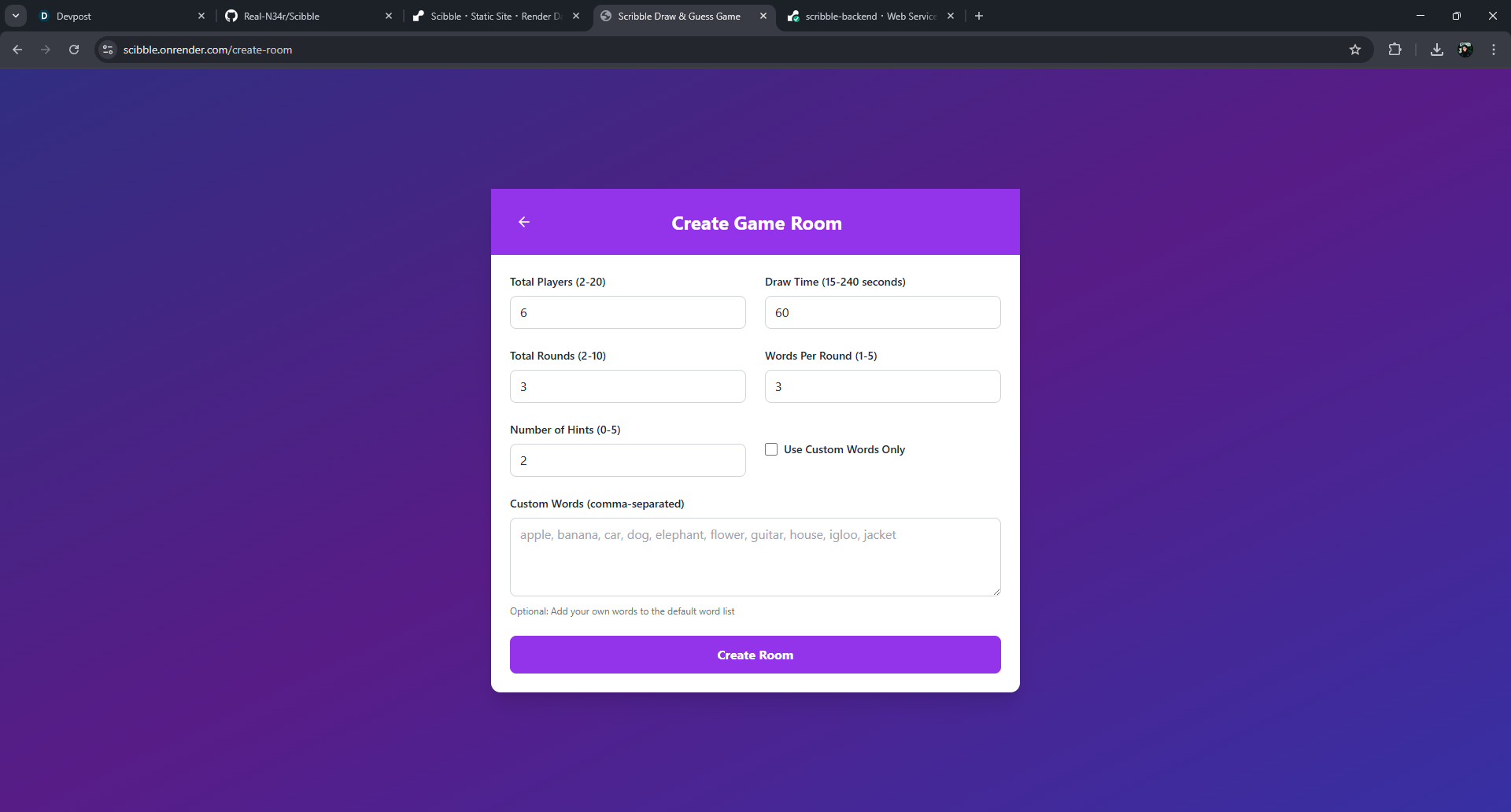
- 🔗 Room creation and invite link sharing
- 🔄 Fully turn-based game logic with live scoreboard
🧪 How I Built It
- Frontend: React.js + Tailwind CSS + Canvas API (custom brush and animation logic)
- Backend: Node.js + Express.js
- Real-time Communication: Socket.IO
- Data Handling: (Optional) MongoDB / Firebase for storing user settings and custom word lists
I structured the project with clean separation between backend and frontend, and handled WebSocket events for drawing, chatting, guessing, player turns, and hint reveals.
🚧 Challenges I Faced
- Ensuring low-latency, real-time drawing for all clients
- Designing a clean and intuitive drawing UI with multiple tools
- Building a fair and dynamic scoring system
- Handling edge cases like players leaving mid-game or submitting invalid guesses
- Syncing hint timers and turn rotation logic for all players
🌱 What I Learned
- Deepened understanding of WebSocket communication using Socket.IO
- Learned to manage complex game state across multiple clients
- Improved UI/UX design for multiplayer gaming interfaces
- Got better at debugging real-time issues and syncing animations across browsers
🚀 What’s Next
- Emoji reactions and sound effects
- Leaderboard animations
- AI-generated word packs by difficulty
- Timed game modes and challenge rounds
Built With
- github
- html5-canvas-api
- javascript
- node.js
- react.js
- socket.io
- tailwind-css
- vite

Log in or sign up for Devpost to join the conversation.