Inspiration
As someone who watched friends and family struggle with mindless scrolling and strained parent-child dynamics around screens, I knew the issue wasn’t just “too much screen time”—it was the unmet emotional needs driving it. Drawing on local mental health principles that prioritize empathy over punishment, I set out to build a tool that addresses the root of screen dependency, not just the symptoms.
What it does
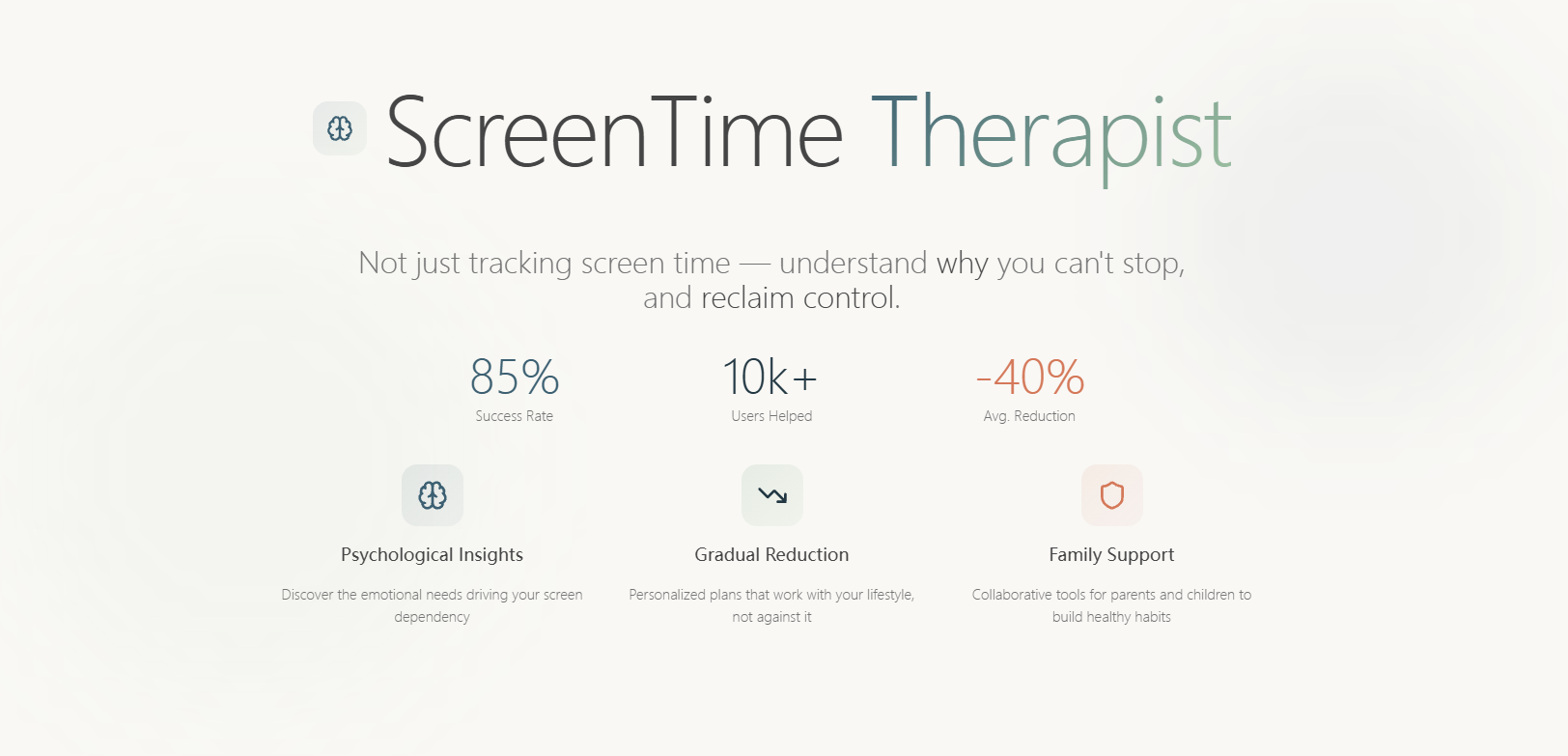
ScreenTime Therapist helps users identify their unique screen addiction patterns and the psychological triggers (stress, loneliness, boredom) behind them, then delivers personalized, gradual reduction strategies. For parents, it offers collaborative tools to create screen-time agreements with kids and guide constructive conversations about usage habits—no blame, no conflict.
How we built it
We started by mapping core user journeys for individuals and parents, focusing on a frictionless experience with no login barriers. Using React for the frontend, we built a card-based UI with soft, calming colors aligned with mental health design best practices. Chart.js was integrated to make habit patterns easy to understand, and we prioritized smooth navigation between role-specific modes (individual/parent).
Challenges we ran into
Translating behavioral health research into approachable, non-clinical language was a major hurdle—we wanted to be accurate but not intimidating. We also struggled to design parent tools that felt collaborative (not controlling), requiring multiple rounds of feedback to avoid framing screen time as a “failure” to police.
Accomplishments that we're proud of
We created a tool that centers empathy over shame: users report feeling seen, not judged, by the psychological need analysis. Parents also praise the agreement tool for fostering open dialogue instead of power struggles with their kids around screen use.
What we learned
Technically, we mastered balancing data visualization clarity with emotional design. On a human level, we learned that digital wellness isn’t about restriction—it’s about intentionality. We also deepened our understanding of how to align product design with compassionate mental health practices.
What's next for this project
We plan to expand the alternative activity library with regionally relevant hobbies, add guided reflection prompts to deepen emotional awareness, and refine the parent-child agreement tool with more flexible, family-specific customization options. Long-term, we aim to enhance accessibility and refine the user journey for even more intuitive navigation.

Log in or sign up for Devpost to join the conversation.