Inspiration
Screentime estimator, a mobile application and website designed to help users track, manage, and project their screen time for specific “time-wasting” applications. The idea came from noticing that people often know they are spending too much time on certain apps, but do not have a clear way to understand how that behavior adds up over time or where it is heading.
What it does
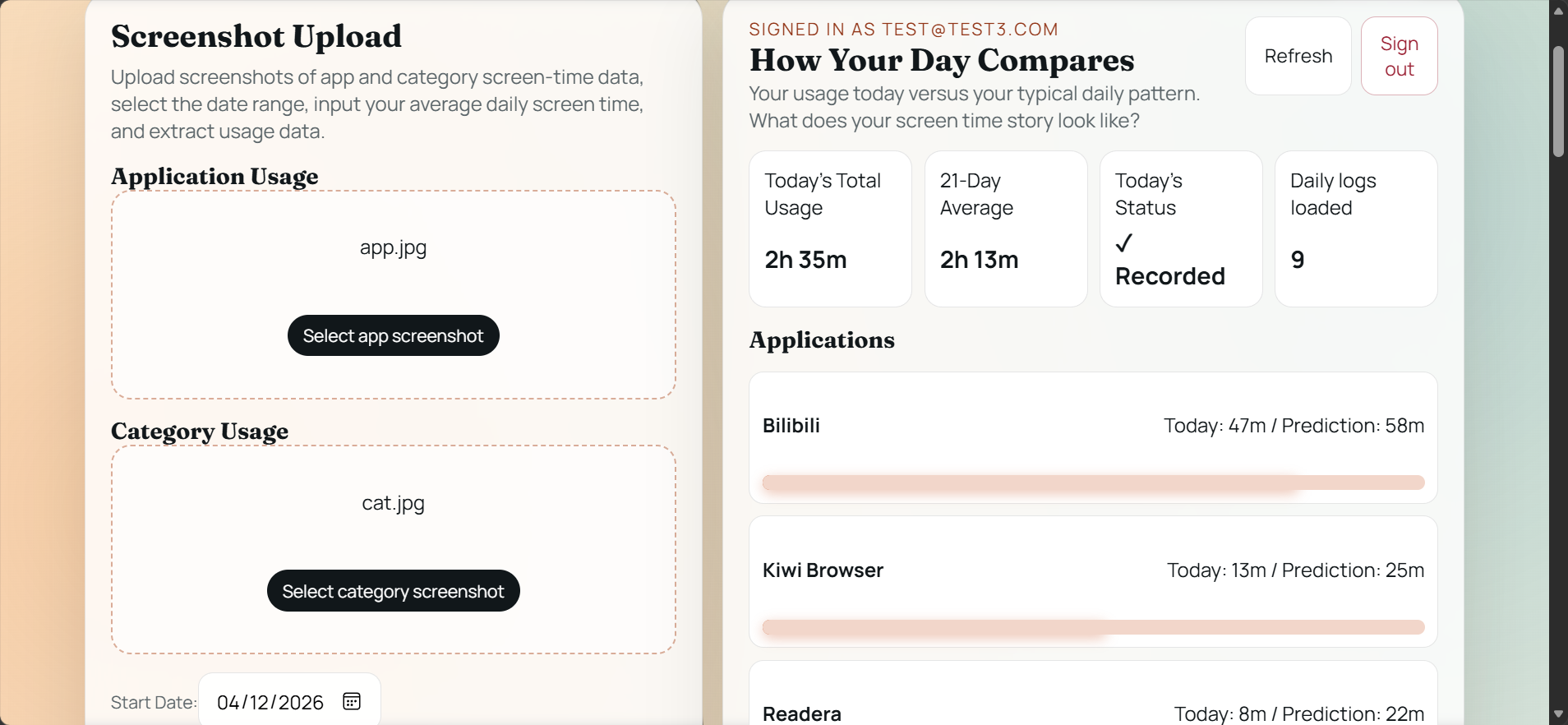
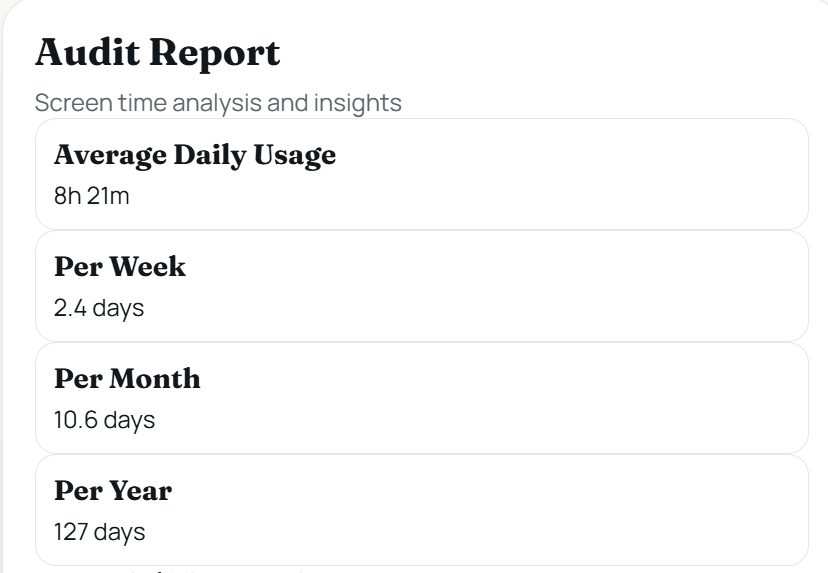
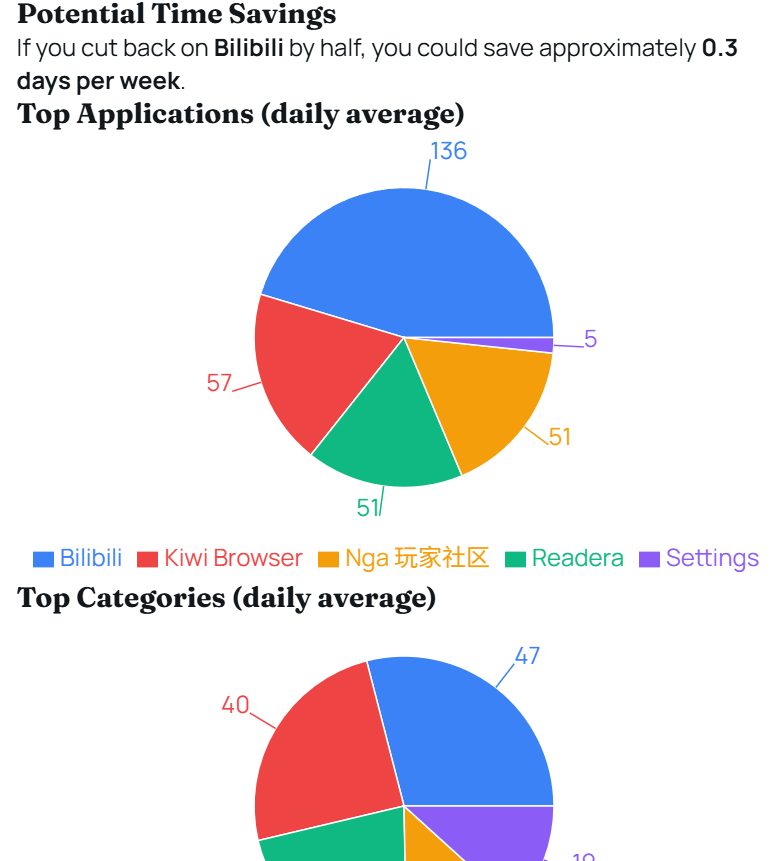
The app allows users to upload screenshots of their device’s screen time data and automatically extracts app usage information. It tracks usage across selected applications and calculates weekly totals and daily averages. Using this historical data, it generates projections to estimate future screen time and highlights trends so users can see whether their habits are improving or getting worse. The goal is to help users reduce time spent on distracting apps through better awareness and forecasting.
How we built it
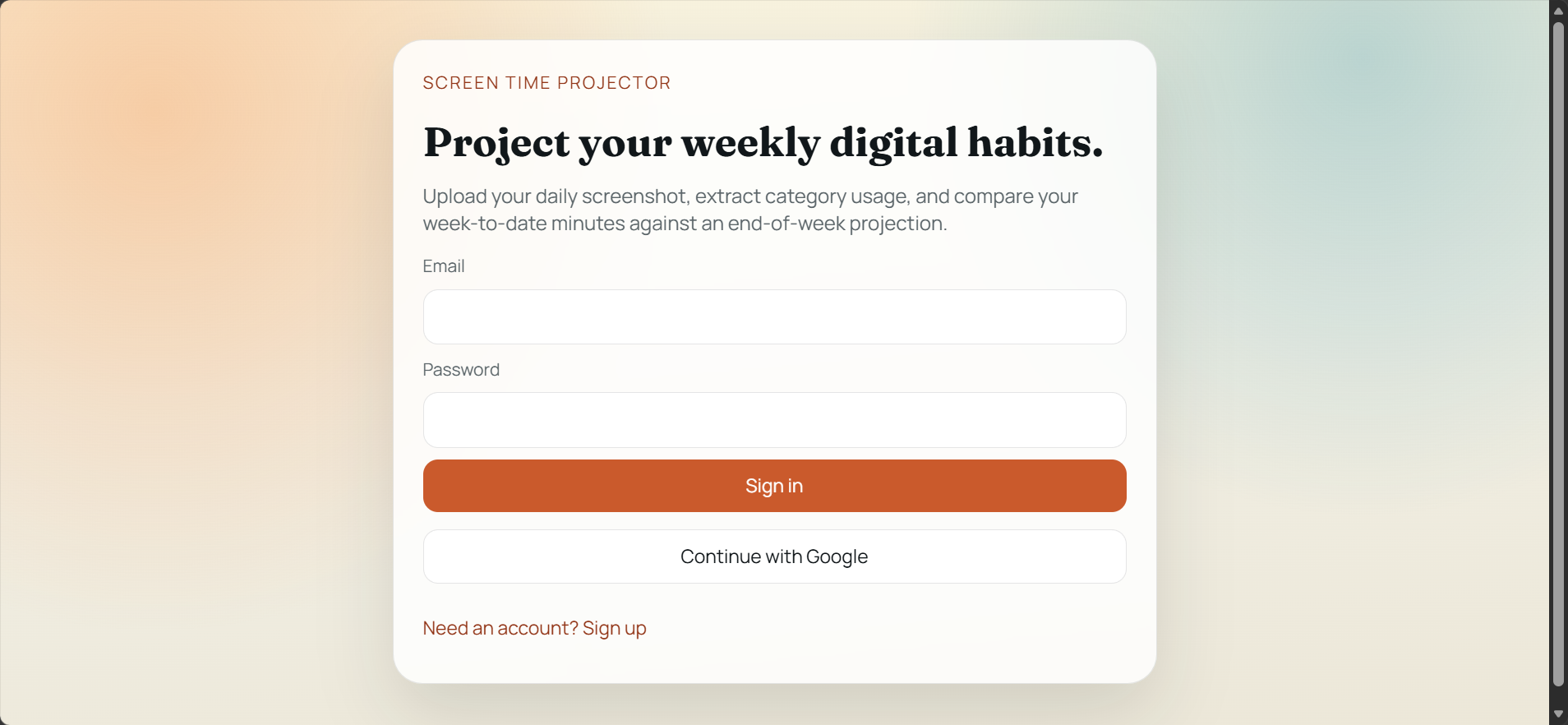
We built Screentime estimator as a full stack application with both a web interface and an iOS app. The frontend handles user interaction, screenshot uploads, and visualization of usage data and projections. The backend processes the images, extracts relevant data, and stores user logs. We used Google’s Gemini API to analyze screenshots and identify app names and usage times. We also used Appifex to deploy the iOS version of the app. GitHub tools and AI assistants were used throughout development for debugging and iteration.
Challenges we ran into
The biggest challenge was reliably extracting the correct information from screenshots. Screen time images contain multiple numbers, labels, and layouts, and it was difficult to consistently identify which values correspond to app usage, averages, and totals. Another challenge was designing projection logic that actually reflects user behavior instead of simply repeating current values. Ensuring consistency between web and iOS versions also required additional debugging.
Accomplishments that we're proud of
We successfully built both a web and iOS version of the application with a working pipeline from screenshot upload to data extraction to projections. We were able to integrate AI into a real use case and produce meaningful outputs from unstructured image data. The app demonstrates a complete flow where users can log, analyze, and reflect on their screen time habits.
What we learned
We learned how to work with multimodal AI for extracting structured data from images and the importance of validating AI outputs. We also learned how to design around imperfect data and build systems that still provide useful insights. Additionally, we gained experience developing and coordinating a full stack project across multiple platforms.
What's next for Screentime estimator
Next, we want to improve the accuracy of screenshot parsing and reduce the need for manual corrections. We also plan to refine the projection model to better reflect historical weekly averages and trends. Future features include category-level tracking, personalized recommendations, and more advanced analytics to help users actively reduce their screen time.
Built With
- appifex
- gemini-api
- javascript
- react
- typescript


Log in or sign up for Devpost to join the conversation.