-
-
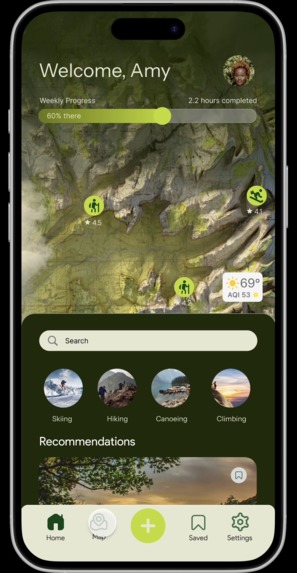
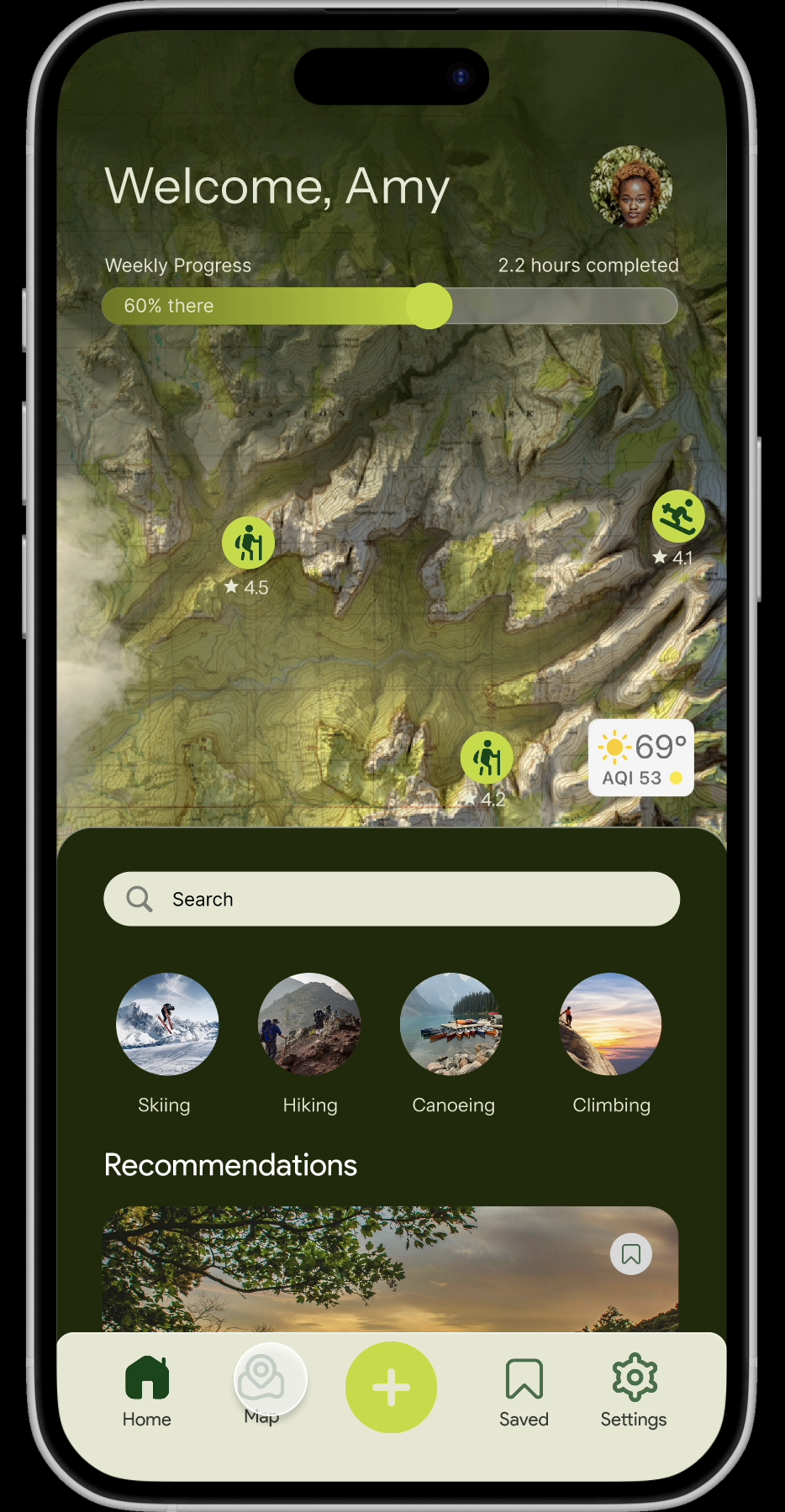
Dashboard Screen
Inspiration
Our inspiration stems from a growing body of research highlighting the strong correlation between outdoor activities and improved mental well-being. In an increasingly AI-driven world, where digital distractions are more prevalent than ever, we believe that "staying human" means fostering a deeper connection with the natural world. Rather than leveraging AI to keep users glued to their screens, Touch Grass takes a radically different approach—encouraging people to step outside, engage in real-world activities, and embrace the mental health benefits of nature.
Our decision to pursue this concept was reinforced by our survey findings and academic research. We surveyed seven undergraduate students to better understand their screen time habits and attitudes toward reducing phone use. Our survey asked questions about:
- Types of activities participants enjoy doing in their free time.
- Barriers that prevent them from engaging in those activities.
- Daily screen time usage
- Impact of screen time on mental health, including whether they feel it contributes to stress, anxiety, or reduced well-being.
- Openness to reducing screen time.
Key insights from our survey include:
- 85.7% of respondents noted that screen time negatively affects their mental health.
- 100% of respondents expressed openness or enthusiasm toward reducing their screen time.
- 62% of respondents noted that being outdoors makes them happier.
Academic research strongly supports the benefits of outdoor activities over excessive screen use. Studies show that spending time in green spaces and engaging in outdoor recreation can reduce stress, improve mood, and enhance overall well-being. Specifically:
- An NIH study of 624 U.S. youth (ages 10-18) found that outdoor activities were strongly linked to better subjective well-being, particularly during the COVID-19 pandemic.
- Research published in Sustainability emphasized that adolescents' connection to nature plays a crucial role in mental health
- Another study in Environment and Behavior found that students who actively engaged with green spaces for at least 15 minutes, four times per week, reported higher life satisfaction, improved mood, and lower perceived stress.
By combining these insights, we designed Touch Grass as a tool that empowers users to break free from excessive screen time and discover the joys of outdoor activities.
What it does
Touch Grass is an intuitive outdoor activity companion designed to help users foster healthier habits by reducing screen time and increasing engagement with nature. The app provides a seamless way to:
- Set and track weekly outdoor activity goals (acting as a "reverse screen time" tracker!)
- Discover and receive personalized recommendations for outdoor activities based on preferences and location.
- Access detailed information about activities, including difficulty levels, user reviews, and accessibility.
- Bookmark activities for future exploration
- View interactive maps to easily locate nearby opportunities for outdoor engagement.
How we built it
We approached this project with a user-centered, research-first methodology. Our process included:
1. User Research & Data Collection
- Leveraged ethnographic interviews with four college students to understand more about their relationship with screen time and the outdoors. As one respondent put it: “I wish I knew of more activities to do outdoors”
- Conducted surveys with university students to understand their screen time habits, openness to reducing screen time, and the types of activities they enjoy
- Analyzed academic studies on the effects of outdoor time on mental health, identifying key trends that informed our design choices.
2. Ideation & Concept Development
- Brainstormed how we could help users detach from screens and engage in the real world especially in the age of AI.
- Defined core features based on survey insights and research findings, ensuring the app directly addressed user pain points.
3. Design & Prototyping
- Created low-fidelity wireframes in Figma to visualize the app's structure and user journey.
- Iterated on the design to develop a high-fidelity prototype, integrating findings from our research to refine the user experience.
Challenges we ran into
As first-time designathon participants, one of our biggest hurdles was determining where to start and how to properly scope our project. Balancing ambition with feasibility was a crucial lesson, as we had to ensure we could bring our vision to life within the given timeframe. Additionally, designing an app that encourages users to reduce screen time (while requiring a digital platform to do so) presented a unique challenge—one that we tackled by visually focusing the app on possible outdoor activities to get users excited about turning off their screens.
Accomplishments that we're proud of
We're incredibly proud of what we've created, especially considering our limited experience in designathons. Some key accomplishments include:
- Developing a fully interactive prototype that effectively translates our research findings into a practical tool.
- Designing engaging user flows and visually appealing interfaces that promote outdoor activity in an intuitive and motivating way.
- Successfully applying user research and behavioral psychology insights to encourage sustainable phone use reduction.
What we learned
This experience provided us with valuable takeaways, including:
- Practical skills in Figma and the iterative design process.
- A deeper understanding of screen time’s impact on mental health and how to address it through digital interventions.
- The importance of user research in designing meaningful and effective solutions
- Strategies for balancing technology use with real-world engagement, rather than merely minimizing screen time.
What's next for Touch Grass
We're excited about the potential growth of Touch Grass and have several ideas for expanding its functionality:
- Enhanced Social Features: Introduce a review leaving system and friend connectivity, allowing users to plan outdoor activities together and stay motivated.
- Expanded Activity Database: Incorporate a wider variety of outdoor activities, ensuring inclusivity for users with different interests and accessibility needs.
- Rewards: Implement milestone achievements and rewards to further encourage consistent engagement with nature.
It's time to log off, step outside, and actually touch grass.
Built With
- figma

Log in or sign up for Devpost to join the conversation.