-
-

Inspiration: Flappy Bird & Eight Note
-
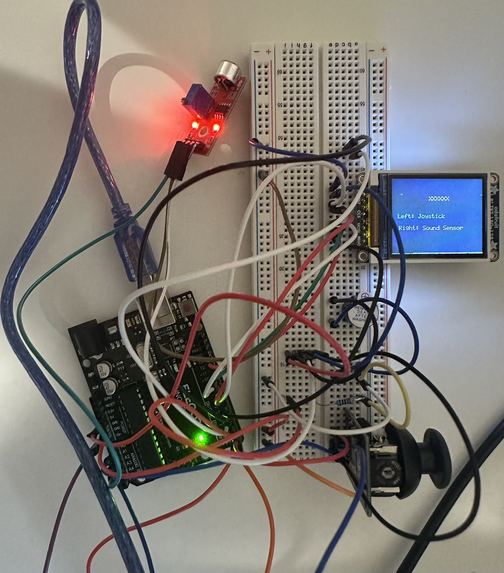
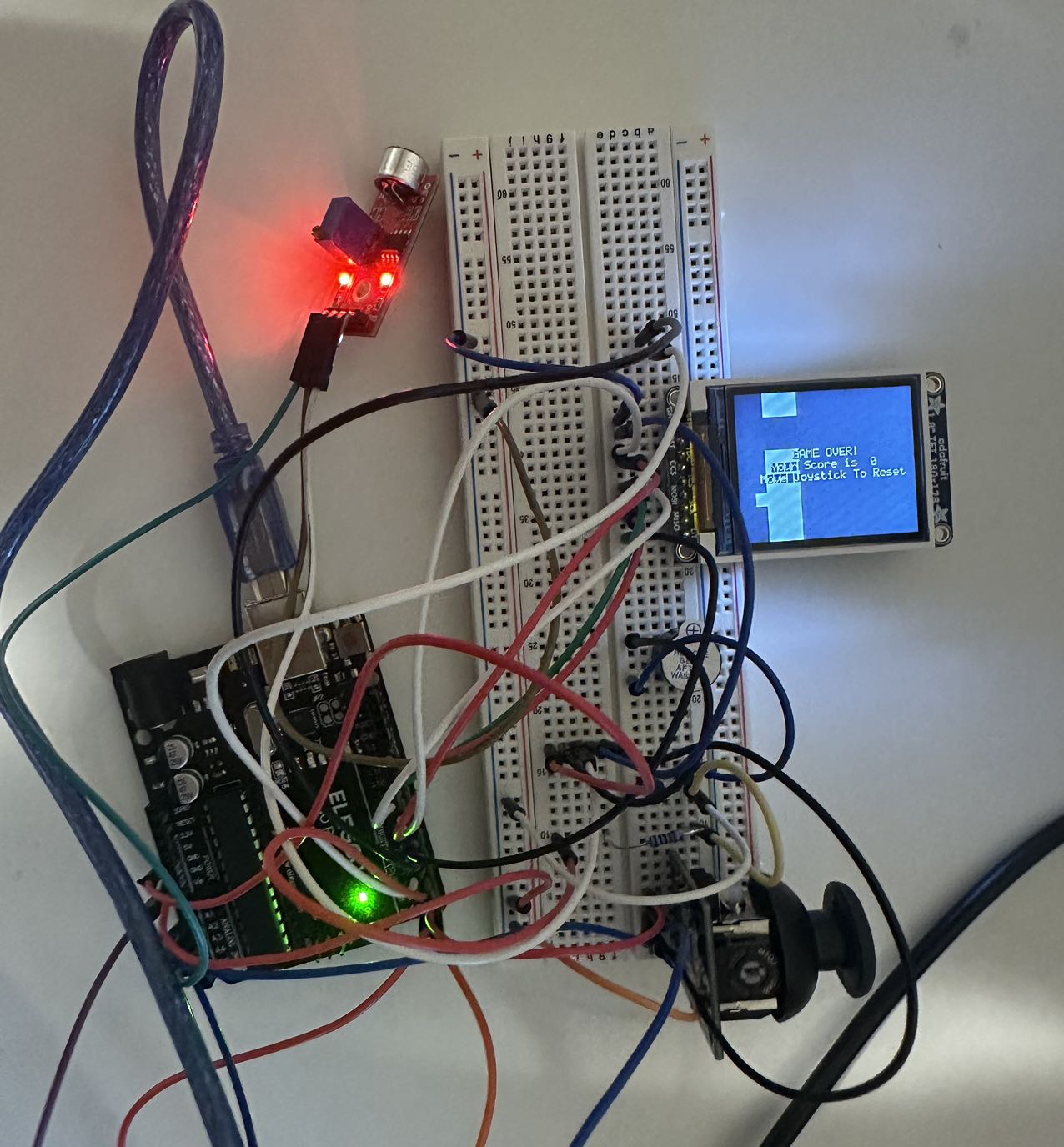
Overall
-
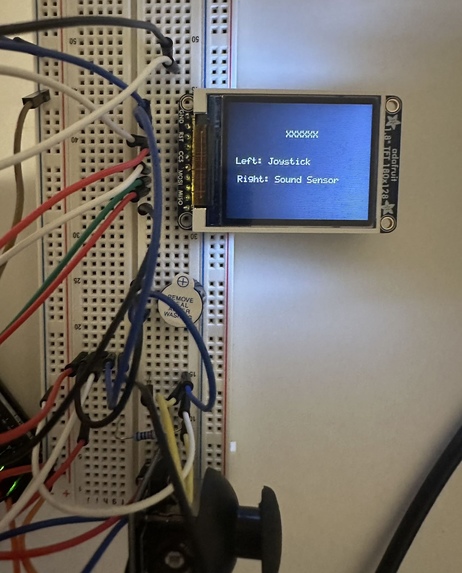
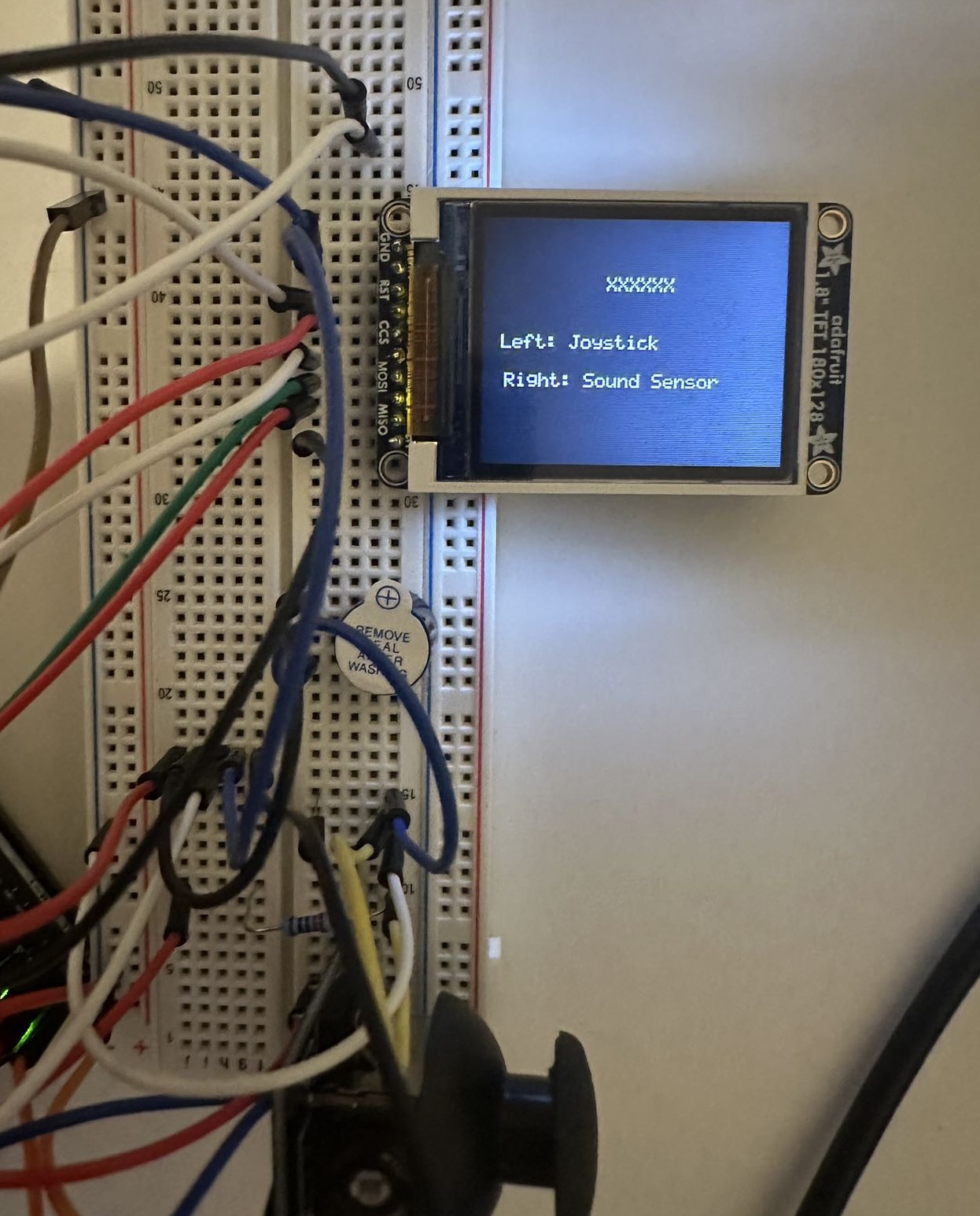
Mode Selection
-
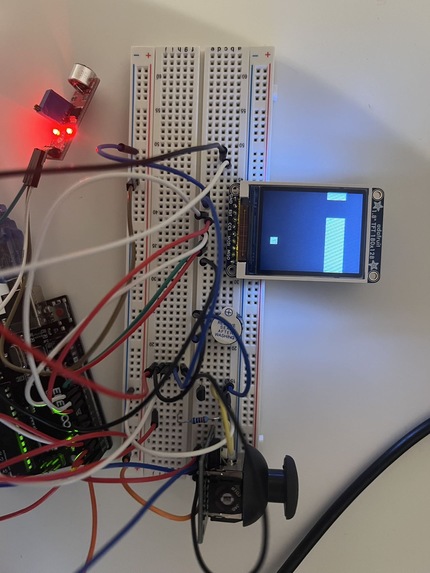
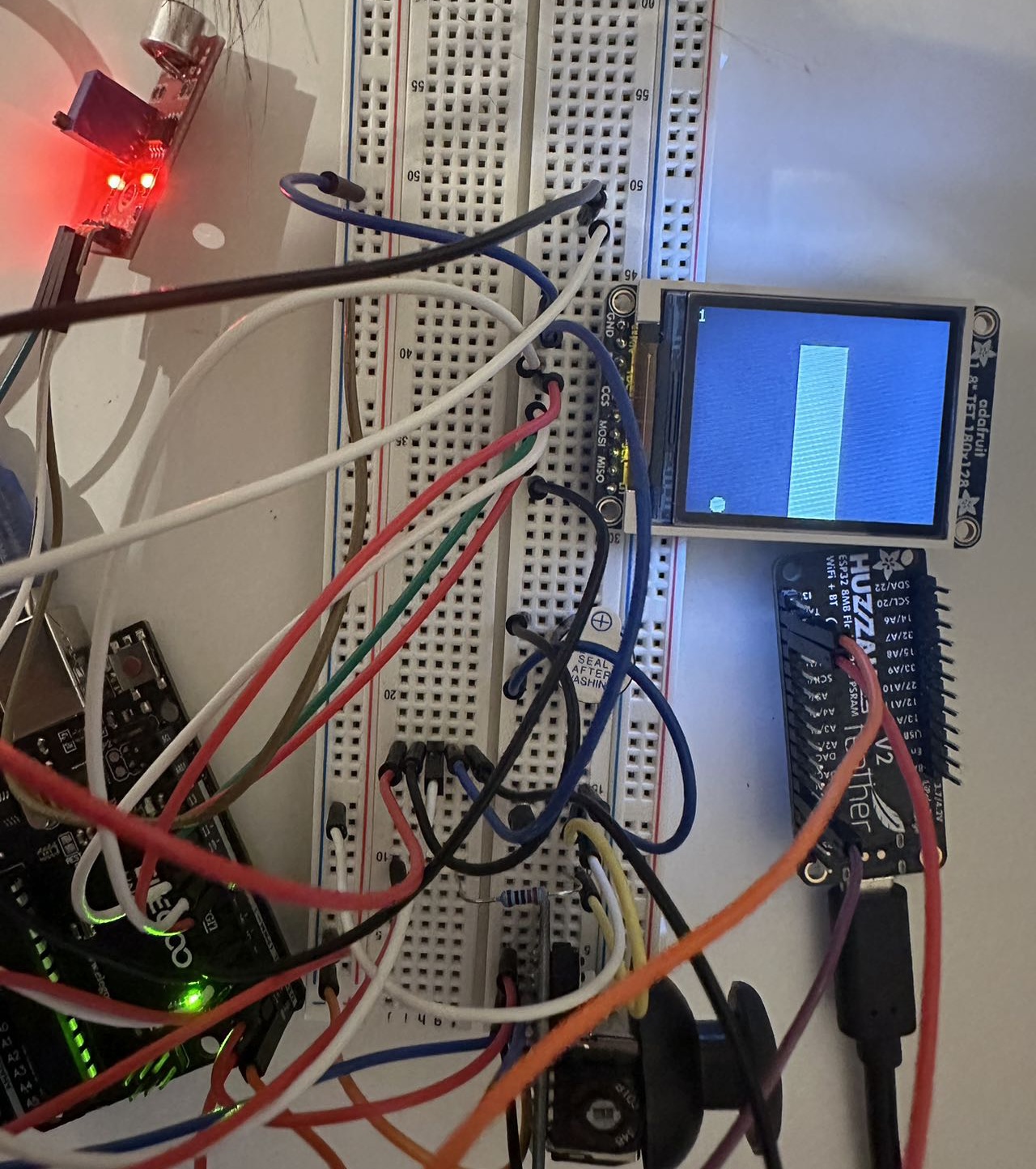
Joystick Mode: In Game
-
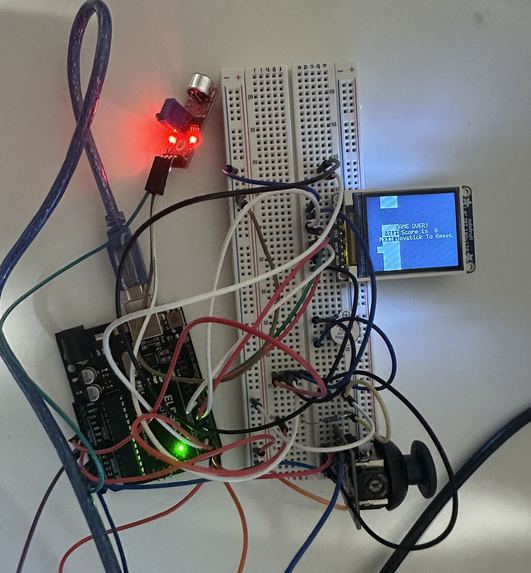
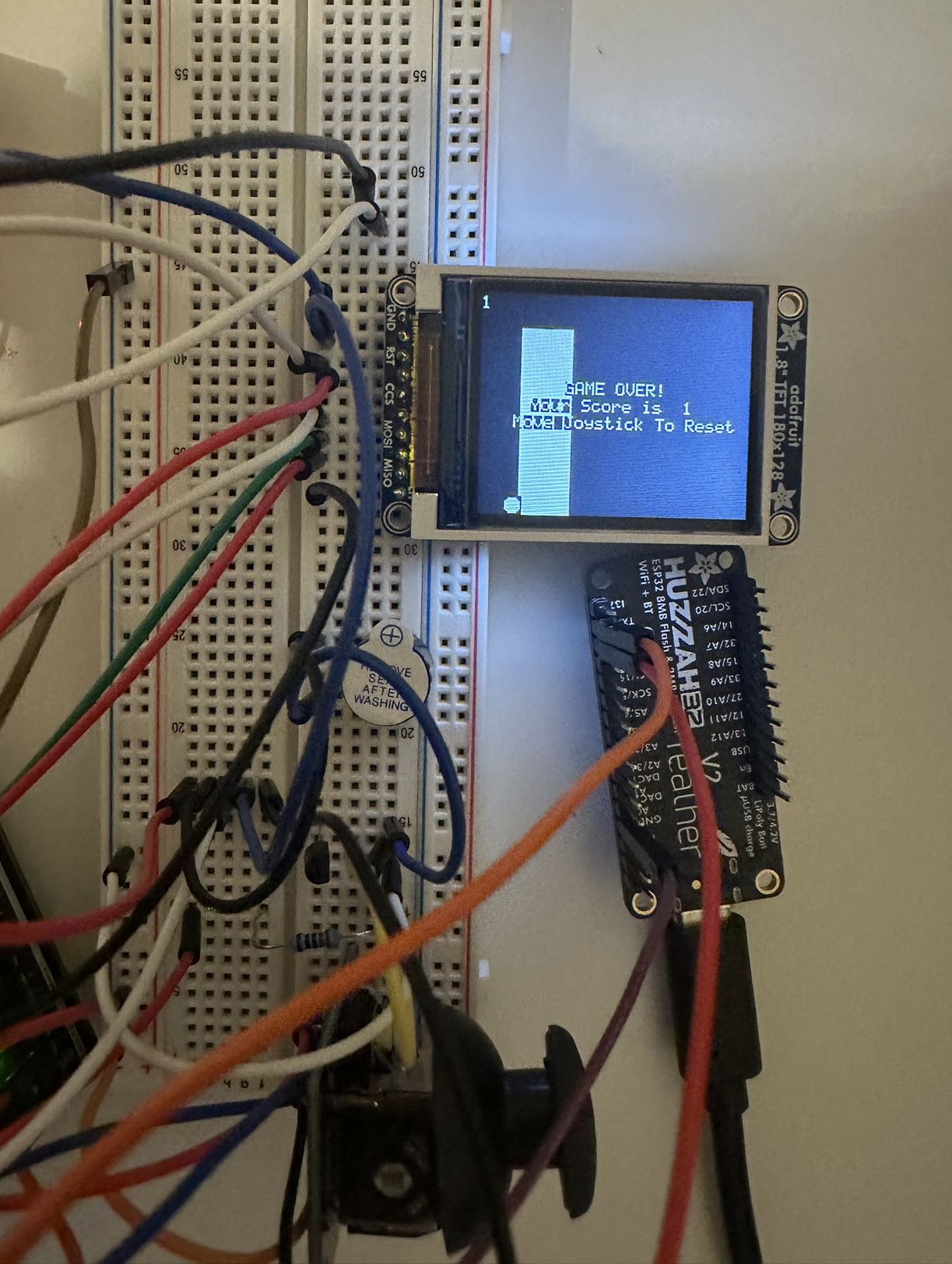
Joystick Mode: Game Over
-
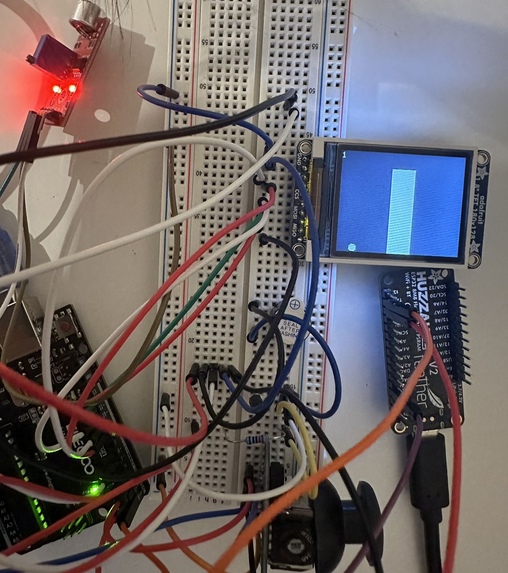
Sound Sensor Mode: In Game
-
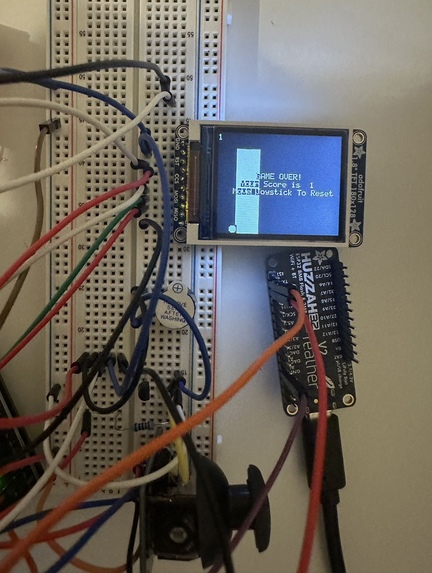
Sound Sensor Mode: Game Over



Inspiration
Our game, "Screaming Chicken", draws inspiration from the addictive simplicity of "Flappy Bird" and the innovative voice control of "Eight Note". We wanted to create an engaging, interactive game that combines physical and vocal interaction with digital entertainment.
What it does
We built "Screaming Chicken" using c. The core mechanic is controlling the chicken's height using either a joystick or the player's shouting volume. We incorporated real-time voice recognition and developed a responsive gameplay interface.
How we built it
Communication and Data Processing: The ATmega and ST7735 were used for data communication, generating barriers, and the movement of these barriers.
Control Mechanisms: The game employed a sound sensor and a joystick to control the movement of the object (the chicken).
Software Development: The project involved developing software for the sound sensor and for interfacing with the ST7735 display, which was crucial for controlling the movement of the object and the barriers.
Testing and Refinement: Extensive testing was conducted to ensure that the game mechanics and software functioned as intended, with particular focus on the responsiveness of the controls and the smoothness of the gameplay.
Challenges we ran into
In "Screaming Chicken," the two main challenges are switching between the two game modes and uploading player data. Mode switching requires precise control to ensure a smooth gaming experience, maintaining the uniqueness and challenge of each mode. Data uploading involves efficiently handling players' scores for display and comparison on the website. These challenges demand in-depth technical knowledge and meticulous programming.
Accomplishments that we're proud of
Ensuring Smooth Gameplay: The team successfully optimized the game to run smoothly, which is a crucial aspect of any interactive digital game. This involved fine-tuning the game mechanics and ensuring that the graphics and controls worked seamlessly together.
Enhancing Sound Sensor Sensitivity: Another significant achievement was improving the sensitivity of the sound sensor. This enhancement allowed for more fluid and responsive control of the game's height mechanism, a key feature for a game that relies on sound or voice control for navigation. This improvement not only made the game more enjoyable but also showcased the team's skill in hardware manipulation and software optimization.
What we learned
We learned how to use the UART communication between ESP32 and Arduino Board. In addition, we gain knowledge about how to interact with the sound sensor.
What's next for Screaming Chicken
Because of the limitation of the Blynk, we are unable to save all players' scores. Instead, we save the highest score in each mode. In the future, we need to find a suitable cloud that allows us to save all data. In addition, we found that the sound sensor could do sound frequency analysis. Lately, we could also add a mode that uses the frequency to control the height of the object to doge the barriers.


Log in or sign up for Devpost to join the conversation.