Inspiration
The Canadian winter's erratic bouts of chilling cold have caused people who have to be outside for extended periods of time (like avid dog walkers) to suffer from frozen fingers. The current method of warming up your hands using hot pouches that don't last very long is inadequate in our opinion. Our goal was to make something that kept your hands warm and also let you vent your frustrations at the terrible weather.
What it does
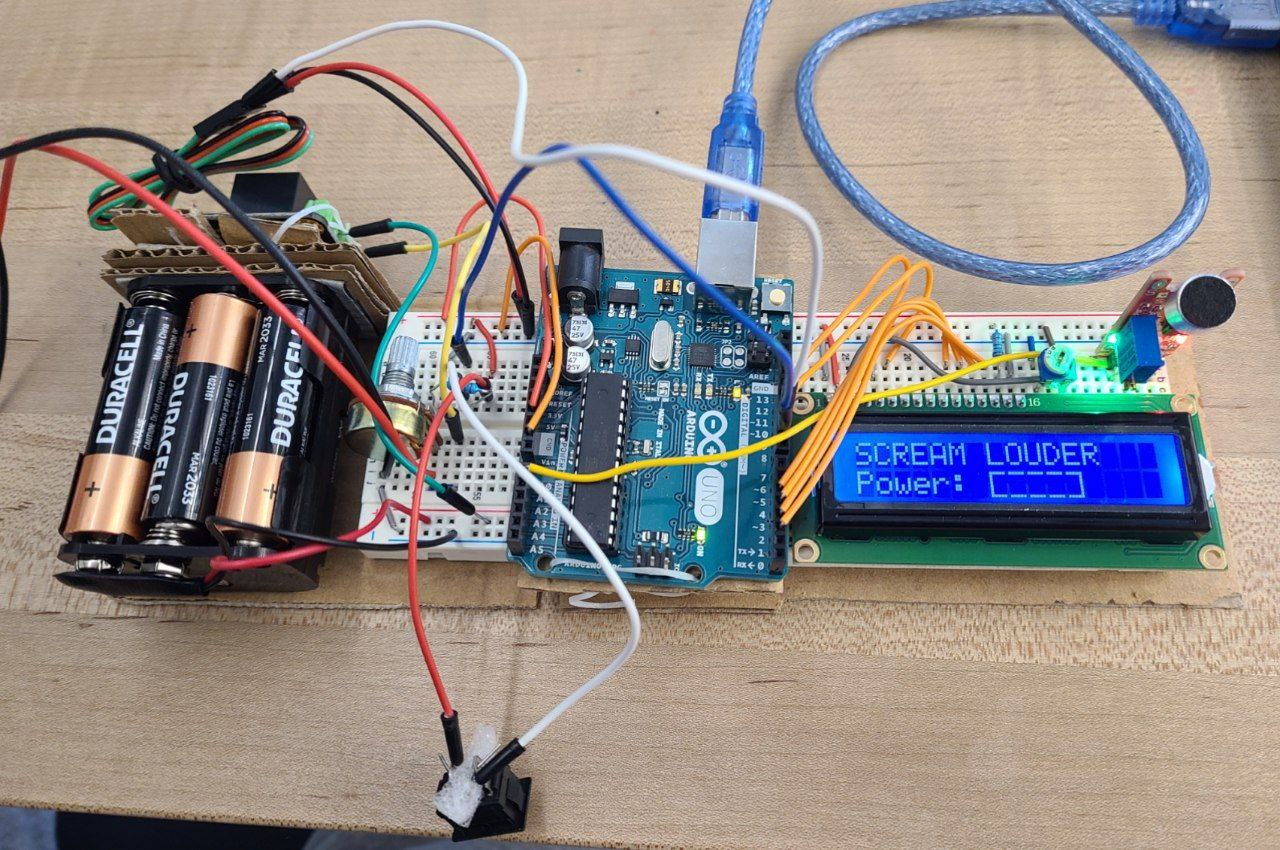
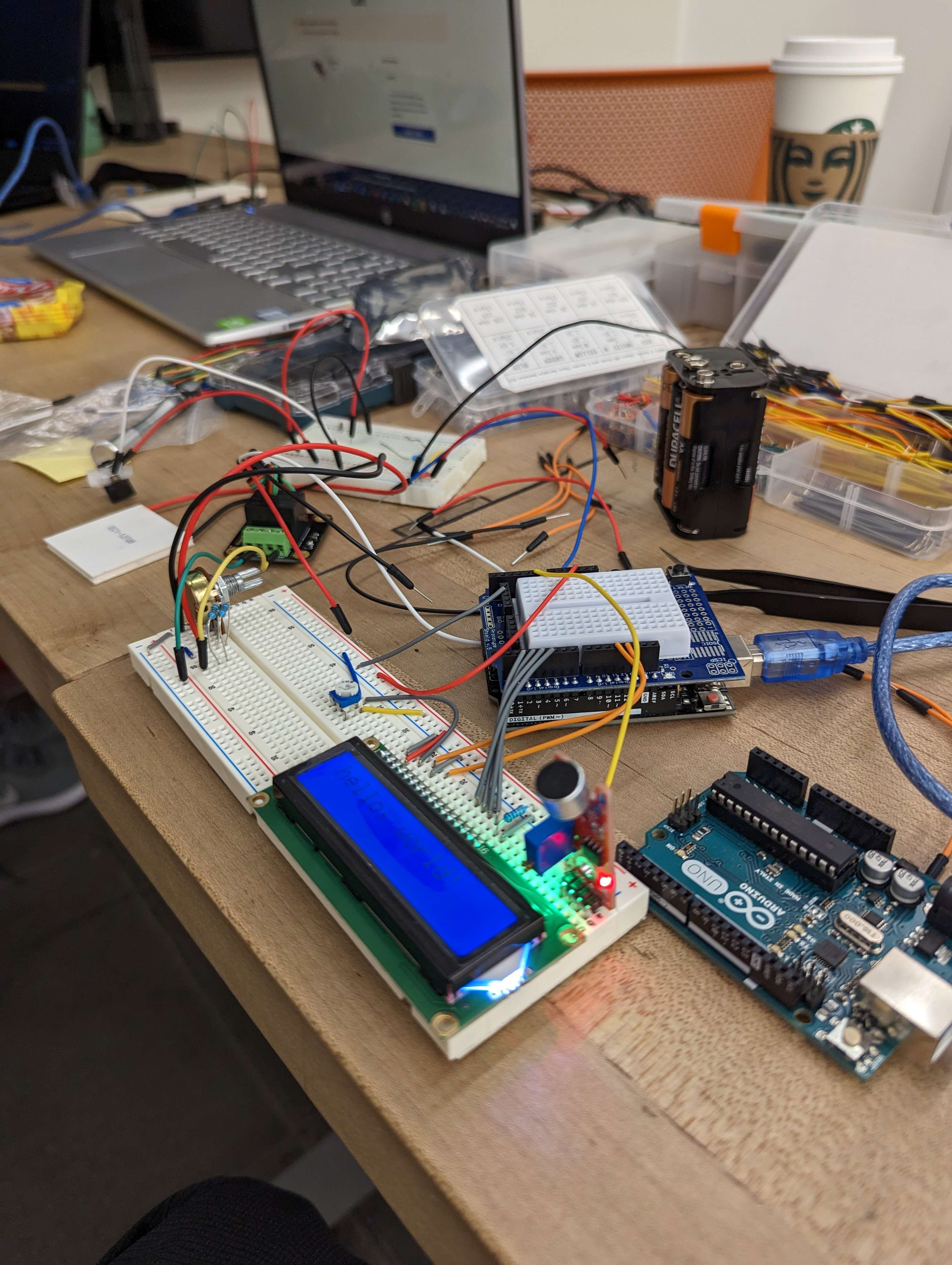
The Screamathon3300 heats up the user's hand based on the intensity of their SCREAM. It interfaces an analog electret microphone, LCD screen, and thermoelectric plate with an Arduino. The Arduino continuously monitors the microphone for changes in volume intensity. When an increase in volume occurs, it triggers a relay, which supplies 9 volts, at a relatively large amperage, to the thermoelectric plate embedded in the glove, thereby heating the glove. Simultaneously, the Arduino will display an encouraging prompt on the LCD screen based on the volume of the scream.
How we built it
The majority of the design process was centered around the use of the thermoelectric plate. Some research and quick experimentation helped us conclude that the thermoelectric plate's increase in heat was dependent on the amount of supplied current. This realization led us to use two separate power supplies -- a 5 volt supply from the Arduino for the LCD screen, electret microphone, and associated components, and a 9 volt supply solely for the thermoelectric plate. Both circuits were connected through the use of a relay (dependent on the Arduino output) which controlled the connection between the 9 volt supply and thermoelectric load. This design decision provided electrical isolation between the two circuits, which is much safer than having common sources and ground when 9 volts and large currents are involved with an Arduino and its components.
Safety features directed the rest of our design process, like the inclusion of a kill-switch which immediately stops power being supplied to the thermoelectric load, even if the user continues to scream. Furthermore, a potentiometer placed in parallel with the thermoelectric load gives control over how quickly the increase in heat occurs, as it limits the current flowing to the load.
Challenges we ran into
We tried to implement feedback loop, ambient temperature sensors; even though large temperature change, very small changes in sensor temperatures. Goal to have an optional non-scream controlled system failed because of ultimately not having a sensor feedback system. We did not own components such as the microphone, relay, or battery pack, we could not solder many connections so we could not make a permanent build.
Accomplishments that we're proud of
We're proud of using a unique transducer (thermoelectric plate) that uses an uncommon trigger (current instead of voltage level), which forced us to design with added safety considerations in mind. Our design was also constructed of entirely sustainable materials, other than the electronics. We also used a seamless integration of analog and digital signals in the circuit (baby mixed signal processing).
What we learned
We had very little prior experience interfacing thermoelectric plates with an Arduino. We learned to effectively leverage analog signal inputs to reliably trigger our desired system output, as well as manage physical device space restrictions (for it to be wearable).
What's next for Screamathon 3300
We love the idea of people having to scream continuously to get a job done, so we will expand our line of Scream devices, such as the scream-controlled projectile launcher, scream-controlled coffee maker, scream-controlled alarm clock. Stay screamed-in!

Log in or sign up for Devpost to join the conversation.