-
-
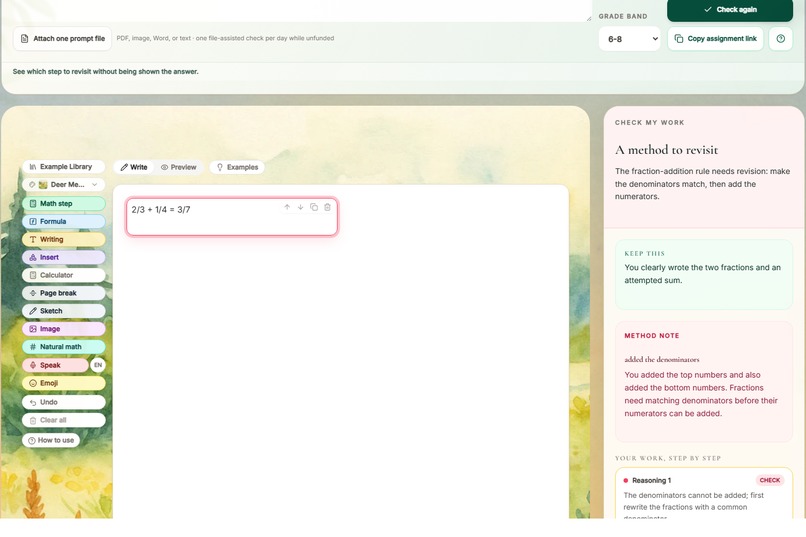
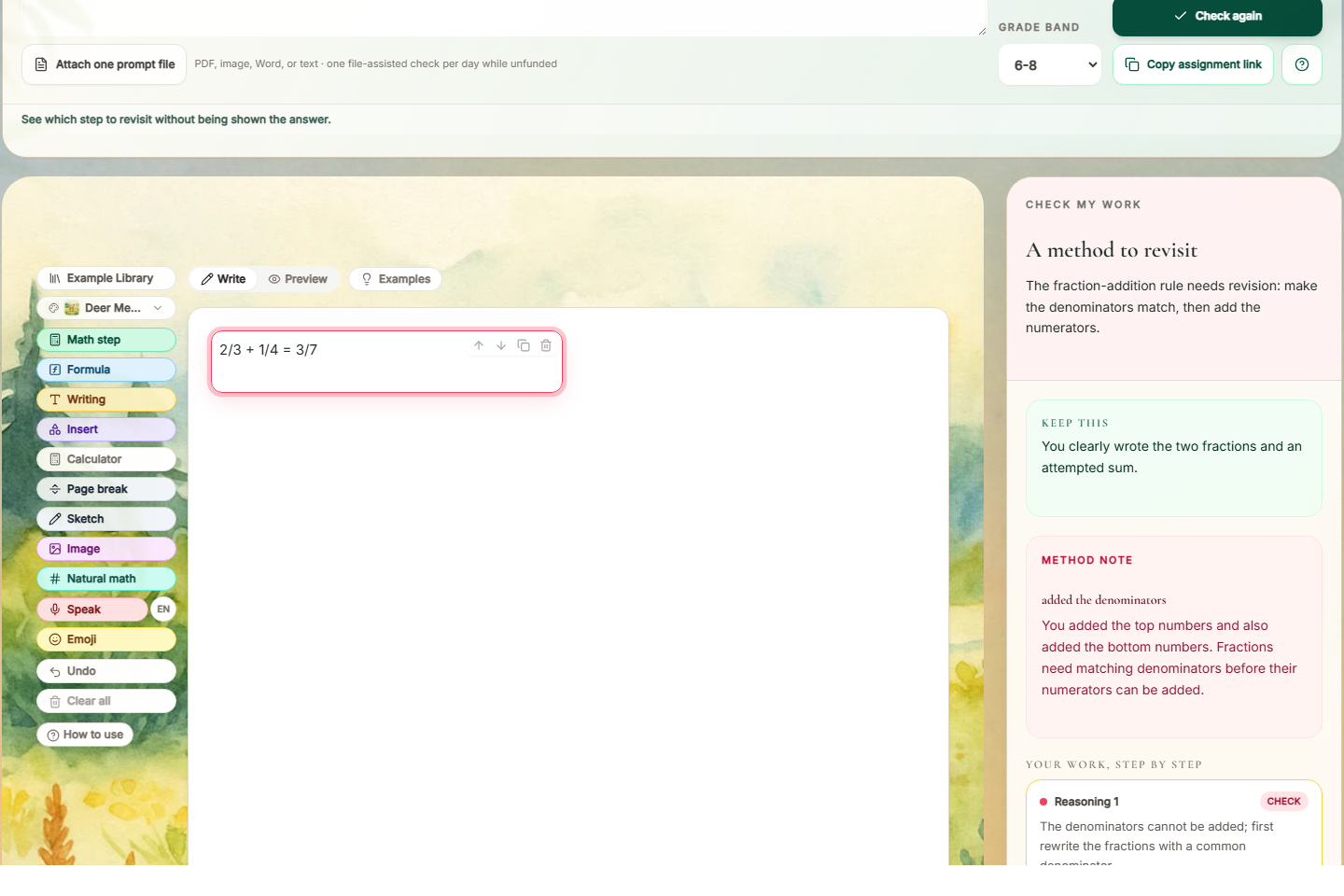
Feedback points to the exact step without revealing the answer.
-
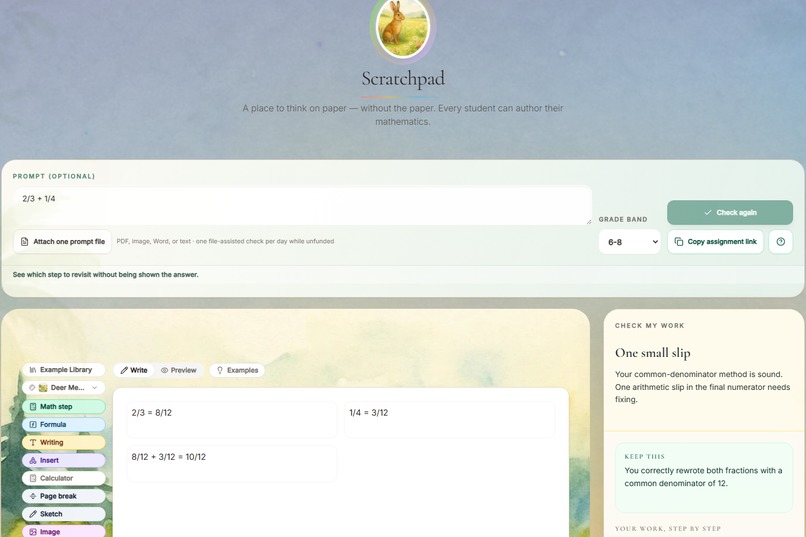
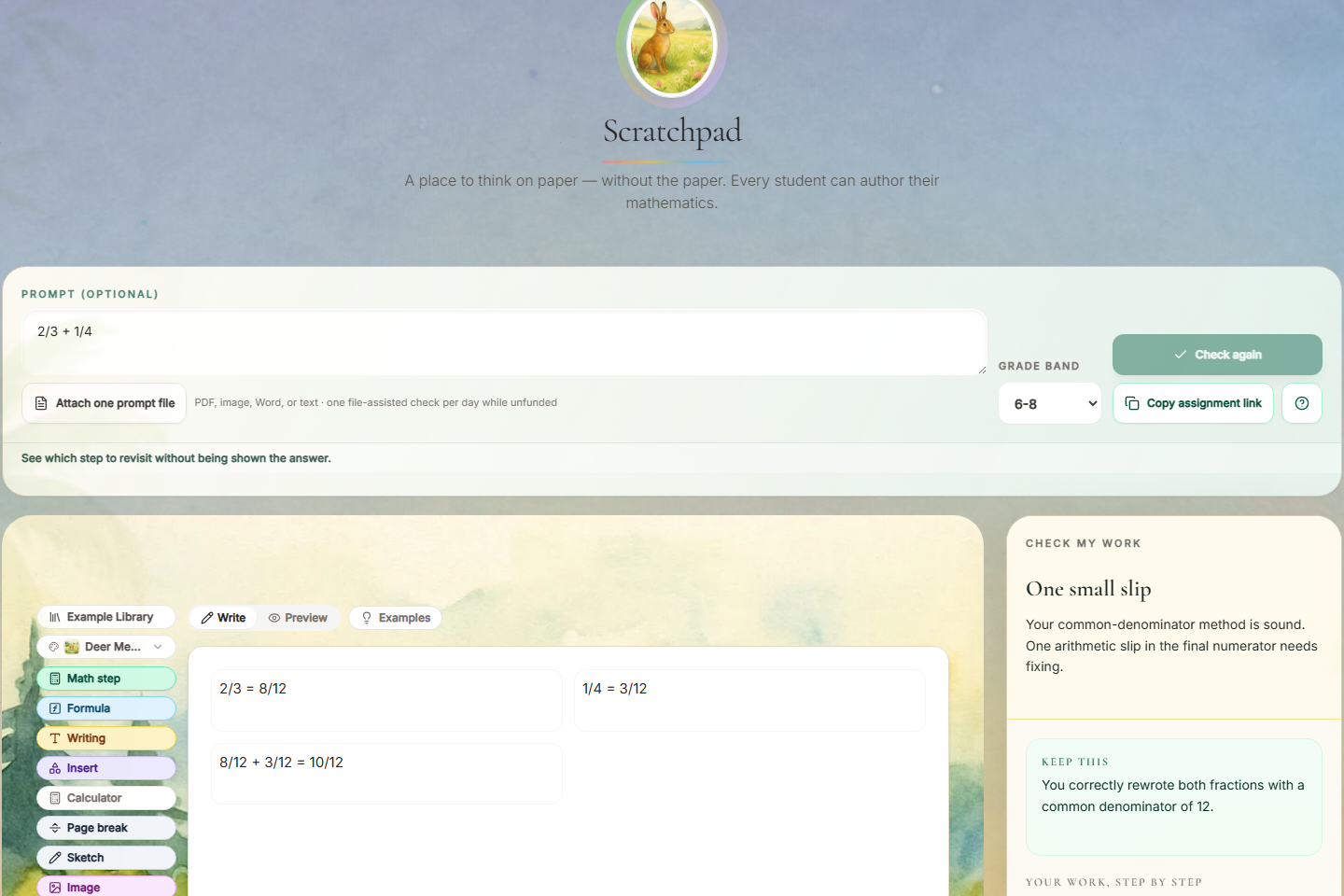
Correct reasoning stays intact; only the arithmetic slip is flagged.
-
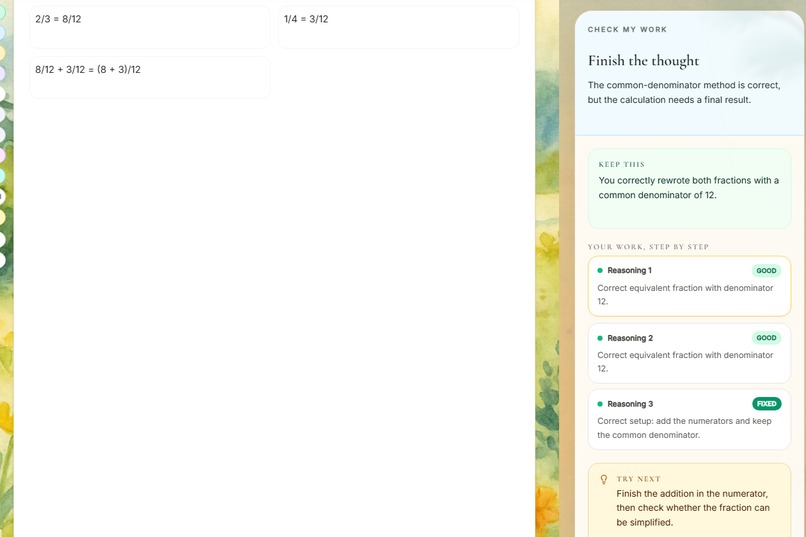
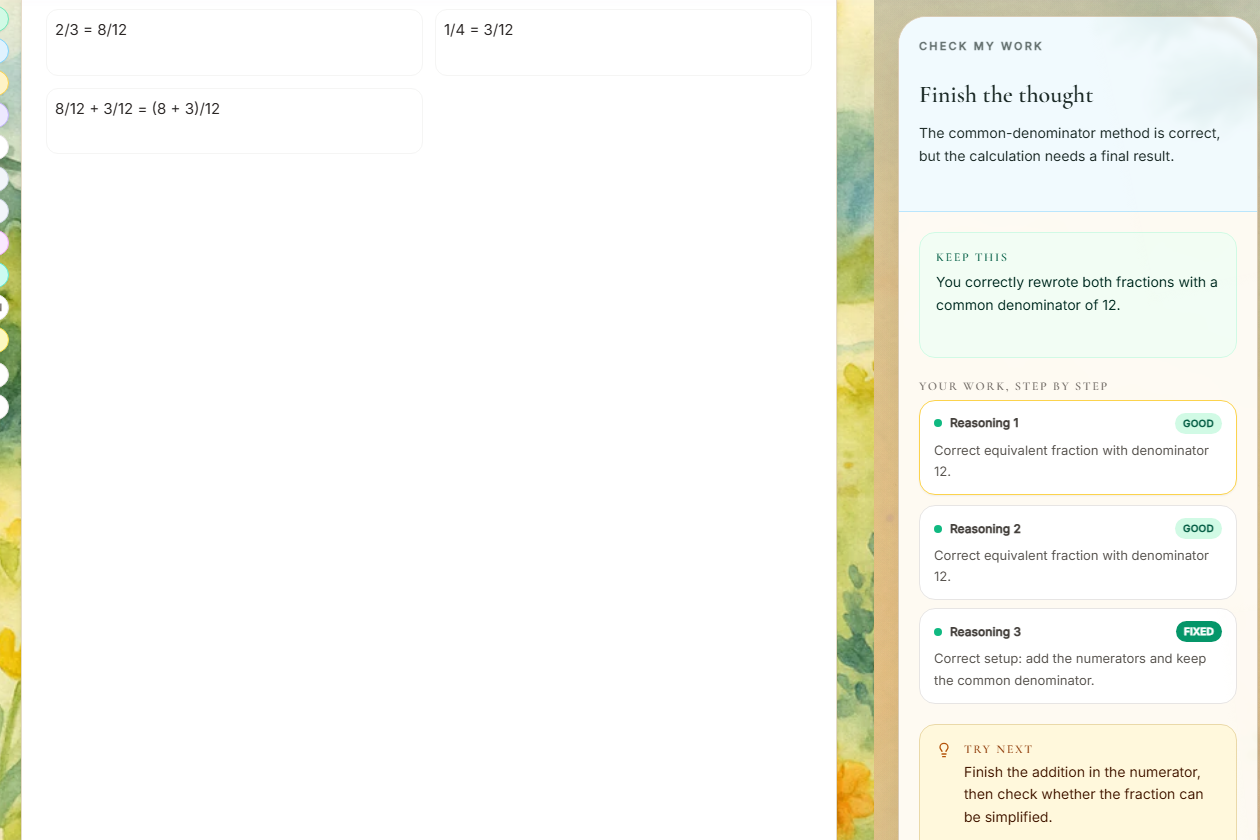
Students revise the step, check again, and see what changed.
-
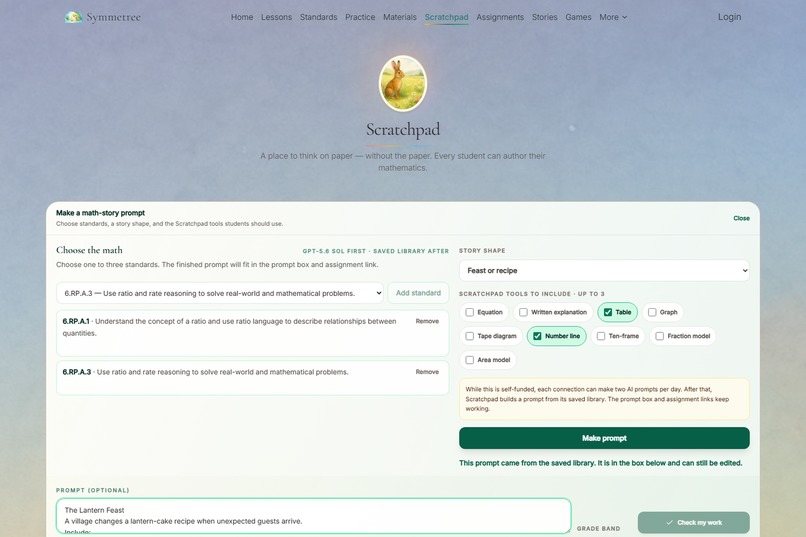
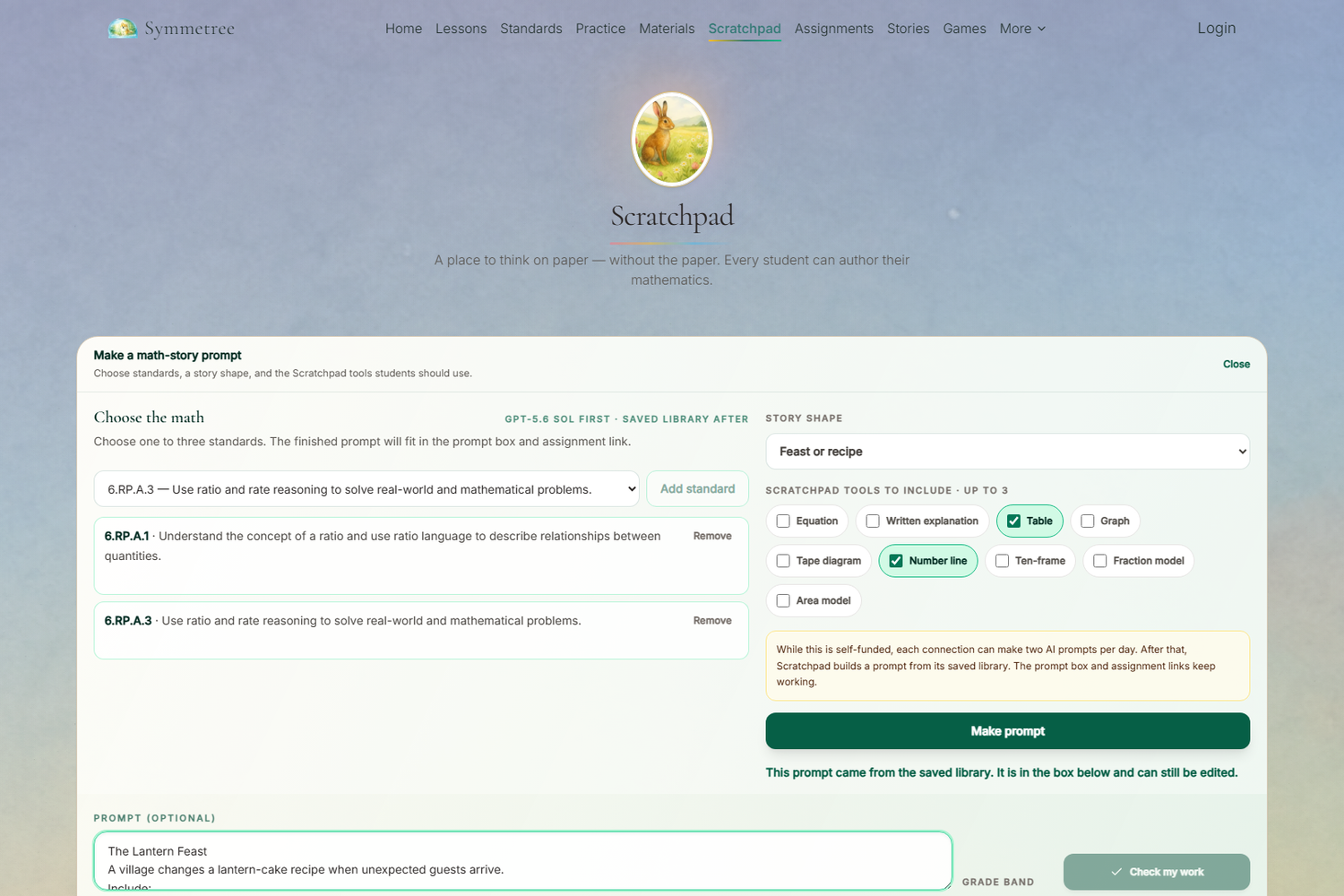
Teachers choose standards and a story shape. After two AI prompts, a saved library fills the same editable prompt.
-
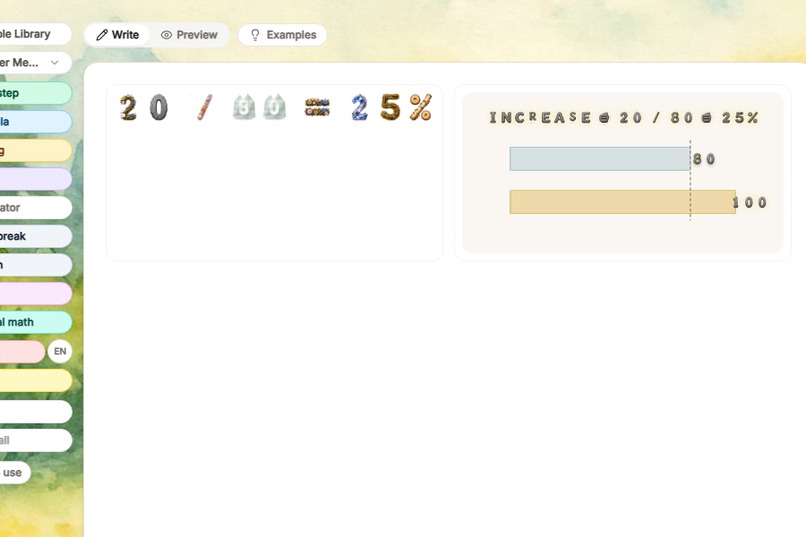
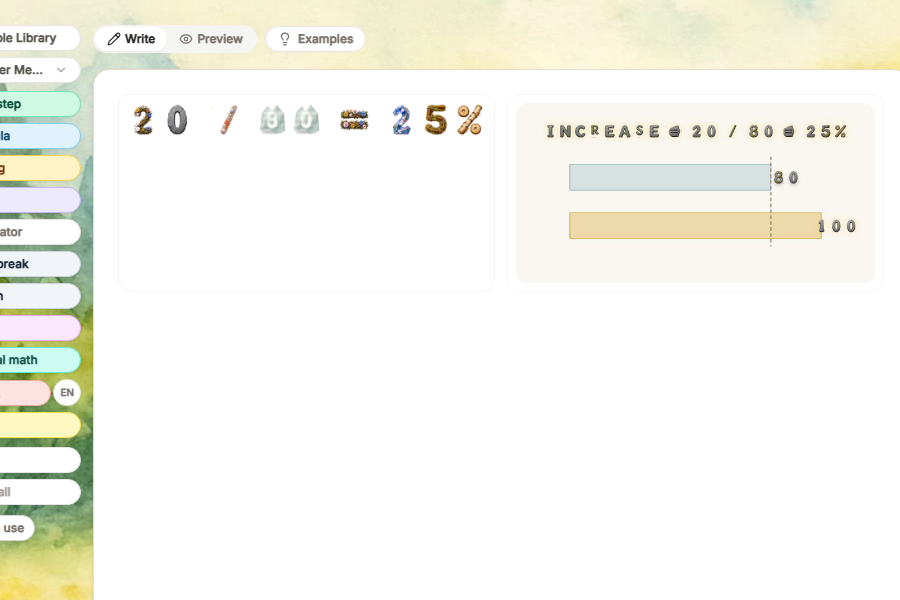
Students build equations from painted symbols and place a bar diagram beside their reasoning.
-
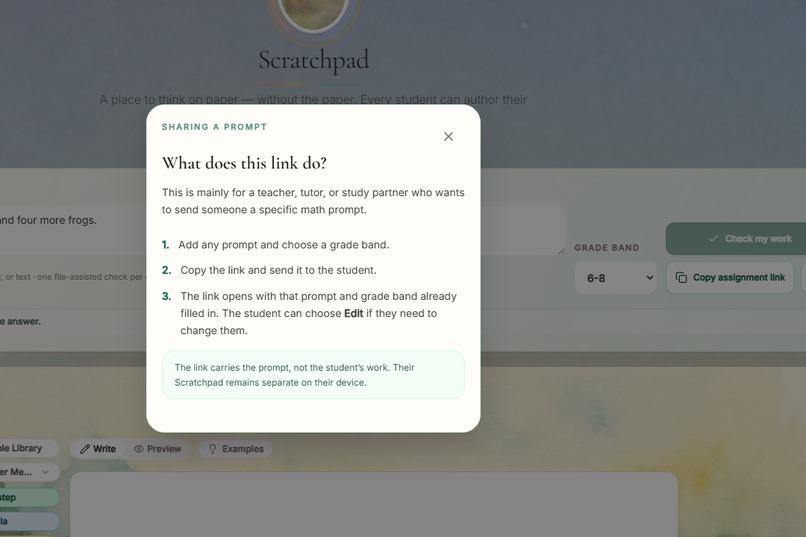
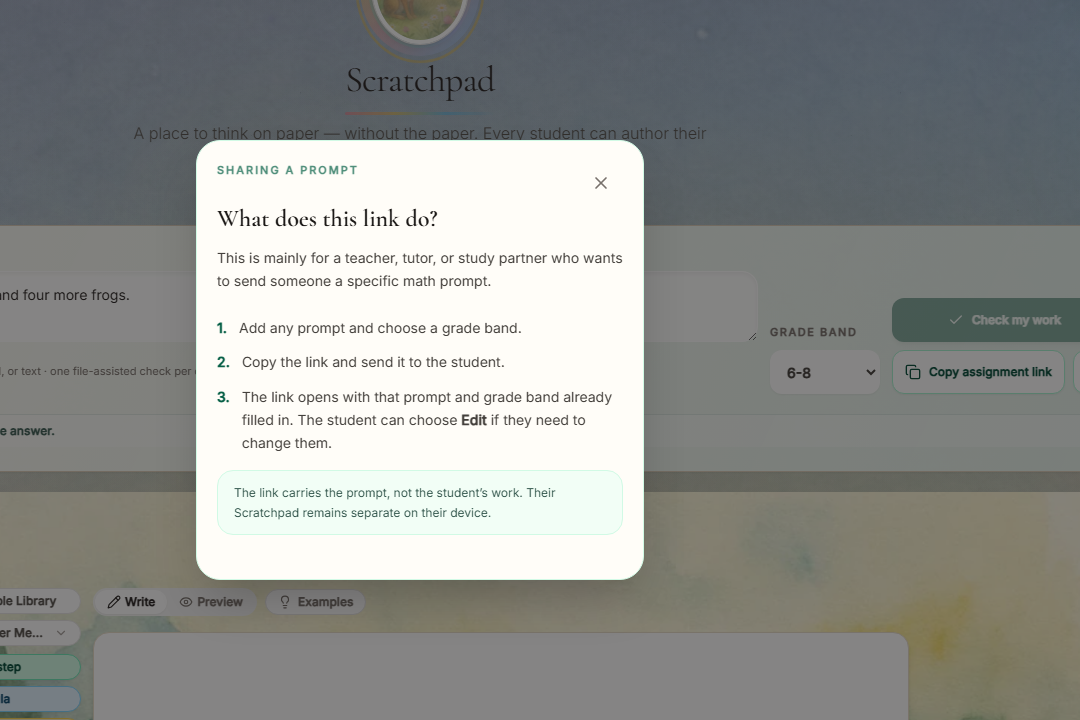
Teachers share a link carrying the prompt and grade band; student work never travels with it.
-
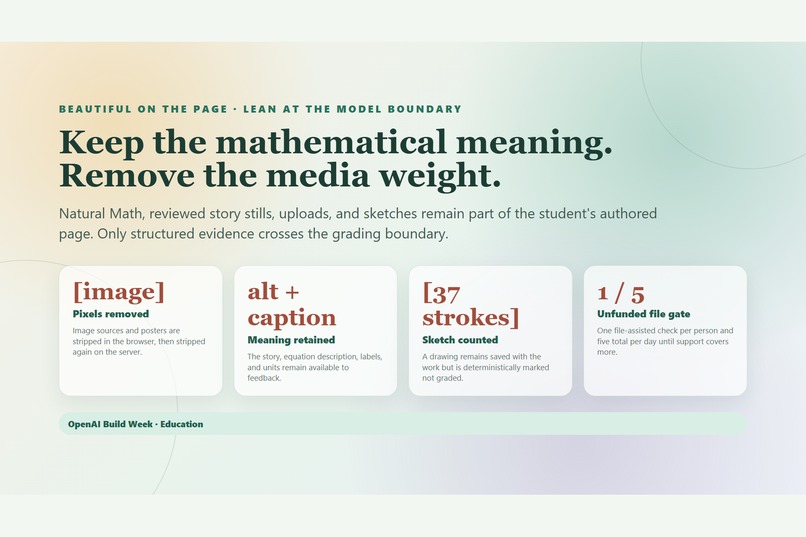
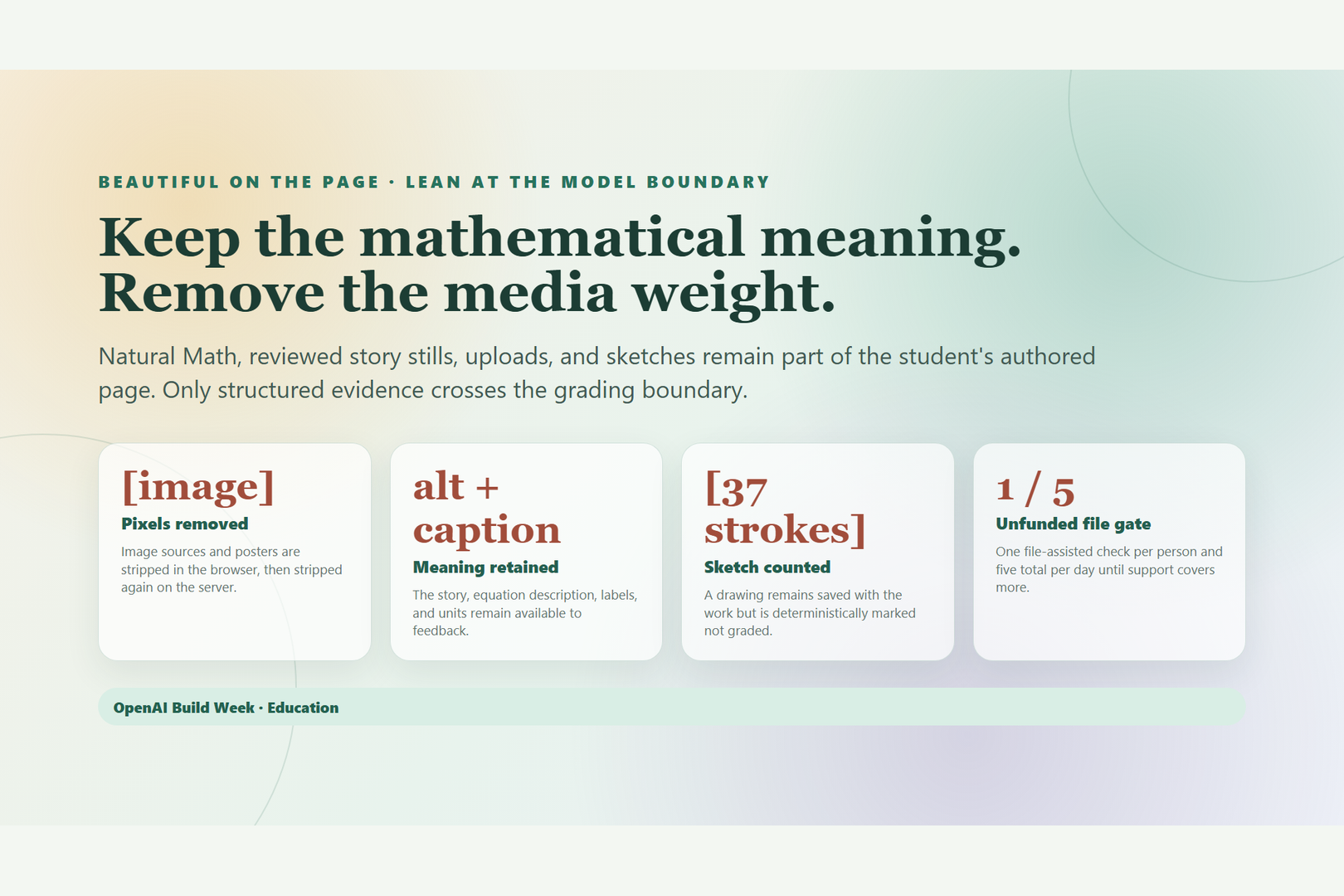
Images are reduced to their captions and sketches to stroke counts before GPT-5.6 Sol sees the work.
-
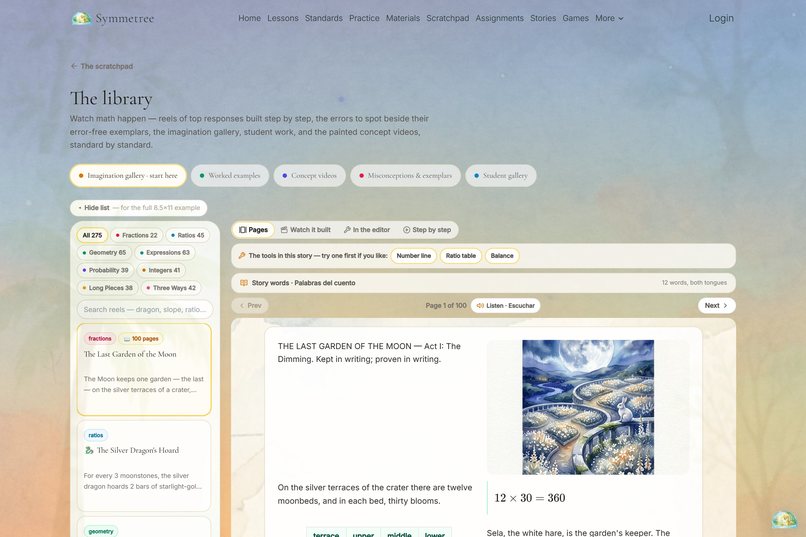
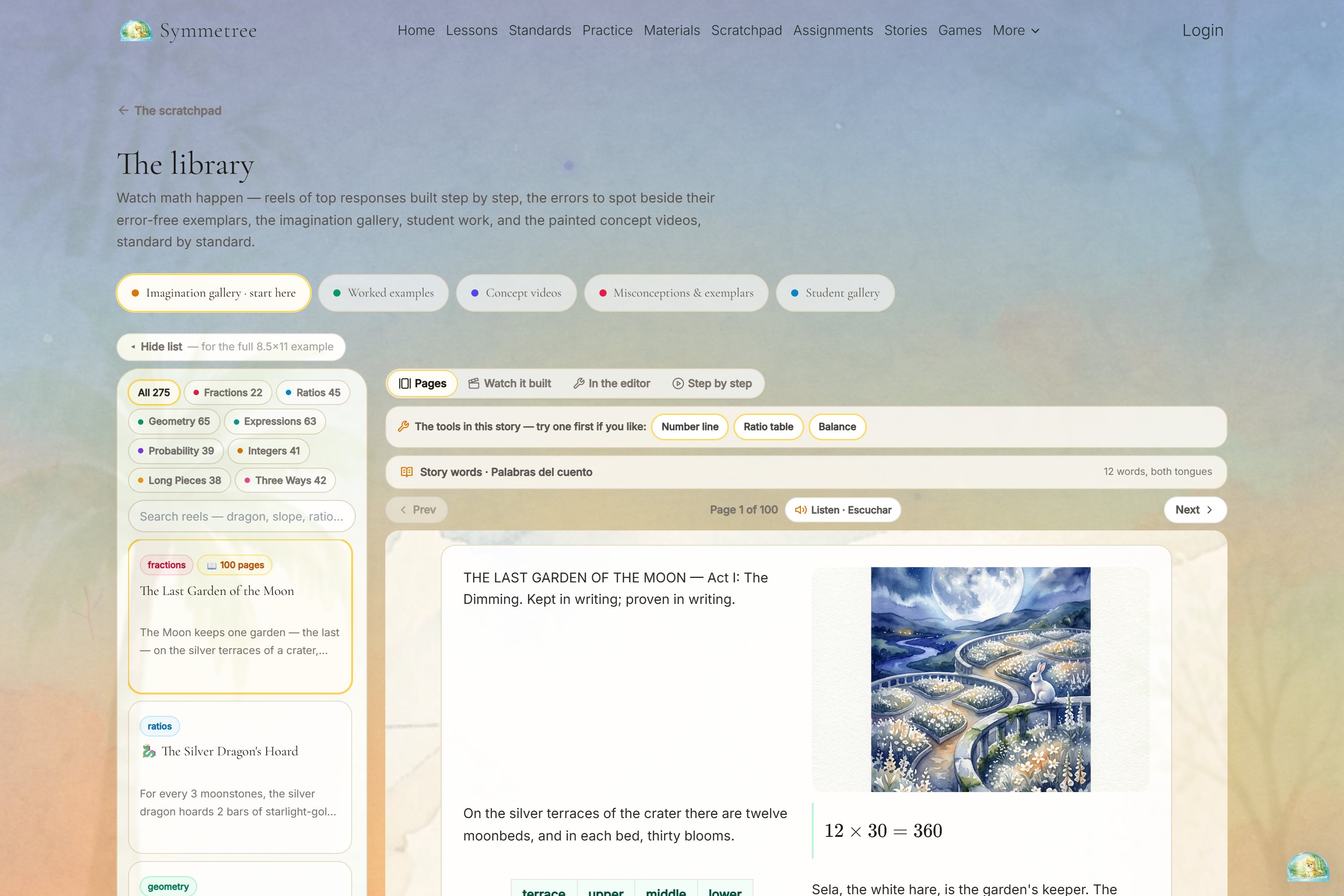
Scratchpad Example Library
-
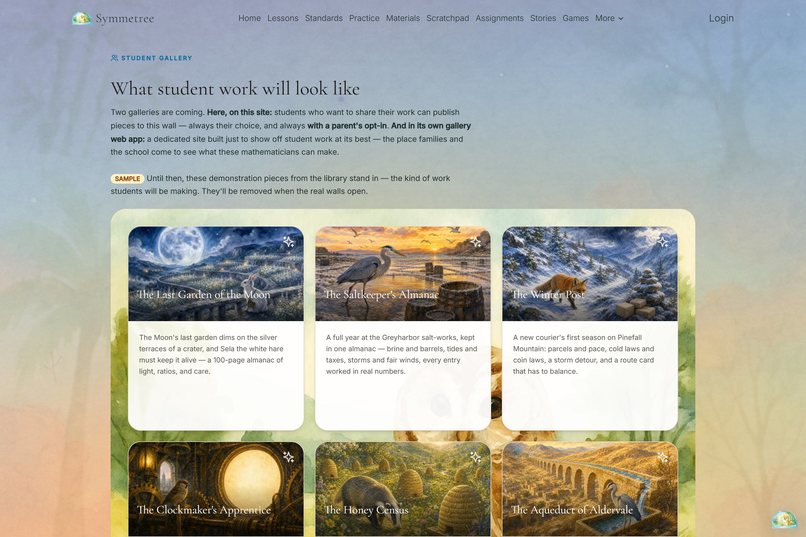
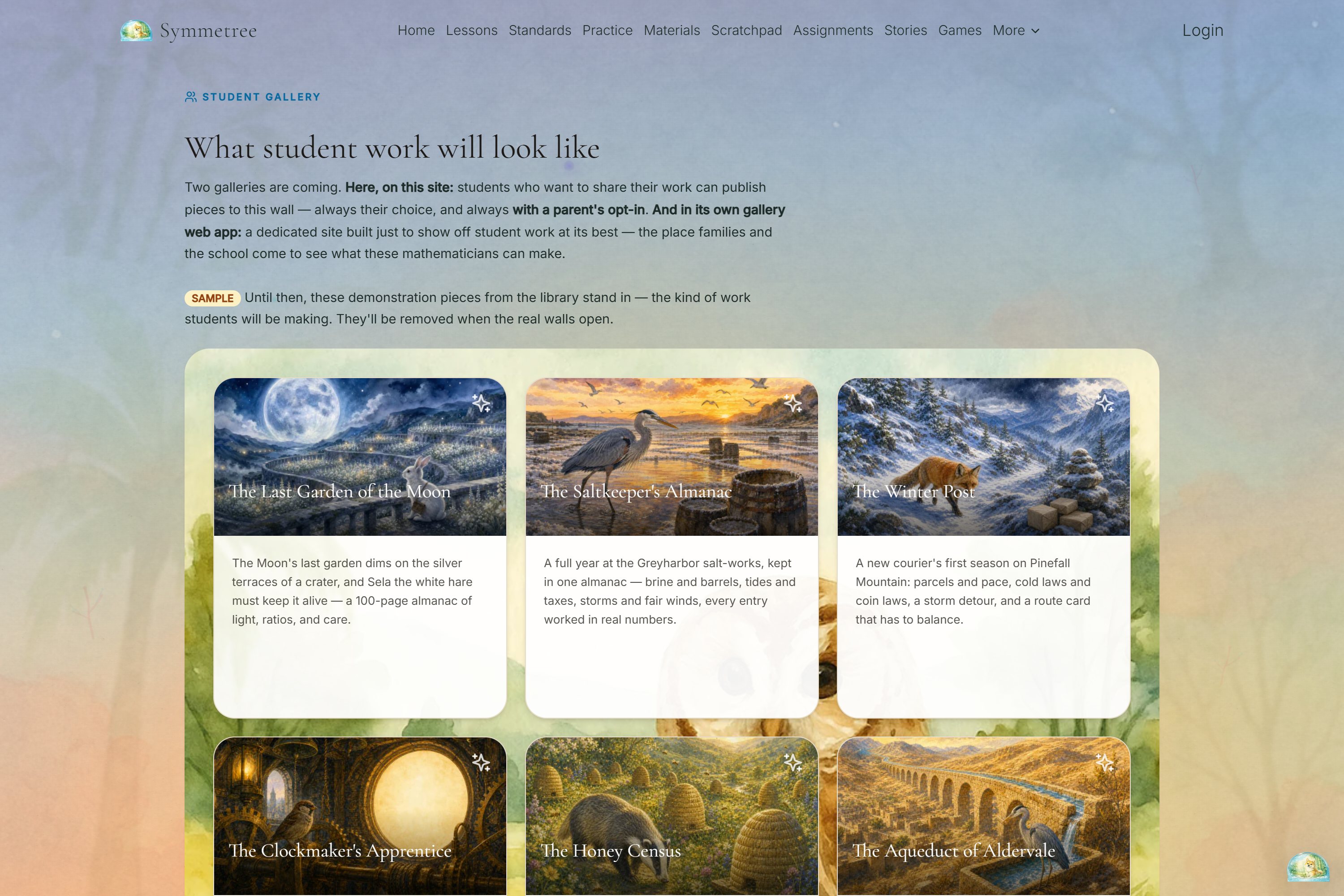
Scratchpad Student Gallery Demo
Inspiration
I teach math. Two problems have bothered me for years.
First: autograders check answers, not thinking. A student writes 2/3 + 1/4 = 3/7 and gets it marked wrong. The grade does not tell the student they added the denominators, which is the mistake a teacher would actually correct. Tools that read photos of handwriting often misread the work.
Second: worksheets bore the students who like math most. Those students want to tell stories with it, and no tool puts a story and its math on the same page or gives useful feedback on both together.
I had already built the tool this needs. Scratchpad is a free, no-login page where students arrange equations, tape models, ten-frames, number lines, long division, proofs, two-way tables, story text, art, and page breaks for long illustrated math stories. Every part remains machine-readable. A student who cannot physically write can still author math by typing with a painted symbol palette.
For Build Week, I connected that expressive page to GPT-5.6 Sol.
What it does
The new Check my work action reads the student's page and returns feedback tied to the exact step that needs attention.
- Each step is analyzed. Clicking the feedback scrolls to that line and highlights it.
- Misconceptions are named ("added the denominators") and explained in language a child can understand.
- The student gets one useful next move. The feedback does not include the answer.
- If the page is a story, the feedback addresses the story and checks the math inside it: "your otter's shares don't match the third part of your tape model."
- Students can ask for feedback with or without a prompt. A prompt can be a calculation, a story, or an open request such as "tell a math story that meets these conditions."
- The tool can also write the prompt. Pick a grade band, one or more standards, a story type (journey, shop, rescue, recipe, mystery...), and which representations must appear — a tape diagram, a graph, a ten-frame — and GPT-5.6 Sol composes a bounded story prompt with a success check the grader can verify.
Teachers, tutors, or study partners can share a link carrying the prompt and grade band. Student work never goes into the link, and no account is required. One prompt file can be attached when pasting is impractical; because file reading costs more, that option is tightly limited while the project is self-funded.
The classroom routine it powers
In my classroom, every student writes a weekly math story—characters, art, and real math on the page. On Friday, we read the winners together. This is the part I could never do by hand: precise feedback for thirty authors, every week. On the live product, one check of the required competition case cost about a cent, which is what makes a weekly routine for a whole class affordable.
This is the same routine writing classes use, applied to math.
How we built it
I used Codex as my primary integrator and plan critic, mostly at XHigh. Ultra was used only for the adversarial audit. Codex turned the classroom idea into repeatable checks, built the feature, and caught gaps in no-prompt use, sharing, accessibility, mobile layout, cost controls, and the revise-and-check loop. Those plan changes are recorded in the repository, along with the Codex session where the core was built.
GPT-5.6 Sol performs the mathematical judgment. Every grading request uses gpt-5.6-sol directly. Each item on the page has a stable ID, and model feedback refers only to IDs that are actually present. The server checks every response again before it reaches a student: references to unknown steps are dropped, skipped steps get safe fallbacks, and students don't receive the solution directly.
Images are reduced to their captions and sketches to stroke counts before sending; the server repeats it. Drawings remain part of the student's page but are not graded. Rate limits and daily ceilings keep the self-funded feature bounded.
Challenges we ran into
The hard part was making feedback point to the exact step, then keeping that reference correct after a student revises and checks again. I also had to stop the model from including the answer, handle both worked solutions and stories, support no-prompt work, and make sure art wasn't evaluated by the model.
Accomplishments that we're proud of
Both competition examples passed on the live product: the denominator misconception was named without exposing the answer, and the correct fraction method kept its good steps while only the arithmetic slip was flagged. I also tried twenty different student pages across four grade bands, all forty-nine Scratchpad formats, and seven complete product flows.
Scratchpad is free, requires no login, and does not collect student data. Students can write in their own language; one example has margin notes in Spanish.
What we learned
When students build math from machine-readable pieces instead of an opaque image, the grader is more reliable. Students also write more math when they know classmates will see it on Friday.
What's next for Scratchpad: where kids write math — stories, models, proofs
Class rollups will help teachers see shared misconceptions across a set of submissions. Funding through the prize, OpenAI credit support, or donations would let us raise the file-reading limits while keeping the tool free and login-free.
Built With
- codex
- gpt-5.6-sol
- katex
- latex
- node.js
- openai-api
- react
- serverless
- supabase
- tailwindcss
- typescript
- vercel
- vite

Log in or sign up for Devpost to join the conversation.